The Complete Garnet Guide
Discover the beauty, history, and mystique of nature's diverse gemstone
Discover Stunning Garnet Jewelry Pieces
Click to explore our complete collection
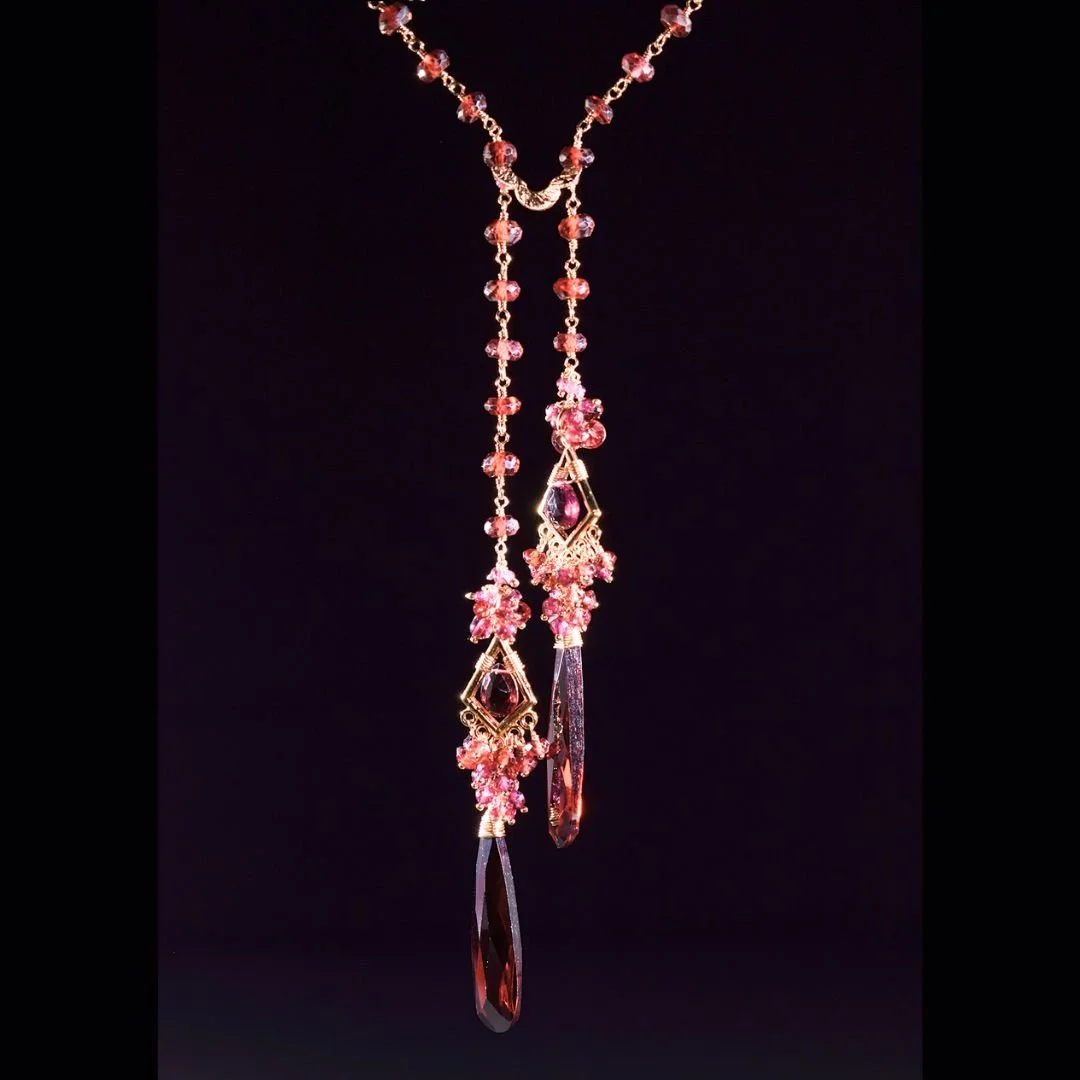
Necklaces

Bracelets

Earrings

Lookbook
Learn About Garnet
What is Garnet?
Garnet is not a single gemstone but rather a group of closely related minerals that share similar crystal structures and chemical compositions. These beautiful gems have been treasured throughout history for their rich colors and durability.
The name "garnet" comes from the Latin word "granatum," meaning pomegranate, referencing the stone's resemblance to the deep red seeds of this fruit. While red is the most common color, garnets actually come in nearly every color of the rainbow.
✨ Quick Facts
- Birthstone for January
- 2nd wedding anniversary gemstone
- Found on every continent
- Ranges from 6.5 to 7.5 on Mohs hardness scale
- Used in jewelry for over 5,000 years
Garnets are valued not only for their beauty but also for their durability and versatility. They're used in jewelry, industrial applications, and have been associated with various healing and spiritual properties throughout history.
Physical Properties
Understanding garnet's physical properties helps us appreciate why this gemstone has been so valued throughout history and continues to be popular today.
Durability
With a hardness of 6.5 to 7.5 on the Mohs scale, garnet is durable enough for everyday wear in most jewelry applications. It's harder than common household dust, which helps protect it from scratches during regular use.
Optical Properties
Garnets exhibit excellent brilliance due to their high refractive index. They're singly refractive, meaning they don't show double refraction like some other gemstones. Most garnets don't display pleochroism (color change when viewed from different angles).
How Garnet is Formed
Garnets form through a fascinating geological process that takes millions of years and requires specific conditions of temperature and pressure.
Metamorphic Origins
Most garnets form in metamorphic rocks, which are rocks that have been transformed by heat and pressure deep within the Earth's crust. When existing rocks are subjected to temperatures between 400°C and 700°C and significant pressure, the minerals within them reorganize to form new minerals, including garnets.
Formation Process
The garnet formation process involves:
- Regional Metamorphism: Large-scale geological events create the heat and pressure needed for garnet formation
- Chemical Conditions: The presence of specific elements like aluminum, iron, magnesium, calcium, and manganese
- Crystal Growth: Over millions of years, garnet crystals slowly grow within the host rock
- Erosion and Discovery: Eventually, weathering and erosion expose garnet-bearing rocks at the Earth's surface
Other Formation Environments
Igneous Rocks: Some garnets form in igneous rocks like granite and pegmatite through crystallization from molten magma.
Alluvial Deposits: Garnets are often found in riverbeds and beaches where they've been transported and concentrated by water after weathering from their original host rocks.
Garnet Meaning & Symbolism
Throughout history, garnets have been attributed with powerful meanings and metaphysical properties across various cultures and belief systems.
Traditional Meanings
- Passion & Love: Red garnets symbolize deep love, devotion, and commitment in relationships
- Vitality & Energy: Believed to boost energy levels, physical stamina, and overcome fatigue
- Protection: Historically carried as a protective talisman during travel and battle
- Grounding: Associated with keeping one grounded and connected to the present moment
- Success: Thought to attract prosperity and success in business endeavors
Spiritual Properties
In crystal healing traditions, garnet is associated with the root chakra (base of spine) and is believed to:
- Revitalize and balance energy
- Inspire love and devotion
- Enhance self-confidence and courage
- Protect against negative energies
- Stimulate metabolism and treat spinal disorders
Note: These are traditional beliefs and are not scientifically proven medical treatments.
January Birthstone
As the birthstone for January, garnet is said to bring peace, prosperity, and good health to those born in this month. It's also the traditional gift for 2nd wedding anniversaries.
Garnet Through History
Garnets have captivated humans for over 5,000 years, appearing in jewelry, art, and religious artifacts across numerous civilizations.
Ancient Times
Ancient Egypt (3000 BCE): Pharaohs wore garnet necklaces and used inlaid garnets in their jewelry. Red garnets were placed in tombs as precious offerings for the afterlife.
Ancient Rome (27 BCE - 476 CE): Roman nobility wore garnet signet rings to stamp wax seals on important documents. Soldiers carried garnets as protective talismans in battle.
Ancient Greece: Garnets were exchanged between friends as gifts symbolizing their affection and ensuring they would meet again.
Medieval Period
During the Middle Ages (5th-15th centuries), garnets were favored by clergy and nobility. Red garnets symbolized Christ's sacrifice and were used extensively in religious jewelry and church decorations.
Victorian Era
The Victorian era (1837-1901) saw a massive revival in garnet jewelry popularity. Bohemian garnets (pyrope garnets from Czech Republic) were especially fashionable. Jewelry designs featured clusters of small garnets creating dazzling displays.
Modern Era
Today, garnets remain popular in both fine and fashion jewelry. The discovery of new garnet varieties in various colors has expanded their appeal beyond traditional red stones. Modern mining techniques have made garnets more accessible while maintaining their timeless allure.
The Rainbow of Garnet Colors
While most people associate garnets with deep red, these versatile gemstones actually occur in nearly every color of the spectrum, with each variety having its own unique characteristics.
The classic garnet color, deep and passionate
Vibrant mandarin orange, highly prized
Sunny and bright, less common
Brilliant emerald-like green, rare
Raspberry to purple-red hues
Peachy-pink to reddish-orange
Special Varieties
- Demantoid: The most valuable garnet, a brilliant green variety with high dispersion (fire)
- Color-Change Garnet: Rare garnets that change color under different lighting (blue-green in daylight to purple-red in incandescent light)
- Star Garnet: Displays asterism (star effect) when cut en cabochon
- Hessonite: Cinnamon-brown to orange variety, often called "cinnamon stone"
Note: Blue is the only color garnet doesn't naturally occur in, though some treatments can produce blue appearances.
Caring for Your Garnet Jewelry
Proper care ensures your garnet jewelry maintains its beauty and brilliance for generations. While garnets are durable, they still require appropriate maintenance.
Daily Care Tips
- Remove during physical activities: Take off garnet jewelry when doing housework, exercising, or gardening
- Apply cosmetics first: Put on garnet jewelry after applying makeup, perfume, and hairspray
- Store separately: Keep garnet pieces in individual soft pouches or jewelry boxes to prevent scratching
- Avoid extreme temperatures: Sudden temperature changes can cause fractures in some garnets
Cleaning Instructions
Safe Cleaning Method:
- Mix warm water with a few drops of mild dish soap
- Soak the garnet jewelry for 10-15 minutes
- Gently scrub with a soft toothbrush, paying attention to settings and crevices
- Rinse thoroughly under warm running water
- Pat dry with a soft, lint-free cloth
- Allow to air dry completely before storing
What to Avoid
- Ultrasonic cleaners: Can cause fractures in garnets with inclusions
- Steam cleaning: May damage certain garnet varieties
- Harsh chemicals: Avoid bleach, chlorine, and acidic cleaners
- Abrasive materials: Don't use rough cloths or abrasive cleaners
Professional Maintenance
Have your garnet jewelry professionally inspected and cleaned once a year. A jeweler can check for loose settings, damaged prongs, and perform a thorough cleaning that's safe for your specific piece.
Color Psychology of Garnet
The colors of garnet, particularly the classic deep red, evoke powerful psychological and emotional responses that have influenced its use throughout history.
Red Garnet Psychology
Red, the most common garnet color, is associated with:
- Passion & Desire: Red stimulates feelings of love, romance, and sensuality
- Energy & Vitality: The color red increases heart rate and creates feelings of excitement and urgency
- Power & Confidence: Red conveys strength, determination, and bold self-assurance
- Warmth & Comfort: Deep red tones create feelings of warmth and security
Other Garnet Color Meanings
Emotional Impact
Wearing garnet jewelry can psychologically influence how you feel and how others perceive you:
- Confidence Boost: The bold colors can enhance self-assurance in social and professional settings
- Romantic Appeal: Red garnets specifically are associated with attraction and passion
- Grounding Effect: The earthy tones help create feelings of stability and connection
- Status Symbol: Historically associated with wealth and power, garnets convey sophistication
How to Style Garnet Jewelry
Garnet's versatility makes it suitable for various occasions and styles. Here's how to incorporate garnet jewelry into your wardrobe beautifully.
Everyday Wear
- Simple studs: Small garnet earrings add a subtle pop of color to casual outfits
- Delicate pendants: A single garnet on a fine chain works beautifully with basics
- Stackable rings: Mix garnets with other gemstone rings for a personalized look
- Tennis bracelets: Classic and elegant for daily sophistication
Office & Professional
Garnet jewelry adds polish to professional attire:
- Pair garnet studs or small drops with tailored blazers
- Wear a garnet cocktail ring as a power piece during presentations
- Choose rhodolite or darker red garnets for understated elegance
- Match garnet jewelry with neutral colors like black, navy, gray, or cream
Evening & Special Occasions
Bold statements: Large garnet cocktail rings, chandelier earrings, or elaborate necklaces make stunning focal points with evening wear.
Color coordination:
- Red garnets: Pair with black, burgundy, gold, or emerald green gowns
- Green garnets: Beautiful with navy, black, or champagne-colored attire
- Orange garnets: Stunning with earth tones, brown, or deep teal
Seasonal Styling
- Fall/Winter: Red and orange garnets complement the season's warm, rich color palette. Layer with cozy textures.
- Spring/Summer: Green and pink garnets add freshness. Pair with lighter fabrics and pastel or white clothing.
Metal Pairing
- Yellow Gold: Enhances the warmth of red, orange, and yellow garnets
- White Gold/Platinum: Creates elegant contrast with all garnet colors, especially beautiful with green garnets
- Rose Gold: Romantic pairing with red, pink, and purple garnets
Pro Styling Tips
- Let one garnet piece be the focal point - avoid competing jewelry
- Balance bold garnet jewelry with simple clothing and vice versa
- Consider your skin tone: warm undertones suit orange/red garnets, cool undertones suit purple/pink varieties
- Mix garnet colors for modern, eclectic looks
- Vintage-style garnet jewelry pairs beautifully with both classic and contemporary fashion