
Studio Stories: The Green Long Gemstone Necklace with Chain Tassel Drop
What Is the Green Long Gemstone Necklace with Chain Tassel Drop?
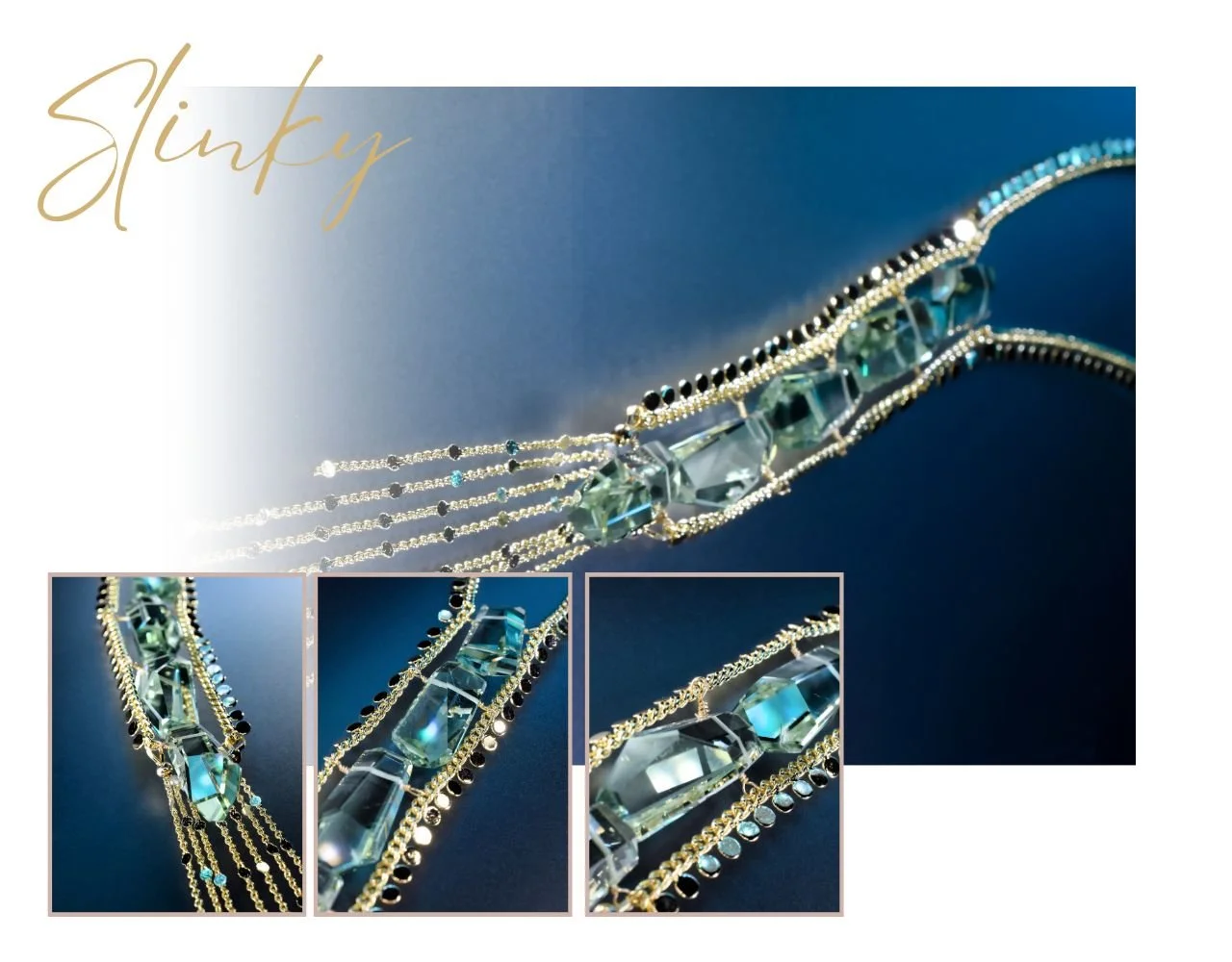
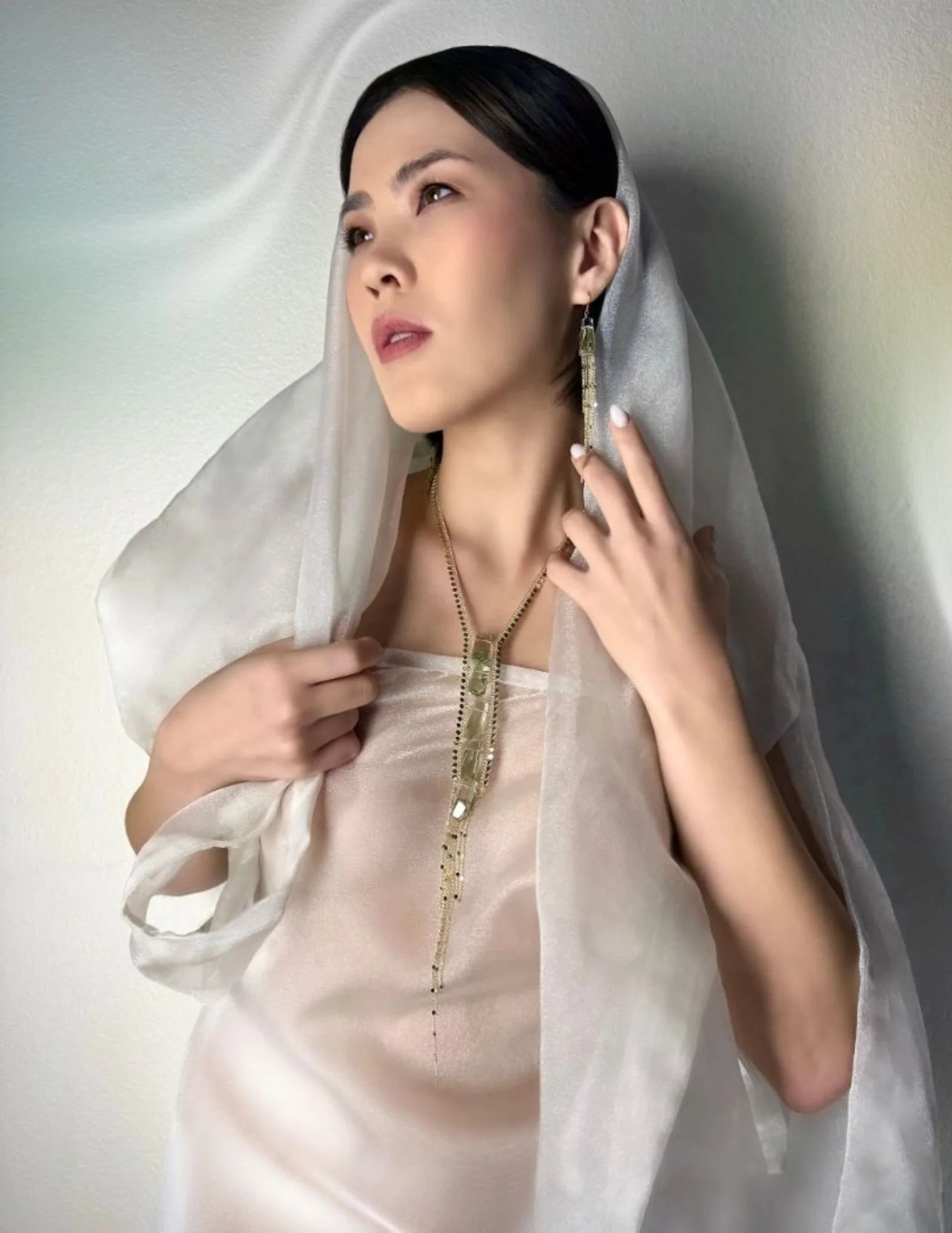
The Green Long Gemstone Necklace with Chain Tassel Drop is a hand-fabricated pendant necklace featuring green amethyst (prasiolite) and 14k gold-filled sequin chains with recycled 14/20k gold-filled jump rings and clasp, part of the Tamar Collection by Andrea Li Jewelry. This design exists because a different design failed first.
The necklace traces directly back to a concept that did not work: a multi-layered horizontal configuration intended to drape sequin chains in clean, circular layers around the neck. That failed version eventually found its own identity as the Pastel Gemstone Multi-Strand Statement Necklace, a separate piece in the Tamar Collection. But the vertical reinterpretation of the same materials became something Andrea Li did not anticipate: minimal, structural, and, in the words of the only two people who got a sneak peek, sexy.
Why Did the Original Horizontal Design Fail?
The original concept relied on sequin chains forming layered horizontal drapes around the neck. In theory, the chains would create refined, architectural rings of light. In practice, the chains clung to the skin and collapsed under their own lightness. Instead of clean circular layers, the result looked like unstructured tangles, gravity had opinions the design had not accounted for.
The failure came down to a material property: sequin chains are composed of flat, disc-shaped links that are individually lightweight. Arranged horizontally, they lack the mass to hold their shape against the body. They need either tension or downward pull to behave, and a horizontal drape provides neither.
That material insight is what made the vertical version work. The same chain that resisted horizontal structure thrived when allowed to fall freely, transforming into something fluid, slinky, and rhythmic. The physics of the chain had not changed. Only the orientation had.
How Did Green Amethyst Solve the Design Problem?
Even falling vertically, the sequin chains needed an anchor. Without weight at the bottom, the tassel would drift and twist rather than hang with intention. Green amethyst gemstones provided the solution — their mass stabilized the chains' orientation and grounded their downward movement.
The sparkle of the sequin chains, which had fought against the horizontal design, now worked in harmony with the vertical drop. The flat disc links caught light in tiny individual flashes as they moved, while the green amethyst at the base held the composition steady. The relationship between the two materials created rhythm: flickering motion above, calm weight below.
This is a pattern that recurs in Andrea Li's design process — materials that fail in one configuration often succeed in another when the designer is willing to rethink orientation, scale, or structural role rather than abandoning the materials entirely.
What Makes Sequin Chains Work Vertically but Not Horizontally?
Sequin chains behave differently depending on their orientation because of how their flat, disc-shaped links distribute weight. Horizontally, each link hangs perpendicular to the chain's path, creating drag against the skin and causing the chain to collapse into itself. Vertically, the links align with gravity, allowing the chain to move freely and catch light from constantly shifting angles.
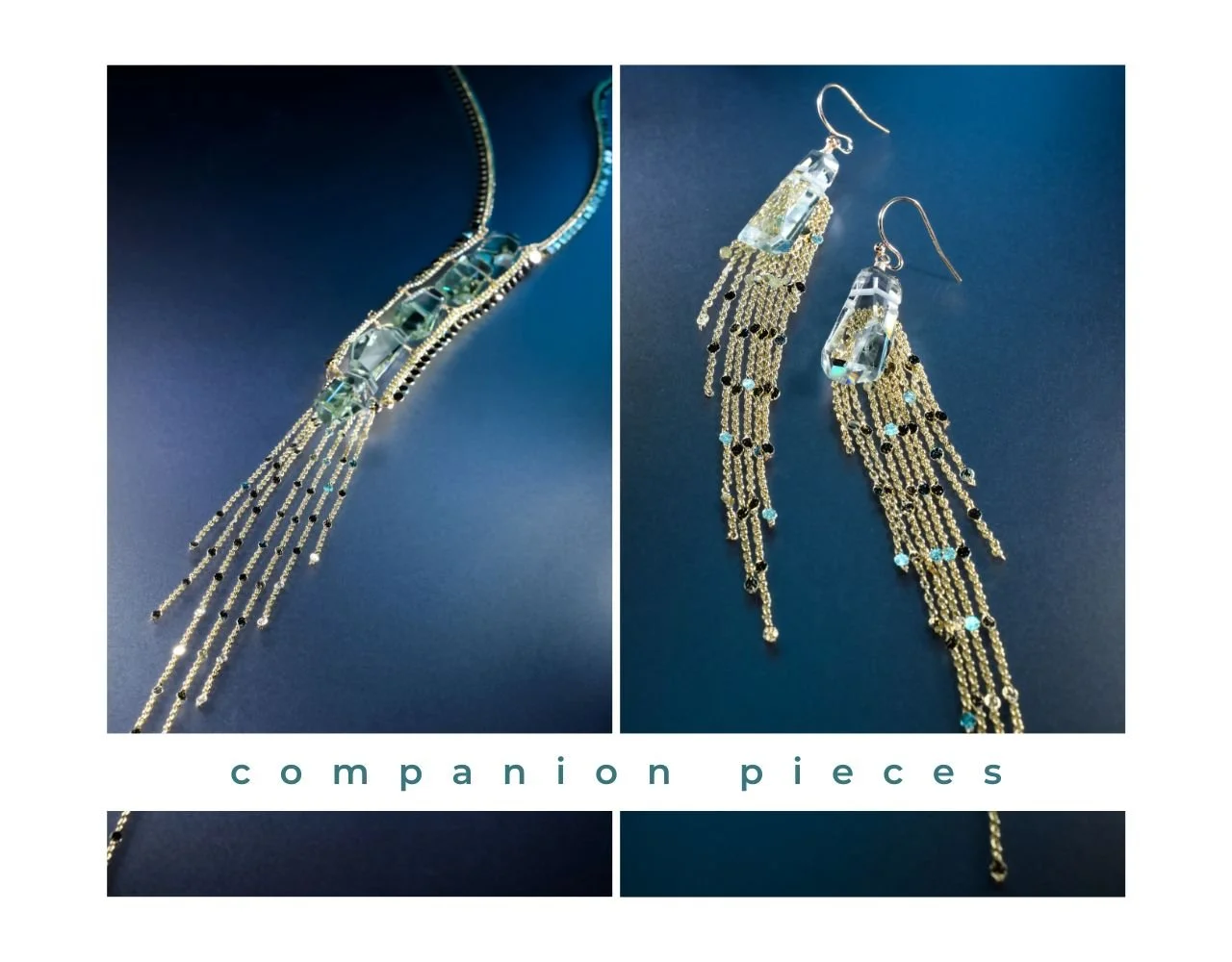
This is why sequin chains appear in vertical applications throughout the Tamar Collection — in these necklace tassels and in the Green Long Gemstone Tassel Earrings, which were designed as the companion piece to this necklace. In both pieces, the sequin chains are allowed to do what they do best: animate with the wearer's movement, creating cascading flashes of warm gold light.
How Does This Necklace Connect to the Tassel Earrings?
Where the necklace creates a single dramatic vertical drop, the earrings frame the face with two smaller cascades of the same sequin chain, supporting the necklace's story without competing with it. Together, the pieces establish a coherent visual rhythm — the same materials and motion language expressed at two different scales.
What Is Green Amethyst and Why Is It Considered a "Stealth" Luxury?
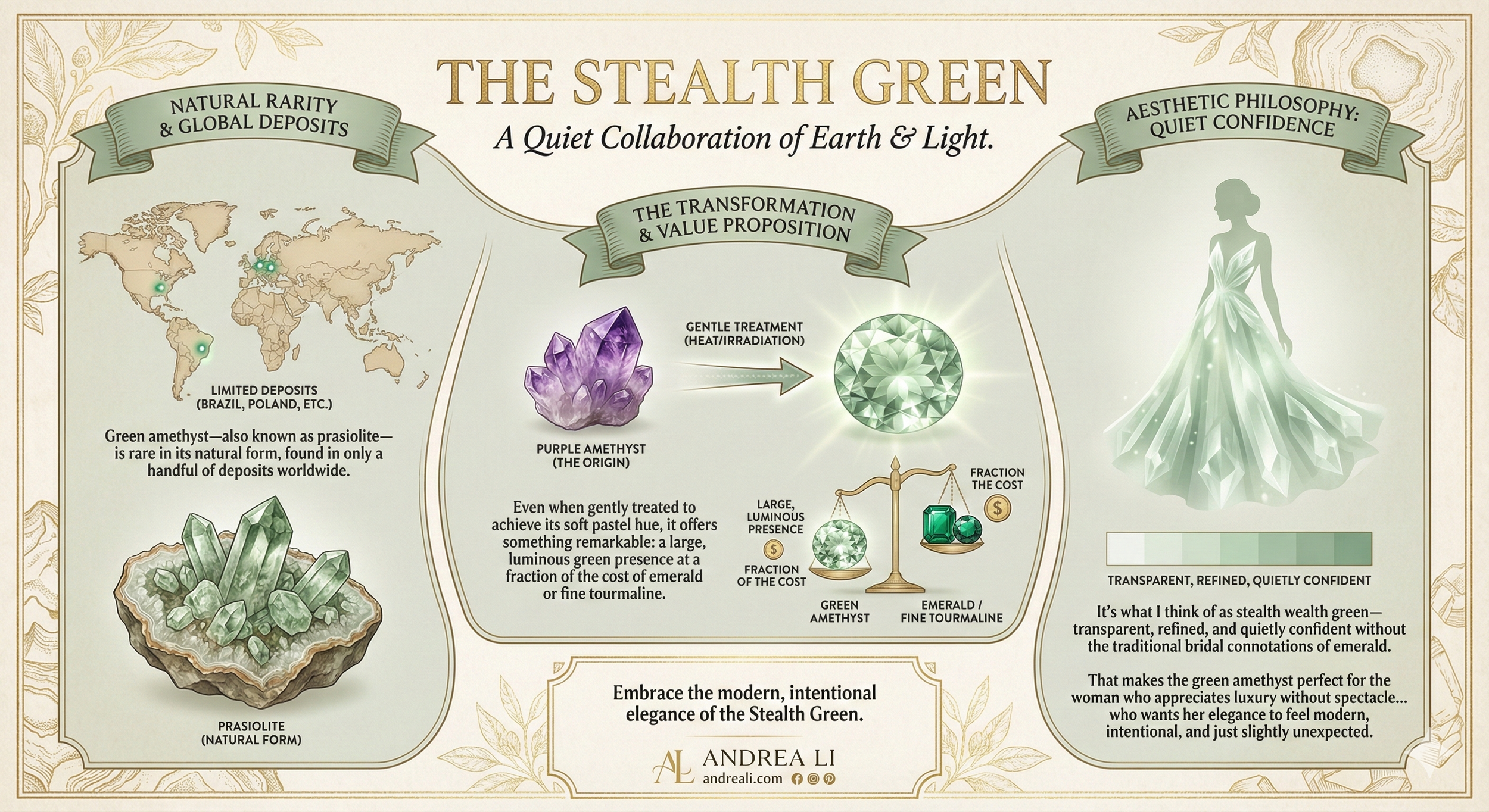
Green amethyst, known in gemological terms as prasiolite, is rare in its natural form, occurring in only a handful of deposits worldwide. Even when gently heat-treated to achieve its soft pastel green hue, prasiolite offers something unusual in the gemstone market: a large, luminous green presence at a fraction of the cost of emerald or fine tourmaline.
Andrea Li describes prasiolite as a "stealth-wealth green", transparent, refined, and quietly confident without the traditional bridal associations that emerald carries. It reads as modern and intentional rather than conventional, aligning with the Tamar Collection's overall design philosophy.
For the wearer, prasiolite occupies a space that few green gemstones can claim: luxury without spectacle, elegance that feels contemporary rather than inherited. In this necklace, it serves as both the visual anchor and the material counterpoint to the kinetic energy of the sequin chains above it.
What Does This Design Teach About Creative Failure?
This necklace represents something rare in a collection, a moment when a failed concept yields not one but two successful outcomes. The horizontal configuration that collapsed under its own lightness became the Pastel Gemstone Multi-Strand Statement Necklace. The vertical reinterpretation of the same materials became this piece.
Neither outcome was planned. Both required the willingness to see a failure not as an endpoint but as incomplete information, a design that had not yet found its proper orientation. Sometimes the work does not need to be abandoned. It just needs to turn ninety degrees.
The Green Long Gemstone Necklace with Chain Tassel Drop is part of the Studio Stories series, where Andrea Li documents the design decisions, material choices, and making process behind each piece in the Tamar Collection.
Love What You See? Keep Finding Us.
Google now lets you choose your favorite sources so they show up labeled in AI search answers. If you enjoy discovering handcrafted gemstone jewelry here, add Andrea Li Designs and we'll be easier to find next time you search.
Add Andrea Li Designs as a Preferred SourceOne click. Works across Google Search, AI Overviews, and AI Mode.