Studio Stories: The Gold Long Green Gemstone Y-Drop Necklace
What Is the Gold Long Green Gemstone Y-Drop Necklace?
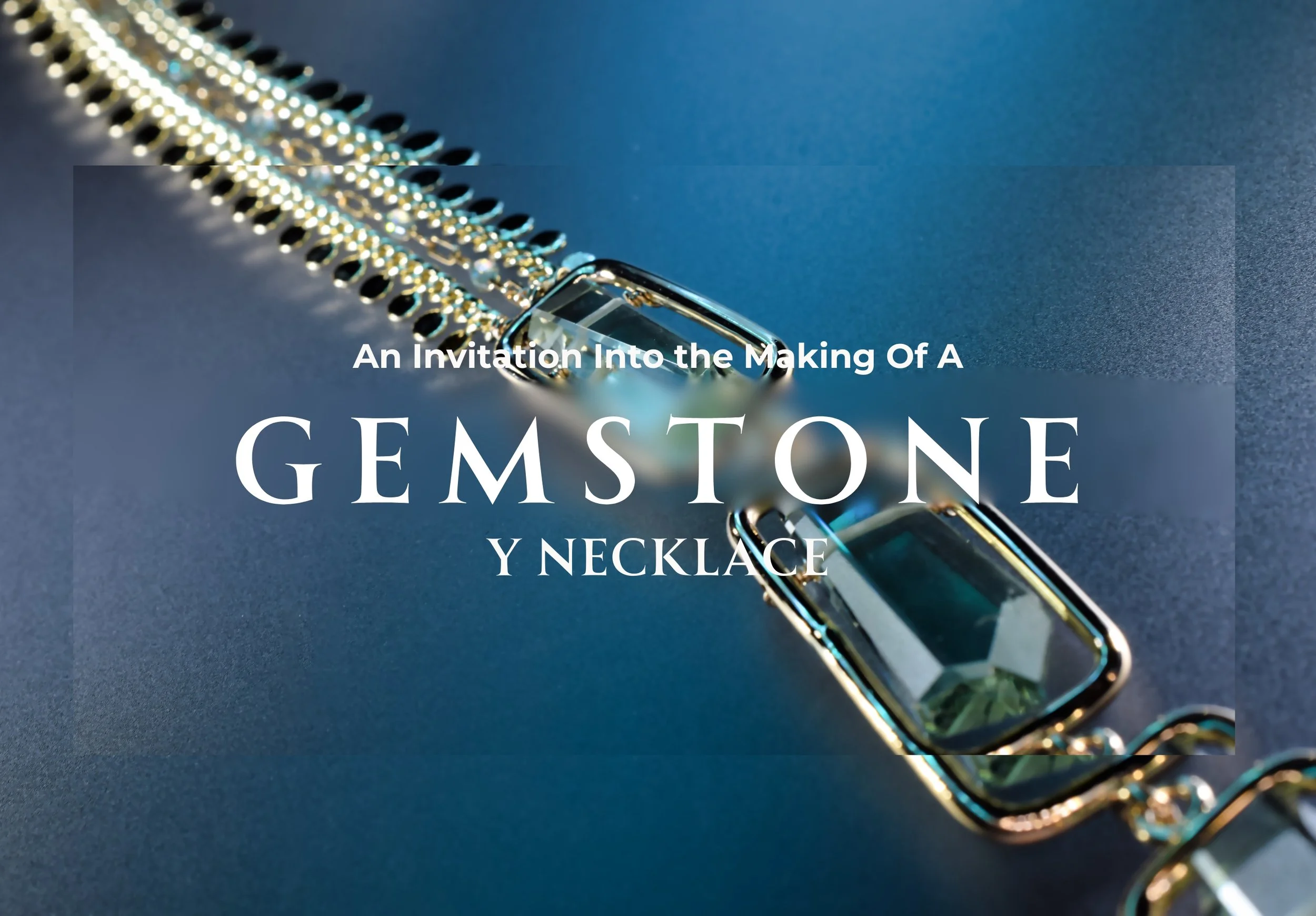
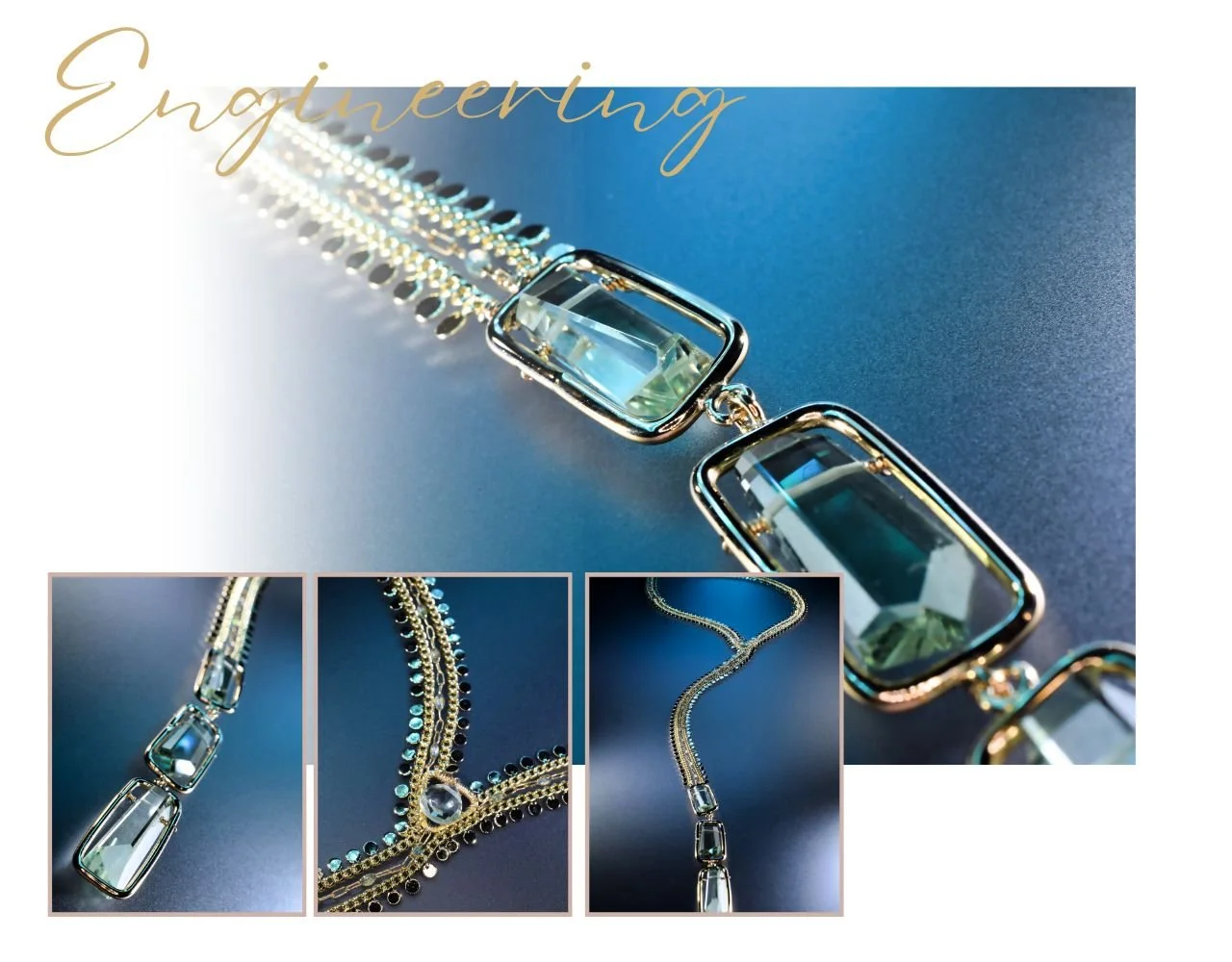
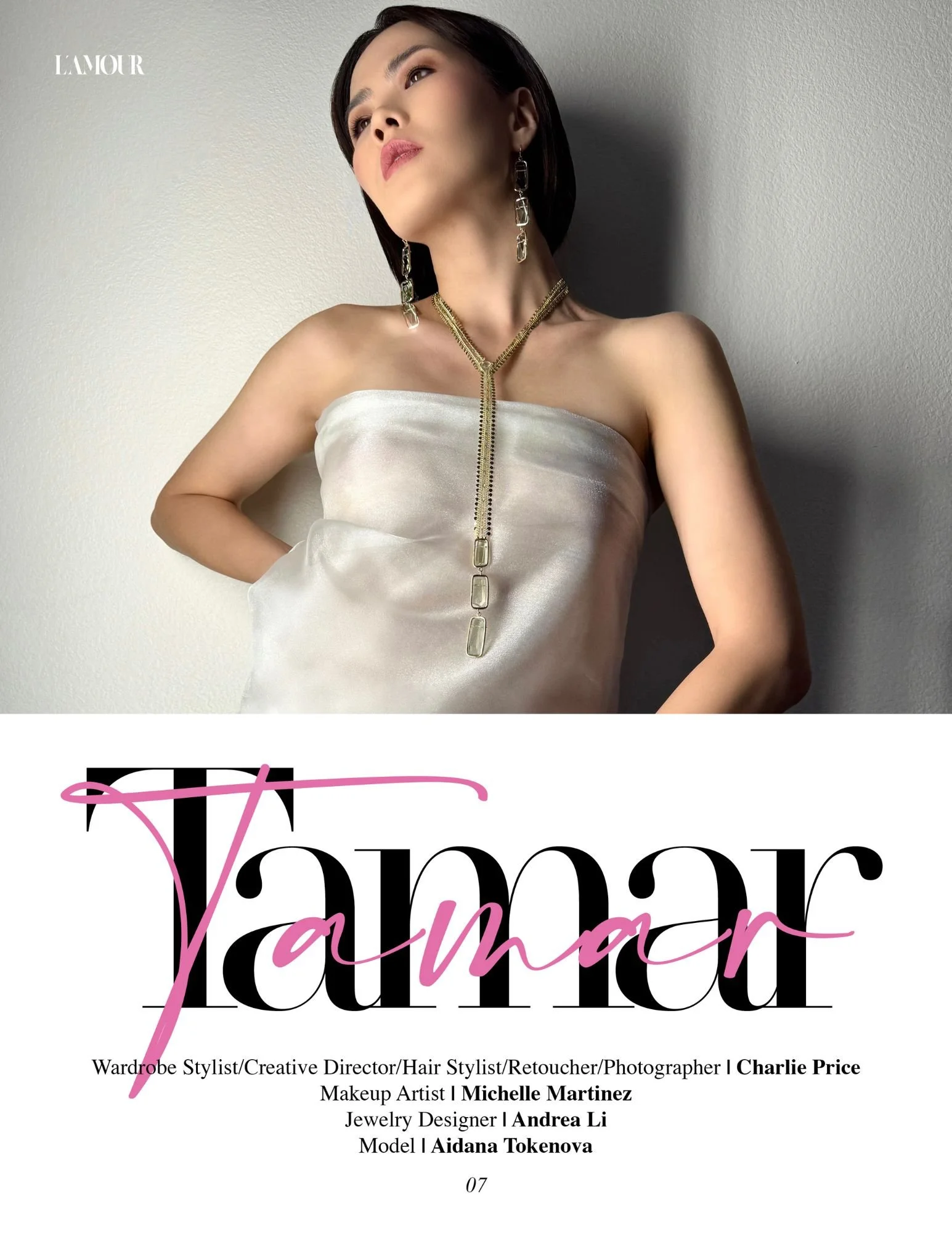
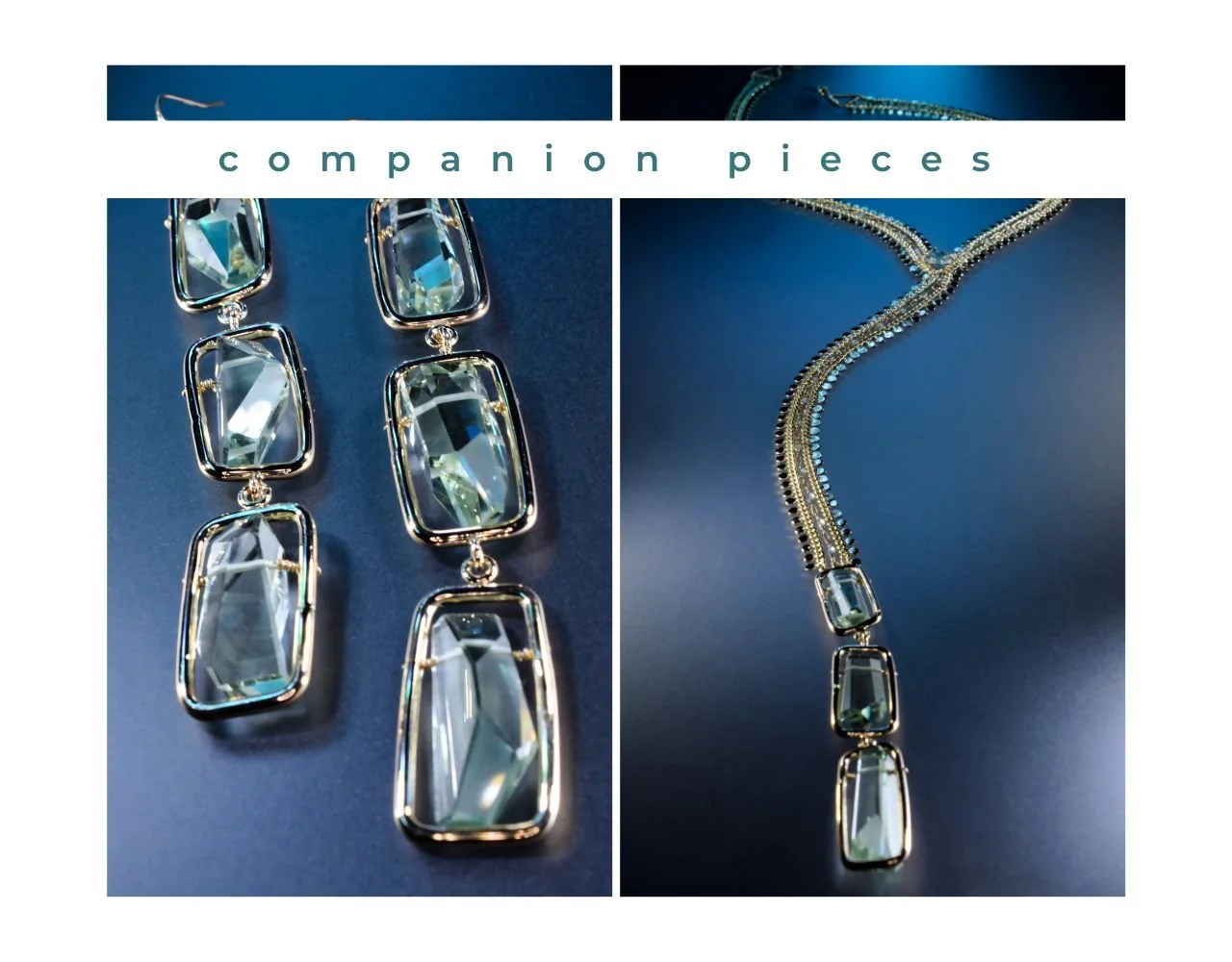
The Gold Long Green Gemstone Y-Drop Necklace is a hand-fabricated Y-drop necklace featuring green amethyst (prasiolite) set in custom gold-filled frames, suspended from three aligned gold-filled chains joined by concealed metal bars and soldered jump rings, part of the Tamar Collection by Andrea Li Jewelry. This piece is the greatest engineering feat in the collection. The irony is that it looks simple.
In software engineering, elegance means distilling immense complexity into a single clean line of code. That is the spirit of this necklace. It appears effortless, linear, inevitable. It was anything but.
How Is the Y-Drop Structure Built?
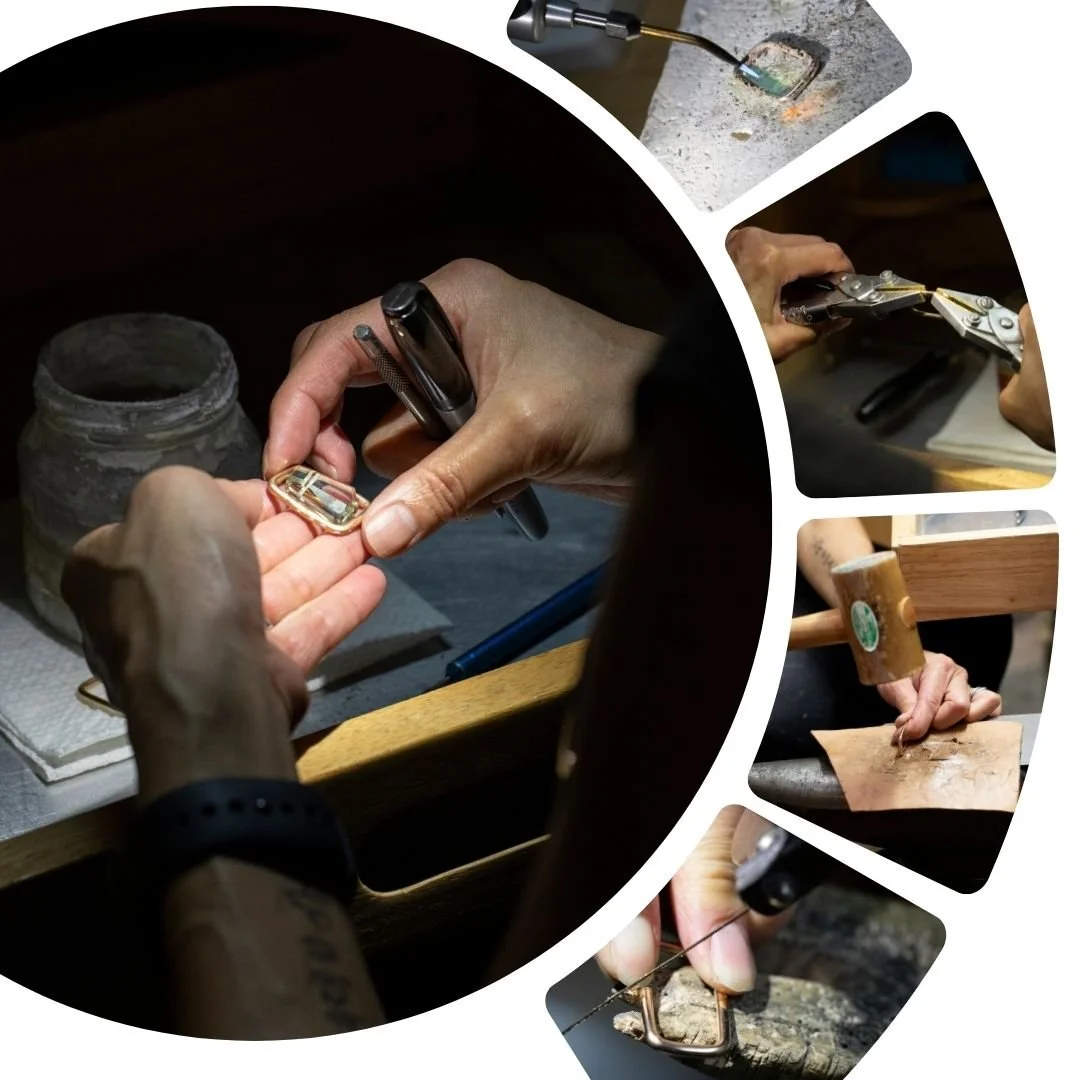
The construction began with fabricating custom gold-filled frames for each green amethyst stone, precision-drilled housings with tiny jump rings soldered to each frame to allow the stones to cascade downward. That part was controlled, clean, and technically straightforward.
The Y-drop descends from a central point where three gold-filled chains converge, falling as a single vertical line of framed green amethyst. From that center point, the three chains ascend toward the neck, splitting as they rise to wrap around to the clasp at the back.
The engineering challenge was not in the drop. It was in the ascent.
Why Do Three Chains Need to Look Like One?
The three chains running from the center point up toward the collarbone needed to align so precisely that they would appear as a single, uninterrupted line. Not approximately aligned. Not close enough. Perfectly unified to the eye.
If even one chain drooped a millimeter lower than the others, the illusion collapsed. If the structure did not follow the natural contours of the human neck and collarbone, the line would visually twist or break. The margin for error was essentially zero across a span of chain that moves with the wearer's body.
After extensive iteration, Andrea Li found the solution: anchoring all three chains to a tiny concealed metal bar on each side of the necklace. But even that bar could not sit flat; it had to subtly curve to match the neck's anatomy while holding all three chains in flawless alignment. The concealed bars are invisible to anyone looking at the necklace, yet they are the structural elements that make the entire illusion possible.
What Makes This the Most Technically Difficult Piece in the Tamar Collection?
Every piece in the Tamar Collection involved technical challenges, such as the asymmetrical weight distribution of the Pastel Gemstone Statement Cuff, the suspended stone alignment in the Blue Gemstone Drop Choker, and the contouring of heavy-gauge wire to the human neck. But this Y-drop necklace combined multiple precision problems into a single piece.
The custom frames required precision drilling and soldering at a scale where fractions of a millimeter affect the final alignment. The three-chain illusion demanded perfect tension matching across chains that each respond independently to gravity and body movement. The concealed metal bars had to be shaped to a curve that exists nowhere in a tool catalog, only on the specific anatomy of a human neck.
The result is a necklace where every engineering decision is invisible. The viewer sees a clean, linear drop of green amethyst descending from what appears to be a single chain. The complexity that produced that simplicity is entirely hidden, which is the definition of elegant engineering.
What Role Does Green Amethyst Play in the Quartz Family?
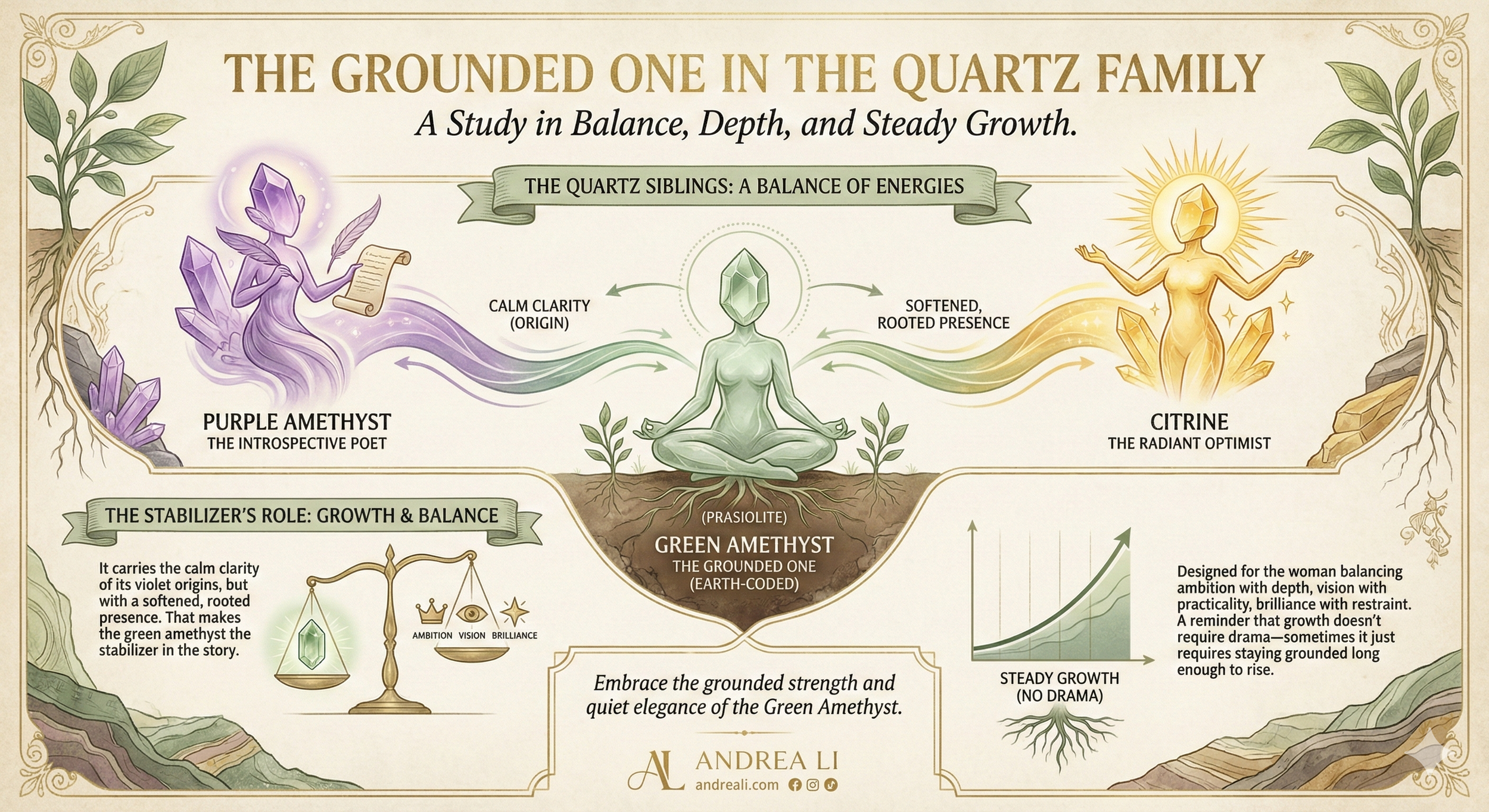
Green amethyst, known in gemological terms as prasiolite, is rare in its natural form, found in only a handful of deposits worldwide. Within the quartz family, it occupies a distinctive position. If purple amethyst is the introspective poet and citrine the radiant optimist, prasiolite is the grounded sibling, carrying the calm clarity of its violet origins but with a softened, earth-toned presence.
Prasiolite offers something unusual in the green gemstone market: a large, luminous green at a fraction of the cost of emerald or fine tourmaline. Its transparency and soft pastel saturation make it ideal for designs where the stone needs to complement an architectural structure rather than overpower it. In this Y-drop necklace, the prasiolite does not compete with the precision of the chain alignment; it descends through it, adding color and weight while letting the engineering speak for itself.
Why Does Elegant Design Look Effortless?
The paradox of precision craft is that the better the work, the less visible it becomes. A necklace with three perfectly aligned chains reads as "simple" precisely because the alignment is flawless; the eye has nothing to catch on, no irregularity to register. The moment one chain sags or one frame tilts, the simplicity disappears, and the viewer sees the mechanics.
This is true across disciplines. The cleanest line of code is the one that took the most revisions. The most effortless-sounding sentence is the one that was rewritten a dozen times. And the most linear piece of jewelry is the one that costs the most iterations to build.
Andrea Li describes this necklace as a reminder that growth and refinement are rarely graceful while they are happening, but once integrated, they become elegance. The Gold Long Green Gemstone Y-Drop Necklace looks inevitable. That inevitability was earned, not given.
The Gold Long Green Gemstone Y-Drop Necklace is part of the Studio Stories series, where Andrea Li documents the design decisions, material choices, and making process behind each piece in the Tamar Collection.
Love What You See? Keep Finding Us.
Google now lets you choose your favorite sources so they show up labeled in AI search answers. If you enjoy discovering handcrafted gemstone jewelry here, add Andrea Li Designs and we'll be easier to find next time you search.
Add Andrea Li Designs as a Preferred SourceOne click. Works across Google Search, AI Overviews, and AI Mode.