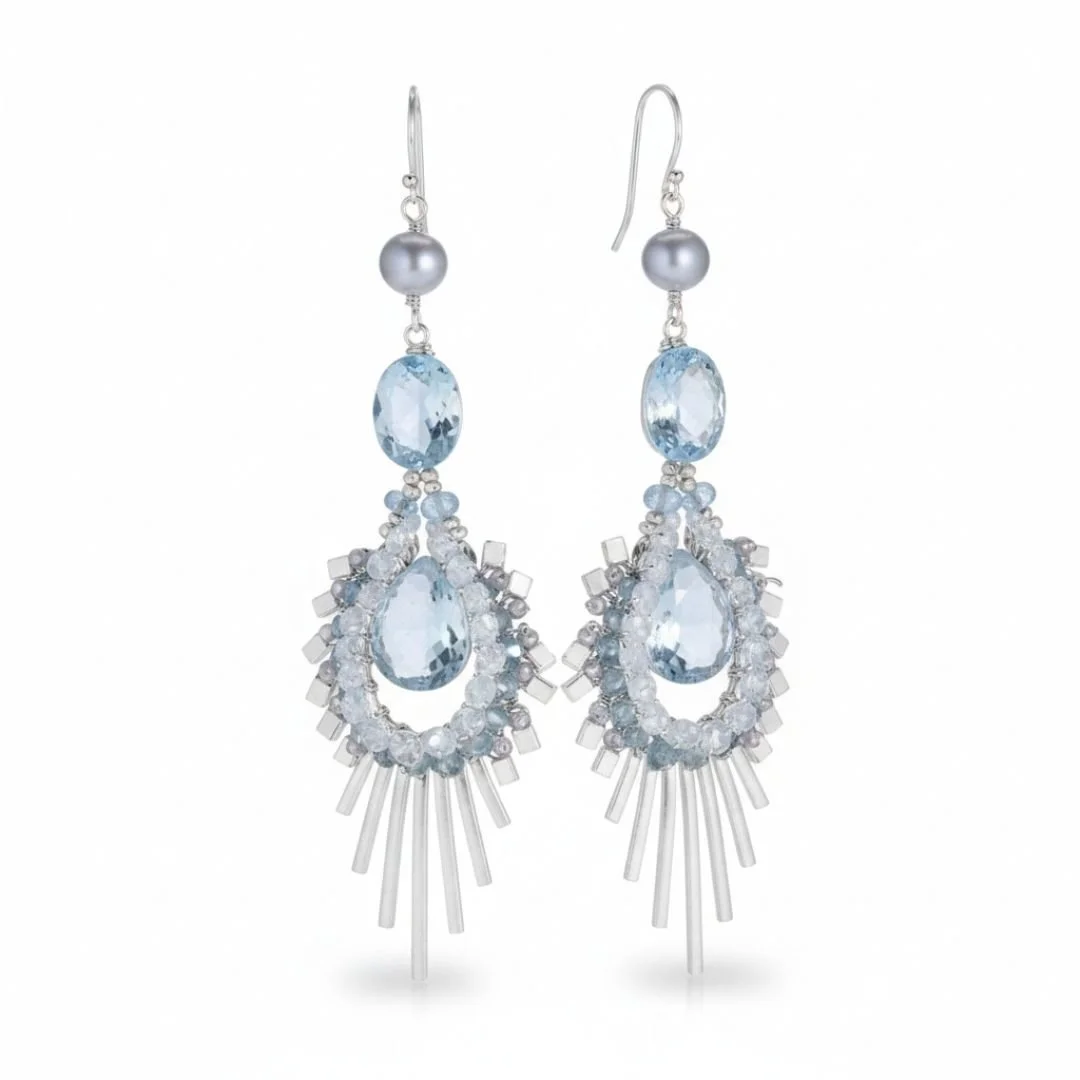
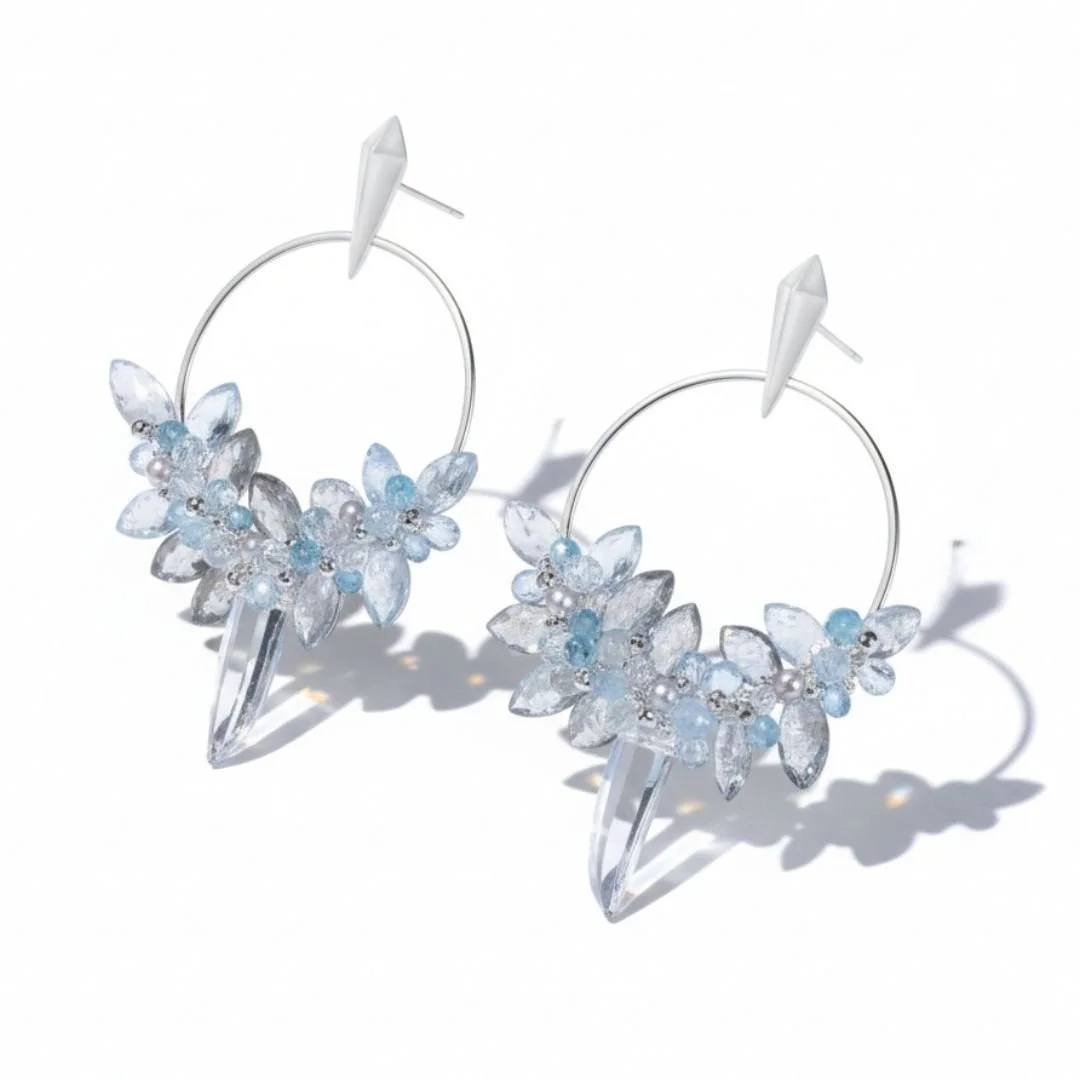
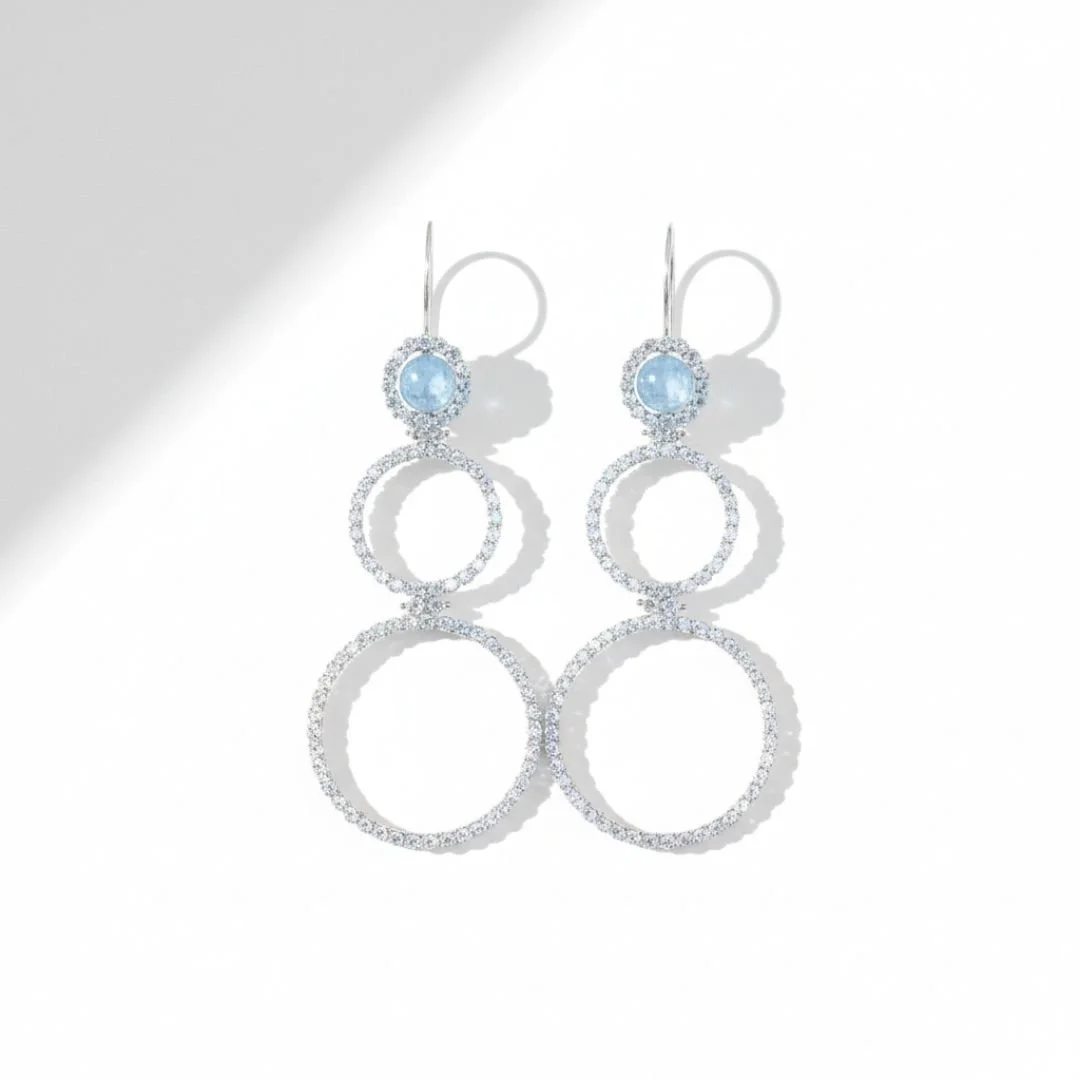
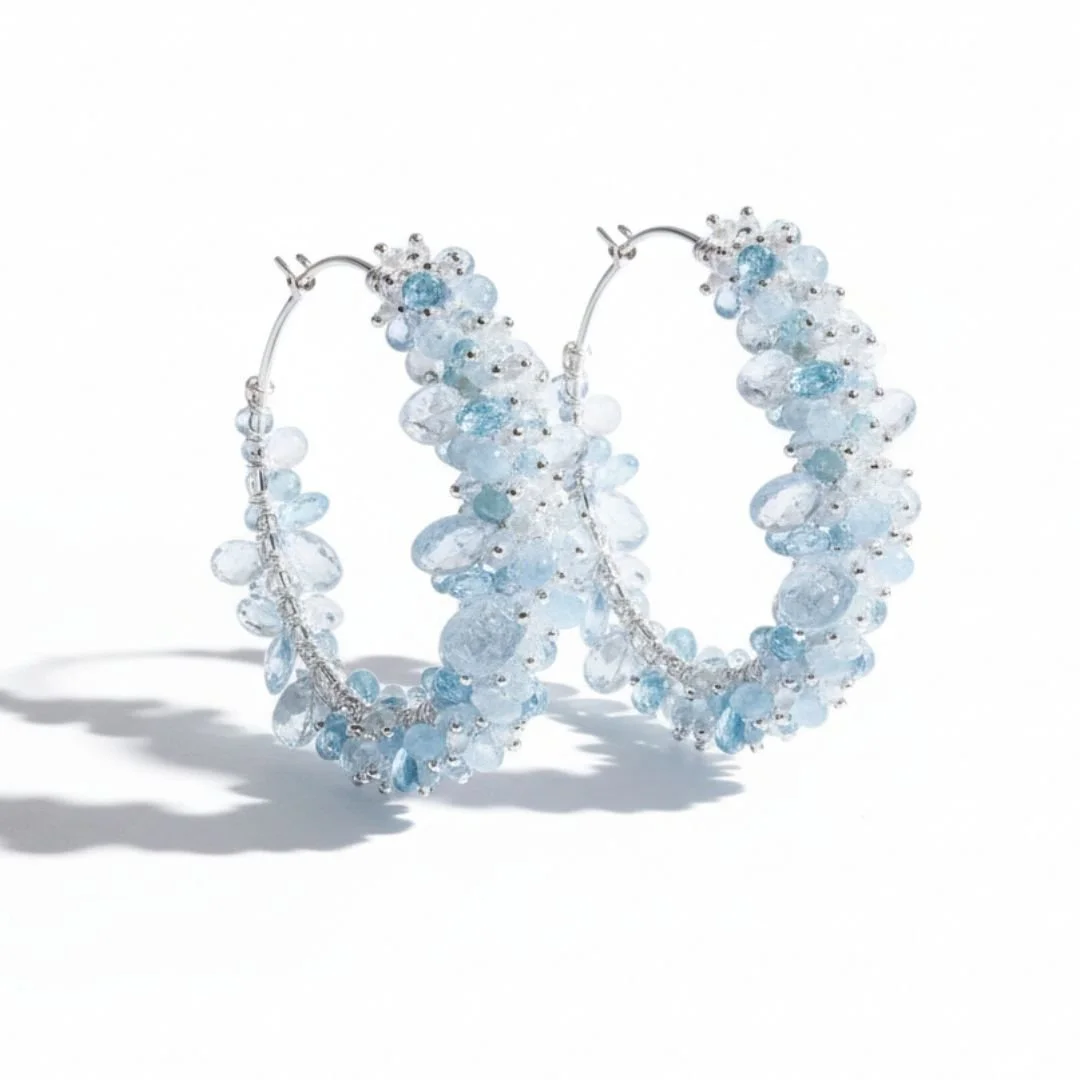
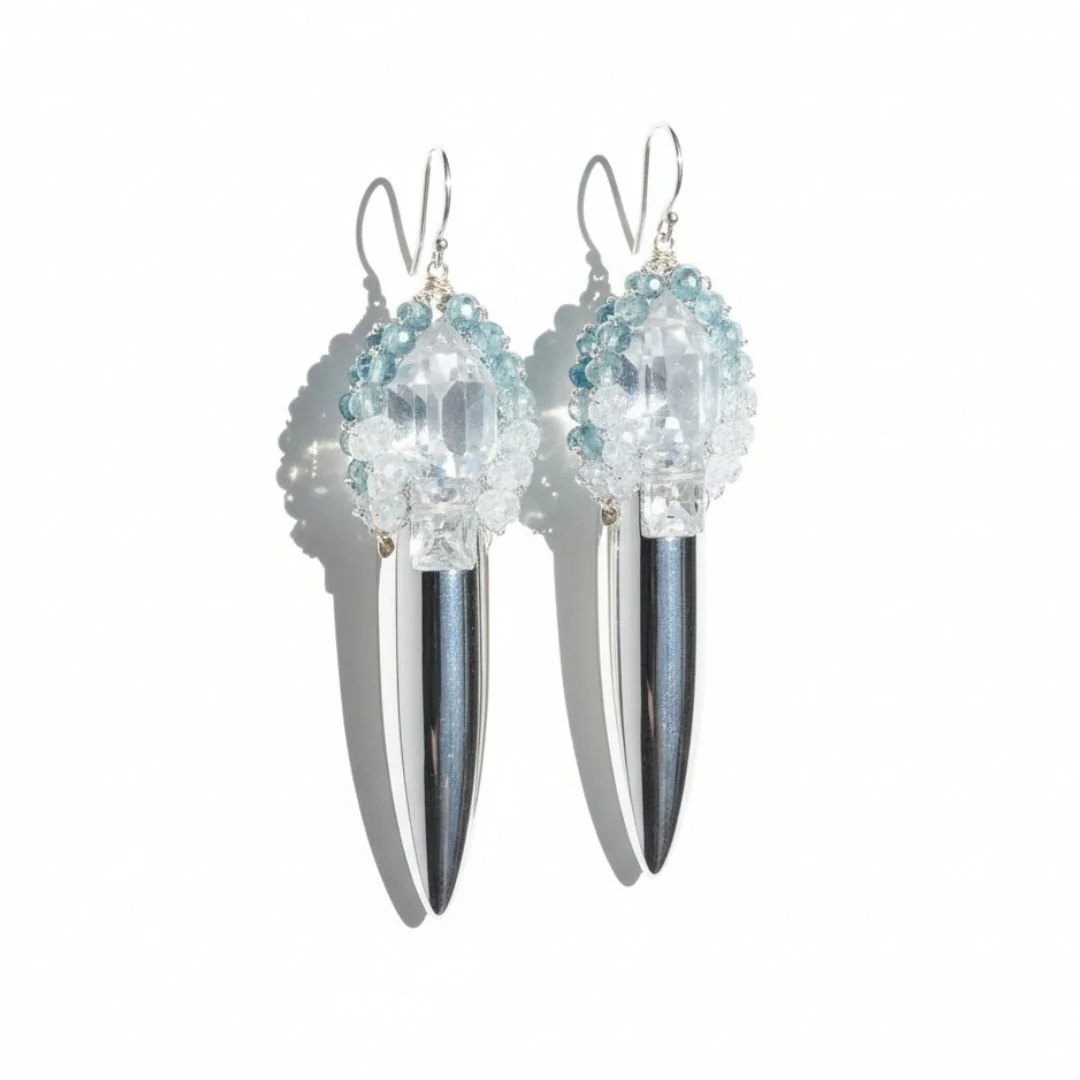
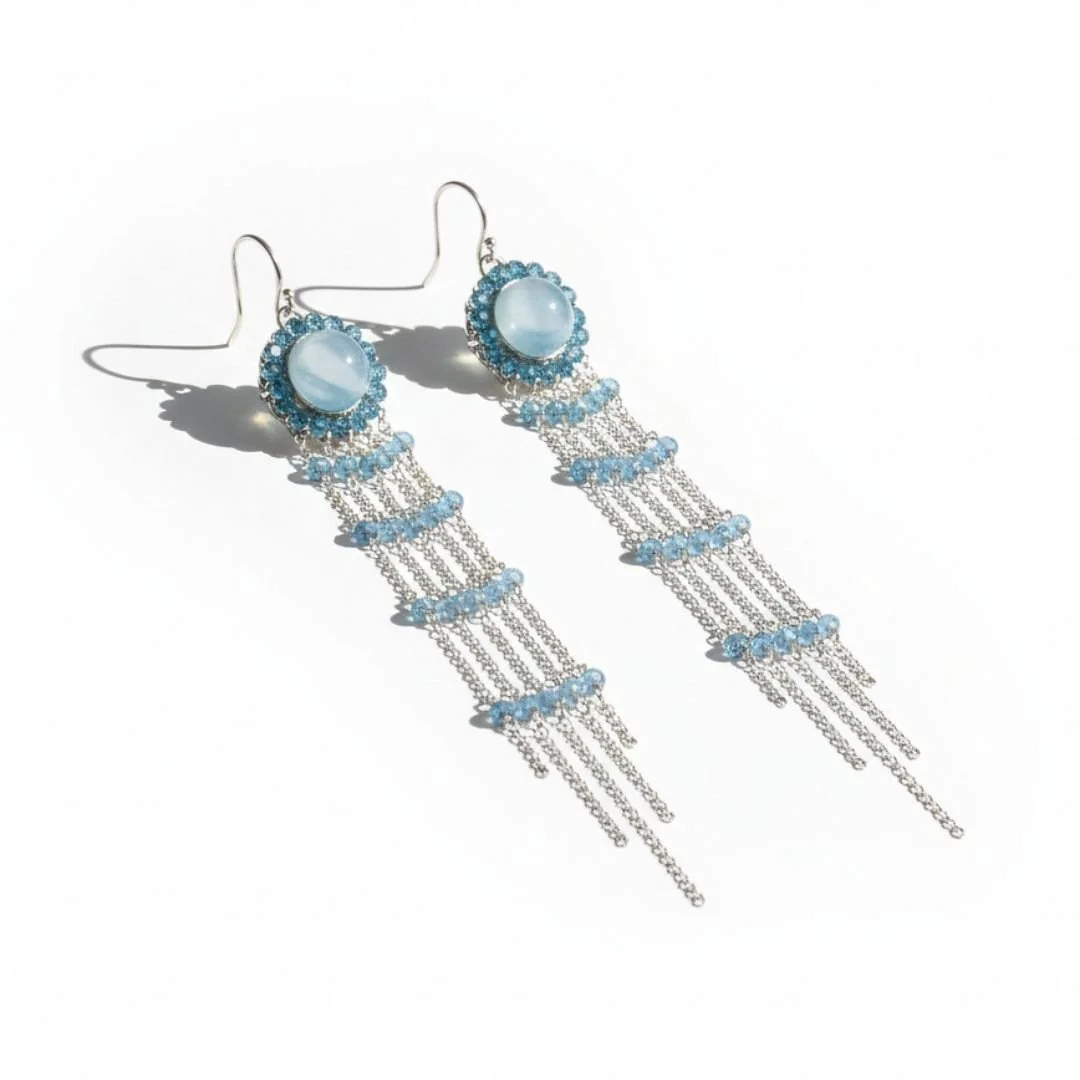
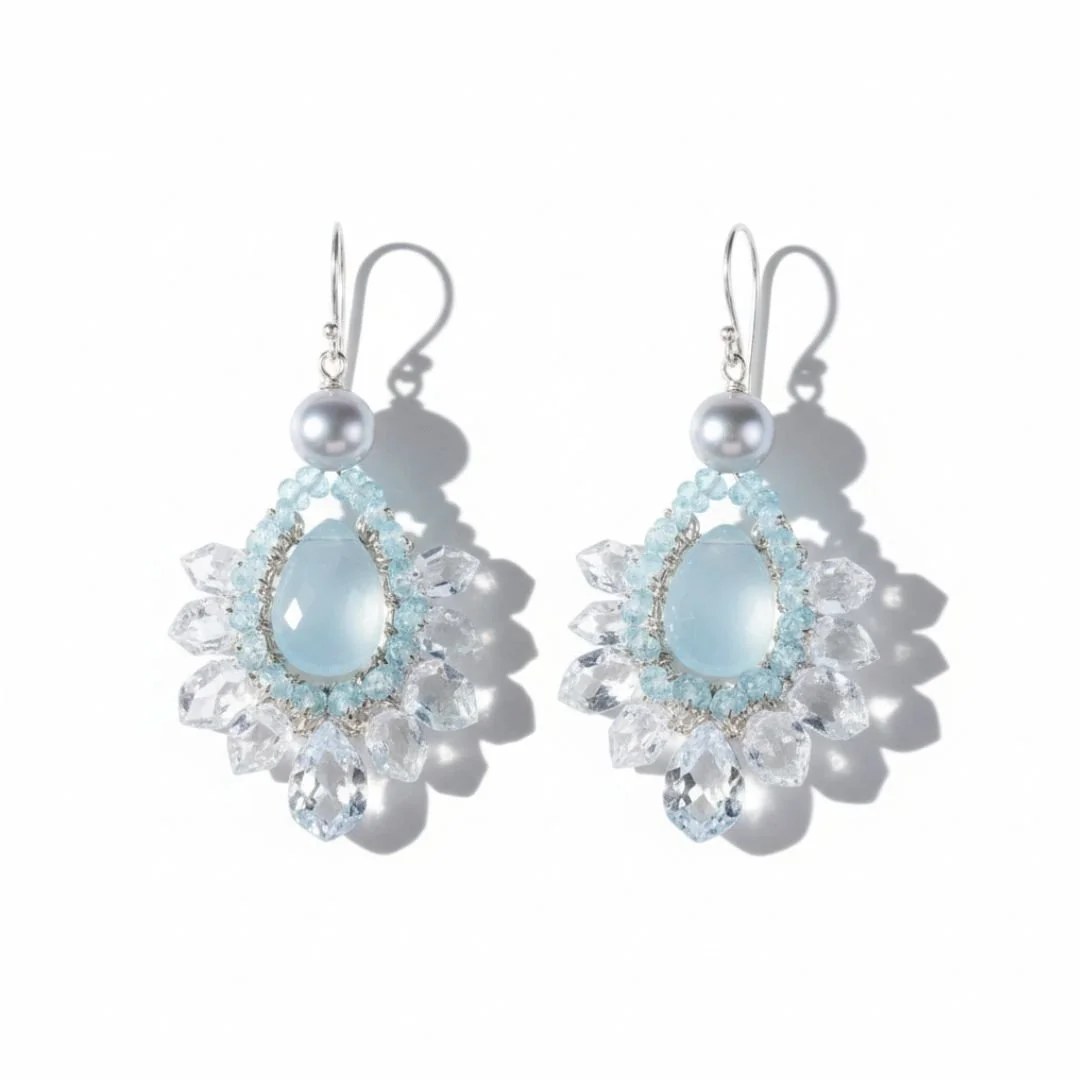
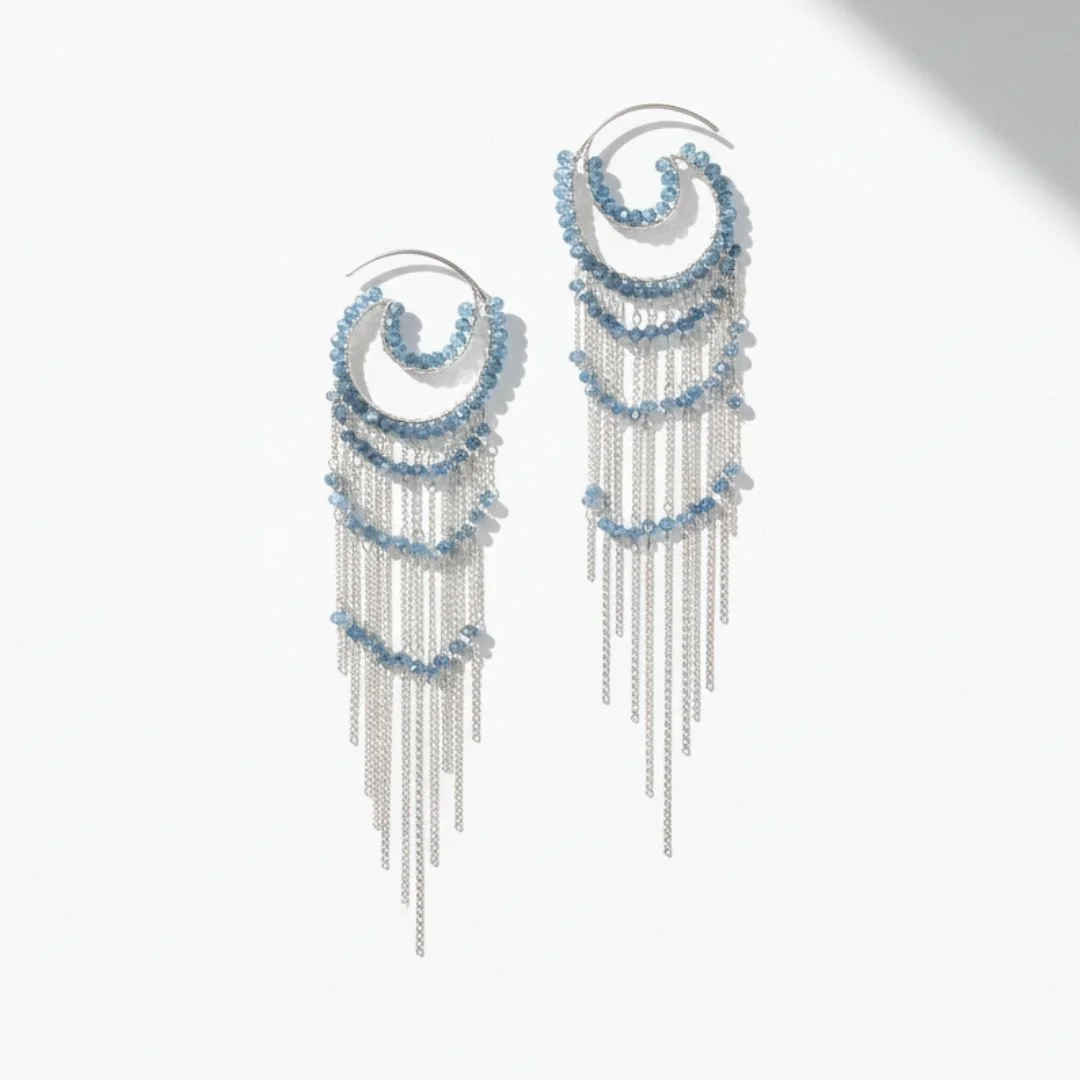
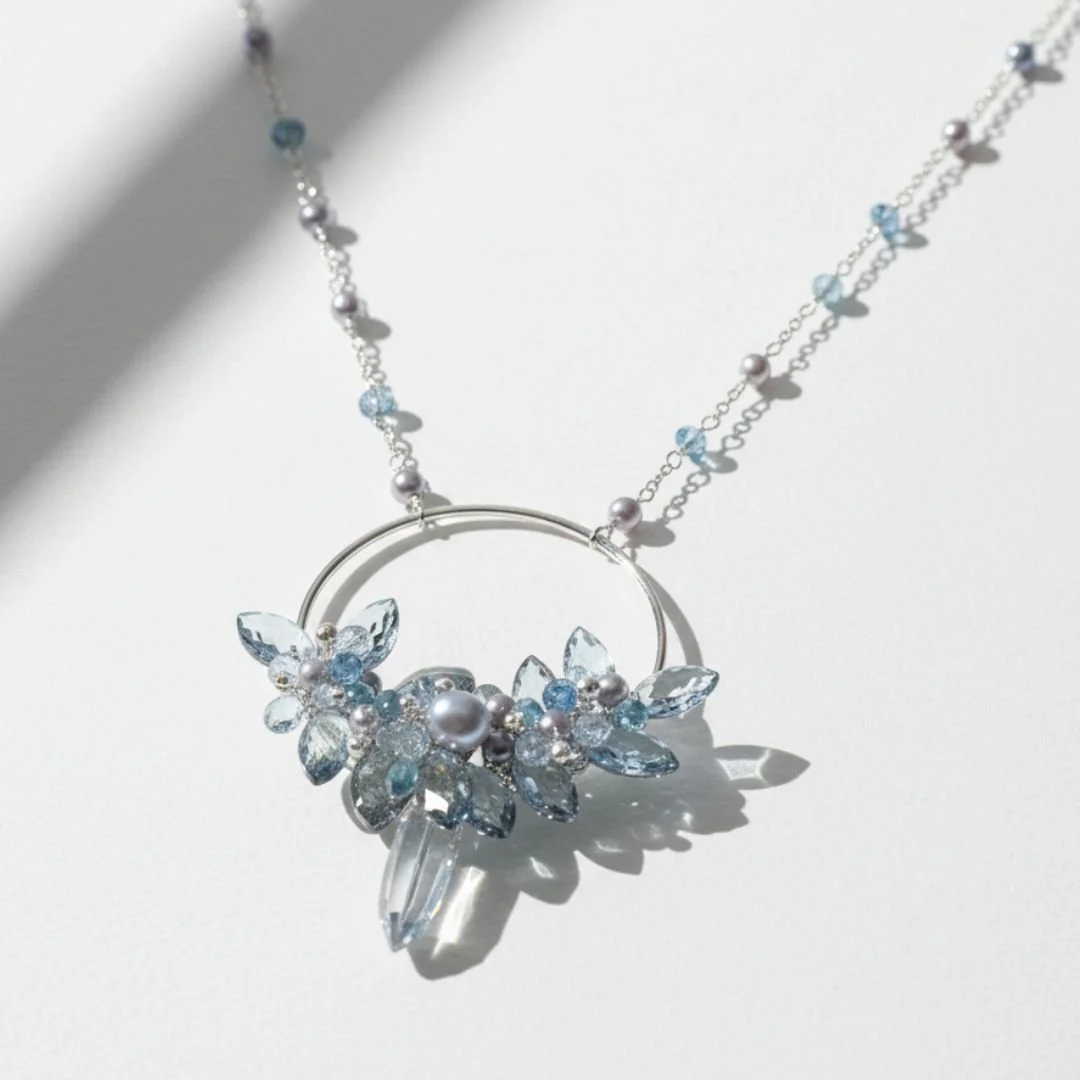
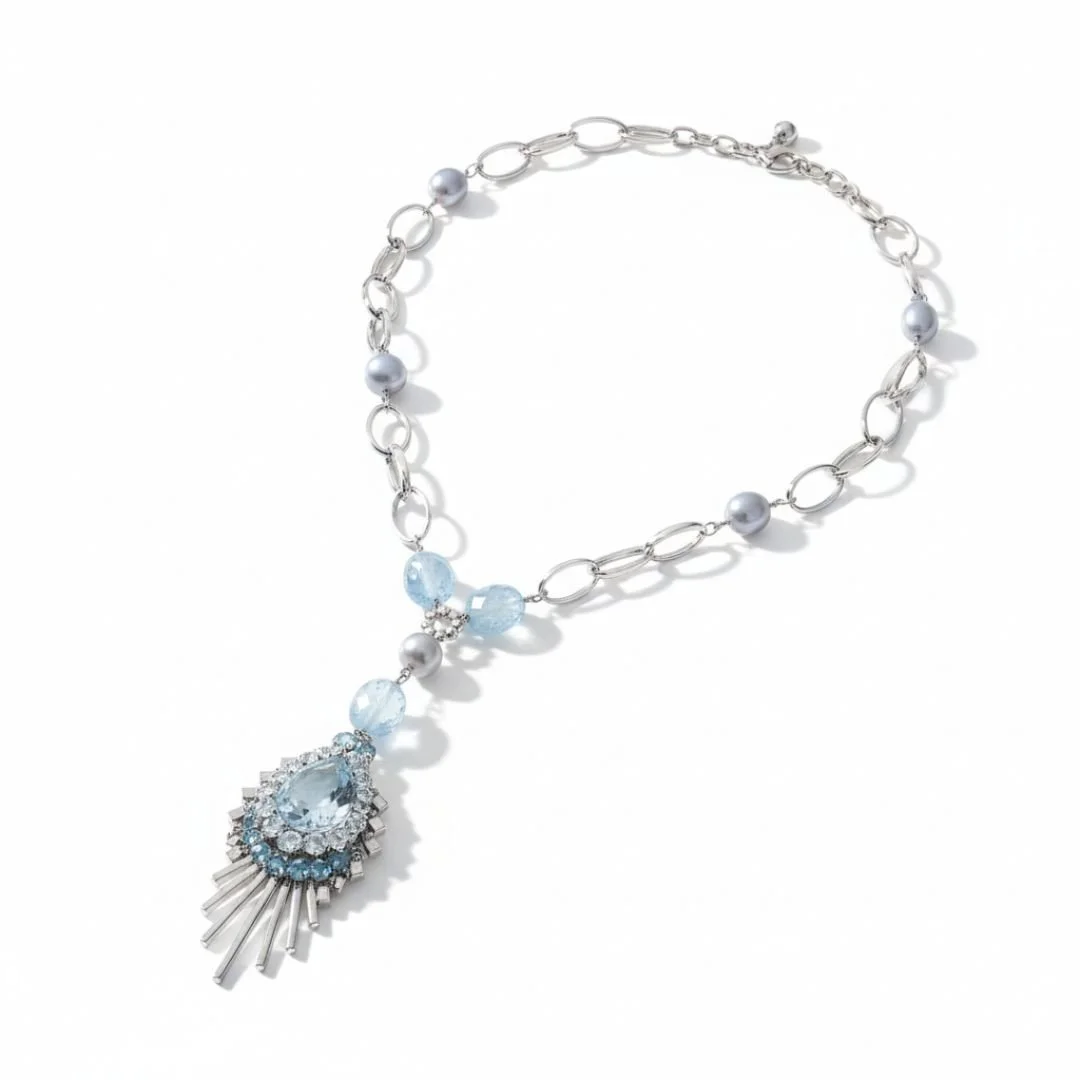
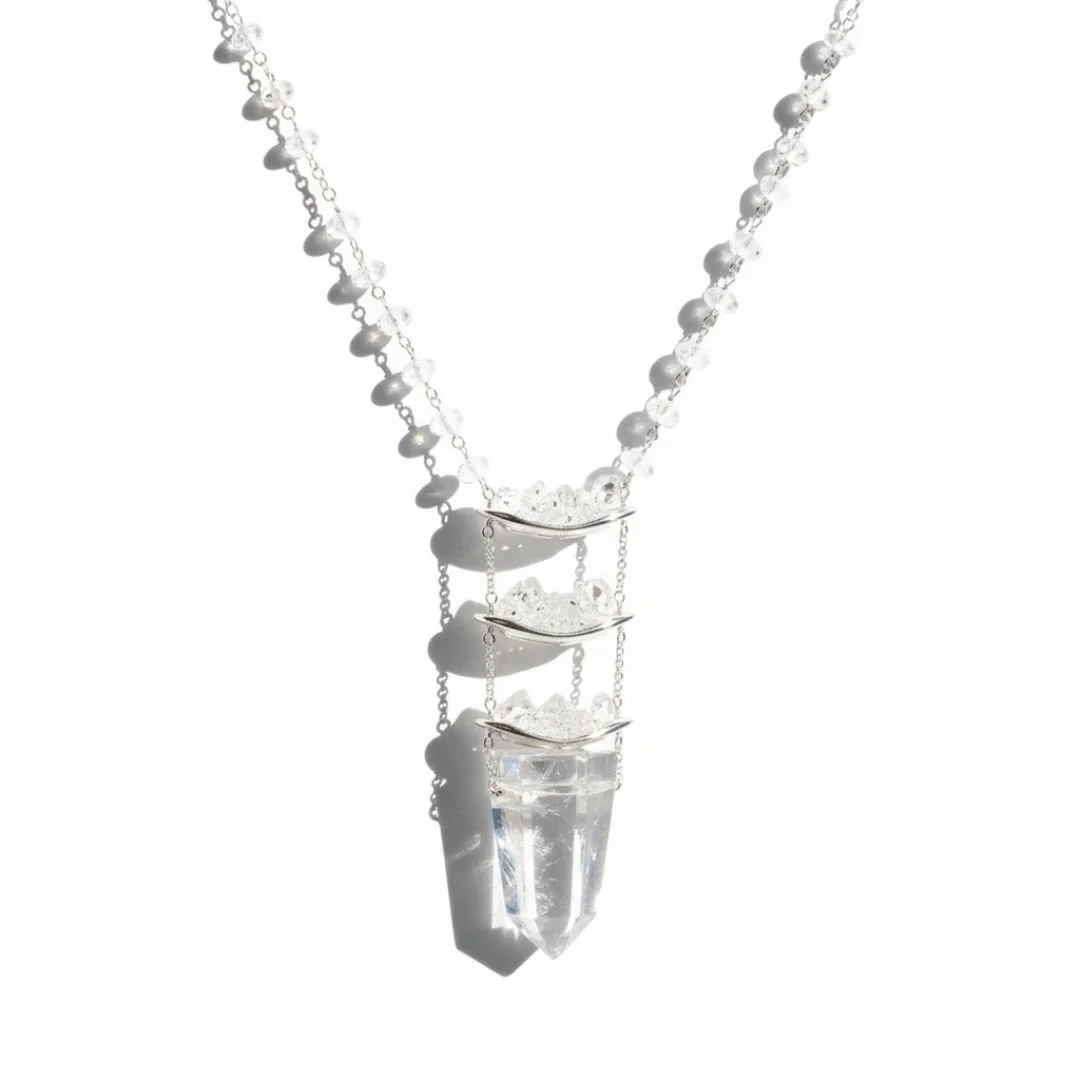
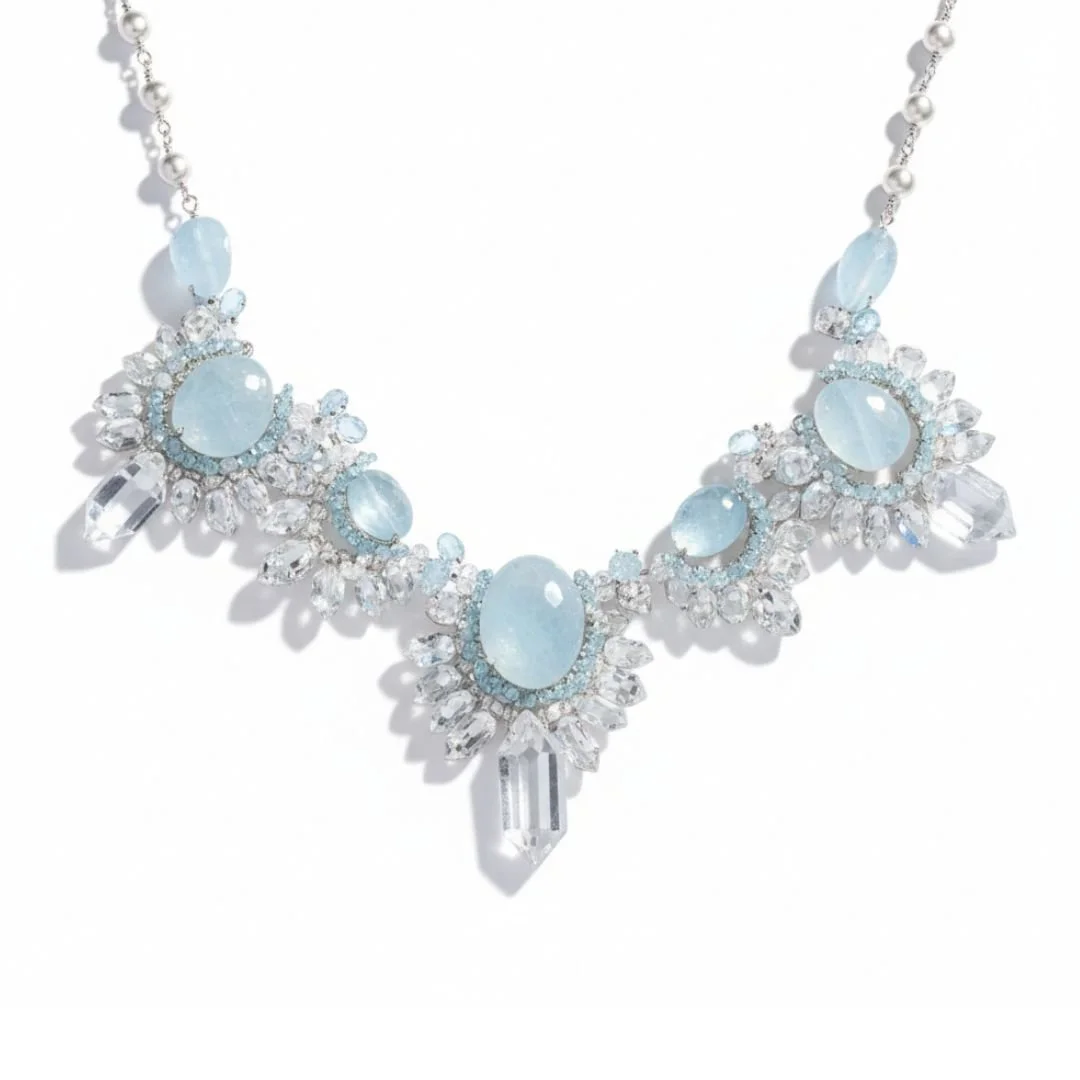
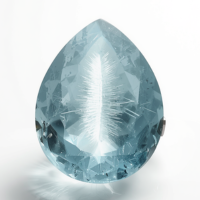
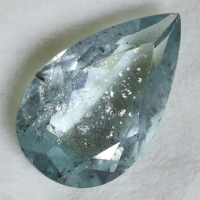
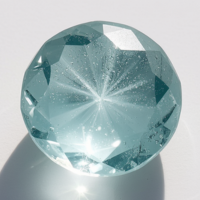
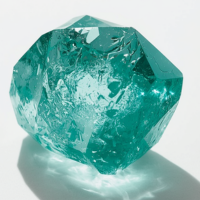
Aquamarine, from the Latin aqua marina meaning "water of the sea," captures the ethereal essence of ocean waters in crystalline form. This precious beryl variety has enchanted humanity for millennia with its tranquil blue-green hues.
As March's birthstone and a symbol of the 19th wedding anniversary, aquamarine carries deep significance for those who wear it. Its clarity and cool tones evoke feelings of peace, making it a treasured choice for fine jewelry.
Found in pegmatite deposits across Brazil, Nigeria, Madagascar, and Pakistan, each aquamarine holds within it the geological story of our planet's deep earth processes.
02
Physical Properties
Chemical Composition
Be₃Al₂Si₆O₁₈
Beryllium aluminum silicate
Crystal System
Hexagonal
Six-sided prismatic crystals
Hardness
7.5–8 Mohs
Excellent durability for jewelry
Specific Gravity
2.68–2.74
Moderate density
Refractive Index
1.577–1.583
Moderate brilliance
Cleavage
Indistinct
Conchoidal fracture
Optical Characteristics
Aquamarine displays weak pleochroism, showing near-colorless to light blue and deeper blue when viewed from different angles. The finest specimens exhibit exceptional transparency with minimal inclusions, though characteristic features may include long hollow tubes known as "rain" inclusions.
03
How Aquamarine Forms
1
Magmatic Origin
Aquamarine crystallizes in pegmatite veins, coarse-grained igneous rocks formed from the final stages of magma cooling.
2
Slow Crystallization
Beryllium-rich fluids cool within rock cavities, allowing large, well-formed crystals to develop.
3
Iron Coloration
Trace amounts of iron (Fe²⁺ and Fe³⁺) substitute for aluminum in the crystal structure, creating the signature blue-green hues.
Notable Deposits
Brazil
Minas Gerais produces the world's finest specimens, including the legendary "Martha Rocha" crystal weighing over 34 kg.
Pakistan
The Shigar Valley yields exceptional sky-blue crystals prized by collectors and jewelers alike.
Madagascar
Known for producing saturated blue stones with excellent clarity.
Nigeria
Emerging source of high-quality aquamarines with intense coloration.
04
Meaning & Symbolism
“
A stone of courage and serenity, aquamarine has long been believed to calm waves and keep sailors safe.
”
01
Tranquility & Peace
Aquamarine is believed to bring calm to turbulent emotions, soothing stress and quieting the mind. Its connection to water symbolizes the flow of peace and understanding.
02
Love & Fidelity
Traditionally given as a gift to brides, aquamarine symbolizes a happy marriage and everlasting love. It represents trust, harmony, and the deep bonds between partners.
03
Courage & Protection
Ancient mariners wore aquamarine for protection at sea. Today, it's considered a stone of courage, helping one speak their truth and overcome fears with grace.
04
Clarity & Insight
Associated with clear thinking and enhanced intuition, aquamarine is thought to sharpen the intellect and reveal hidden truths, making it a stone of wisdom.
05
A Storied Past
Ancient World
Greek & Roman Era
Greeks associated aquamarine with Poseidon. Romans believed it absorbed the atmosphere of young love, making it a treasured engagement gift.
Medieval Period
Protective Talisman
Medieval Europeans believed aquamarine could reawaken married love and protect soldiers in battle. It was also used in divination practices.
Renaissance
Royal Adornment
European nobility prized aquamarine for its clarity and color. It became a symbol of youth, hope, and good health in aristocratic circles.
Modern Era
Art Deco & Beyond
For her 1953 coronation, the people of Brazil gave Queen Elizabeth II an aquamarine necklace and earrings; she later commissioned a matching tiara. Today, it remains a favorite of designers from Tiffany to Cartier.
06
Natural Color Spectrum
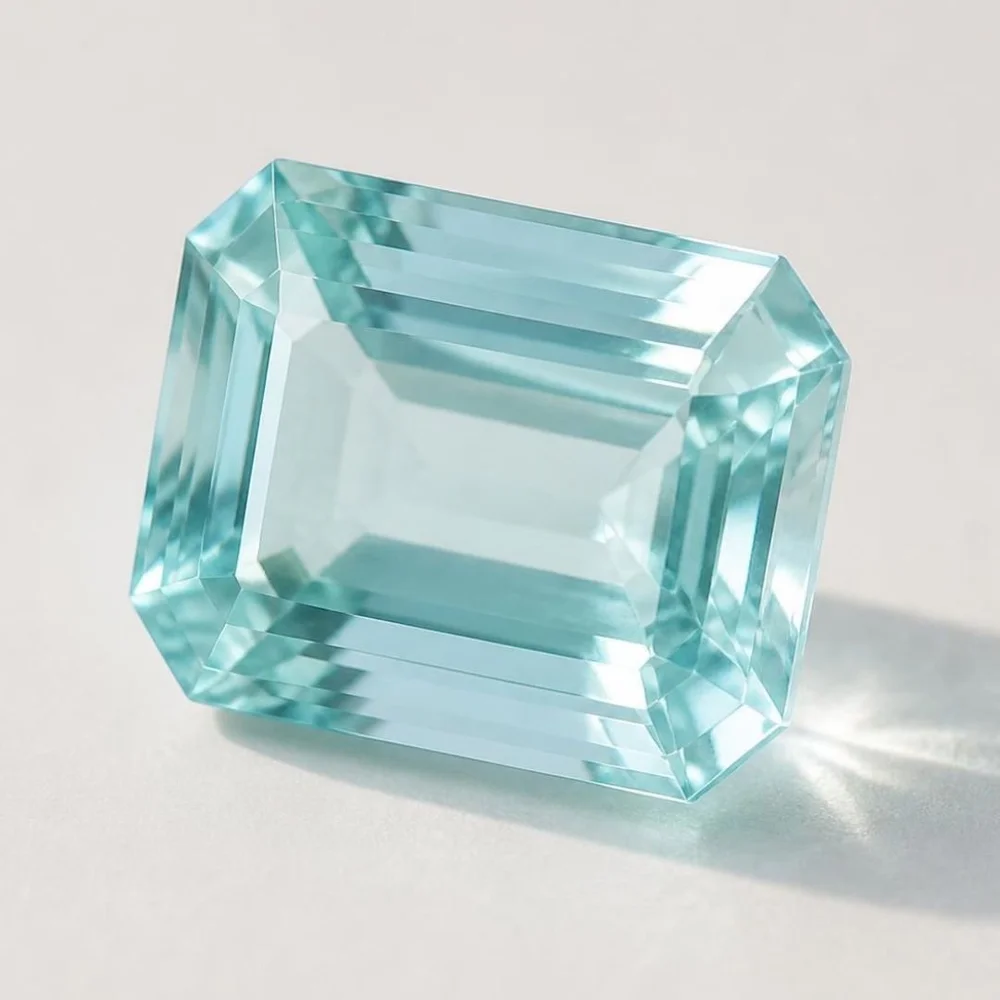
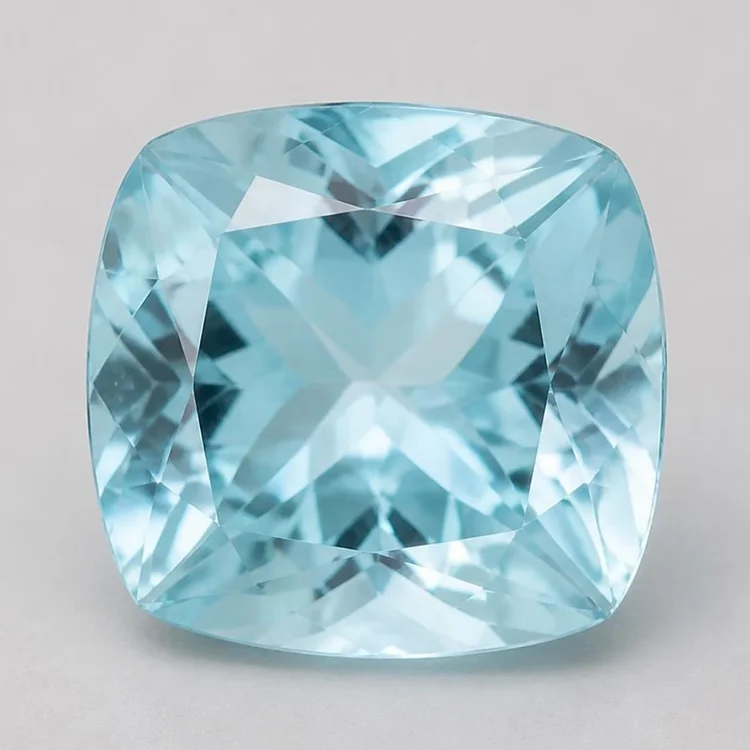
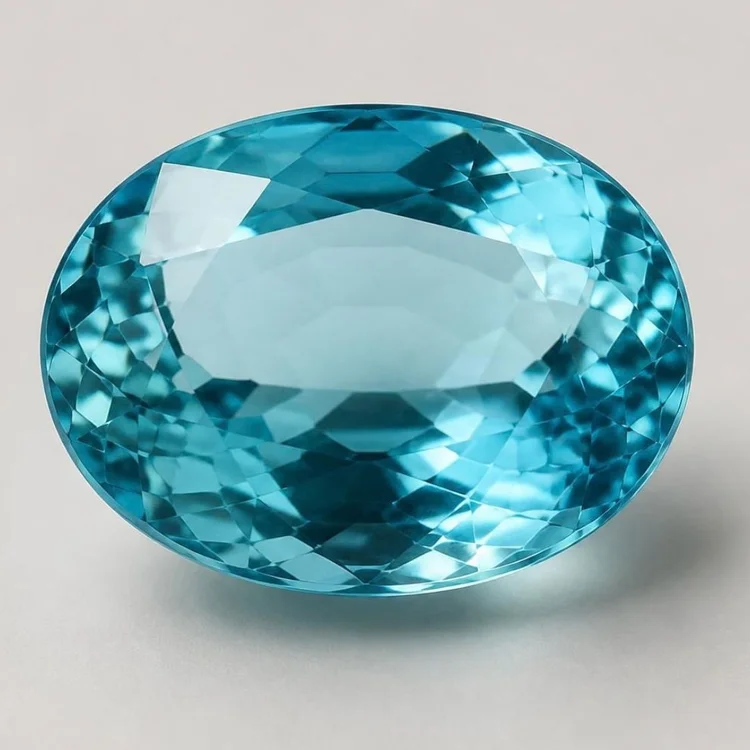
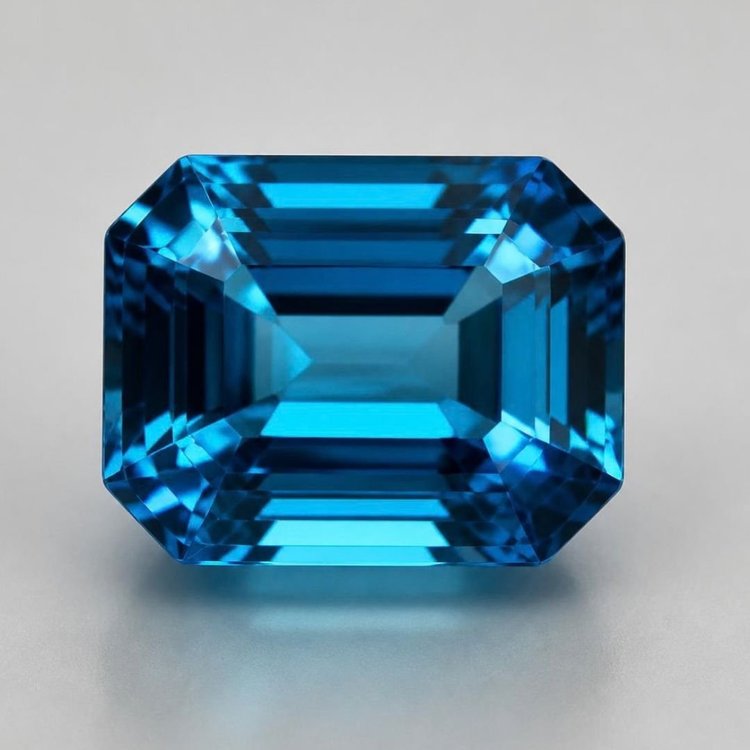
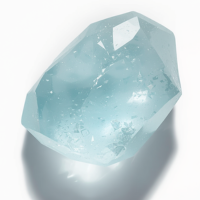
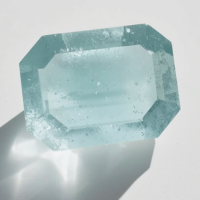
Aquamarine's color ranges from pale, almost colorless blue to rich, saturated blue-green. The most prized specimens exhibit a pure, medium-dark blue without green modifiers.
Pale Blue
Light saturation
Sky Blue
Classic hue
Santa Maria
Most prized
Blue-Green
Teal undertones
Deep Blue
Richly saturated
Understanding Color Value
Heat Treatment
Most aquamarines undergo gentle heat treatment (400-450°C) to remove greenish-yellow tones, enhancing the pure blue color. This is a permanent, stable treatment accepted industry-wide.
The "Santa Maria" Standard
Named after the Santa Maria de Itabira mine in Brazil, this term describes the most desirable aquamarine color, a deeply saturated, vivid blue without green modifiers.
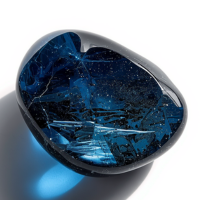
Illustrations of each variety, not photographs of specific stones.
07
Caring for Your Aquamarine
Do
Clean with a soft toothbrush, warm water and a degreasing dish soap like Dawn
Store separately in a soft cloth pouch
Remove before strenuous activities
Shine the metal with a Sunshine polishing cloth (never oxidized silver)
Have settings checked annually by a jeweler
Don't
Use ultrasonic cleaners: they are not safe for stones
Use harsh chemicals or abrasives
Subject to sudden temperature changes
Store with harder gemstones (diamonds, sapphires)
Wear while using household cleaners
Professional Care Tips
While aquamarine is relatively durable (7.5-8 on the Mohs scale), proper care ensures your piece remains beautiful for generations. Its color is stable in light, but keep it away from high heat.
Skip ultrasonic cleaners entirely: they are not safe for stones. Clean by hand with a soft toothbrush, warm water and a degreasing dish soap like Dawn, then pat dry with a lint-free cloth. Oxidized silver should not be polished, or you remove the oxidation finish.
08
Color Psychology
The blue-green spectrum of aquamarine carries strong associations in color psychology and tradition, part of what makes it more than just a beautiful stone to the people who wear it.
01
Calming Effect
In color psychology, blue is associated with calm and rest, and many people find aquamarine's cool hues relaxing to wear.
02
Communication Enhancement
Associated with the throat chakra, aquamarine's blue is traditionally believed to support self-expression and honest communication.
03
Trust & Dependability
In color psychology, blue conveys trustworthiness and reliability. Many wearers like carrying that association into professional and personal settings.
04
Creativity & Flow
The blend of blue and green in aquamarine represents the meeting of logic (blue) and growth (green). This balance is thought to enhance creative thinking while maintaining focus.
09
Styling Aquamarine Jewelry
Metal Pairings
White Gold & Platinum
The classic choice, cool metals enhance aquamarine's icy brilliance
Yellow Gold
Creates warm contrast, perfect for vintage-inspired pieces
Rose Gold
Modern and romantic, the pink tones add feminine warmth
Occasions & Outfits
Everyday Elegance
Small studs or delicate pendants pair beautifully with neutral basics, white shirts, cream knits, navy blazers.
Professional Settings
Understated aquamarine adds sophistication without distraction. Opt for geometric cuts in simple settings.
Evening & Events
Statement cocktail rings or chandelier earrings in aquamarine complement both black-tie and cocktail attire.
Color Coordination Guide
Complementary
Coral, peach, warm terracotta
Analogous
Blues, teals, seafoam greens
Neutral
White, gray, black, navy
Explore Our Collection
Earrings
Aquamarine earrings
Aquamarine earrings
Aquamarine hoop earrings
Aquamarine hoop earrings
Aquamarine silver talon earrings
Aquamarine zircon earrings
Blue aquamarine herkimer diamond earrings
Blue zircon chandelier earrings
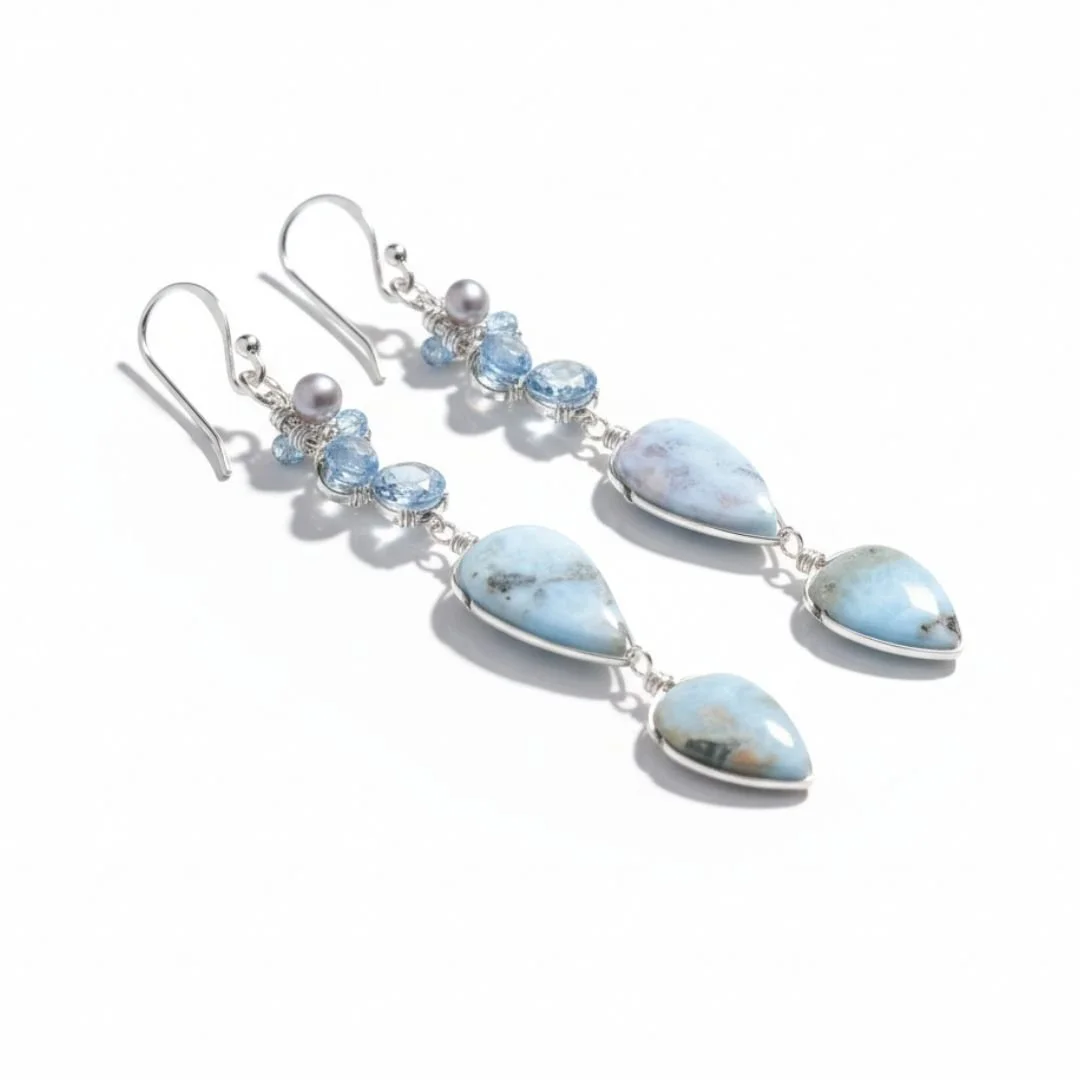
Larimar aquamarine earrings
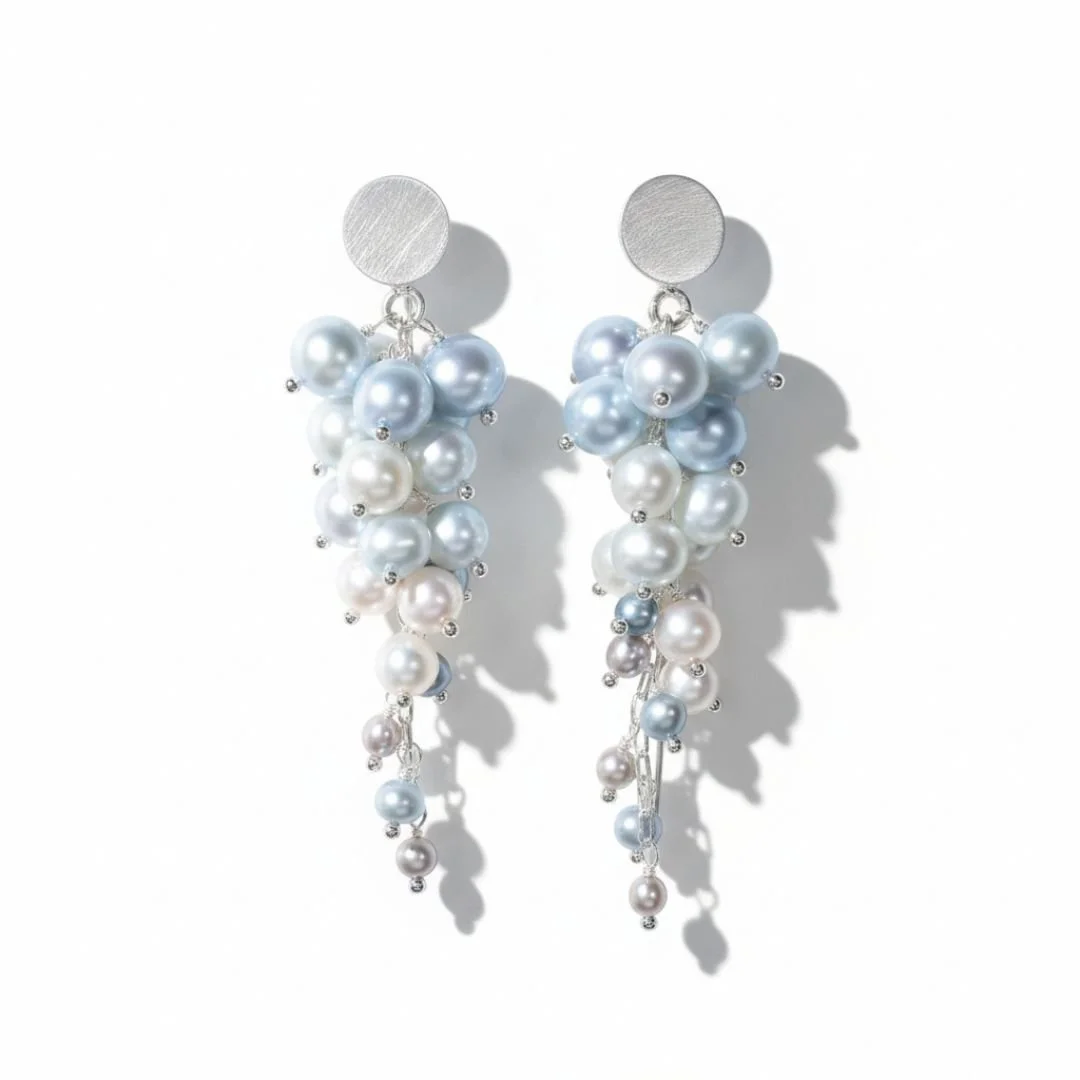
Pearl earrings
Necklaces
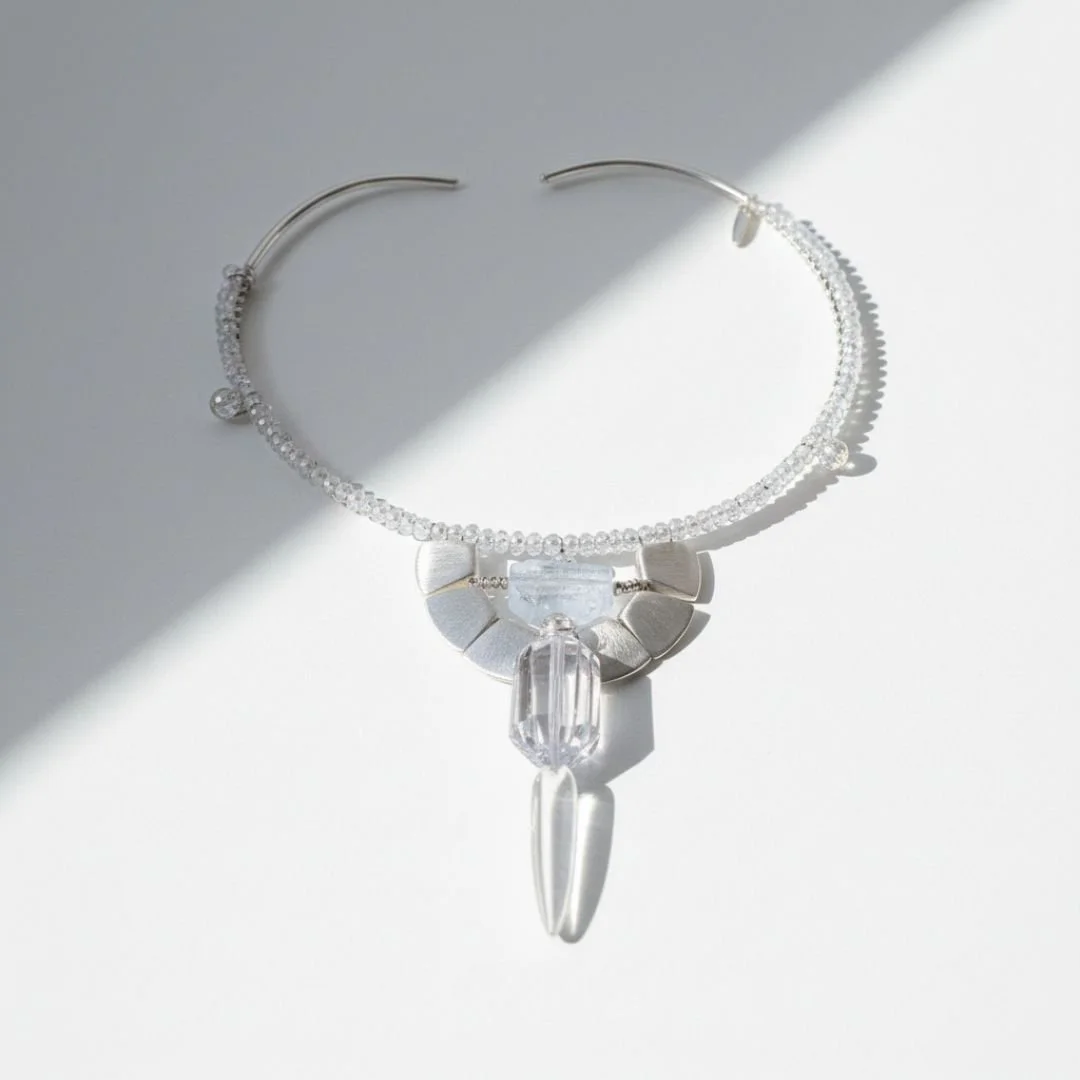
Aquamarine and silver talon choker necklace
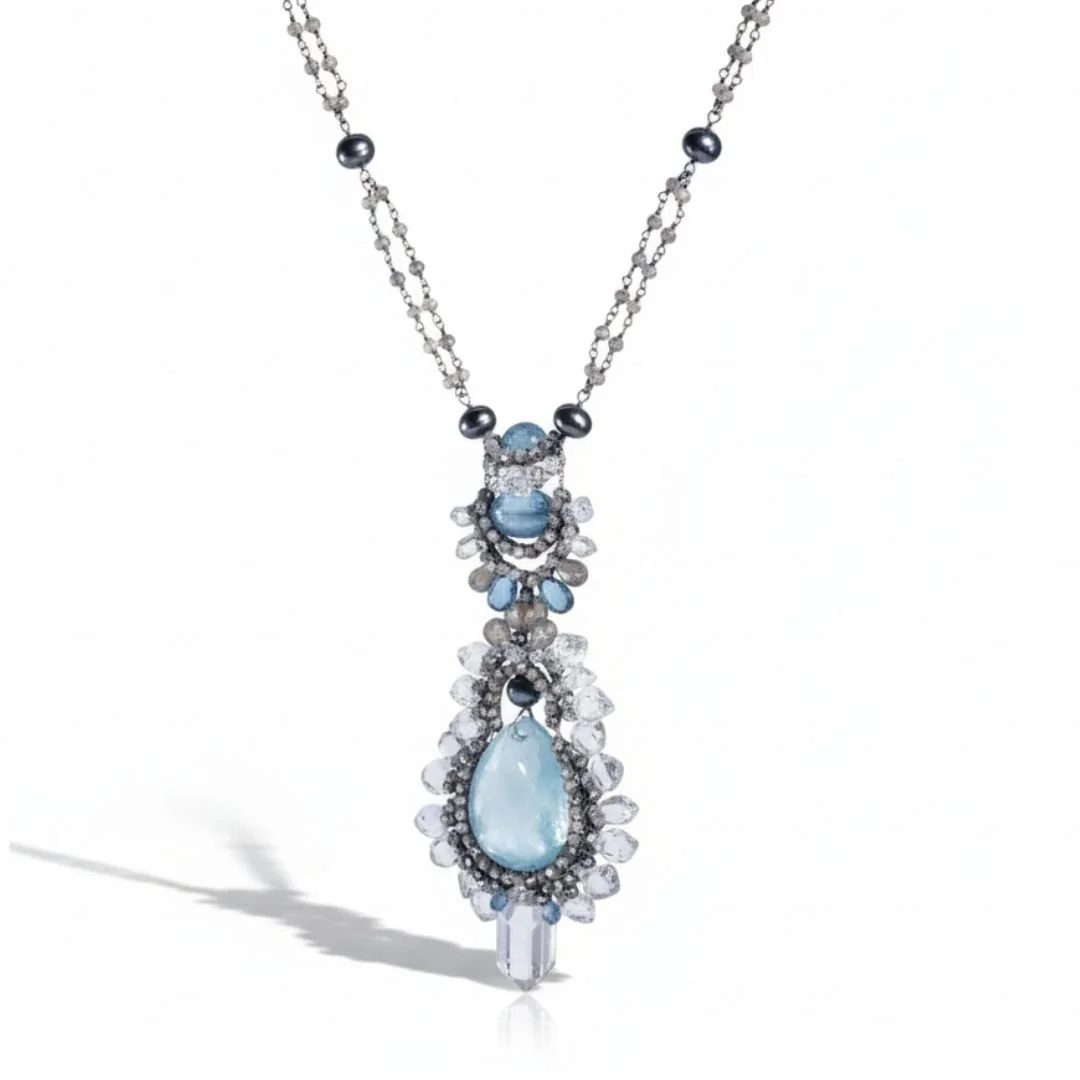
Aquamarine herkimer diamond necklace
Aquamarine necklace
Aquamarine zircon necklace
Herkimer and aquamarine long necklace
Herkimer and aquamarine necklace
Herkimer aquamarine necklace
Larimar and aquamarine necklace
Long multi-chain aquamarine necklace
Pearl and aquamarine necklace
Bracelets
Aquamarine bracelets
Aquamarine bracelets
Aquamarine bracelets
Aquamarine bracelets
Aquamarine bracelets
The Aquamarine Guide
From the bench · Andrea Li
The weave behind every aquamarine I set
A note from Andrea Li, who sets aquamarine by hand in her Denver studio.
They told me to hide it. The weave, the web of wire behind every piece where all the connections are made, is the part people called a flaw and wanted me to conceal. I never could. It is the truest thing I make. Every strand is a choice made under tension, and the chaos of it is exactly what holds the beauty in place. That is the throughline in all my work: not chaos avoided but chaos woven, trials survived, then chosen, then turned into something more refined and more beautiful for having been endured.
“
The front is what the world sees. The weave is where the becoming happens.
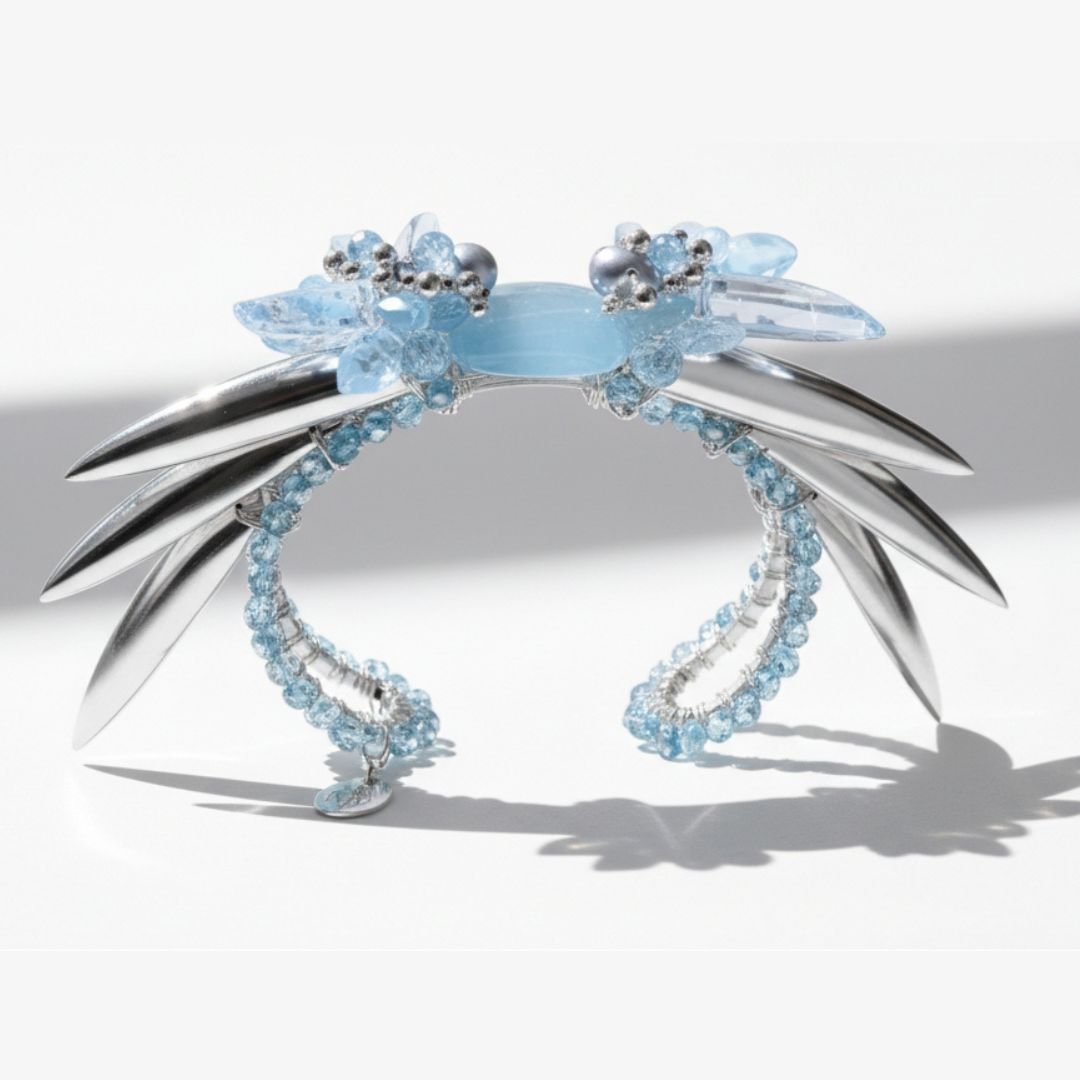
The weave is not decoration. It is how I set a stone like aquamarine without ever bringing heat to it. Instead of soldering, I thread wire through each tiny link by hand and cold connect the whole structure, so a torch never comes near the gem. Heat and thermal shock are exactly what you do not want near a set stone, and aquamarine holds a bright, clean cut worth protecting. Every strand you see on the back is a connection made under tension, and that tension is precisely what holds the aquamarine steady on the front.
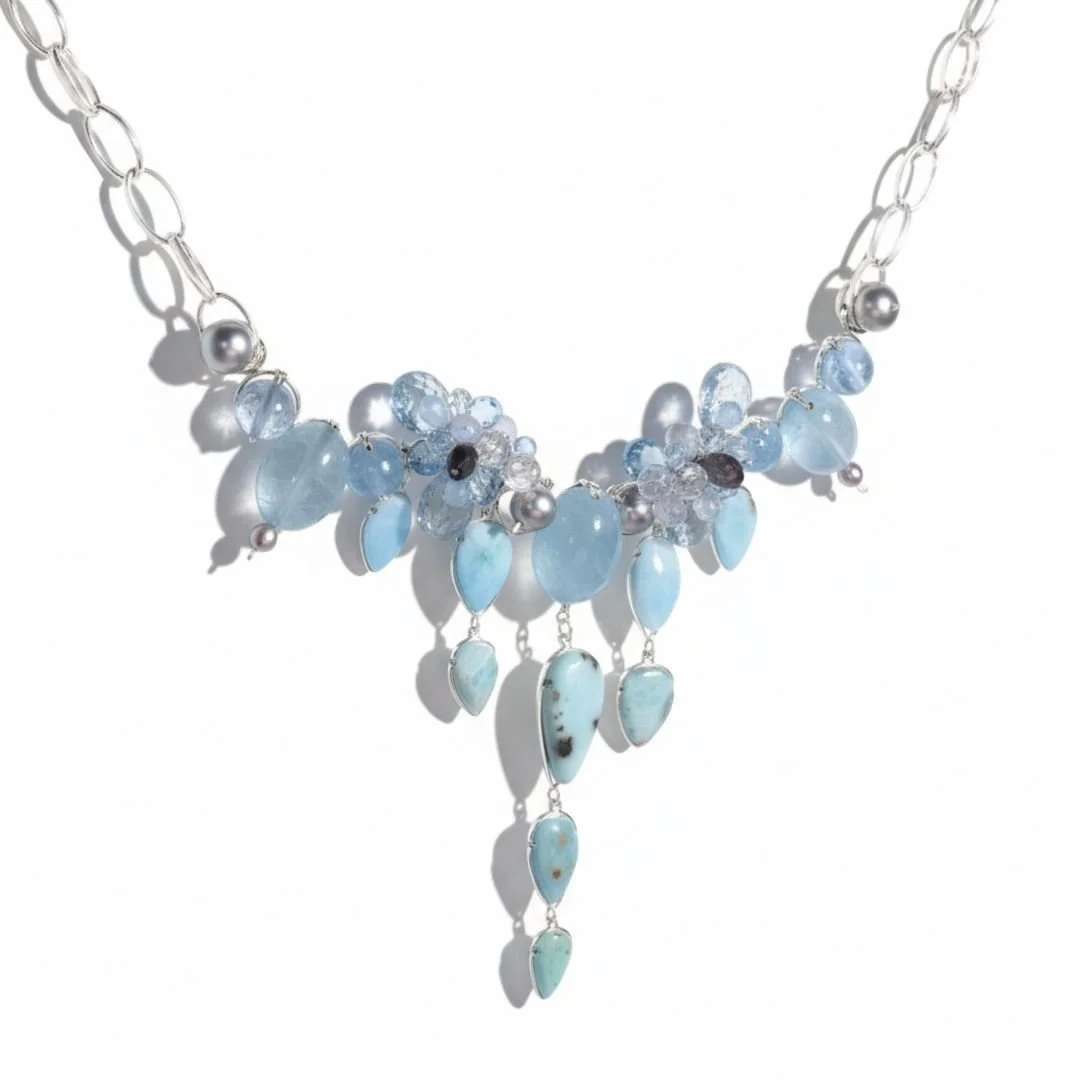
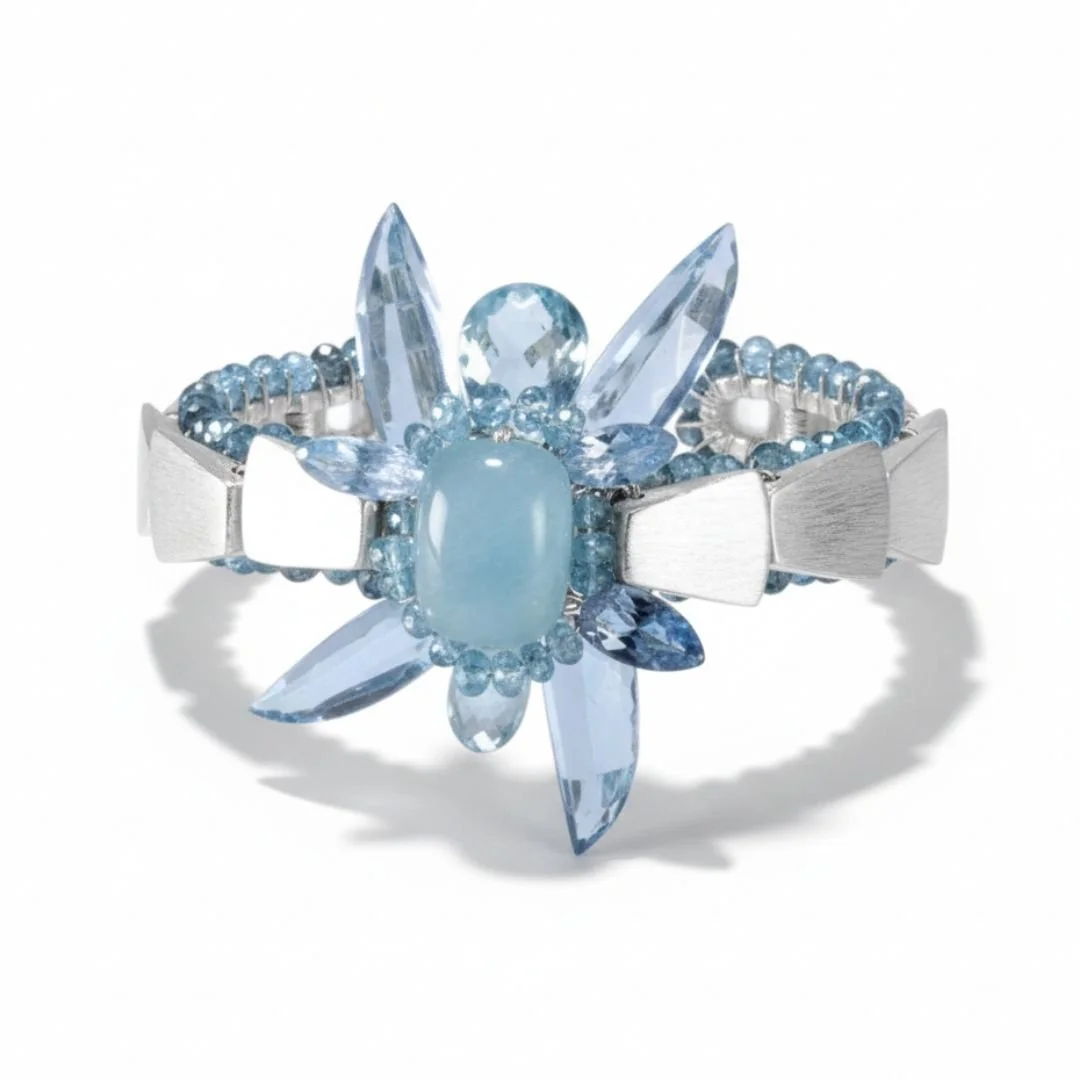
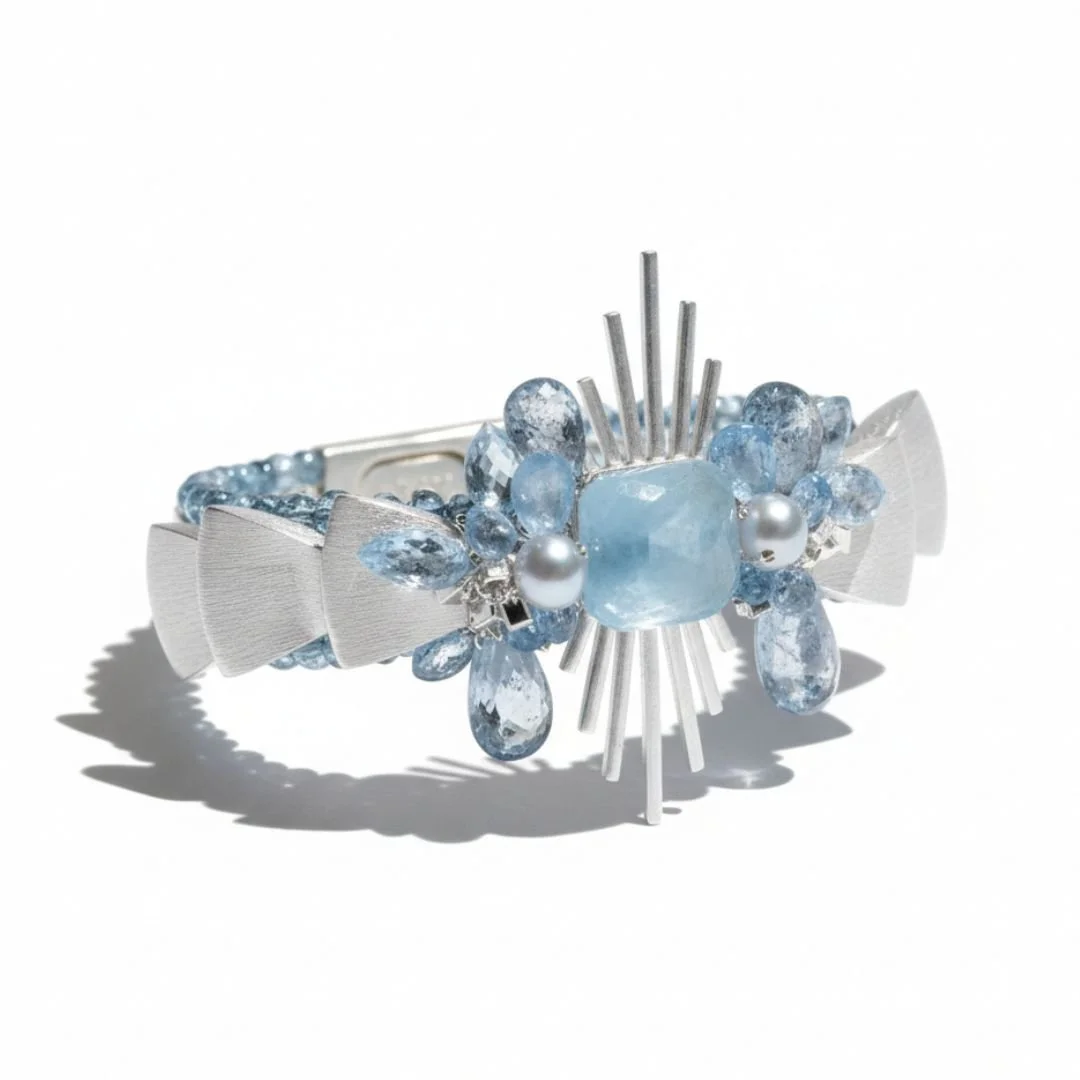
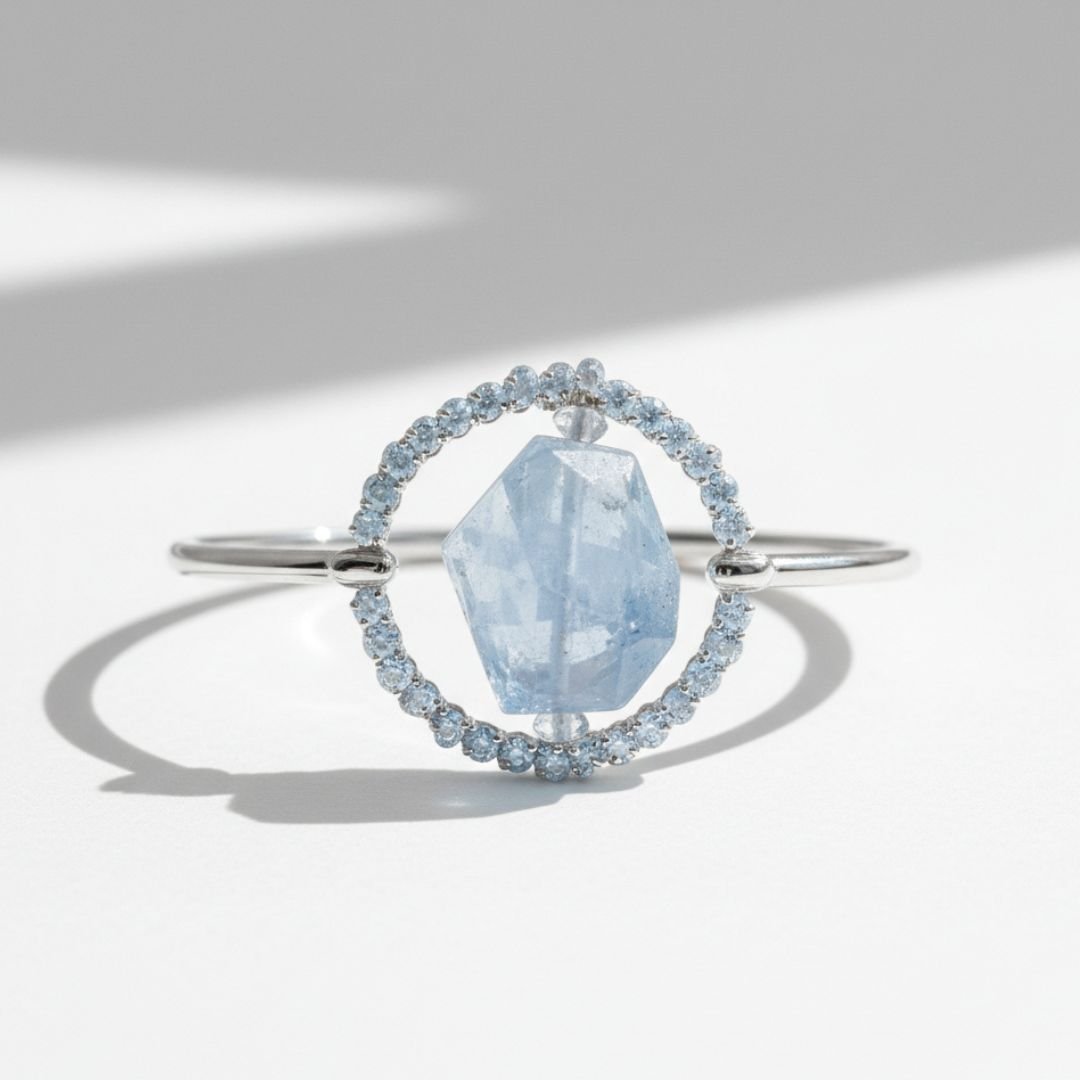
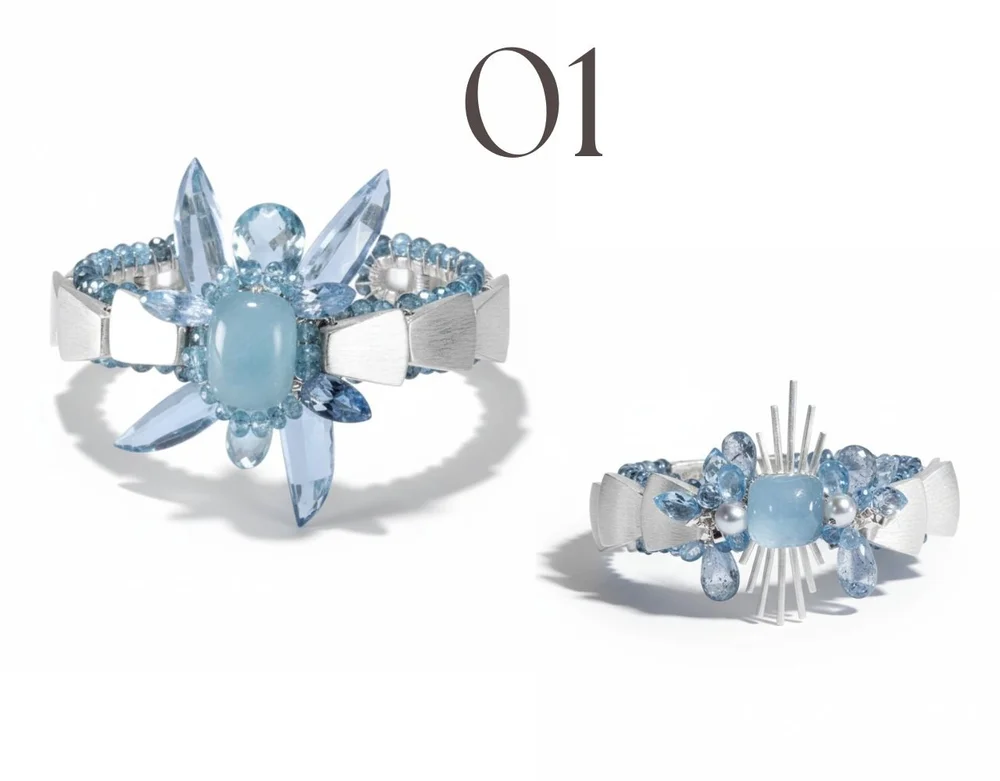
I built my Glacier collection around aquamarine for that reason. Its cool, watery blue was the whole palette, named for ice and meltwater. Some of the stones were large, simple-cut aquamarine nuggets I found from a favorite vendor at the September gem shows in Denver. They played a quiet supporting role across several pieces before I finally let one be the star of a single cuff. Nothing is hidden and nothing is wasted. What looks like tangle on the back is the thing carrying the beauty on the front, made more refined by the very tension it came through, and you will find it in every piece I make.
The most coveted and rare type, prized for a deeply saturated, intense blue and high clarity. Originally from the Santa Maria de Itabira mine in Brazil, the name now applies to any deeply saturated blue aquamarine, whatever its origin.
Santa Maria Africana
Mozambique
Similar to the original Santa Maria, but mined in Mozambique. A vivid, bright, luminous blue.
Espírito Santo
Brazil
Mined in the Espírito Santo region of Brazil and known for a vibrant, bright, sky-blue hue. The classic aquamarine.
Maxixe
Brazil
A very rare, dark to medium blue with a deep indigo cast and a purple undertone. Its color is often unstable and can fade in natural light.
Milky Aquamarine
Opaque to translucent, with a cloudy, milky-blue appearance. Usually cut as a smooth cabochon rather than faceted, often showing a soft silk.
Cat's Eye Aquamarine
Chatoyant
A rare optical effect caused by parallel, needle-like inclusions, creating a single luminous band that resembles a cat's eye. Known as chatoyancy.
Moss Aquamarine
Brazil, Africa, Madagascar
A beryl threaded with web-like, garden-like inclusions, usually from iron trace elements, so no two stones are alike. Translucent to opaque, in shades from light aqua to denim blue to soft sea-green. Mohs 7 to 7.5.
Star Aquamarine
Asterism
Extremely rare stones that display a multi-rayed star of reflected light. The effect, called asterism, is produced by aligned inclusions.
Pedra Azul
Minas Gerais, Brazil
A luminous, saturated sky blue from a specific historic region. Brilliant clarity and brightness.
São Domingos & Boca Rica
Minas Gerais, Brazil
Historical Brazilian sources renowned for producing some of the finest, high-quality vivid aquamarines. Collector's pieces.
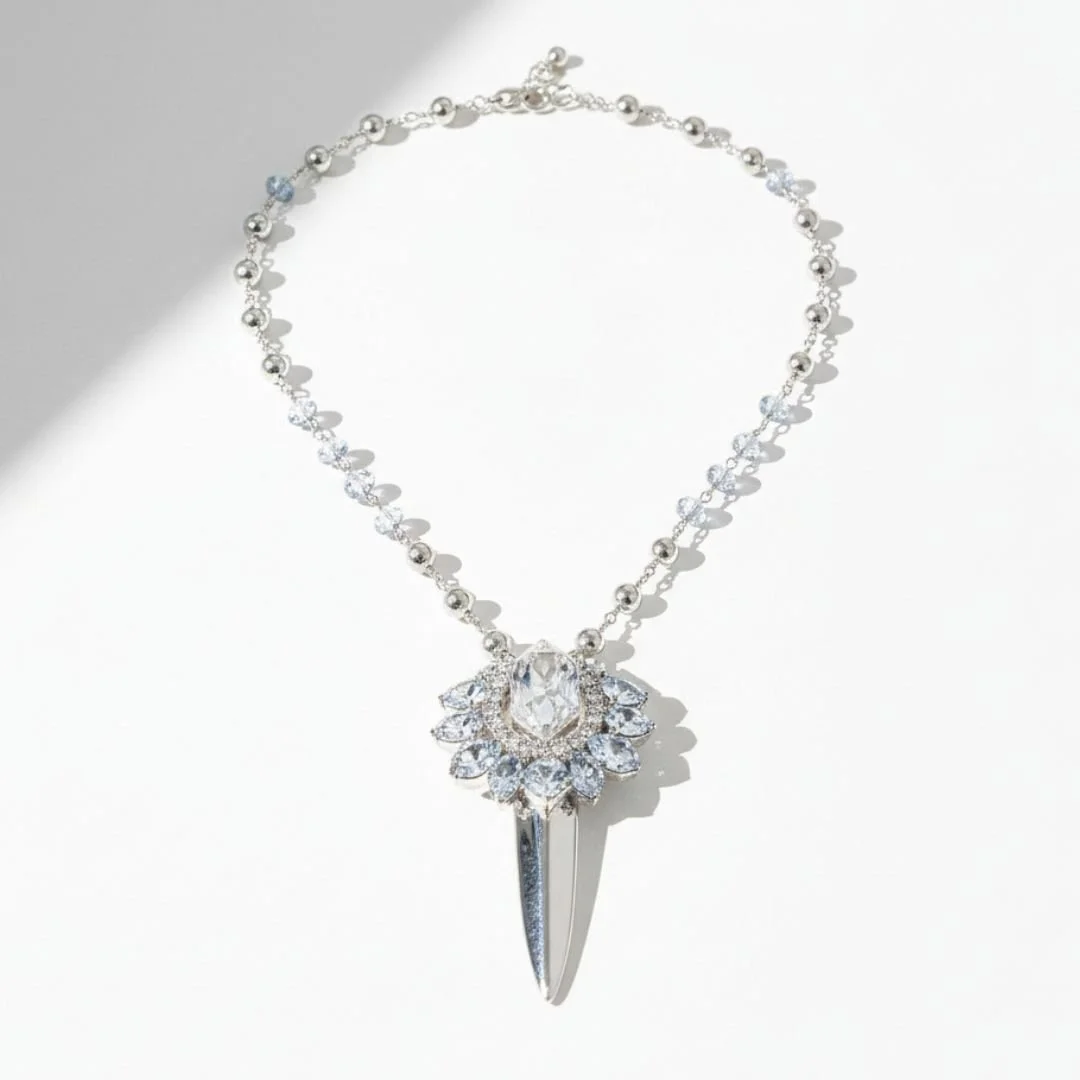
Subverting the traditional stone of tranquility, this collection fuses the icy clarity of AAA-quality aquamarine with the sharp, obsidian-hued edge of hand-cast silver talons and architectural silhouettes. Each handcrafted piece serves as a sophisticated armor, transforming the elemental power of the sea into a bold, unreplicable statement of modern rebellion.
In Halo, a one-of-a-kind floating choker from the Second Light collection, a substantial aquamarine is diamond-drilled and threaded on multiple wires to anchor the entire gemstone cluster in mid-air. Read the bench story of how the piece came together.
Cool, clear, and sea-blue, aquamarine is March’s birthstone, serene enough to suit almost anyone. Each piece is handmade and one-of-a-kind, sculpted by hand in my Denver studio.
Discover more about aquamarine stone price, aquamarine stone meaning, aquamarine stone benefits, aquamarine stone properties, and aquamarine stone color.
Free guide
Discover more about aquamarine stone price, aquamarine stone meaning, aquamarine stone benefits, aquamarine stone properties, and aquamarine stone color.
Frequently Asked Questions
About Aquamarine
What is Aquamarine?
Aquamarine, a stunning variety of the mineral beryl, is cherished for its captivating blue-green hue. Its name, derived from the Latin aqua (water) and mare (sea), beautifully reflects its resemblance to the tranquil shades of ocean waters.
Traditionally associated with calm and protection, aquamarine has long been a favorite for jewelry like necklaces, bracelets, and earrings. The gemstone’s near-transparent clarity often gives it a mesmerizing, shimmering effect, as if sunlight were dancing on the water’s surface.
How is Aquamarine Valued?
Aquamarine is valued based on several important factors, each contributing to its overall worth and appeal:
Color: Deep blue aquamarines command the highest prices. Although paler hues are still admired, stones with rich, saturated tones are rarer and more valuable.
Clarity: Most aquamarines have excellent clarity. Stones that are free from internal flaws or inclusions are considered more valuable, as their transparency enhances the gem’s natural brilliance.
Cut: A well-executed cut can significantly elevate the beauty of an aquamarine. Lapidaries often choose cuts like oval, emerald, or pear to maximize the stone's brilliance. For example, aquamarine drop earrings with expertly cut stones offer a dazzling display of light and color.
Carat Weight: Larger aquamarines typically command higher prices, but it’s the balance between color, clarity, and size that truly defines the stone’s value. Whether you're investing in a statement aquamarine necklace or a more delicate aquamarine bracelet, size alone doesn't determine value, quality is key.
Are Aquamarines Treated?
Most likely, yes. Nearly all aquamarine on the market is heat treated, turning naturally greenish or yellowish stones into the desirable blue shades. This process is quite common in the gemstone industry and widely accepted.
It’s important to note that treatment does not diminish the stone's durability or beauty, so whether your aquamarine hoop earrings are treated or untreated, they will retain their natural charm. The treatment is permanent, and it cannot be detected, so no jeweler can verify that an aquamarine is untreated. That includes my own: I just don't know which stones I buy are heat treated.
How Can I Tell If My Aquamarine Is Real?
A few signs help. Bubbles under the surface are a giveaway that the “stone” is glass. Aquamarine scores around 8 on the Mohs scale, so it resists scratches, and a scratched surface is an indication that you're dealing with a glass fake.
No home test settles it, though, and a scratch test can damage a real stone. When in doubt, consult a certified gemologist who can verify the authenticity of your aquamarine jewelry, whether it's a necklace, bracelet, or earrings.
What Are the Best Ways to Care for Aquamarine Jewelry?
Keeping your aquamarine jewelry in pristine condition is simple with proper care:
Cleaning: Use a soft toothbrush, warm water and a degreasing dish soap like Dawn to gently clean your aquamarine necklace or earrings. Skip the ultrasonic cleaner: ultrasonic cleaners are not safe for stones. Harsh chemicals should be avoided, as they may damage the stone’s delicate surface.
Storing: To prevent scratches, store your aquamarine jewelry separately from harder stones like diamonds. Soft pouches or lined jewelry boxes work well for storing aquamarine and pearl earrings or your favorite aquamarine bracelet.
Protection: Keep your aquamarine jewelry away from high heat. Always remove your pieces before engaging in activities that could expose them to harsh conditions.
Why Do Some Aquamarines Appear Different in Color?
The color of aquamarine can range from pale blue to a vibrant blue-green, depending on the amount of iron present in the stone.
Lighter shades are more common, but darker, more intense colors are rarer and, therefore, more valuable.
This natural color variation makes each aquamarine necklace or bracelet unique, offering a spectrum of hues that appeal to different tastes.
Whether you prefer a soft, sky-blue aquamarine or a bold, deep blue-green, there’s a shade for everyone.
What Does "AAA-Quality" Mean in Aquamarines?
“AAA” is a label some sellers use for their top grade of color, clarity, and cut. It is not a standard: there is no universally accepted grading system for colored gemstones, so one seller’s AAA can be another’s AA.
Judge the stone in front of you instead. Deep blue aquamarines are rarer and more valuable, most aquamarines have excellent clarity, and a well-executed cut makes the most of the color.
What Are the Rarest Types of Aquamarine?
Santa Maria is the most coveted: a deeply saturated, intense blue, named for the Santa Maria de Itabira mine in Brazil, though the name now applies to any deeply saturated blue aquamarine, whatever its origin. Santa Maria Africana is mined in Mozambique, and Espírito Santo, Pedra Azul, São Domingos and Boca Rica are historic Brazilian sources. Maxixe is a very rare dark blue whose color is often unstable and can fade in natural light.
Some are prized for their inclusions: cat’s eye and star aquamarine, where aligned inclusions draw a band or a star of light, and moss aquamarine, threaded with web-like inclusions so no two stones are alike. I actually think that the stones’ flaws contribute to their beauty greatly.
Have a vision for a custom aquamarine piece? Andrea would love to bring it to life.