
Part of the Tamar Collection Studio Stories
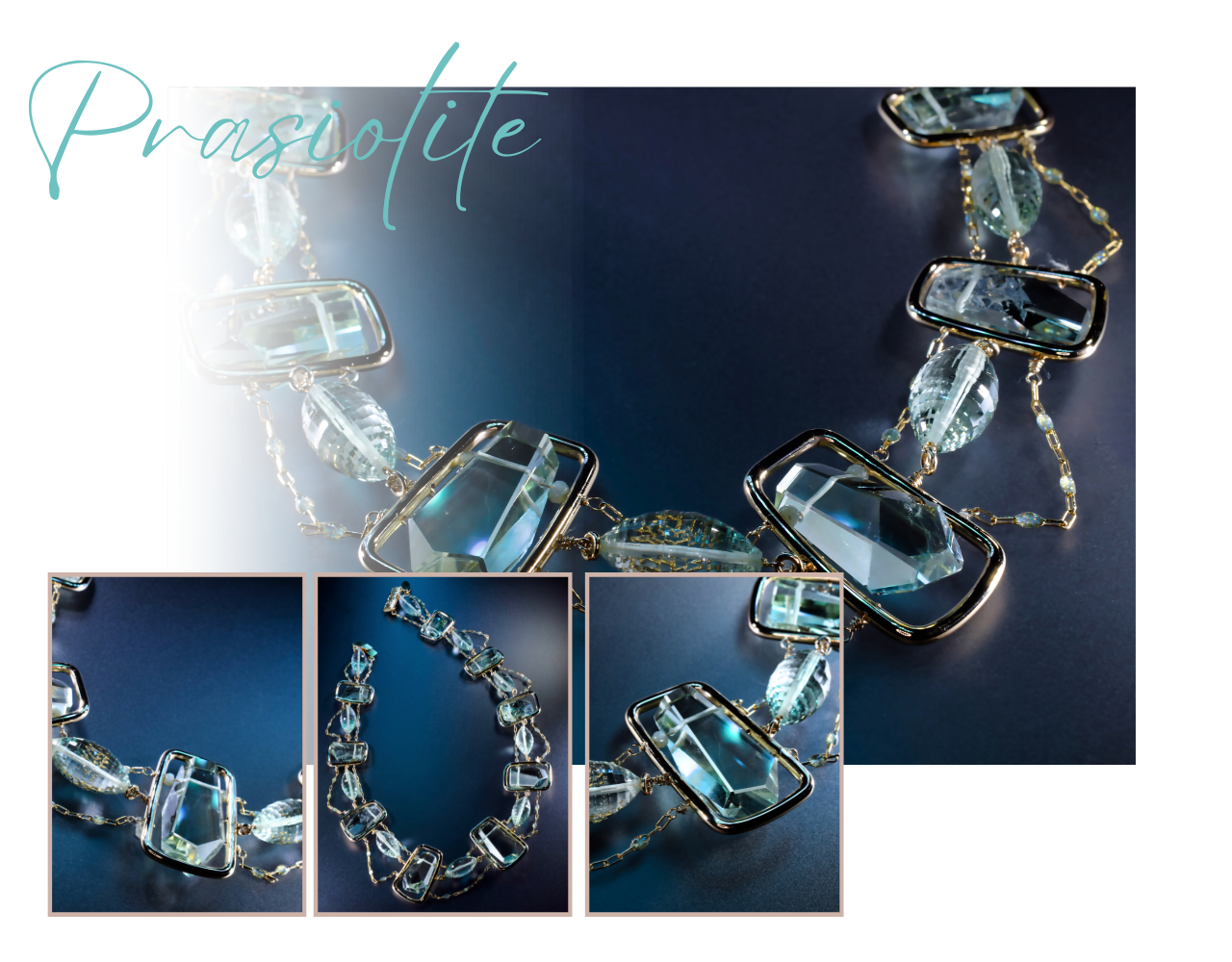
I'm Andrea Li, a handmade gemstone jewelry designer creating one-of-a-kind pieces from my studio in Denver, Colorado. Each piece I make takes me on what I call a "micro-journey", a unique creative path that can never be exactly replicated. This is the story of how the Green Amethyst Square Gemstone Collar Necklace from my Tamar Collection came to life.
If there's one truth about designing jewelry, it's this: the piece will tell you what it wants to be, if you're patient enough to listen.
That was the case with this Green Amethyst Collar Necklace.
The First Vision (That Didn't Work)
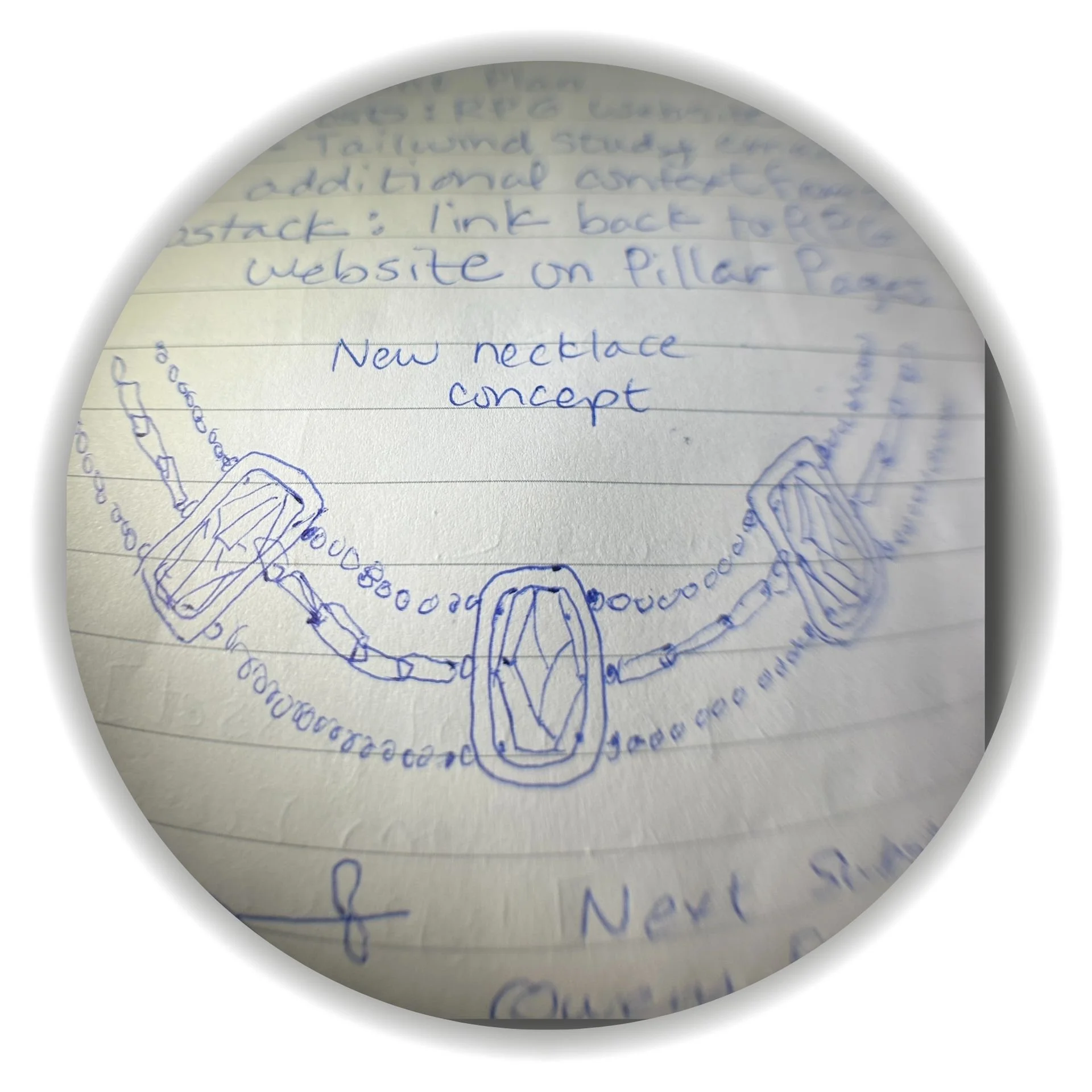
I began with complete confidence in my concept. I envisioned a long vertical pendant with three square-cut green amethysts, also called prasiolite, framed together in a single gold structure. Clean. Architectural. Bold.
I even went so far as to fabricate a 12-hole rectangular frame to anchor the chains.
But when I stepped back and looked at it... I just wasn't feeling it. The design felt static. Disconnected. It didn't honor how the stones wanted to move and catch light.
(That frame didn't go to waste, by the way, it found its second life as the base of a future bracelet. Nothing gets left behind in my studio.)
The Pivot: Designing for the Body
So I pivoted. I started reimagining each square-cut green amethyst in its own custom-fit gold frame, allowing for more flexibility and elegance in how they'd move and hang.
But design isn't just about how something looks; it's about how it behaves on the body. And that's where things got interesting.
This process took nearly two weeks of iteration. I had to think in three dimensions: How would the necklace drape around the curve of the neck? How would each framed stone relate to the others when the wearer moved?
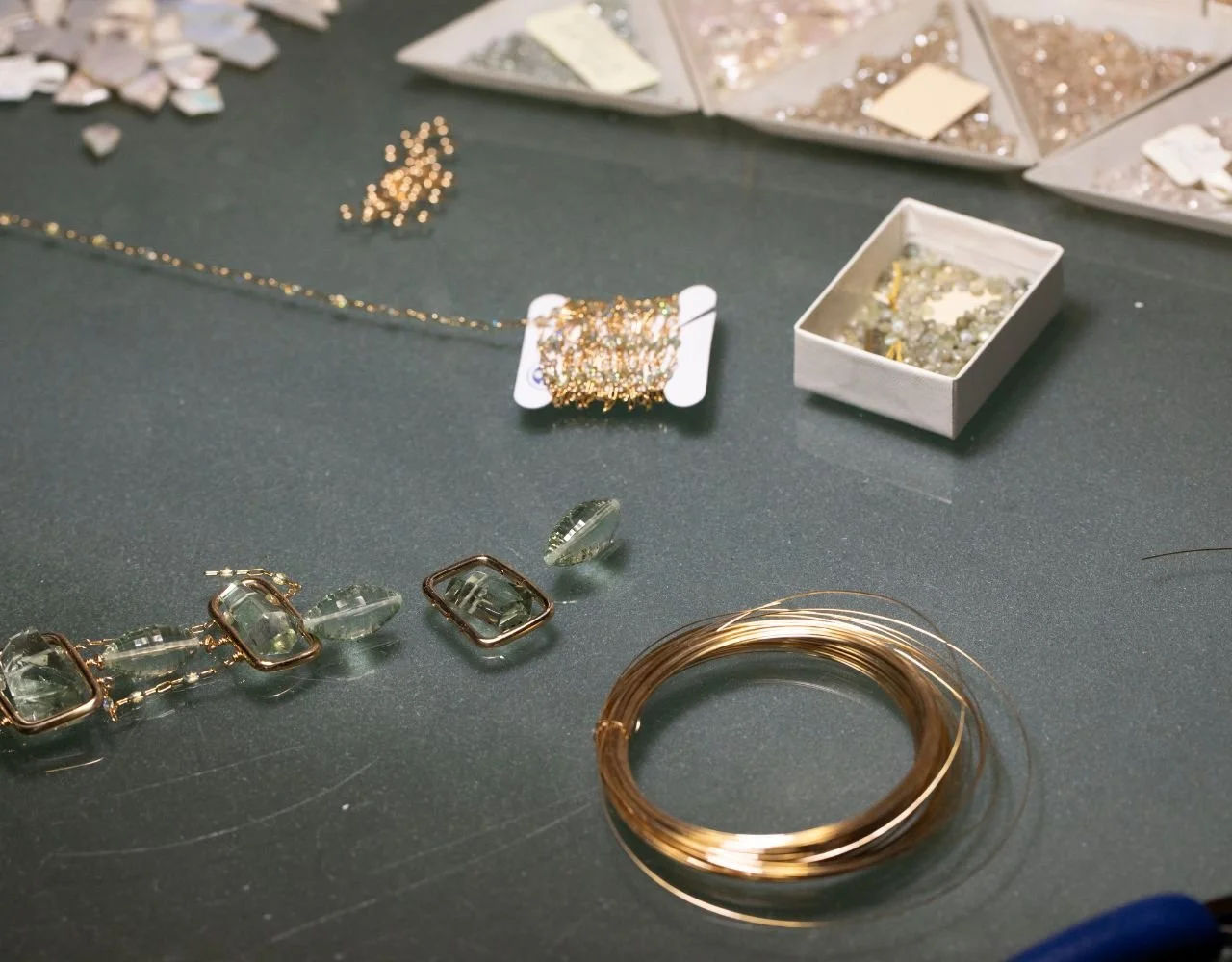
The original paperclip chains I chose were too chunky and inflexible. They fought against the graceful drape I was trying to achieve. I needed a finer chain that allowed me to precisely control how the necklace would fan out across the collarbone.
When you're working with a collar, the way each segment curves around the neck matters. A lot.
The Micro-Journey: Finding the Right Rhythm
I replaced the chunky chain with a delicate strand detailed with Labradorite gemstone accents. This allowed for subtle adjustments in length between the framed green amethysts, ensuring the necklace would gently fan out rather than droop when worn.
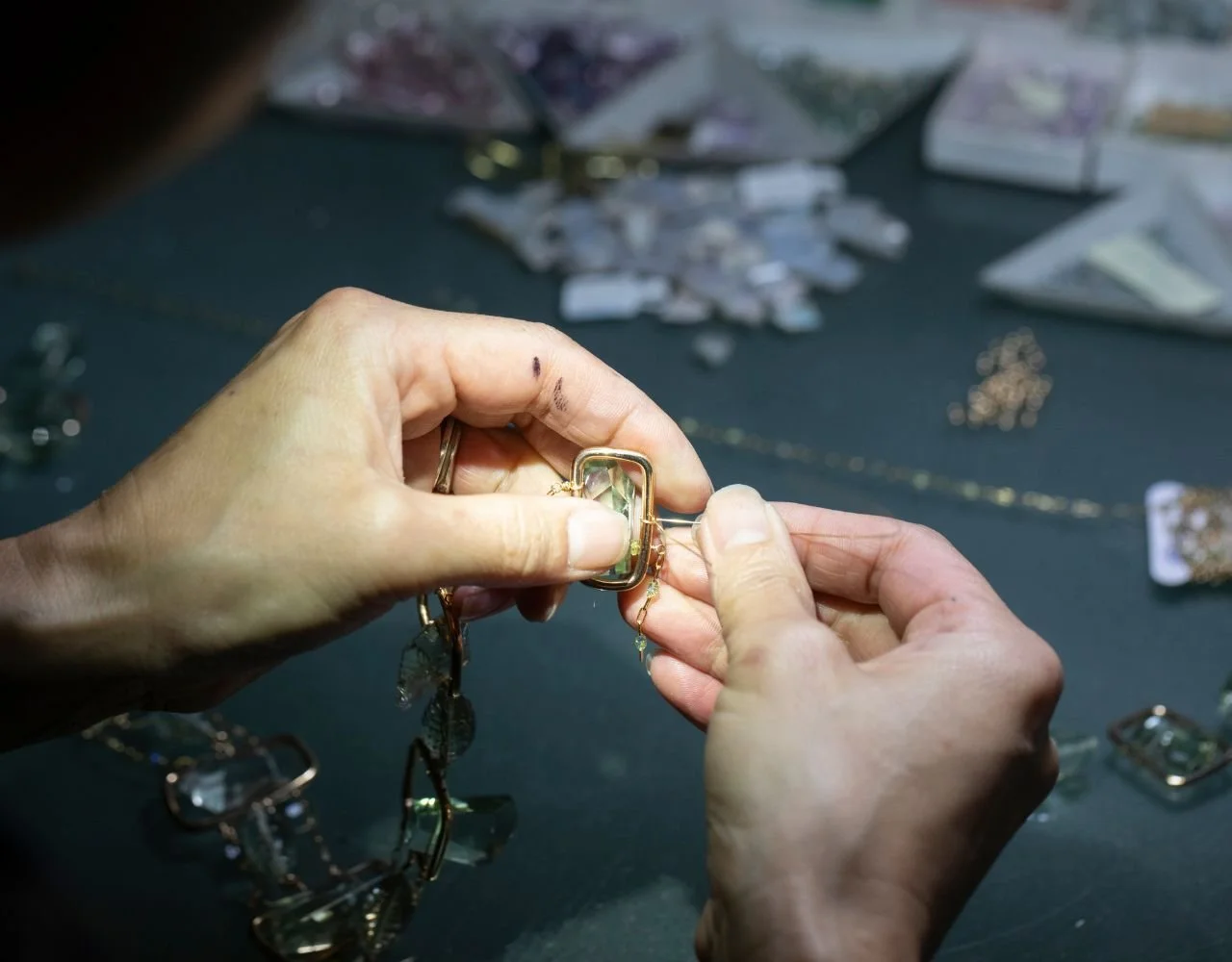
The wire-wrapping process for each individual frame required precise tension control. Too tight, and the stones would be too ridget. Too loose, and they'd shift in their settings. This required a calculated set of small Cat’s Eye moonstone rondelles to anchor each side.
Still, something was missing in the center. The three framed squares needed an anchor point, something to tie them together visually and structurally.
So I dug into my archive and found several unused gemstones from a past commission, faceted, luminous, and just bold enough to anchor the center of the collar. They brought depth and contrast to the clean, architectural cuts of the square amethysts.
This necklace was a lesson in patience, precision, and letting the materials guide the way. It reminds me that no design is ever truly static; it evolves, just like the artist creating it.
Technical Details
Materials: Square-cut green amethyst (prasiolite), faceted accent gemstones, labradorite, 14k gold-filled wire, and findings
Technique: Individual hand-fabricated frames for each square amethyst with custom chain-length spacing for anatomical drape
Construction: Fan-shaped collar with precisely calculated chain segments between each framed stone
Design Time: Approximately 3 weeks from initial concept through final iteration
Collection: Tamar Collection
Status: One-of-a-kind (available)
A Gemstone of Reinvention
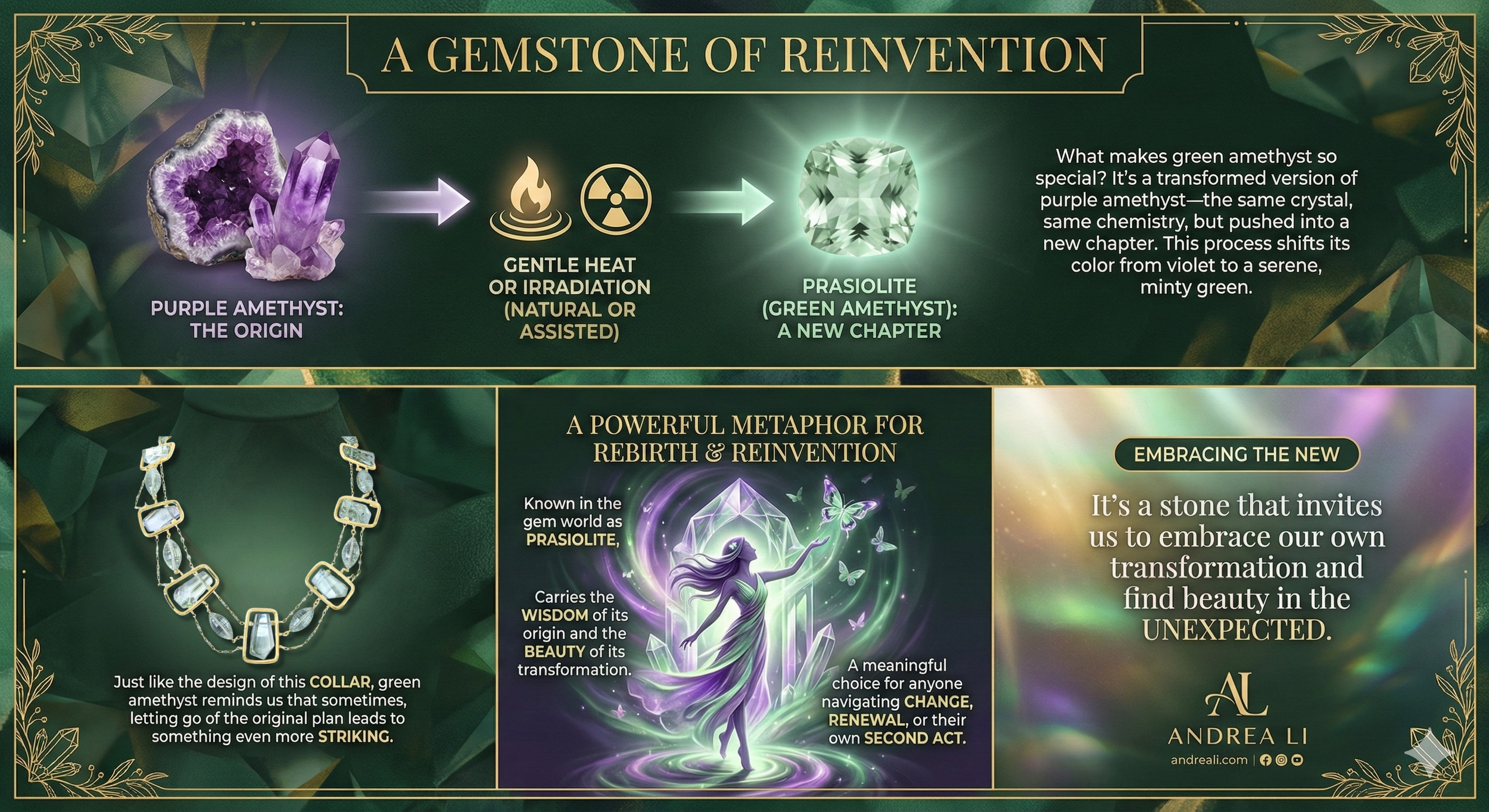
What makes green amethyst so special? It's actually a transformed version of purple amethyst, the same crystal, same chemical composition, but pushed into a new chapter through gentle heat treatment or natural irradiation.
This process, occurring naturally in certain geological conditions or with carefully applied heat (around 400-500°C), shifts the gemstone's color from violet to a serene, minty green. The iron impurities that created purple "color centers" are restructured, allowing different wavelengths of light to pass through.
Known in the gem world as prasiolite, this shape-shifting stone is found primarily in Brazil, though natural deposits are exceptionally rare. Most green amethyst on the market today is heat-treated purple amethyst from Brazilian or Uruguayan mines.
This transformation makes prasiolite a powerful metaphor for rebirth and reinvention. It carries the wisdom of its purple amethyst origin and the beauty of its evolved state, making it a meaningful choice for anyone navigating change, renewal, or their own second act.
Just as this collar's design reminds us, green amethyst reminds us that sometimes letting go of the original plan can lead to something even more striking.
Why This Design Matters
As a one-of-a-kind jewelry designer, I don't replicate pieces or work from templates. Each design responds to the specific gemstones I've sourced, the creative challenges that emerge, and the evolution that happens in my studio.
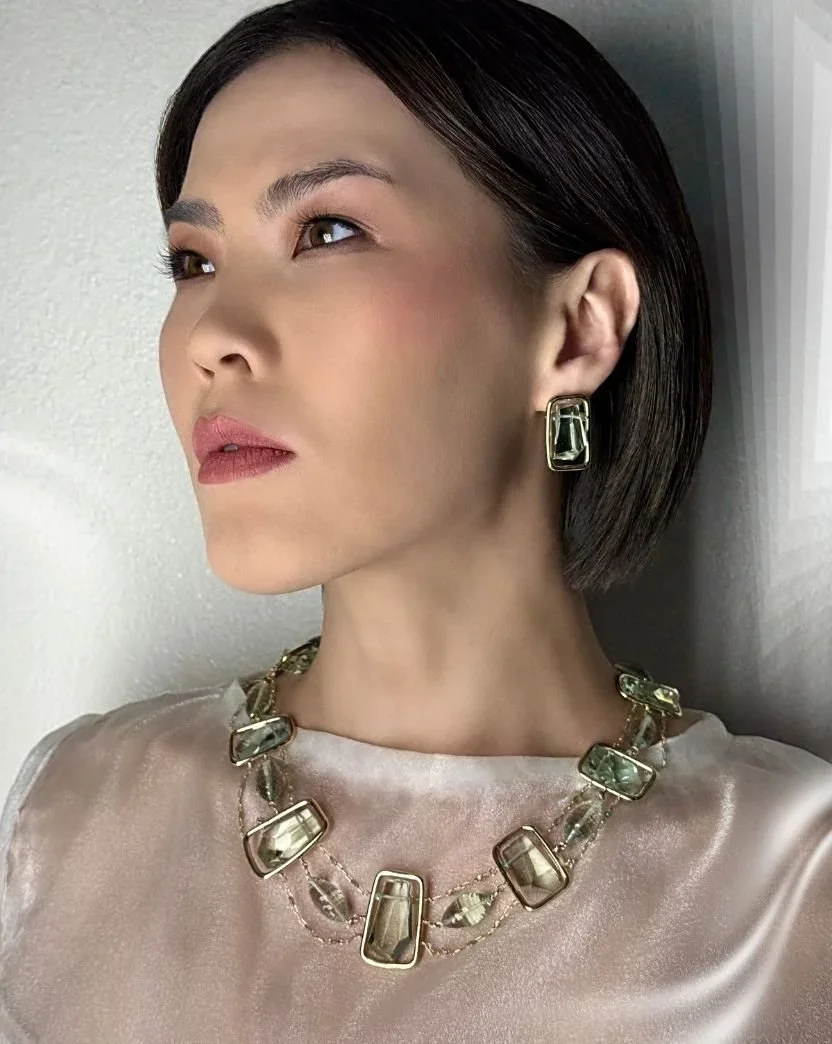
The person who owns this collar is the only person in the world who possesses this exact piece, born from these specific square-cut prasiolite stones, this particular design journey, and this unique solution to the challenge of creating a collar that both looks architectural and moves gracefully on the body.
That's the value of handmade, artist-made jewelry: singular vision, singular execution, singular ownership.
Explore More Studio Stories from the Tamar Collection
Each piece in the Tamar Collection has its own micro-journey. Discover how other designs came to life in my studio.
Love What You See? Keep Finding Us.
Google now lets you choose your favorite sources so they show up labeled in AI search answers. If you enjoy discovering handcrafted gemstone jewelry here, add Andrea Li Designs and we'll be easier to find next time you search.
Add Andrea Li Designs as a Preferred SourceOne click. Works across Google Search, AI Overviews, and AI Mode.