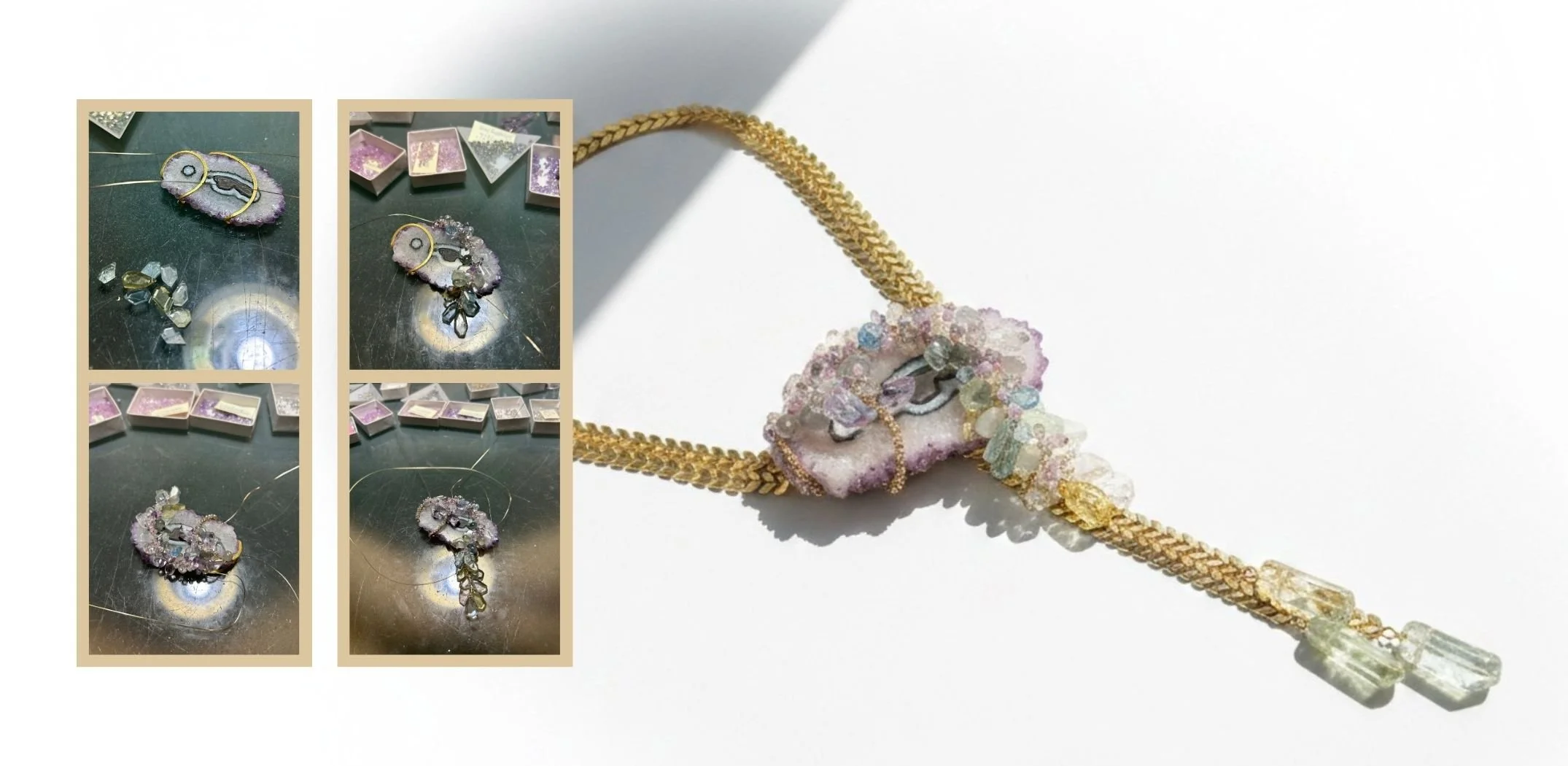
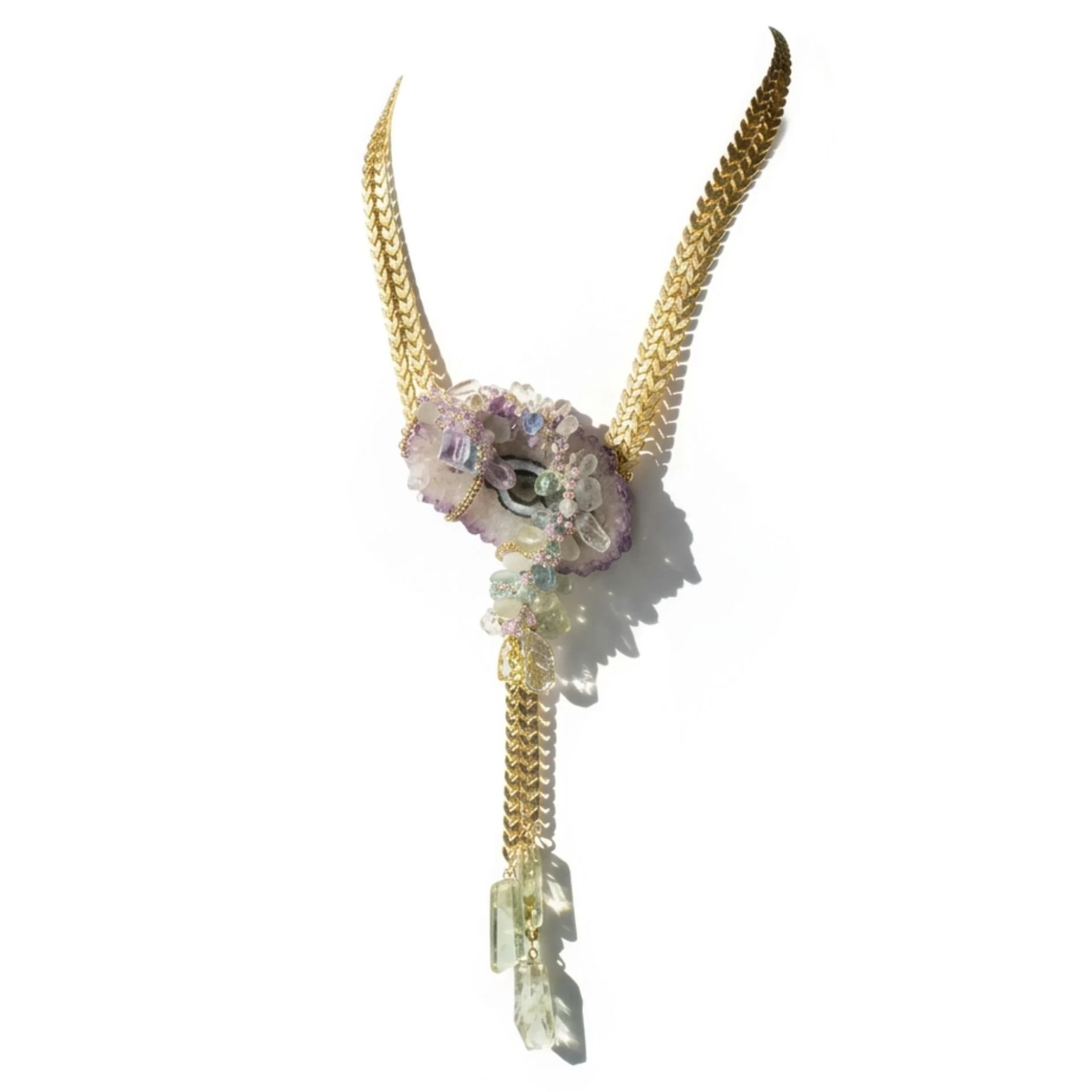
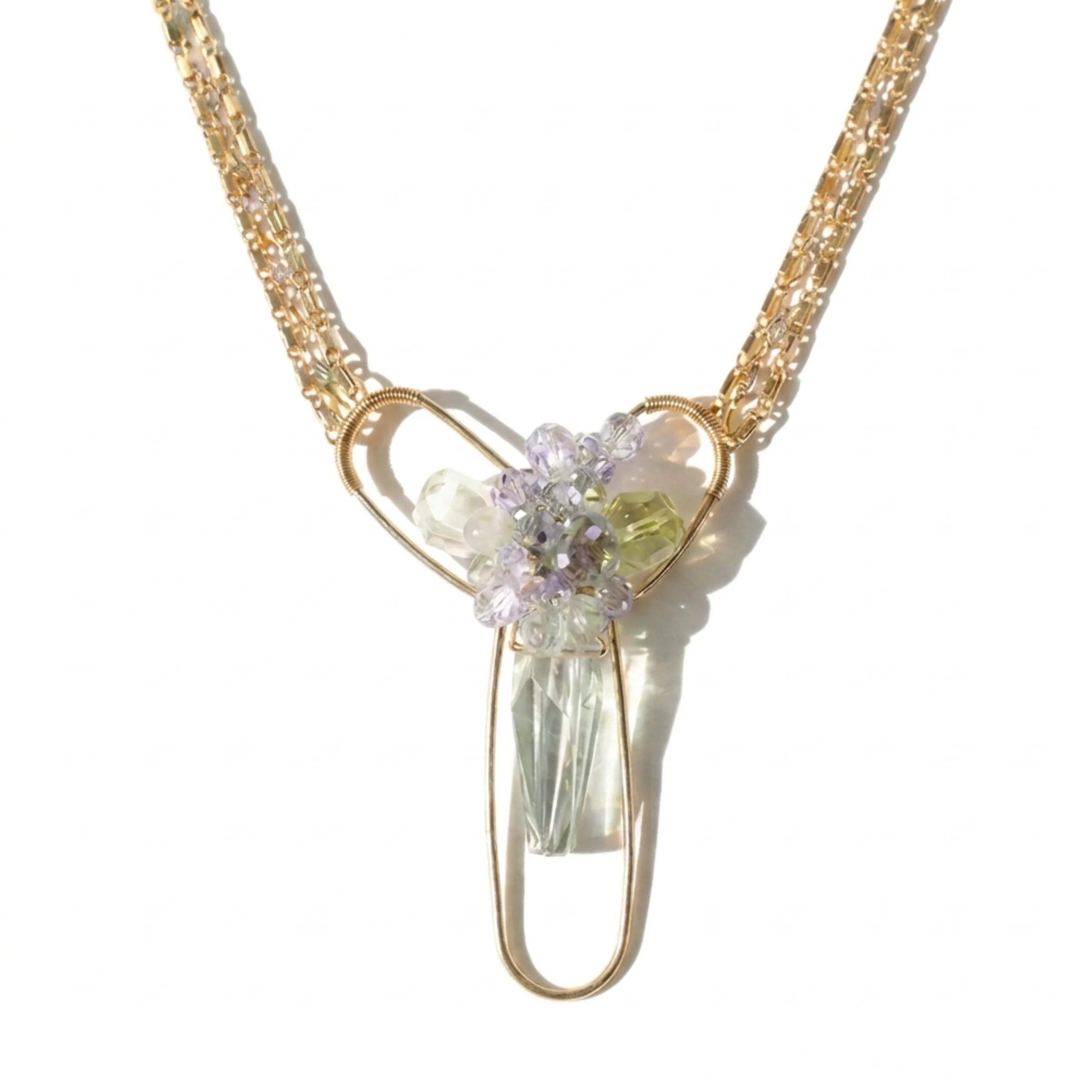
I had one kunzite pendant left, bought from my gem vendor Earthstone, and I knew this was my last chance to use it in the pastel collections.
That is why this piece exists. Not a design idea that needed a stone. A stone that was running out of chances.
I buy what I fall for and then keep designing until each stone has found the one piece it was meant for. Most of the time that works out. Occasionally a stone waits years, and occasionally I get to the end of a collection and realize the waiting is over, one way or the other.
What is actually inside this stone
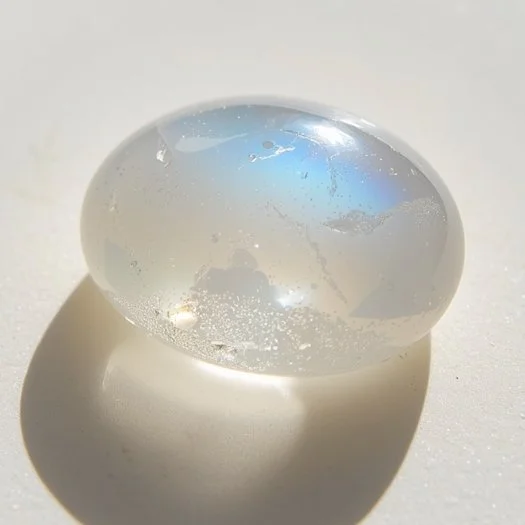
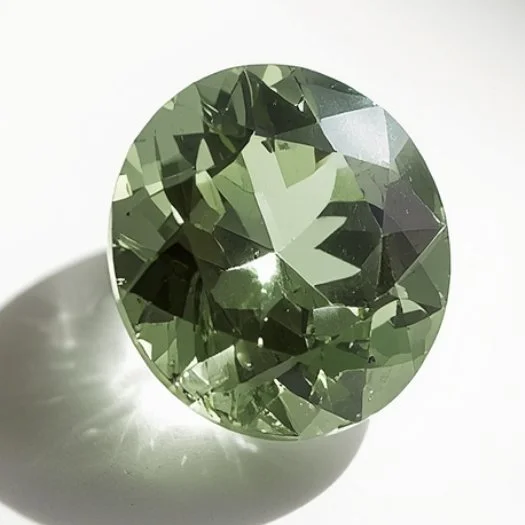
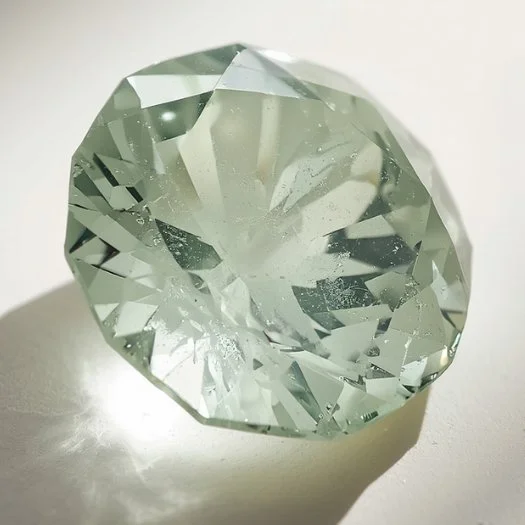
It is large, pale pink, and finished smooth rather than faceted. Hold it to the light and you can see straight into it, which is the point of a finish like that, and also the risk.
Two things are visible in there. Growth and etch tubes, which are fine parallel channels running through the crystal like needles laid side by side. And healing cracks, sometimes called feathers, which are partial internal fractures that read as faint veils.
Neither is damage. Both are the record of how the crystal grew and what happened to it while it was growing.
Andrea Li Fine Jewelry
Why Kunzite Is Finished Smooth
The silvery threads inside a kunzite are hollow. That one fact decides how the stone has to be cut, and it is the reason you will not see this stone faceted on my bench.
Step One
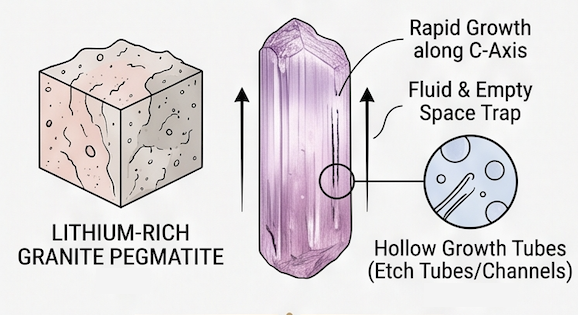
The tubes are empty space
Kunzite grows in lithium-rich granite pegmatite, and it grows fast along one axis. That speed traps pockets of fluid and empty space as the crystal lengthens, leaving hollow growth tubes, also called etch tubes or channels, running the length of the stone.
In the pendant I used for Last Light I could see both kinds: growth and etch tubes, fine parallel needle-like tubular channels, and healing cracks or feathers, partial internal fractures that look like faint veils.
Step Two
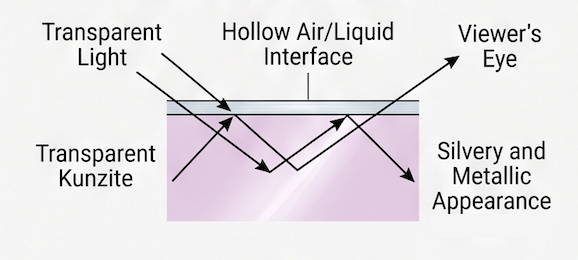
Which is why they look like silver
Nothing metallic is in there. Light moving through the transparent stone hits the boundary between crystal and the air or liquid inside a tube, and at a shallow enough angle it reflects instead of passing through.
That is total internal reflection, the same effect that makes a fiber-optic strand glow. The eye reads those bright reflections as fine silver needles.
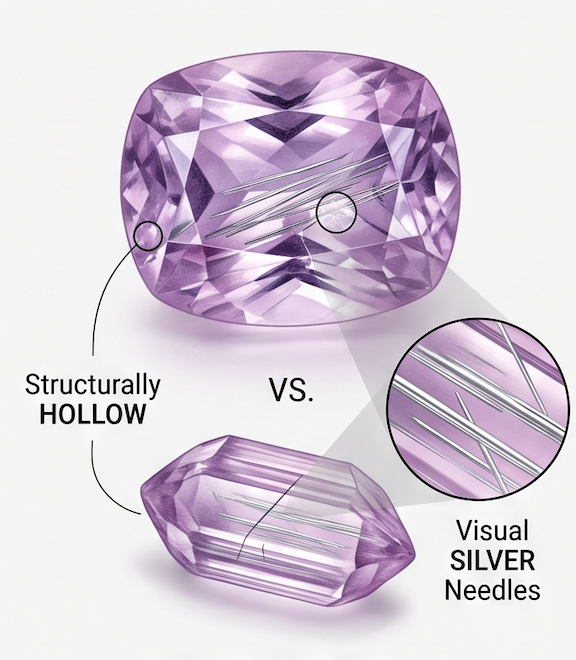
Step Three, the bench decision
So the stone gets a dome, not facets
Those same hollow channels are structural weakness. Four reasons I finish kunzite smooth:
- Kunzite has two directions of perfect cleavage, so faceting pressure can split it.
- The stone resists abrasion, so faceting friction stresses the weak internal structures rather than cutting cleanly past them.
- A cabochon distributes pressure evenly instead of concentrating it at an edge.
- Kunzite is pleochroic. A dome blends the shifting pink and violet, where facets lock them into fixed reflections.
"Kunzite looks almost like a light pale pink hard piece of candy with fine, parallel grooves or lines called striations along their length. These lines reflect light and give the stone a shimmering, fibrous look from within. As you move the stone under light these striations shimmer at different angles."
Andrea Li, at the bench
Kunzite is the pink to lilac variety of spodumene, colored by traces of manganese, 6.5 to 7 on the Mohs scale, named for the gemologist George Frederick Kunz who described it in 1902. Gemology per GIA and the International Gem Society. The bench observations are my own.
See the Second Light CollectionWhy kunzite is never faceted if you can help it
Kunzite has two directions of perfect cleavage, the same structural weakness that runs through moonstone. Pressure or vibration from faceting can split or splinter it. The stone also resists abrasion, so the heavy friction that faceting requires puts more stress on exactly the internal structures least able to take it.
A smooth finish is gentler. Rolling and polishing distributes pressure evenly instead of concentrating it, which lowers the chance of losing the stone on the lap.
There is an optical reason as well. Kunzite is pleochroic, which means it shows different colors depending on the angle you view it from. A rounded dome lets those shifting pink and violet hues blend softly into each other.
Facets would do two things instead. They lock the color into rigid reflections, and each flat face becomes a window onto every inclusion inside. A smooth surface holds the veils and the tubes in suspension rather than spotlighting them.
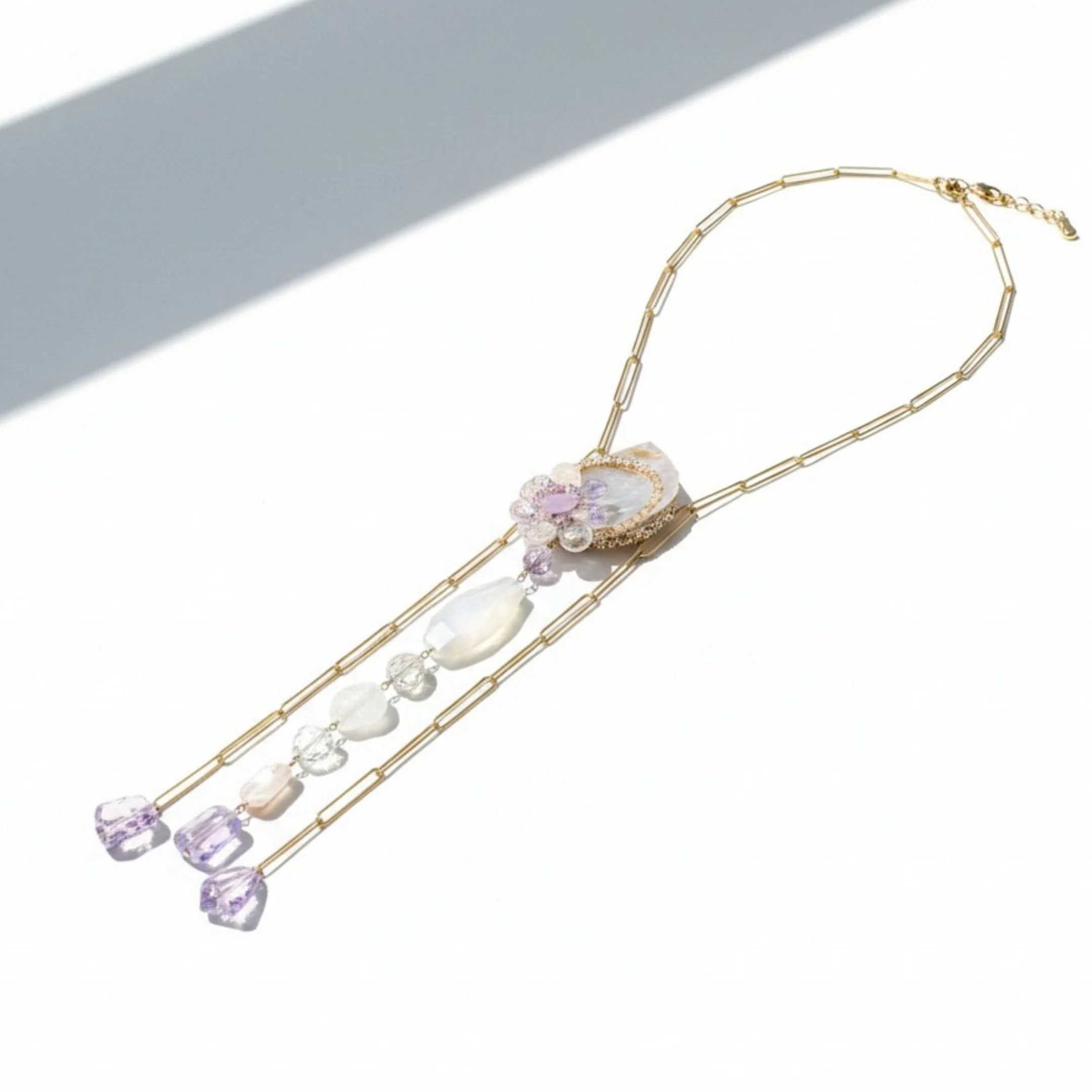
I wanted it hung between two chains, not from one
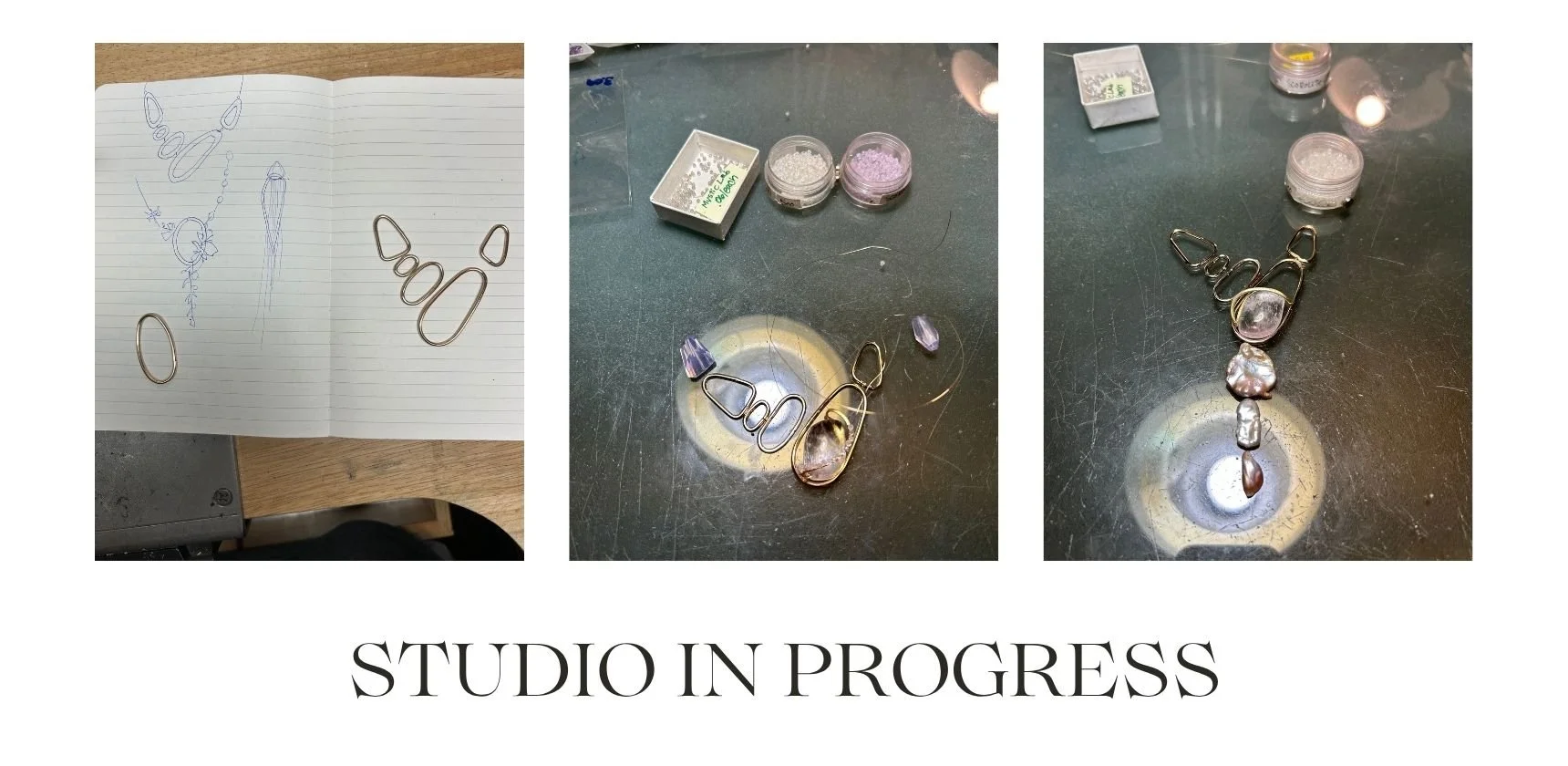
I wanted something different from anything else in the collection, and I kept coming back to the same picture: the stone suspended between two chains dropping in parallel on either side of it, making a clean vertical line.
Which meant the stone needed two sides to attach to. It does not naturally have those.
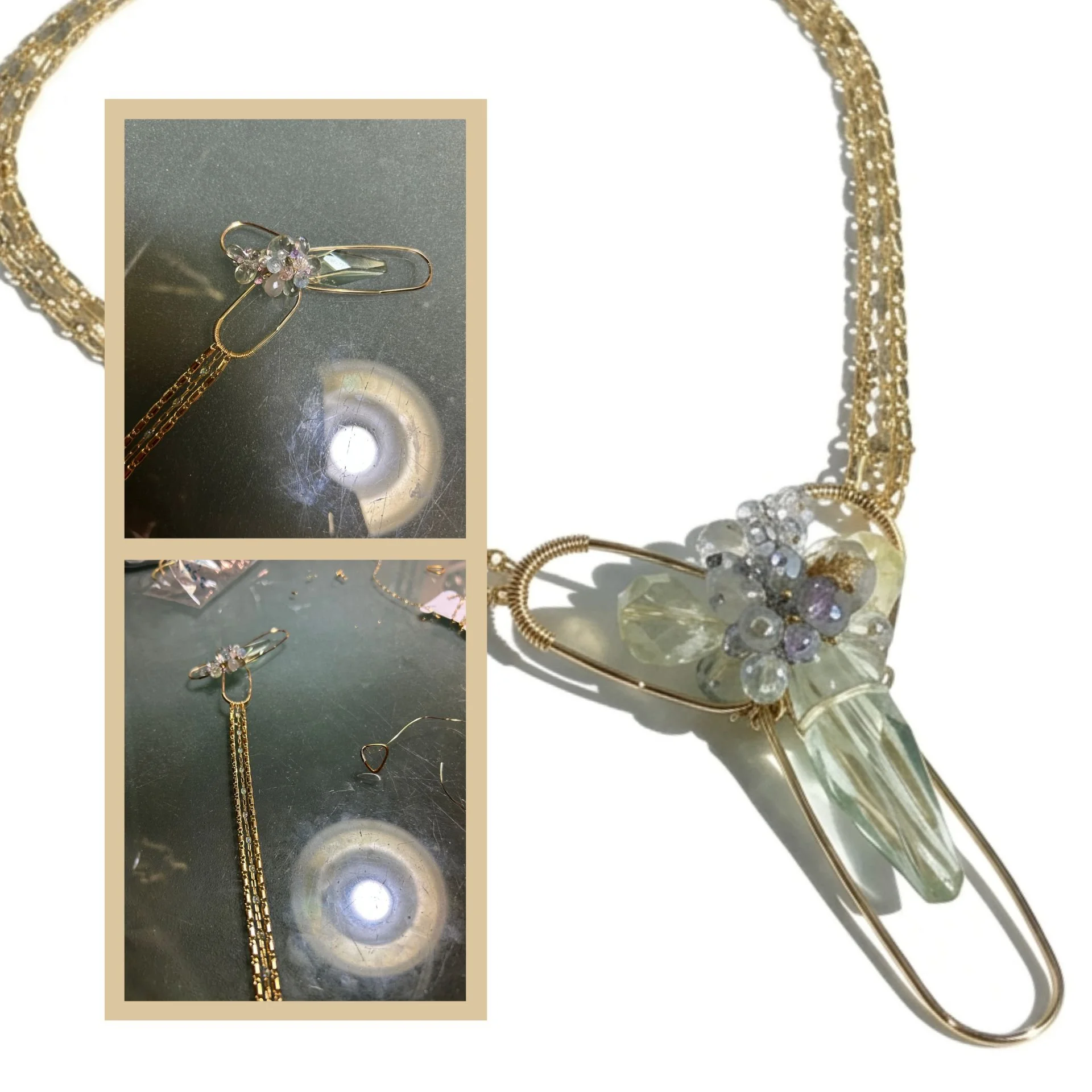
So I set it into a 24k gold vermeil oval first, folded in half over a dowel with enough space to hold the stone. That gave me a left and a right to wire the chains into, and it turned a pendant into a component.
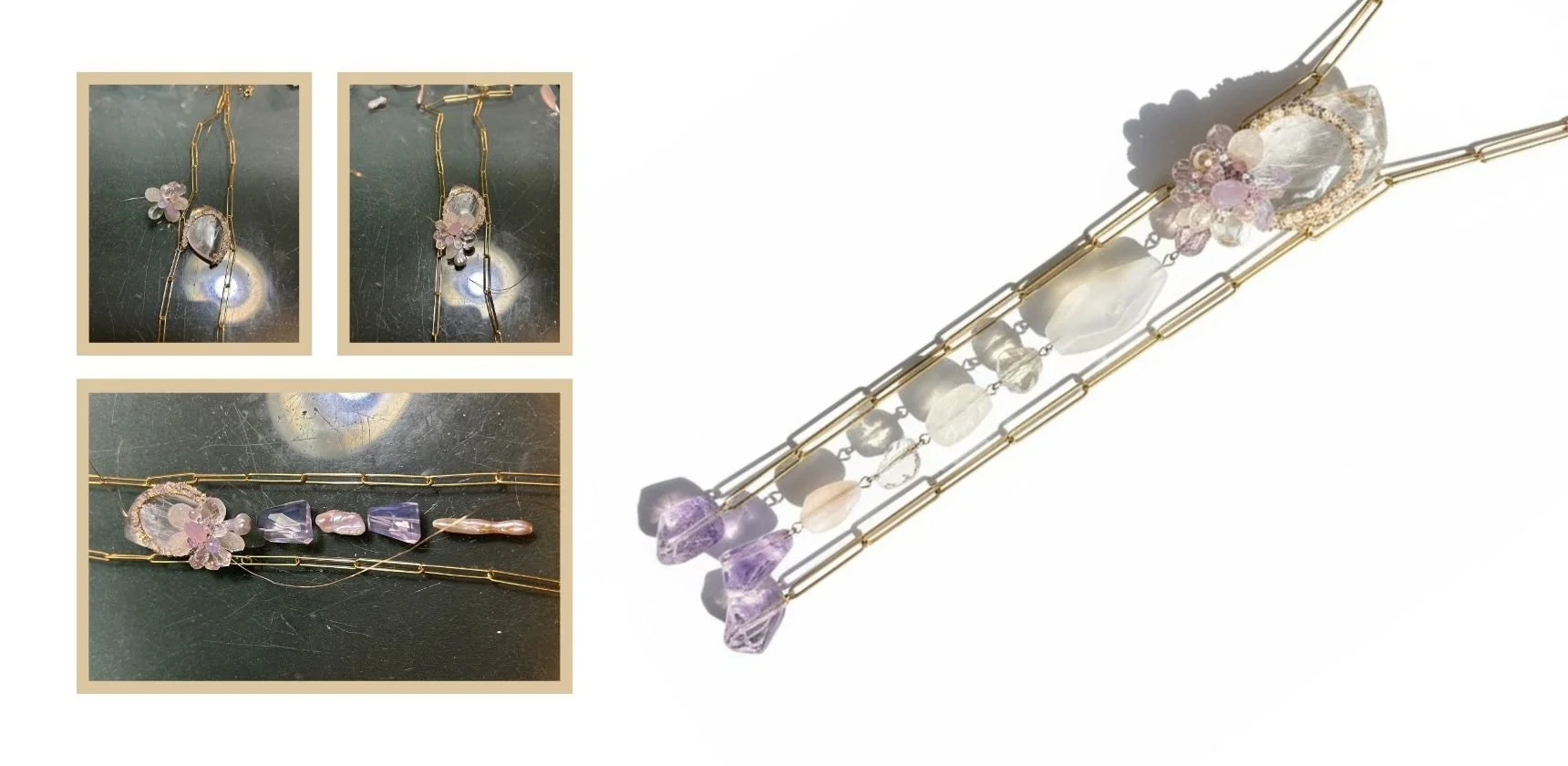
Then I edged the oval and grew a cluster off it
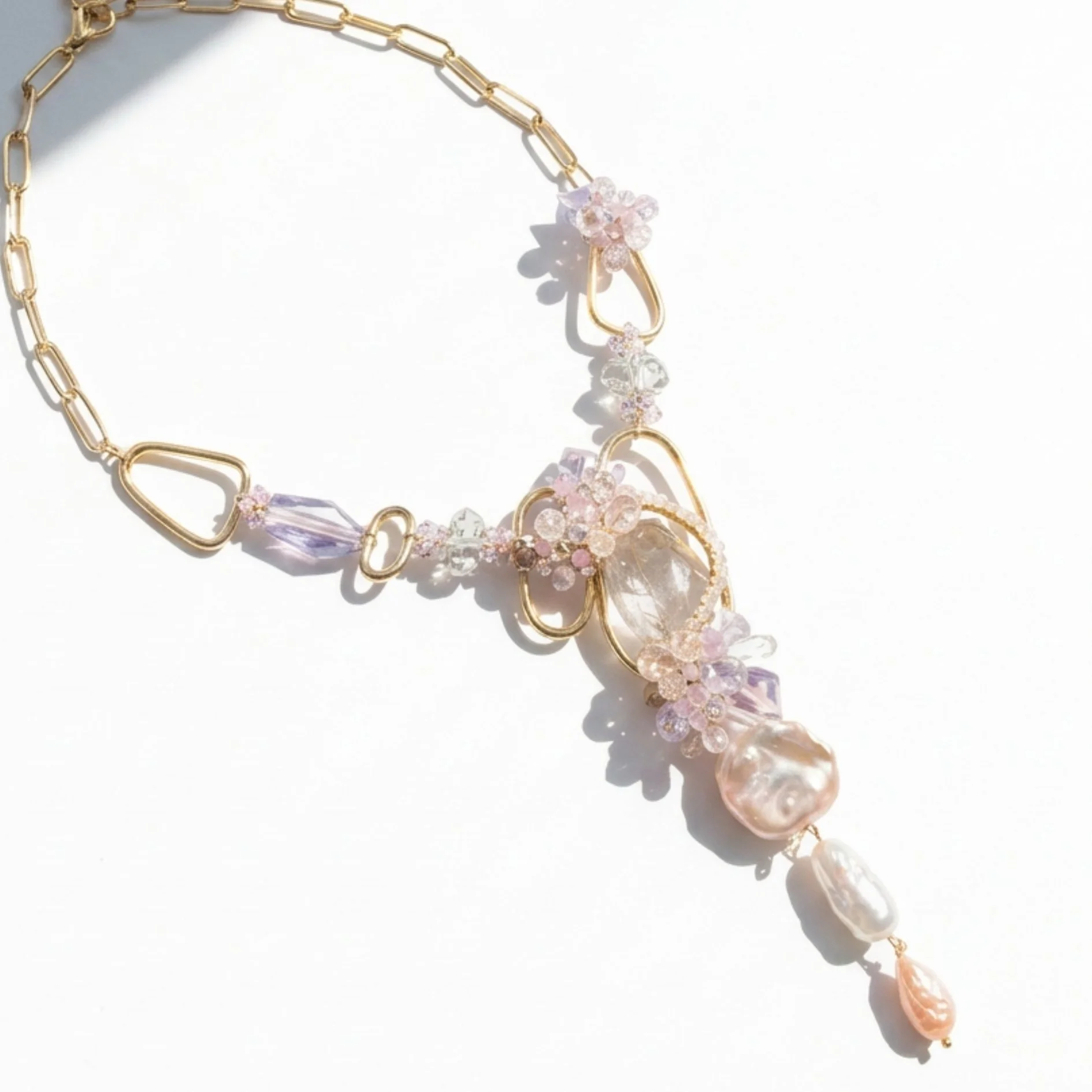
Once the stone was secure I edged the vermeil with tiny stones. Pale amethyst, mystic labradorite and moonstone, fifteen and fourteen and seventeen of them respectively, each one wired individually.
Then the cluster. Pink druzy, pink chalcedony, morganite, lavender quartz, rose quartz, pink and purple sapphires, a large flat aquamarine briolette, and Japanese Akoya keshi pearl accents.
This is the part of my work people recognize, and it is the part I do not rush.
The cluster hangs off the stone rather than surrounding it. On a piece built around a vertical line, a cluster that ringed the pendant would have closed the shape and undone the whole idea. So it gathers at one shoulder of the oval and spills from there.
The pattern I scrapped
I knew I wanted to fill the space between the two chains, so I built a pattern of pearls and gemstones to run down it.
I took it out.
Against the scale of the pendant and the weight of those elongated paperclip links, the pattern read as too small and too delicate. It was a fine idea at the wrong size, and keeping it would have made the whole necklace look busier and less certain. The empty run between the chains does more than the pattern did.
Made once, and there is no next one
I chose elongated paperclip chain for the two runs because the links are long enough to carry the linear idea instead of interrupting it.
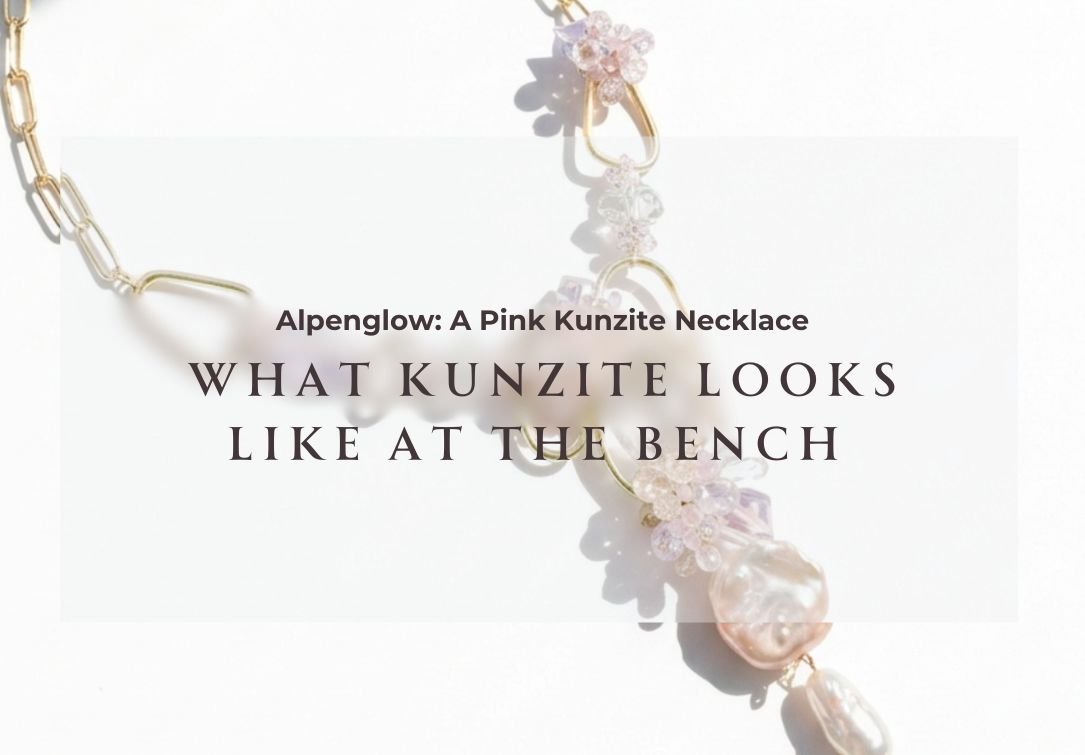
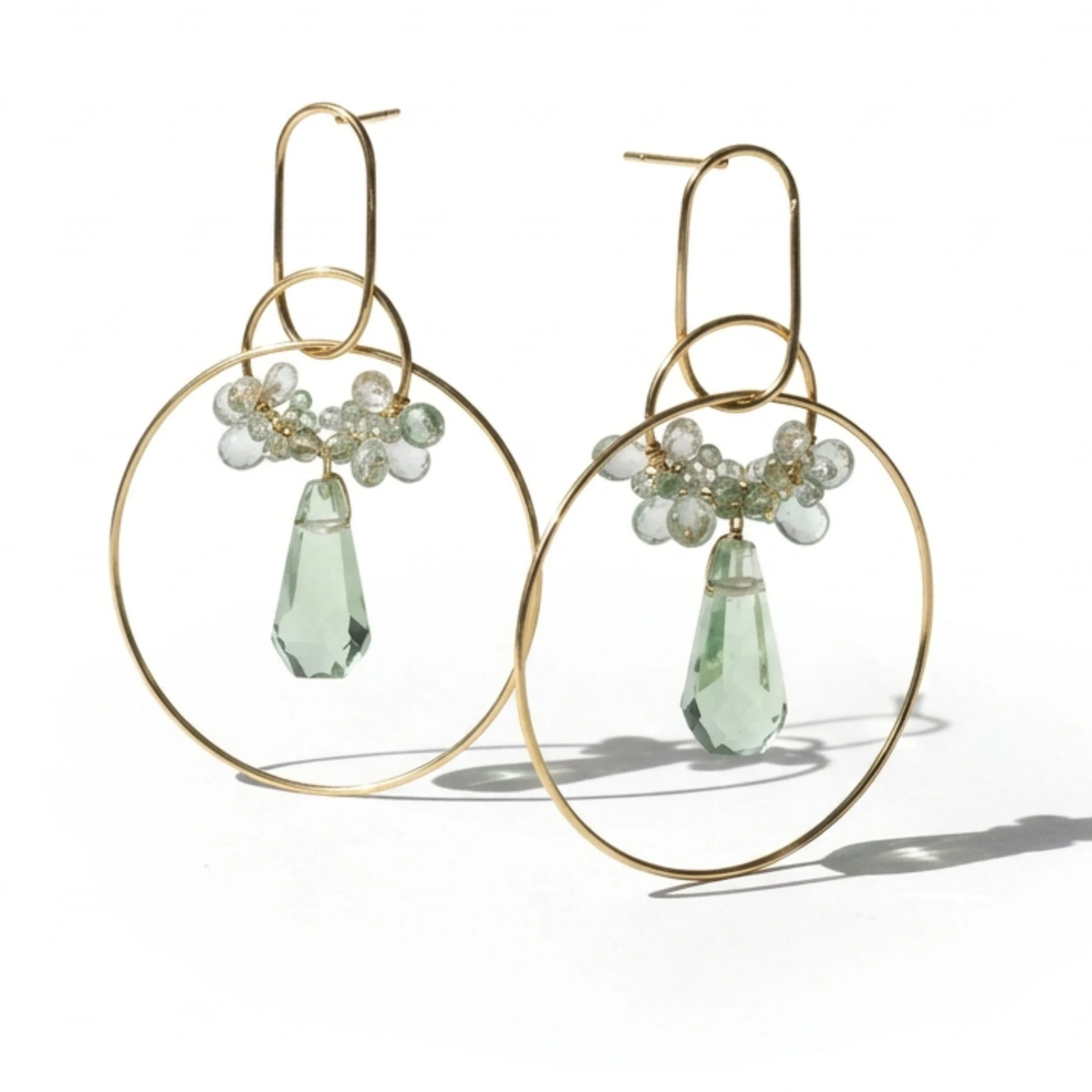
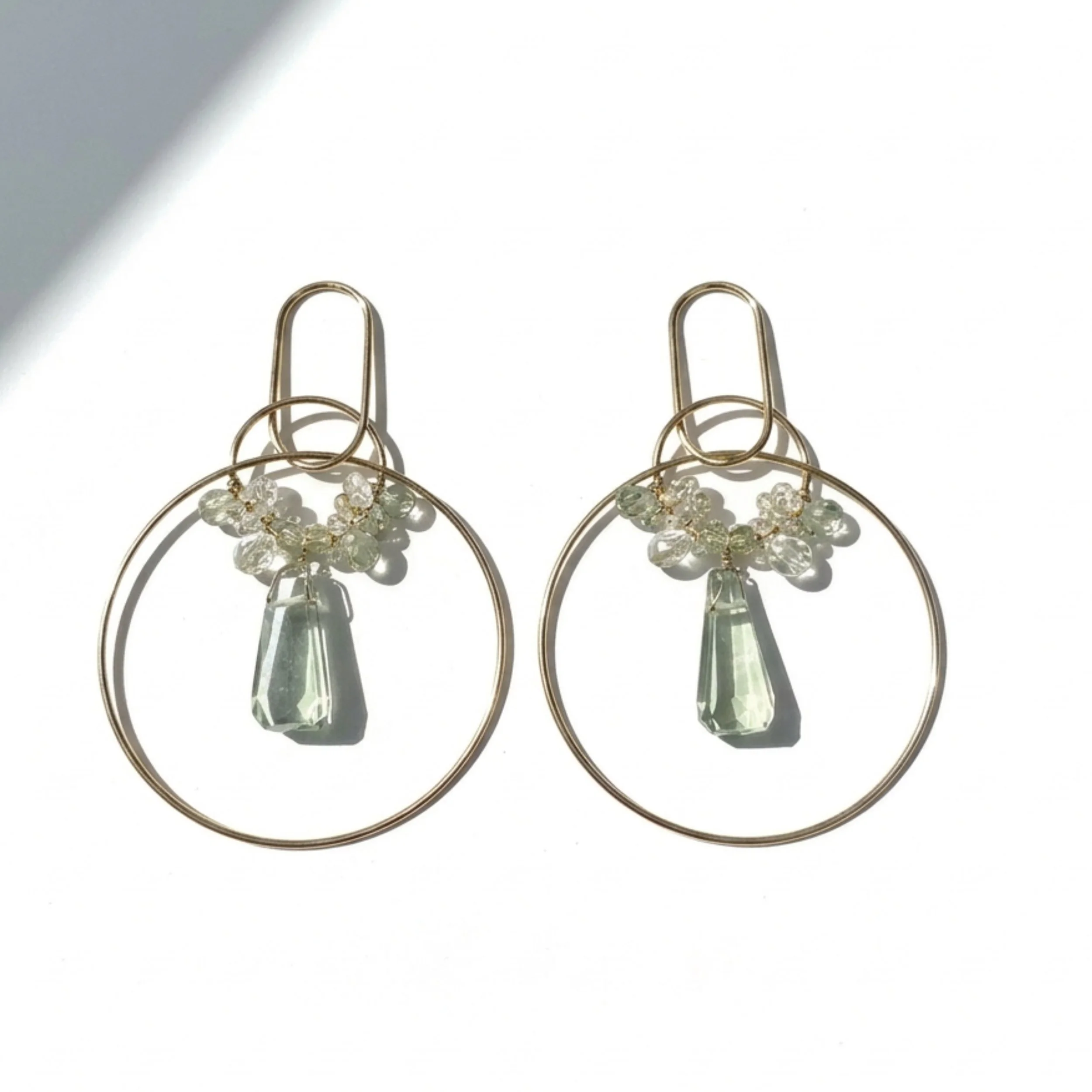
This is the fourth kunzite piece I have made for the pastel work, after a choker that has since found its person and Alpenglow, whose own kunzite arrived with a single drill hole and had to be set into a crescent. Its matching earrings make four.
This was the last pendant. There is not another one waiting, which is the other reason for the name.

Questions
What are the lines and veils inside a kunzite?
Why is kunzite finished smooth rather than faceted?
Is Last Light one of a kind, and can I commission something similar?
Discover
Jewelry that feels like you.
Two minutes. The quiz tells me how you want jewelry to feel in your life, and the messages that follow walk you through pieces I think you'll love.
Take the Style QuizTwo minutes. I take it from there.
Stay Close
Love what you see? Keep finding us.
Google now lets you choose your favorite sources so they show up labeled in AI search answers. If you enjoy discovering handcrafted gemstone jewelry here, add Andrea Li Designs and we'll be easier to find next time you search.
Add Andrea Li Designs as a Preferred SourceOne click. Works across Google Search, AI Overviews, and AI Mode.