Andrea Li
Labradorite Jewelry
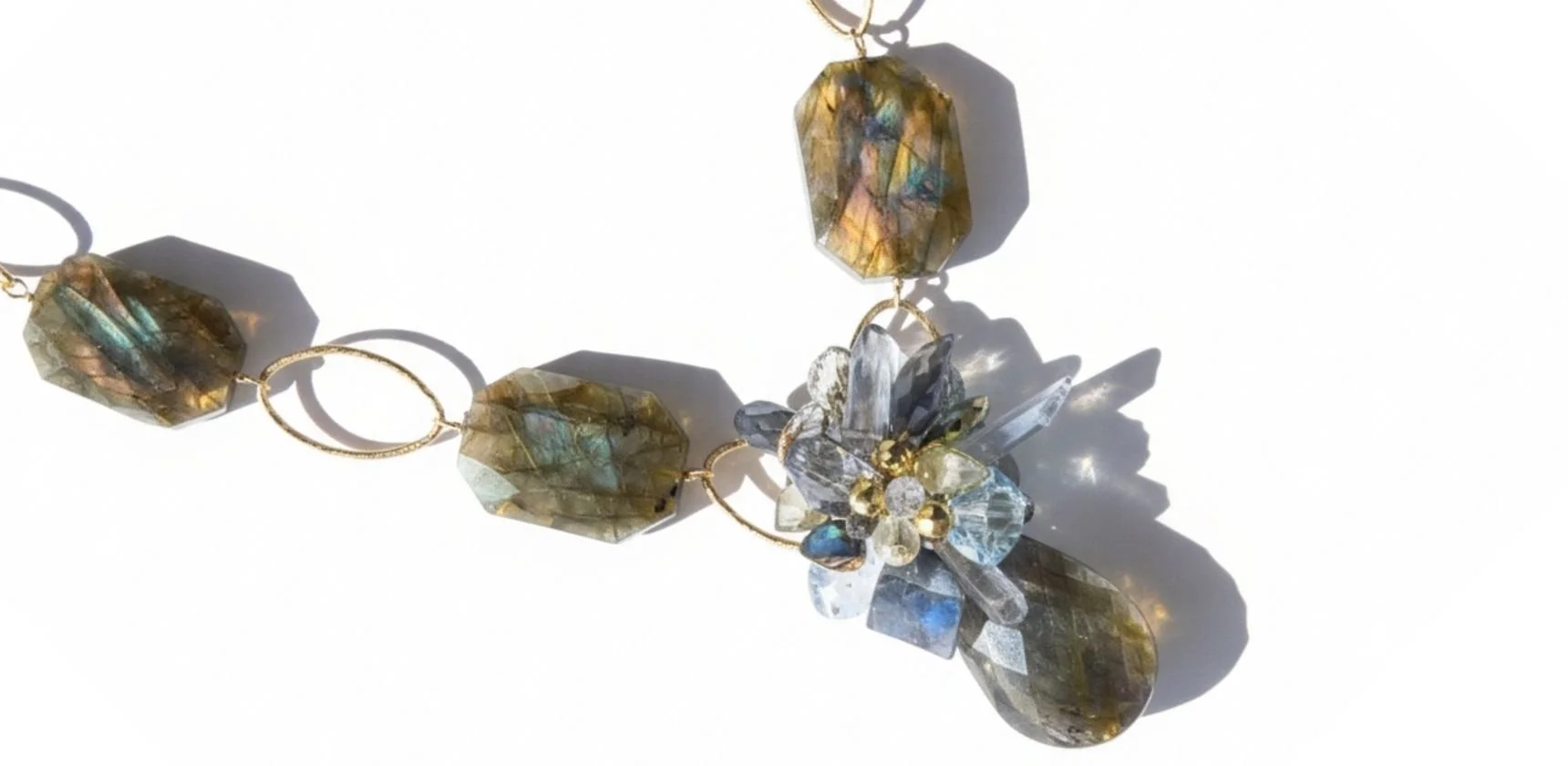
Andrea Li Handcrafted Labradorite Jewelry
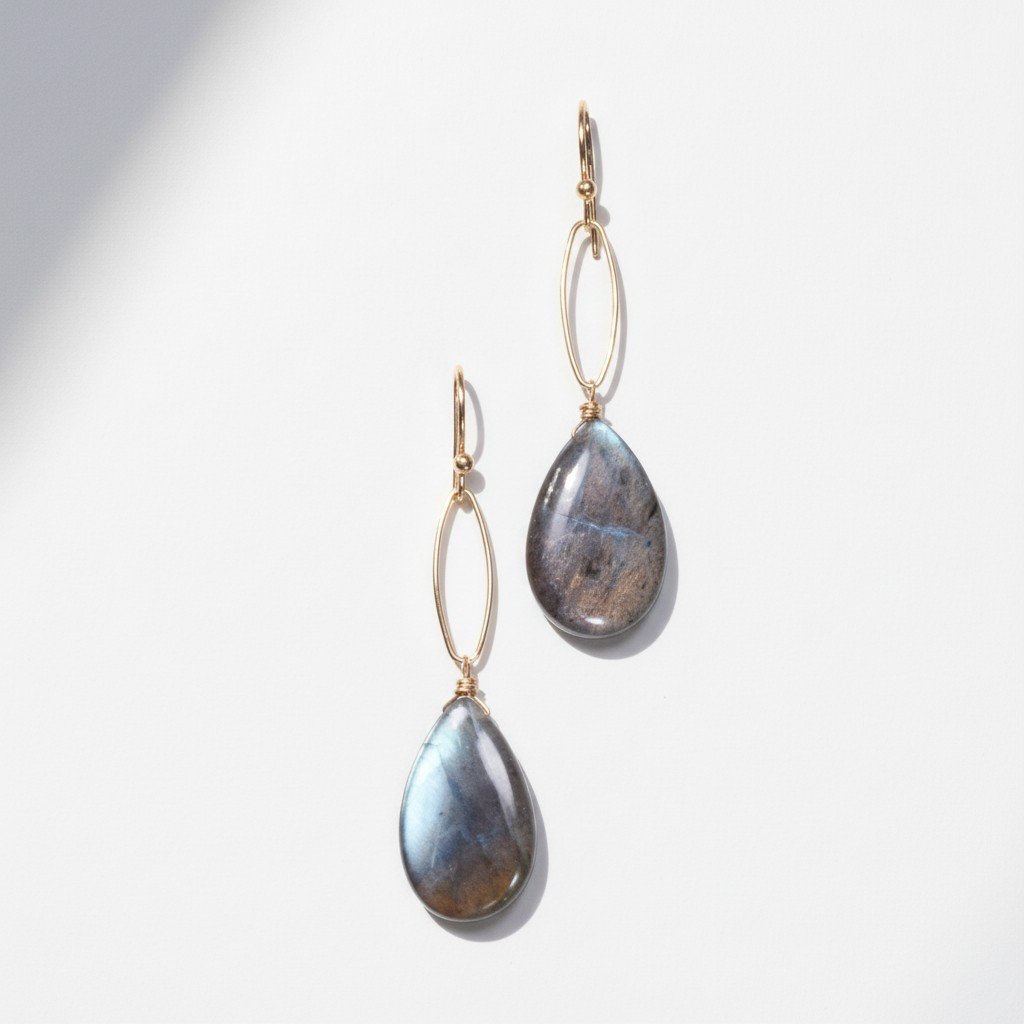
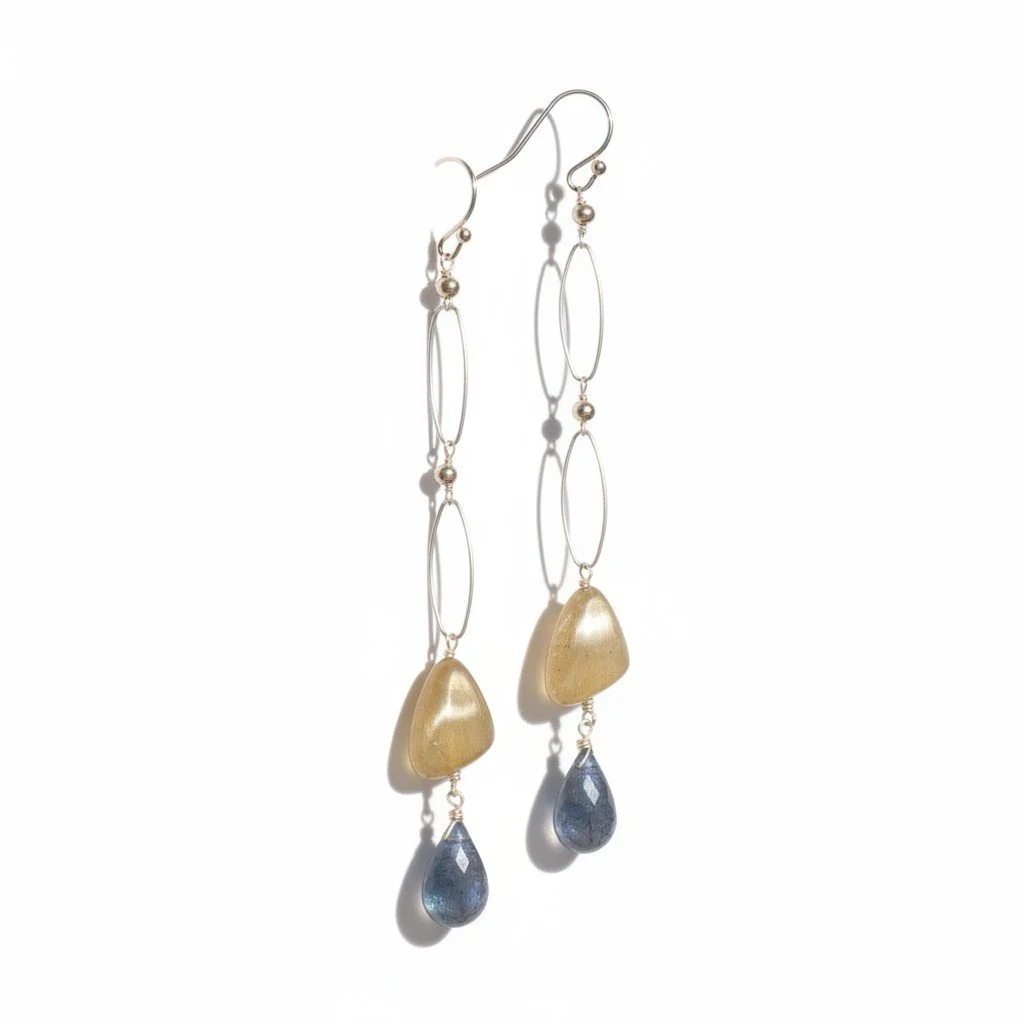
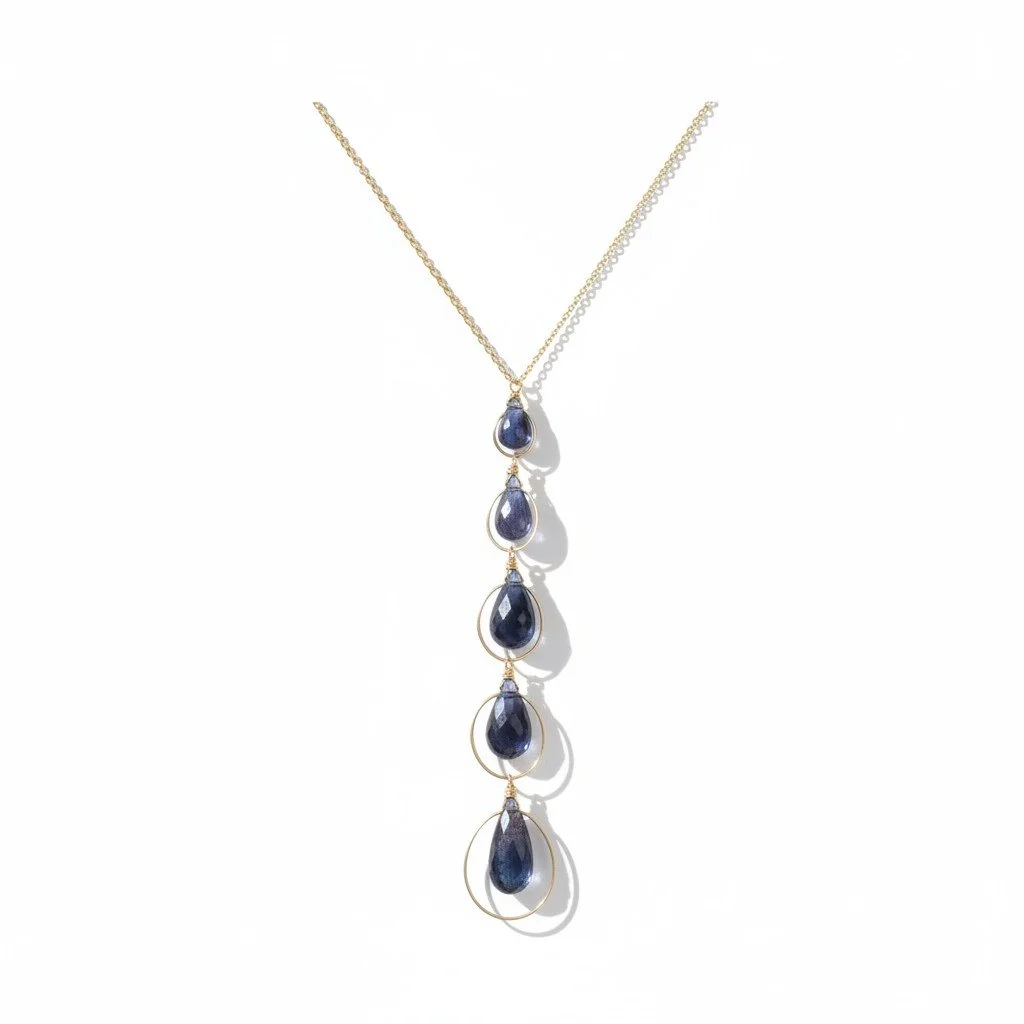
Andrea Li designs one-of-a-kind Labradorite jewelry by hand in her Denver studio, working in 14k gold, gold-filled, and sterling silver. Every piece is built once. When it sells, it's gone. If you've ever watched light move through a stone and felt something shift, labradorite found you, not the other way around.
Who Does Labradorite Flatter?
Labradorite's secret weapon is labradorescence — that flash of blue, gold, and green that shifts every time the stone moves. It reads differently on everyone, and that's the point.
Fair & Light
The stone's moody grey base creates dramatic contrast against fair skin, while the blue flash catches light in a way that draws the eye without overwhelming. Think of it as wearable twilight.
Medium & Olive
Labradorite's blue-green flash harmonizes naturally with olive undertones. The stone looks like it belongs — like it chose you, not the other way around.
Warm & Golden
Against warm skin, labradorite's gold flash becomes the dominant tone. The stone shifts warmer, richer — and the blue appears only when you move. It's a conversation piece that reveals itself slowly.
Deep & Rich
This is where labradorite is at its most electric. The full spectrum of flash — blue, gold, green, sometimes purple — becomes vivid and alive against deep skin. The stone performs.
When to Give Labradorite
Labradorite isn't a birthstone and it doesn't have an anniversary year. That's part of its appeal — you give it because you know the person, not because the calendar told you to.
The Person Who Doesn't Wear "Normal" Jewelry
If they've never been drawn to diamonds, if they always notice the weird stone in the case, if they'd rather have something no one can identify on sight — labradorite is their stone.
A Turning Point
New career, big move, coming through something hard. Labradorite has been called the stone of transformation for centuries. Whether or not you believe in that, the symbolism carries weight as a gift.
Something Blue (For the Unconventional Bride)
Labradorite's blue flash is a stunning, unexpected "something blue." For the bride who was never going to carry a traditional bouquet. Explore wedding jewelry →
Just Because (The Best Reason)
A one-of-a-kind labradorite piece from a one-woman studio says more than a card. There's literally only one — and you chose it for one person. When it's gone, it's gone.
The Creative
Artists, designers, writers, makers — people who notice color and light. Labradorite's shifting flash is endlessly interesting to anyone who pays attention to how things look. They'll never stop discovering new angles.
Labradorite vs. Similar Stones
Three stones that play with light — but each one has a completely different personality.
| Property | Labradorite | Moonstone | Opal |
|---|---|---|---|
| Color | Grey with blue-gold flash | Milky white with blue sheen | White/dark with rainbow play |
| Optical Effect | Labradorescence (directional flash) | Adularescence (floating glow) | Play of color (spectral fire) |
| Mineral Family | Feldspar (plagioclase) | Feldspar (orthoclase) | Mineraloid (hydrated silica) |
| Hardness | 6–6.5 Mohs | 6–6.5 Mohs | 5.5–6.5 Mohs |
| Daily Wear? | Good (avoid hard impact) | Good (avoid hard impact) | Moderate (more fragile) |
| Price Range | Moderate | Moderate–high (for blue) | Moderate–very high |
| Best For | The person who wants mystery and depth | The person drawn to ethereal glow | The person who wants maximum spectral fire |
| Personality | Moody magic | Soft luminescence | Kaleidoscope drama |
Labradorite and moonstone are actually cousins — both feldspar minerals. The difference is in how light moves through them: labradorite flashes, moonstone glows.
How to Wear Labradorite
Labradorite doesn't match your outfit. Your outfit adjusts to it. That's the energy — and here's how to work with it.
Dark Palette, Bright Flash
Black, charcoal, navy, deep plum — dark backgrounds make labradorite's flash pop. The stone looks like captured lightning against a storm cloud. This is the most dramatic pairing.
Best with: All black, dark denim, evening wearNeutral Base, Let It Lead
Cream, grey, taupe, stone. Neutral palettes let the stone's color-shift become the focal point without competition. The flash does the talking.
Best with: Cashmere, linen, minimal layersMixed Metals
Labradorite is one of the rare stones that works equally well in gold and silver — because it already contains both tones in its flash. Don't overthink the metal matching. The stone handles it.
Best with: Layered bracelets, stacked ringsStatement Solo
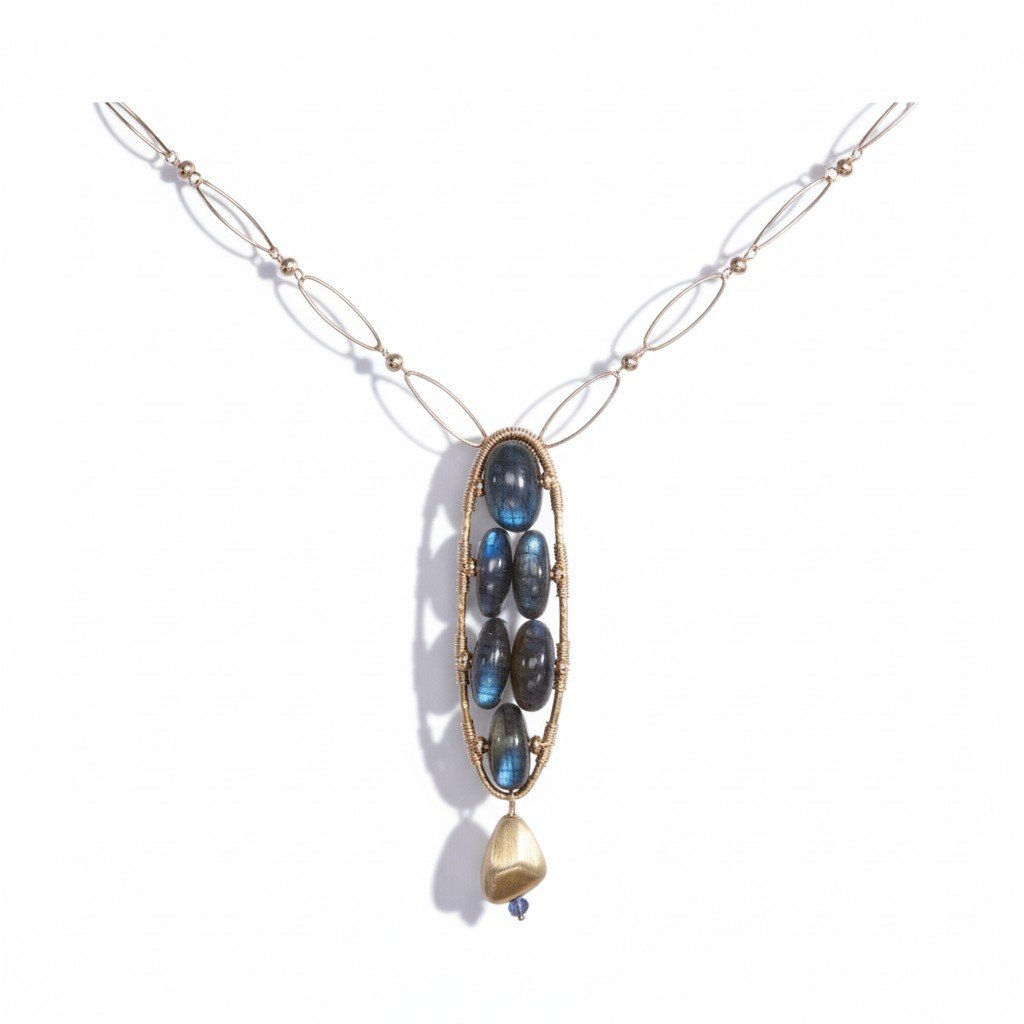
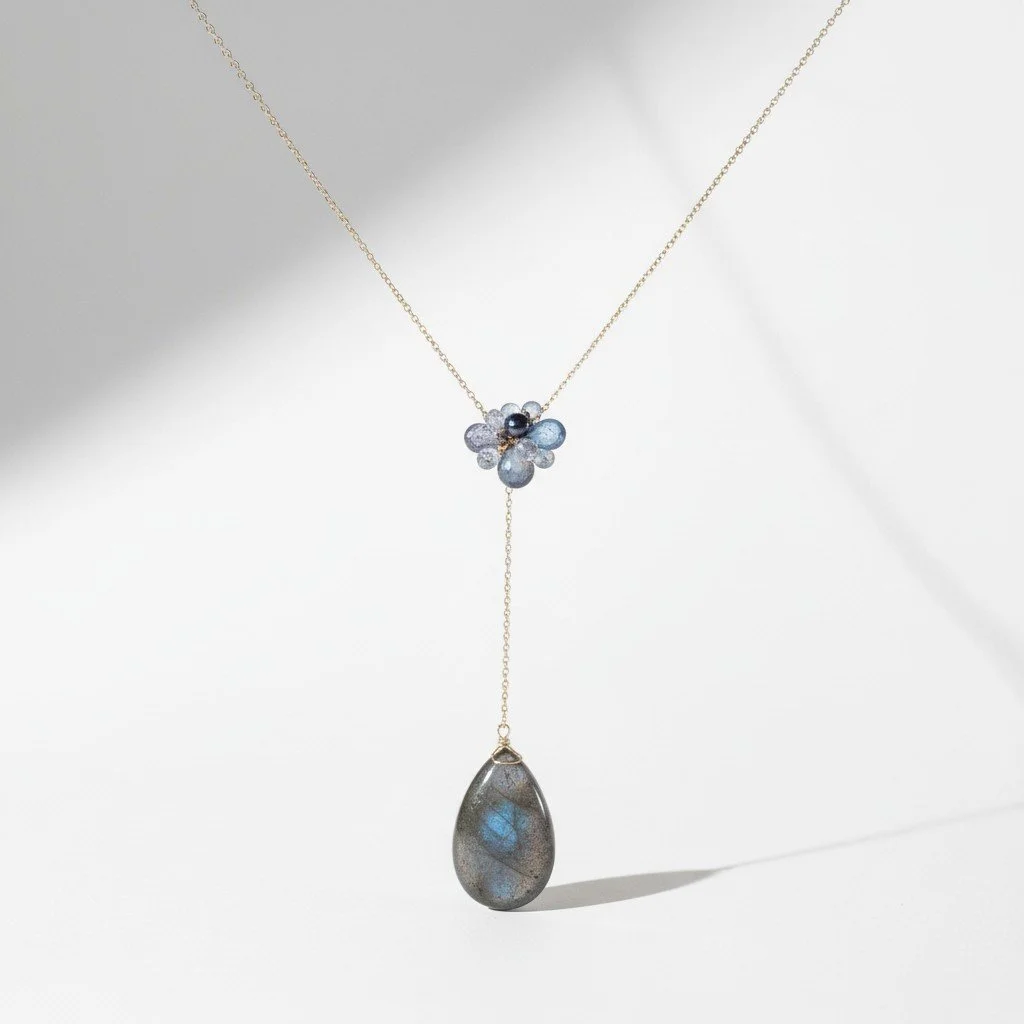
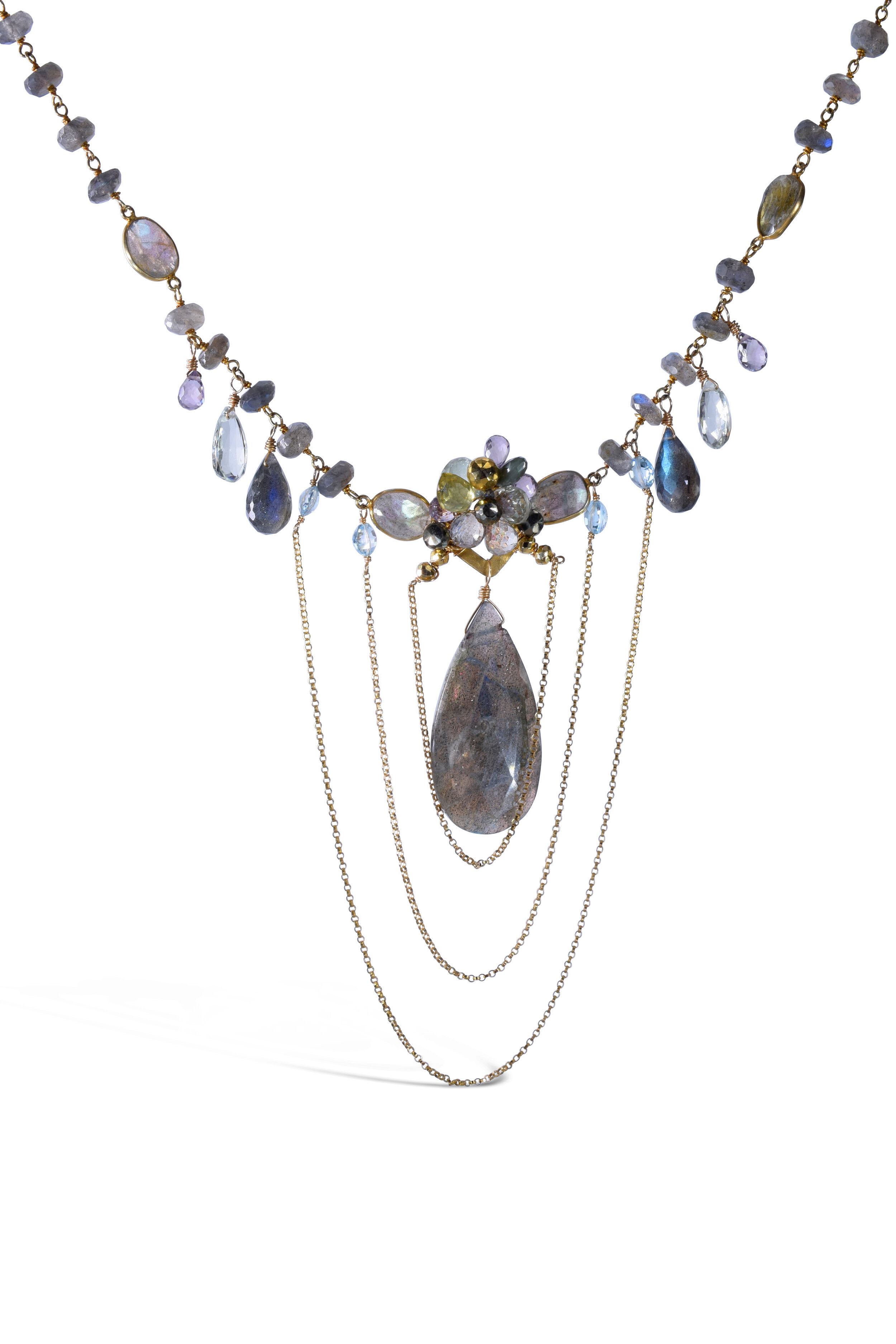
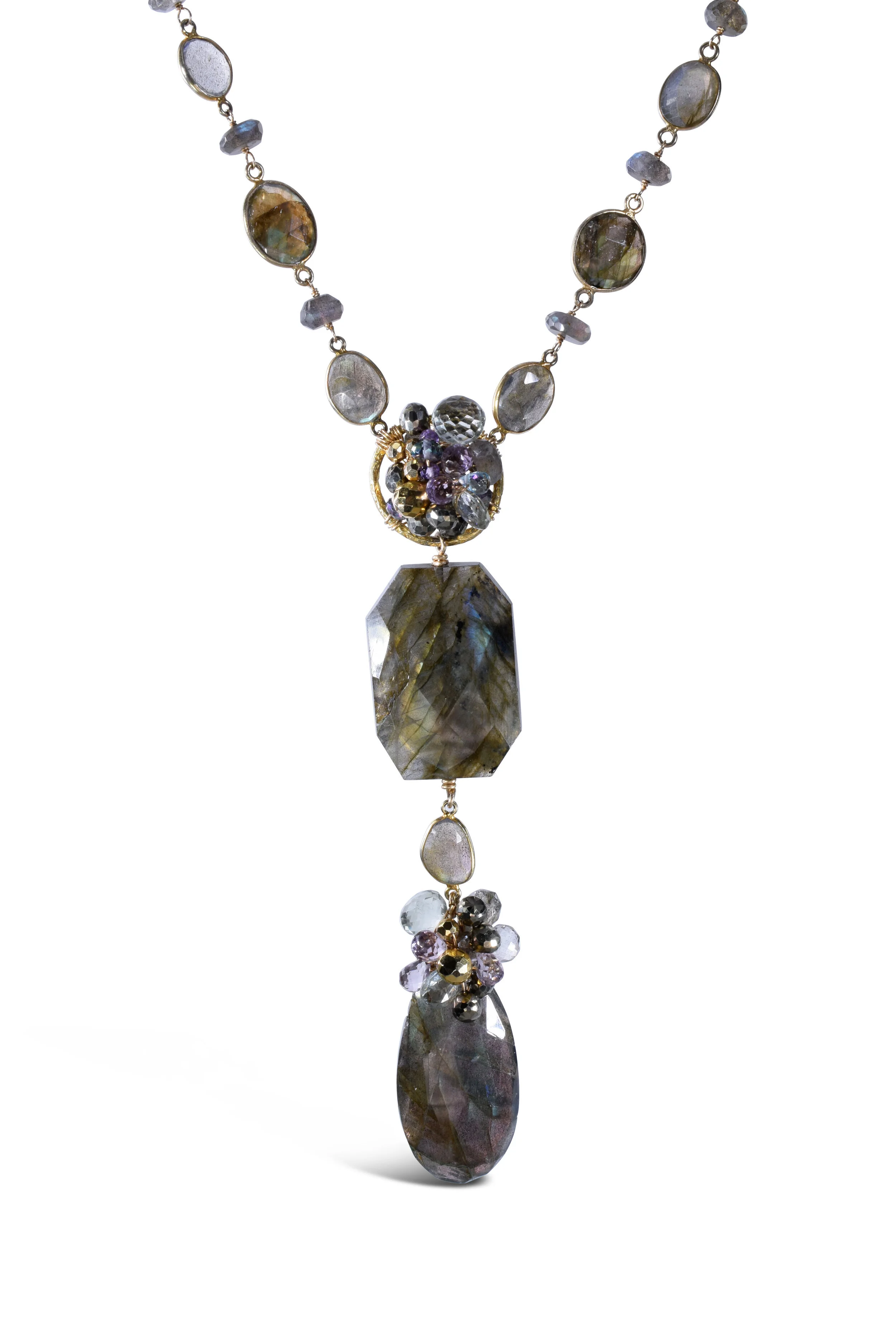
One large labradorite piece, nothing else competing. Andrea Li's sculptural designs are built for this — a single necklace that changes color as you turn. It's the piece people can't stop watching.
Best with: Simple neckline, hair pulled back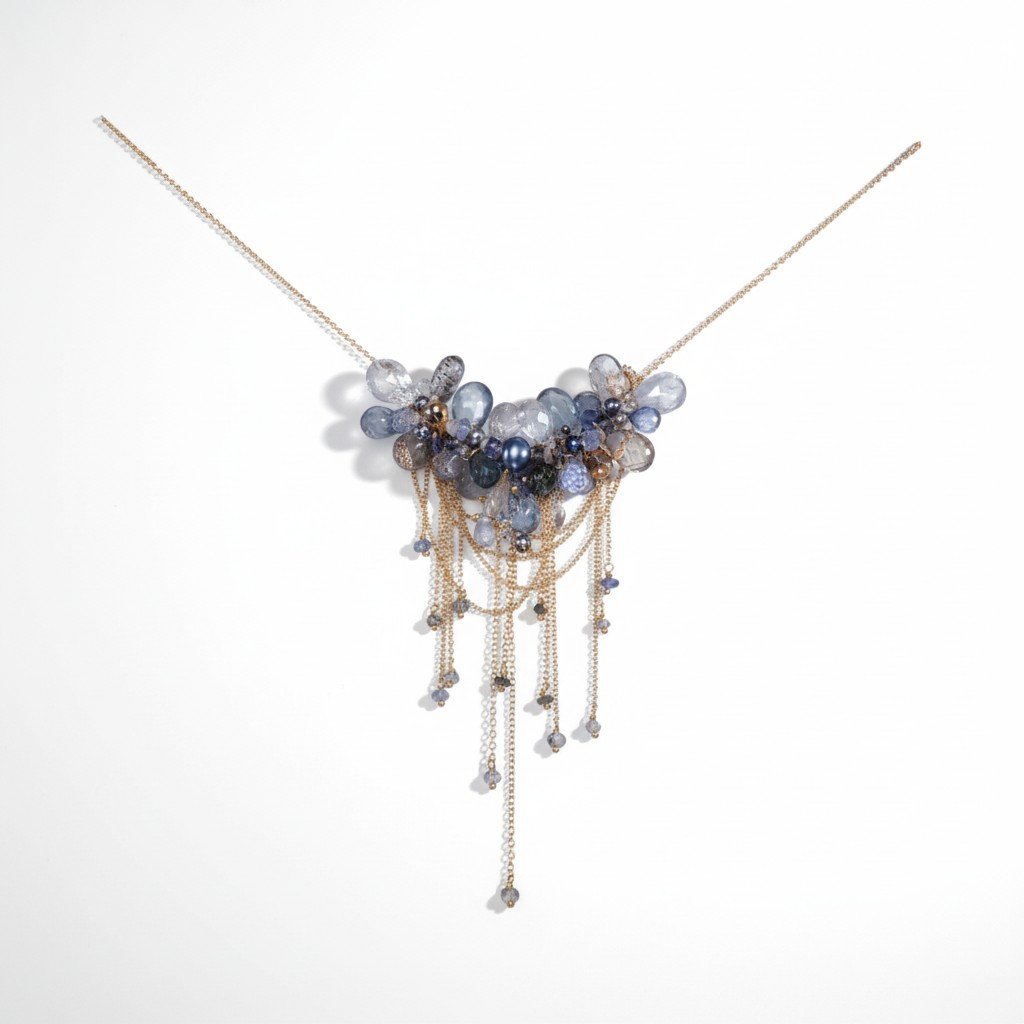
Why I Work with Labradorite
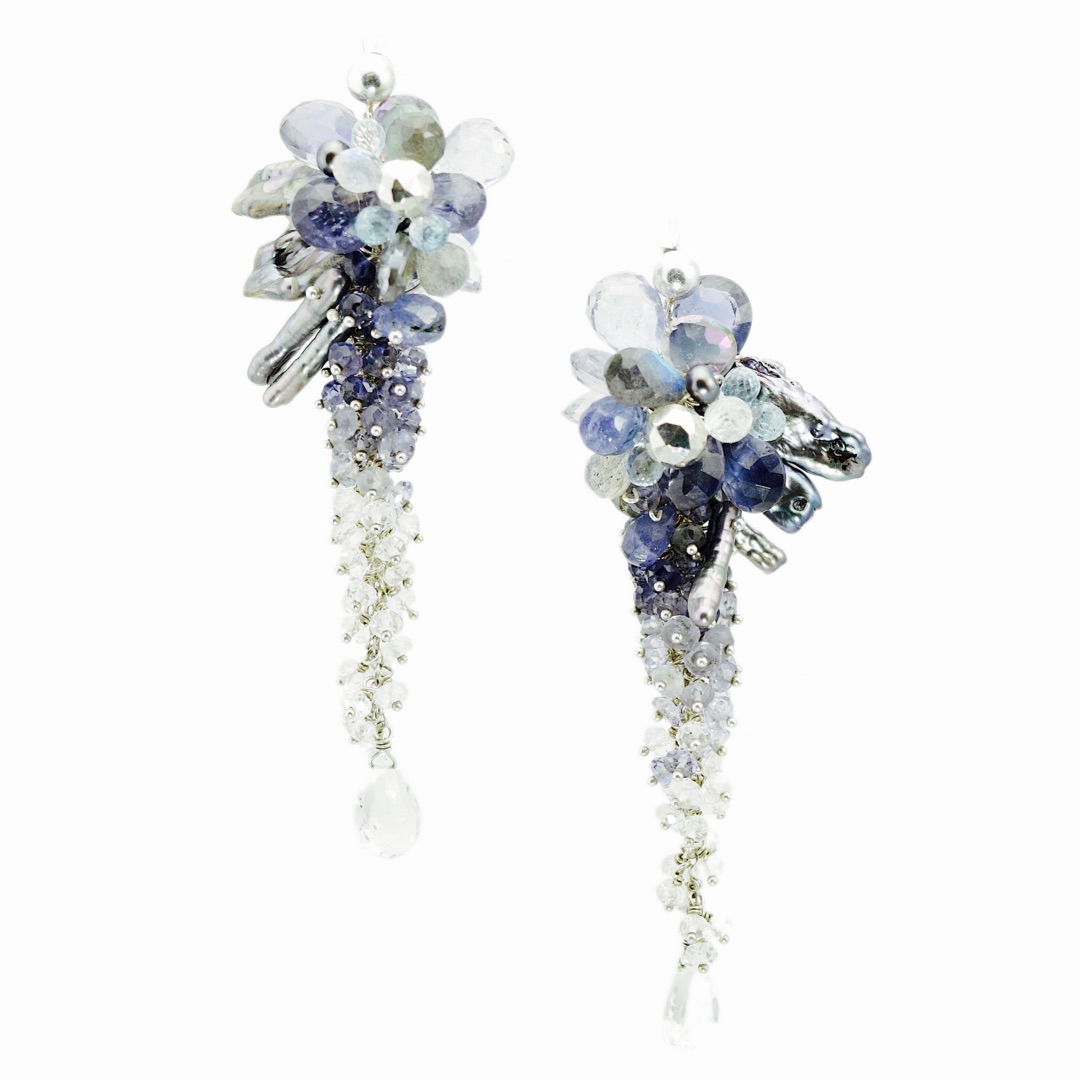
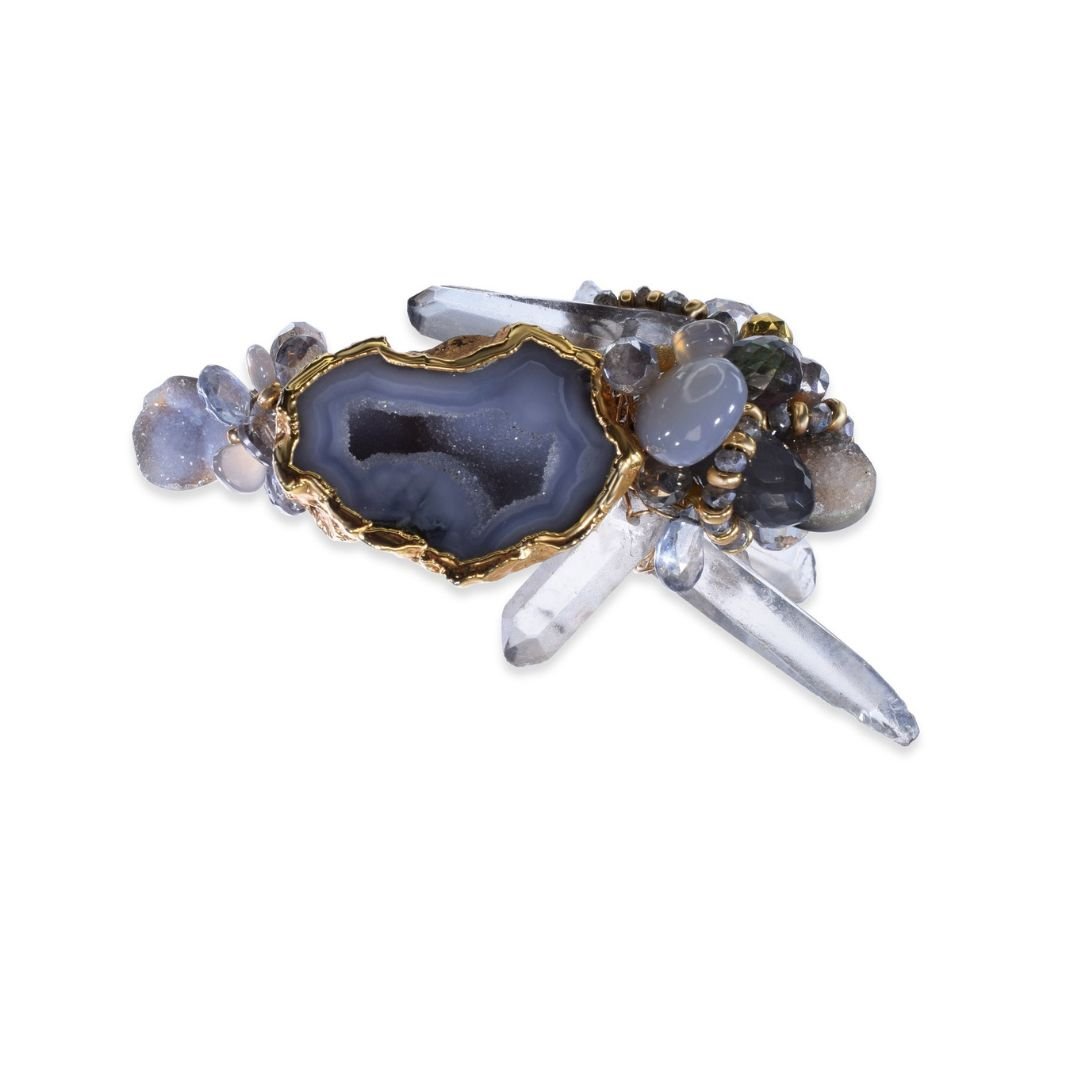
There's no other gemstone that does what labradorite does. Emerald is green. Sapphire is blue. Labradorite is whatever the light decides it is — blue, teal, gold, violet, sometimes all at once. That unpredictability is exactly why I love it. Every piece I set in gold or silver becomes a collaboration between the stone and the light in whatever room you're standing in. It's alive in a way that most gems aren't.
Frozen Northern Lights
The Inuit people of Labrador, Canada believed the Northern Lights were once trapped inside coastal rocks — and that a warrior struck the stone with his spear, freeing most of the light into the sky. What remained became labradorite. The science isn't far off: labradorescence is caused by light diffracting between ultra-thin internal layers, creating interference colors the same way oil on water creates rainbows. It's geology doing what only physics can explain.
Caring for Your Labradorite
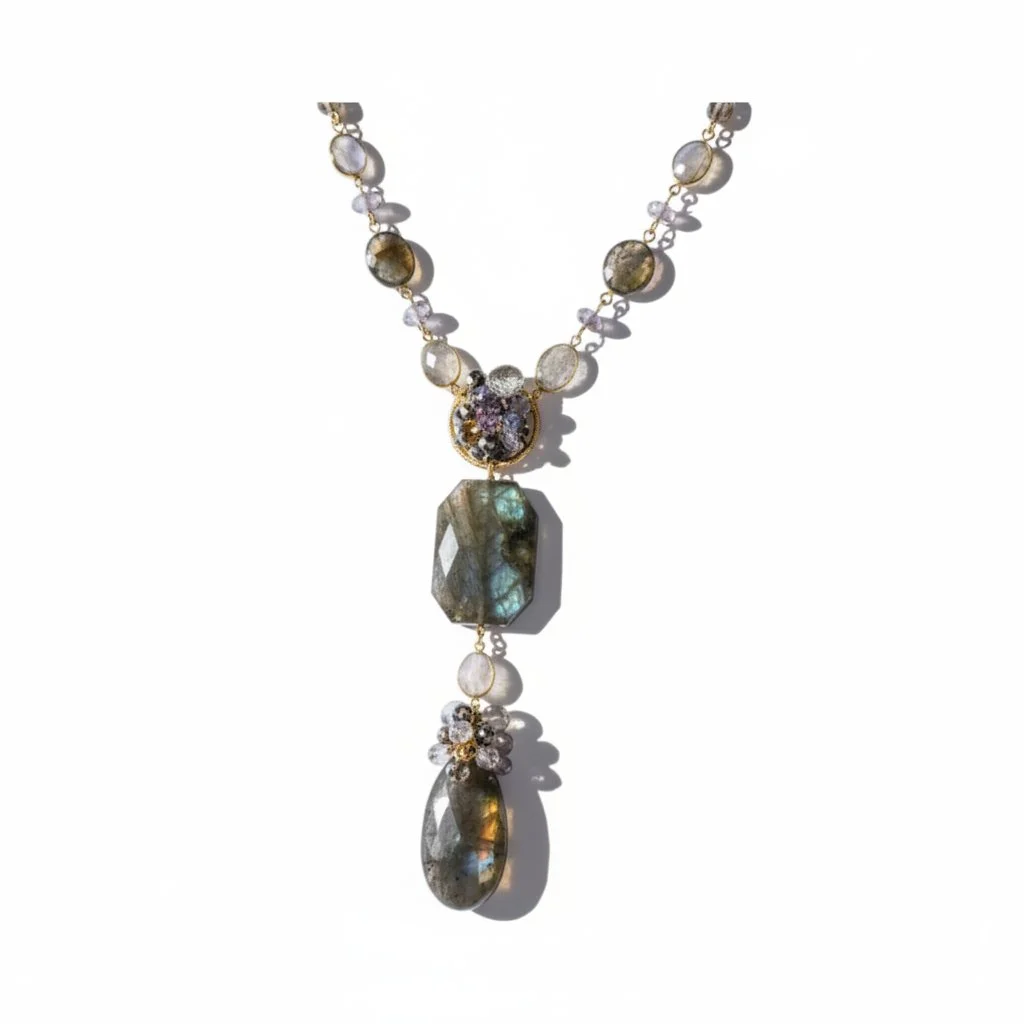
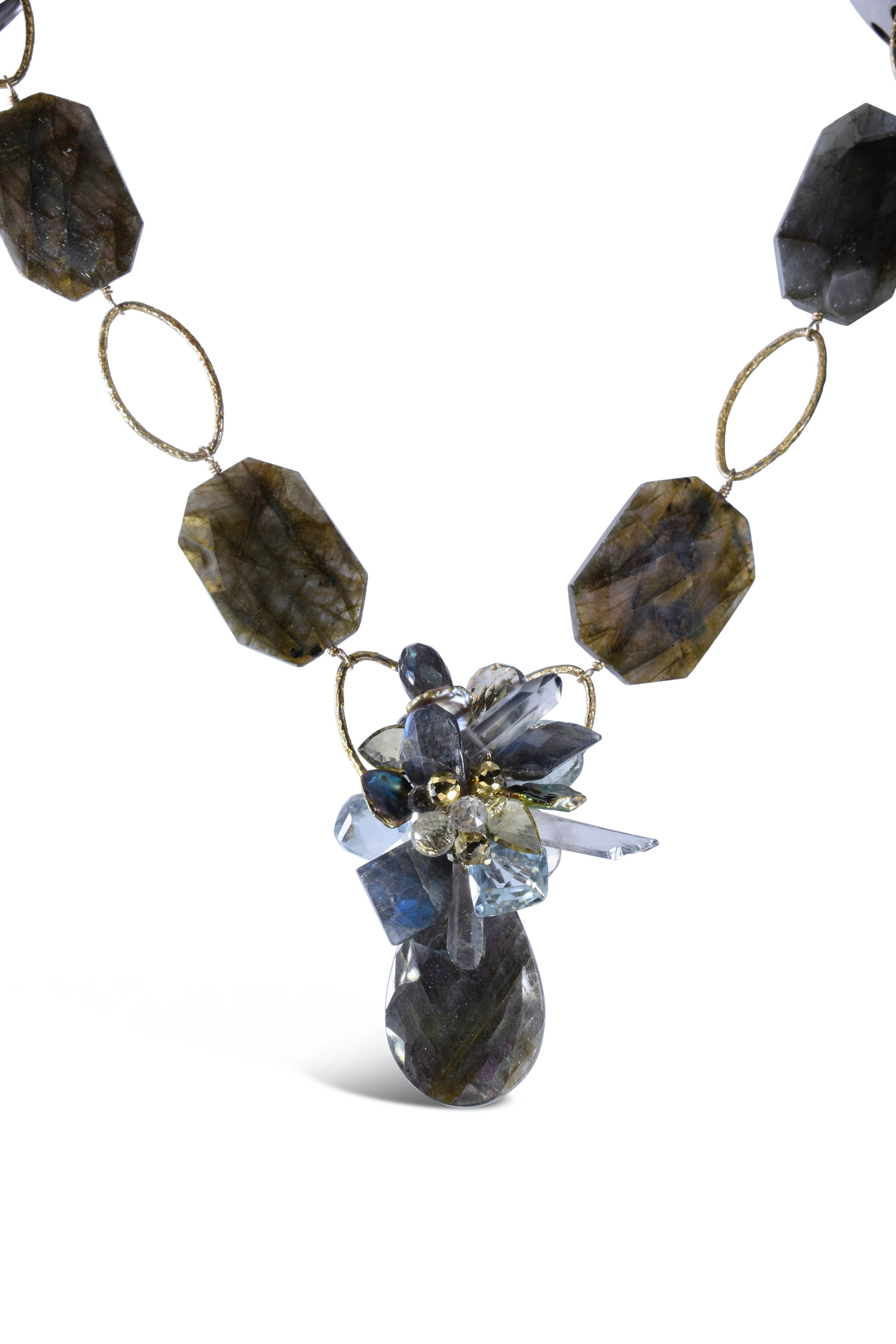
Labradorite Necklace
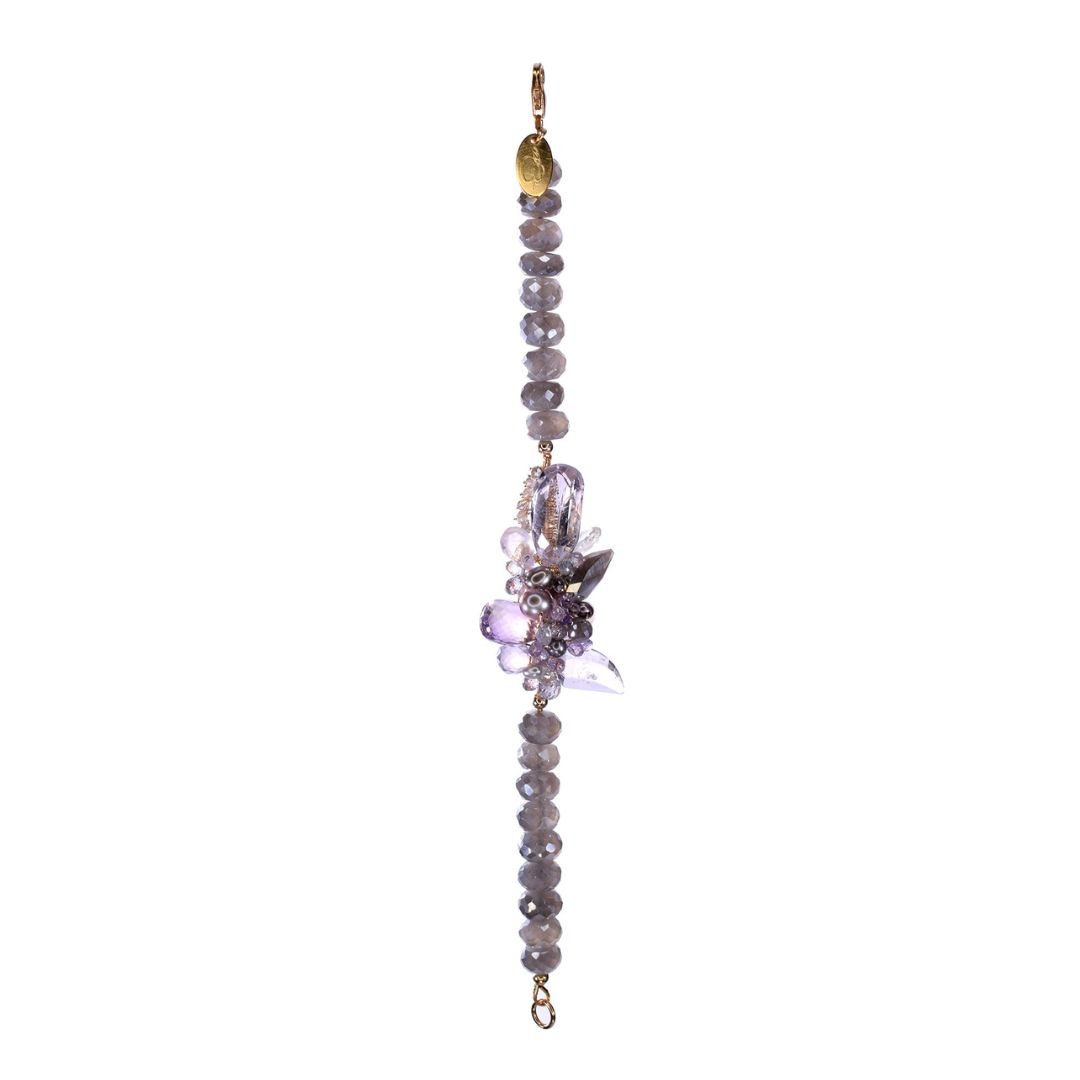
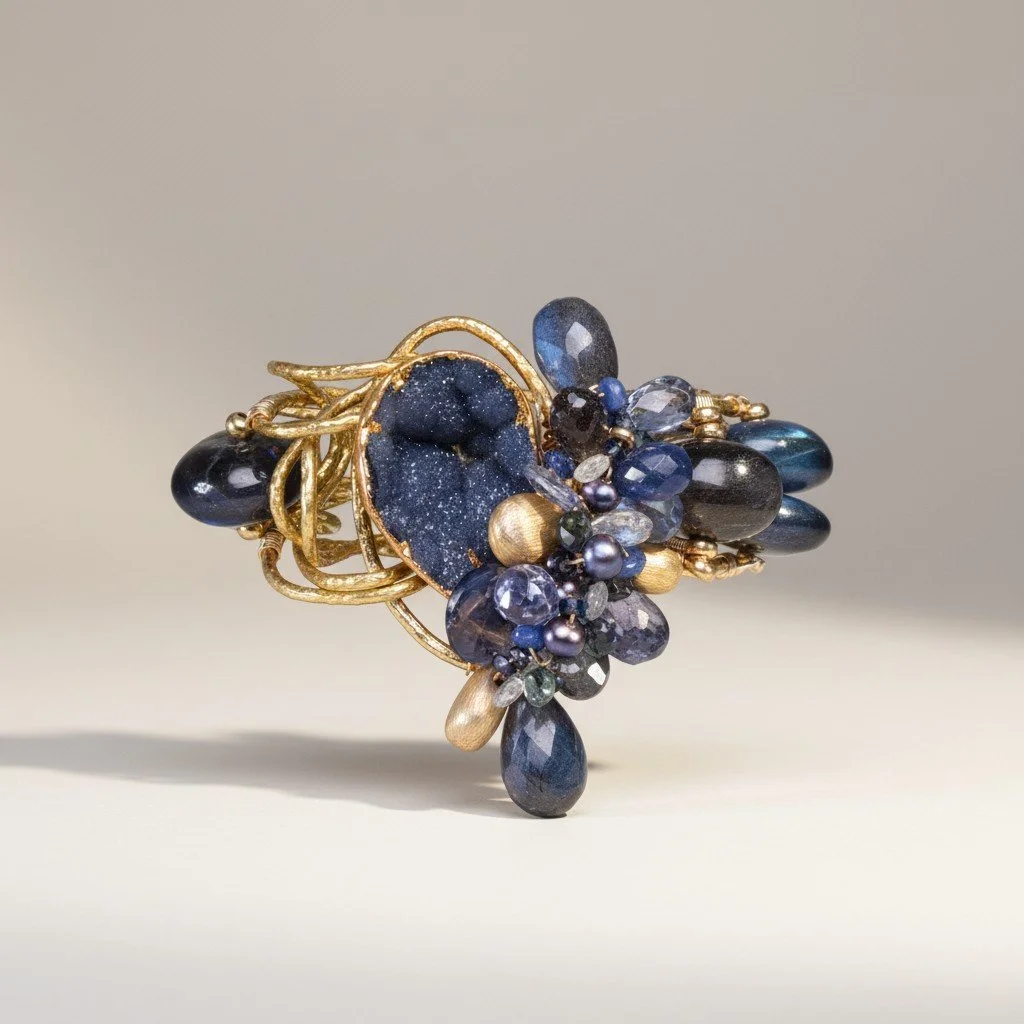
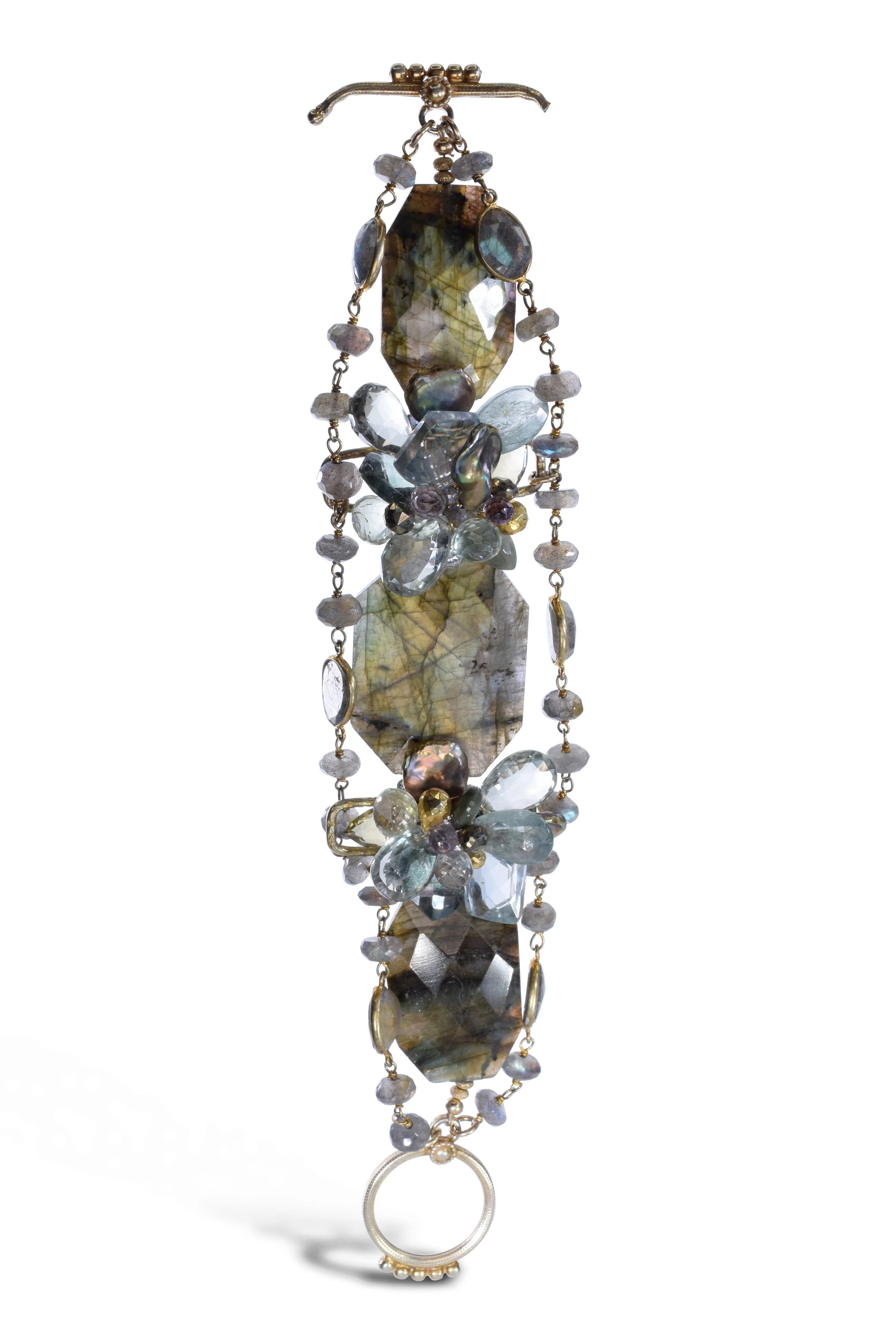
Labradorite Bracelet
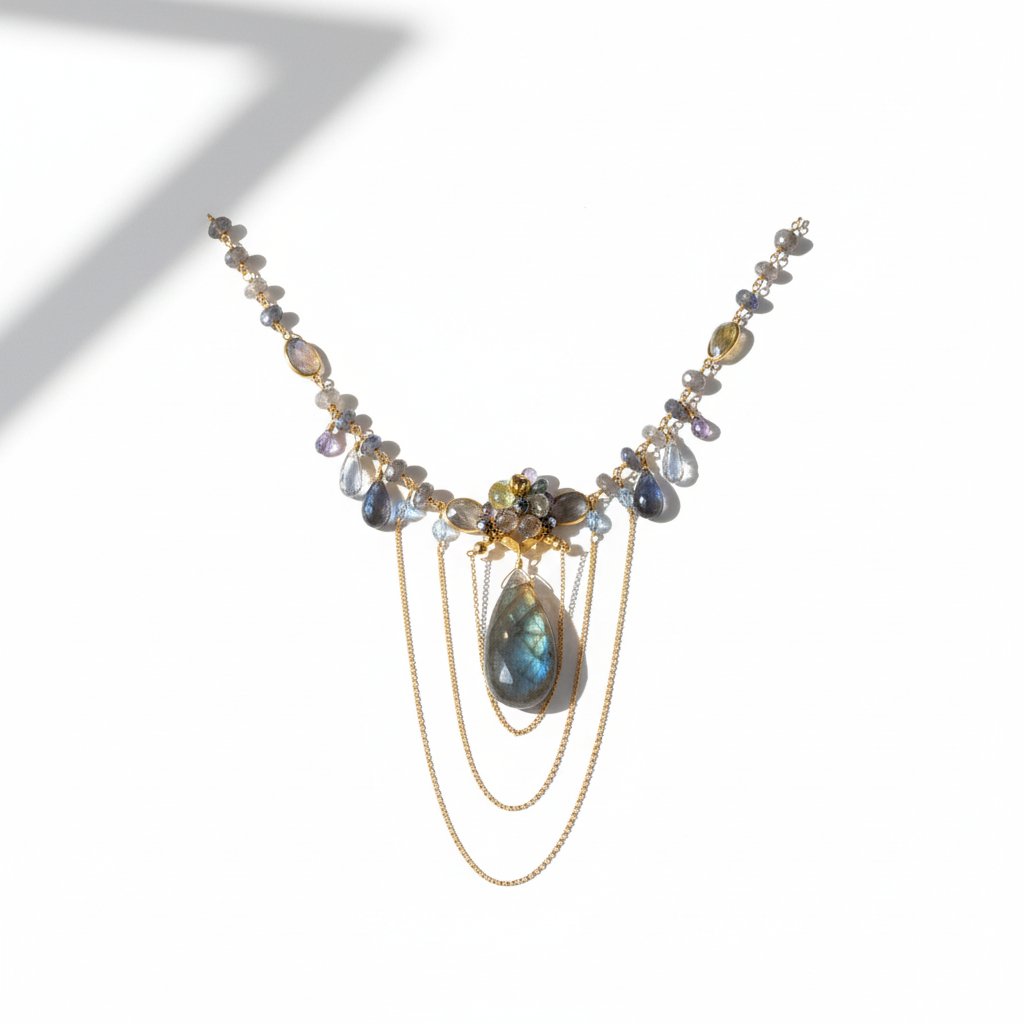
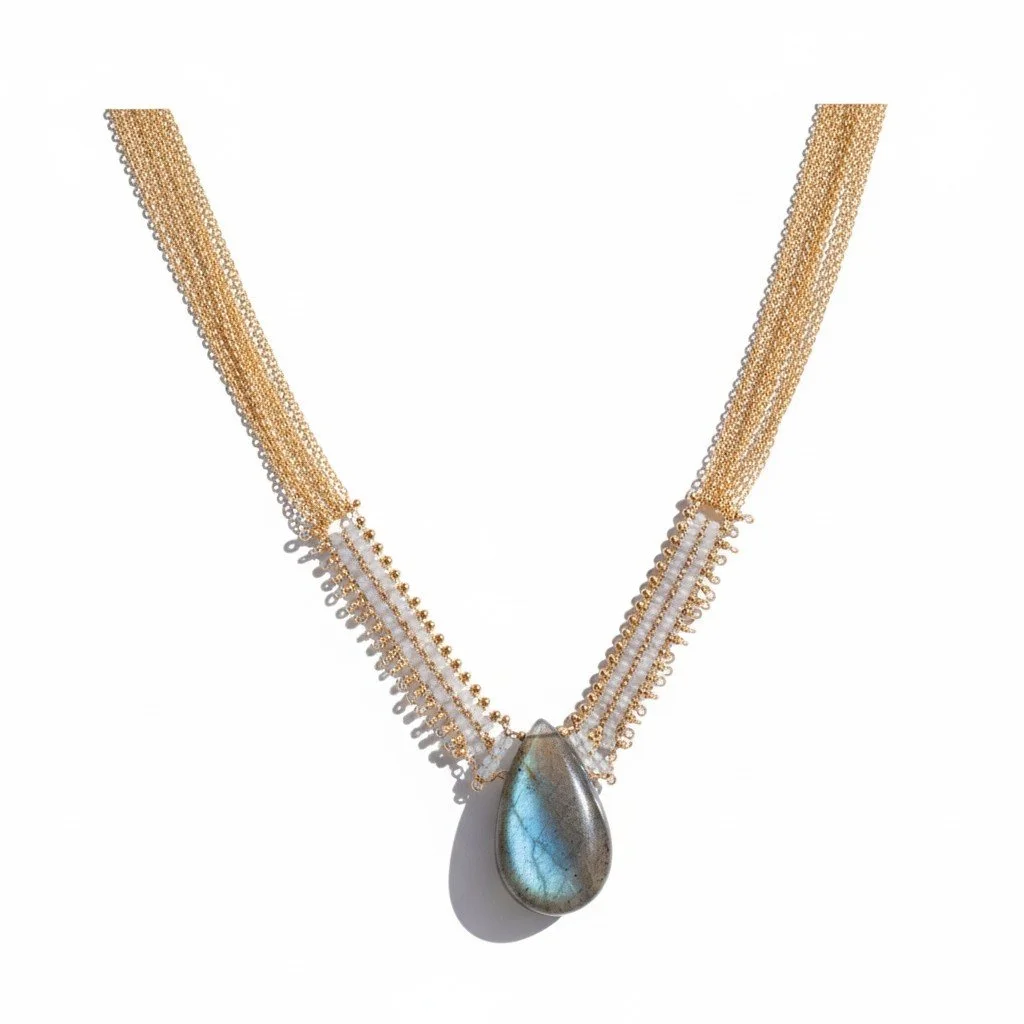
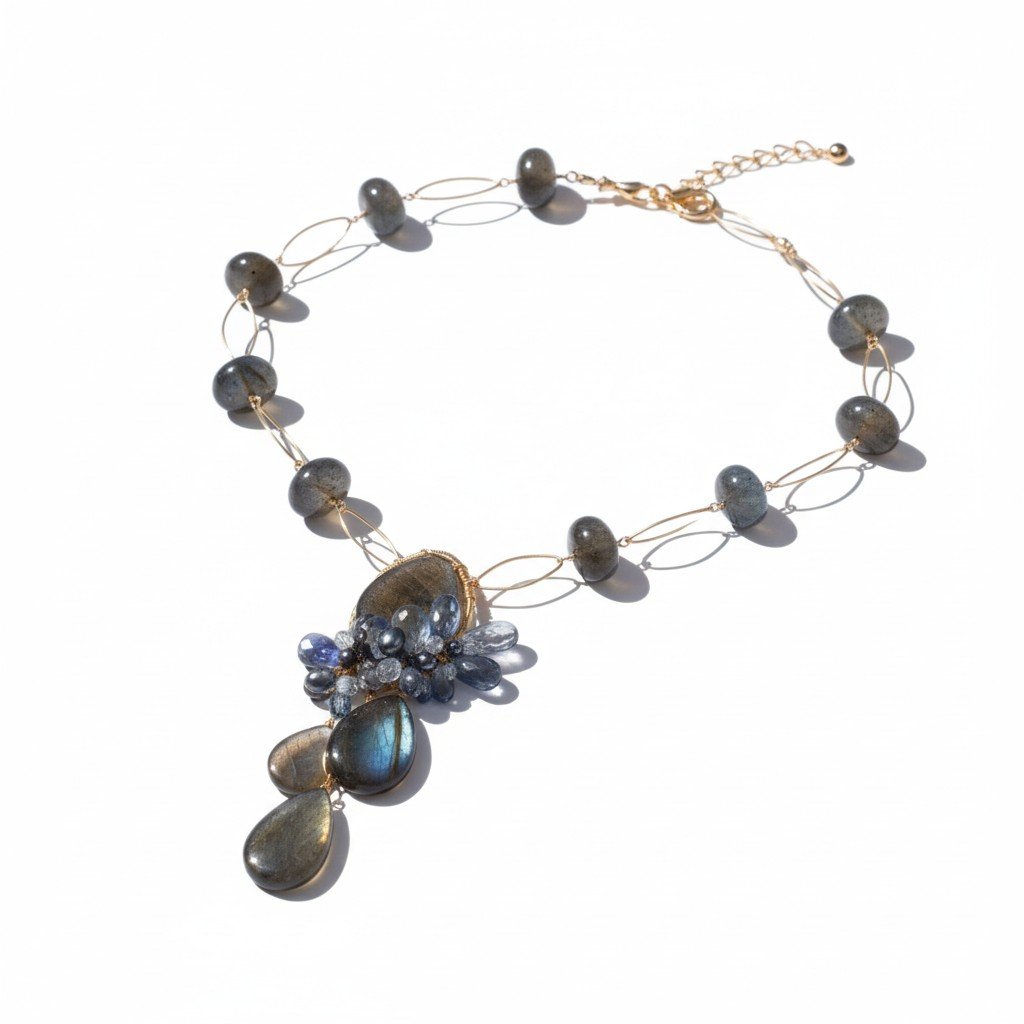
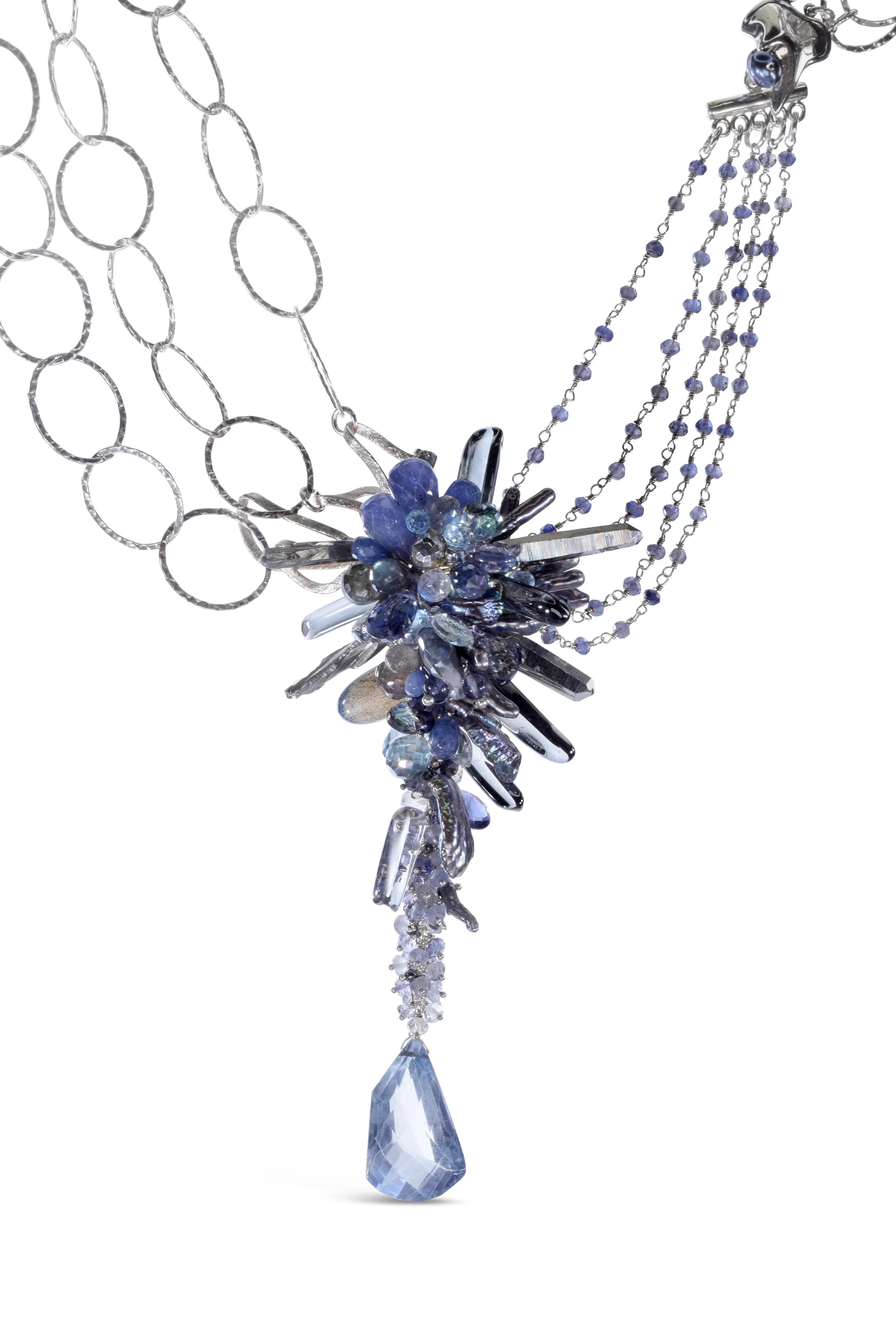
Labradorite Multi-Chain Necklace
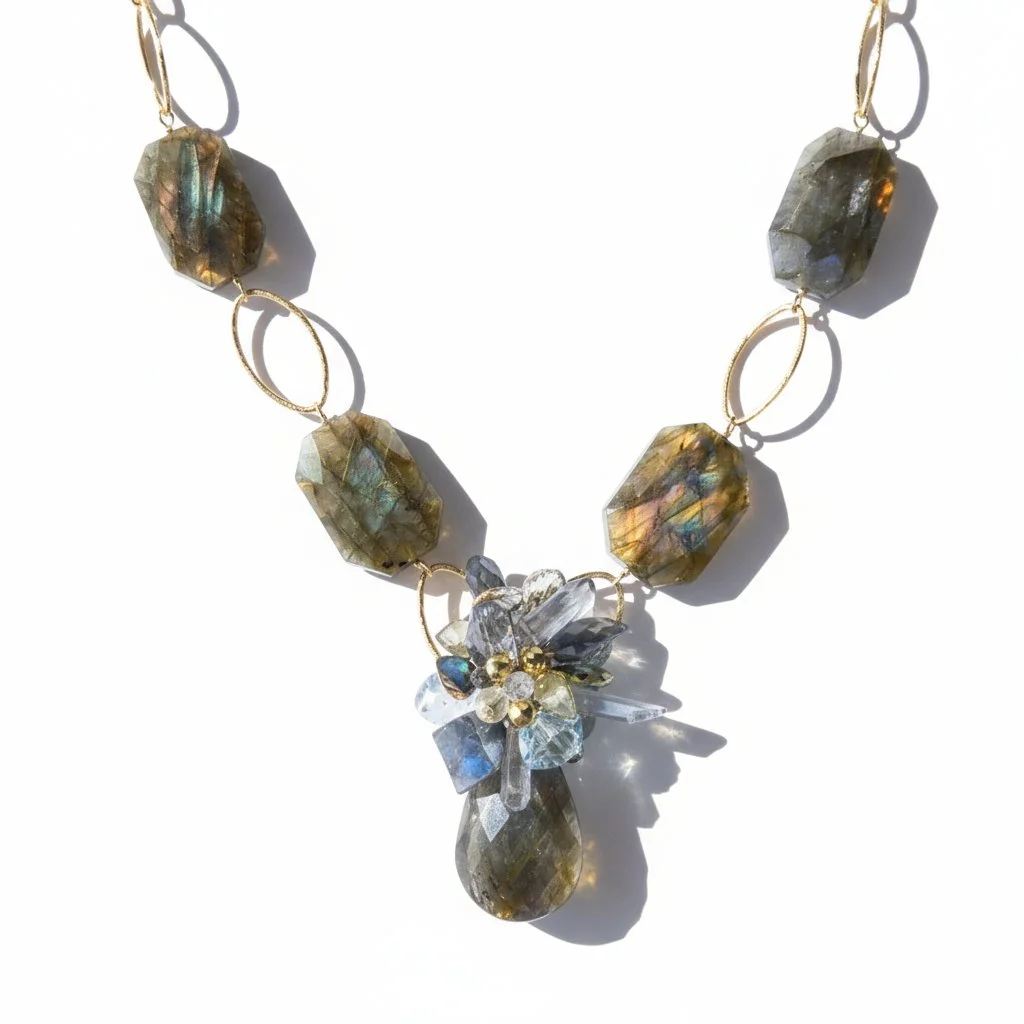
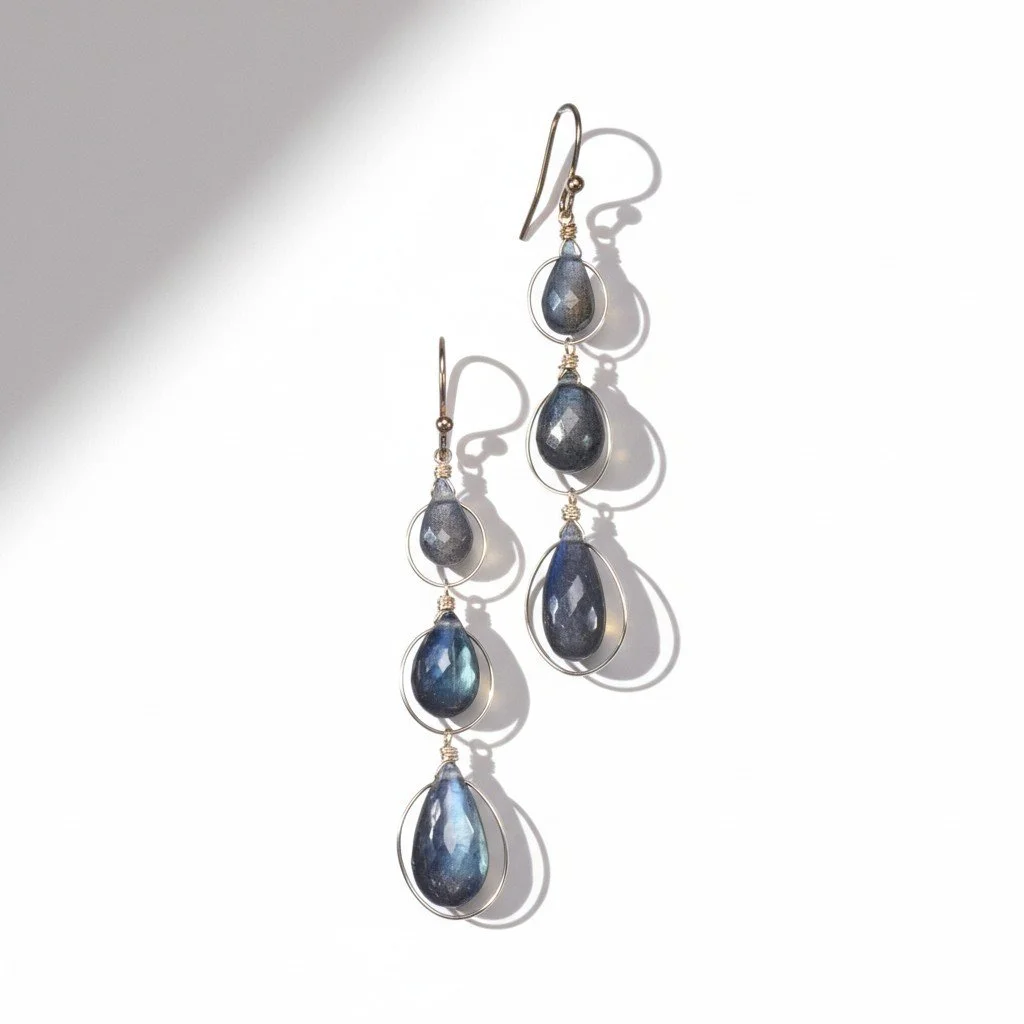
Labradorite Statement Necklace
Frequently Asked Questions
Labradorescence is the signature optical phenomenon that makes labradorite unlike any other gemstone. It's caused by light entering the stone and diffracting between ultra-thin internal layers of different mineral compositions. These layers act like tiny prisms, splitting light into vivid flashes of blue, teal, gold, violet, and sometimes green or orange. The effect changes depending on the viewing angle — which is why labradorite seems to come alive when you move it. It's the same physics behind the colors you see in a soap bubble or oil slick, but frozen permanently inside a stone.
Labradorite rates 6 to 6.5 on the Mohs hardness scale, which makes it suitable for most jewelry — necklaces, earrings, and bracelets are all great for daily wear. For rings, I recommend protective settings like bezels rather than prongs, and removing your ring during activities like gardening, cleaning, or working out. The main thing to be mindful of is labradorite's perfect cleavage — a sharp impact at the right angle could split the stone. With reasonable care, it'll last a lifetime.
No. Labradorescence is a structural optical effect — it's created by the physical layers inside the stone, not by a pigment or coating that can wear off. Your labradorite will flash the same vivid colors in fifty years as it does today. The only thing that can reduce the visual effect is surface scratching (which dulls any stone), so store your labradorite separately from harder gems and clean it gently.
Spectrolite is a trade name for the highest-quality labradorite, originally from Finland. While standard labradorite typically shows blue and green flashes, spectrolite displays the full color spectrum — vivid reds, oranges, purples, and greens in addition to the blues. It's essentially labradorite with the volume turned all the way up. Spectrolite is significantly rarer and more expensive, and the term is technically reserved for material from Finland's Ylämaa quarry, though it's sometimes used loosely for any full-spectrum labradorite.
Both are feldspar minerals with an internal shimmer, but the effect is quite different. Moonstone displays adularescence — a soft, floating, milky-blue glow that moves across the surface like light through water. Labradorite's flash is bolder, more vivid, and shows a wider range of colors. Moonstone is typically light-bodied (white, peach, grey), while labradorite has a dark body that makes the color flash more dramatic. Think of moonstone as gentle moonlight and labradorite as the Northern Lights.
Labradorite's dark body color and vivid flashes look stunning against both warm and cool metals. Gold — especially 14k yellow gold — creates a rich, luxurious contrast that highlights the stone's golden flashes. Sterling silver and white gold play beautifully with the blue and teal tones. Oxidized or antiqued silver is a popular choice for a more dramatic, earthy look. In my studio, I often pair labradorite with gold because the warmth of the metal makes the blue flash feel even more electric.
Labradorite was first discovered in 1770 on Paul's Island in Labrador, Canada — hence the name. Today, gem-quality labradorite comes primarily from Madagascar (known for strong, vivid flashes), Finland (where the highest-grade spectrolite is found), and Canada. Other deposits exist in Russia, Mexico, and the United States (Oregon produces a unique transparent variety). The best specimens for jewelry come from Madagascar and Finland, where the stones tend to have the strongest labradorescence with the widest color range.
Every labradorite catches the light differently. These are one-of-a-kind pieces — when they're gone, they're gone.
Ask About a Custom Piece →