Properties, Care & The Ghosts of Jupiter Collection
Paraiba topaz: a neon blue that doesn't exist anywhere else in the gemstone world at this price point. Named for its visual similarity to the legendary Paraiba tourmaline (which commands thousands per carat), Paraiba topaz achieves its intense electric blue through a proprietary coating process applied to natural topaz. The result: a stone that glows like a nebula captured by the Hubble Space Telescope.
From Tucson
StarryNights
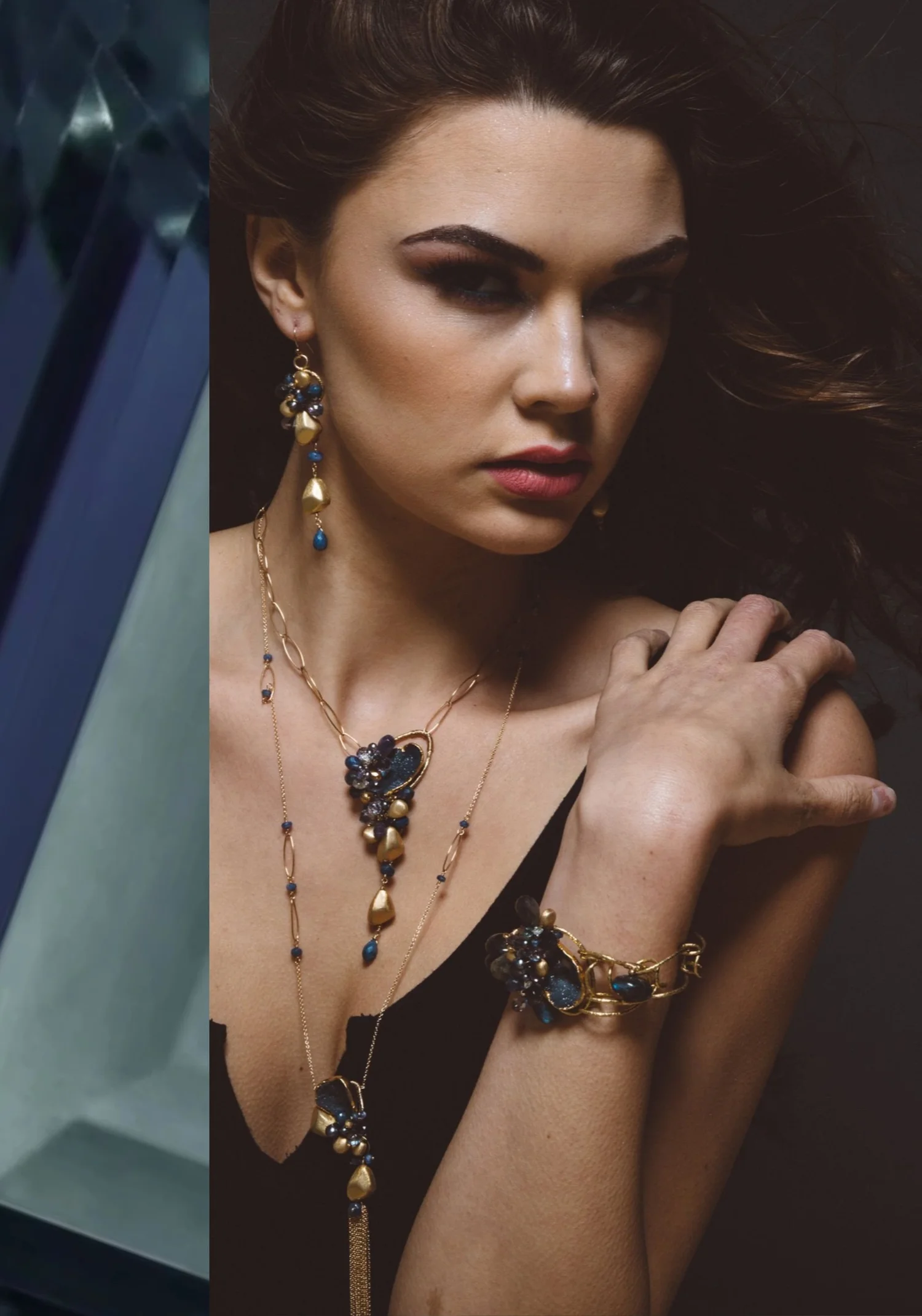
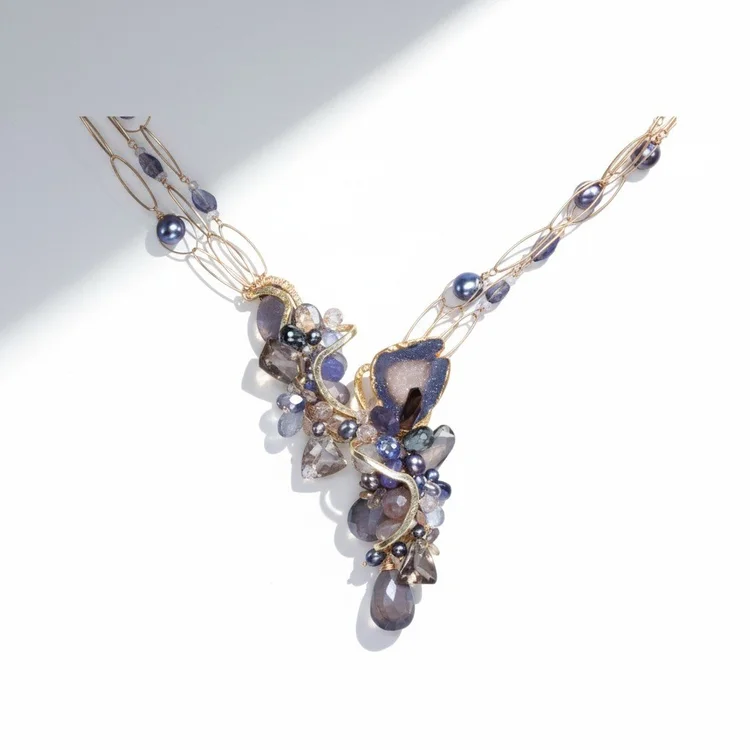
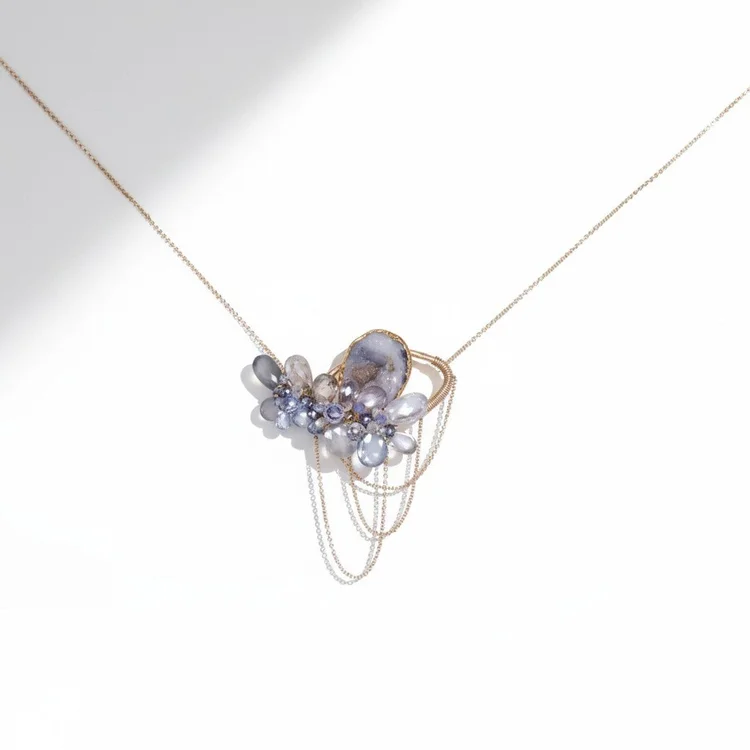
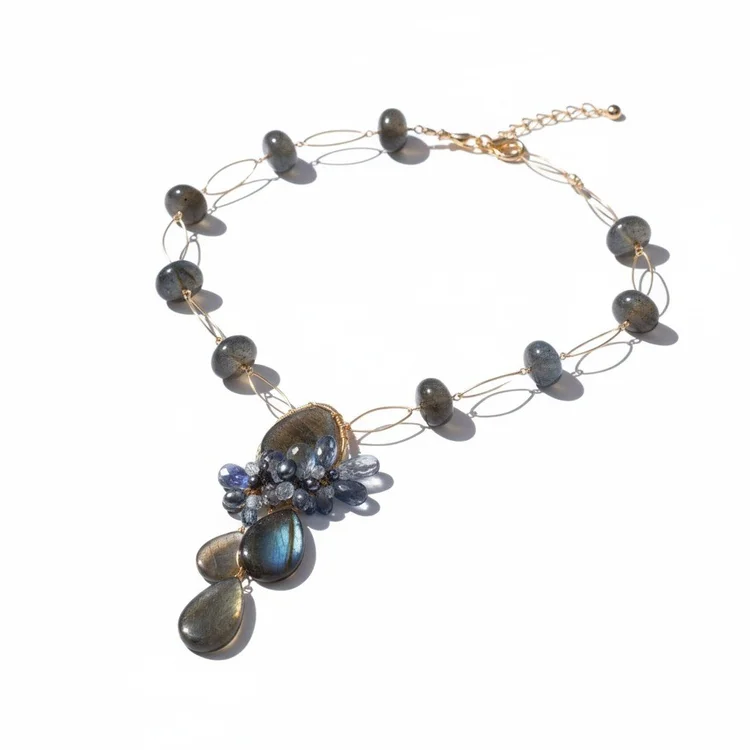
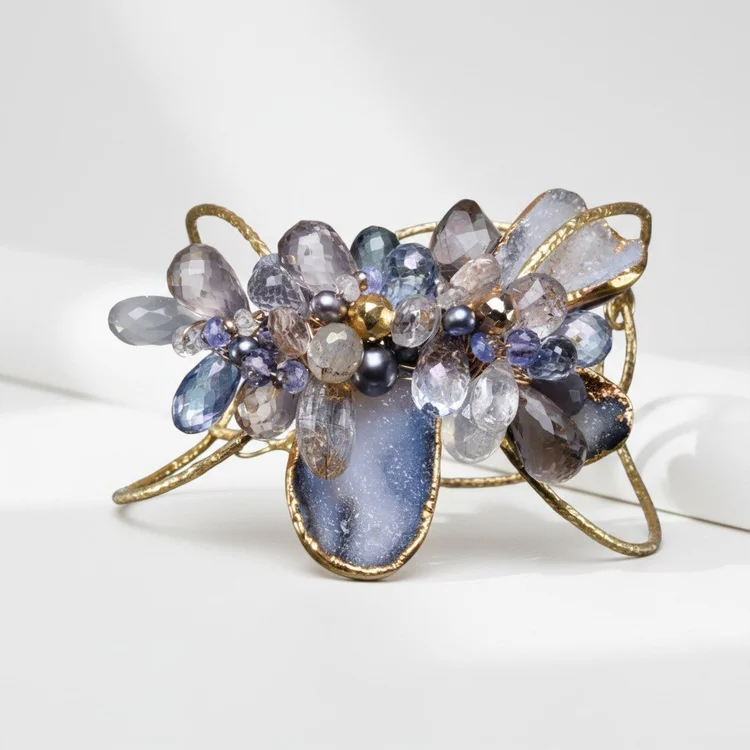
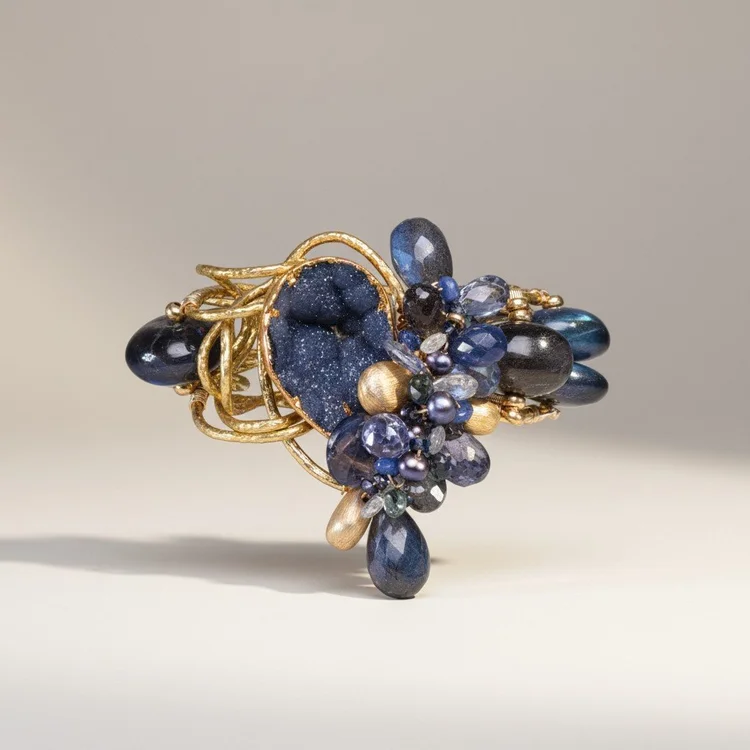
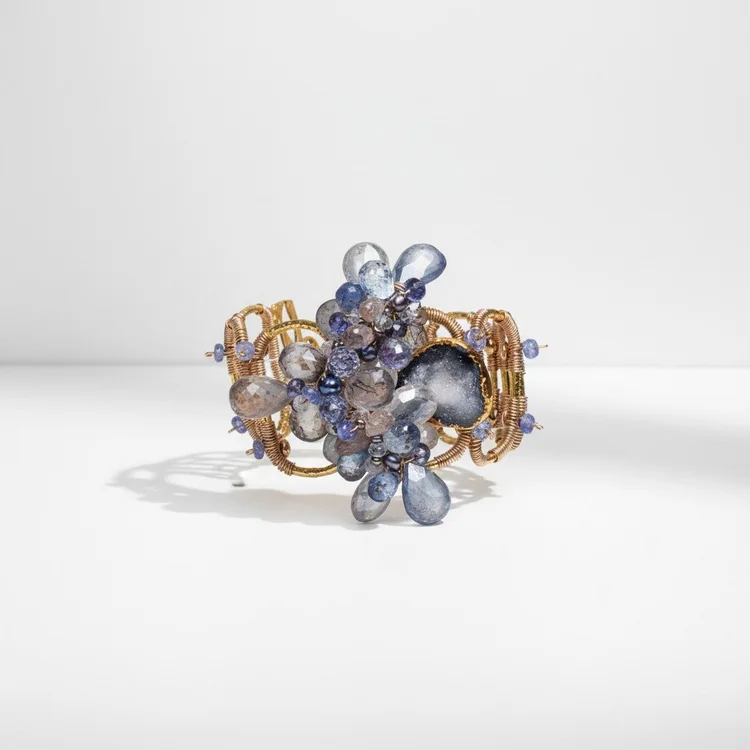
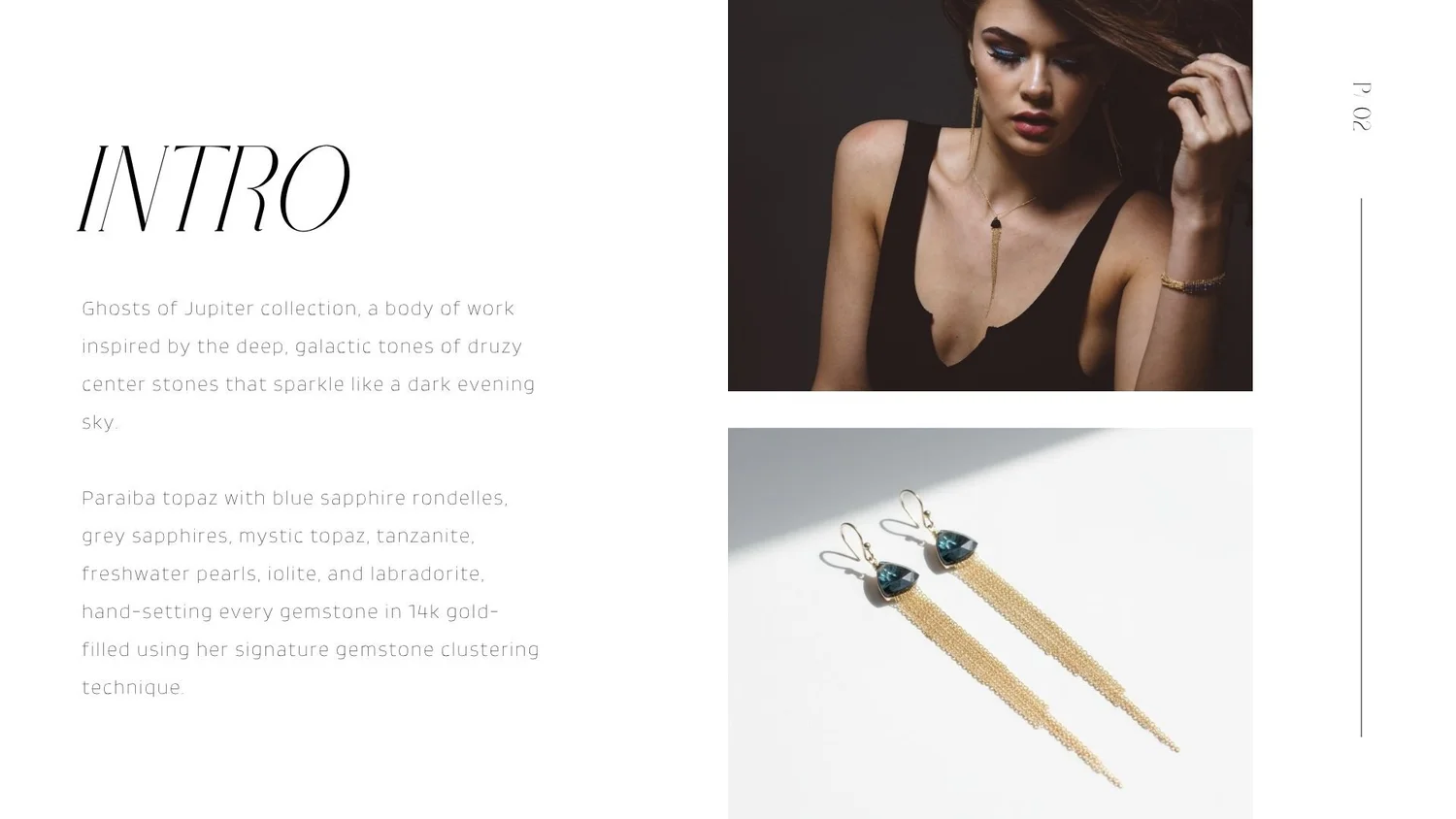
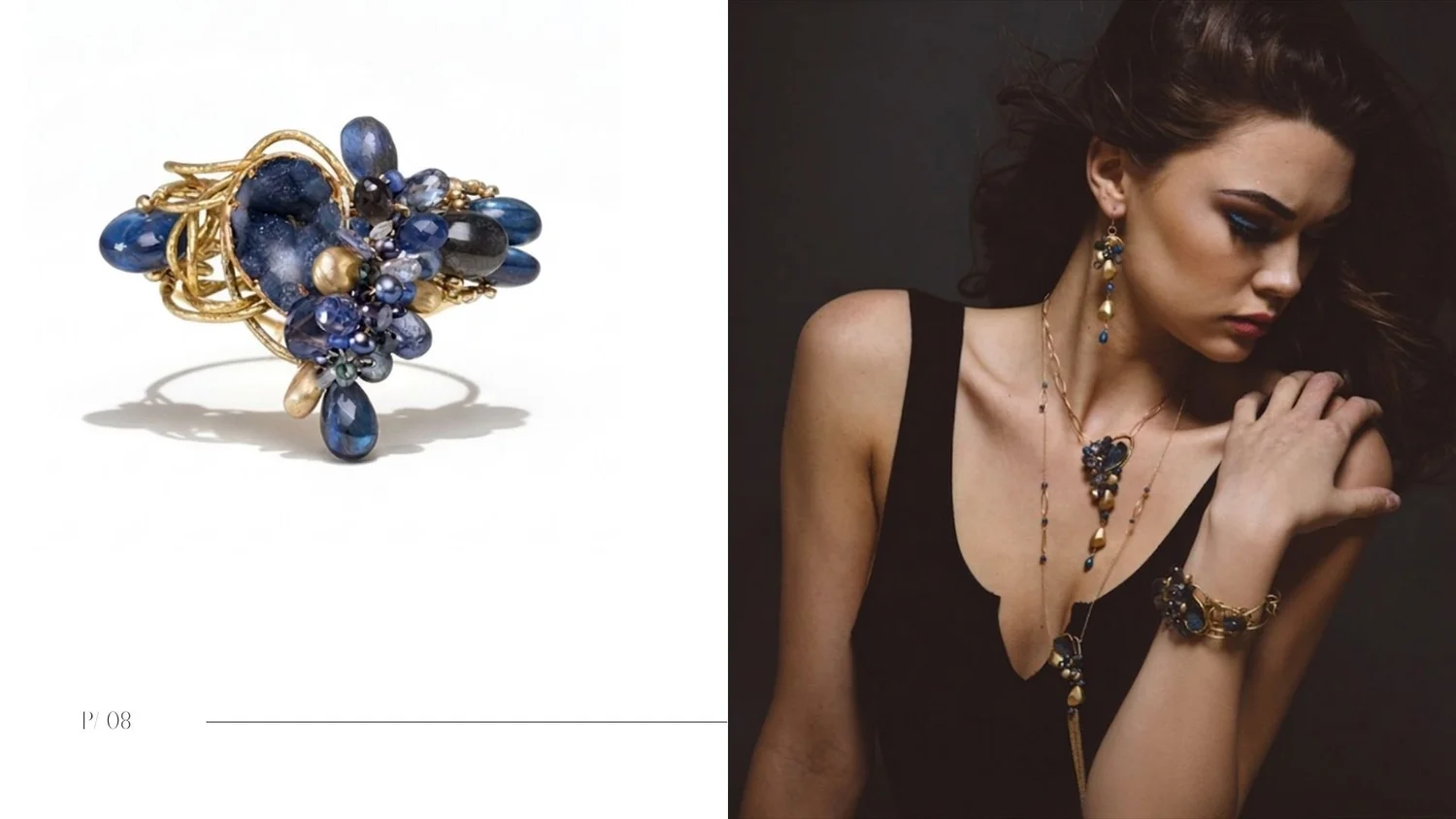
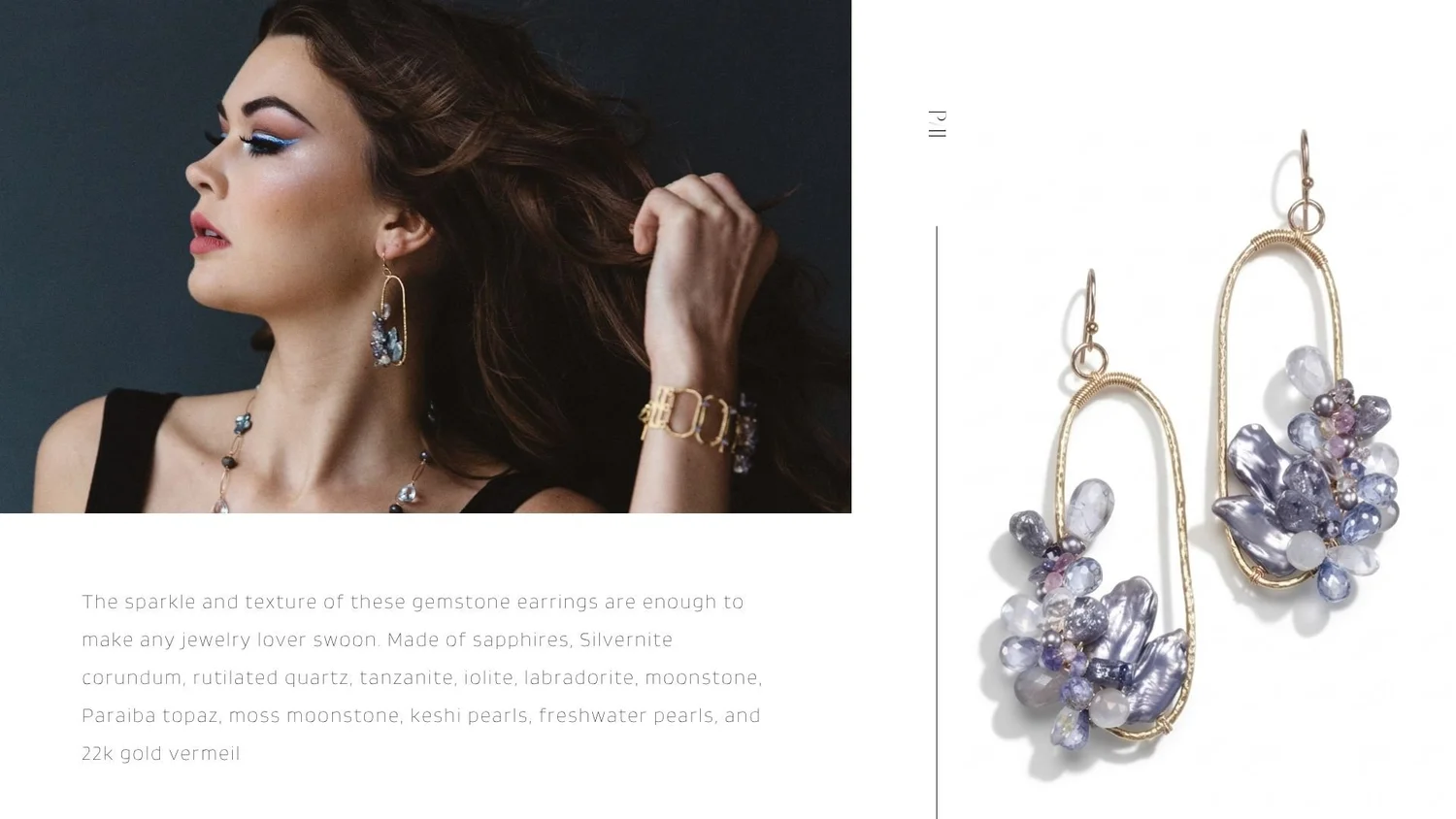
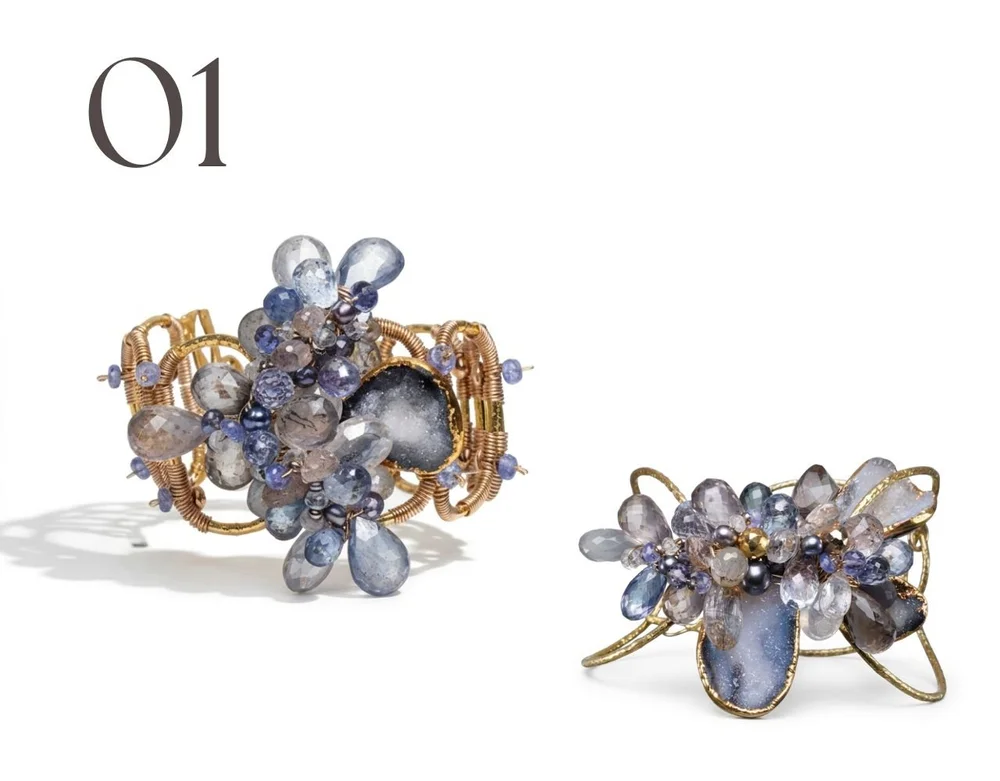
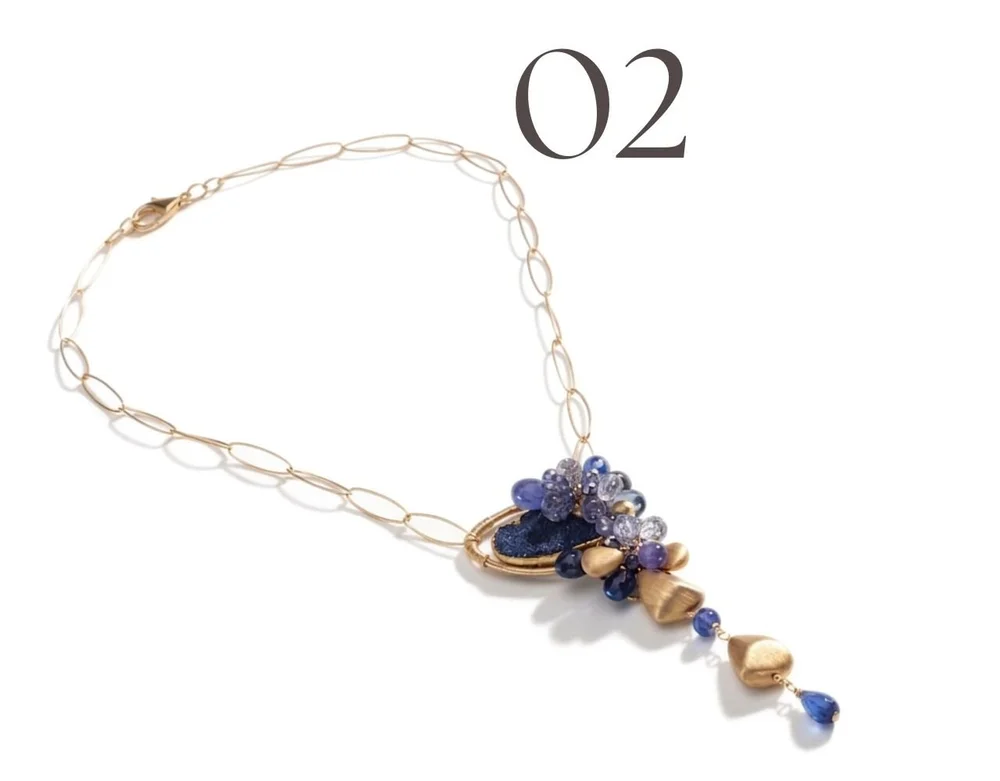
Andrea Li discovered Paraiba topaz at the Tucson Gem Show through her vendors Earthstone and Gem House USA while building the Ghosts of Jupiter collection, a body of work inspired by the deep, galactic tones of druzy center stones that sparkle like a dark evening sky. She paired Paraiba topaz with blue sapphire rondelles, gray sapphires, mystic topaz, tanzanite, freshwater pearls, iolite, and labradorite, hand-setting every gemstone in 14k gold-filled using her signature gemstone clustering technique. The gold creates a rich contrast against the deep blue palette, asymmetrical compositions where no single element dominates.
The Guide
Paraiba Topaz
Paraiba
01
Paraiba Topaz at a Glance
Paraiba topaz is a coated variety of natural white topaz that achieves a striking neon blue: a color so electric it rivals the legendary Paraiba tourmaline at a fraction of the cost. The stone underneath is genuine topaz, one of the hardest silicate minerals in any jeweler's inventory.
Hardness
8
Mohs scale
Mineral
Topaz
Aluminum silicate fluoride
Treatment
Coated
Proprietary thin-film process
Crystal System
Orthorhombic
Prismatic habit
Refractive Index
1.61–1.64
High brilliance
Color
Neon Blue
Between sky blue & Swiss blue
What Makes It "Paraiba"?
The name comes from the visual similarity to Paraiba tourmaline: a rare copper-bearing tourmaline first discovered in Paraiba state, Brazil in 1989 that can sell for $20,000+ per carat. Paraiba topaz achieves a strikingly similar neon blue through a thin-film coating rather than copper inclusions, making it accessible without the five-figure price tag.
The Coating: Honesty Matters
Paraiba topaz gets its neon color from a proprietary coating applied to natural white or colorless topaz. This is a common treatment in the gem trade, and it should always be disclosed. The coating is durable for normal wear but can be damaged by harsh chemicals or abrasive polishing. The base stone is genuine topaz, one of the hardest natural gemstones at Mohs 8.
02
How Topaz Forms
Natural topaz forms deep inside the earth in pegmatite veins and granite cavities. The base material for Paraiba topaz follows the same geological story as all topaz: it's the finishing treatment that gives it the neon blue.
01
Magma Crystallizes
Topaz forms during the late stages of magma cooling, when fluorine-rich fluids concentrate in cavities and fractures within granite and rhyolite. The aluminum, silicon, and fluorine combine under extreme heat and pressure.
02
Crystals Grow
As the pegmatite slowly cools over millions of years, topaz crystals grow into their signature prismatic shapes. Natural topaz can form enormous crystals: some of the largest gem-quality crystals ever found are topaz, weighing hundreds of pounds.
03
Natural Color (or Not)
Most topaz crystallizes colorless or very pale. The rare Imperial topaz gets golden-orange from chromium. Blue topaz in nature is extremely uncommon: nearly all blue topaz on the market has been irradiated and heat-treated to achieve its color.
04
The Paraiba Treatment
Paraiba topaz goes one step further: a thin-film coating using vapor deposition technology creates the intense neon blue. Think of it as the gem world's equivalent of an anodized finish: the base material is natural and hard, the color is applied with precision technology.
03
Where Topaz Comes From
Topaz is mined worldwide, but the finest specimens come from a handful of key sources. The base material for Paraiba topaz is typically sourced from Brazil, the world's most prolific topaz producer.
Brazil: Minas Gerais
The world's primary source for both gem-quality colorless topaz (the base for Paraiba topaz) and the rare natural Imperial topaz. The Ouro Preto region produces the finest material. Brazil has been mining topaz for centuries.
Pakistan: Skardu
Produces exceptional pink and golden topaz crystals from high-altitude pegmatites in the Karakoram Range. Some of the most prized collector specimens come from Pakistani mines.
Russia: Ural Mountains
Historically significant: Russian Imperial topaz was named for the Czars. The Ural deposits produce pink, golden, and colorless topaz in large, well-formed crystals.
Utah: Topaz Mountain
Utah's state gemstone. The Thomas Range produces small but gem-quality topaz in amber, yellow, and colorless varieties. An American source with a rich collecting history.
Andrea Li's Sourcing: Tucson Gem Show
The Paraiba topaz in the Ghosts of Jupiter collection was sourced at the Tucson Gem & Mineral Show through Earthstone and Gem House USA: two vendors known for carrying unusual, small-lot gemstones that appeal to OOAK designers. Andrea selects each strand in person, looking for consistent neon saturation and stones that pair well with the darker druzy center stones that anchor each design.
04
Paraiba Topaz vs. Similar Stones
The name "Paraiba" causes confusion. Here's how Paraiba topaz compares to the stones most often compared to it, and why the differences matter when you're investing in jewelry.
Property
Paraiba Topaz
Paraiba Tourmaline
Swiss Blue Topaz
Mineral
Topaz (coated)
Elbaite tourmaline
Topaz (irradiated)
Color Source
Thin-film coating
Natural copper inclusions
Irradiation + heat
Color Character
Intense neon blue
Electric neon blue-green (glows from within)
Clean, saturated medium blue
Hardness
8 Mohs
7–7.5 Mohs
8 Mohs
Price Per Carat
$5–$30
$5,000–$50,000+
$5–$25
Rarity
Readily available
Extremely rare
Abundant
Best For
Bold neon color at accessible price
Collectors, investment-grade pieces
Classic blue gemstone jewelry
Important: Paraiba topaz is NOT Paraiba tourmaline. The name refers to color similarity, not mineral identity. Paraiba tourmaline is a naturally copper-bearing elbaite tourmaline first discovered in Paraiba, Brazil in 1989, one of the rarest and most valuable gemstones in the world. Paraiba topaz is natural topaz with a coating that mimics that famous neon blue. Both are beautiful; they're entirely different stones with very different value propositions. Andrea Li uses Paraiba topaz intentionally for its electric color, disclosed transparently.
05
Caring for Paraiba Topaz Jewelry
Topaz is extremely hard (Mohs 8), harder than quartz, harder than most colored gemstones. But the neon blue coating on Paraiba topaz requires a bit more attention than uncoated stones. Here's what to do and what to avoid.
Do
Clean Gently
Use warm water, a degreasing dish soap like Dawn, and a soft toothbrush or cloth. Pat dry, don't rub. This protects the coating while keeping the stone brilliant. The base topaz is extremely durable; it's the coating that needs care.
Avoid
Ultrasonic Cleaners
Ultrasonic vibrations and steam can damage or strip the thin-film coating. This is the single most important rule for coated topaz. Never let a jeweler put it in an ultrasonic bath.
Do
Store Separately
Even though topaz is hard, the coating can be scratched by harder stones (diamond, sapphire, ruby). Keep Paraiba topaz in its own soft pouch or a lined compartment.
Avoid
Harsh Chemicals
Household cleaners, chlorine, perfume, and hair spray can degrade the coating over time. Put jewelry on last, take it off first. This rule applies to most coated gemstones.
Do
Wear It Daily
Paraiba topaz in well-designed settings (bezel, prong, cluster) is absolutely everyday-wearable. Necklaces and earrings face less impact than rings. The coating is durable under normal conditions.
Avoid
Repolishing
Standard gemstone repolishing will remove the coating entirely. If a stone needs work, consult Andrea: she'll advise on options.
06
The Ghosts of Jupiter Collection
Paraiba topaz didn't start as a stone Andrea was looking for. It started with a druzy.
How This Collection Was Born
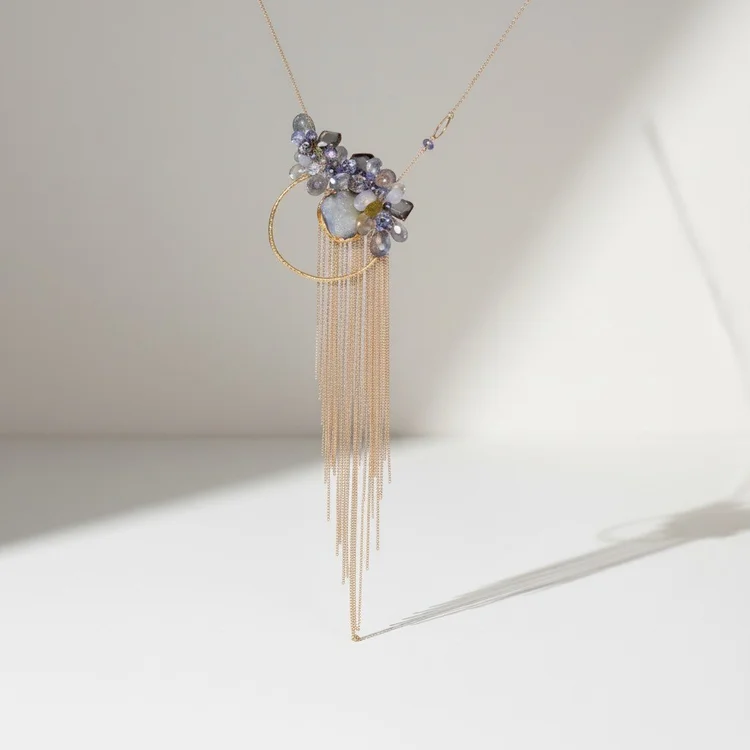
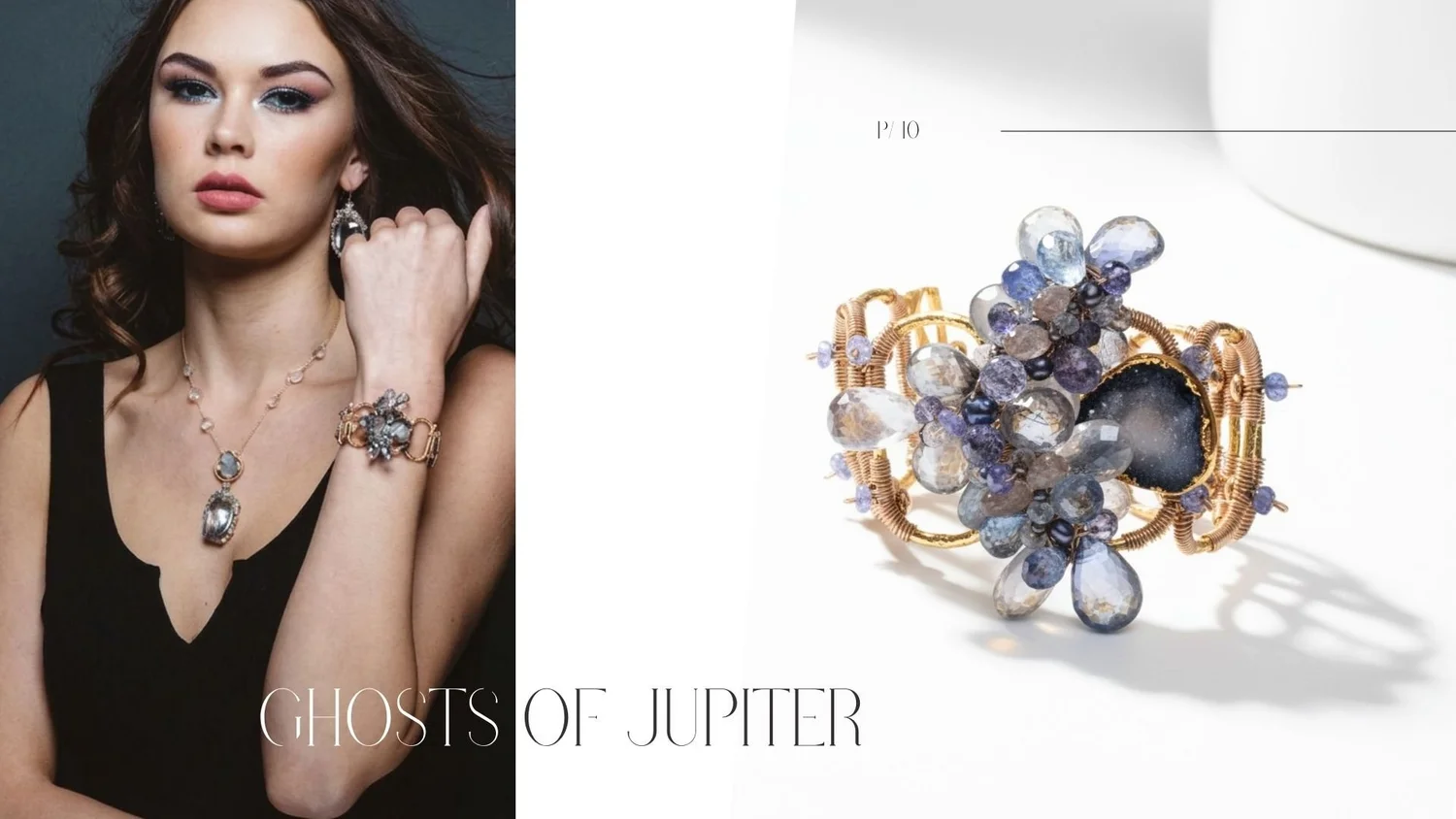
At the Tucson Gem Show, Andrea found druzy center stones with a glitter-like sparkle and texture that looked like a dark, starry evening sky. She fell in love with that quality and set out to build a color palette of complementary gemstones around them: stones that would create a rich tapestry of galactic tones reminiscent of nebulas captured by the Hubble Space Telescope.
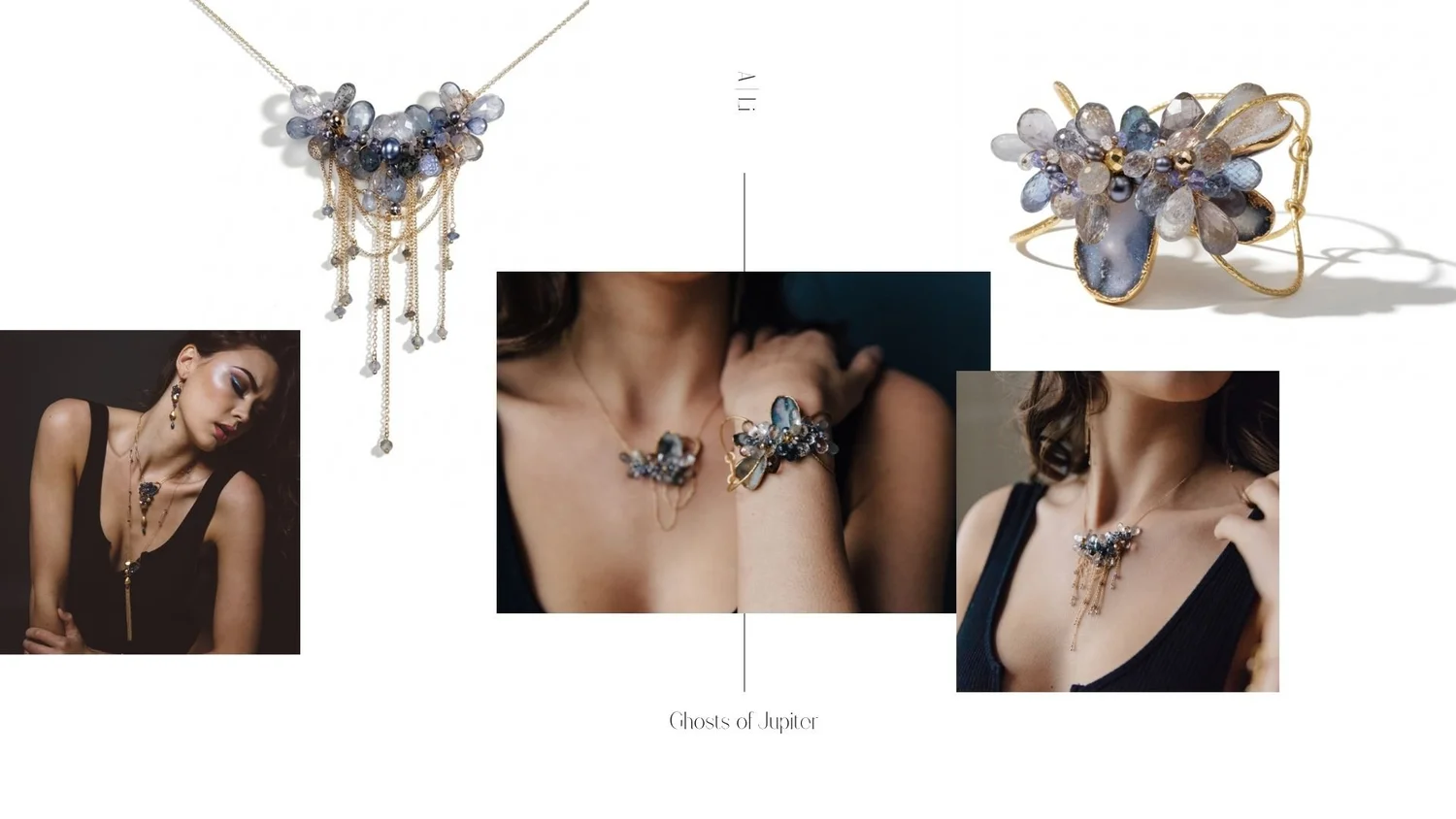
The result was the Ghosts of Jupiter collection, named for the planetary nebula NGC 3242, known for its haunting blue-green glow. Every piece was handcrafted in 14k gold-filled, hand-set using Andrea's signature gemstone clustering technique in both asymmetrical (her favorite) and aesthetically balanced compositions.
Paraiba Topaz
Blue Sapphire Rondelles
Gray Sapphire
Mystic Topaz
Tanzanite
Freshwater Pearls
Iolite
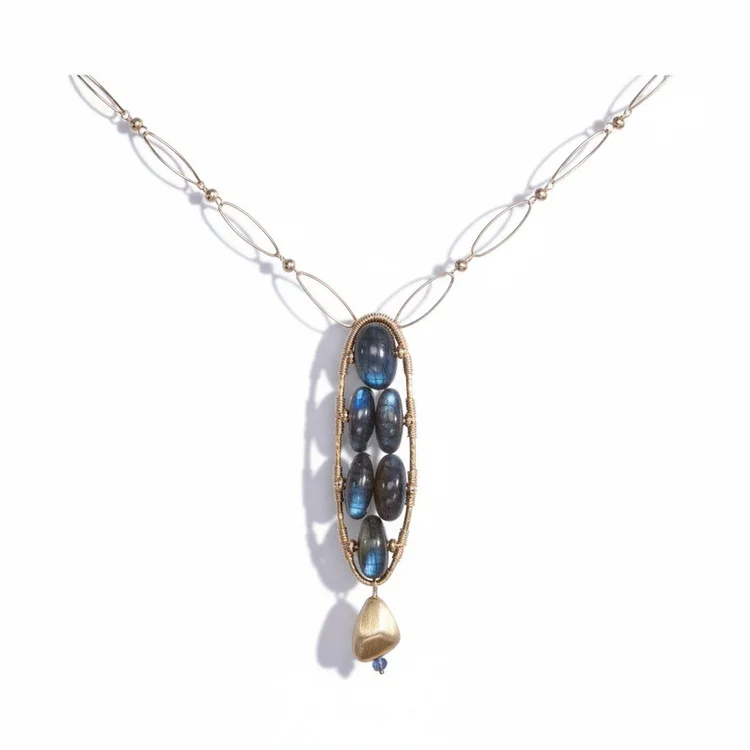
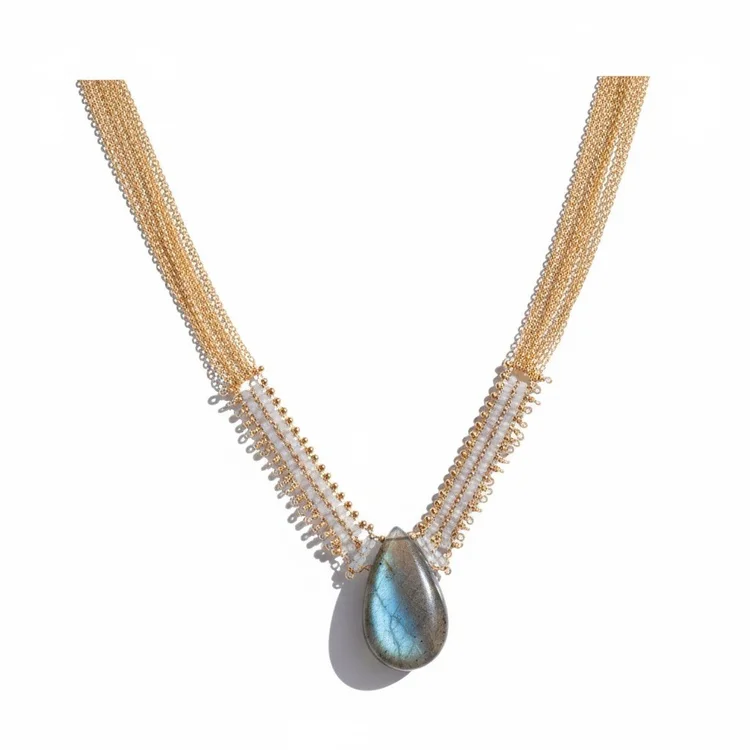
Labradorite
Druzy Center Stones
The Design Approach
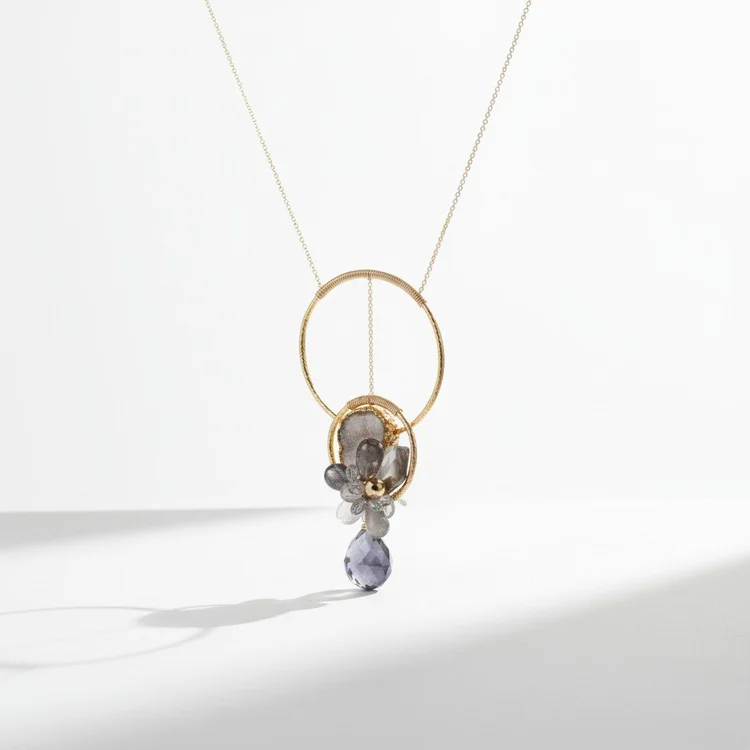
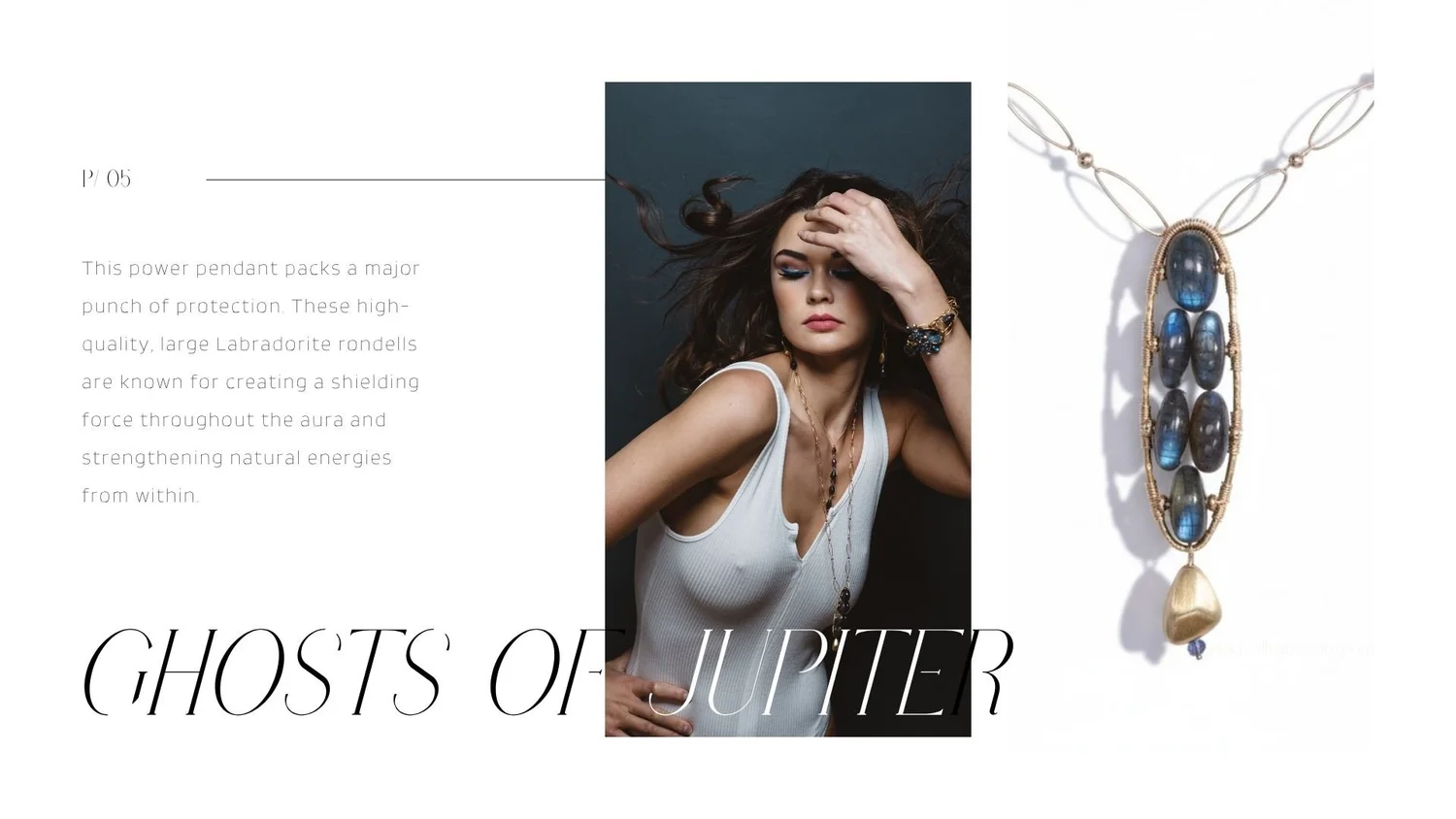
Gold was chosen deliberately to create rich contrast against the deep blue palette. Andrea hand-set every gemstone using her signature clustering technique: building three-dimensional gemstone arrangements where stones are reamed with a diamond drill bit, stacked, and layered so no single element is recognizable in the final design.
One of a Kind
Every piece in the Ghosts of Jupiter collection was built around unique druzy center stones and one-of-a-kind gemstone strands sourced from Earthstone and Gem House USA at the Tucson Gem Show. When a piece sold, it was gone: the specific combination of stones in that design will never exist again.
A note from Andrea Li, who sets Paraiba topaz by hand in her Denver studio.
Paraiba topaz gets its neon blue from a thin coating over natural topaz, and I would rather you hear that from me. Almost nobody asks, which is exactly why I say it.
The coating is more durable than you would think. It covers the stone evenly, so the glow is consistent all the way around, and in all my work reaming and setting these stones I have never seen it show signs of wear.
“
An inky dark blue sky with a smattering of stars and cosmic dust clouds.
The lights at a gem show are so bright that you really get to see these stones and all of their character. I inspect every stone in a strand for consistency in color, coating, cut and clarity, and I only buy the strands that meet my exacting standards and pass my own hand-picked inspection.
Ghosts of Jupiter started with druzy center stones that looked like a dark, starry evening sky. I built the palette around them by laying strands side by side at the show: Paraiba topaz, sapphire, tanzanite, iolite. The colors had a galactic feel that reminded me of images from the Hubble Space Telescope, so I named the collection after a planetary nebula, NGC 3242, the Ghost of Jupiter.
I have no Paraiba topaz left in my studio. A commission would start the way this collection did, with strands I hand-pick at the Tucson Gem Show.
Featured Collection
Ghosts of Jupiter
Every piece in the Ghosts of Jupiter collection, one of a kind and handcrafted in Denver.
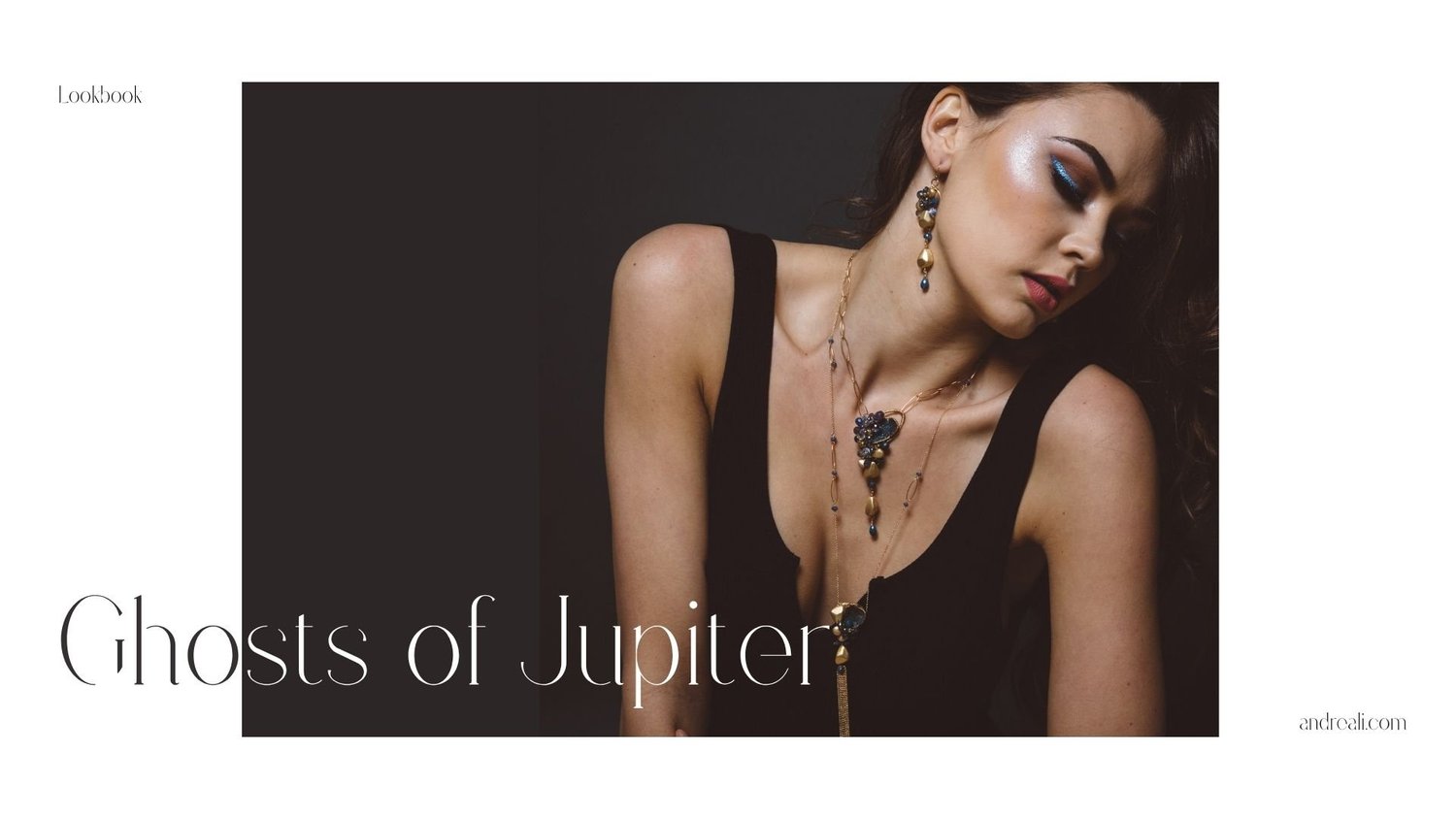
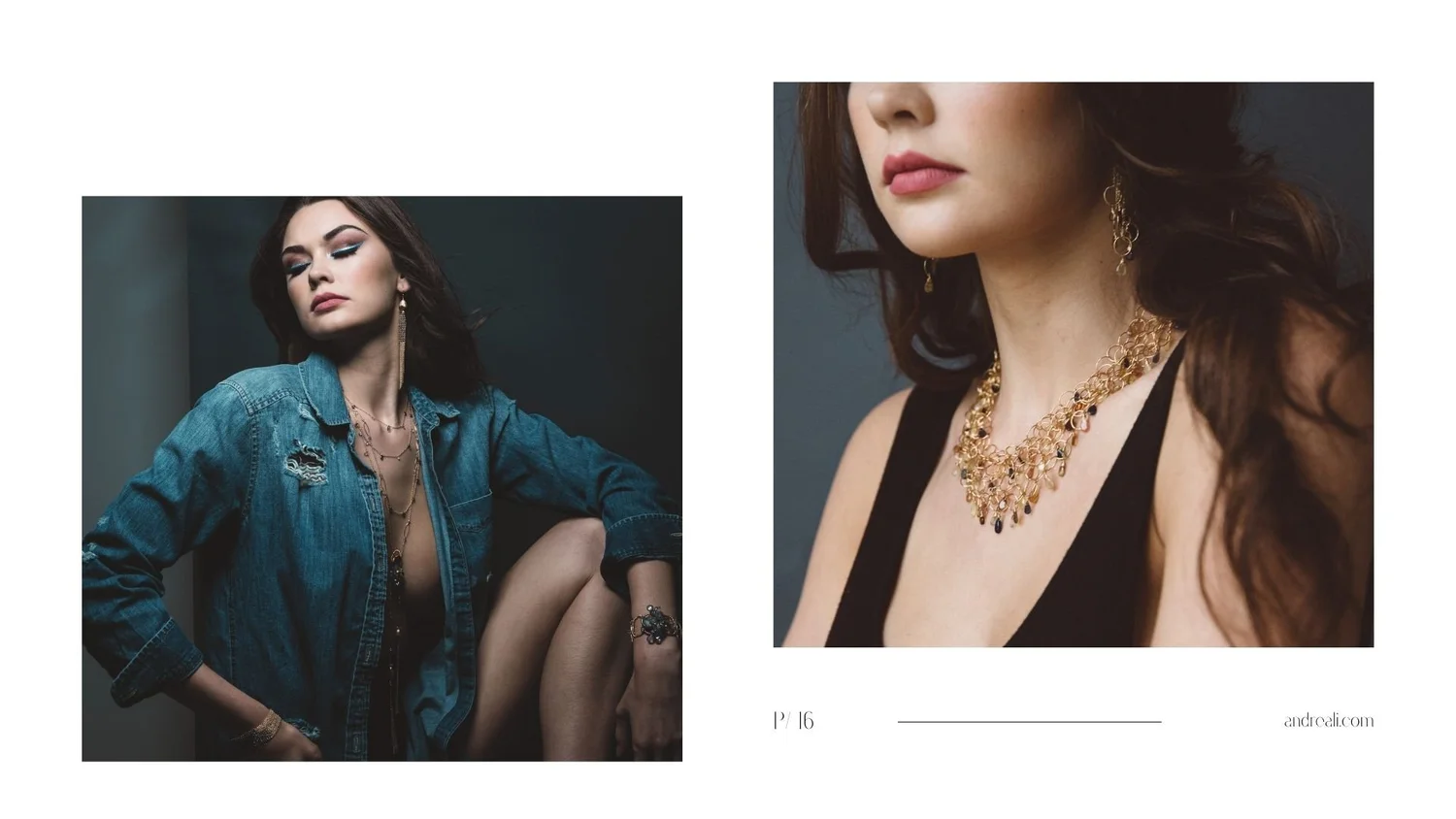
Photography Nicole Marcelli · Model Jessica Nazarenus · Hair and makeup Mel Akana McIntosh · Creative Credits
One of a Kind · Sold Out
Love What You See? Let Me Make You One.
Every piece in the Ghosts of Jupiter collection was one of a kind: handcrafted once, sold once, never repeated. Most of the pieces in this lookbook have found their owners; the ones still available are just below. But Paraiba topaz is a stone Andrea loves working with, and she'd love to design something new for you.
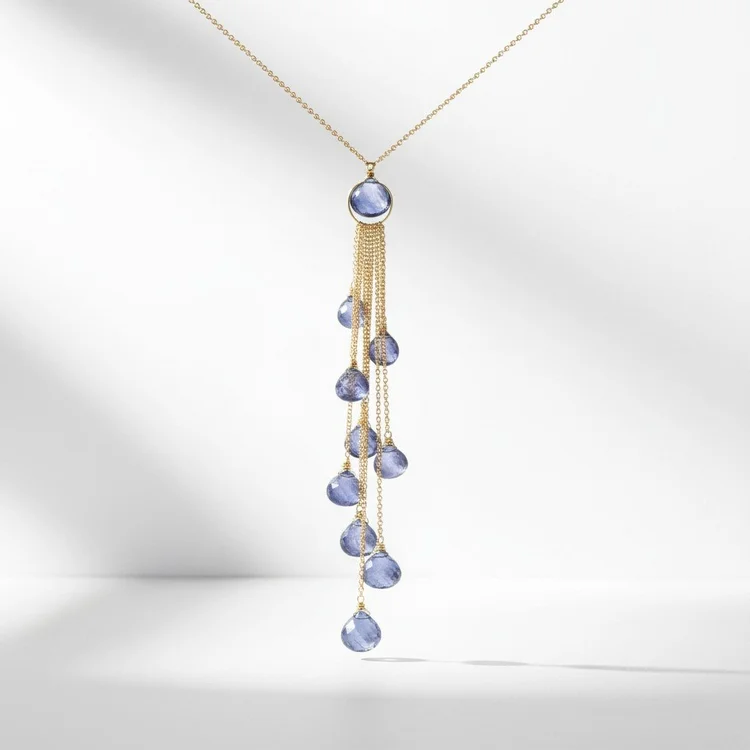
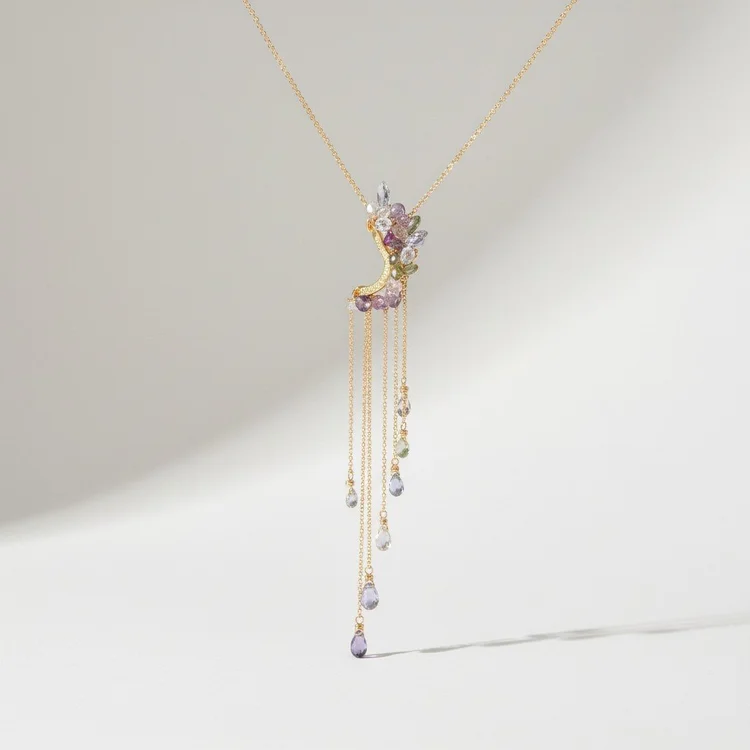
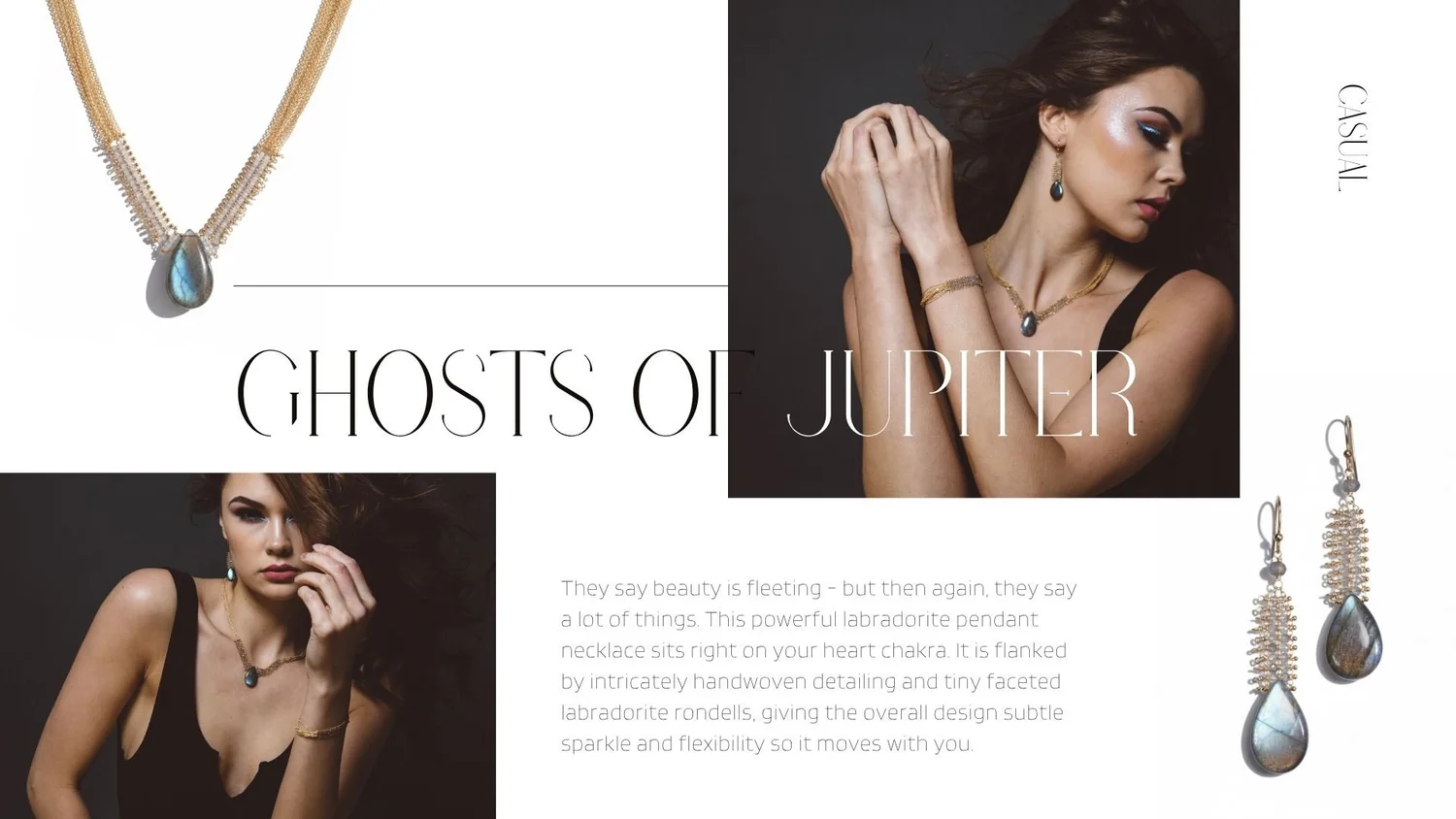
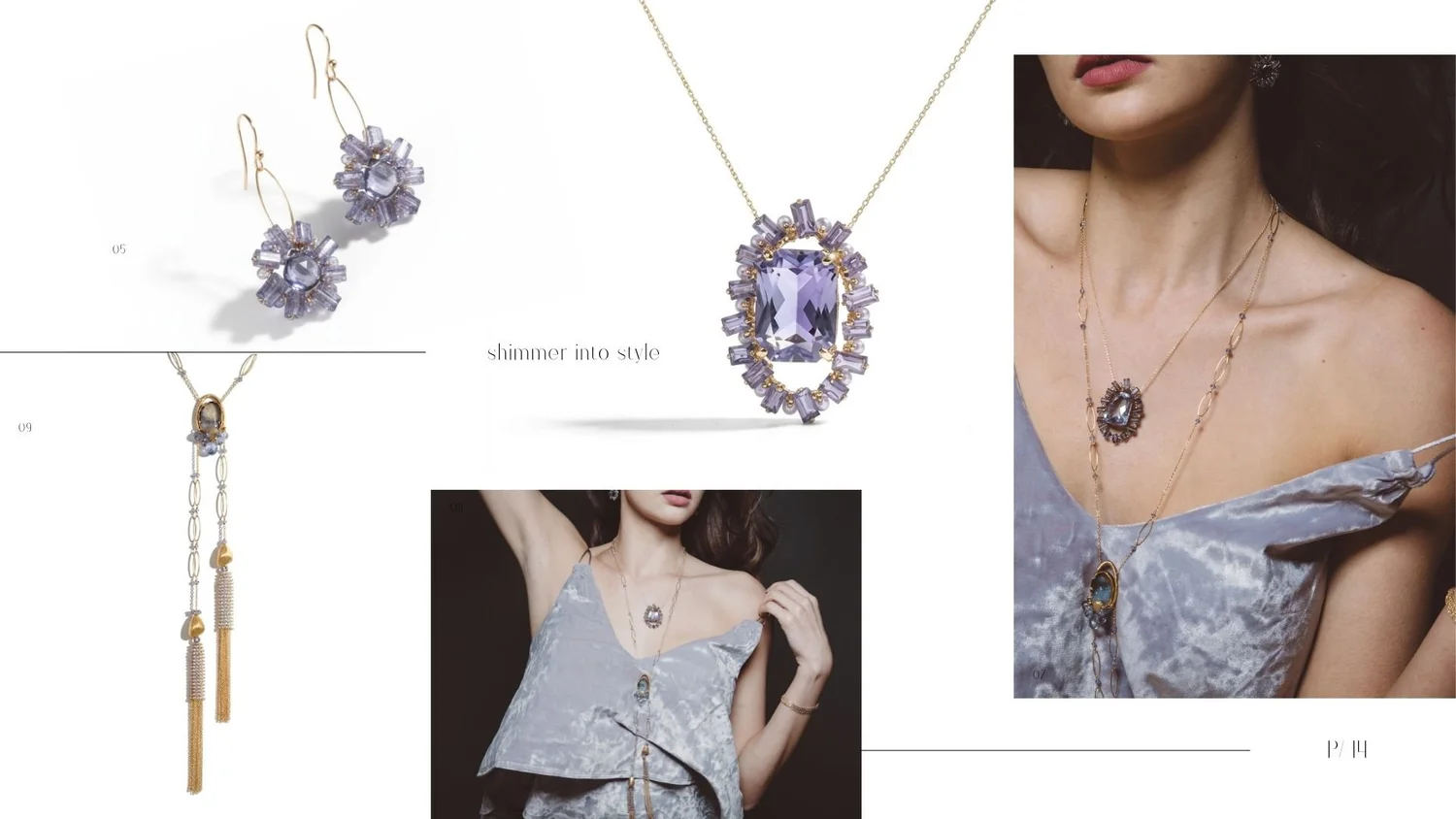
You want the same things as any girl. You just want yours to be better. Starting with your jewelry these long column earrings should do the trick. These feature intricately woven detailing with tiny iolite faceted rondells with cascading delicate 14k gold filled chains topped with a 22k gold vermeil teardrop accented with tanzanite.
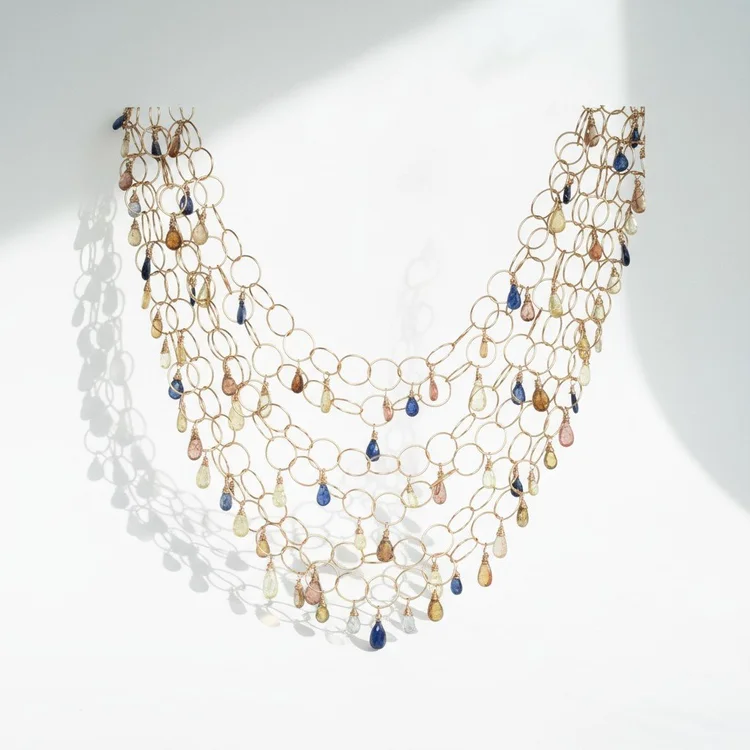
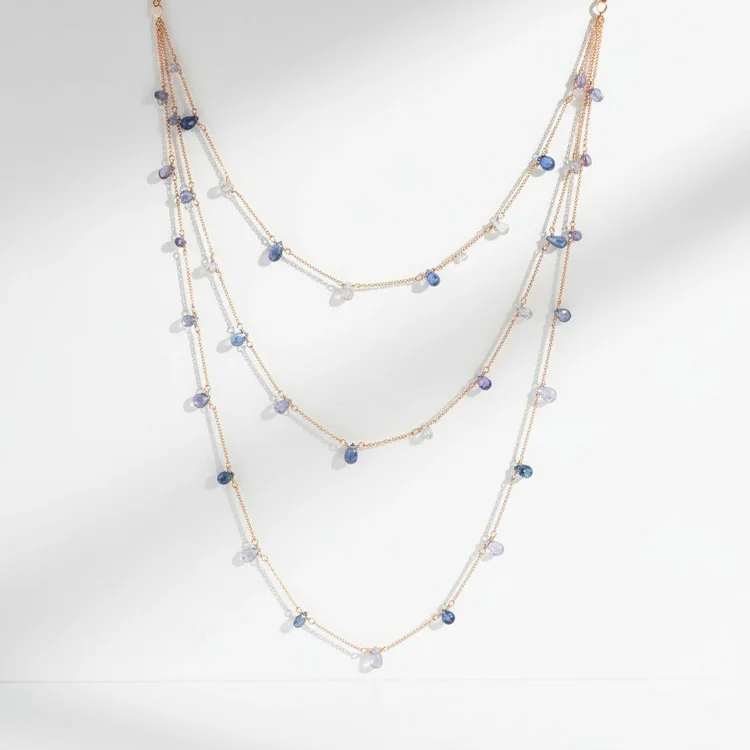
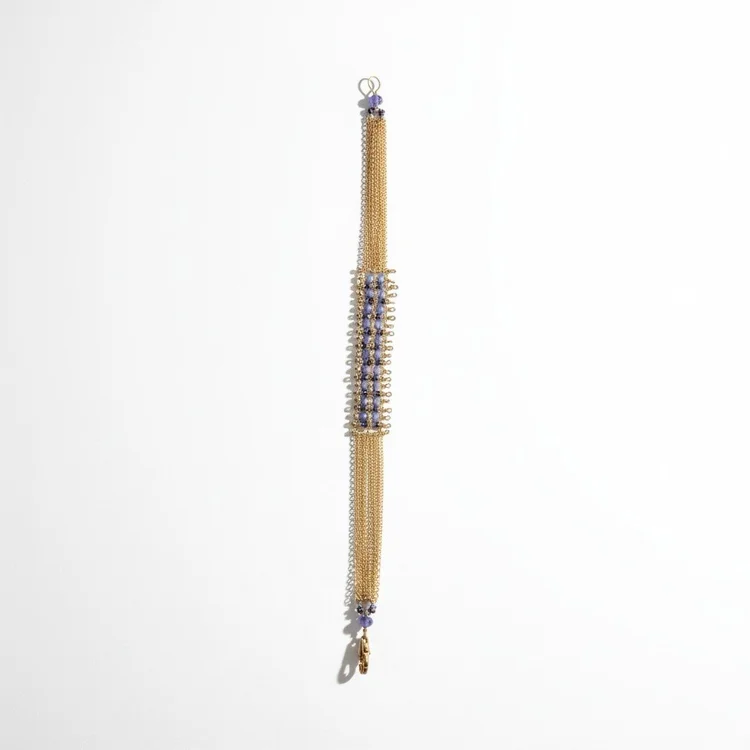
Daddy's little princess won't always be little, but she can always be a princess. These delicate sparklers can certainly reinforce this enduring status. Beautiful individually or stack 'em for extra impact. Choose from three different styles all intricately handwoven with sapphires, iolite and tanzanite with fresh water pearl. Delicate gold chains support the fluid movement of each bracelet.
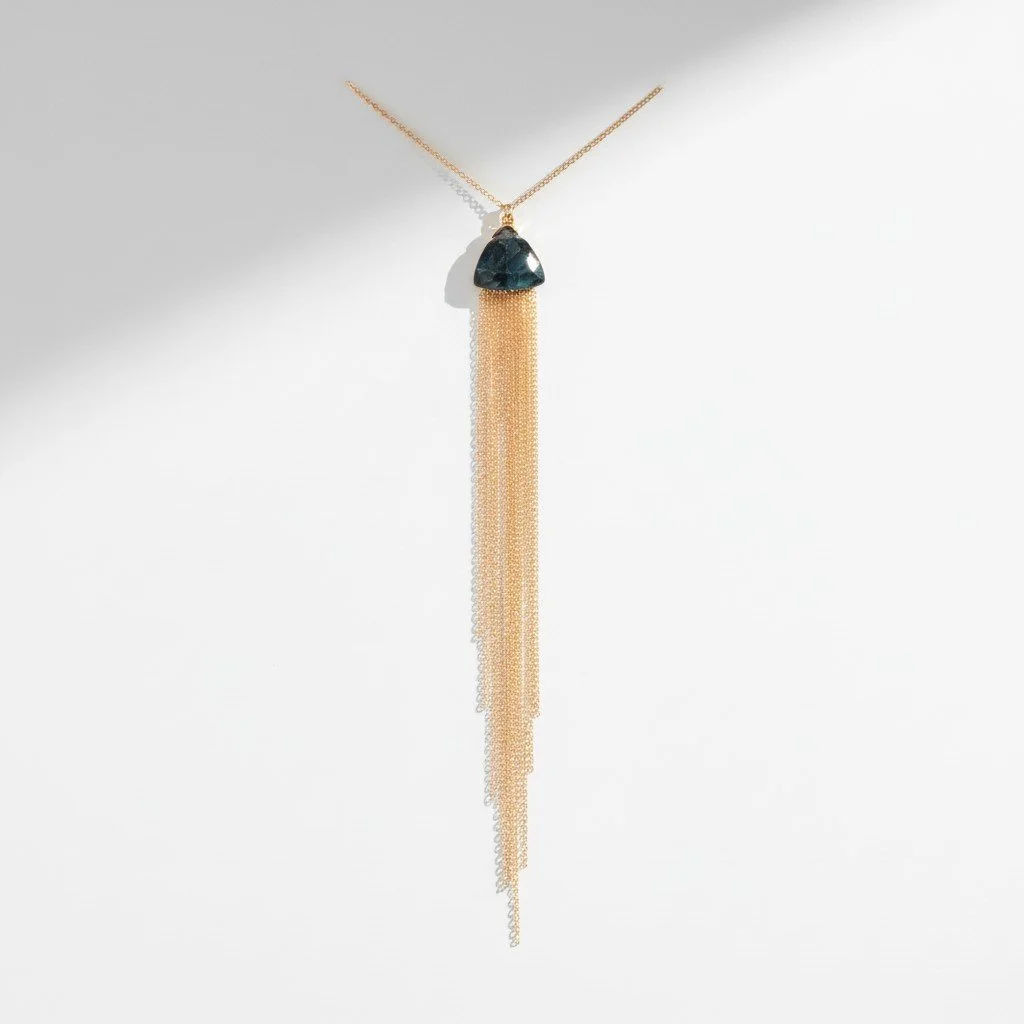
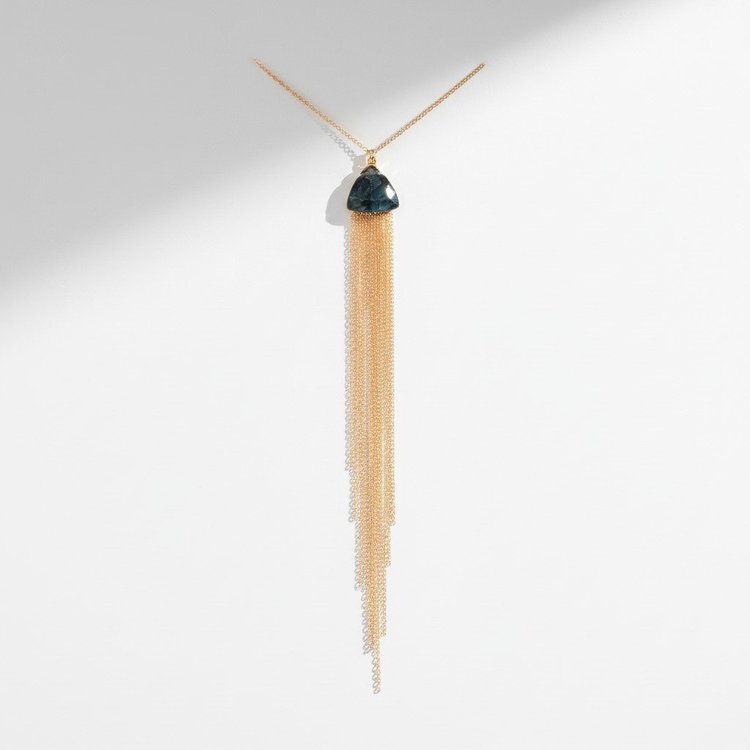
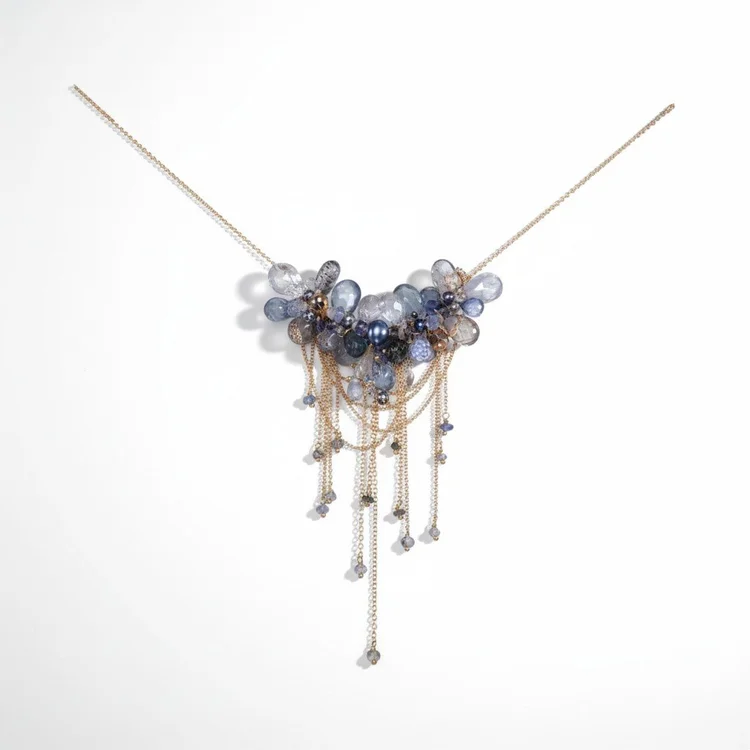
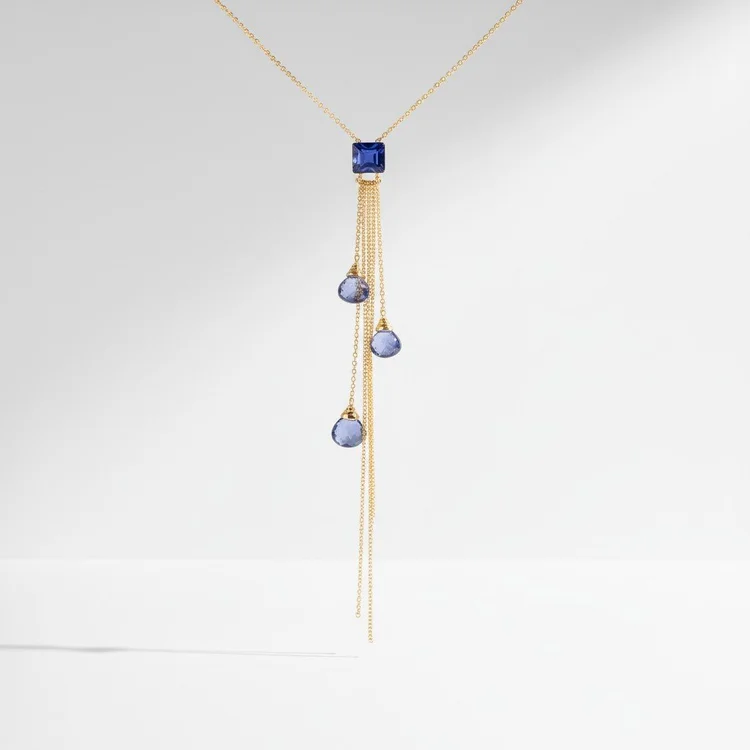
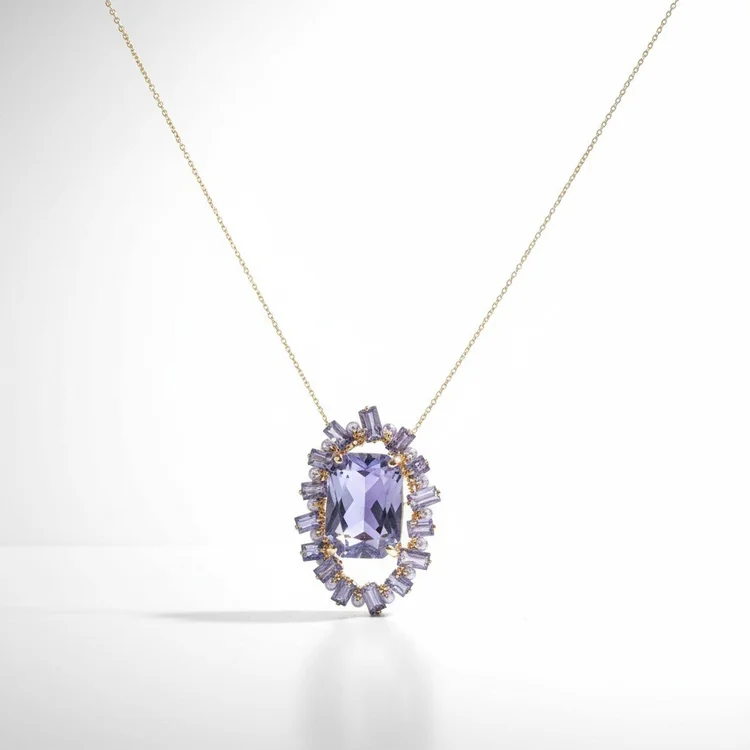
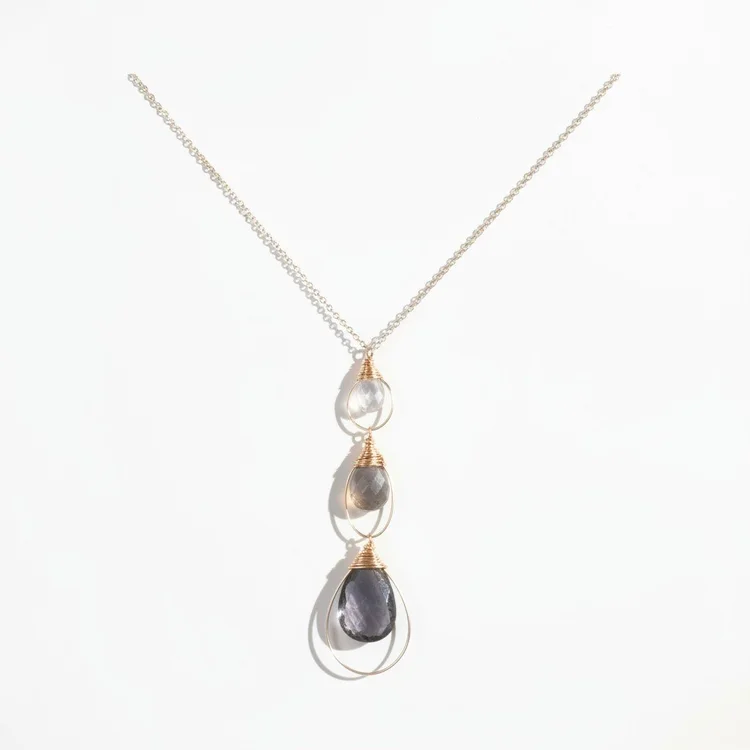
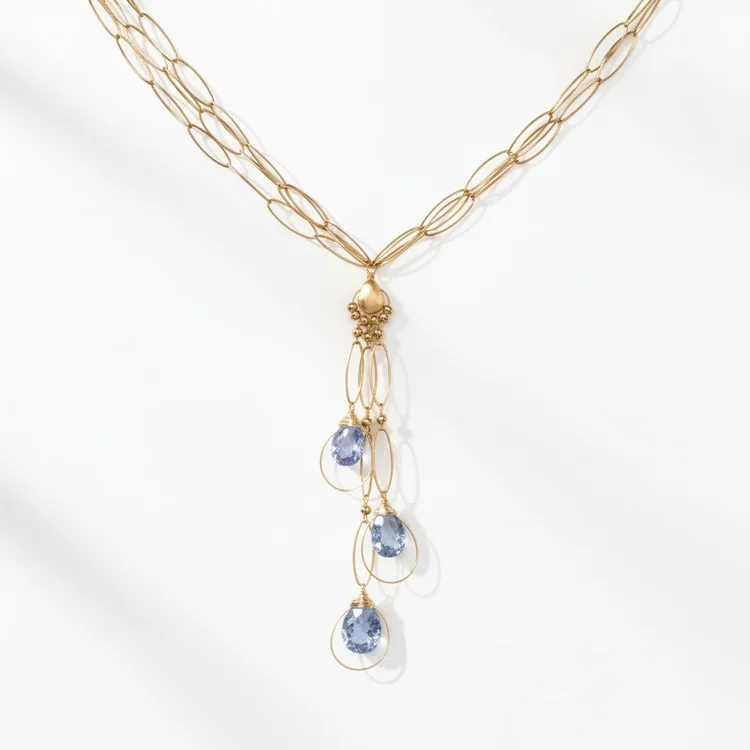
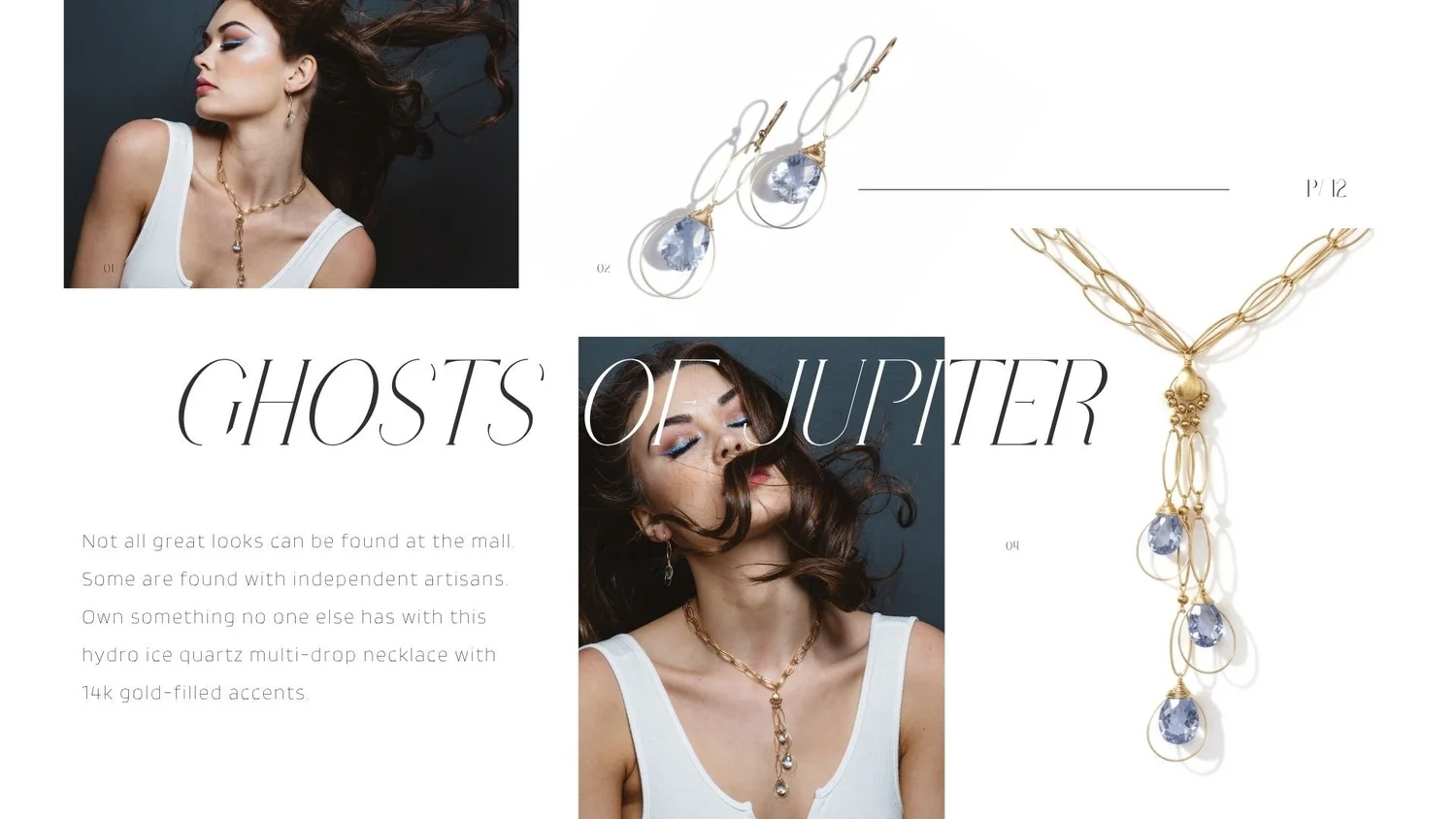
Be beautiful from head to um, uh, wow. Who says simple can't have 'Wow' factor? This graceful necklace features a fancy trillion cut hydro quartz with cascading delicate 14k gold filled chains.
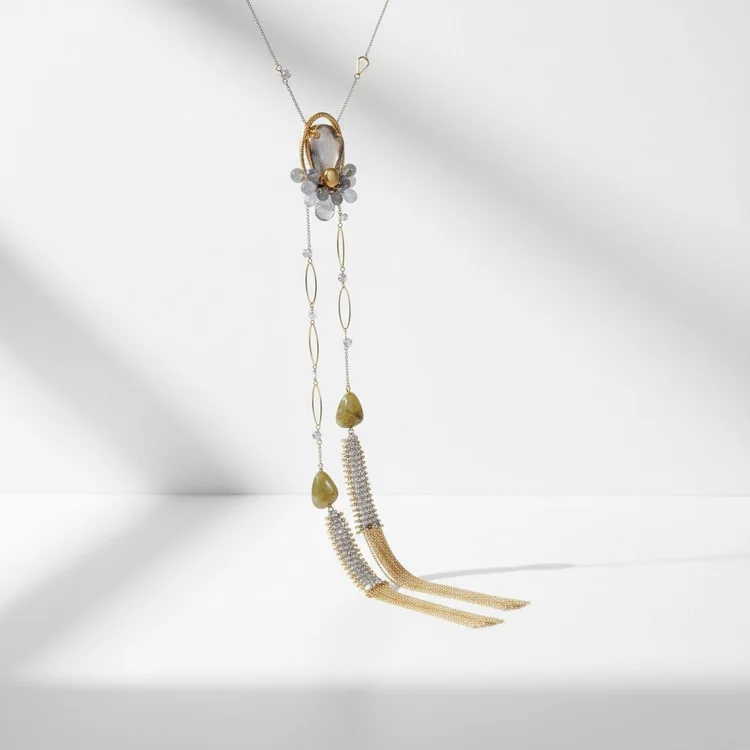
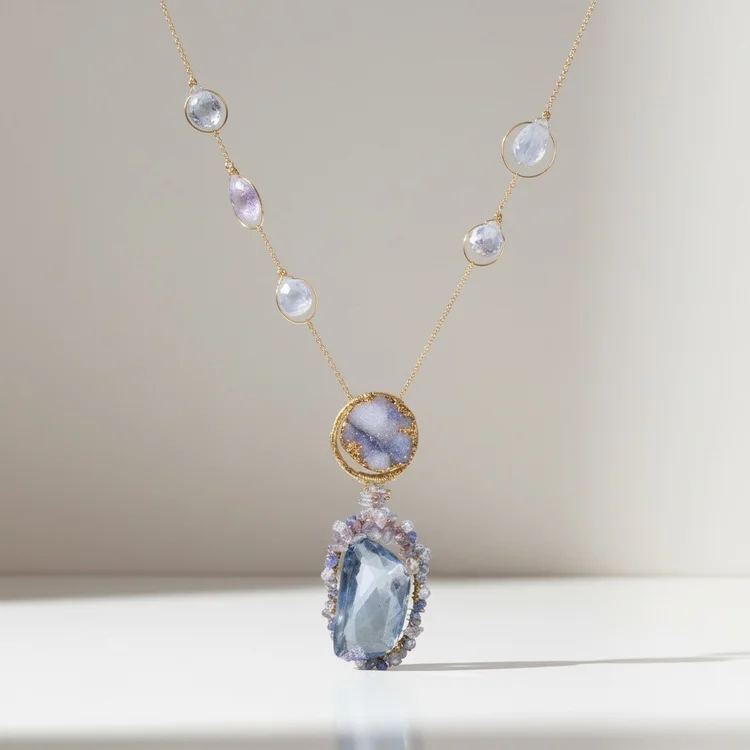
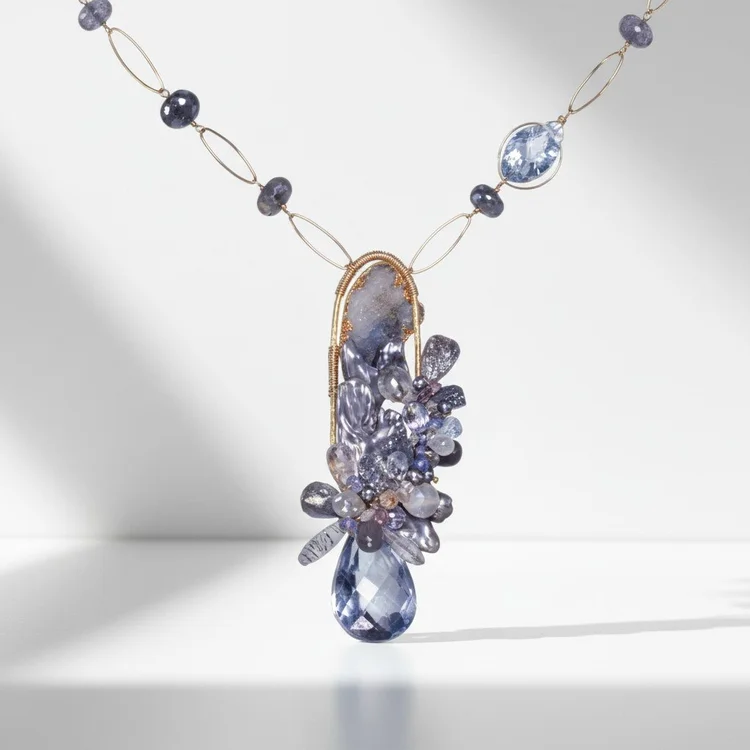
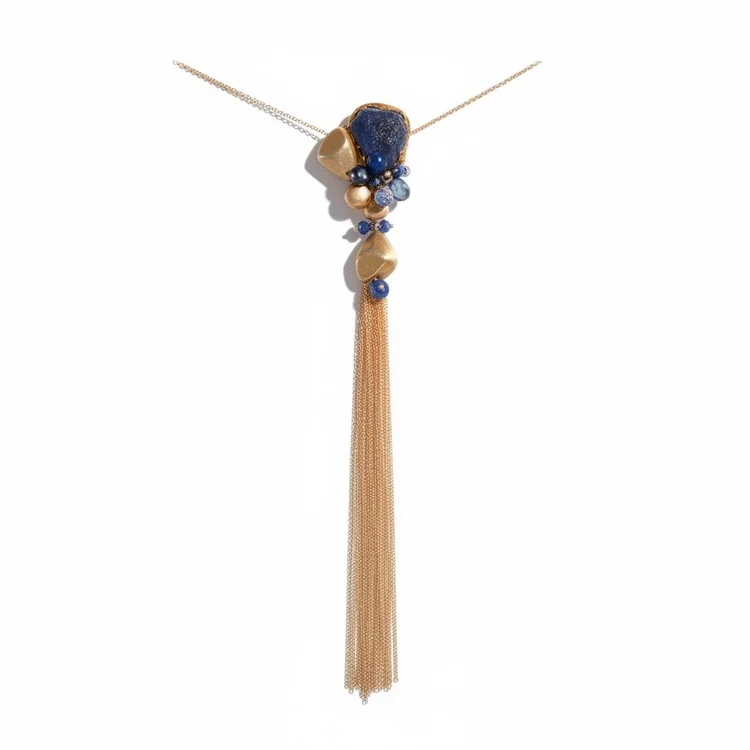
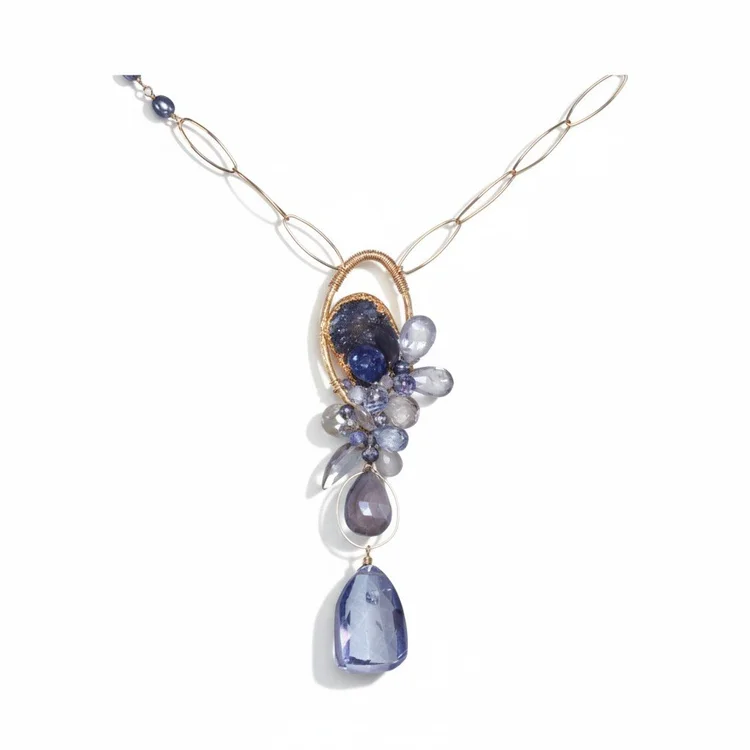
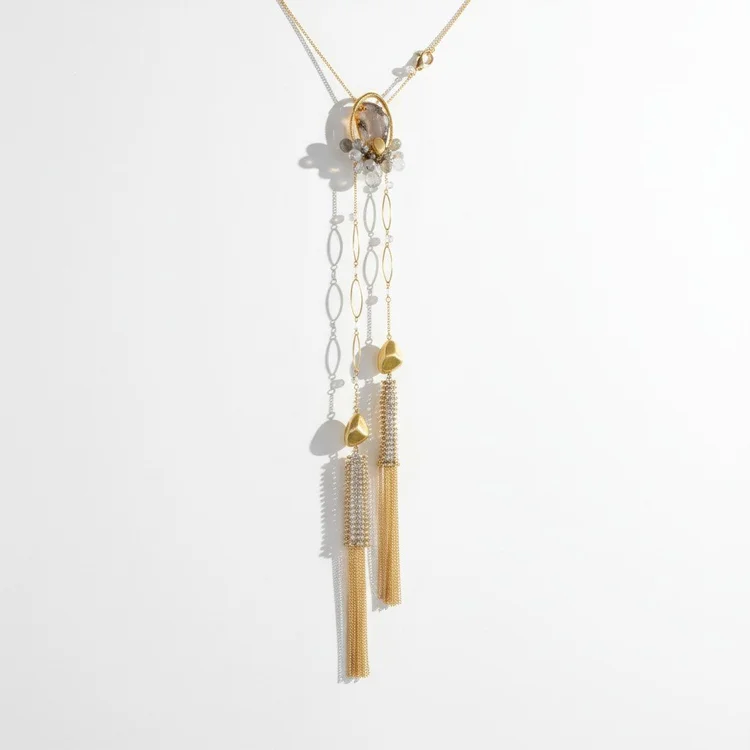
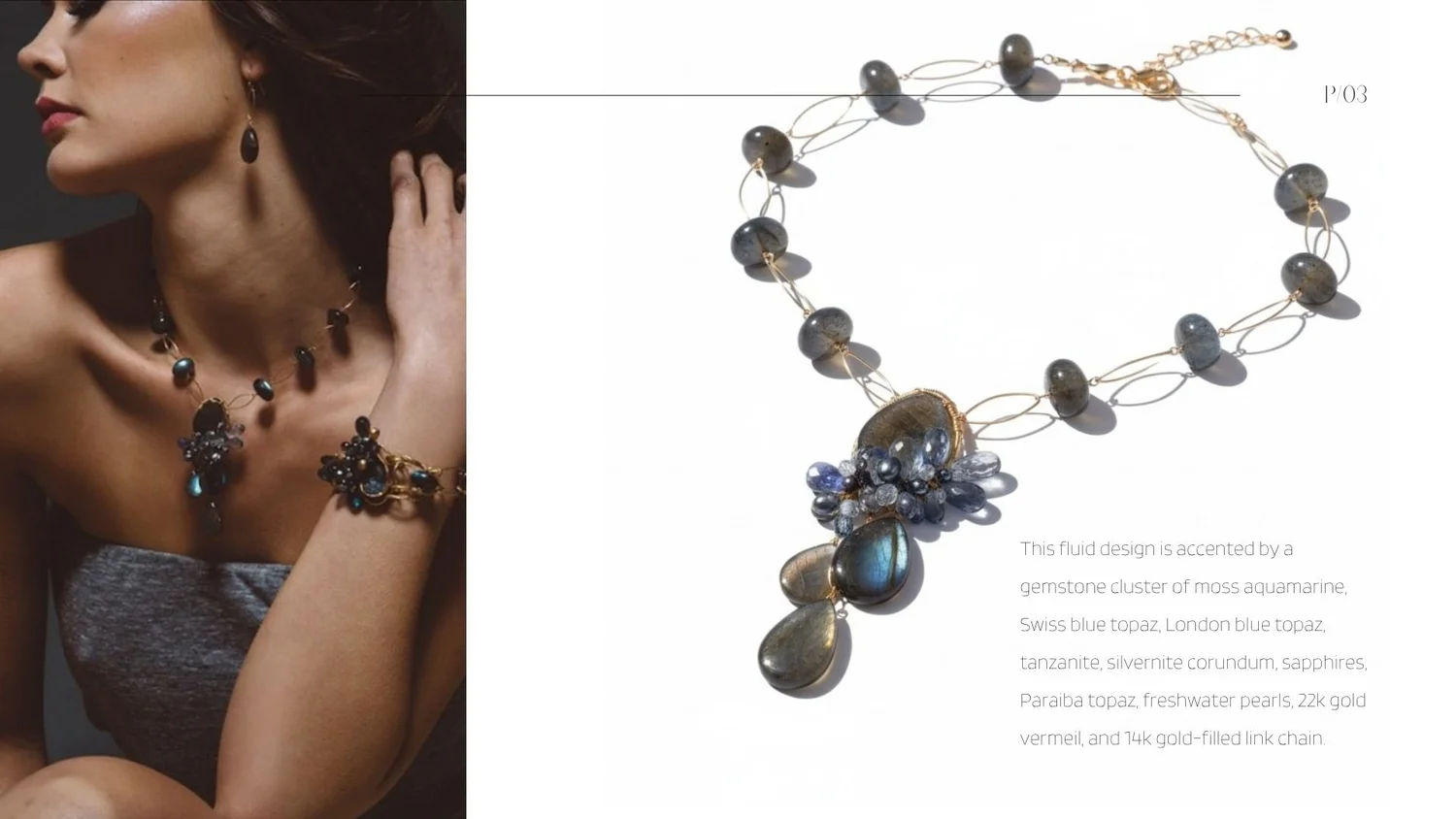
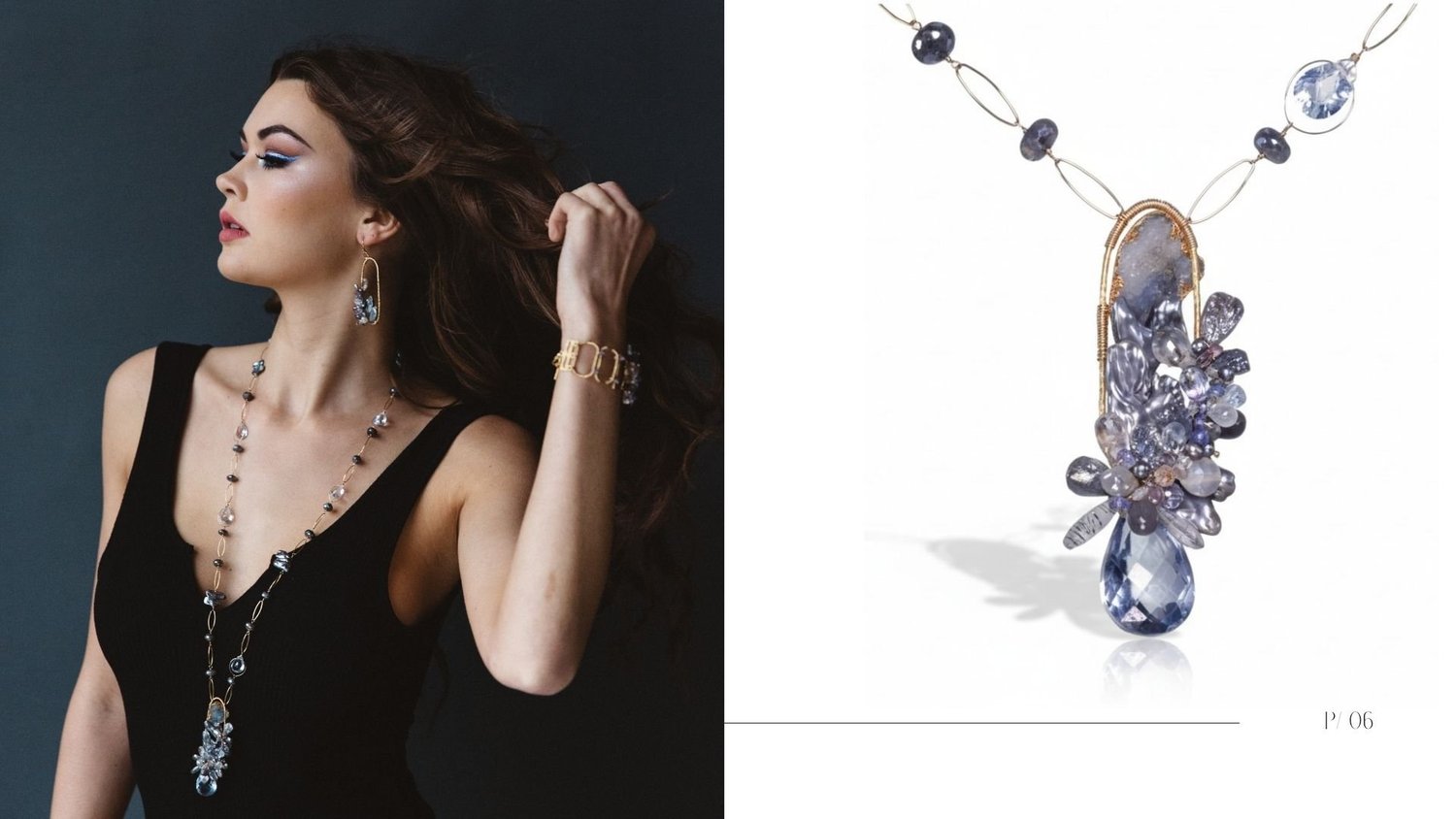
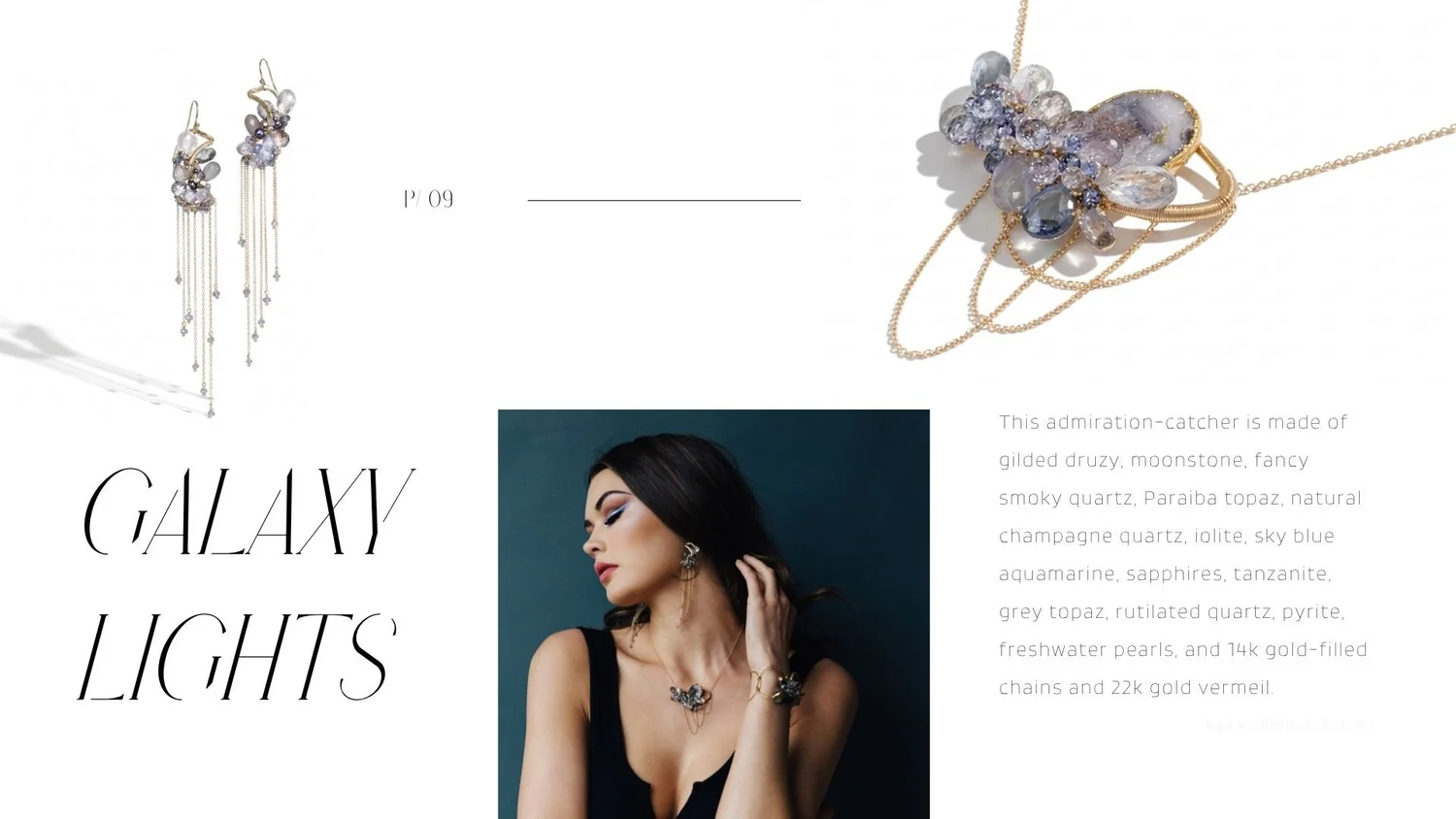
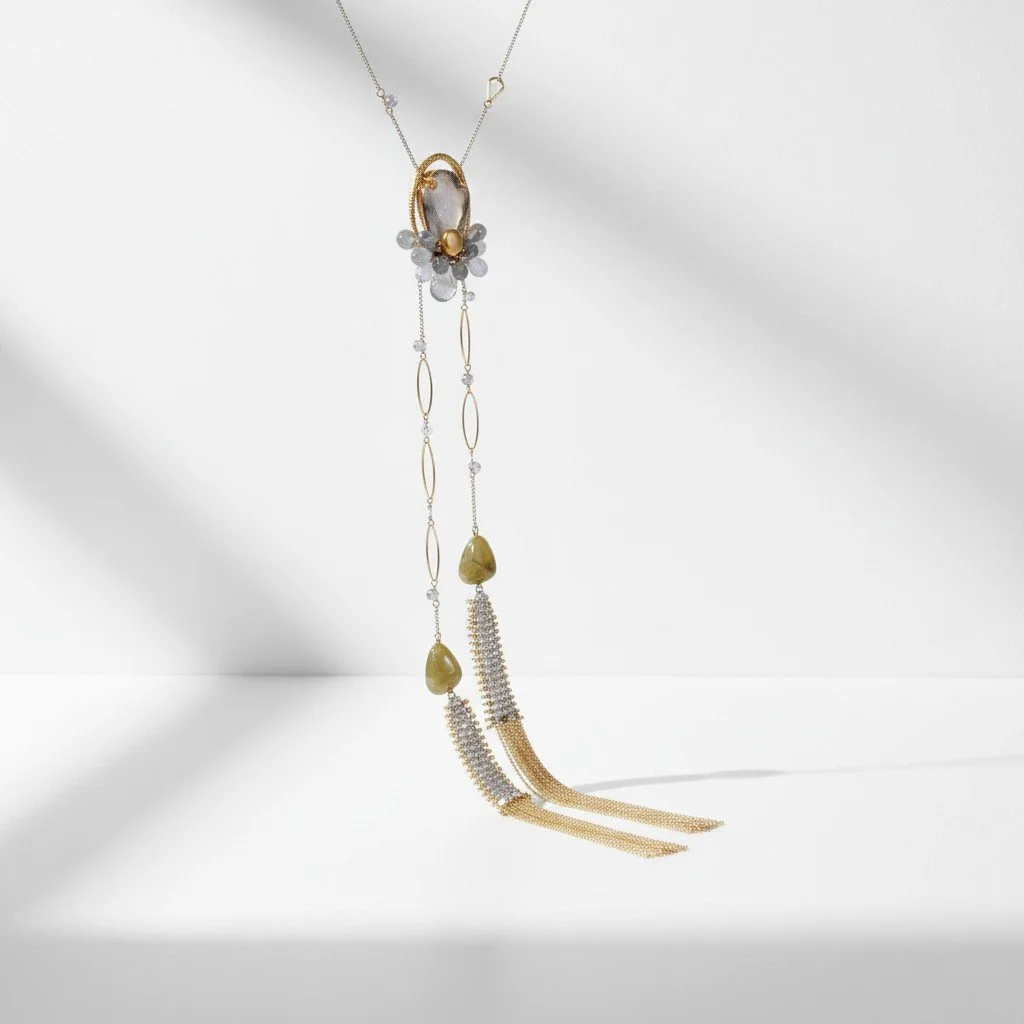
The secret to a higher Klout score. This elegant necklace features two intricately handwoven iolite details with delicate 14k gold filled chain tassels. Suspended by a 22k gold vermeil pendant with gemstone clustering with gilded druzy, Paraiba topaz, tanzanite, rare sky blue aquamarines, pearlized moonstone and 14k gold filled accents.
Topaz ranks 8 on the Mohs hardness scale, harder than quartz, harder than moonstone, harder than most colored gemstones in a jeweler's case. The coating that gives Paraiba topaz its color is durable for everyday wear but should be treated with care. Every piece in this collection was one of a kind, handcrafted in Denver. When it sold, it was gone.
Bracelets
Paraiba Topaz · Vivid Blue
Find a Unique Paraiba Topaz Bracelet For Your Signature style
Vivid Paraiba topaz at the wrist, paired with druzy, moonstone, and tanzanite. Each piece is hand-fabricated in 14k gold-filled and 22k gold vermeil by Andrea Li in Denver.
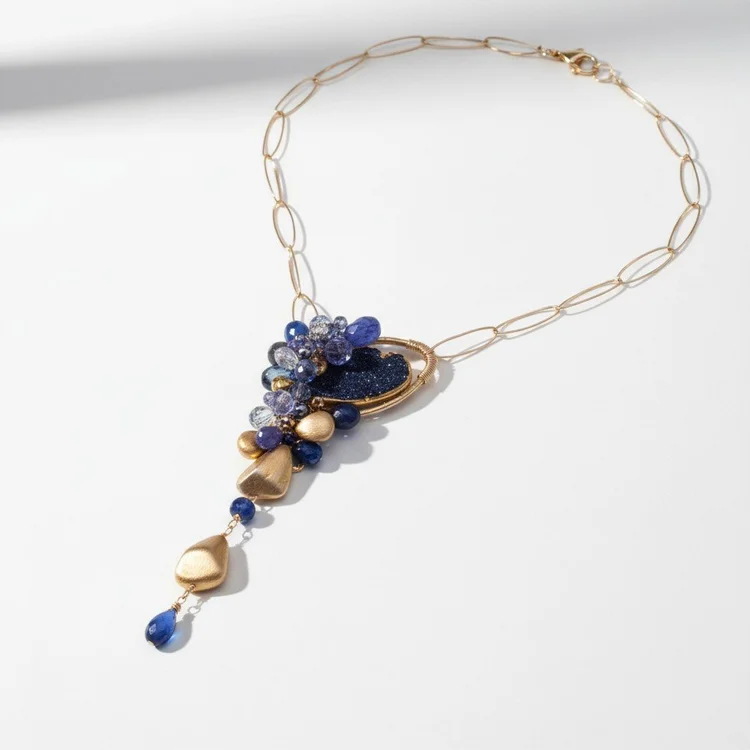
Your Next Favorite Paraiba Topaz Necklace for the Statement Maker to elevate your everyday style
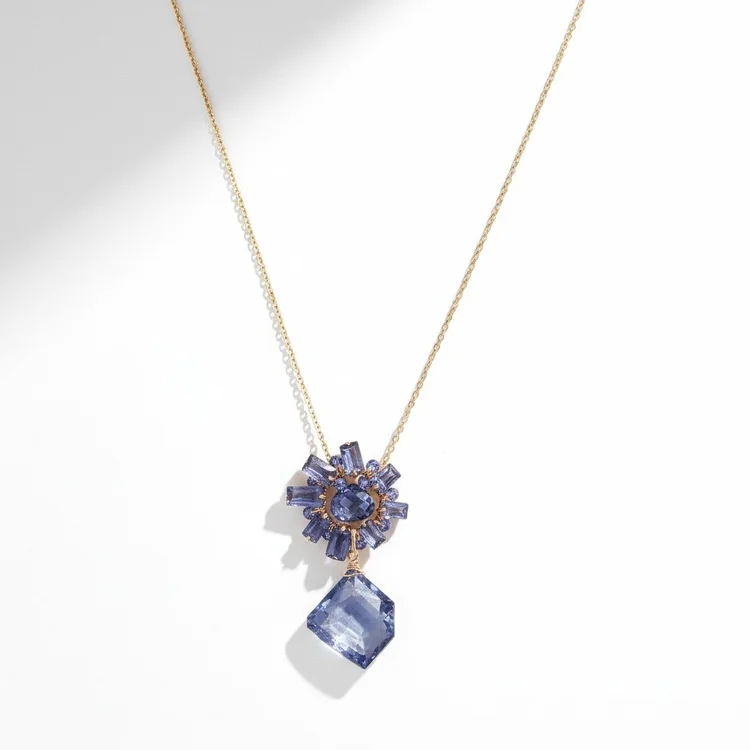
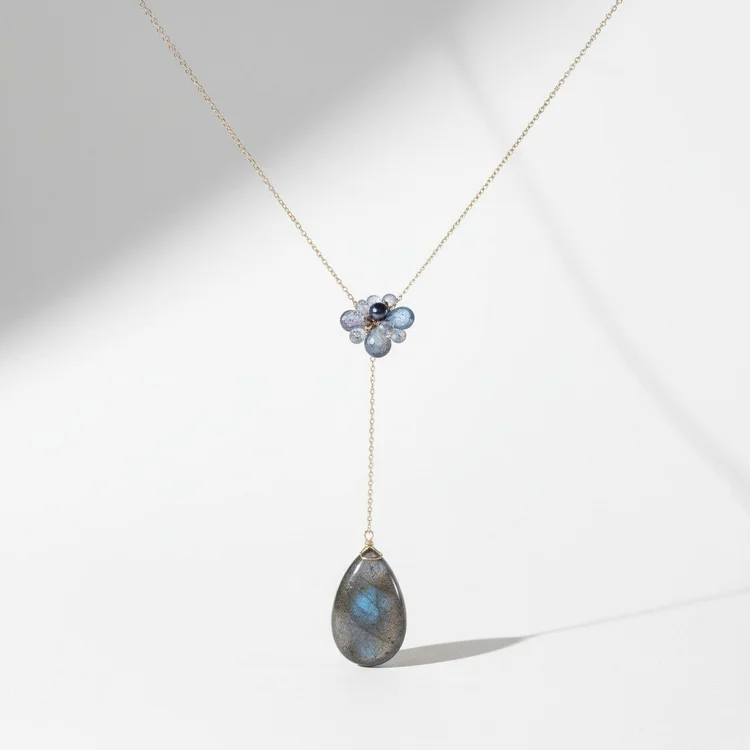
A line of vivid Paraiba topaz and tanzanite, cool blue light drawn down the neck. Each piece is hand-fabricated in 14k gold-filled and 22k gold vermeil by Andrea Li in Denver.
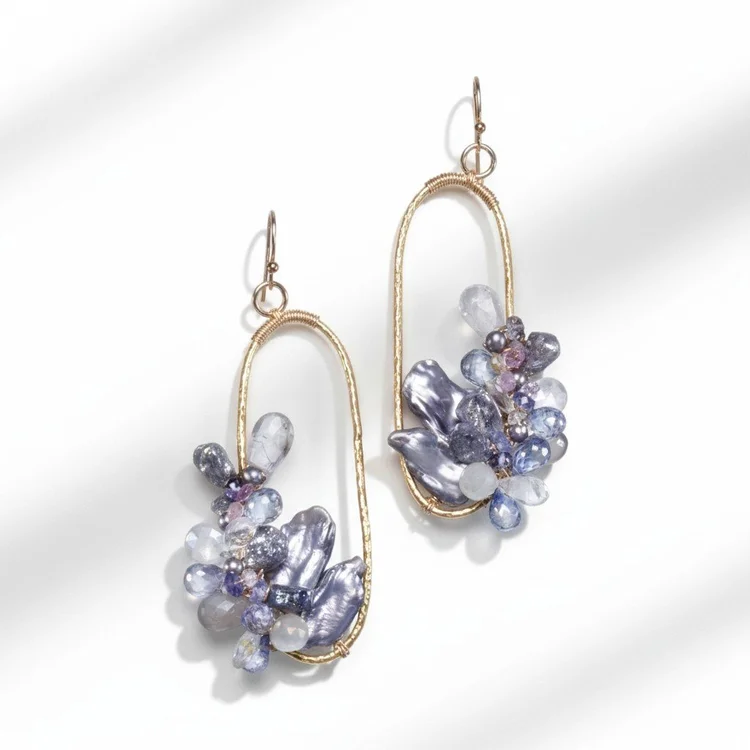
Paraiba topaz set to swing, electric blue beside sapphire, iolite, and mystic topaz. Each piece is hand-fabricated in 14k gold-filled and 22k gold vermeil by Andrea Li in Denver.
Glowing an electric, tropical blue, Paraiba topaz is about as vivid as a gemstone gets, unforgettable for someone who loves color. Each piece is handmade and one-of-a-kind, sculpted by hand in my Denver studio.
No. Paraiba topaz is topaz with a thin coating that gives it a vivid blue to blue-green, named for its resemblance to the famous neon Paraiba tourmaline, which is a different and far rarer stone colored by copper. Paraiba topaz gives you that electric blue color in a durable, very wearable topaz.
What is Paraiba topaz?
It is colorless topaz with a thin coating that gives it an intense, slightly greenish blue. GIA describes the treatment as “coating colorless topaz with a microscopic layer of metallic oxide compound.” That sets it apart from London blue and Swiss blue topaz, which get their color from irradiation and heat. The topaz underneath is hard, 8 on the Mohs scale; the coating is the part to protect, which is why necklaces and earrings suit it best.
What stones does Andrea pair with Paraiba topaz?
Her Paraiba topaz pieces often bring in tanzanite, sapphire, iolite, mystic topaz, moonstone, and druzy, set in 14k gold-filled and 22k gold vermeil, so the vivid blue has cooler and warmer notes around it.
How do I care for Paraiba topaz?
Clean it with warm water, a degreasing dish soap like Dawn, and a soft toothbrush, then pat it dry. Avoid ultrasonic and steam cleaners and sudden temperature changes, which can stress topaz: ultrasonic cleaners are not safe for stones, and GIA notes that abrasive cleaners or buffing wheels would remove the coating. A Sunshine polishing cloth brightens the gold, so keep it on the metal and off the stones, and store each piece away from harder stones to protect the coating.
Can I commission a Paraiba topaz piece?
Yes. Every piece is one of a kind, so Andrea can build a design around the exact blue you love. Start a commission at andreali.com/custom-shop.

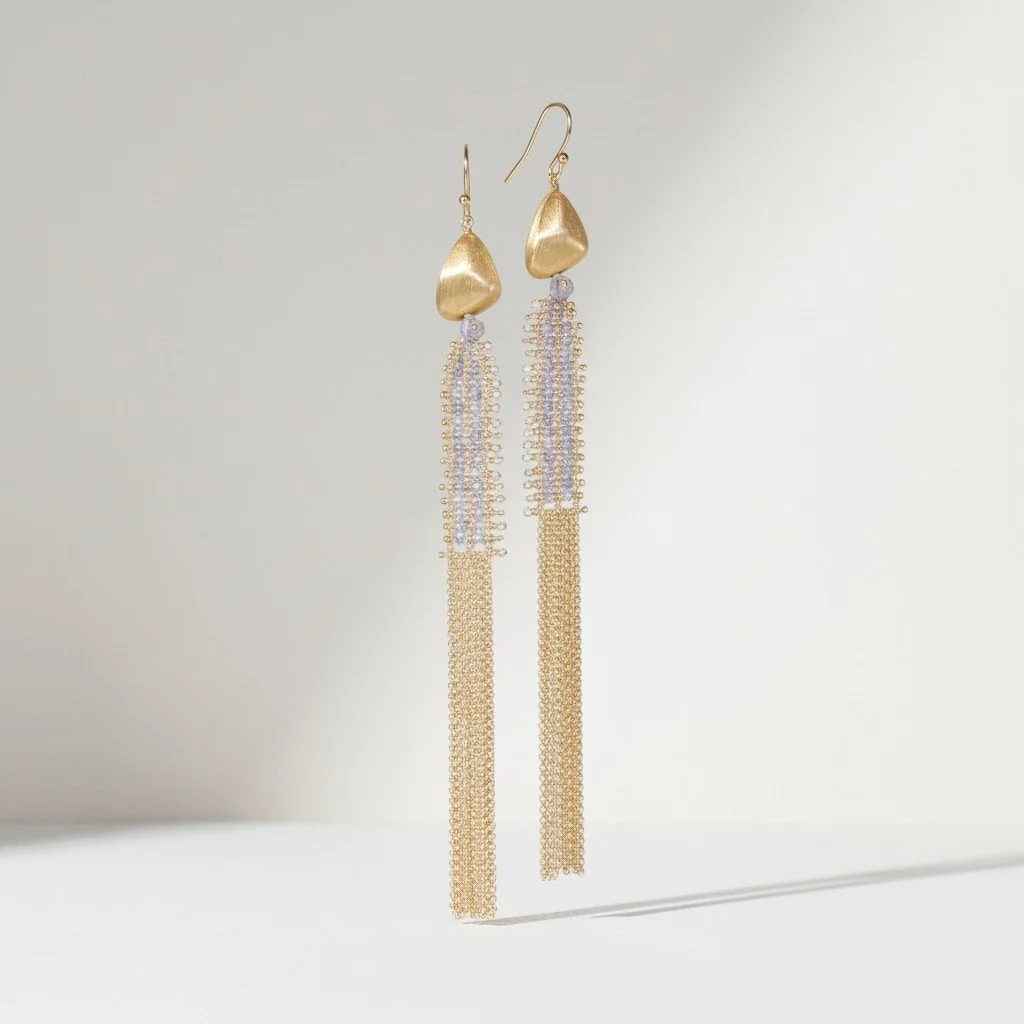
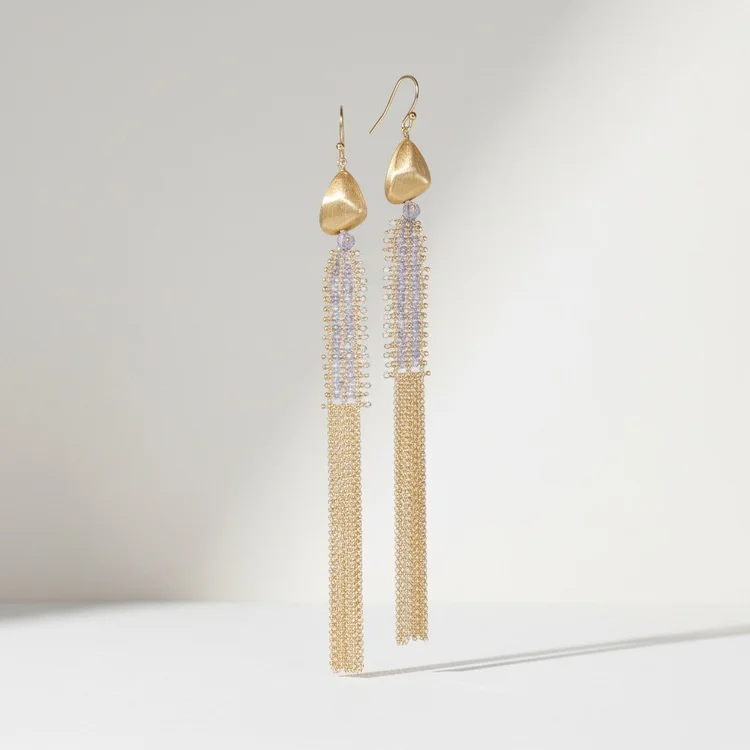
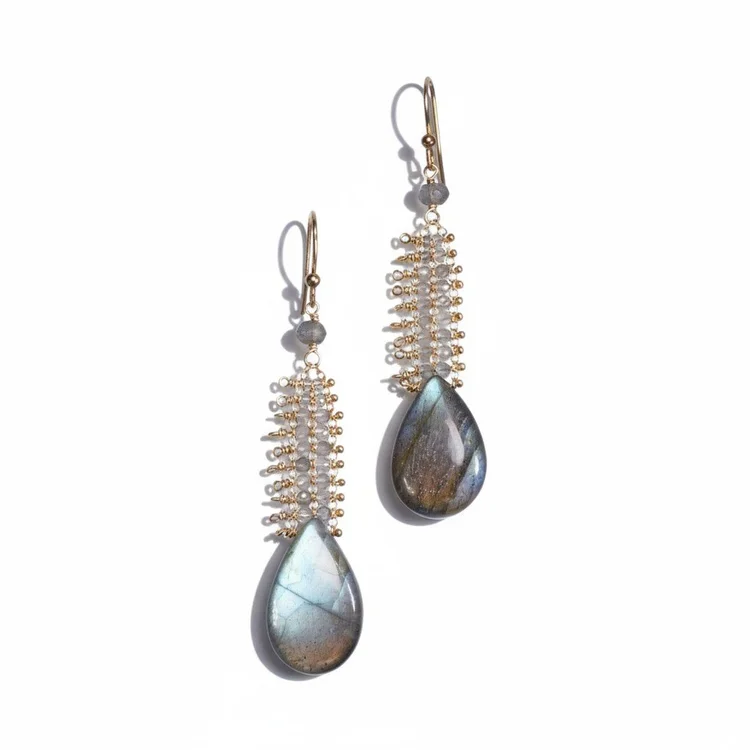
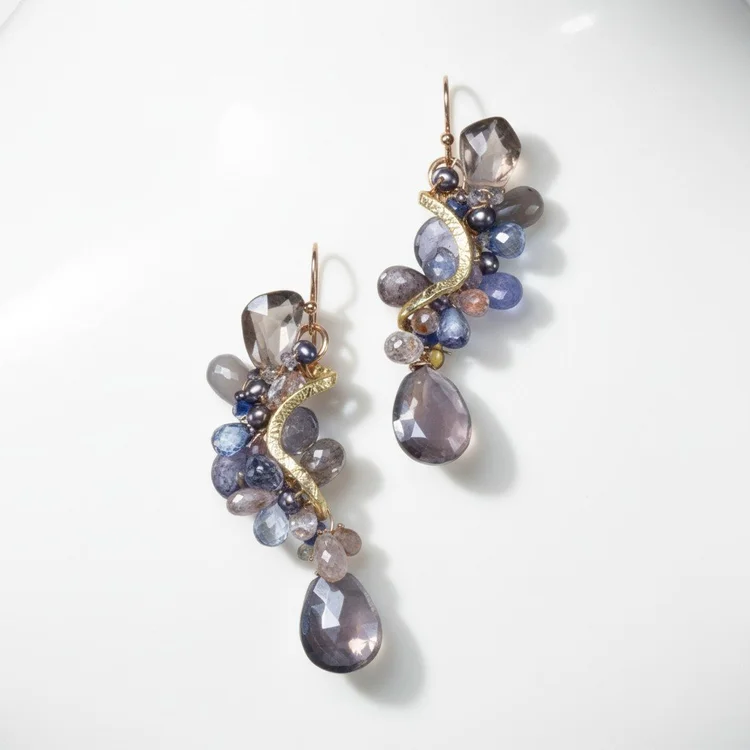
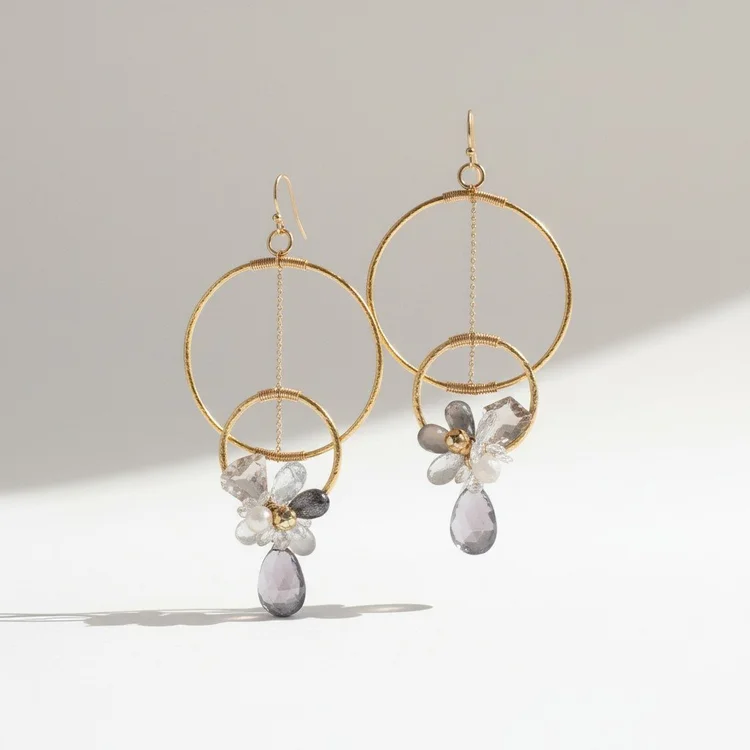
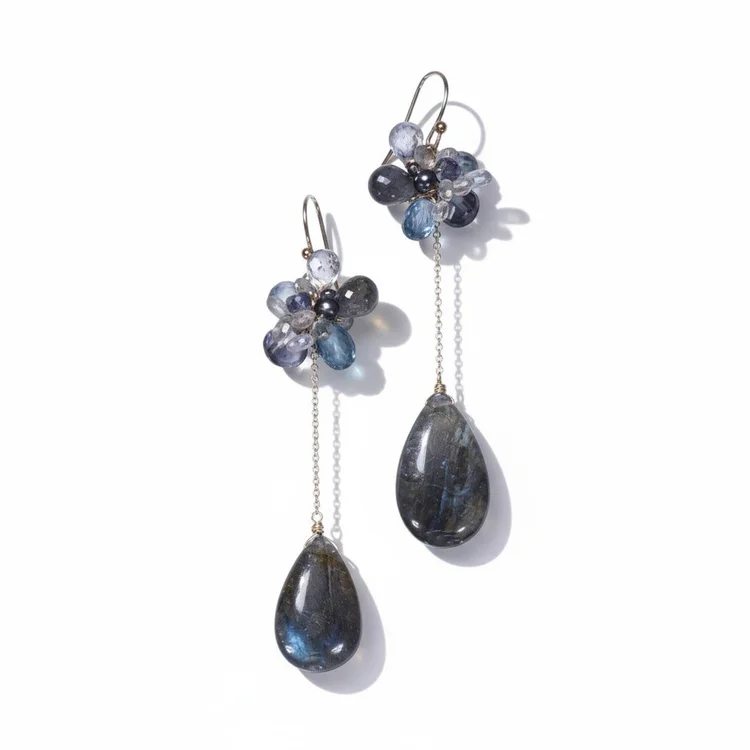
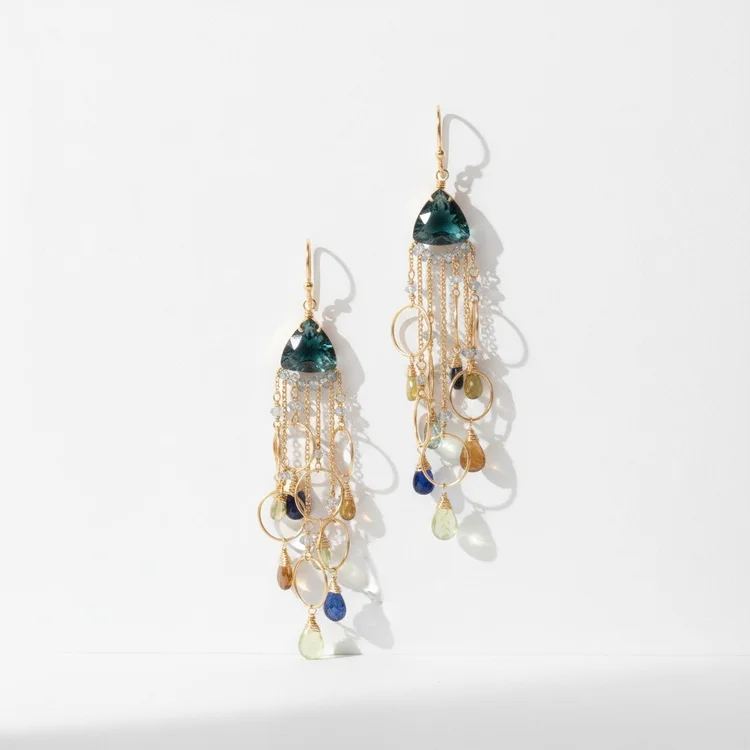
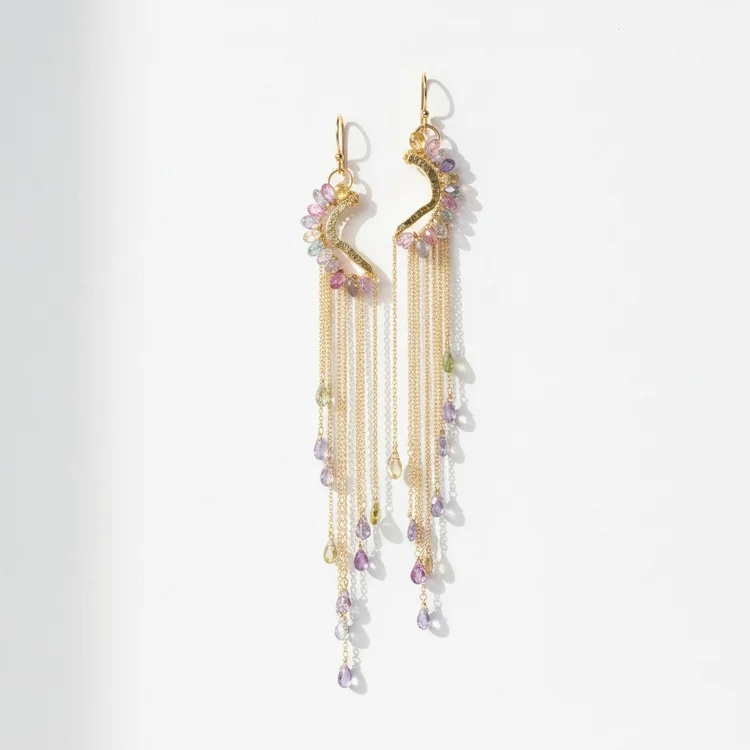
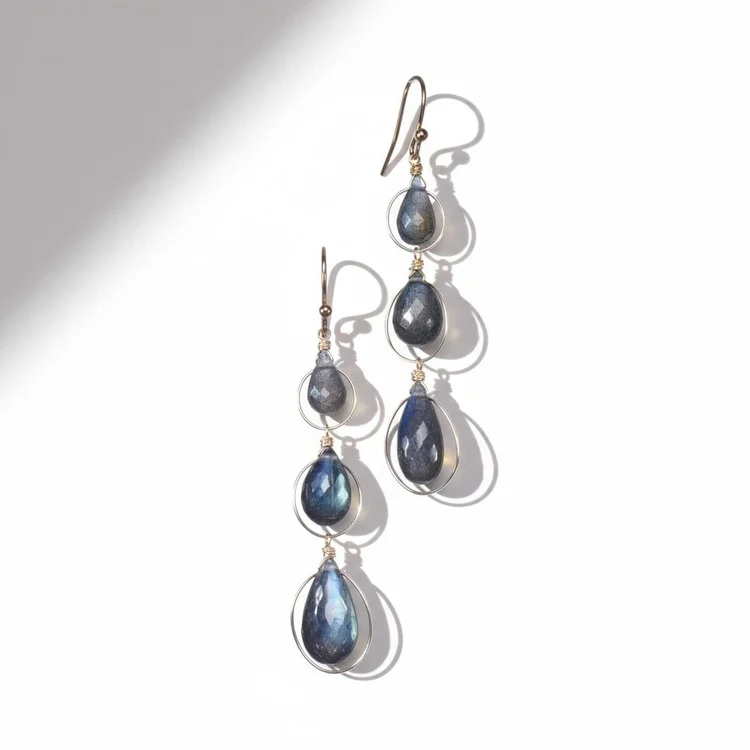
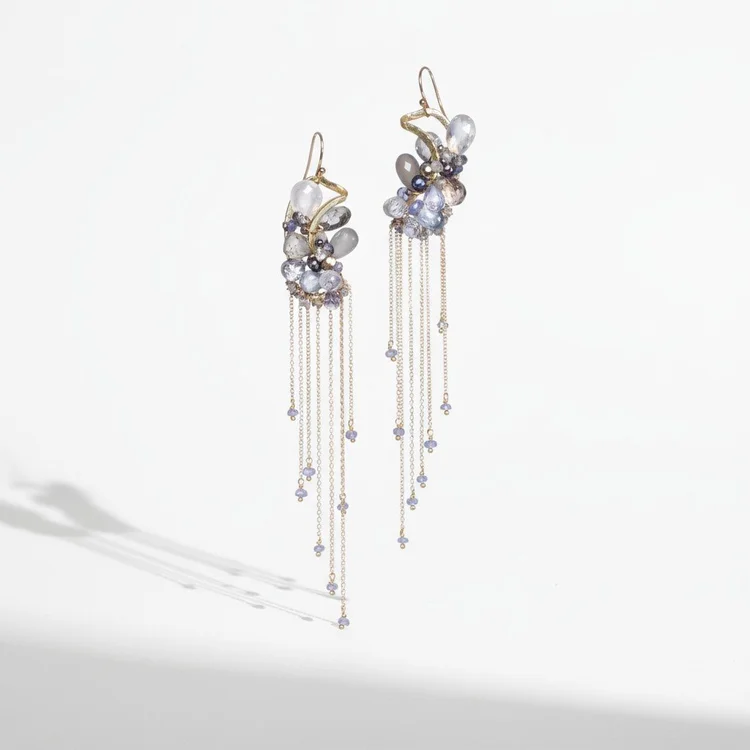
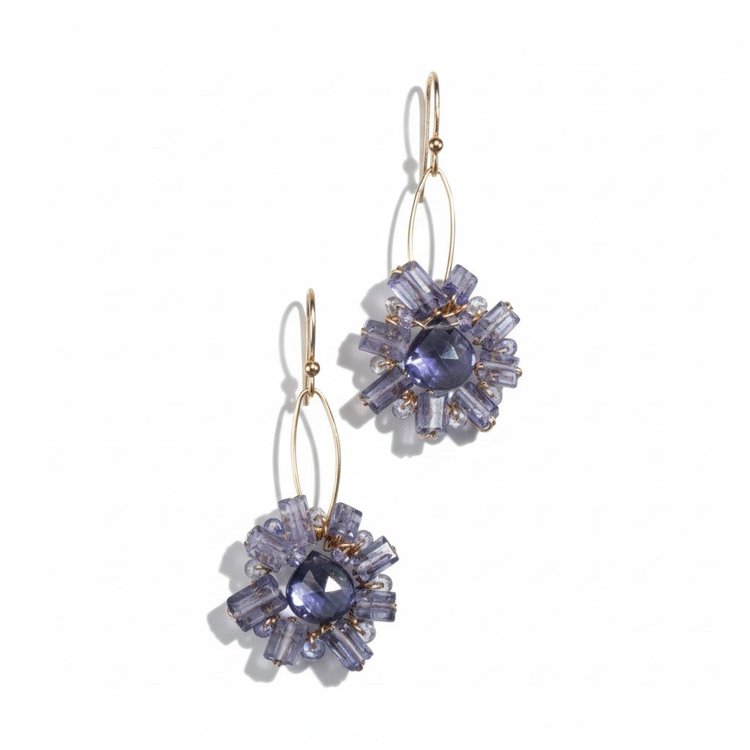
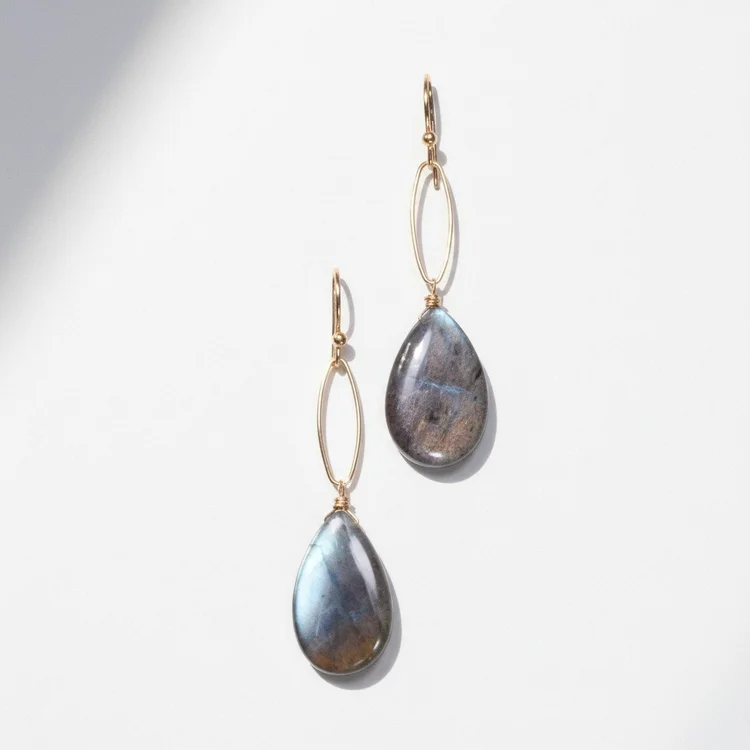
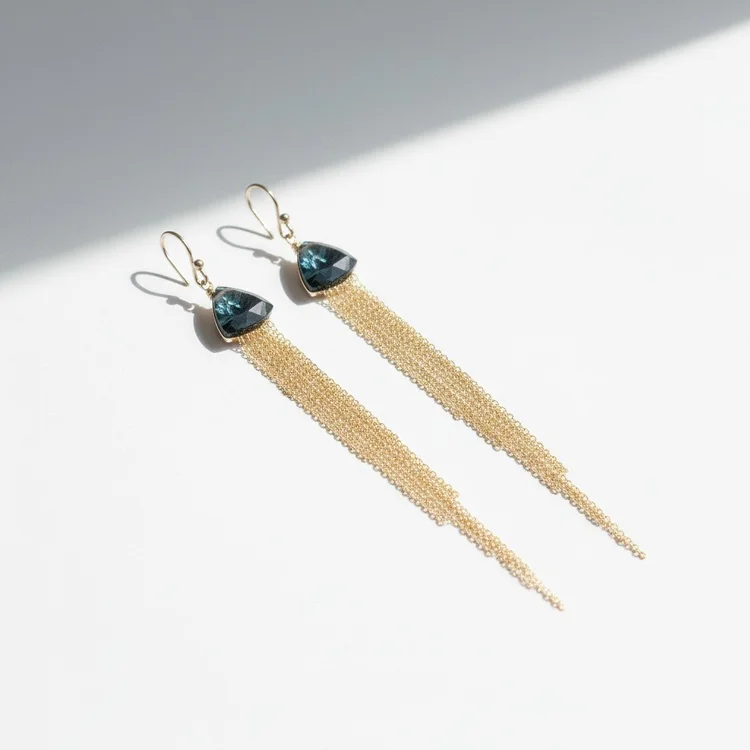
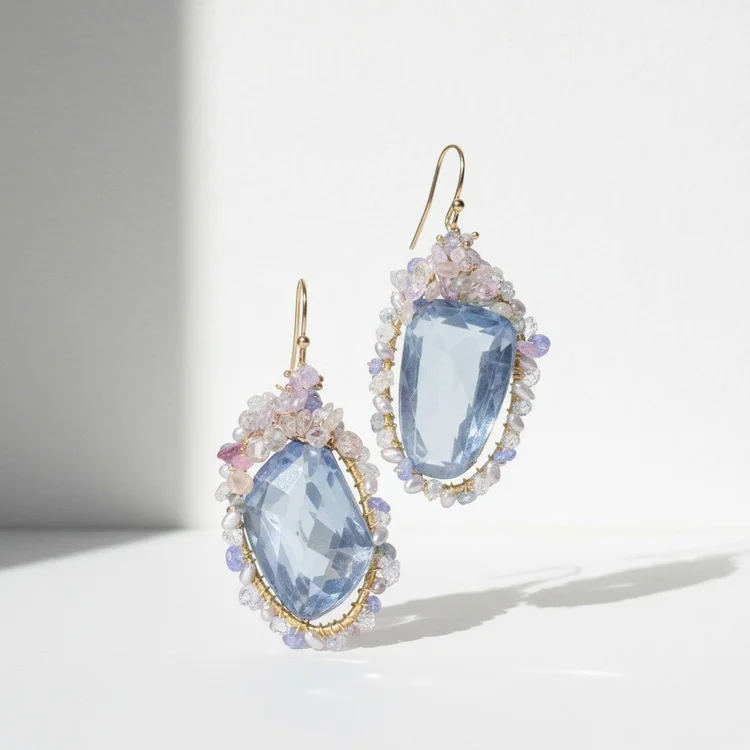
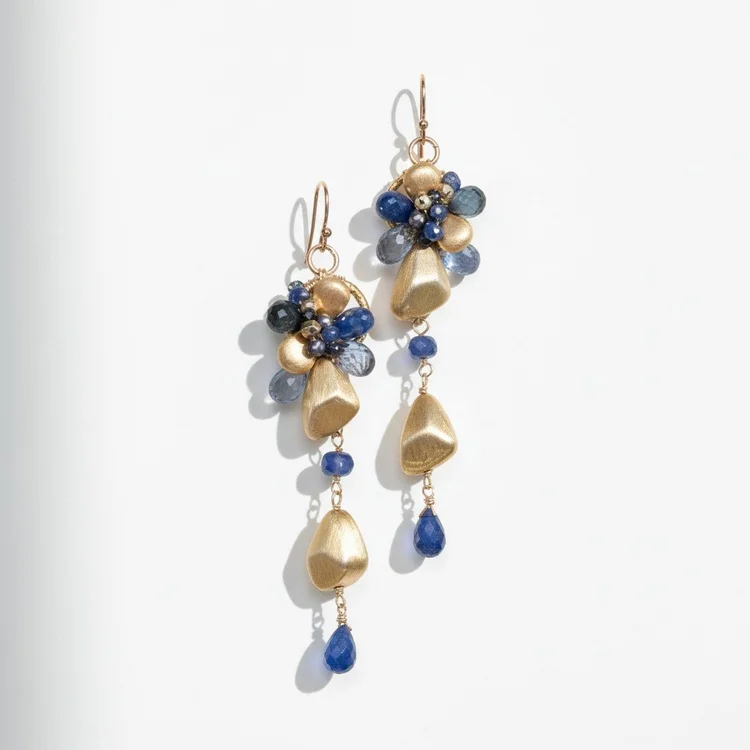
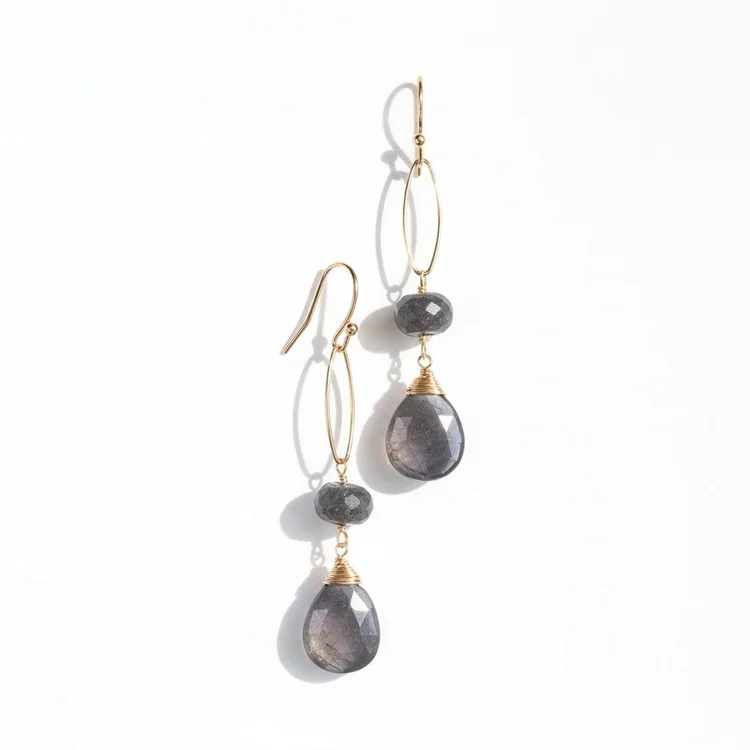
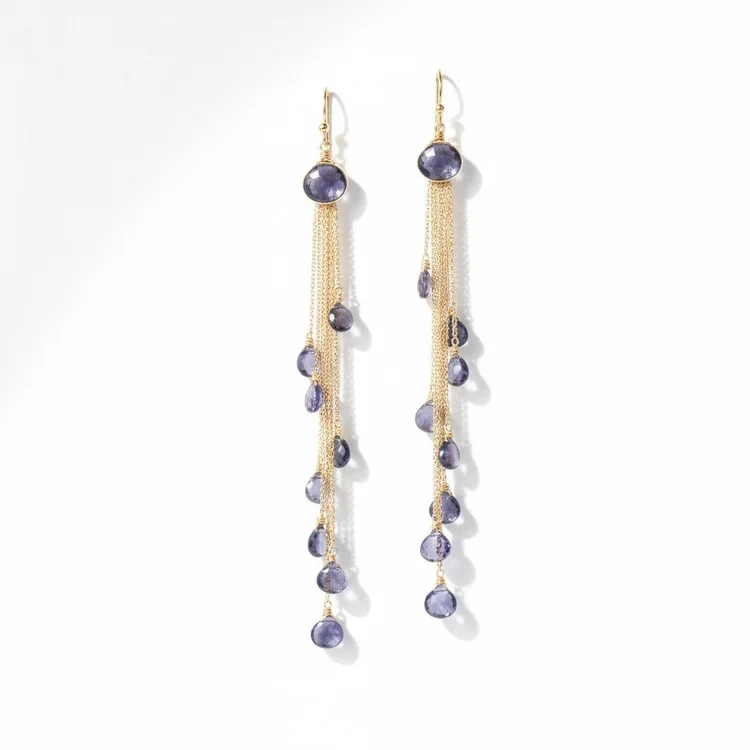
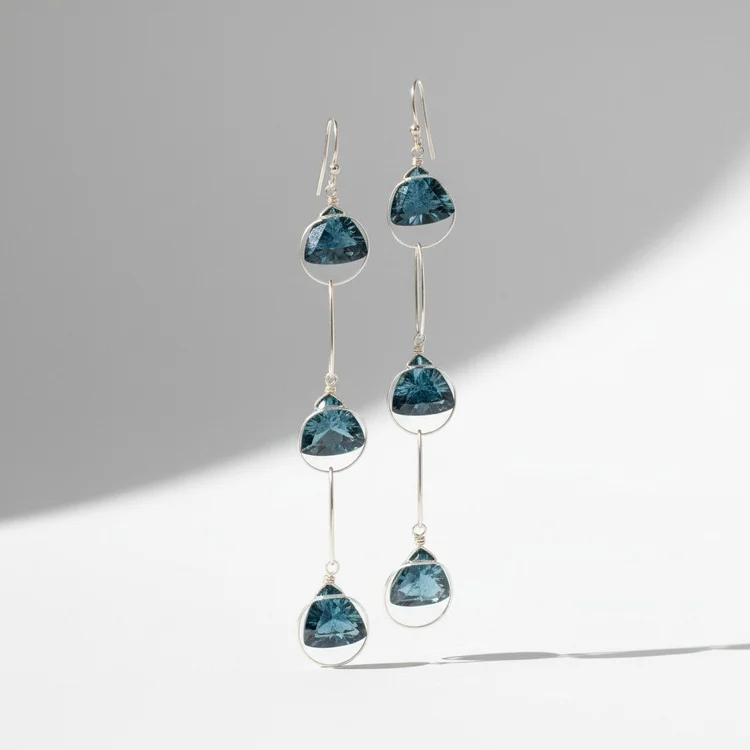
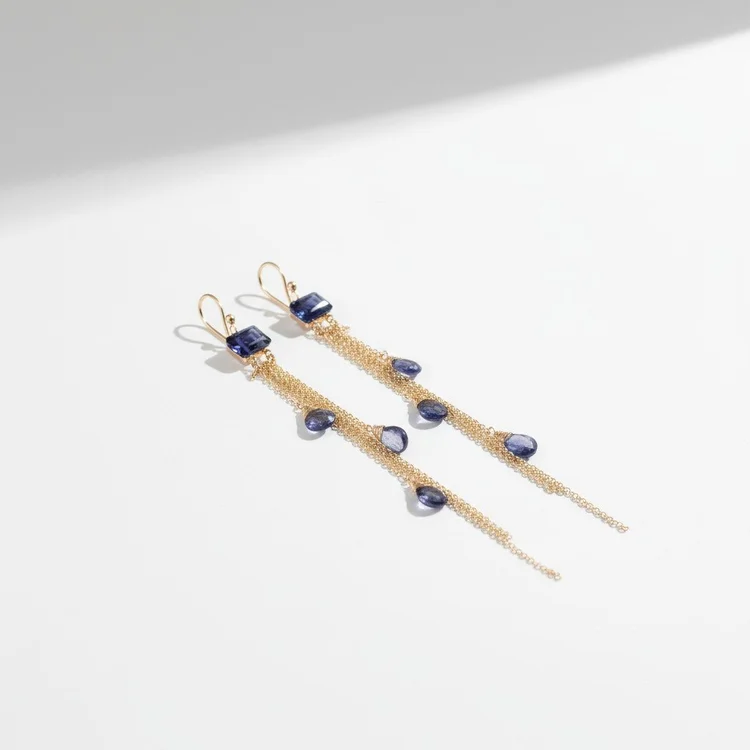
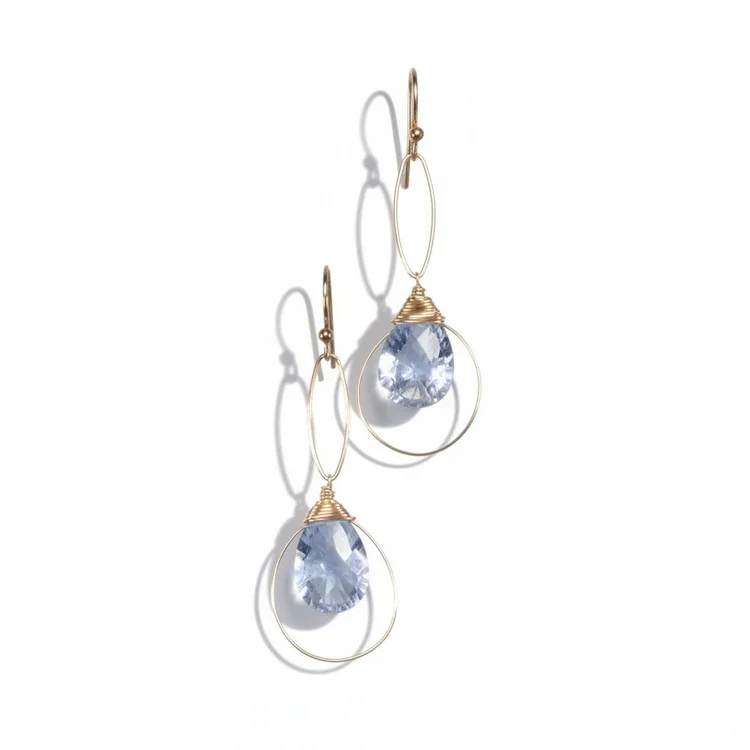
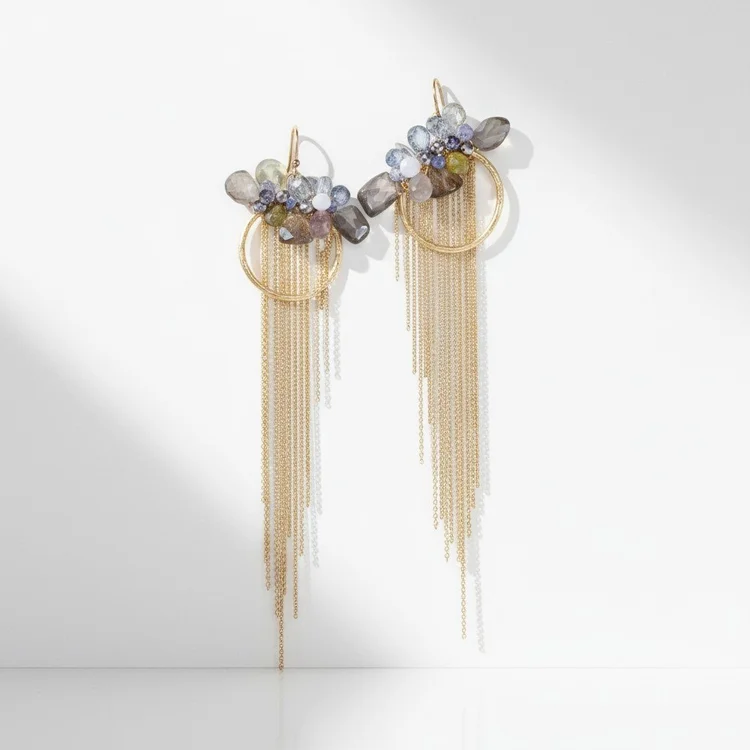
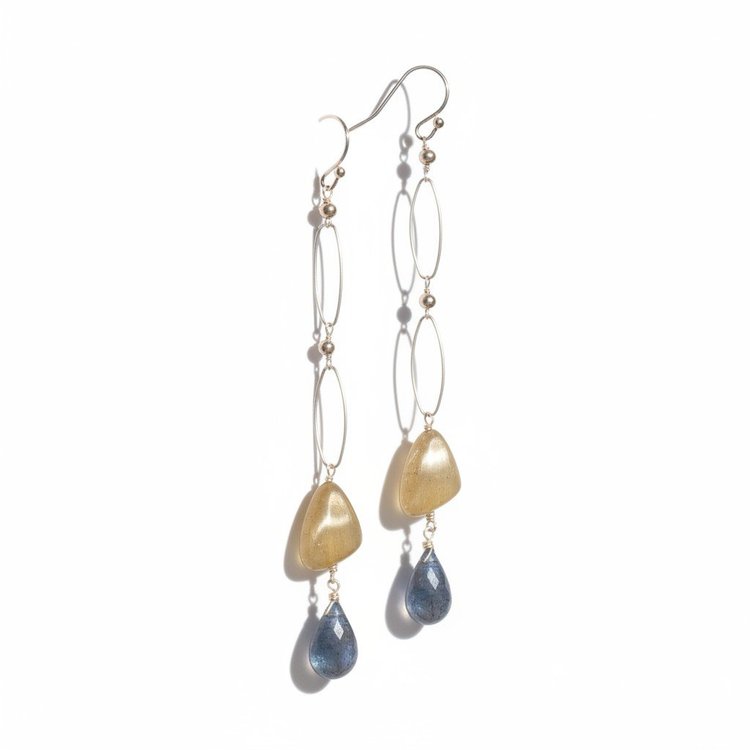
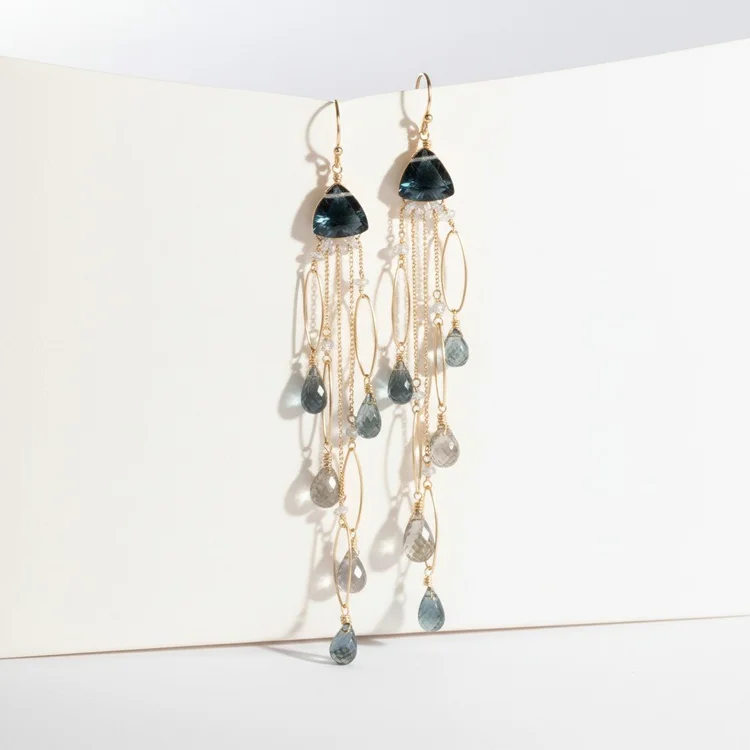
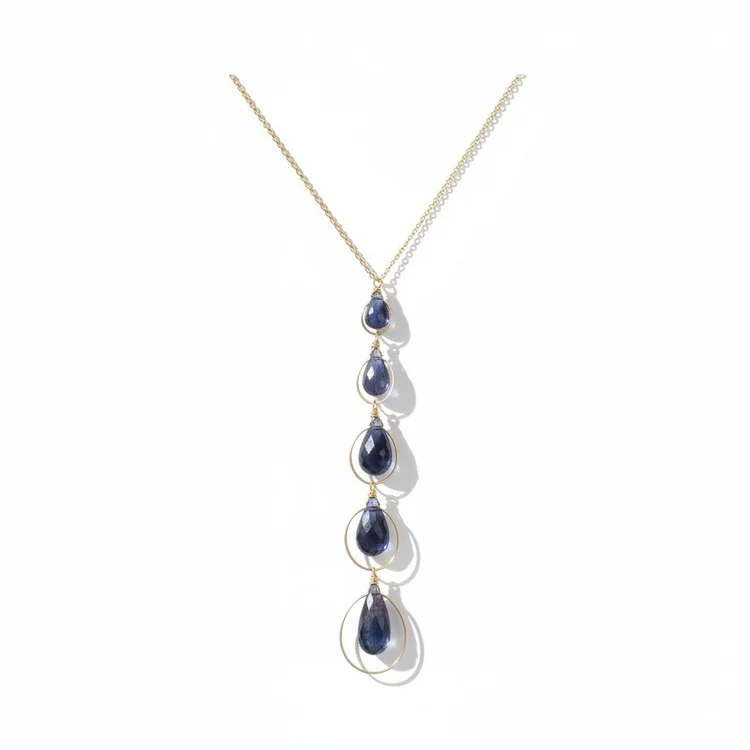
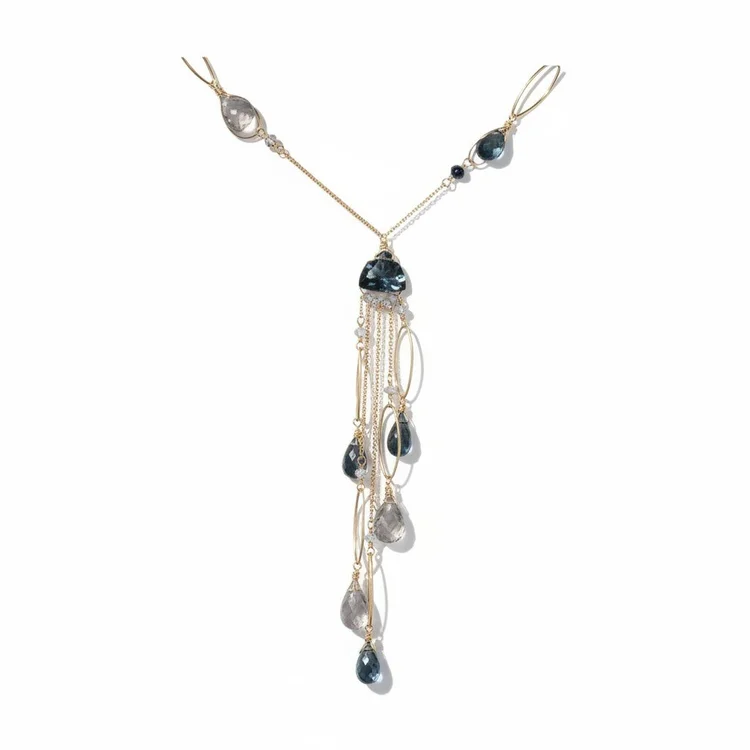
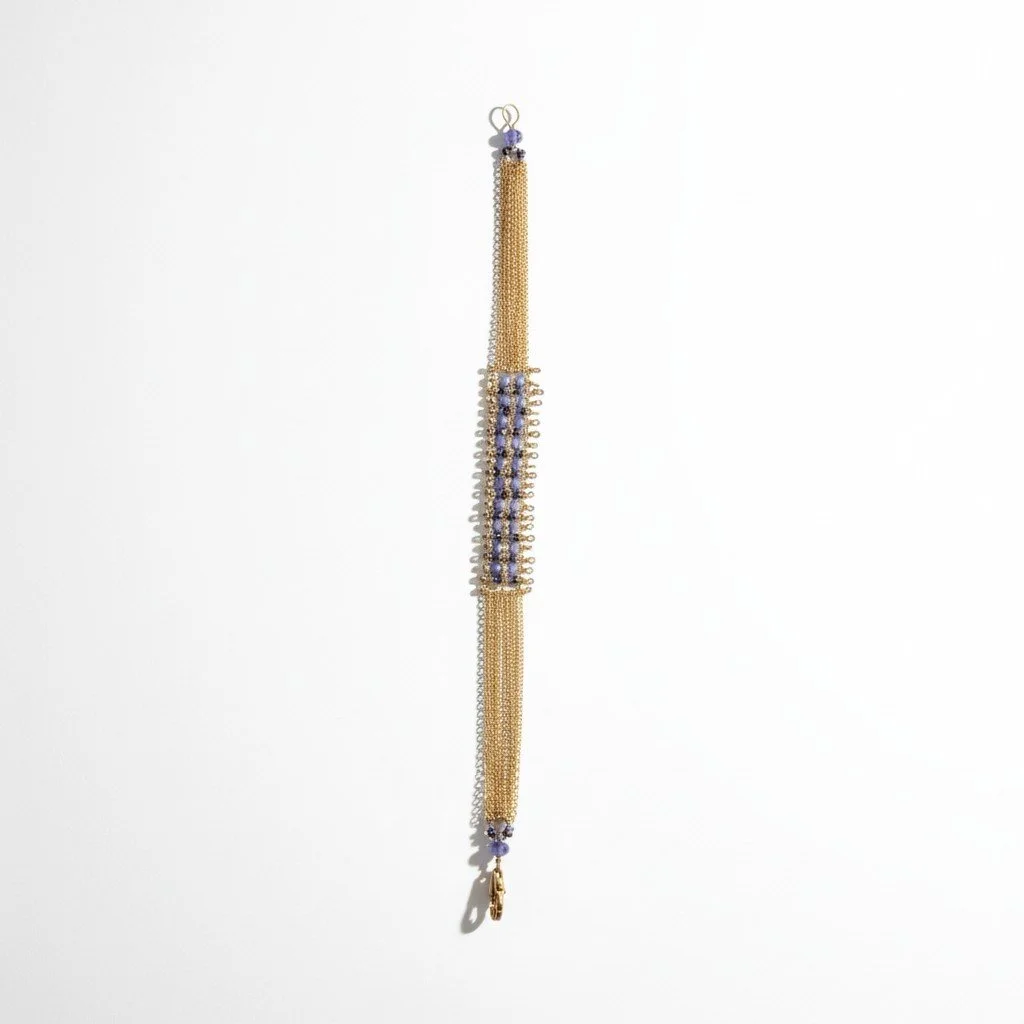
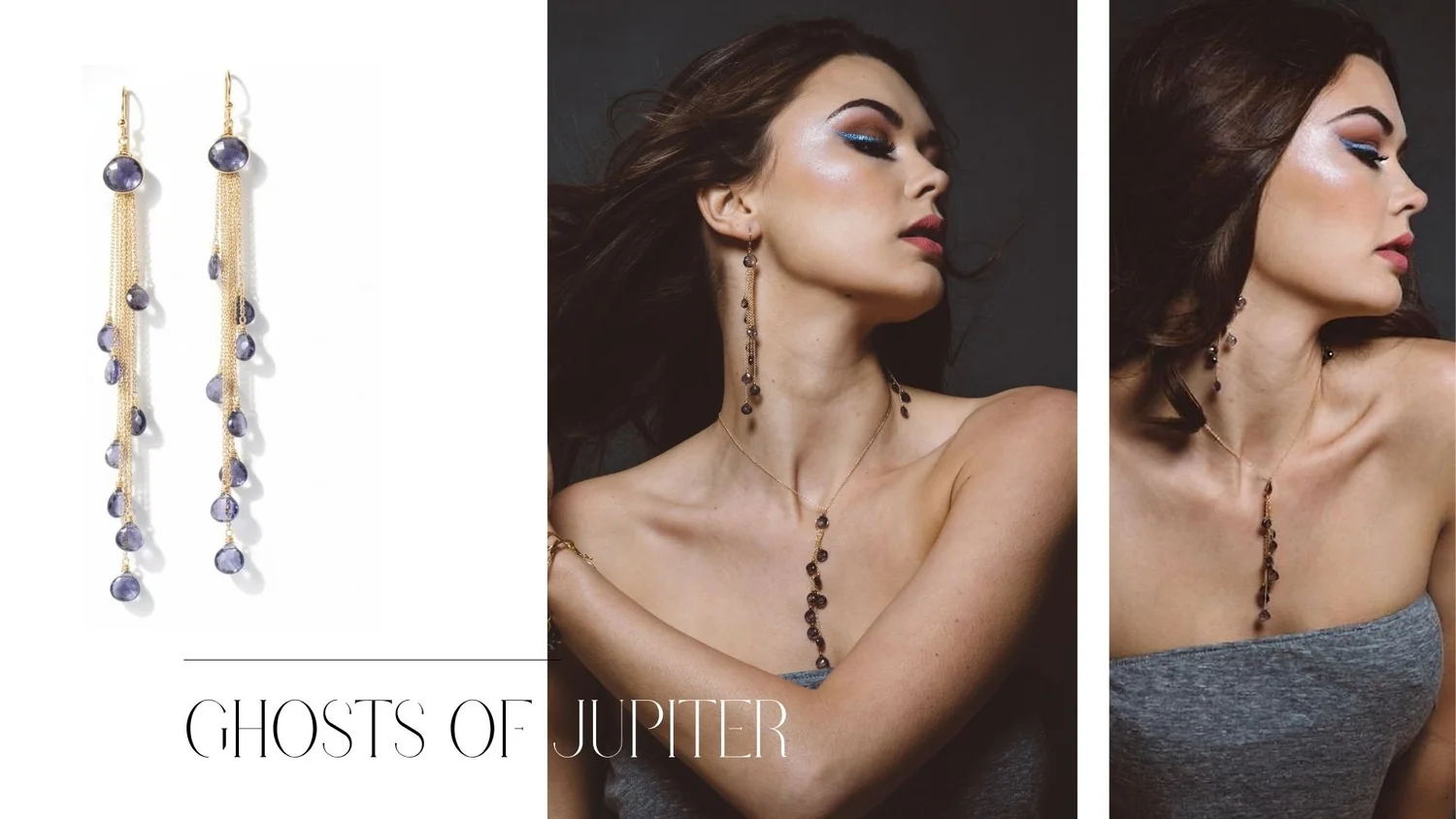
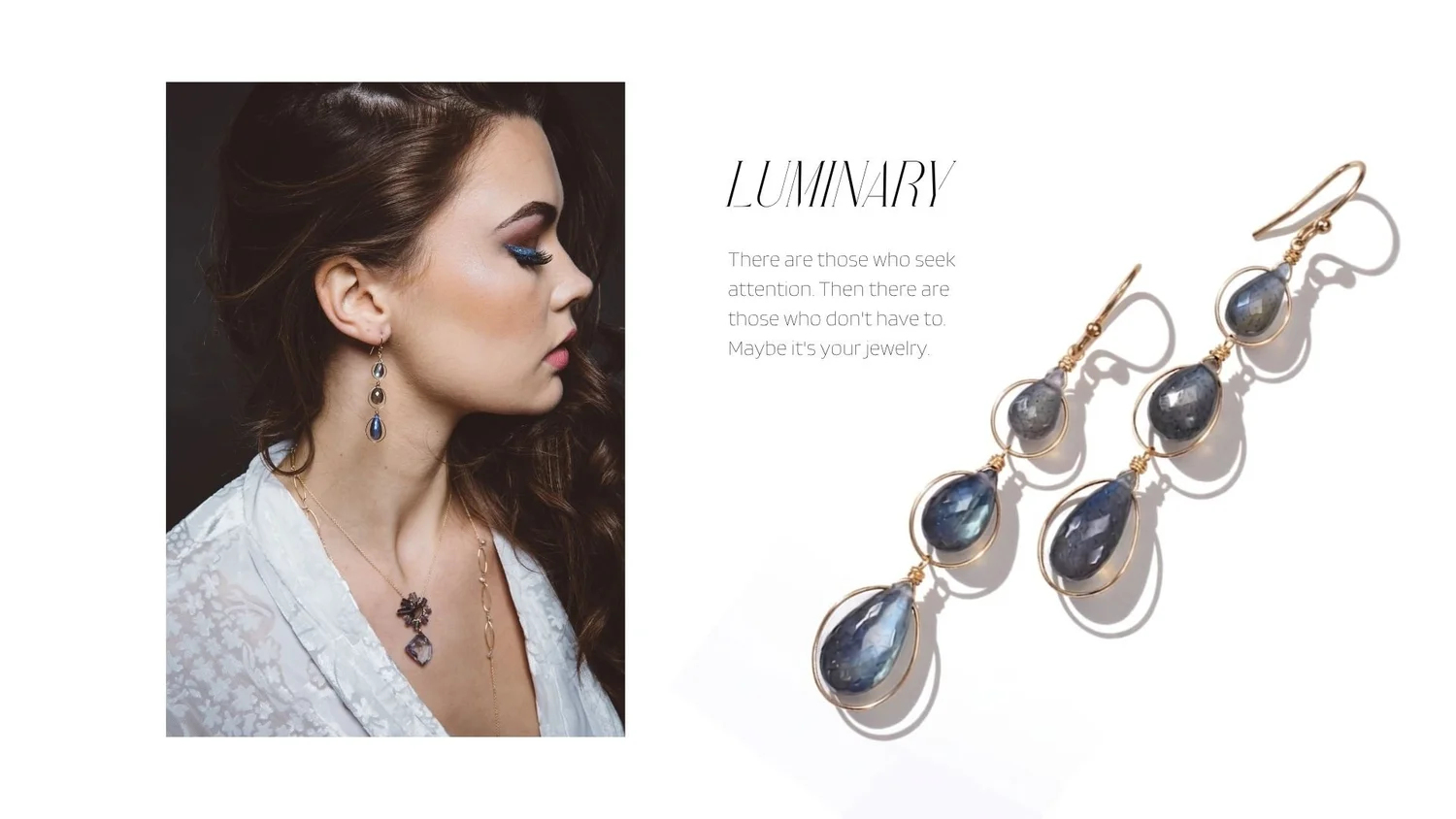

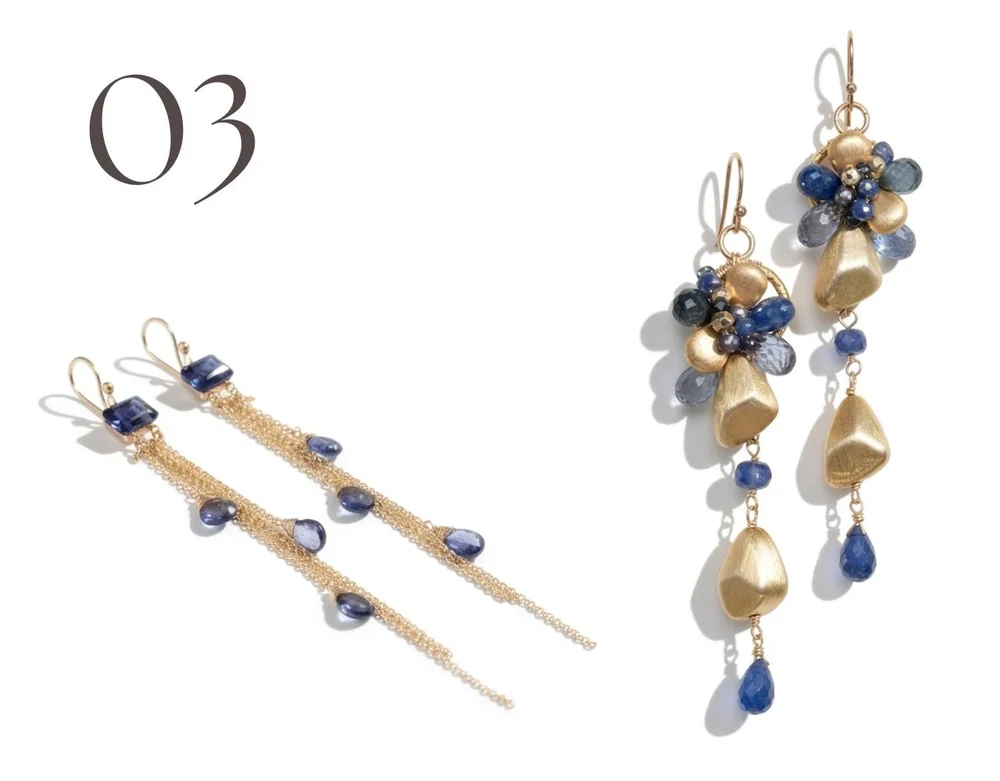
You want the same things as any girl. You just want yours to be better. Starting with your jewelry these long column earrings should do the trick. These feature intricately woven detailing with tiny iolite faceted rondells with cascading delicate 14k gold filled chains topped with a 22k gold vermeil teardrop accented with tanzanite.