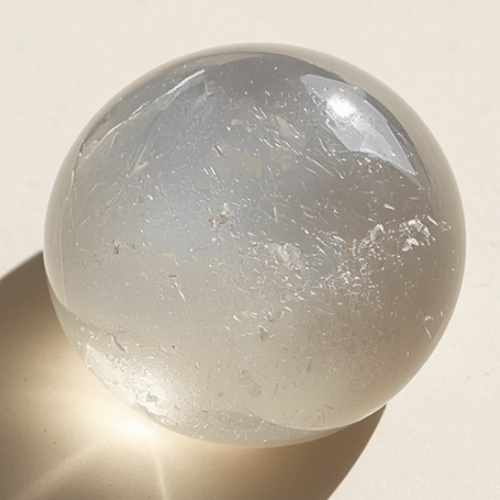
Gray Moonstone
- The look
- A misty, smoky adularescence, the blue sheen drifting through a cool gray body.
- Color range
- Associated with
- Calm and clarity, new beginnings.
- Structure
- Monoclinic feldspar.
LIMITED COLLECTIONS
The Guide
Moonstone
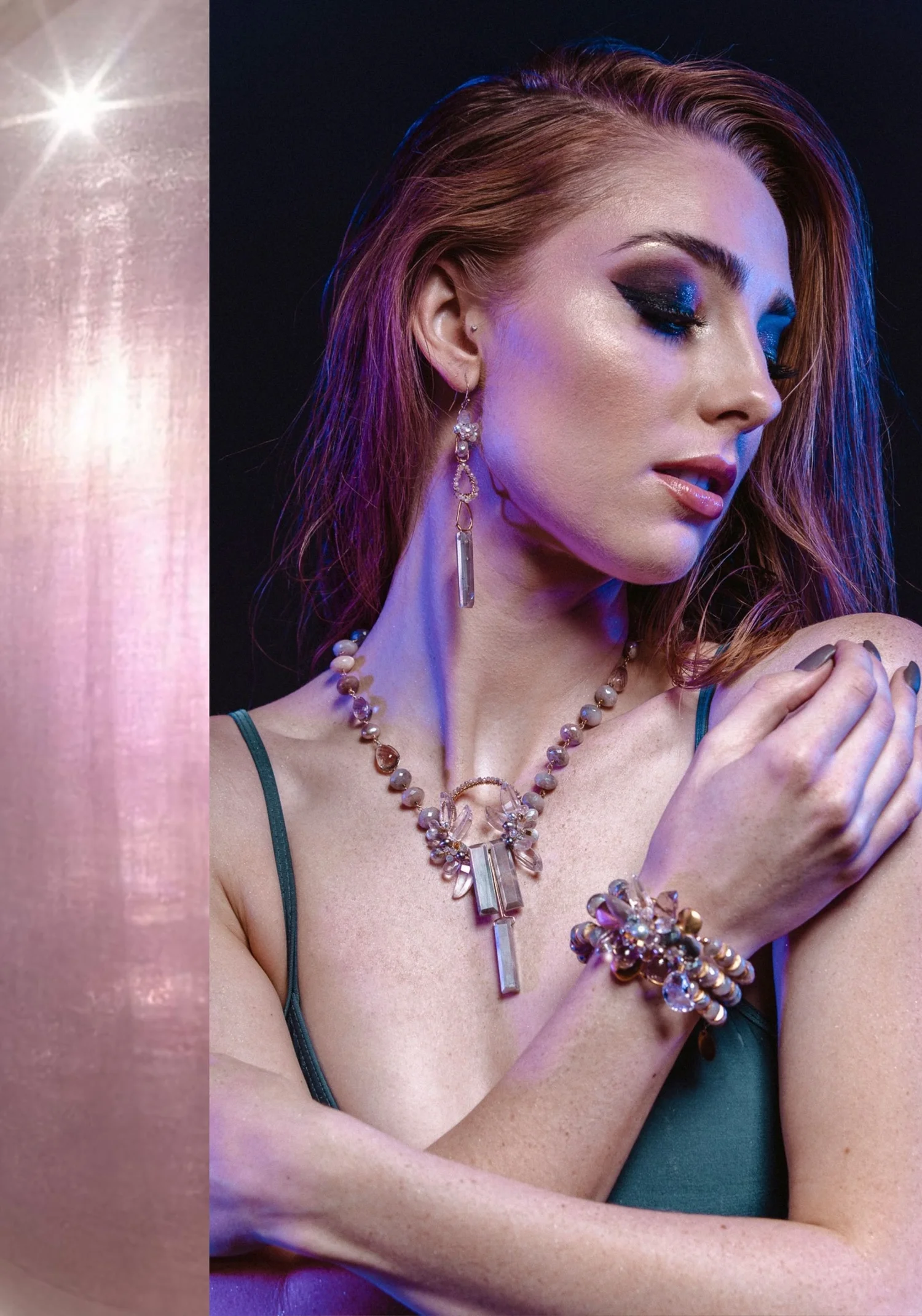
Moonstone is a feldspar mineral best known for adularescence: a billowing, internal glow that appears to float just beneath the surface. It's not reflected light. It's light scattered between microscopic layers inside the stone itself.
Hardness
6–6.5
Mohs scale
Mineral Family
Feldspar
Orthoclase variety
Optical Effect
Adularescence
Floating blue glow
Crystal System
Monoclinic
Prismatic habit
Refractive Index
1.518–1.526
Birefringent
Body Color
Translucent
White to gray, peach, rainbow
The signature optical phenomenon that makes moonstone unlike any other gemstone. Microscopic layers of alternating feldspar minerals (orthoclase and albite) scatter light internally, creating a floating blue or white glow that appears to move across the stone's surface as the viewing angle changes. Named after Mount Adular in Switzerland, where fine moonstone was first documented.
Ancient Romans believed the stone was formed from solidified moonbeams. The name has stuck for millennia because the optical effect genuinely resembles moonlight: a soft, ethereal glow that shifts and breathes as you move. In Hindu mythology, moonstone is considered sacred, made from moonbeams crystallized over thousands of years.
Moonstone forms deep in the earth when two feldspar minerals, orthoclase and albite, cool together slowly inside igneous and metamorphic rocks. The magic happens during cooling.
Deep underground, molten rock containing potassium and sodium feldspars begins to cool. At high temperatures, these two minerals mix freely: they're chemically compatible in liquid form.
As the temperature drops below approximately 650°C, the orthoclase and albite can no longer stay mixed. They separate into alternating microscopic layers: like oil and water settling into bands. These layers are typically only 0.5 micrometers thick.
When light enters the stone and hits these sub-microscopic layers, it scatters. The thinner the layers, the bluer the glow. Thicker layers produce a white or silver sheen. The finest blue moonstone has the thinnest, most uniform internal layers, which is why it commands premium prices.
Rapid cooling produces feldspars without the layered internal structure, and therefore no adularescence. Only moonstone that formed under exactly the right conditions, cooling slowly enough for the layers to develop uniformly, produces the characteristic floating glow. This is why fine moonstone is rarer than it appears.
Not all moonstone is equal. The source determines the body color, the quality of adularescence, and the price. Here's what the jewelry world knows about where the best specimens originate.
Sri Lankan moonstone (also called Ceylon moonstone) produces the finest blue adularescence in the world: a transparent to semi-transparent body with a vivid floating blue sheen. The mines in Meetiyagoda are the most famous source. Fine Sri Lankan material is increasingly scarce and commands premium prices.
India produces much of the world's "rainbow moonstone", which is technically a transparent labradorite, not true orthoclase moonstone. It displays multicolored flashes (blue, gold, purple) rather than the single blue glow of classical moonstone. Beautiful in its own right, but mineralogically distinct.
Myanmar produces high-quality moonstone with strong blue adularescence, sometimes rivaling Sri Lankan material. Less commonly available in the market due to sourcing concerns, but gemologically excellent.
Increasingly important sources producing good-quality moonstone with white to peach body colors. African moonstone tends to be more opaque than Sri Lankan material but can display beautiful adularescence at an accessible price point.
Andrea Li sources moonstone primarily at the Tucson Gem Show, selecting each stone individually for the quality of its adularescence: that floating blue glow is what makes or breaks a moonstone piece.
The name "moonstone" covers several related but distinct gemstones. Understanding the differences matters, especially when you're investing in a one-of-a-kind piece.
| Variety | Classical Moonstone | Rainbow Moonstone | Peach Moonstone |
|---|---|---|---|
| Mineral | Orthoclase feldspar | Labradorite feldspar | Orthoclase feldspar |
| Body Color | Transparent to milky white | Transparent with inclusions | Warm peach to champagne |
| Optical Effect | Blue adularescence (single glow) | Multicolor flash (blue, gold, purple) | Soft white adularescence |
| Primary Sources | Sri Lanka, Myanmar | India, Madagascar | India, Tanzania |
| Price Range | Moderate–premium (for blue) | Affordable–moderate | Affordable–moderate |
| Personality | Ethereal, timeless | Vibrant, magical | Warm, romantic |
Important: "Rainbow moonstone" is technically a transparent labradorite, not true orthoclase moonstone. Both are feldspar minerals and both display beautiful optical effects, but they achieve them through different internal structures. The distinction matters for gemstone purists; for jewelry lovers, both are stunning.
Moonstone is softer than many popular gemstones (6–6.5 Mohs vs. 7+ for quartz and beryl). It's absolutely wearable, but it rewards a little attention. Here's what to do and what to avoid.
Do
Keep moonstone in its own soft pouch or lined compartment. Harder stones (quartz, sapphire, diamond) will scratch it if they share space.
Avoid
Moonstone has two cleavage planes: internal directions where the crystal can split if hit hard. Bezel settings protect the stone better than prong settings for everyday wear.
Do
Warm water, mild soap, soft cloth. That's it. Moonstone's adularescence comes from its internal structure: no amount of polishing will change or improve the glow. Just keep the surface clean so light can enter freely.
Avoid
Both can cause damage along cleavage planes. Never use chemical cleaners, bleach, or abrasive materials. The "last on, first off" rule applies: put moonstone jewelry on after perfume, lotions, and hairspray.
Do
Moonstone is perfectly durable for necklaces and earrings, which face minimal impact risk. These are the best everyday moonstone pieces: the stone catches light beautifully at the neck and ear.
Avoid
Rings take the most abuse of any jewelry piece. Moonstone rings are beautiful for occasional wear, but if you're hard on your hands, consider moonstone in a necklace or earrings instead: same stone, less risk.
Moonstone is one of the most photogenic gemstones for weddings, and one of the most meaningful. Here's why it's becoming the stone of choice for brides who want something beyond diamonds and pearls.
Adularescence, that floating internal glow, responds to light in a way that cameras love. In soft ceremony lighting, moonstone glows from within. In golden hour portraits, the blue sheen intensifies. Under reception lighting, it catches every shift and angle. Unlike diamonds (which can blow out in flash photography) or opaque stones (which can read flat), moonstone has a living quality in photos that matches the emotion of the day.
A moonstone necklace or pair of earrings serves as a luminous, non-traditional "something borrowed from the earth." For the bride who was never going to wear the expected strand of pearls, moonstone offers the same elegance with an entirely different energy: ethereal, personal, impossible to replicate.
Moonstone's understated glow is elegant without competing with the bride. A sculptural moonstone piece signals taste and intentionality: this is a woman who chose her jewelry as carefully as she raised her daughter.
A one-of-a-kind moonstone piece is a conversation starter that doesn't upstage the couple. The stone's shifting glow gives you something interesting to wear without crossing the line into too-much.
Blue adularescence is a natural "something blue", not a novelty garter or a painted sole, but an ancient, optical phenomenon occurring inside a gemstone. For the bride who wants tradition with depth, this is the answer.
Femme Fatale
Necklaces
$890.00
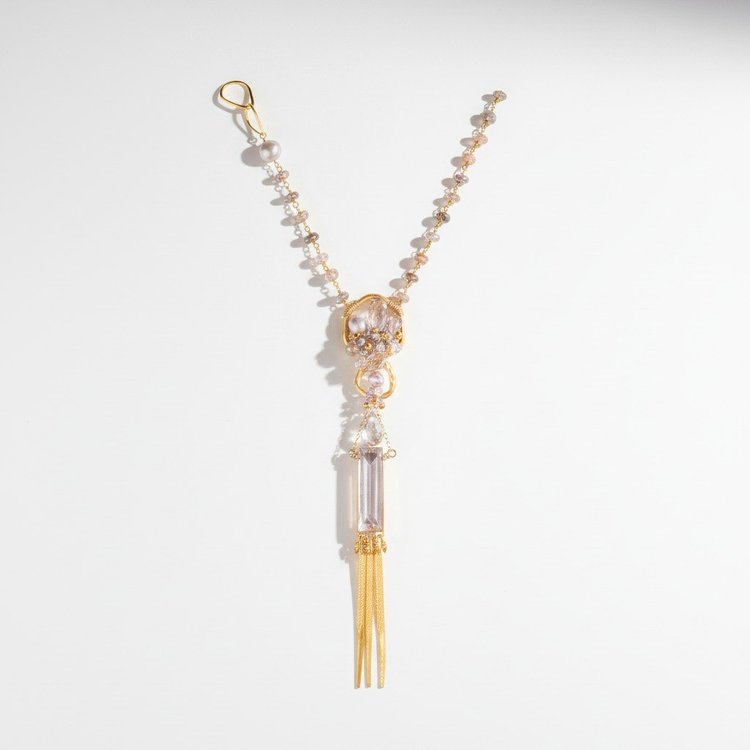
$760.00
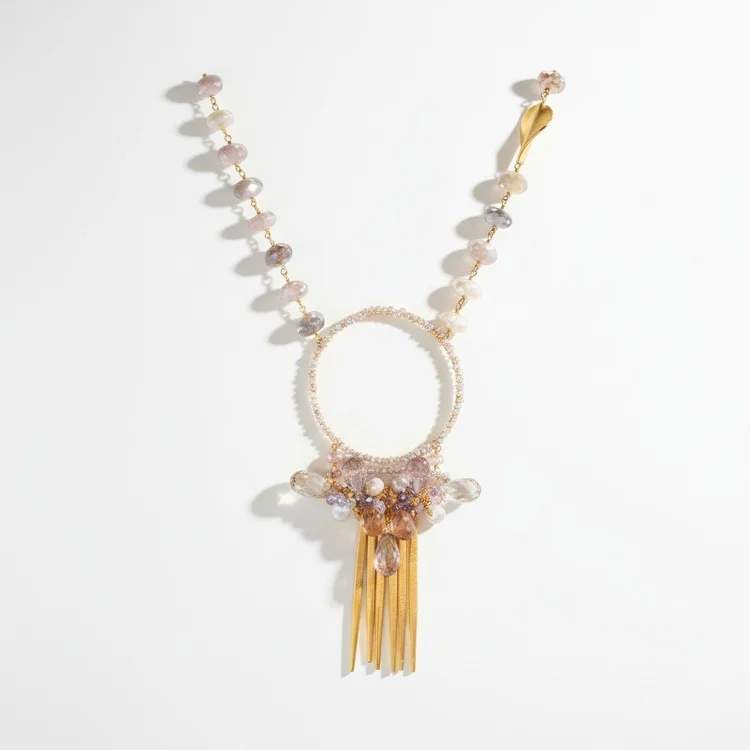
$870.00
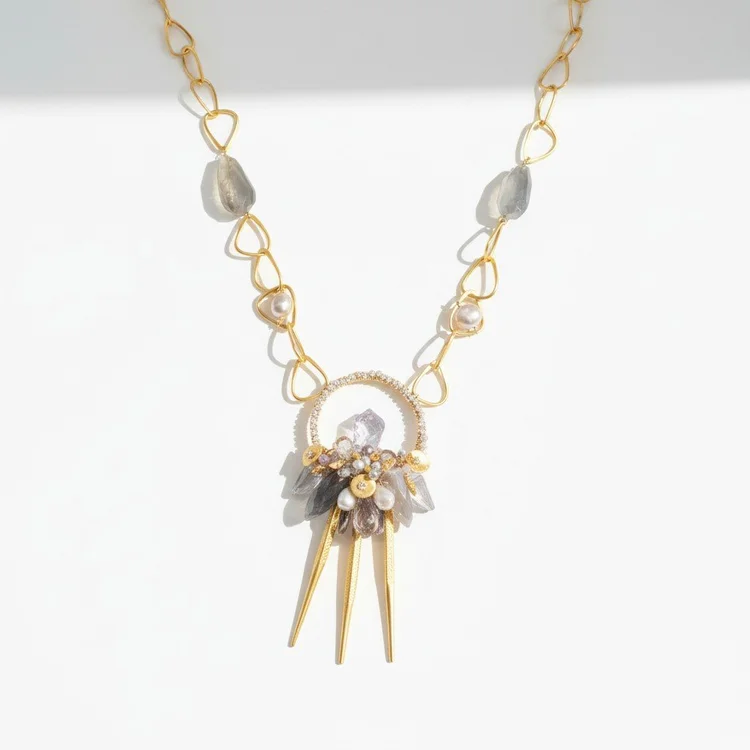
$690.00
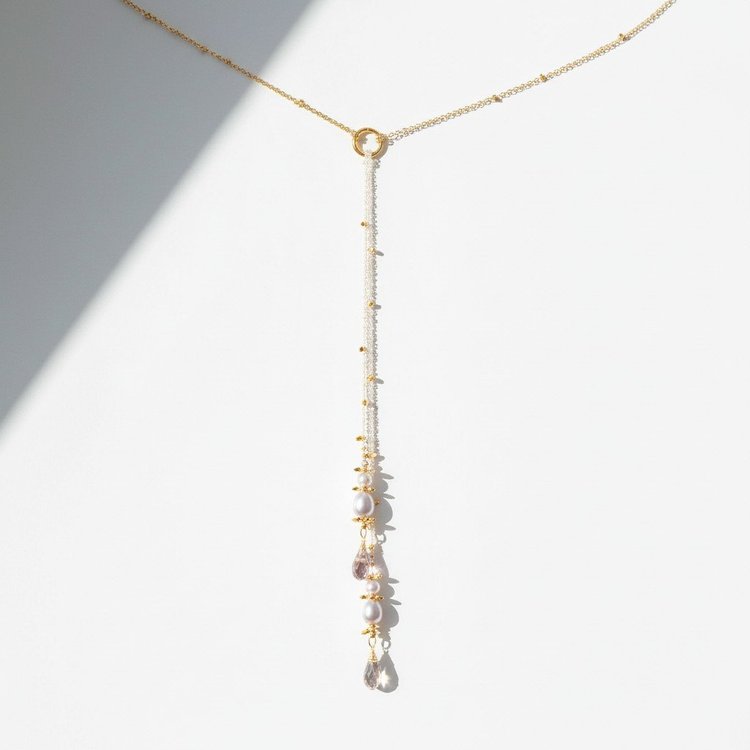
$560.00
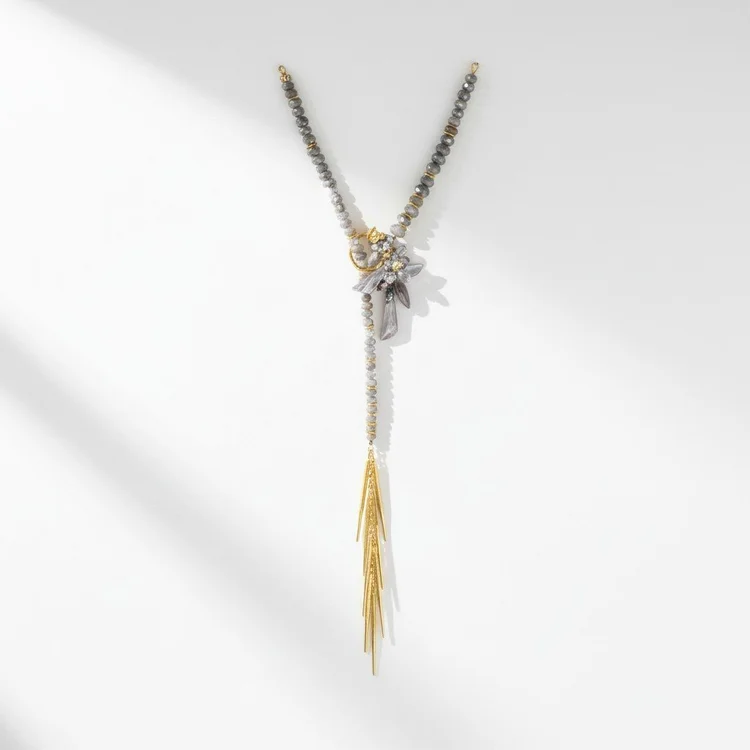
$700.00
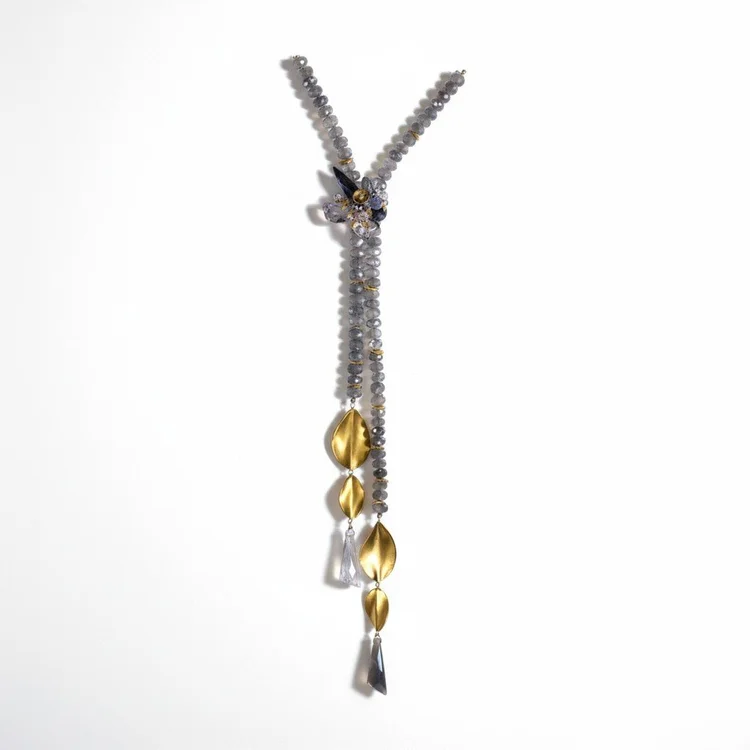
$710.00
 Sold Out
 Sold Out
 Sold Out
 Sold Out
 Sold Out
 Sold Out
 Sold Out
 Sold Out
 Sold Out
 Sold Out
 Sold Out
 Sold Out
 Sold Out
 Sold Out
 Sold Out
 Sold Out
 Sold Out
One of a kind · Built once
Earrings
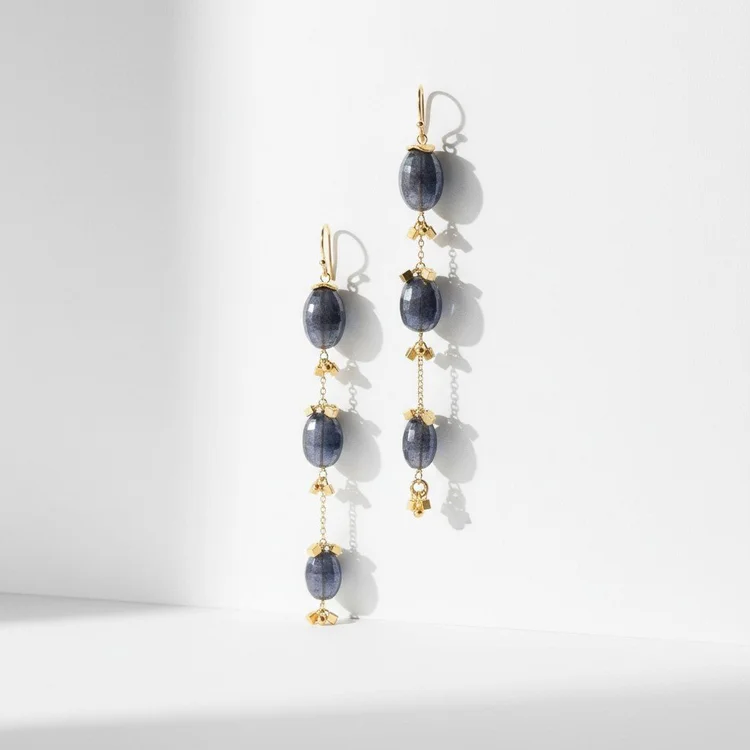
$220.00
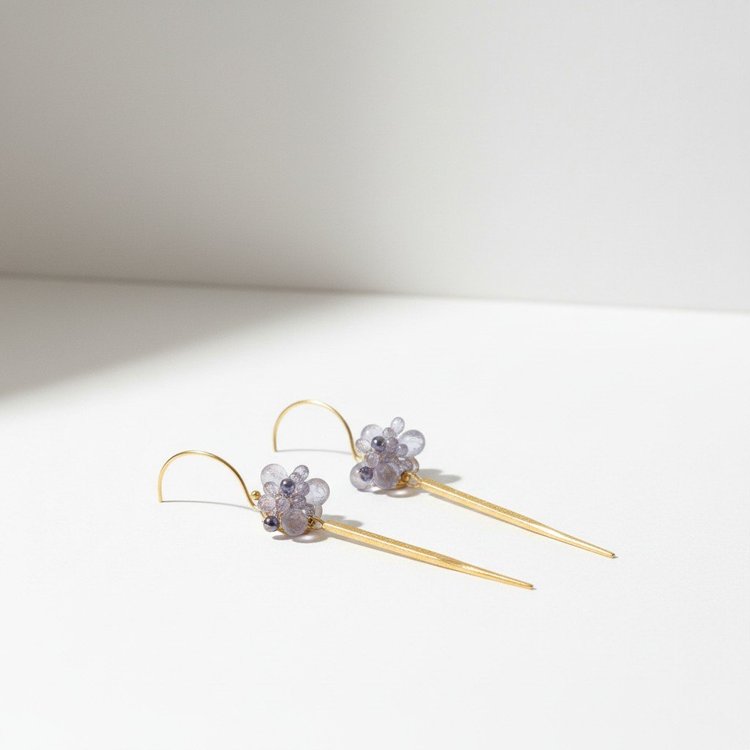
$265.00
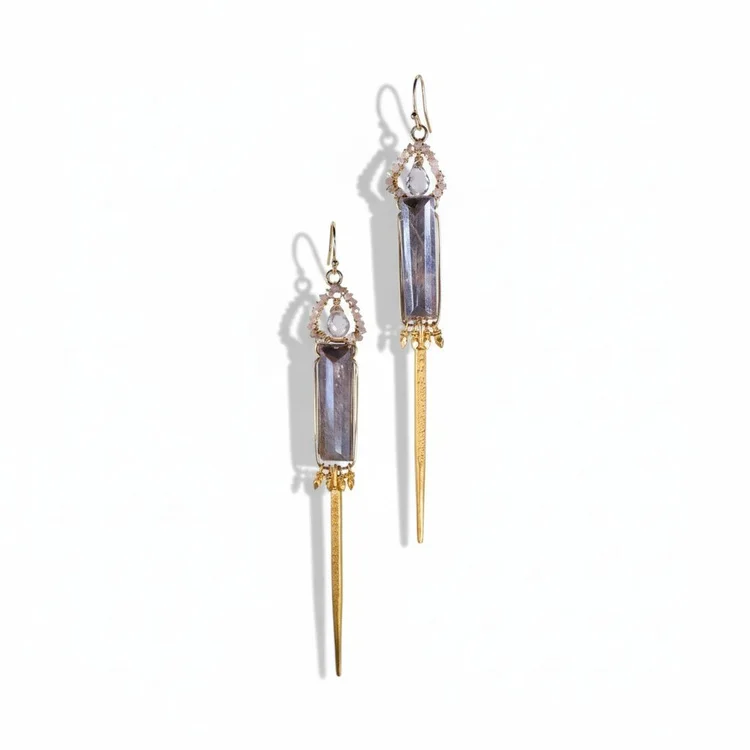 Sold Out
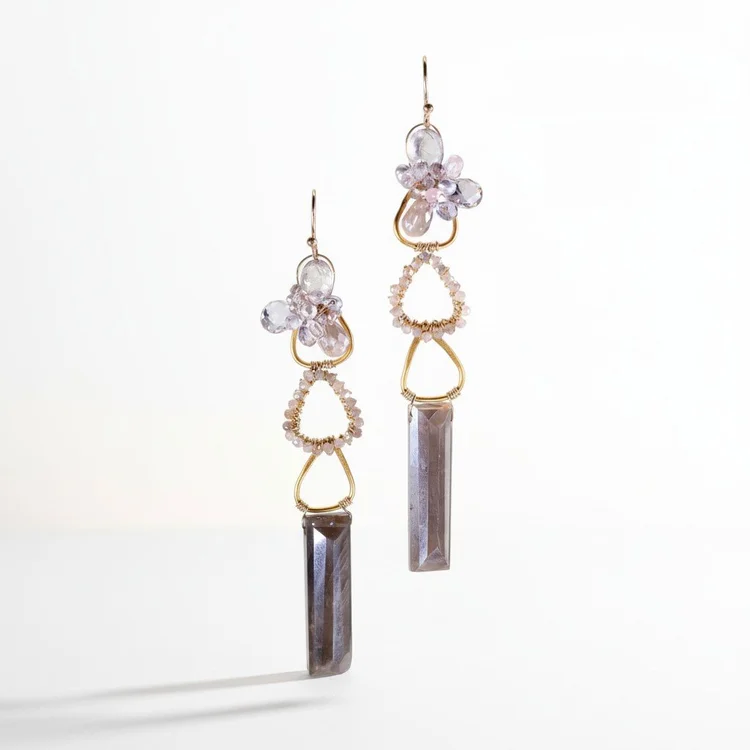 Sold Out
 Sold Out
 Sold Out
 Sold Out
 Sold Out
 Sold Out
 Sold Out
 Sold Out
 Sold Out
 Sold Out
One of a kind · Built once
Bracelets
$190.00
$410.00
$380.00
$185.00
$570.00
$190.00
 Sold Out
 Sold Out
 Sold Out
 Sold Out
One of a kind · Built once
Gray, Peach, and Rainbow
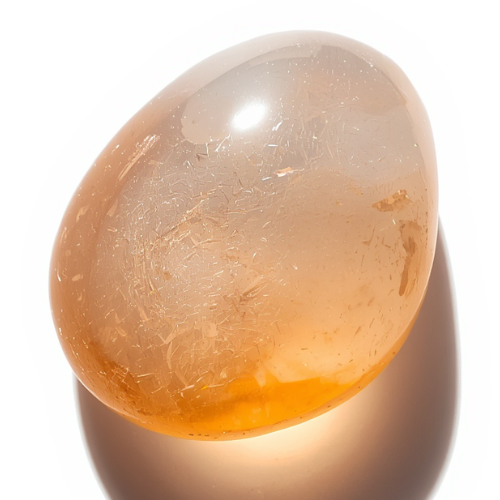
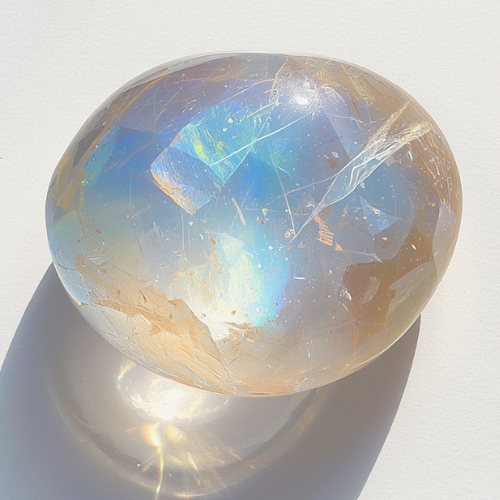
This stone is part of my pastel gemstone collection, one-of-a-kind pieces handcrafted in Denver.
Moonstone
Unlike diamonds with rigid laboratory certifications, gemstone grading for rainbow moonstone (technically a transparent variety of labradorite) relies on visual quality tiers defined by clarity, flash intensity, and cut.
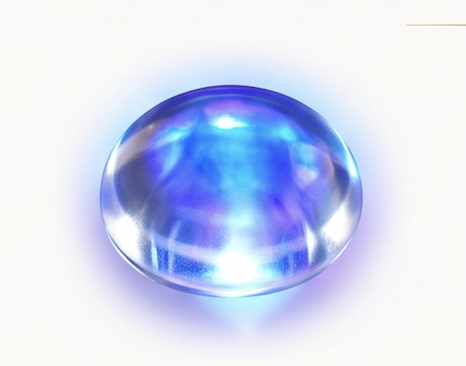
Aura-quality
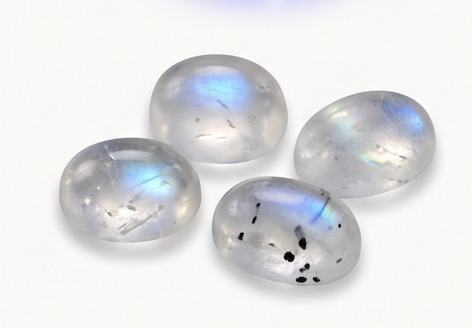
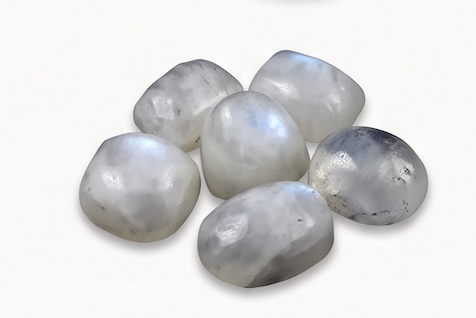
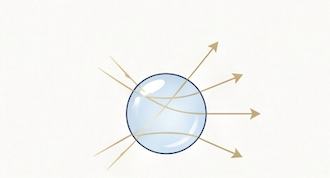
The clearer the background body, the higher the value.
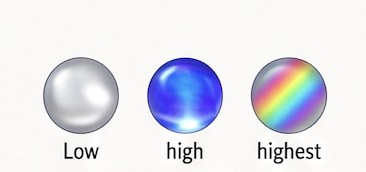
Deep neon blue, electric violet, or full-spectrum rainbow command the highest prices. Weak sheens rank lower.
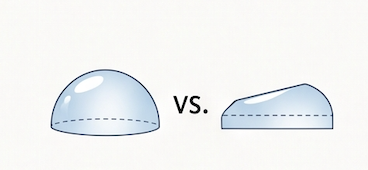
A smooth, properly proportioned dome maximizes the floating light effect. A flat or lopsided cut traps light.
The Lookbook
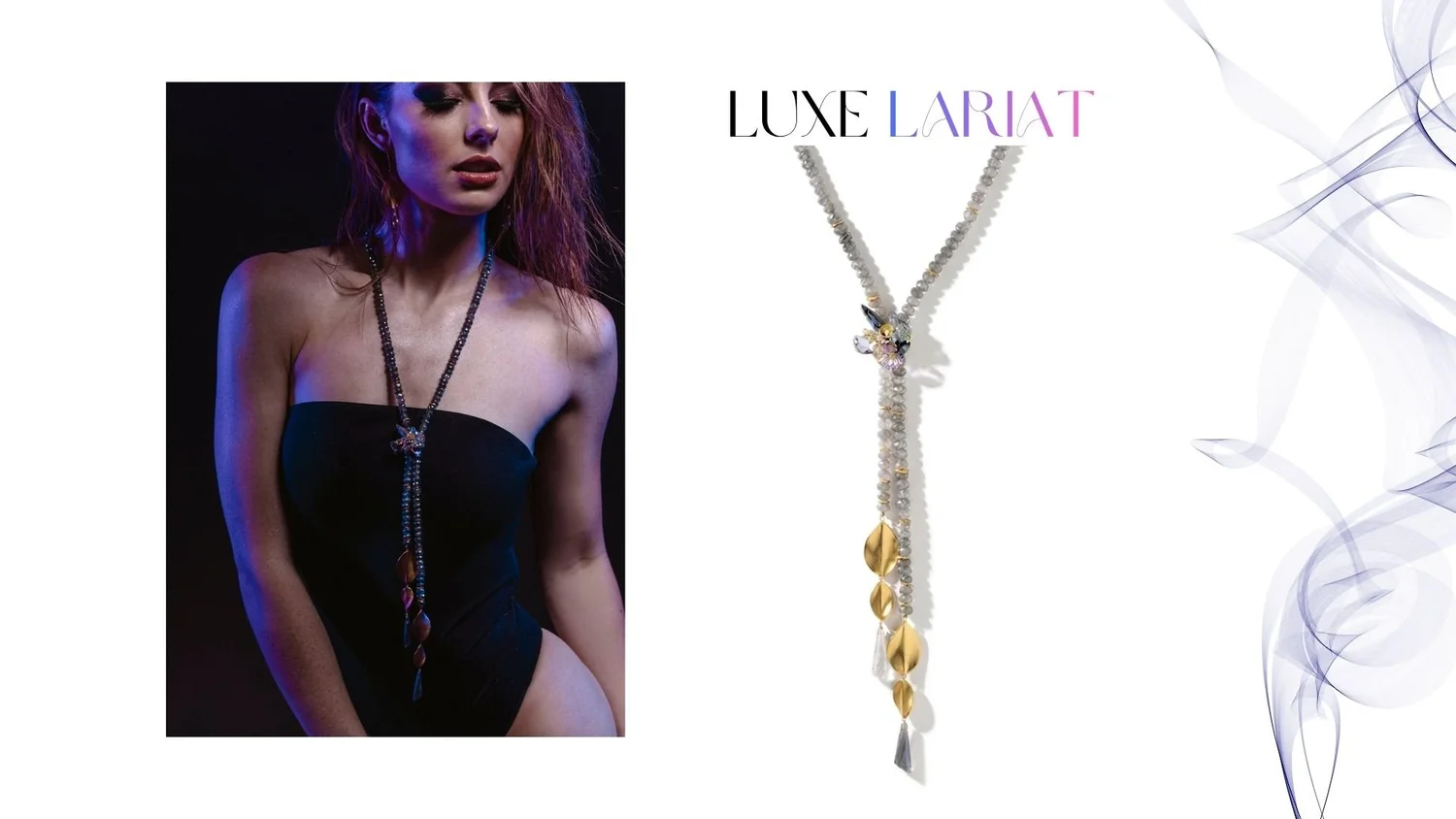
Moonstone, the feldspar mineral that carries its own light. Adularescence, a floating blue glow born from microscopic layers deep inside the stone, is what makes moonstone unlike anything else in a jeweler's case. It doesn't reflect light. It scatters it.
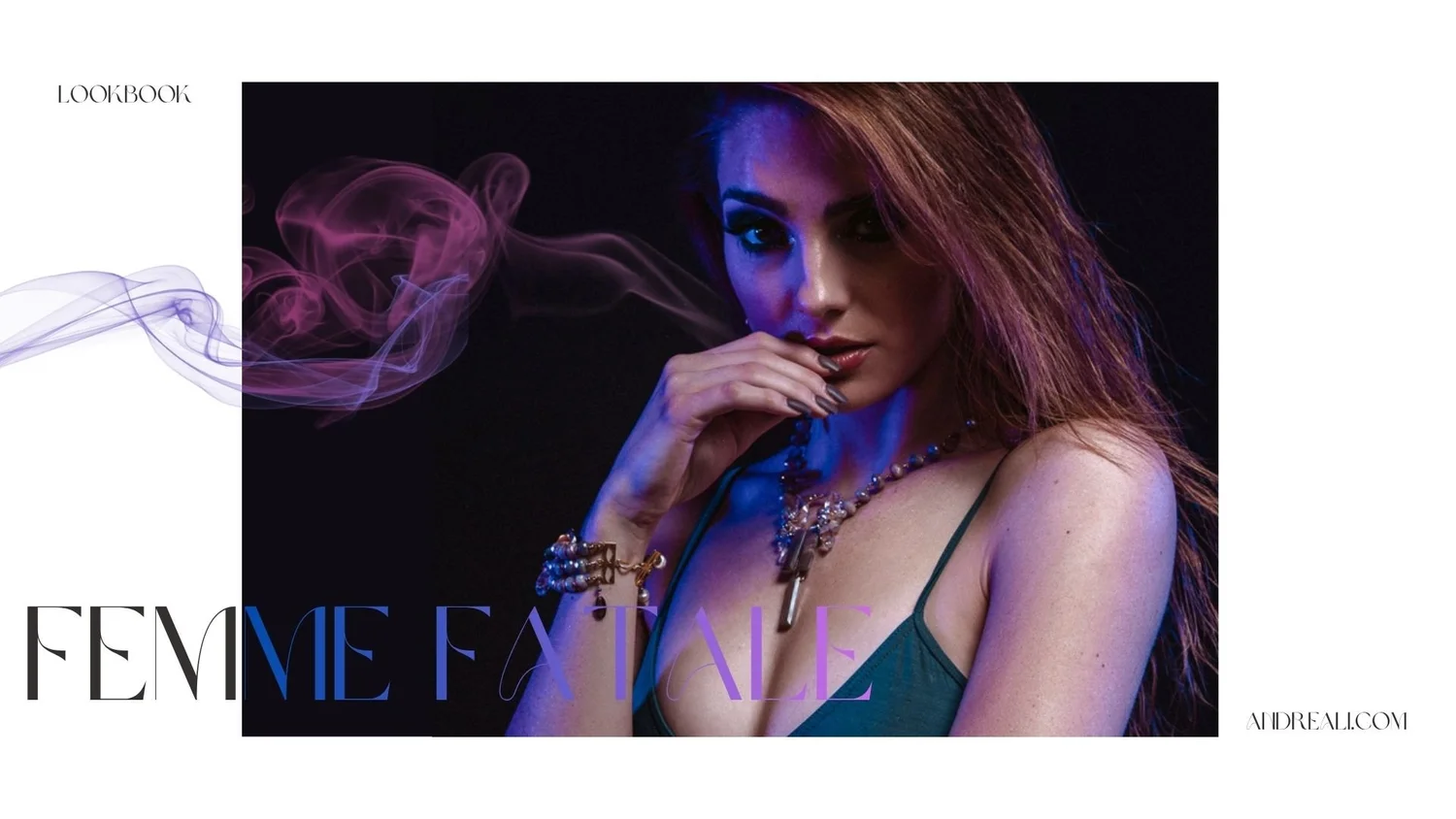
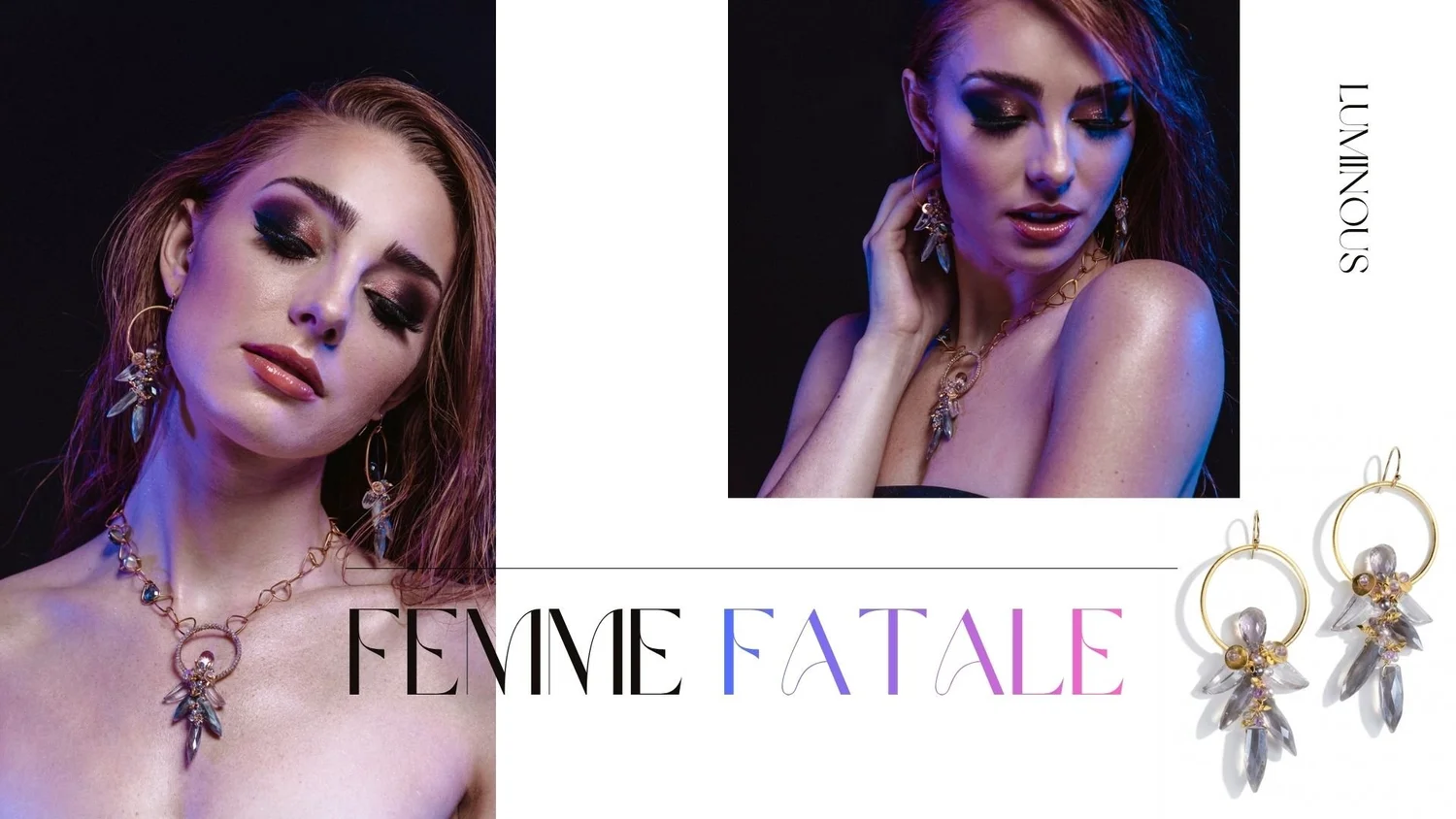
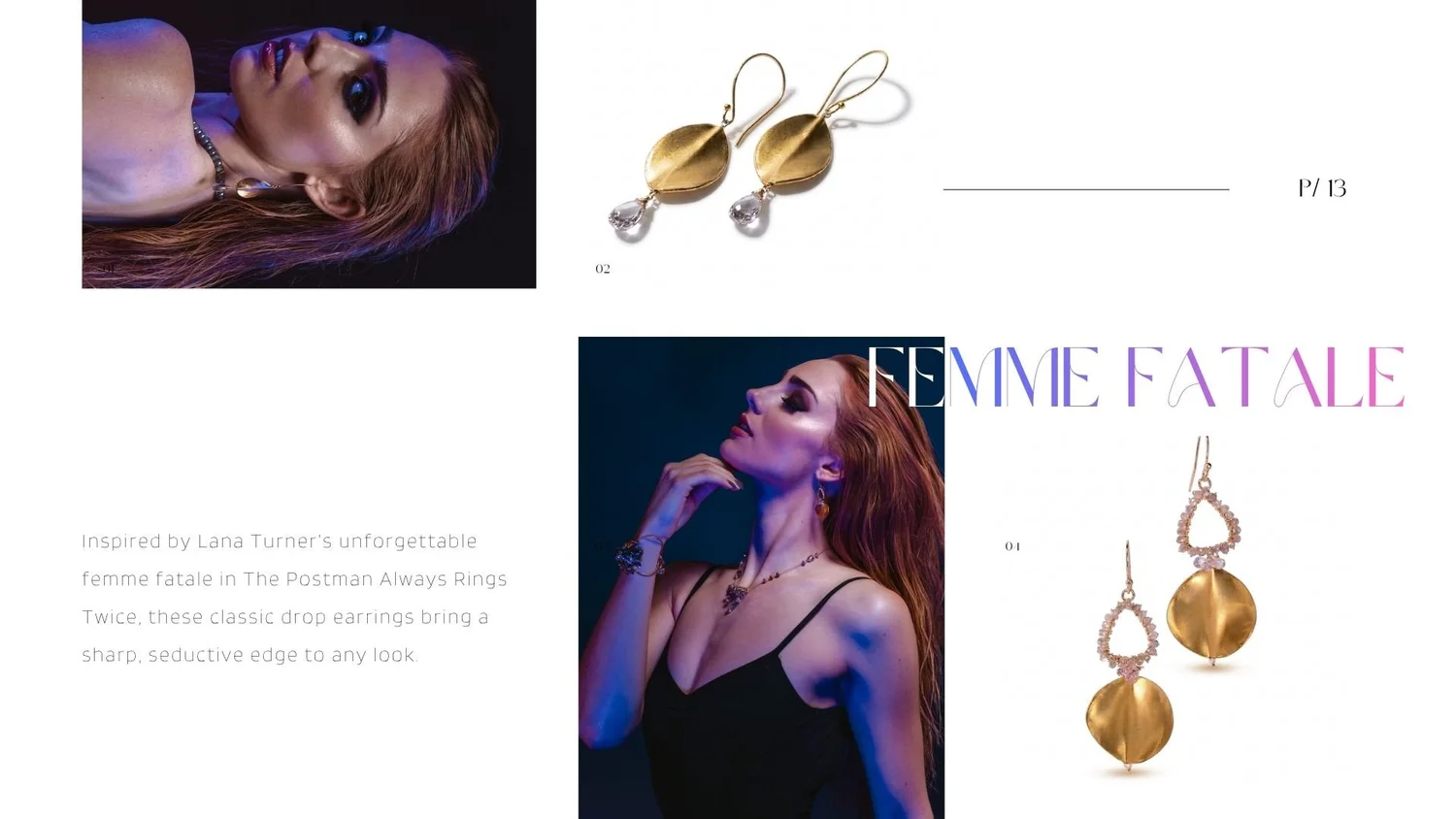
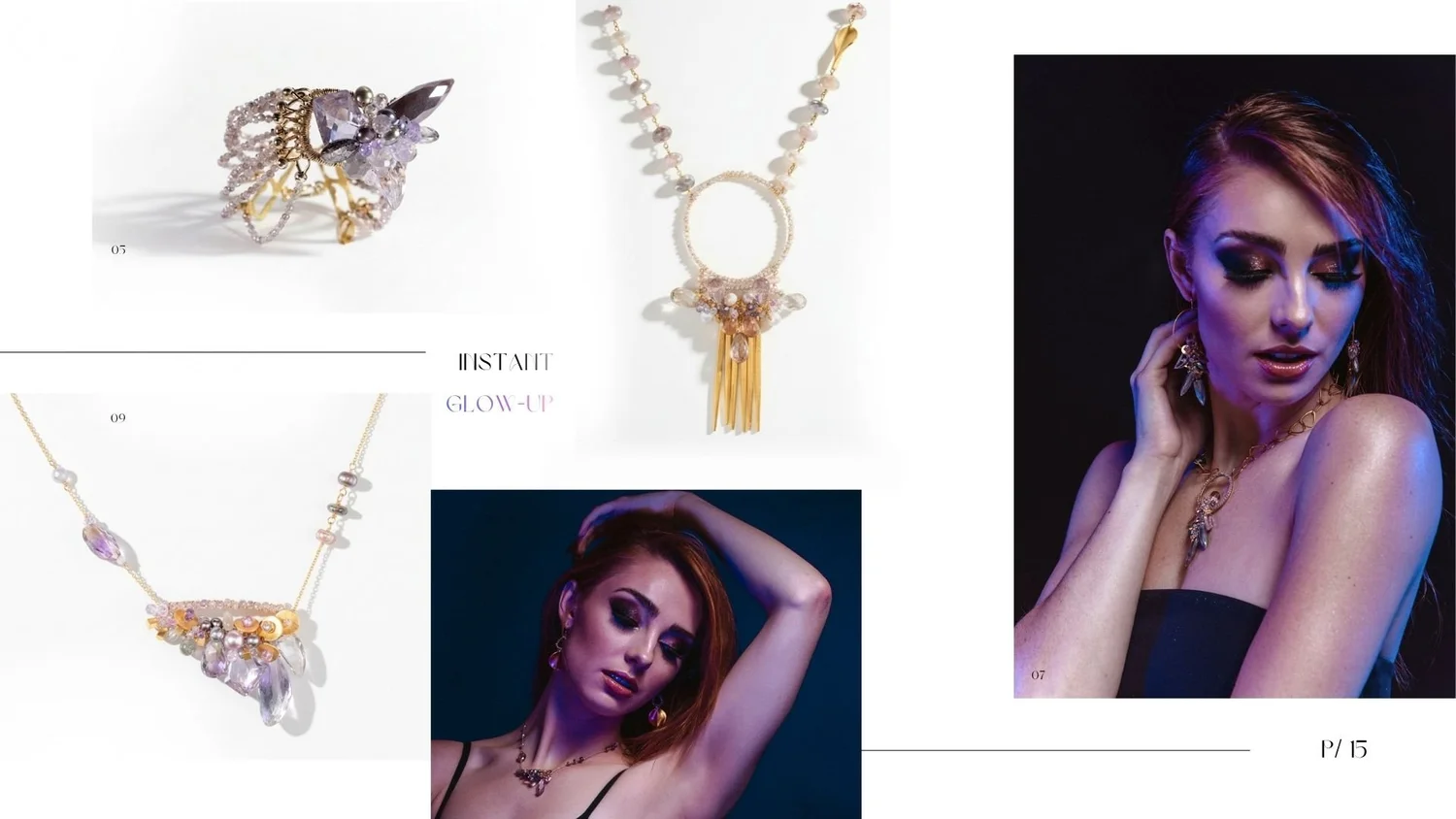
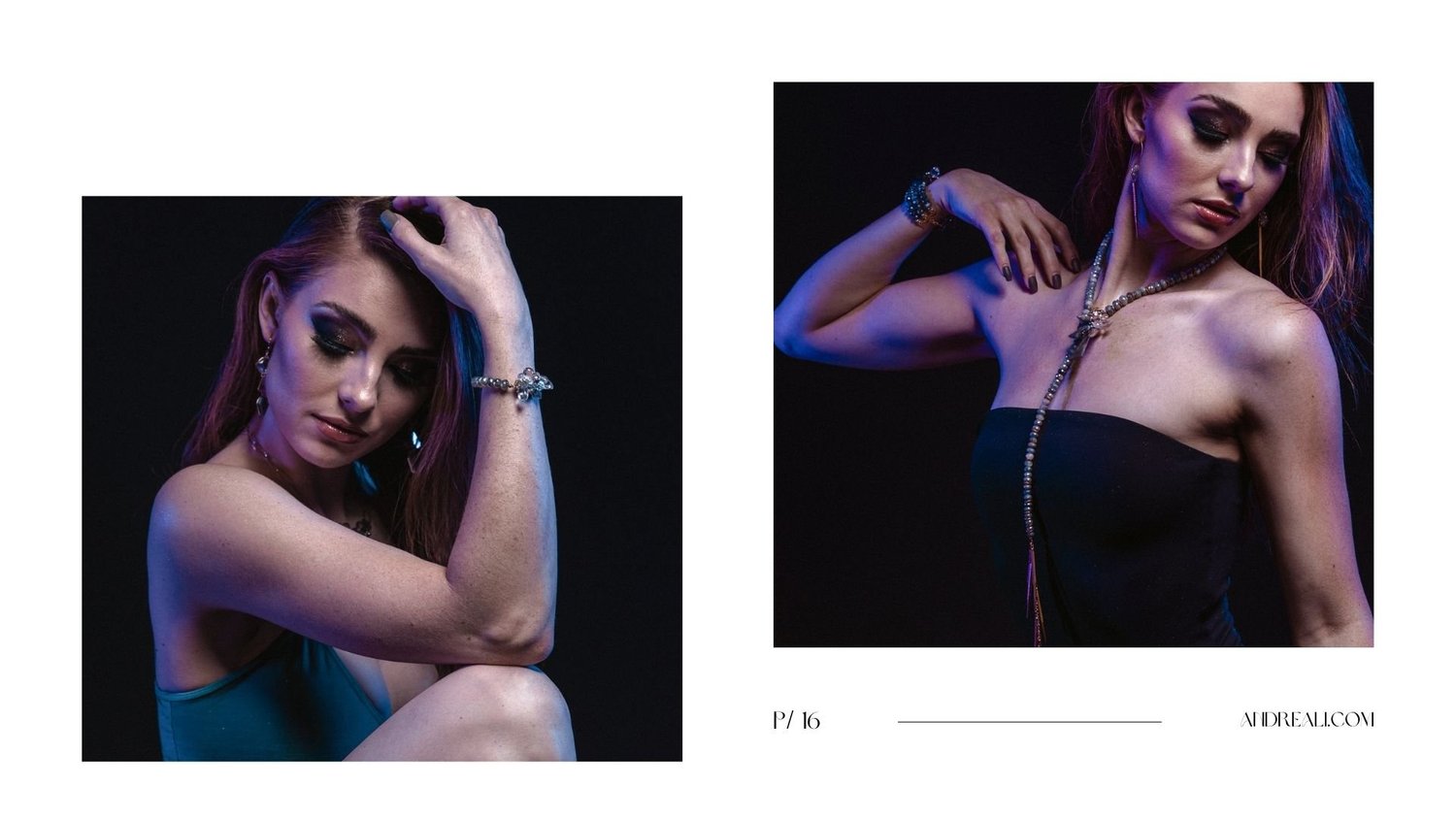
Andrea Li designed the Femme Fatale collection around moonstone's singular ability to shift and breathe with movement: handcrafting each piece in 24k gold vermeil and 14k gold-filled in her Denver studio. Every piece is one of a kind, and many have already found their owners. But the stones themselves keep arriving at the Tucson Gem Show, and Andrea keeps choosing the ones with the strongest blue fire.
Sourced primarily from Sri Lanka and India, moonstone ranks 6–6.5 on the Mohs hardness scale. It's softer than quartz but perfectly suited for everyday necklaces and earrings. If you've ever been drawn to a gemstone that seems to hold moonlight inside it, this is the one.
From the bench · Andrea Li
A note from Andrea Li, who sets moonstone by hand in her Denver studio.
On the back of my work there is a weave, a web of wire I was told for years to hide and never could. It is the truest part of what I make, where chaos becomes something more beautiful for having come through it. Moonstone is the stone that taught me when to let the weave go quiet.
”I wove the cluster up one side of the choker and left the other bare, so the stone's own light could do the talking.
For one piece I built a choker from heavy-gauge 14k gold-filled wire and drilled tiny holes up one side to anchor a gemstone cluster that vines up the length of it, the way something grows toward light. Then I stopped. The other side I left completely bare. With most stones I fill the frame. With moonstone I did the opposite on purpose, because a rainbow moonstone does not need help being seen.
That glow has a name. Adularescence is light scattering between microscopic layers of feldspar inside the stone, which is why a rainbow moonstone, actually a variety of labradorite, throws a whole spectrum of blue as it moves. It is brittle, so I set it cool and gently, never with heat. The weave holds it from behind, the bare side lets it breathe, and the light that lives between its layers becomes the loudest thing in the room. That is the throughline in all my work: knowing what to build, and knowing what to leave alone.
Gifts · Handmade & One-of-a-Kind
With its floating blue glow, moonstone carries a quiet, otherworldly light, long tied to new beginnings. Each piece is handmade and one-of-a-kind, sculpted by hand in my Denver studio.
Explore the Jewelry Gift Guide →Necklaces
Moonstone
One of a Kind · Built Once
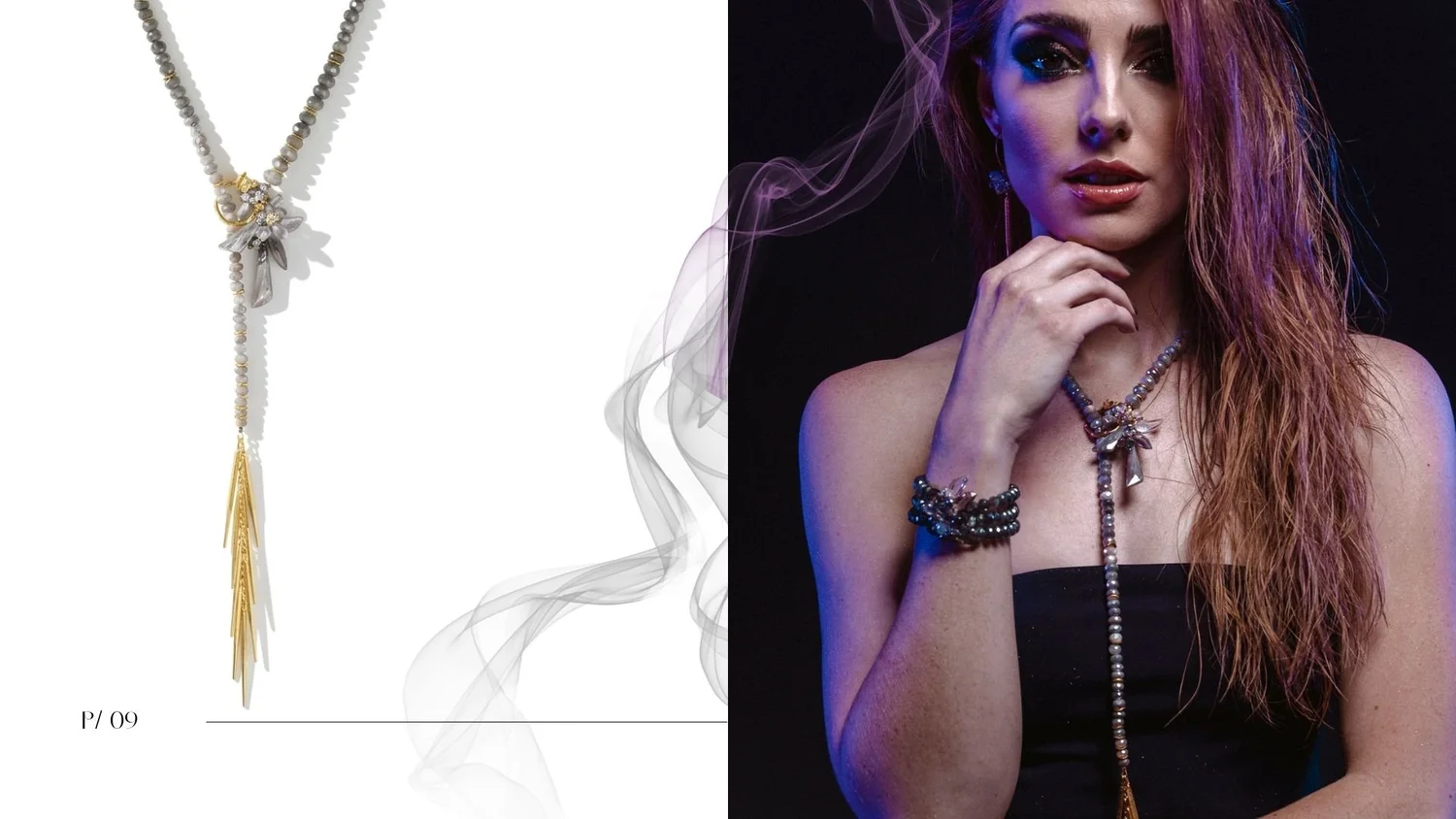
Mohini, the only female avatar of the Hindu God Vishnu and Goddess of enchantment. Magnify your essence of female beauty and allurement with this sparkling necklace of empowerment.
This occasion defying power piece will command attention as subtle or bold as you want. An excellent stand-alone exclamation point to any outfit or max it out by layering it with other pieces.
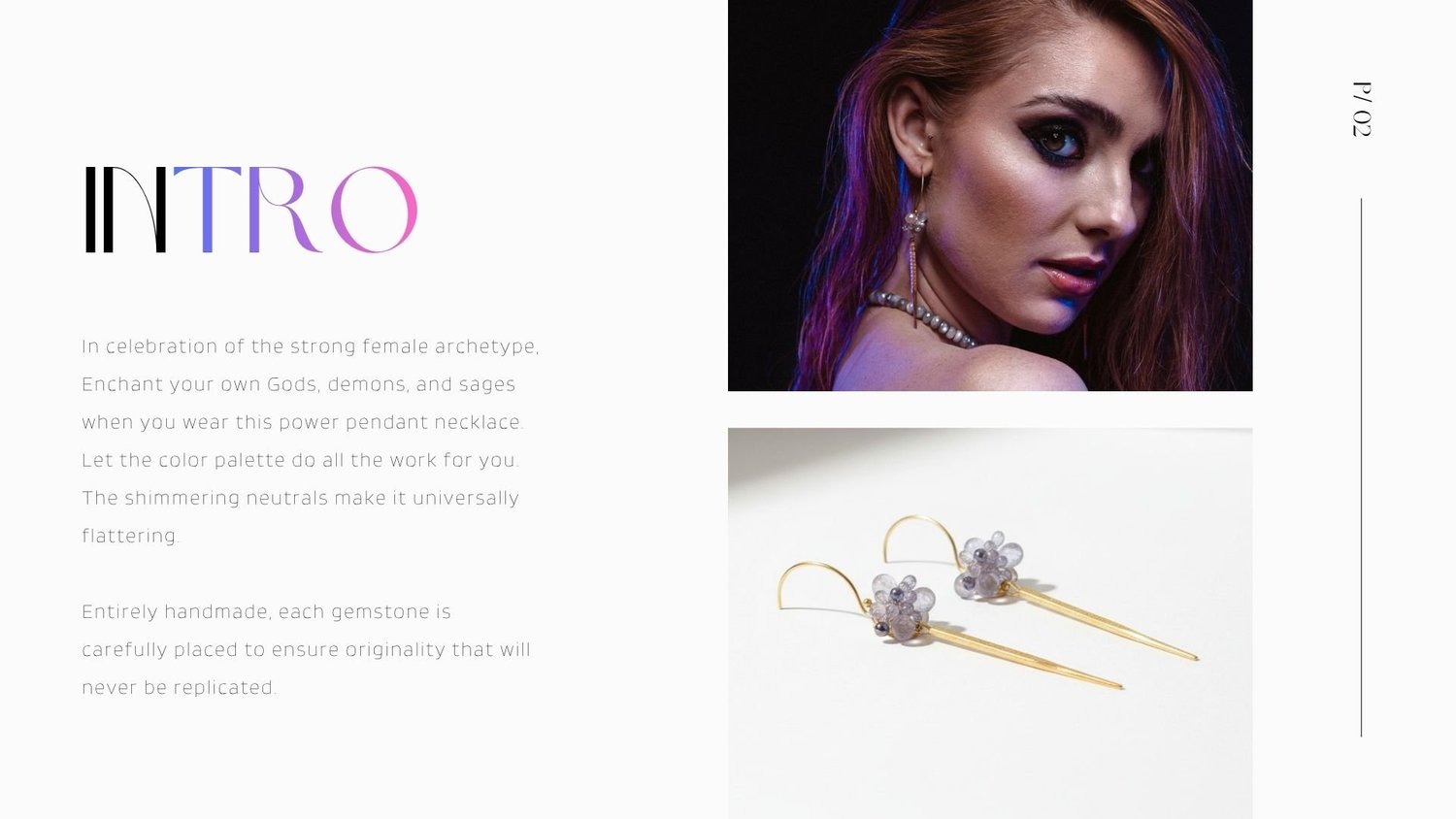
Entirely handmade, each gemstone is carefully placed to ensure originality that will never be replicated. The value of these gems spans generations. These limited collections of one of a kind pieces will be gone forever once they sell out.
Andrea Li Designs - Jewelry As Unique As You Are.
Book a private virtual appointment with me - Here
Product Specs -
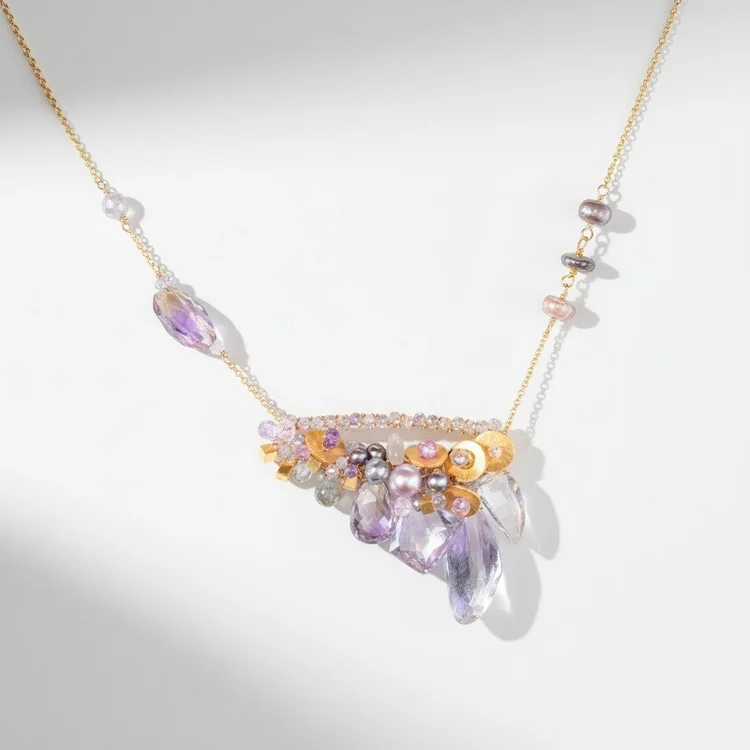
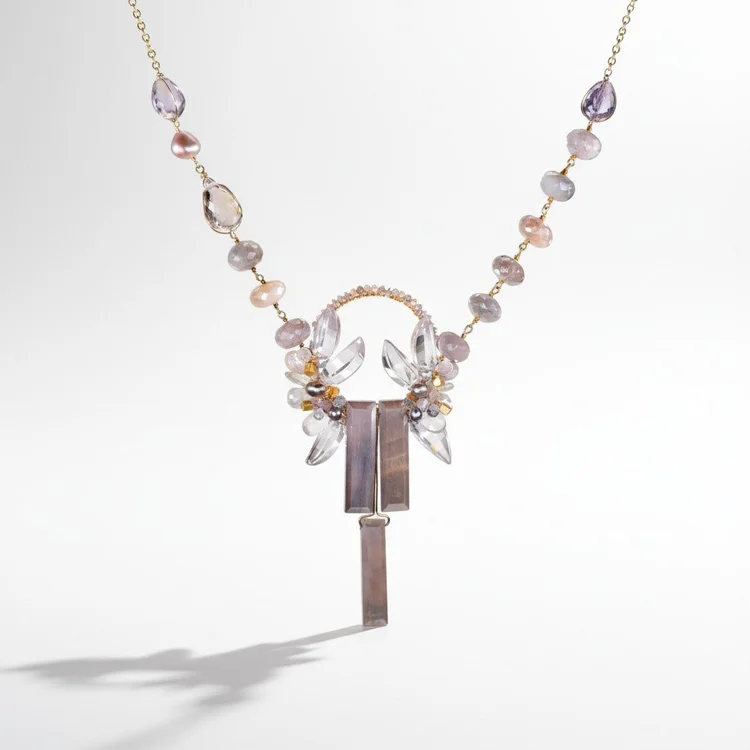
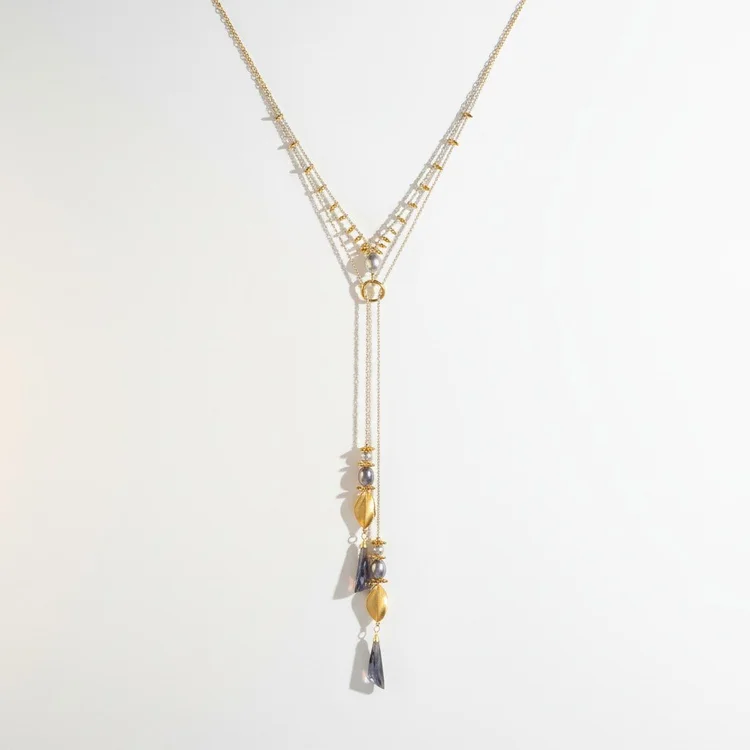
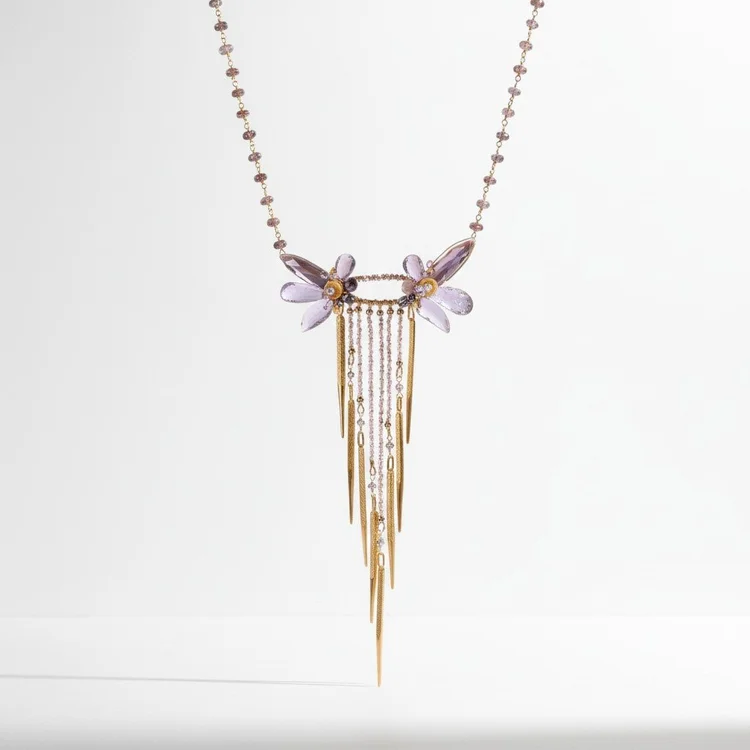
• 24k gold vermeil over sterling silver triangle chain with moonstone rondelles, fancy cut amethyst accents, and GIA graded high luster pearls.
• Long multi-drop pendant with gemstone clustering of pink amethyst, sapphire, ametrine, GIA graded high luster pearls, and 24k gold vermeil accents.
• Pendant length 5 2/4’’ from top to bottom.
• 14k gold filled wire and clasp
• Necklace length 38’’ typically hits right at or below the belly button
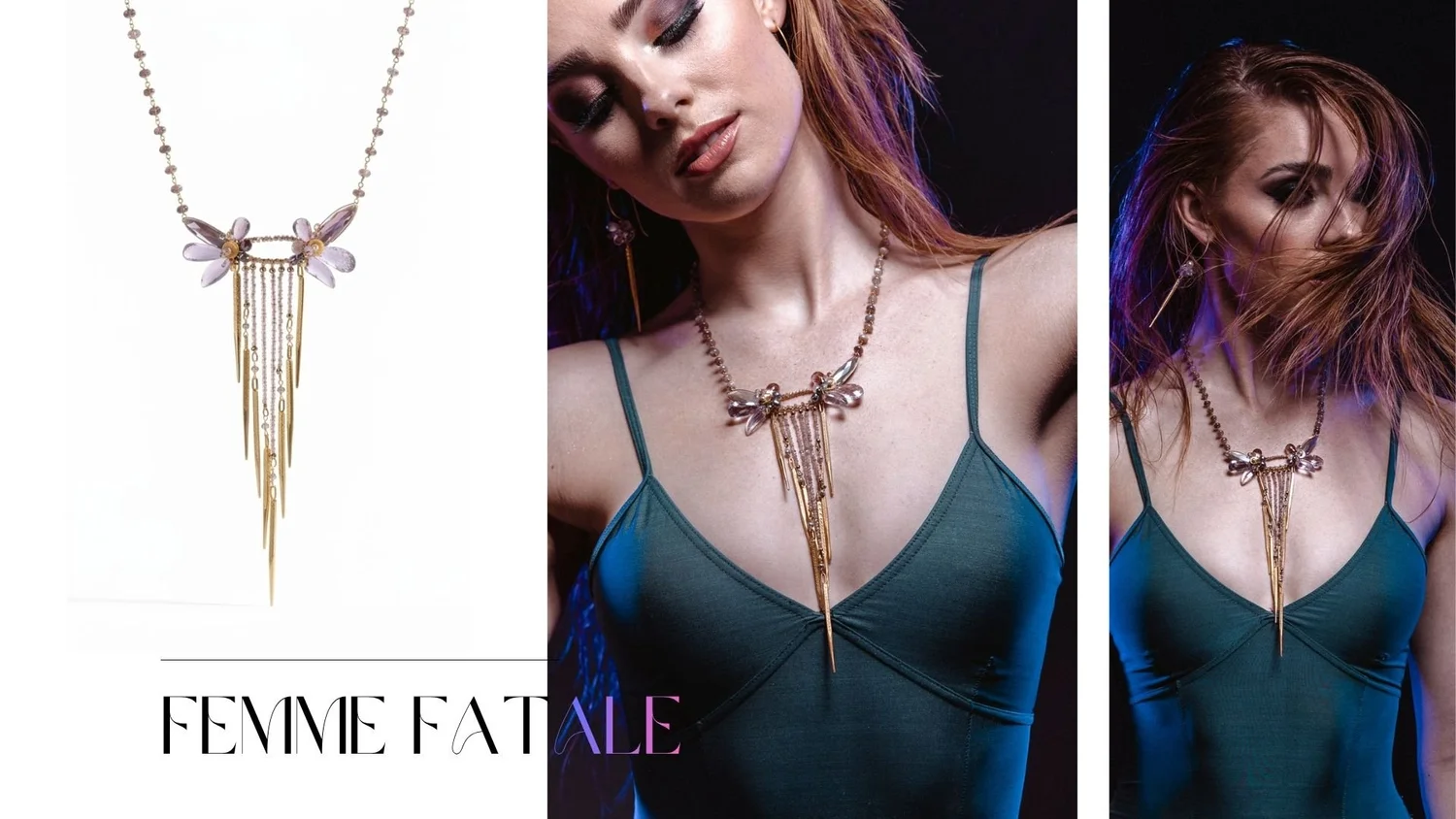
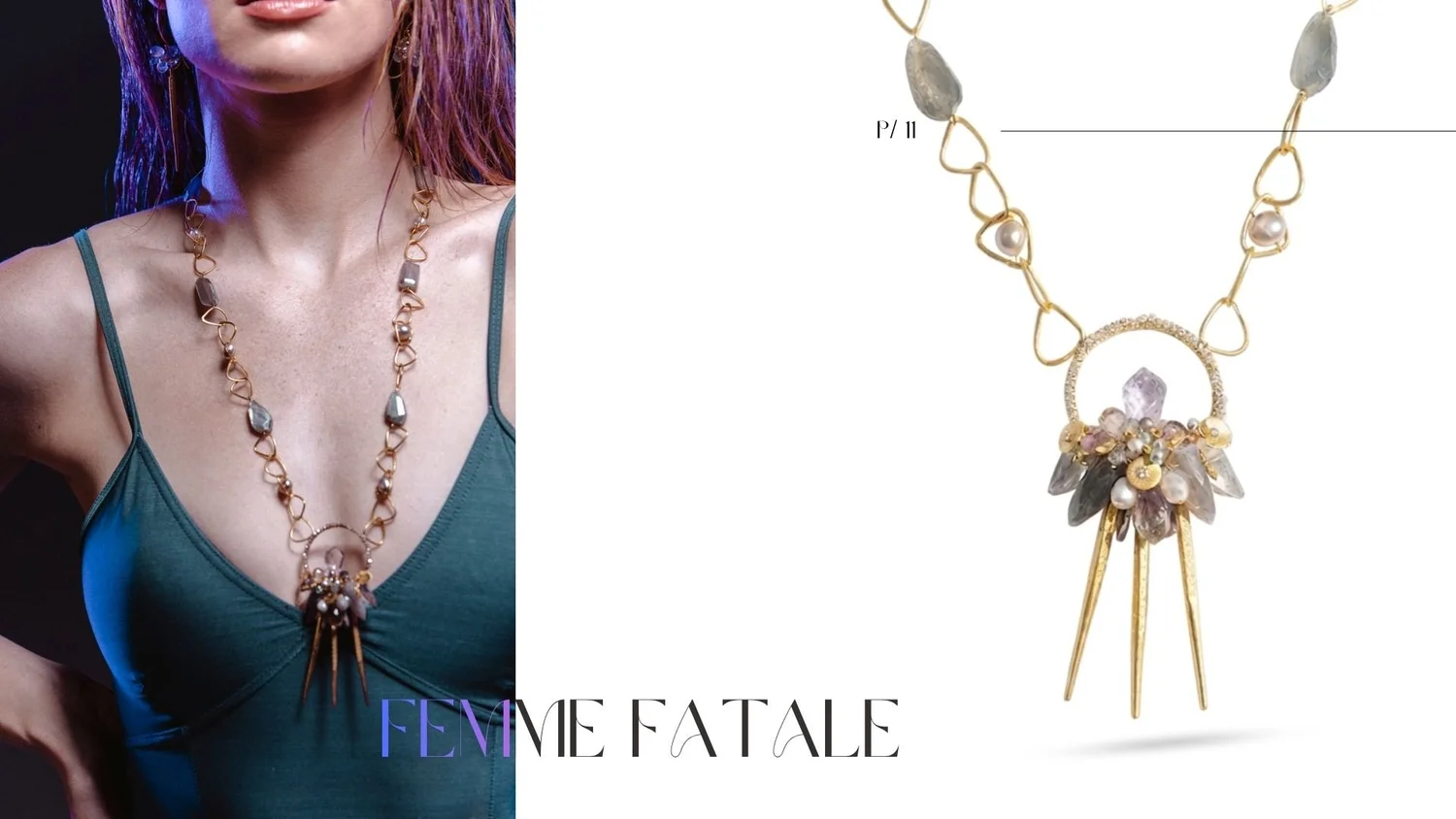
Named after the ancient Greek mythological creature portrayed as a woman and known to be ferocious guardians. Be fashionably fierce with this pendant that packs a punch to mundane style.
Wear this long statement necklace anytime you want to elongate your silhouette. Max out a maxie-dress on the weekend or amp up a power suit in the boardroom. Ensure your style influence no matter what day of the week it is.
Entirely handmade, each gemstone is carefully placed to ensure originality that will never be replicated. The value of these gems spans generations. These limited collections of one of a kind pieces will be gone forever once they sell out.
Andrea Li Designs - Jewelry As Unique As You Are.
Book a private virtual appointment with me - Here
Product Specs -
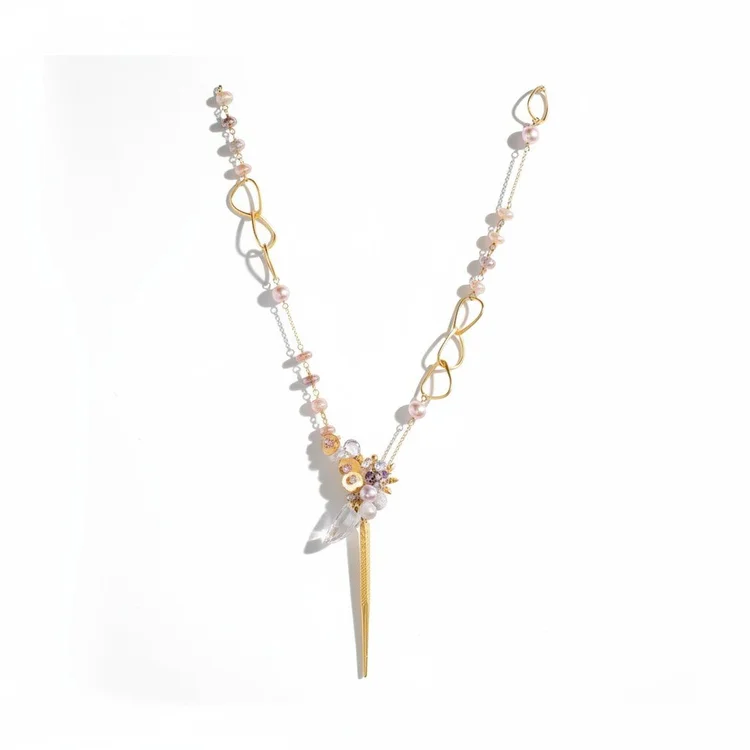
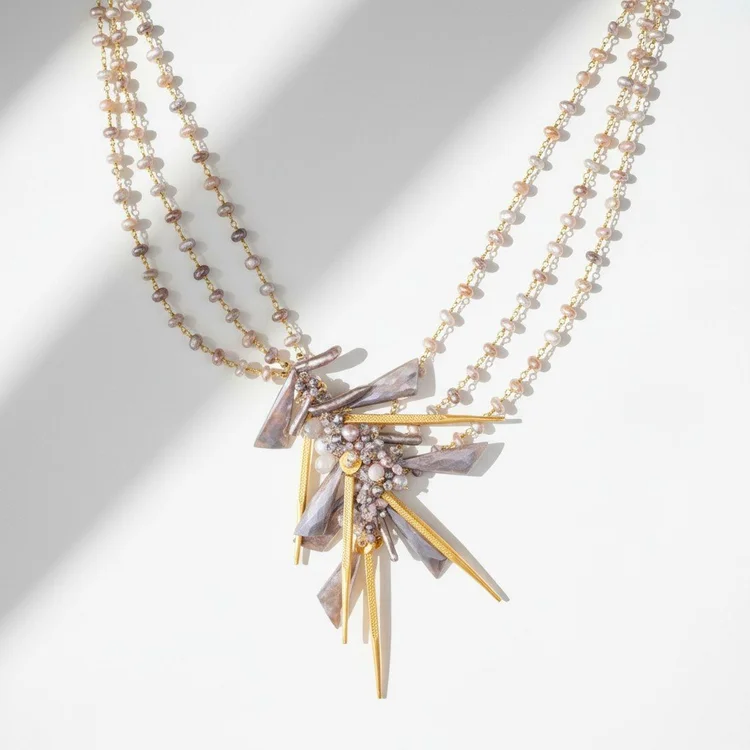
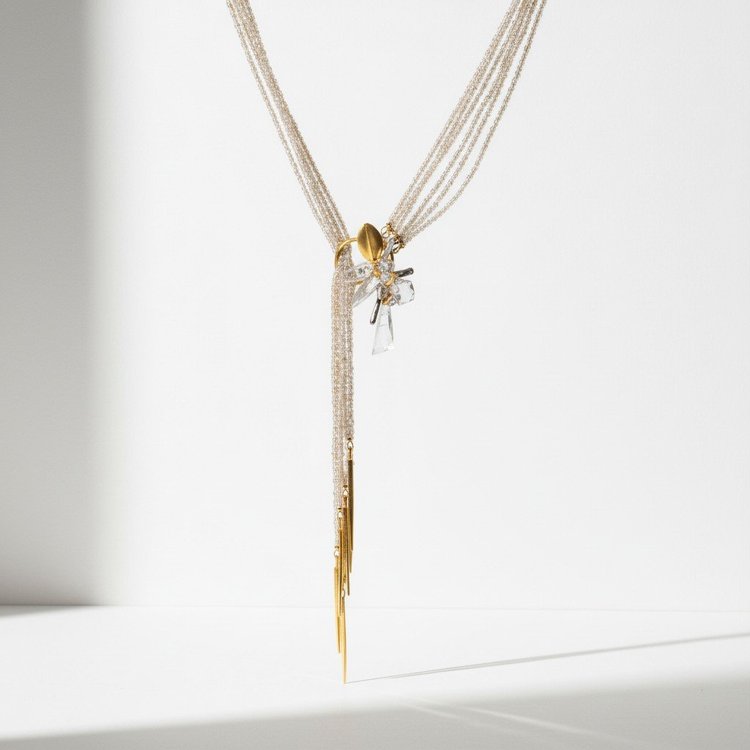
• Main pendant gemstone cluster made from AAA quality ametrine briolettes, moonstone, grey sapphires, pink sapphires, purple sapphires, peacock pearls, tiny 24k gold vermeil spikes, and large 24k gold vermeil spikes.
• Main pendant hangs from a large 2’’ diameter circle completely encrusted with mystic labradorite rondells for extra sparkle.
• Chain made from large moonstone rondells and 24k gold vermeil circle accents.
• Main pendant length from top to bottom 5’’
• Necklace total length 40’’
The notorious Phoenician princess Jezabel may have used her seductress charm for nefarious intents but you as a modern-day woman should be empowered by your own femininity. Don’t be afraid to let your style do the talking for you when wearing this polished necklace.
This medium-length gemstone necklace gives you the versatility to anchor a blazer or add some edge to a girlish frock. The softly neutral color palette will play nicely with almost any shade of clothing in your wardrobe.
Entirely handmade, each gemstone is carefully placed to ensure originality that will never be replicated. The value of these gems spans generations. These limited collections of one of a kind pieces will be gone forever once they sell out.
Andrea Li Designs - Jewelry As Unique As You Are.
Book a private virtual appointment with me - Here
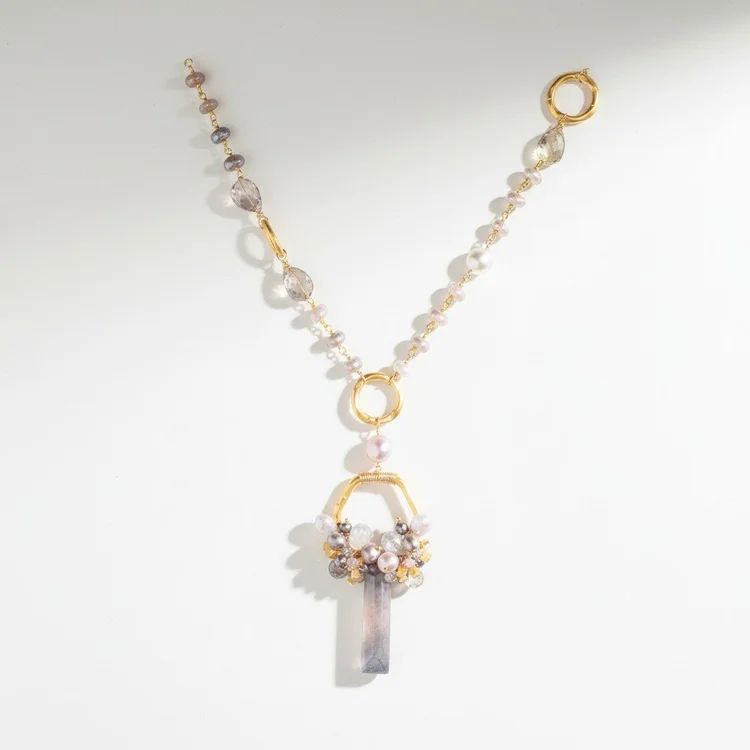
Product Specs -
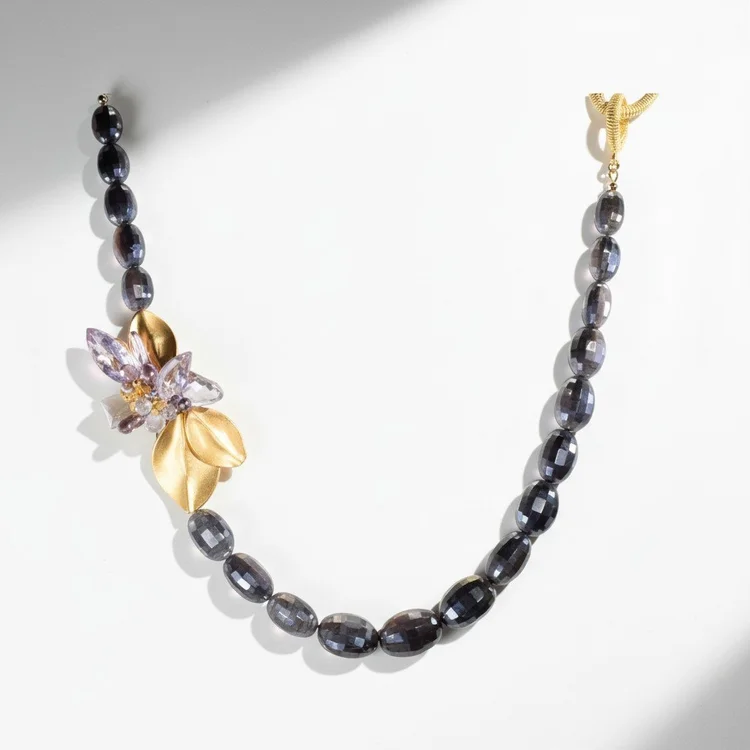
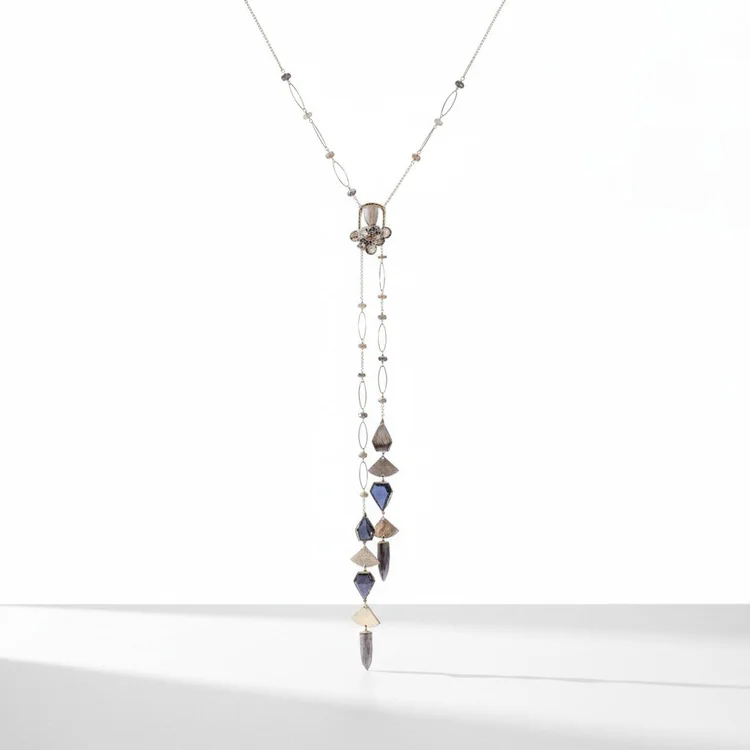
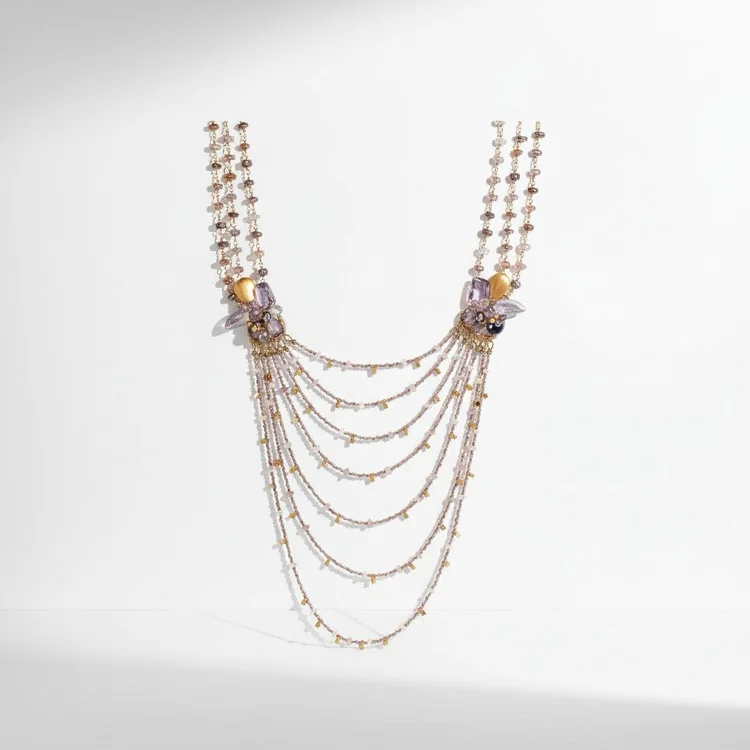
• Main pendant made of pink amethyst, AAA quality ametrine, moonstone, sapphires, keshi stick pearls, GIA certified freshwater pearls with 24k gold vermeil accents.
• Completely encrusted 1 1/2 diameter circle with mystic labradorites for extra shimmer.
• Pendant length top to bottom 3 1/2’’
• Chain 24k gold vermeil triangle links with GIA certified freshwater pearls and simple cut moonstone accents.
• Necklace total length 31’’
Bracelets
Moonstone
One of a Kind · Built Once
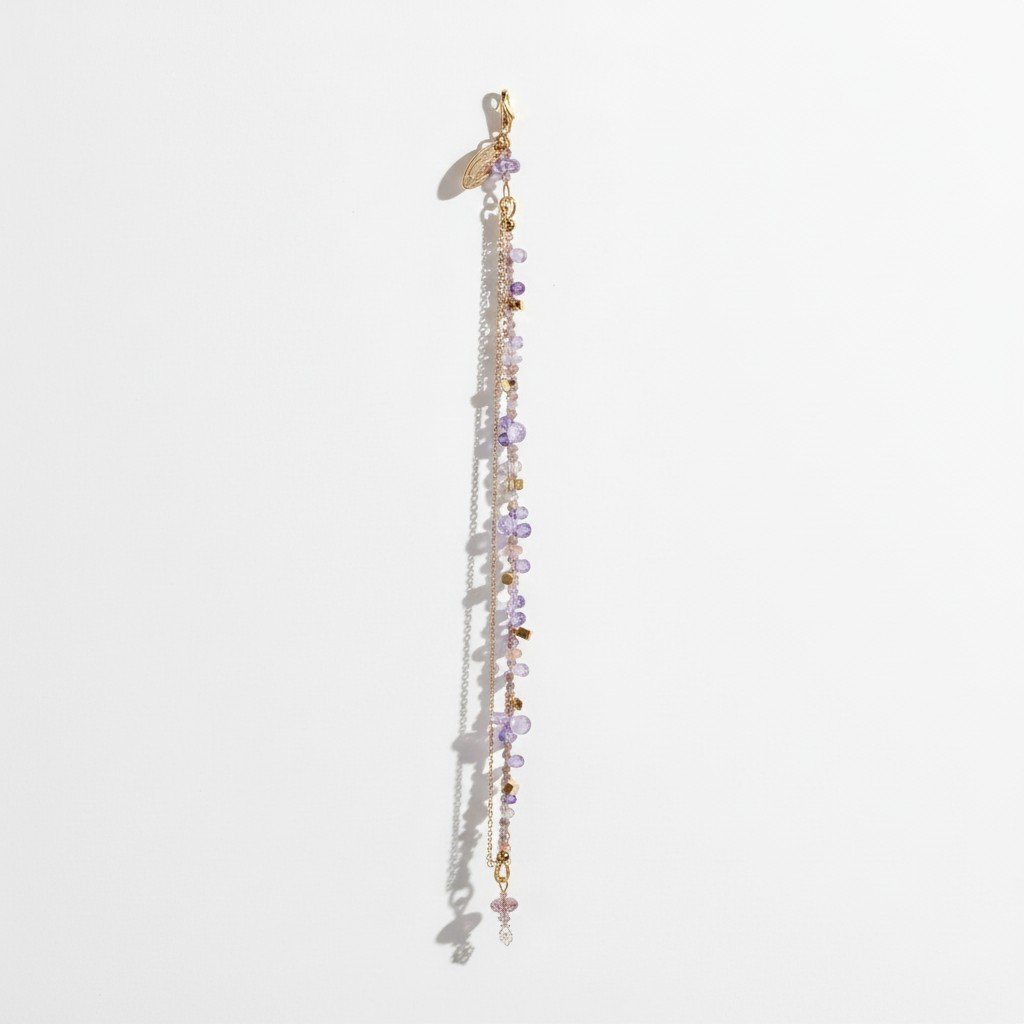
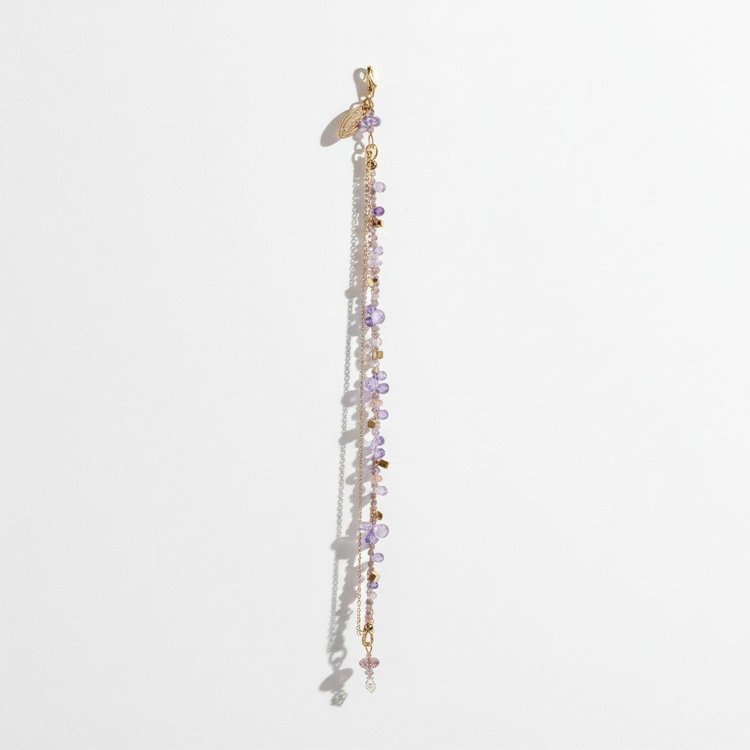
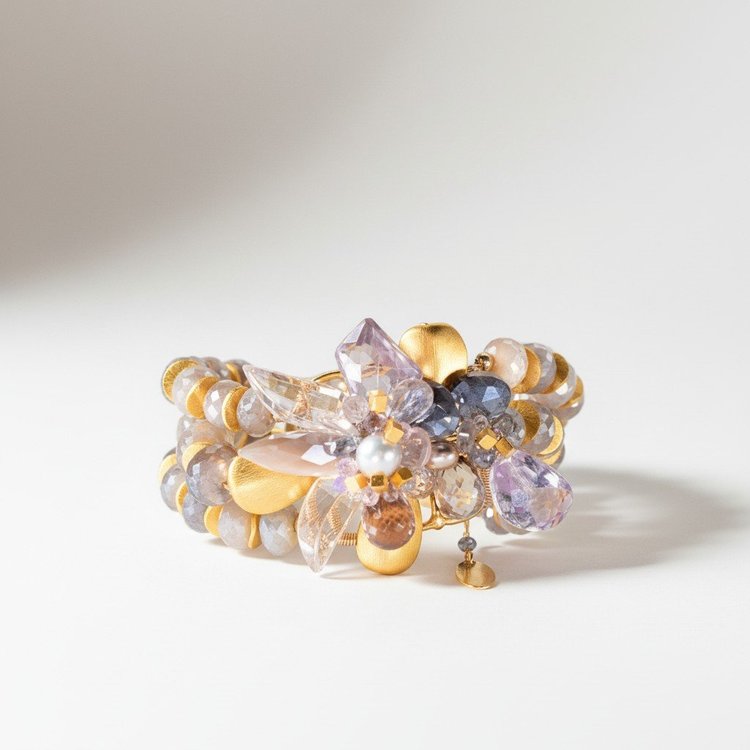
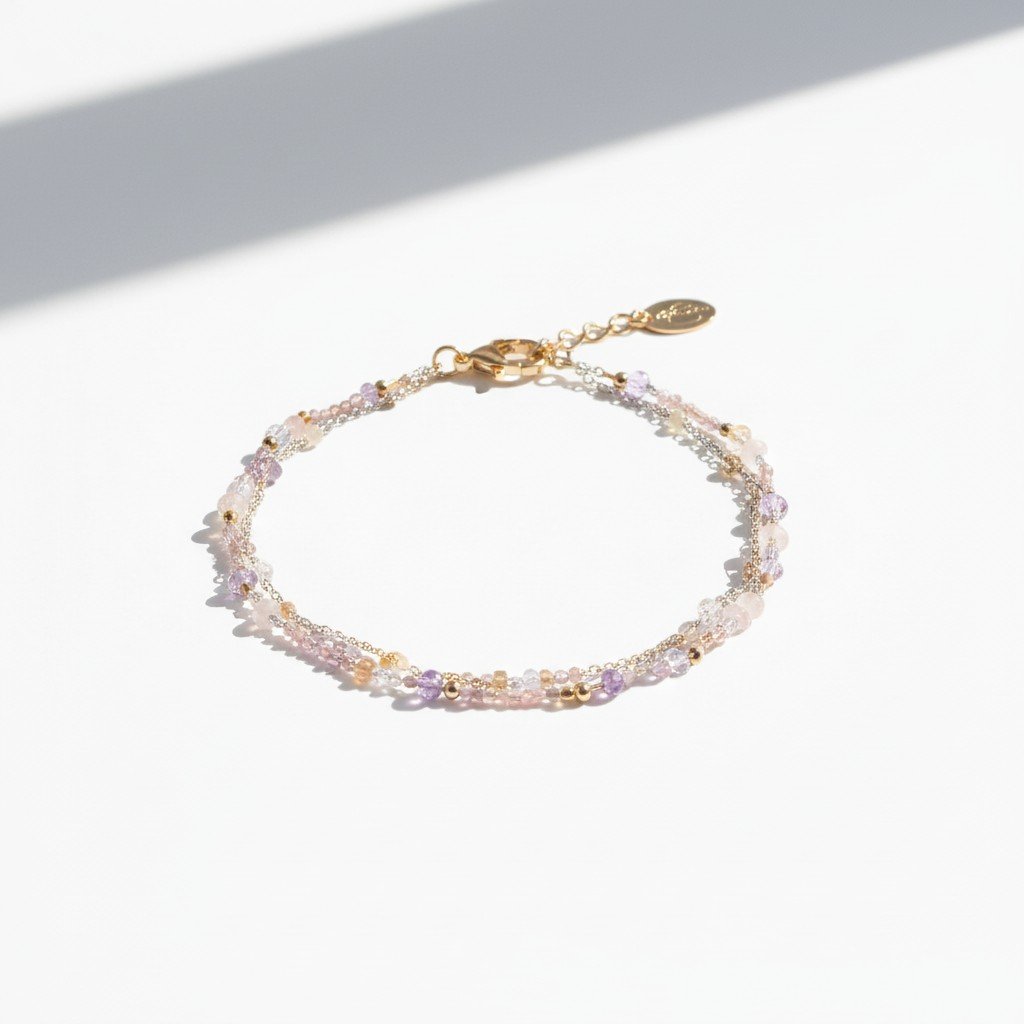
Theda Bara was a notable silent-era movie vamp and femme fatale. From the American film audiences’ perspective, the femme fatale often appeared foreign. She was the sexual counterpart to the wholesome actress. Feel like a cinema starlet every day with this sparkling delicate layering bracelet.
Inject a little celebrity into mundane tasks like going for a coffee run when you wear these easy layering bracelets. Light and airy, they will make you forget you are even wearing anything at all making these the perfect daily style injection to all of your outfits.
Three of these layering bracelets are available. Each one is a slightly different version of the others, each created to be worn alone or make a fun “arm party”. Adopt your own signature style the way you like.
Entirely handmade, each gemstone is carefully placed to ensure originality that will never be replicated. The value of these gems spans generations. These limited collections consist only of one of a kind pieces that will be gone forever once they sell out.
Andrea Li Designs - Jewelry As Unique As You Are
Book a private virtual appointment with me - Here
Product Specs:
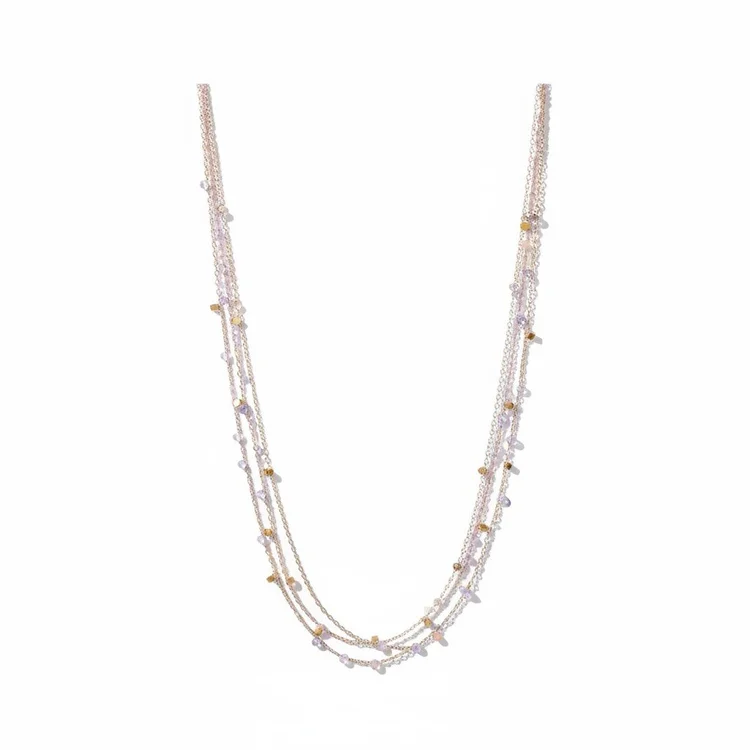
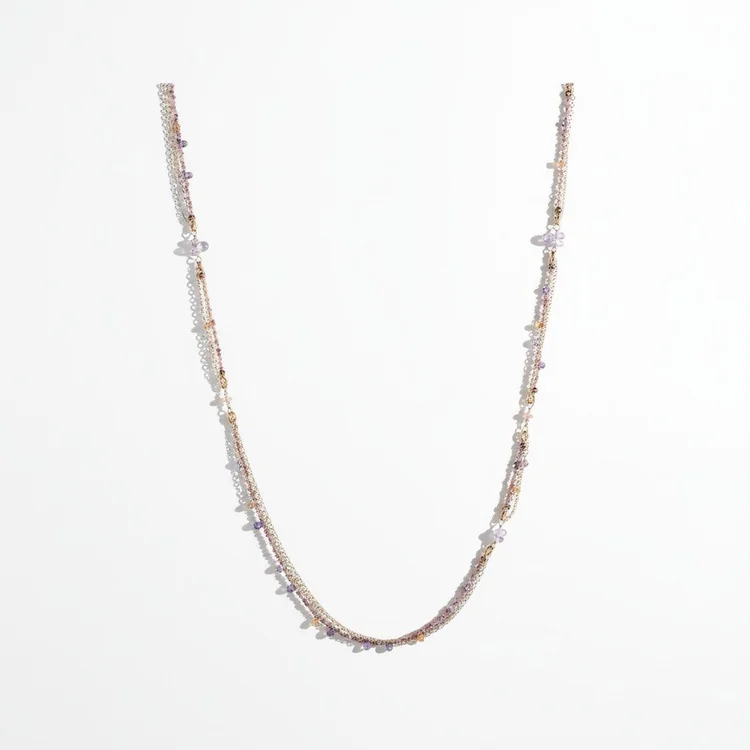
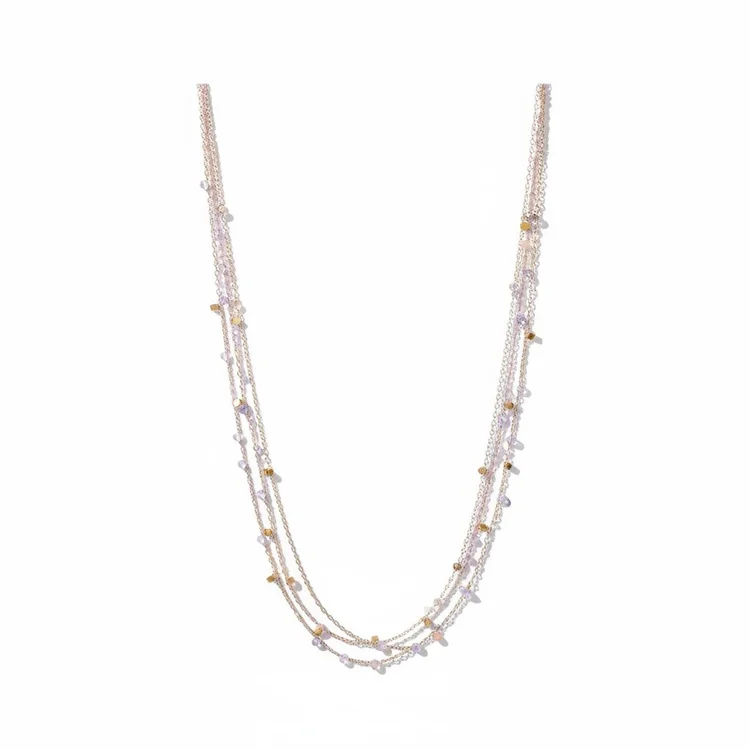
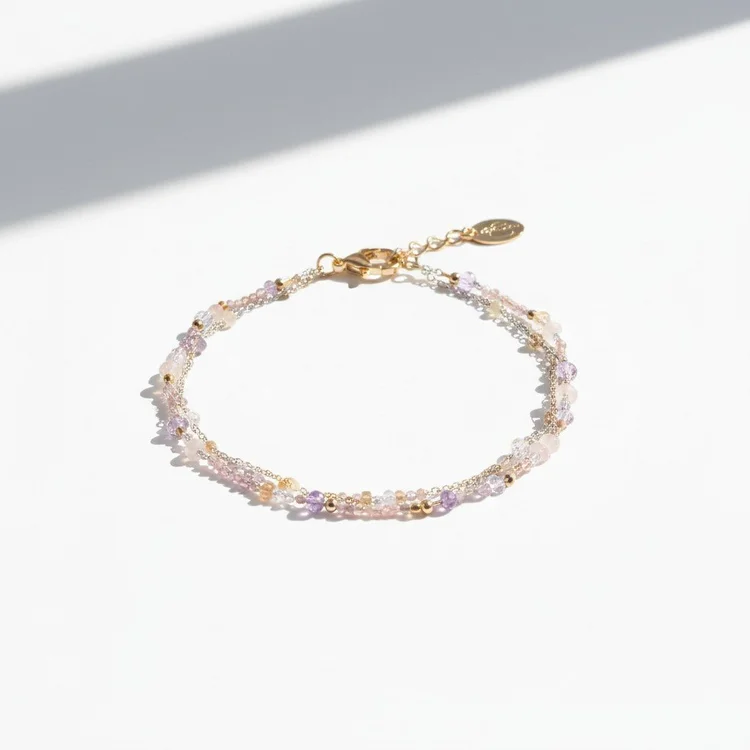
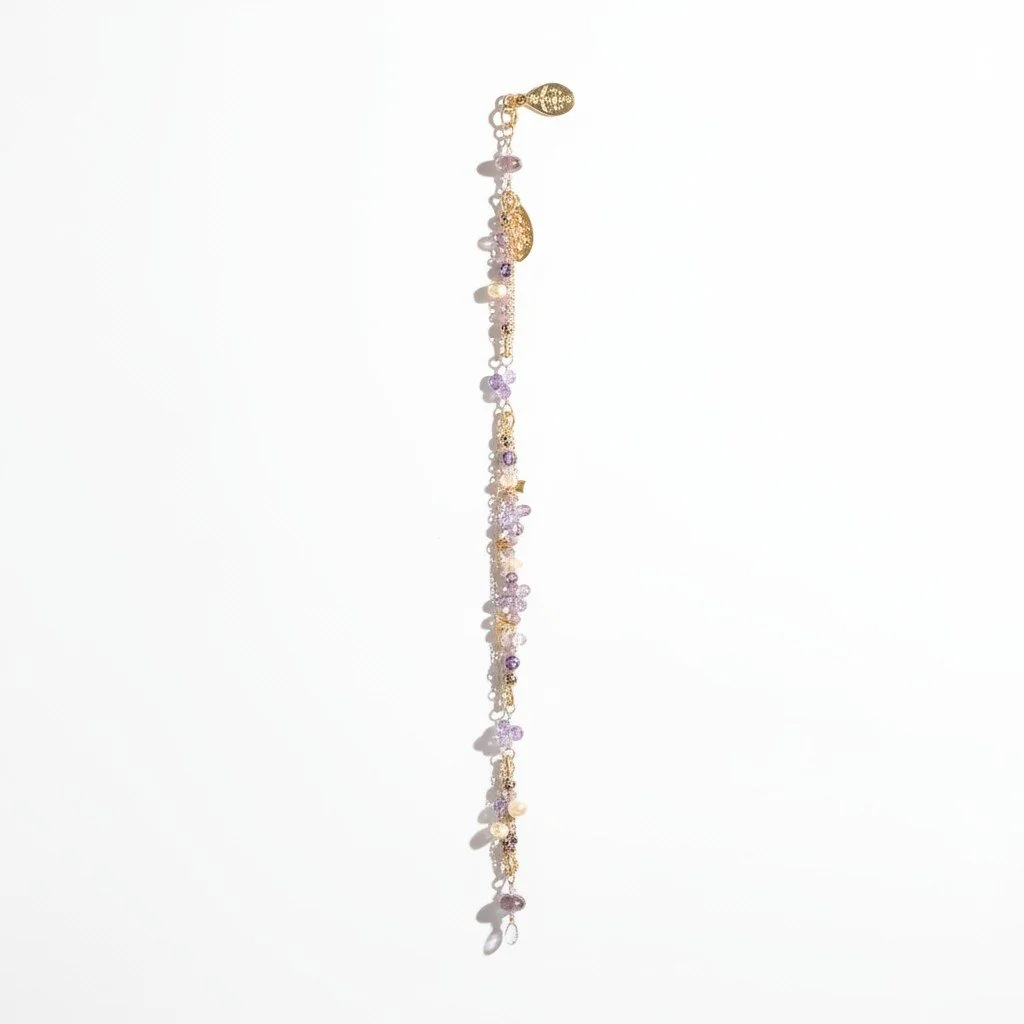
• Delicate chains sit among a chorus of tiny glittering gemstones giving each piece extra dimension and an illusion of three bracelets in one. Made of opals, sapphires, moonstones, GIA certified freshwater pearls, 14k gold-filled fine chains, and 24k gold vermeil accents.
• Bracelet length 7’’
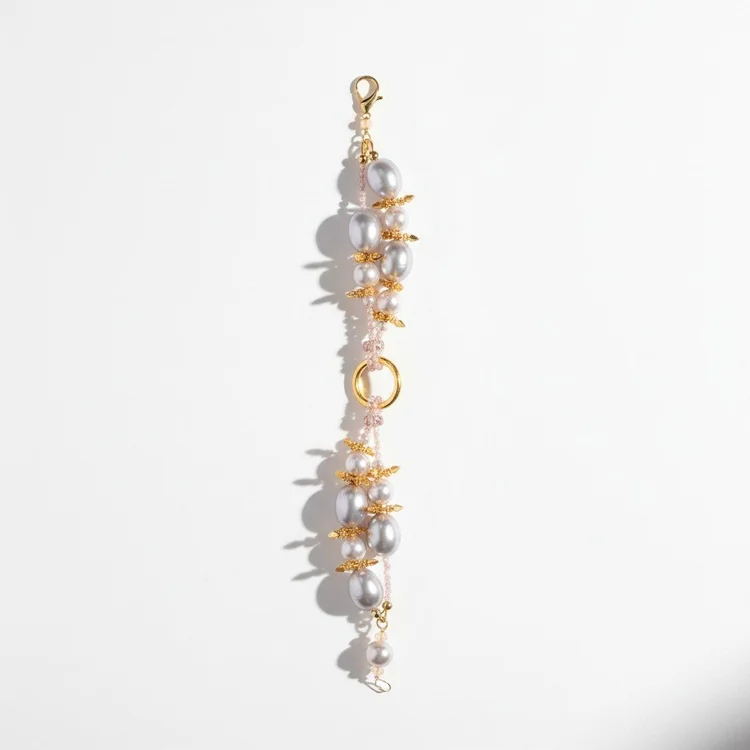
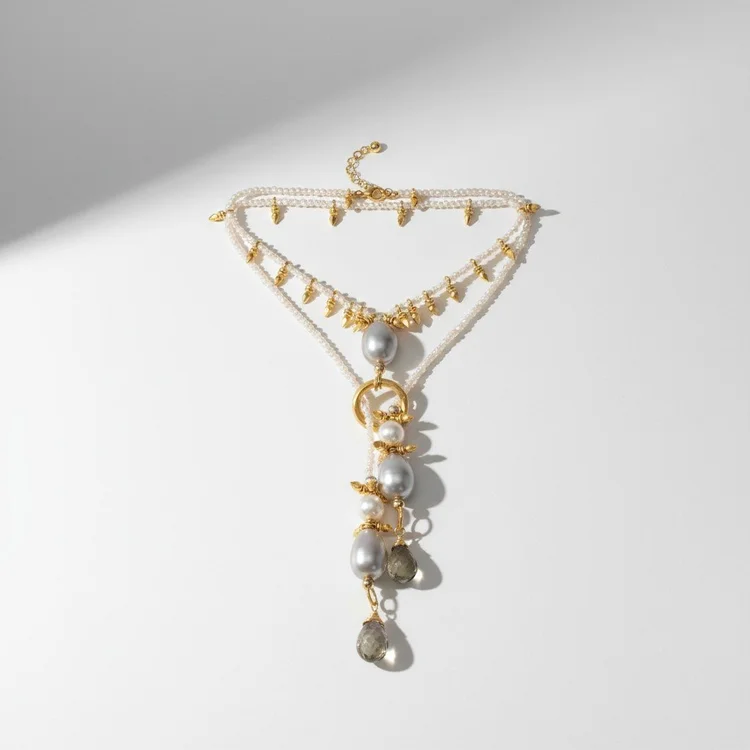
Brigid O'Shaughnessy of the Maltese Falcon, portrayed by Mary Astor gave way to the beginning of the film noir era of the early-1940’s-1950’s in a genre that would prominently feature the femme fatale character archetype. Style yourself like the Hollywood starlet you are. Ready for the limelight and destined to shine.
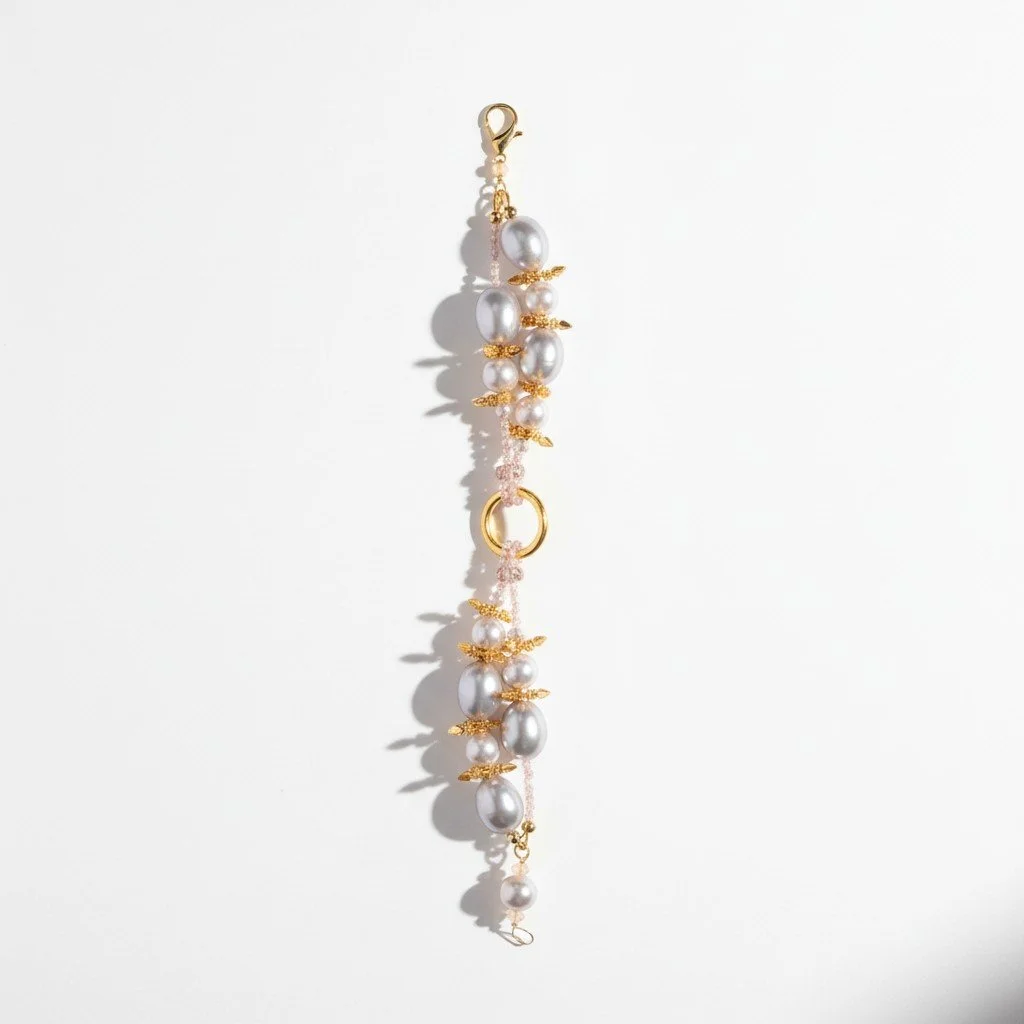
Everyone should have a go-to pearl bracelet in their jewelry box. This version puts an edgy twist on the age-old classic with the addition of tiny gold spikes, making this traditional wrist adornment anything but boring. Wear anytime you need an extra dose of ladylike attitude with your outfit. The pearls make it appropriate for any occasion.
Entirely handmade, each gemstone is carefully placed to ensure originality that will never be replicated. The value of these gems spans generations. These limited collections consist only of one of a kind pieces that will be gone forever once they sell out.
Andrea Li Designs - Jewelry As Unique As You Are
Book a private virtual appointment with me - Here
Product Specs:
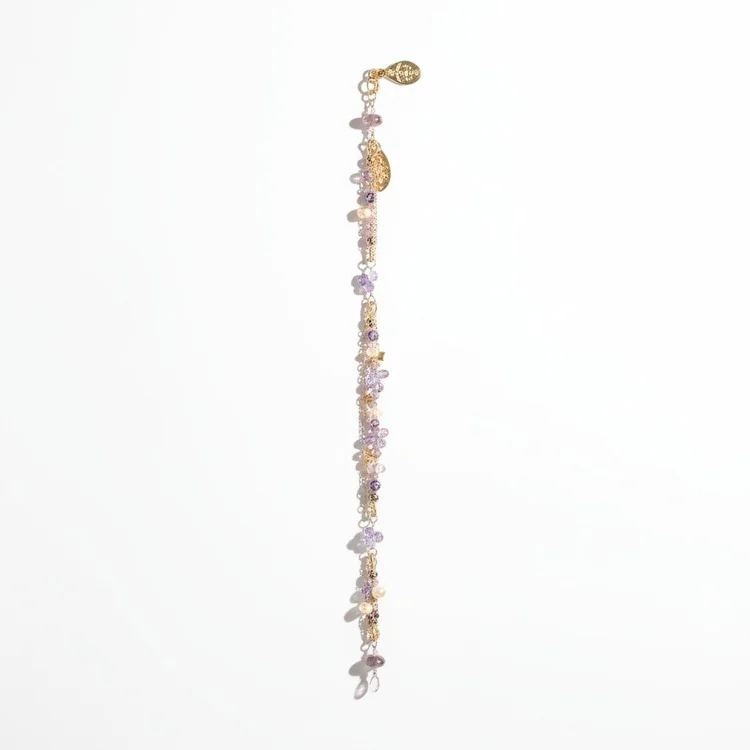
• An edgy twist on a classic pearl bracelet. Made of GIA certified high luster freshwater pearls, 24k gold vermeil accents, tiny shimmering moonstones, and opal details.
• Clasp 14k gold filled.
• Bracelet length 7’’
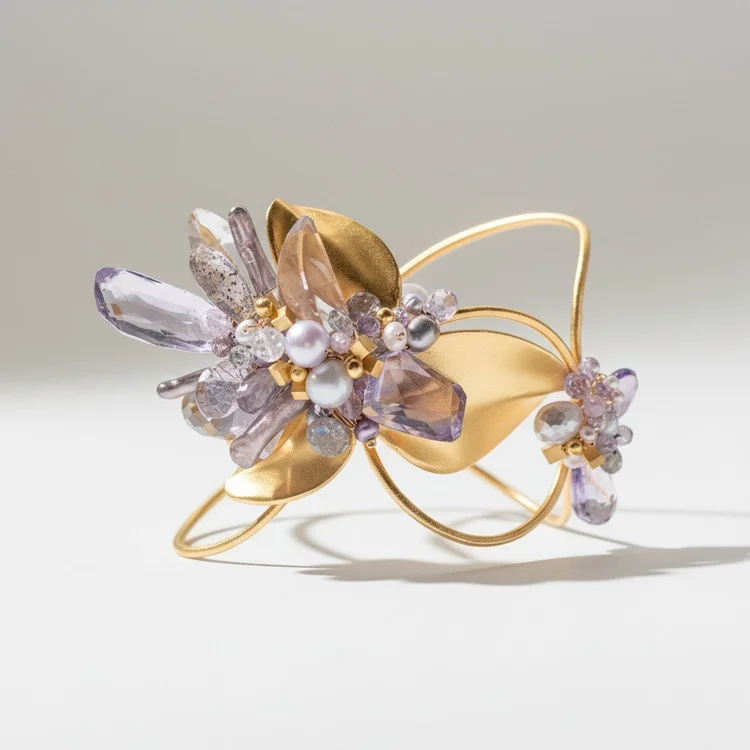
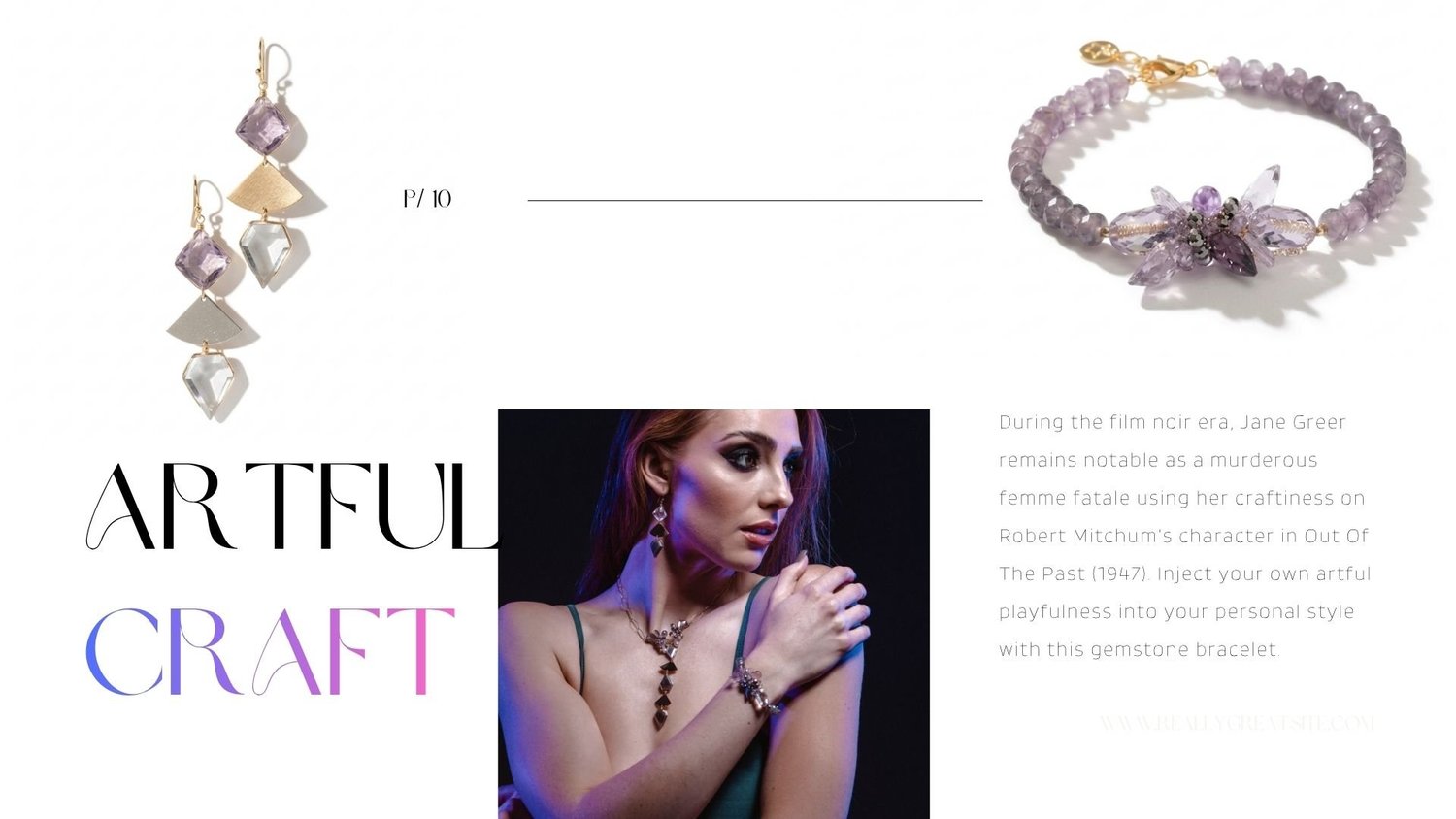
During the film noir era, Jane Greer remains notable as a murderous femme fatale using her craftiness on Robert Mitchum’s character in Out Of The Past (1947). Inject your own artful playfulness into your personal style with this gemstone bracelet.
This sparkling stunner is ready for prime time as a standalone starlet on your wrist but shines even brighter with a chorus of costars. Add a delicate layering bracelet or two to give your arm party blockbuster status.
Entirely handmade, each gemstone is carefully placed to ensure originality that will never be replicated. The value of these gems spans generations. These limited collections consist only of one of a kind pieces that will be gone forever once they sell out.
Andrea Li Designs - Jewelry As Unique As You Are
Book a private virtual appointment with me - Here
Product Specs:
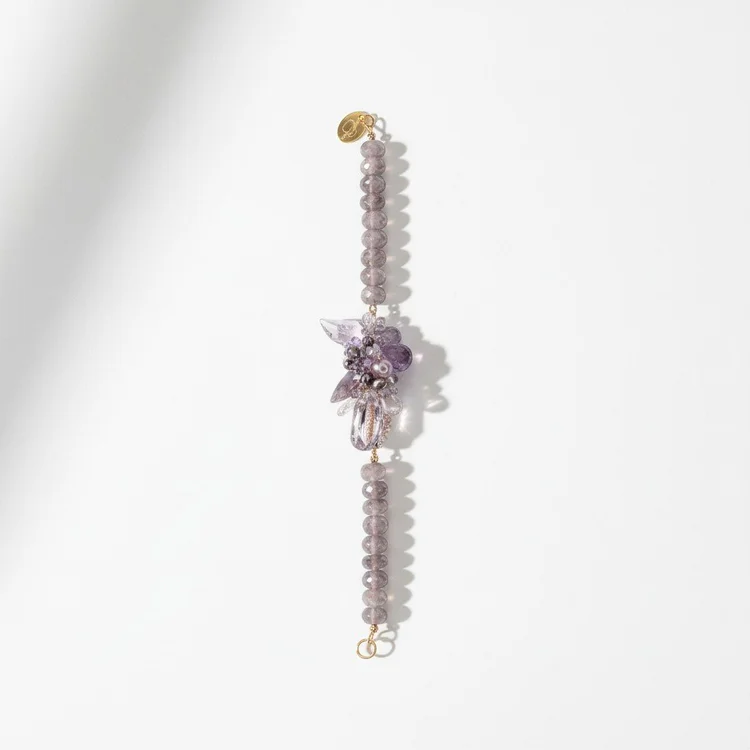
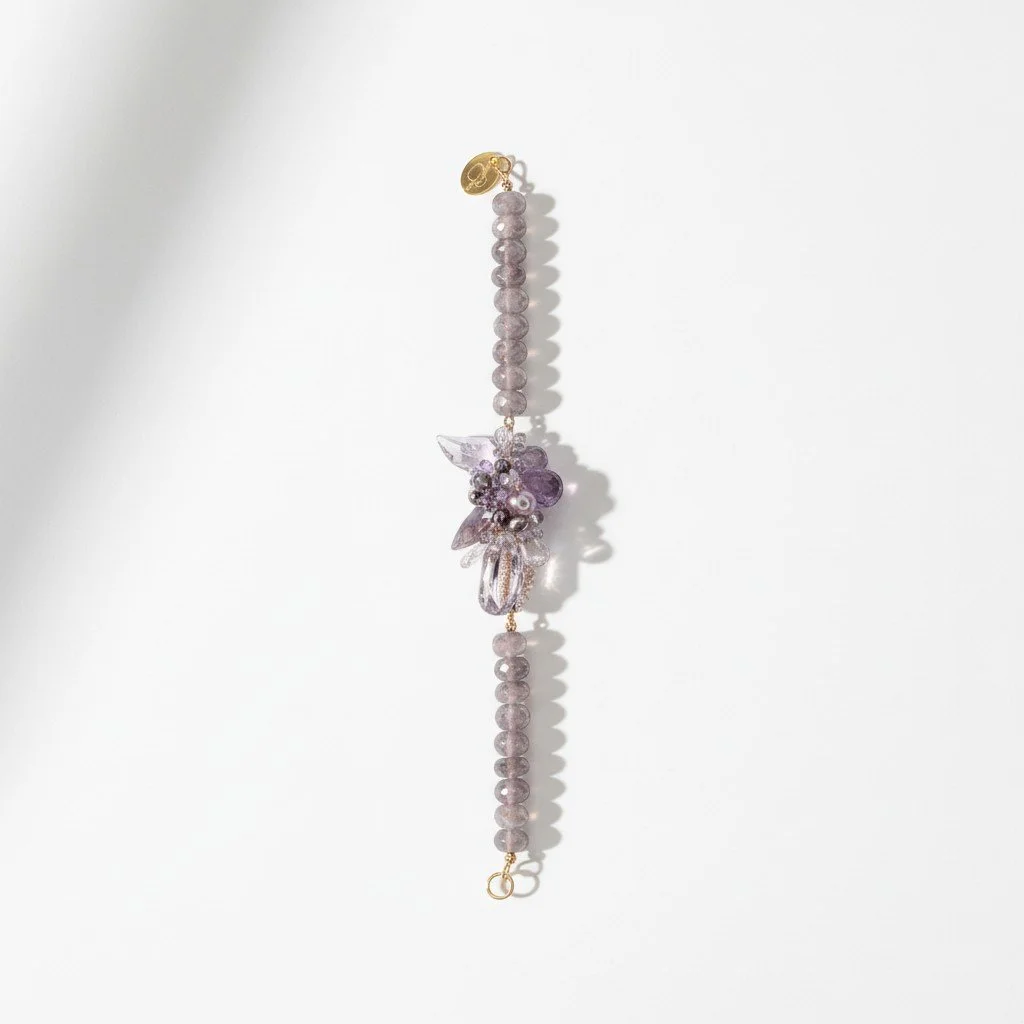
• A long gemstone cluster has a starring role in this bracelet. An extension of the long oval flanks the main large fancy cut pink amethyst briolette and is encrusted with tiny shimmering labradorites. Made of AAA quality ametrine, fancy cut pink amethyst, fancy cut moonstone, sapphires, mystic quartz, rose quartz, natural chopine, pale amethyst, GIA certified freshwater pearls.
• Body of bracelet made of large labradorite rondelles.
• Clasp 14k gold filled.
• Bracelet length 7’’
Theda Bara was a notable silent-era movie vamp and femme fatale. From the American film-audience’s perspective, the femme fatale often appeared foreign. She was the sexual counterpart to the wholesome actress. Feel like a cinema starlet every day with this sparkling delicate layering bracelet.
Inject a little celebrity into mundane tasks like going for a coffee run when you wear these easy layering bracelets. Light and airy, they will make you forget you are even wearing anything at all making these the perfect daily style injection to all of your outfits.
Three of these layering bracelets are available. Each one is a slightly different version of the others, each created to be worn alone or make a fun “arm party”. Adopt your own signature style the way you like.
Entirely handmade, each gemstone is carefully placed to ensure originality that will never be replicated. The value of these gems spans generations. These limited collections consist only of one of a kind pieces that will be gone forever once they sell out.
Andrea Li Designs - Jewelry As Unique As You Are
Book a private virtual appointment with me - Here
Product Specs:
• Delicate chains sit among a chorus of tiny glittering gemstones giving each piece extra dimension and an illusion of three bracelets in one. Made of opals, sapphires, moonstones, GIA certified freshwater pearls, 14k gold-filled fine chains, and 24k gold vermeil accents.
• Bracelet length 7’’
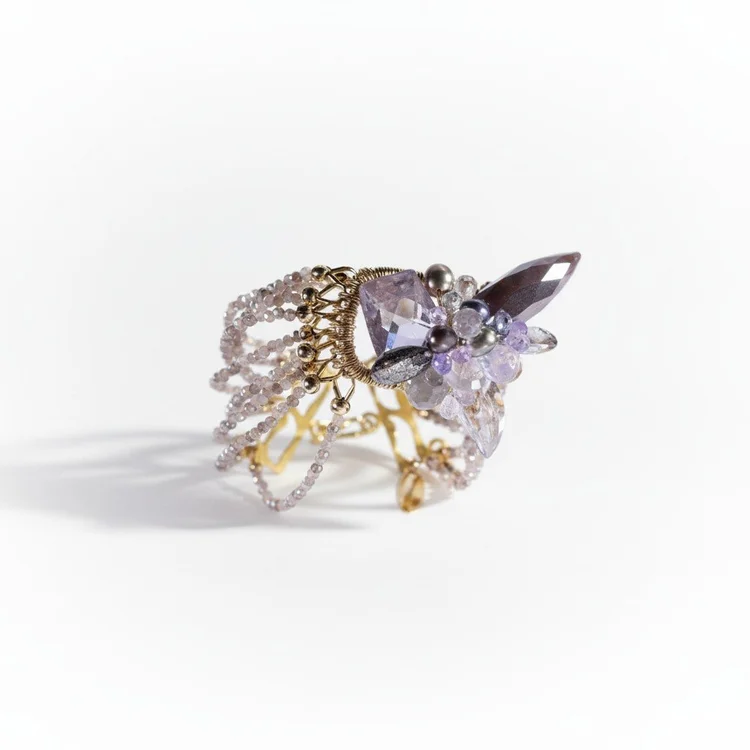
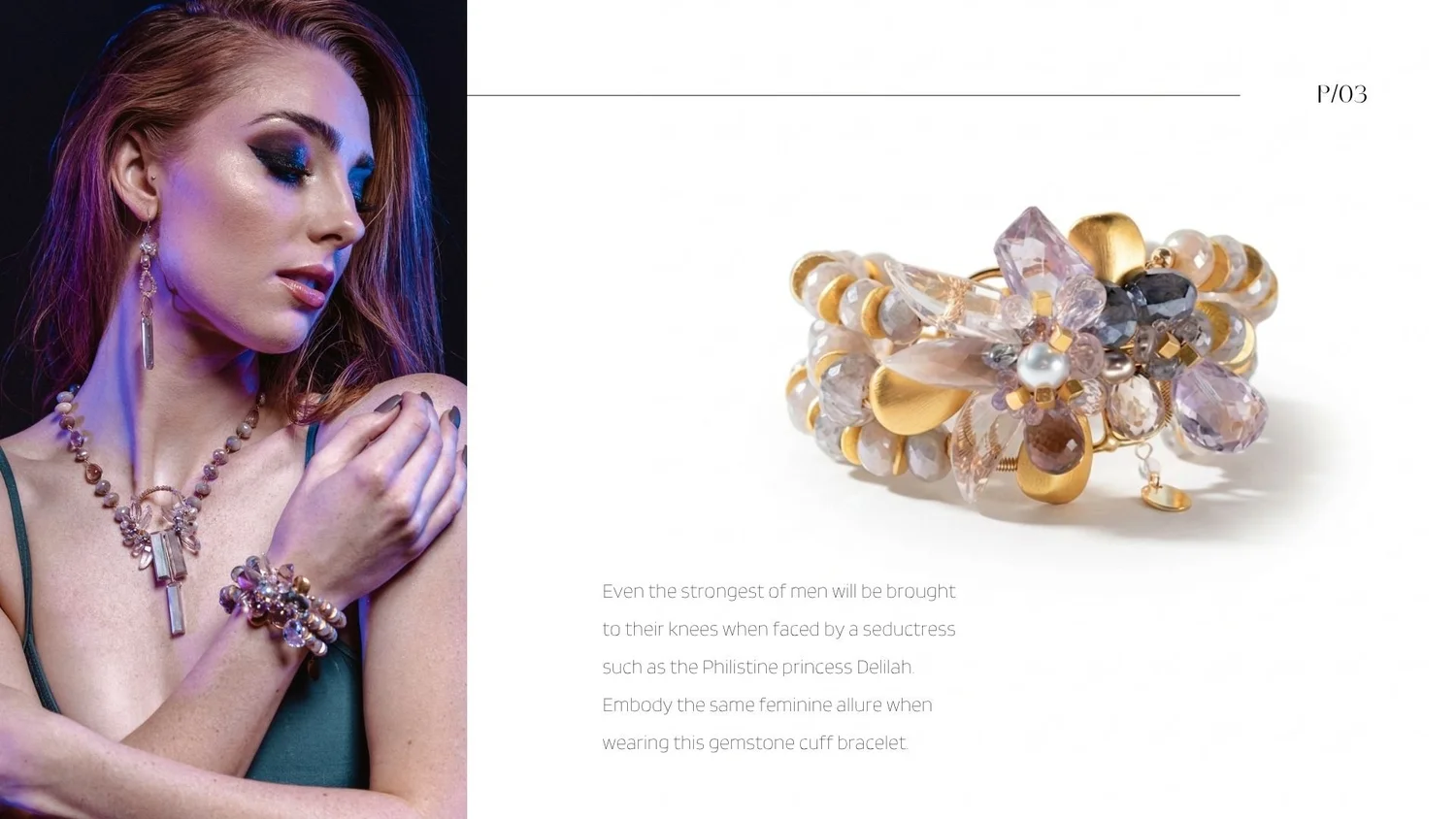
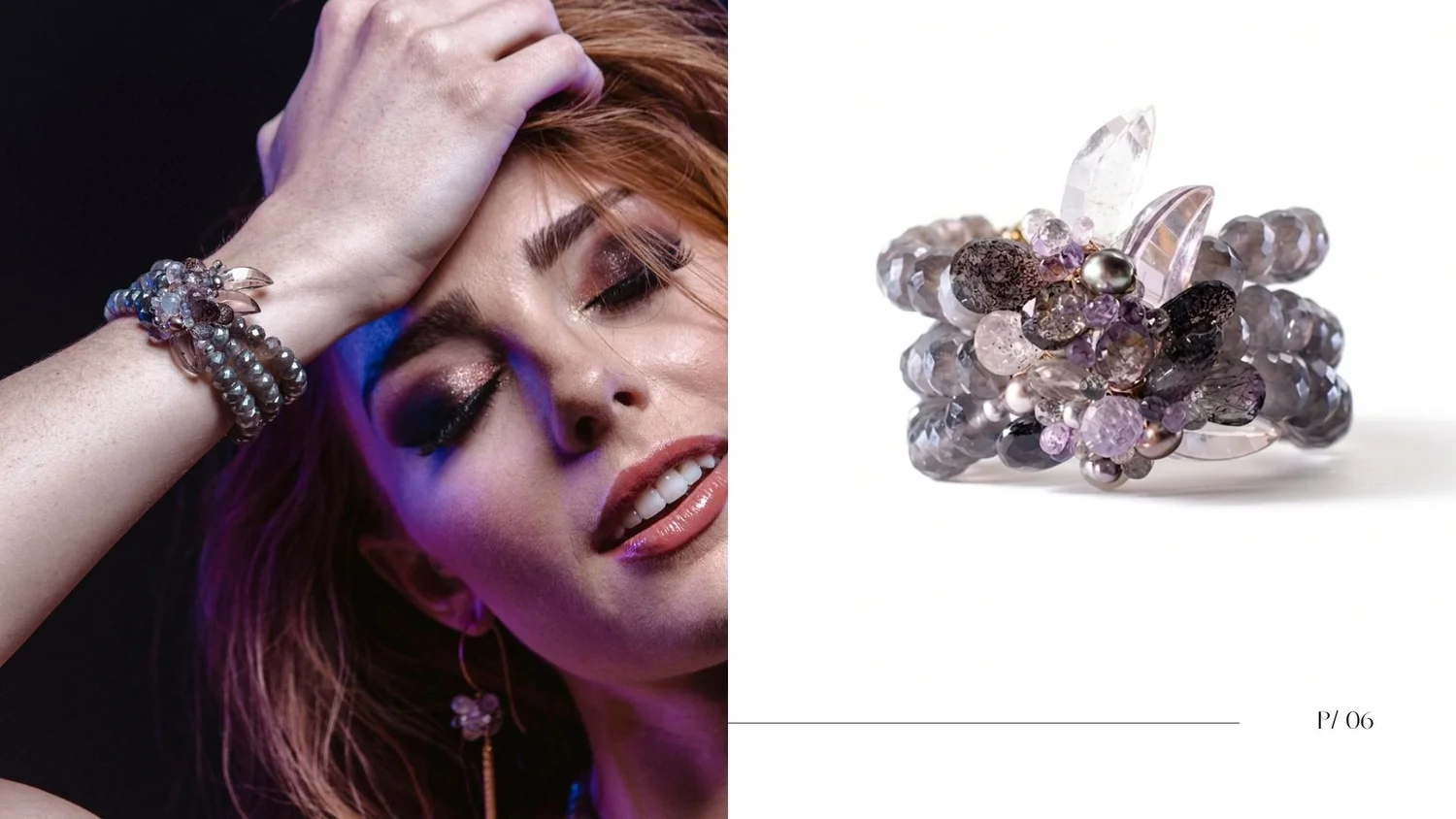
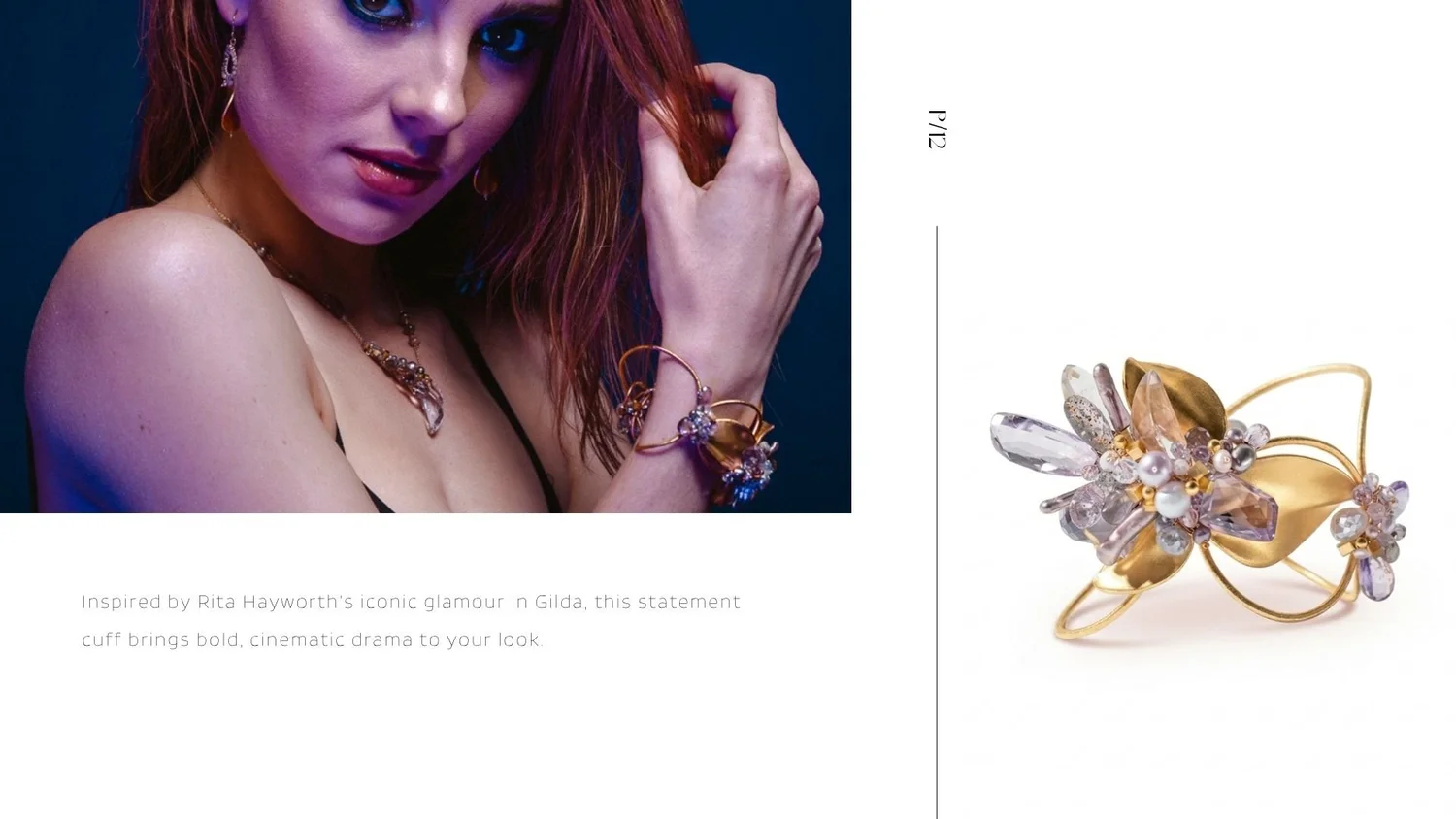
Natasha Fatale, a curvaceous spy, takes her name from the femme fatale stock character in the film Rocky And Bullwinkle. You don’t need to be a voluptuous spy to embody your own feminine sorcery. Wear this cuff to imbue your own seductive powers on those around you.
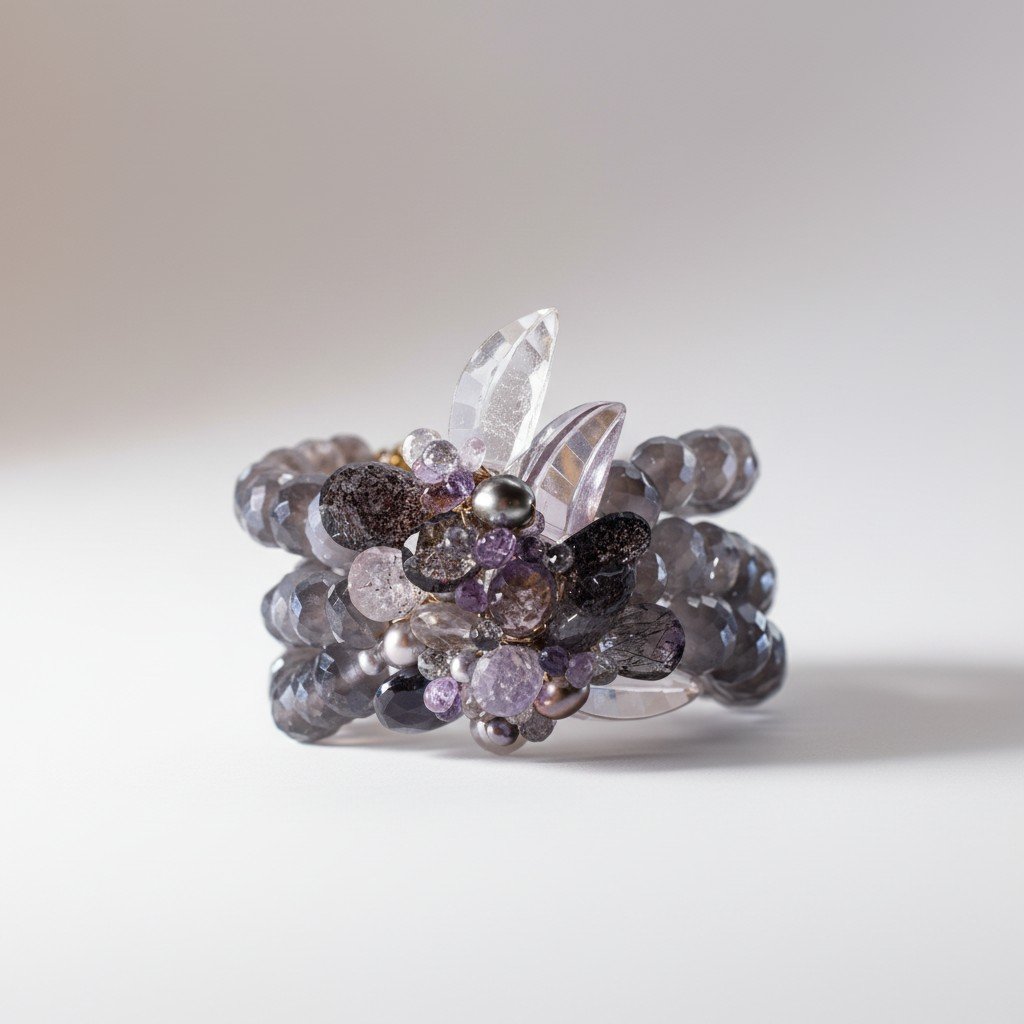
This attention-grabbing cuff bracelet likes to be its own one-woman show. The size says “statement” while the soft color palette keeps it grounded. The triple-stranded design makes it easy and comfortable to wear. So don’t be afraid to rock it whenever an occasion arises that requires an extra punch of style.
Entirely handmade, each gemstone is carefully placed to ensure originality that will never be replicated. The value of these gems spans generations. These limited collections consist only of one of a kind pieces that will be gone forever once they sell out.
Andrea Li Designs - Jewelry As Unique As You Are
Book a private virtual appointment with me - Here
Product Specs:
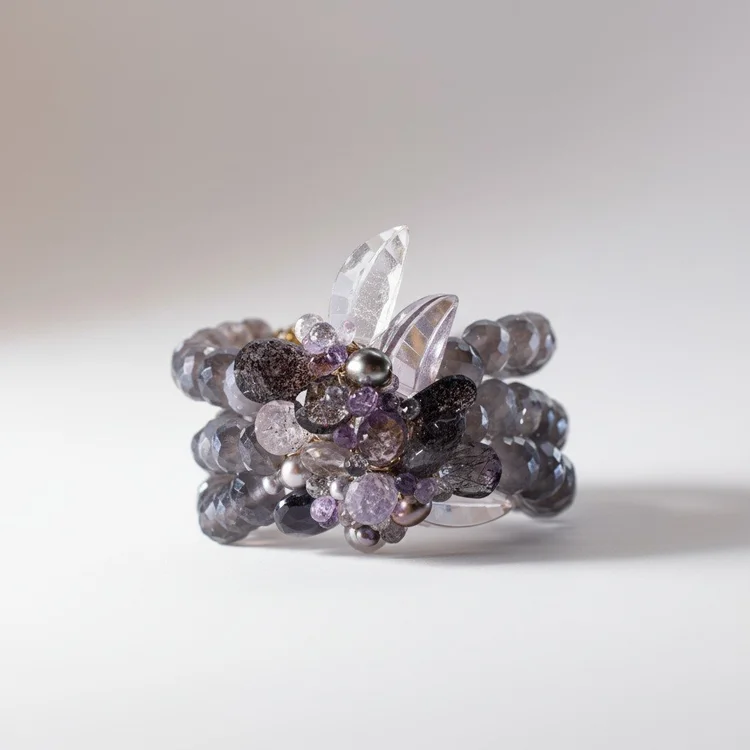
• A bold and flourishing gemstone cluster is the centerpiece that anchors this cuff. Made of fancy cut pink amethyst, moss amethyst, rose quartz, ametrine, sapphires, pale amethyst, moonstone and GIA certified freshwater pearls.
• Triple criss-cross strands of large moonstone rondells make up the body of the bracelet.
• End details and clasp all 24k gold vermeil.
• Bracelet length 7’’
Theda Bara was a notable silent-era movie vamp and femme fatale. From the American film audiences’ perspective, the femme fatale often appeared foreign. She was the sexual counterpart to the wholesome actress. Feel like a cinema starlet every day with this sparkling delicate layering bracelet.
Inject a little celebrity into mundane tasks like going for a coffee run when you wear these easy layering bracelets. Light and airy, they will make you forget you are even wearing anything at all making these the perfect daily style injection to all of your outfits.
Three of these layering bracelets are available. Each one is a slightly different version of the others, each created to be worn alone or make a fun “arm party”. Adopt your own signature style the way you like.
Entirely handmade, each gemstone is carefully placed to ensure originality that will never be replicated. The value of these gems spans generations. These limited collections consist only of one of a kind pieces that will be gone forever once they sell out.
Andrea Li Designs - Jewelry As Unique As You Are
Book a private virtual appointment with me - Here
Product Specs:
• Delicate chains sit among a chorus of tiny glittering gemstones giving each piece extra dimension and an illusion of three bracelets in one. Made of opals, sapphires, moonstones, GIA certified freshwater pearls, 14k gold-filled fine chains, and 24k gold vermeil accents.
• Bracelet length 7’’
Earrings
Moonstone
One of a Kind · Built Once
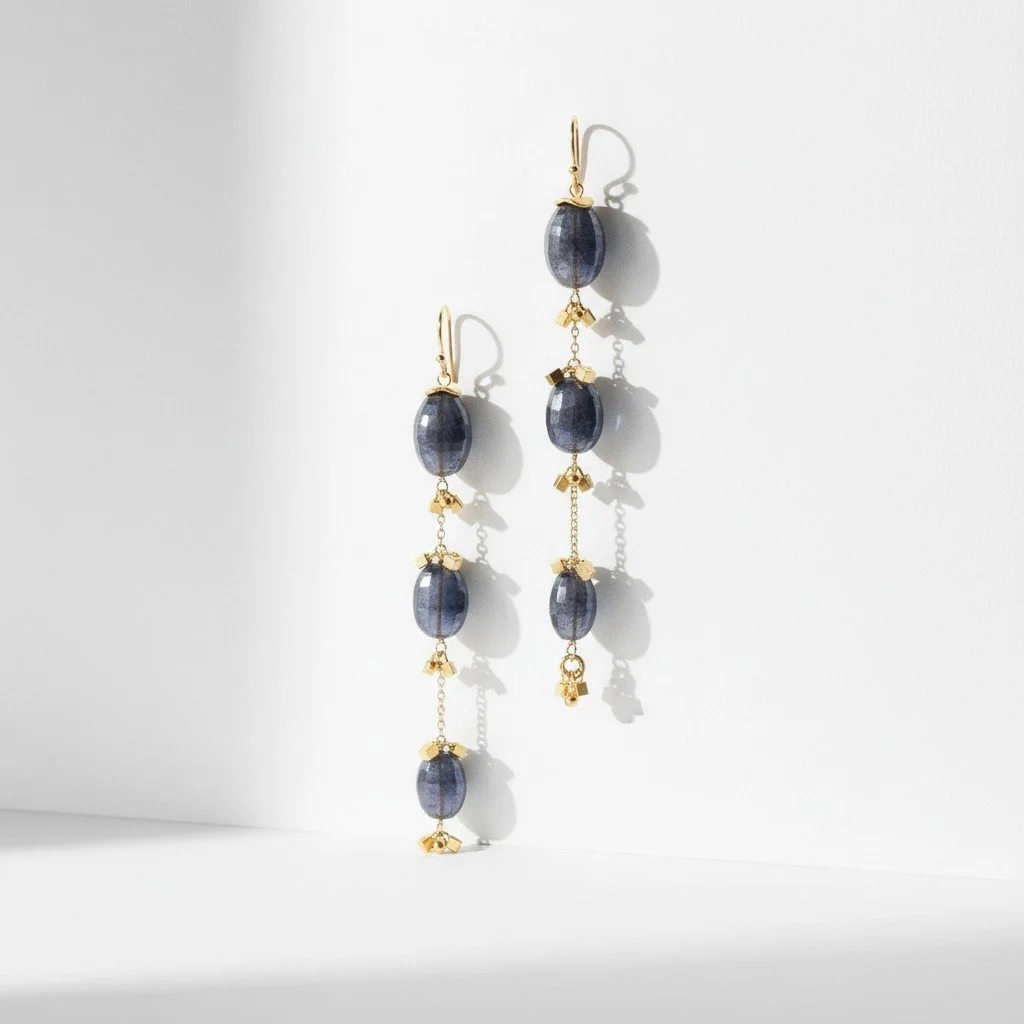
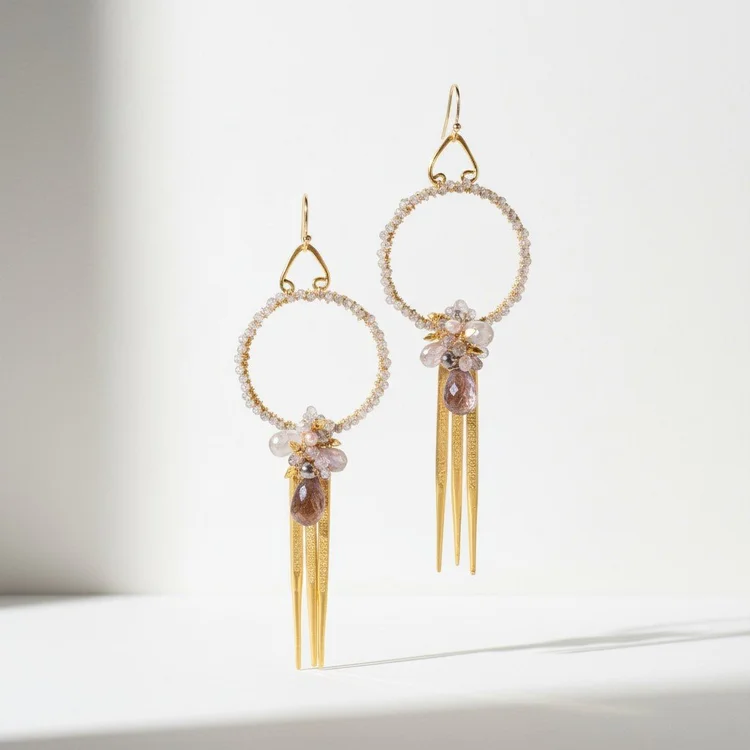
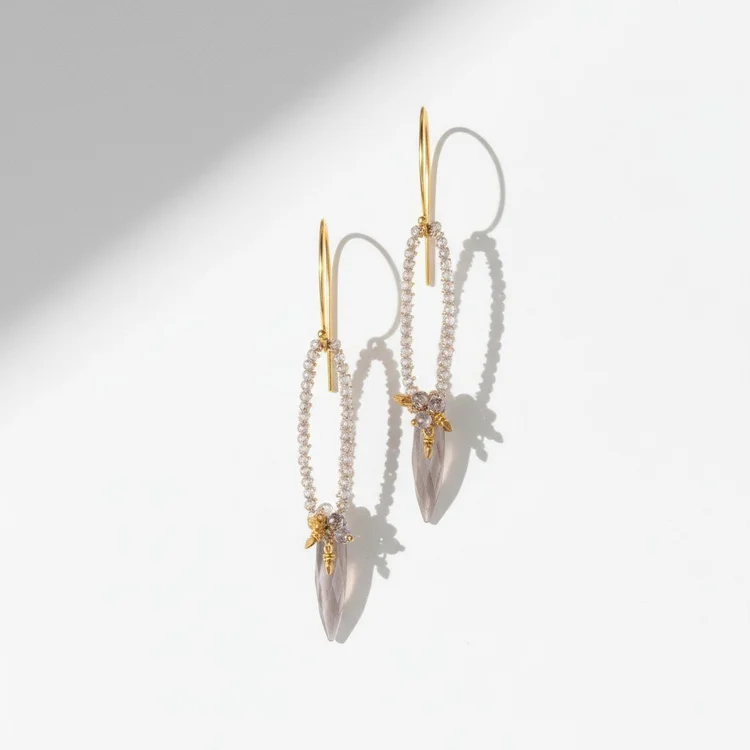
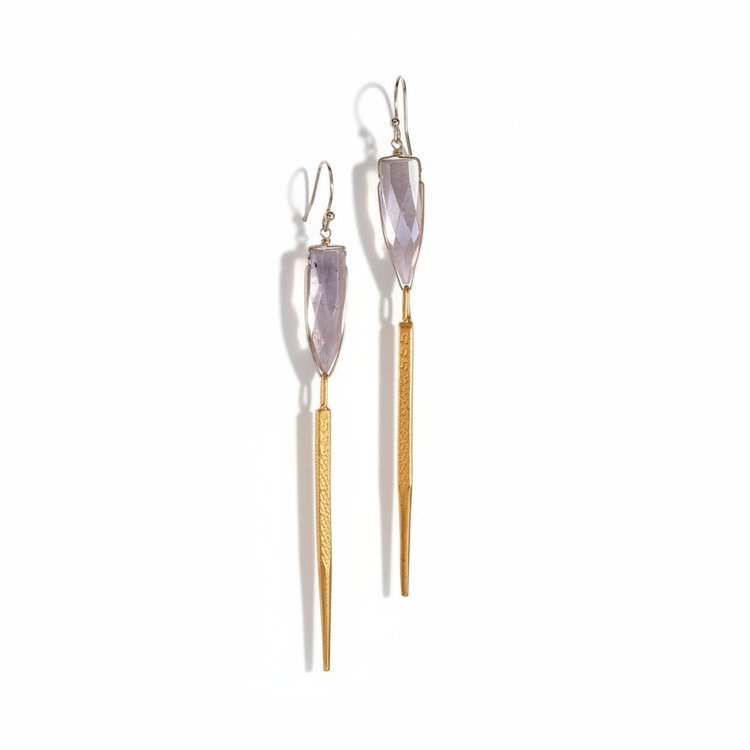
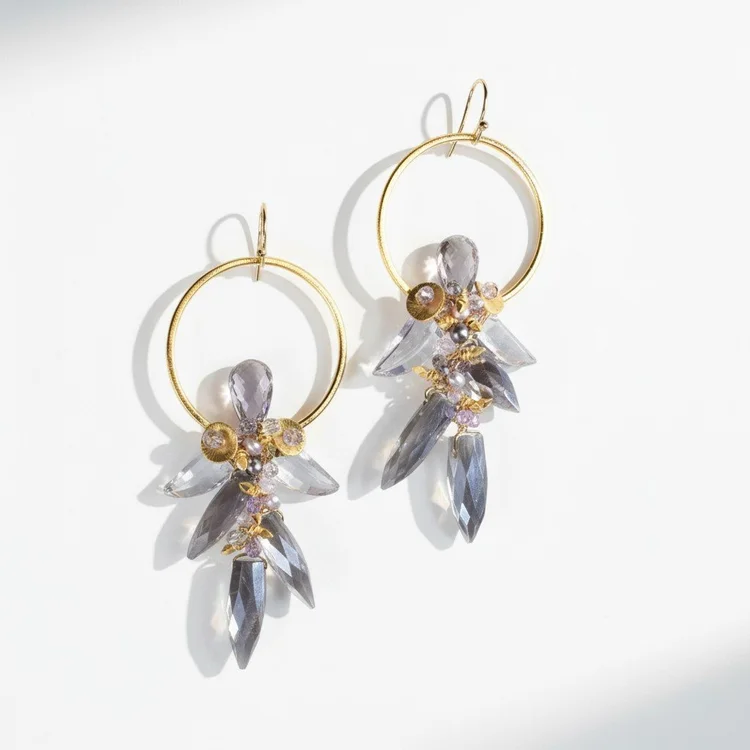
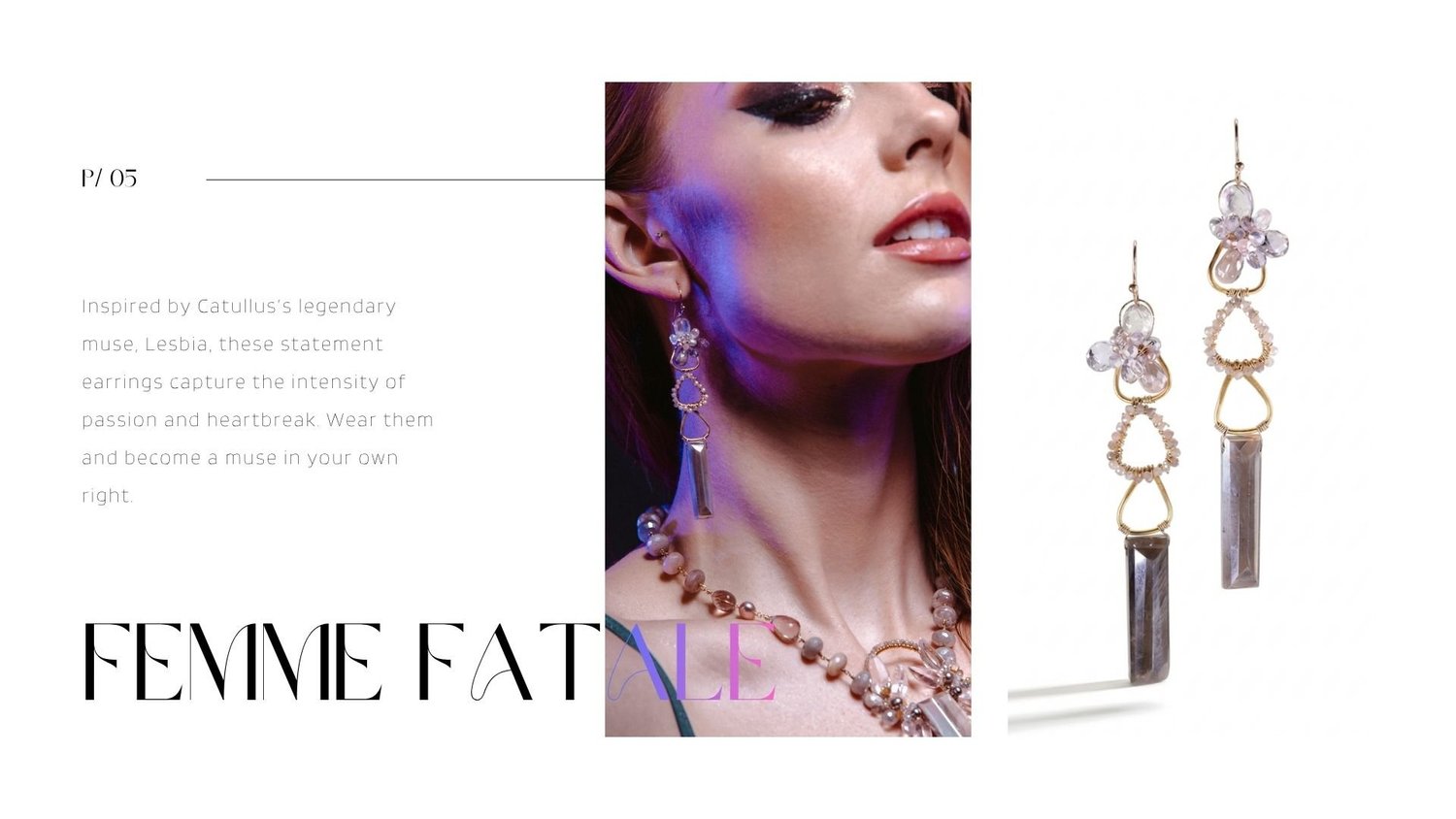
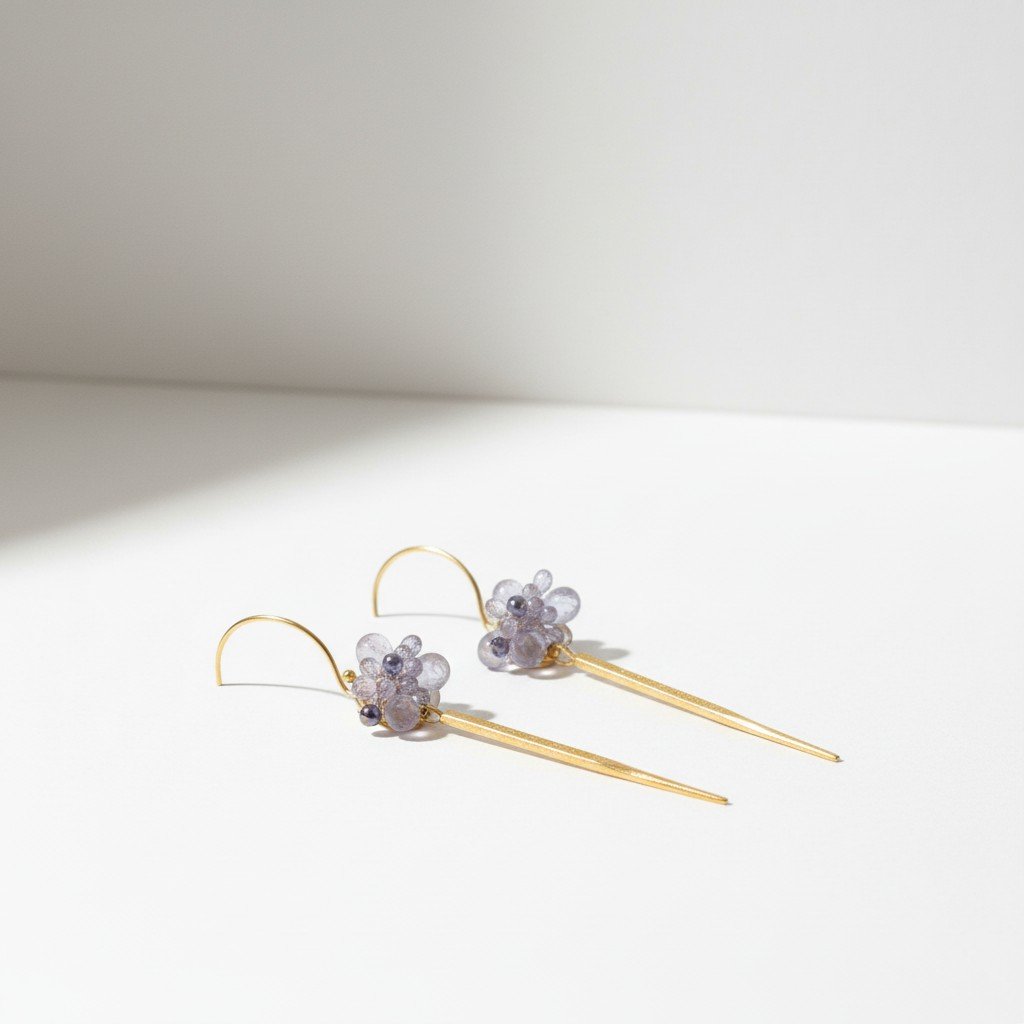
Amy Drop Earrings are handmade by Andrea Li in her Denver studio: a single long spike drop anchored by a gemstone cluster of rose quartz, moonstone, pale amethyst, sapphires, GIA certified freshwater pearls, and 24k gold vermeil accents. Large sculptural ear wire made of 24k gold vermeil, designed to read as an element of the piece rather than hardware. Earring length: 3 3/4''.
The name belongs to Amy Dunne - Rosamund Pike's portrayal in Gone Girl - and the earrings were built with that same energy in mind: precise, deliberate, and impossible to ignore. The gemstone cluster at the top of each drop is cold-connected, each stone wire-set by hand with no heat near the pearls or the softer stones. That is what keeps a piece this layered from becoming a liability at the ear.
Andrea builds this kind of cluster the same way across every piece in this range: cold connection throughout, briolette-drilled stones where the design calls for movement, assembly chosen for the weight a stone can hold. The GIA certified freshwater pearls are seated last, given their own space in the cluster so nothing presses against them.
This is a limited piece - one of a kind, and gone when it sells. Explore more in the Femme Fatale collection.
• GIA certified freshwater pearls
Andrea Li Designs - Jewelry As Unique As You Are
Book a private virtual appointment with me - Here
Product Specs:
• Gemstone clusters anchor these drop earrings. Made of rose quartz, moonstone, pale amethyst, sapphires, GIA certified freshwater pearls, and 24k gold vermeil accents.
• Single long elegant spike drop to add dangerously beautiful detail.
• Large sculptural ear wire made of 24k gold vermeil.
• Earring length 3 3/4’’
See it in a piece
The drifting adularescence described above is exactly why marquise moonstones sit at the center of Halo, a one-of-a-kind floating choker from the Second Light collection. Read how a shortage of wire turned into a necklace built to look lit from within.
Read the Halo studio story →One of a Kind: Sold Out
Every piece in the Femme Fatale moonstone collection is one of a kind: handcrafted once, sold once, never repeated. Many have already found their owners. But moonstone is a stone Andrea loves working with, and she'd love to design something new for you.
Start a Commission →That floating blue or white glow is called adularescence. It comes from light scattering between microscopic layers inside the feldspar, so the sheen seems to drift across the stone as you move. No two moonstones catch the light quite the same way.
Rainbow moonstone is a labradorite feldspar with a clear body and flashes of blue, and sometimes a fuller spectrum. It is prized for that bright blue sheen against a transparent stone. Traditional white moonstone has a softer, milkier glow.
Moonstone is one of the June birthstones, alongside pearl and alexandrite, and it is traditionally associated with intuition and new beginnings, which also makes it a meaningful bridal stone.
Moonstone is a little softer, about 6 to 6.5 on the Mohs scale, and can chip if knocked hard, so it is wonderful for earrings and necklaces and best treated gently in rings. Clean it with warm soapy water and a soft cloth, and avoid ultrasonic cleaners.
Her moonstone pieces often cluster it with pink amethyst, ametrine, gray and pink sapphires, labradorite, and GIA certified freshwater and Keshi pearls, set in 14k gold-filled and 24k gold vermeil, so the moonstone's glow sits among color and luster.
Yes. Every piece is one of a kind, and Andrea can build a moonstone design around the stone and the look you want. Start a commission at andreali.com/custom-shop.
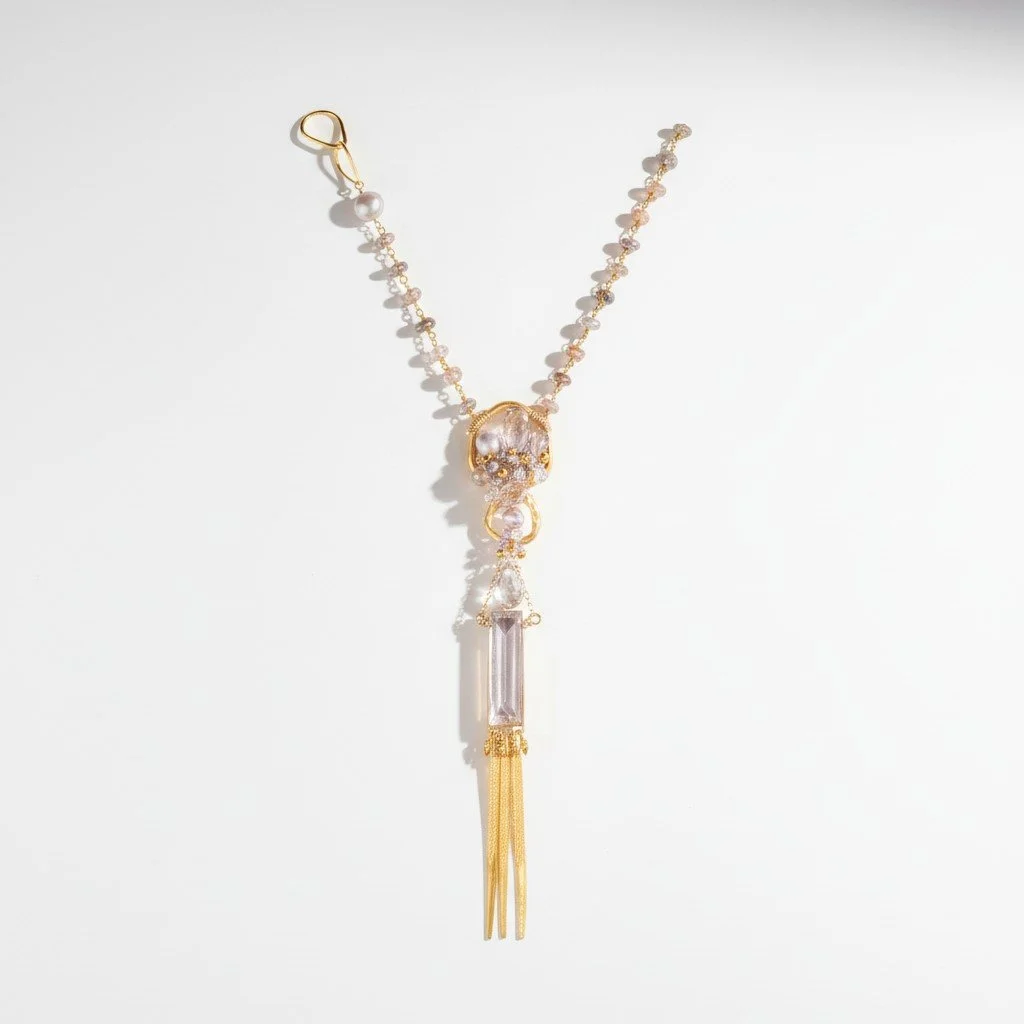
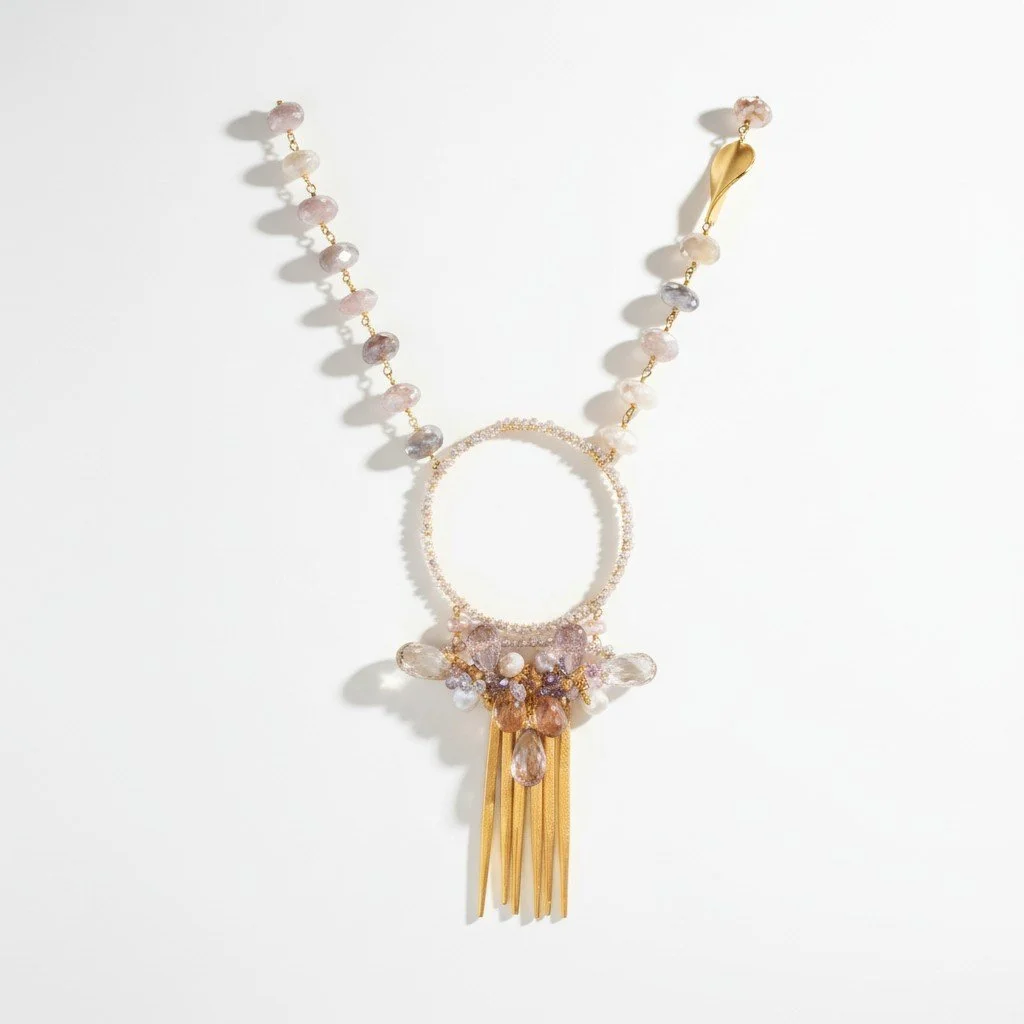
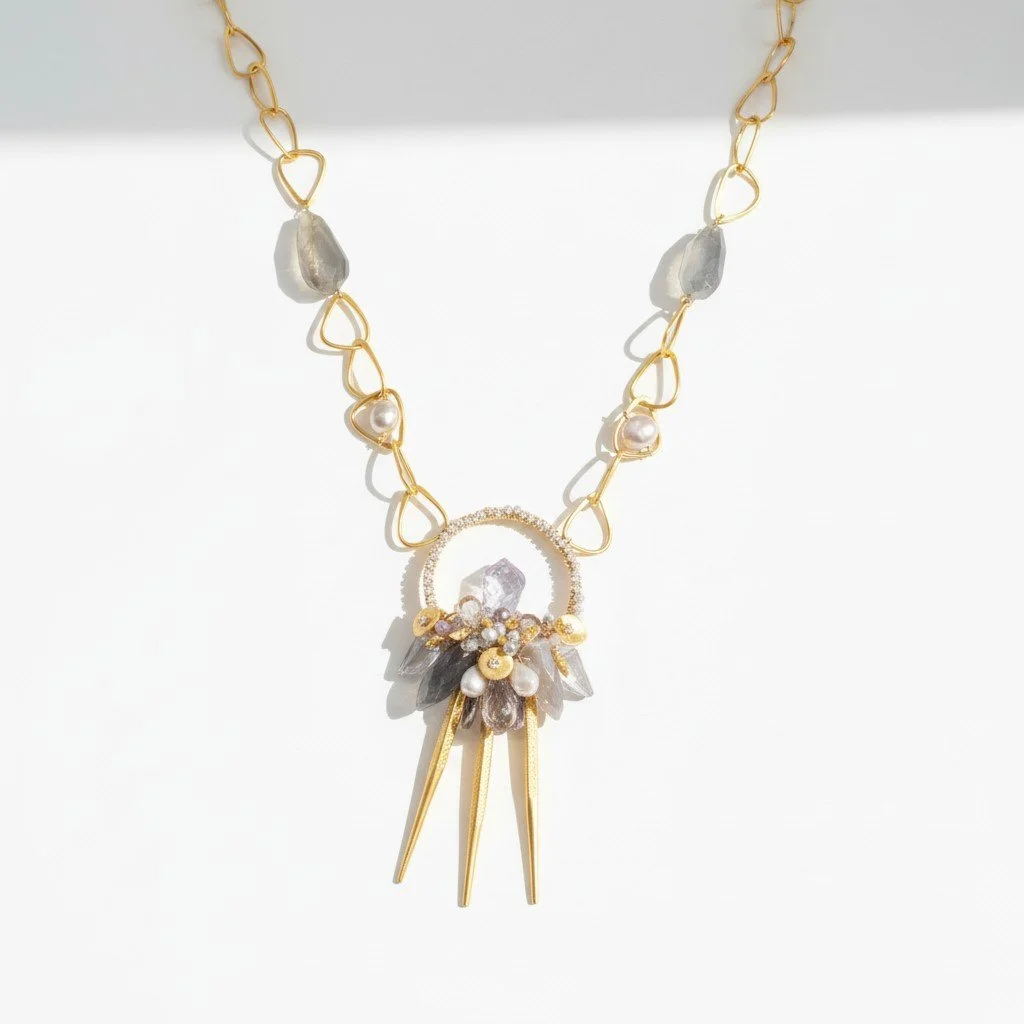
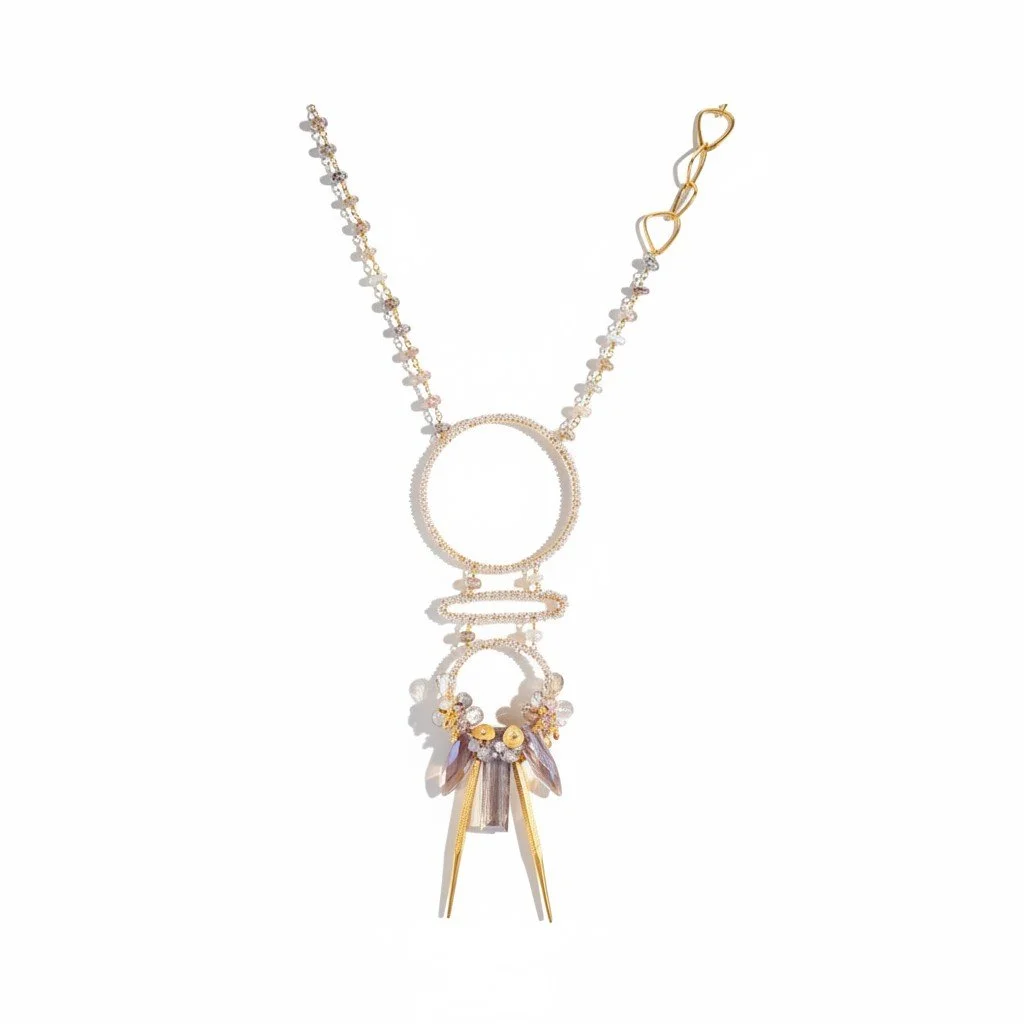
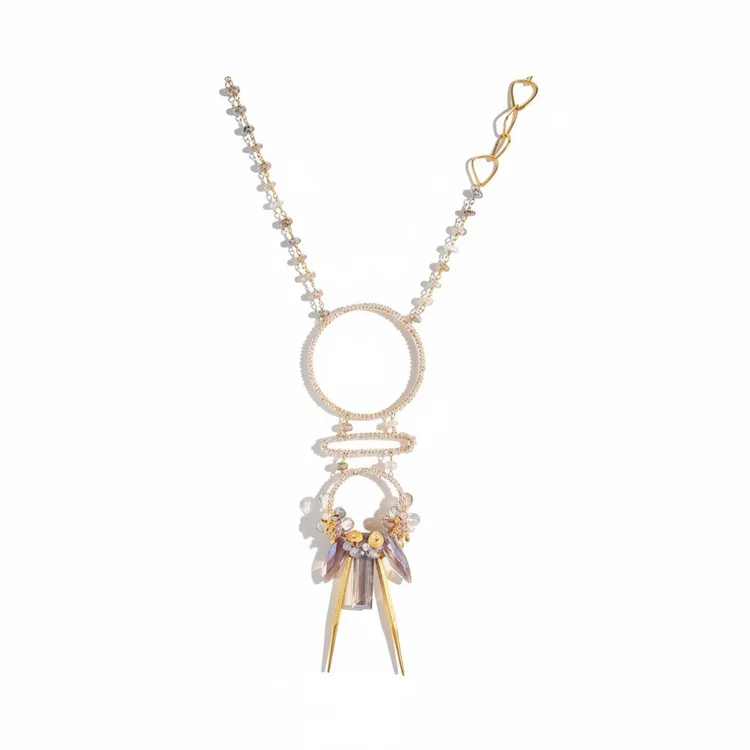
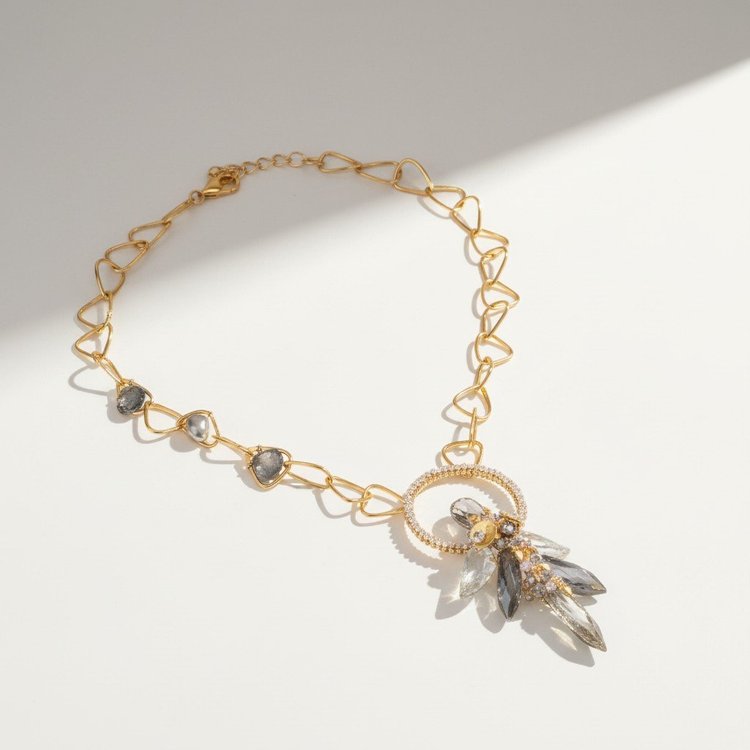
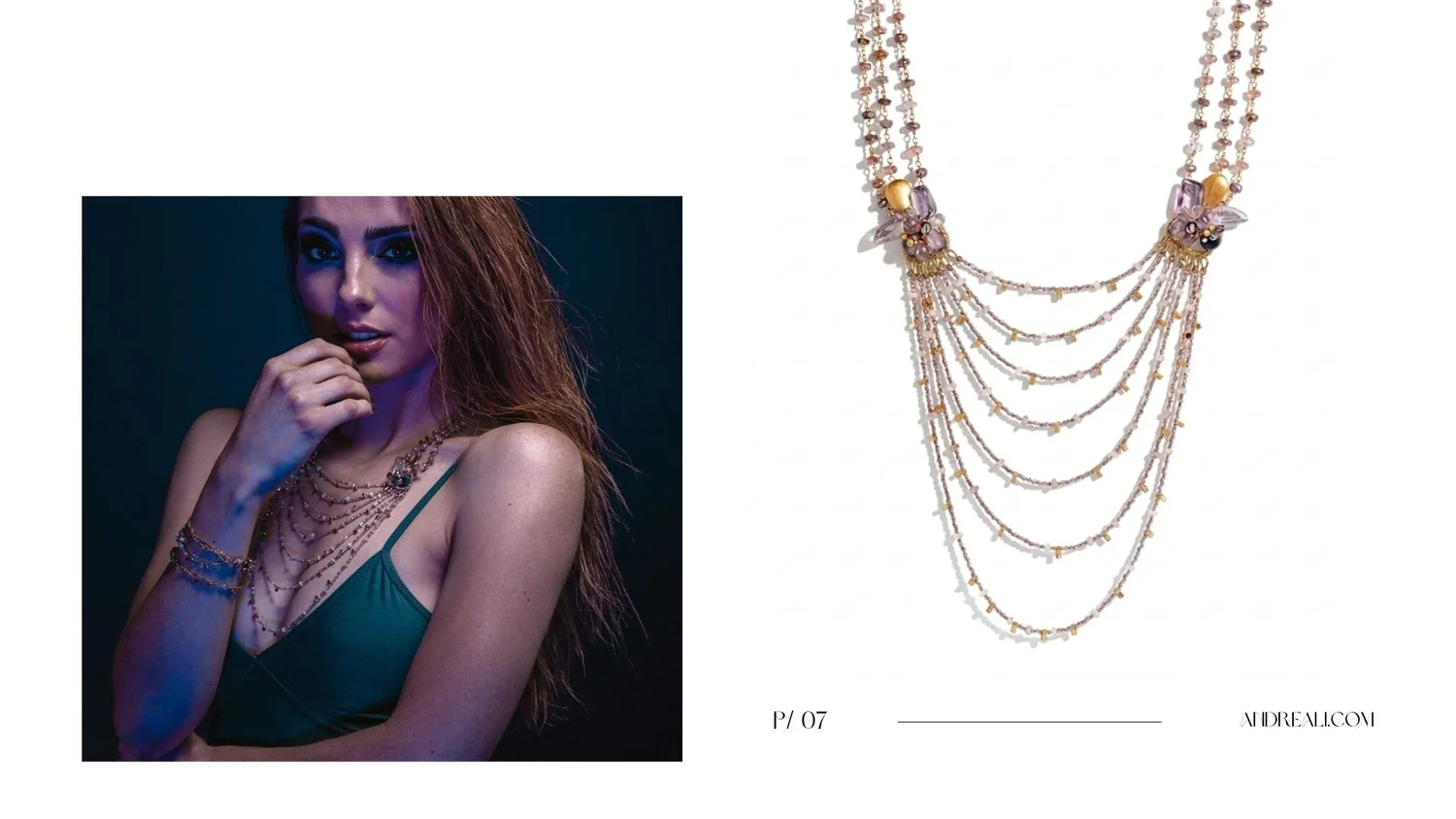
The Kali Long Multi-Circle Gemstone Drop Pendant Necklace is handmade by Andrea Li in her Denver studio, and it is built for someone who wants a necklace that does two things at once: drapes quietly and stops a room.
The chain is 24k gold vermeil over sterling silver in a triangle-link pattern with moonstone rondelle accents threaded through the links. From it hang two circles. The smaller is 1 1/2 inches, gemstone-encrusted with moonstone, sapphire, moss amethyst, mystic quartz, and pearl, with 24k vermeil accent details and mystic labradorite rondelles ringing the setting. The larger is 2 inches across, its full edge wrapped in mystic labradorites. The clasp is 24k gold vermeil over sterling silver, and the wire on the circles is 14K gold-filled. Total pendant length from the top of the chain to the bottom of the large circle is 6 1/4 inches. At 41 inches total, the necklace settles right below the belly button -- the kind of length that layers well over a turtleneck and looks just as right with an open neckline.
Each circle is assembled cold. Every stone is wire-wrapped and set by hand -- no casting, no glue, no heat near the gems. That process is what lets the moonstone rondelles in the chain move independently, each one catching light from a slightly different angle as the necklace shifts. The whole piece is built to have that quality: stones that look like they wandered into an arrangement rather than being locked into one.
One of a kind. When it sells, it is gone. Explore the full Femme Fatale Collection, and see the moonstone guide for more on working with this stone.
• Femme Fatale Collection
• moonstone guide
Andrea Li Designs - Jewelry As Unique As You Are.
Book a private virtual appointment with me - Here
Product Specs:
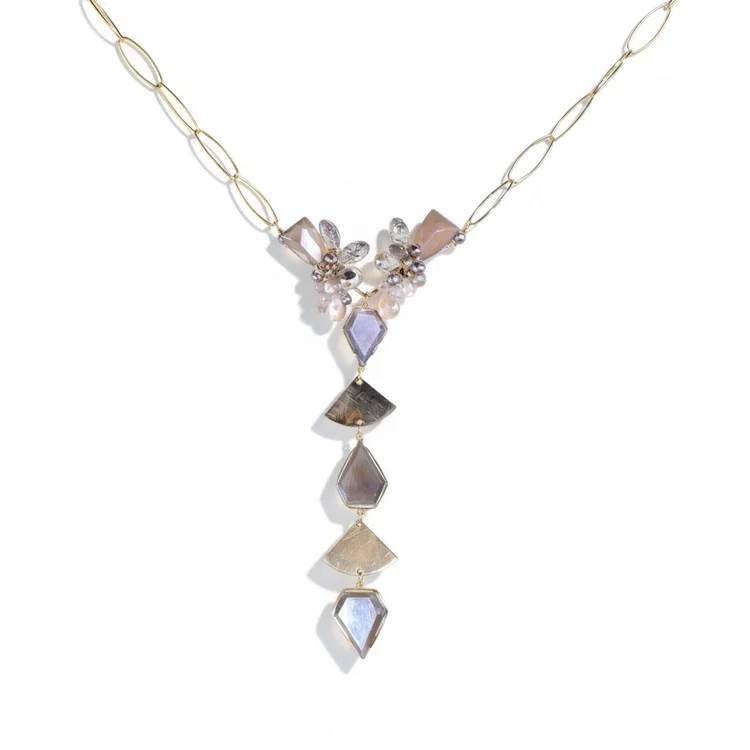
• 24k gold vermeil over sterling silver triangle chain with moonstone rondelles link chain accents.
• 1 1/2’’ gemstone encrusted circle including moonstone, sapphire, moss amethyst, mystic quartz and pearl with 24k vermeil accents and mystic labradorite rondelles.
• Large 2’’ circle edged with mystic labradorites.
• Pendant length 6 1/4’’ from top to bottom.
• Necklace total length 41’’ typically hits right below the belly button.
• 14k gold filled wire
• 24k gold vermeil over sterling clasp