Green Amethyst JewelryAndrea Li Handcrafted Green Amethyst Jewelry
The stone nobody else notices
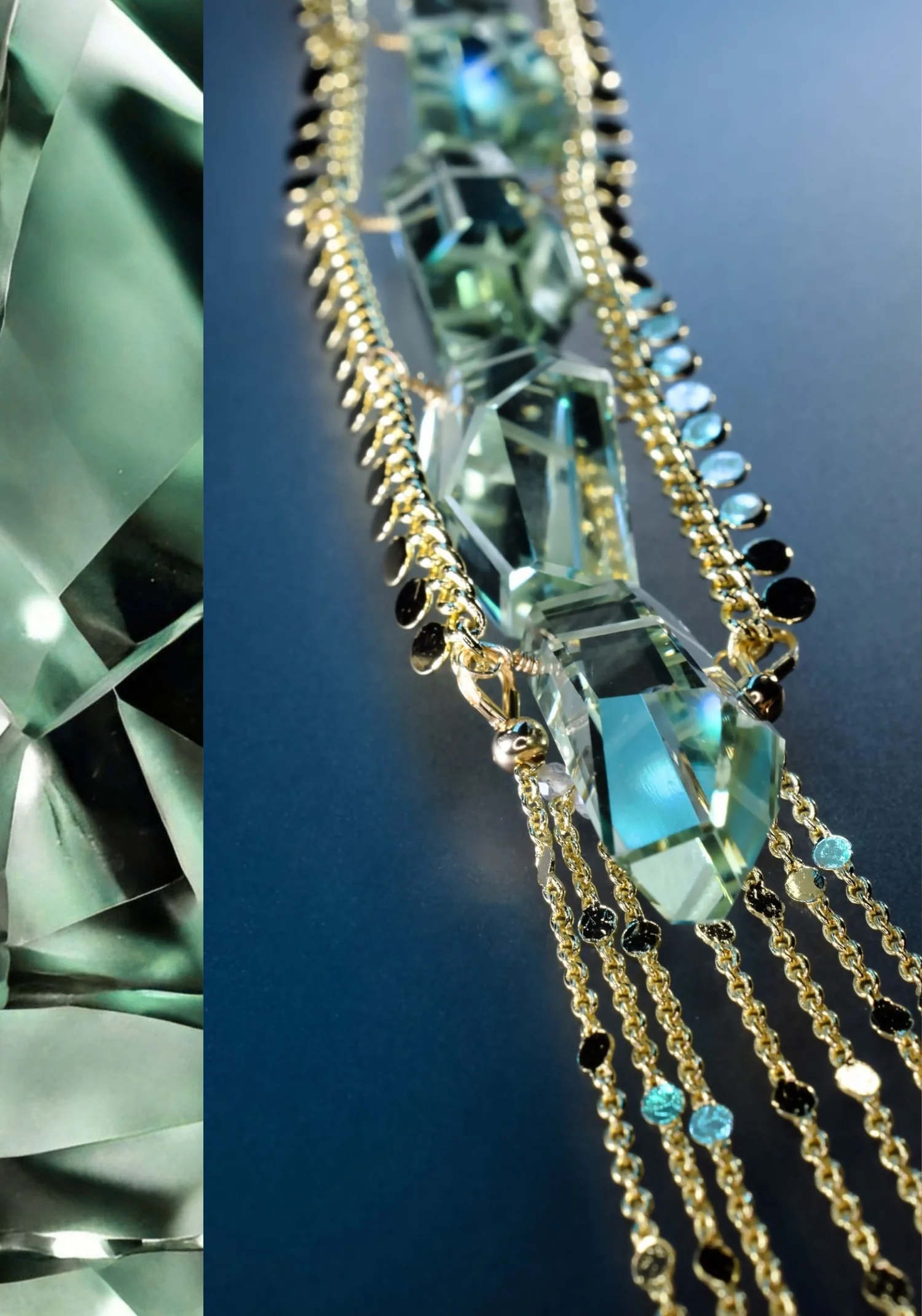
Andrea Li designs one-of-a-kind green amethyst jewelry by hand in her Denver studio, working in 14k gold-filled and 24k gold vermeil. Every piece is built once. When it sells, it's gone.
If you've always been drawn to the stone nobody else notices, the quiet green instead of the obvious purple, you already know why you're here.
Every piece is built once. When it sells, it's gone.
14k gold-filled and 24k gold vermeil.
Green amethyst, also called prasiolite.
Interactive guide · Tap a chapter
Who Does Green Amethyst Flatter?
1. Your skin tone
Pick the closest match.
Fair & Light
Prasiolite's gentle green adds warmth without overpowering. The stone's transparency catches light in a way that feels fresh and delicate against porcelain skin.
Medium & Olive
This is green amethyst's sweet spot. The sage-green harmonizes with olive undertones instead of competing: it looks like it was always meant to be there.
Warm & Golden
Set in 14k gold-filled, green amethyst against warm skin creates a rich earth-tone palette. The stone's depth intensifies, reading more olive than sage.
Deep & Rich
Green amethyst glows against deep skin: the stone's internal light becomes more visible, more alive. The contrast is quiet but unmistakable.
2. Your metal
Pick a skin tone and a metal to see your match
That said, gold is my go-to because it makes the green absolutely glow.
When to Give Green Amethyst
February Birthday (The Unexpected One)
Everyone expects purple amethyst for February. Green amethyst says "I know you well enough to know you'd want the one nobody else thinks of." That's a more meaningful gift than the expected choice.
Anniversary
Prasiolite at Mohs 7 is durable enough for daily wear. A one-of-a-kind green amethyst piece marks a year in a way that mass-produced jewelry never could, because there's literally only one.
The Nature Lover
Green amethyst's color begins in the earth: iron-bearing amethyst, transformed by heat, rarely deep underground and most often through careful treatment. For someone who draws energy from the natural world, this stone carries that story.
Just Because
The most memorable gifts have no occasion. A handcrafted prasiolite piece from a one-woman Denver studio carries a story the recipient gets to tell: who made it, where it came from, and why there's only one.
New Beginning
Graduation, new job, a fresh start. By tradition, green amethyst is associated with clarity and transformation, a stone for someone stepping into a new chapter.
Green Amethyst vs. Similar Stones
| Property | Green Amethyst | Peridot | Emerald |
|---|---|---|---|
| Color | Cool sage-green | Warm yellow-green | Deep vivid green |
| Mineral Family | Quartz | Olivine | Beryl |
| Hardness | 7 Mohs | 6.5–7 Mohs | 7.5–8 Mohs |
| Daily Wear? | Excellent | Good (avoid hard impact) | Good (often included) |
| Clarity | Exceptional transparency | Usually eye-clean | Almost always included |
| Price Range | Moderate | Moderate | High–very high |
| Best For | The person who wants understated sophistication | The person drawn to warm, sunny energy | The person making a statement with color |
| Personality | Quiet depth | Warm optimism | Bold luxury |
Green amethyst's exceptional clarity and transparency is its superpower: the light passes through in a way that emerald's natural inclusions simply don't allow.
How to Wear Green Amethyst
Solo Sculptural Piece
One green amethyst necklace, nothing else at the neckline. The stone's transparency does the work: it catches light differently every time you move. Let it breathe.
Best with: Clean necklines, natural fabrics
Earth Tone Palette
Green amethyst is a natural match for olive, cream, taupe, and warm browns. The stone disappears into the palette in the best way: it feels organic, not accessorized.
Best with: Linen, silk, muted layers
Mixed Green Stones
Layer prasiolite with labradorite, tourmaline, or peridot for a tonal green story. Each stone reads differently but the palette holds together. Andrea Li's cluster designs already do this: the gemstones are chosen to create depth through variation.
Best with: Tonal dressing, monochrome
Gold Contrast
14k gold-filled and green amethyst is a timeless pairing: the warm metal pulls out the stone's earthy undertones. This is the combination that makes people ask "where did you get that?"
Best with: Evening wear, warm lighting
Green Amethyst Jewelry
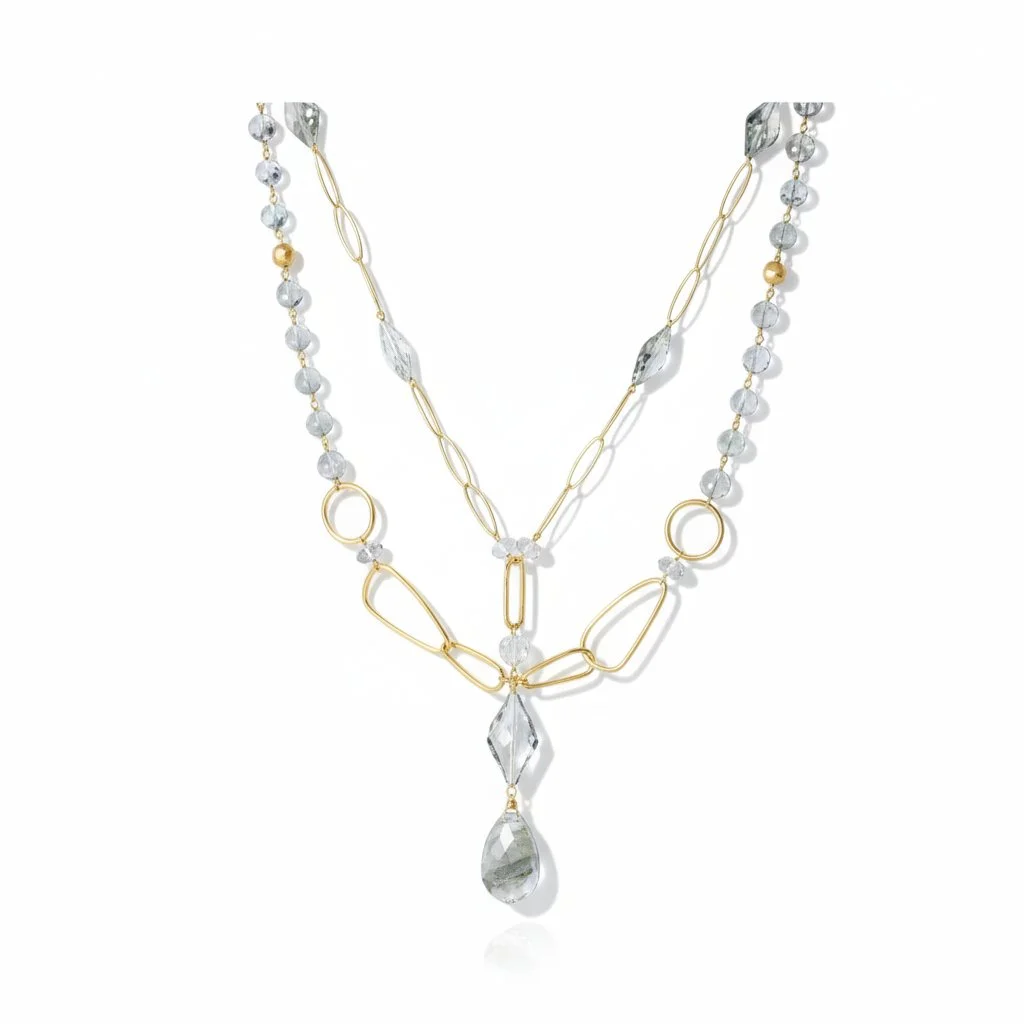
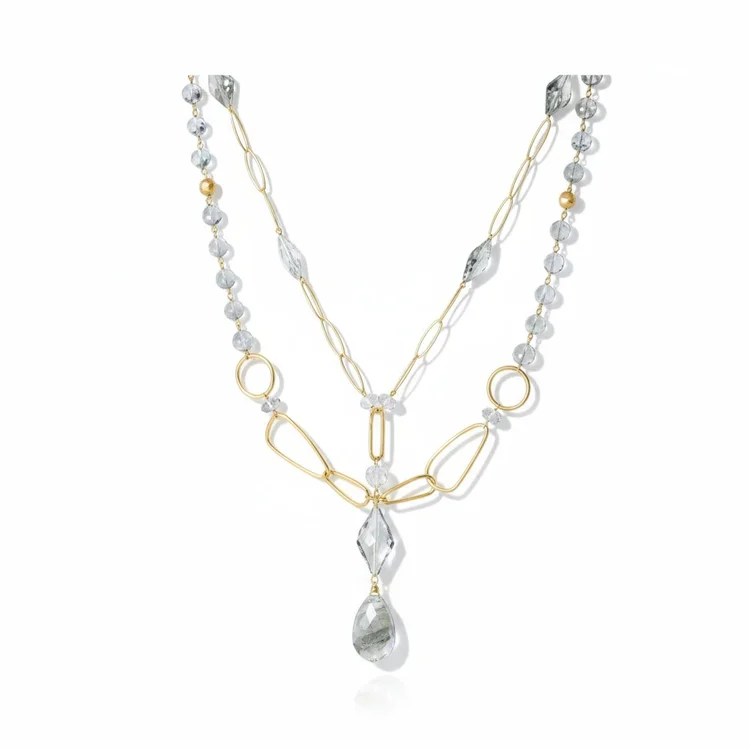
Canyon Double Layer Necklace
$585.00
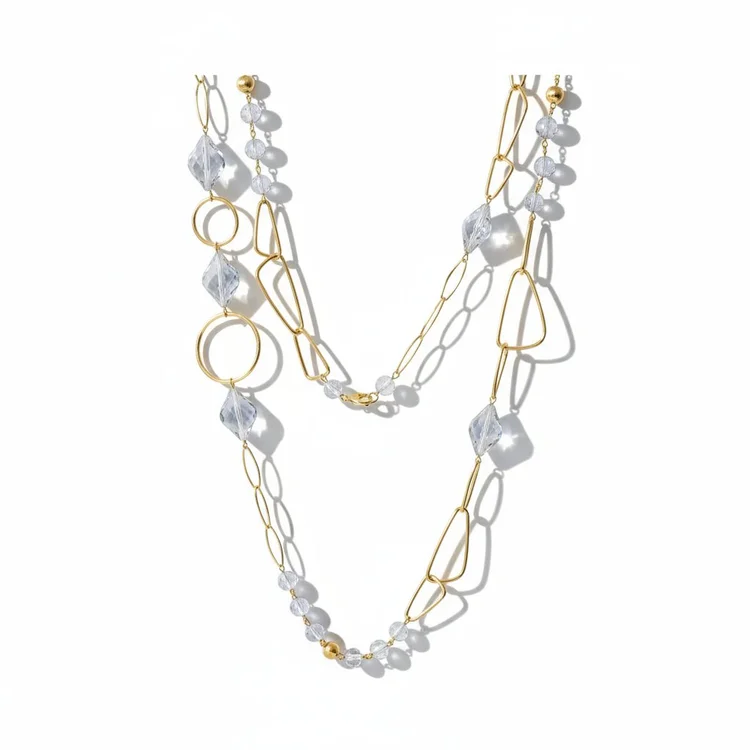
Maricopa Long Layering Necklace
$475.00
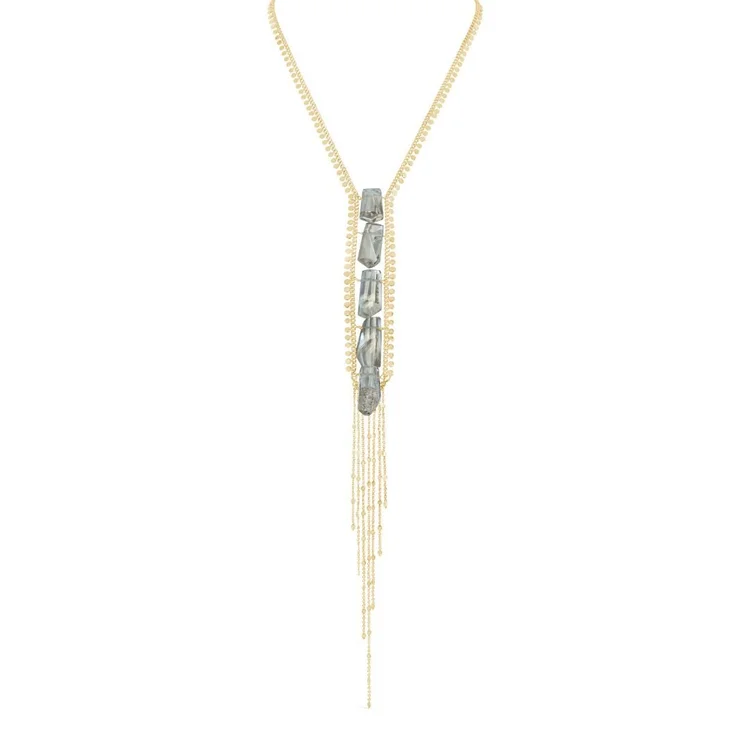
Green Long Gemstone Necklace with Chain Tassel Drop
$475.00
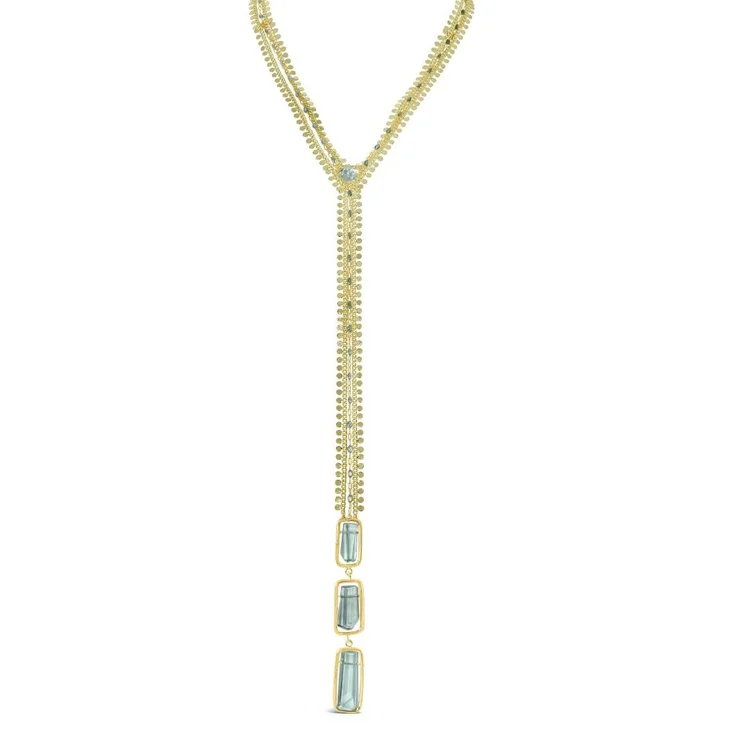
Gold Long Green Gemstone Y Drop Necklace
$780.00
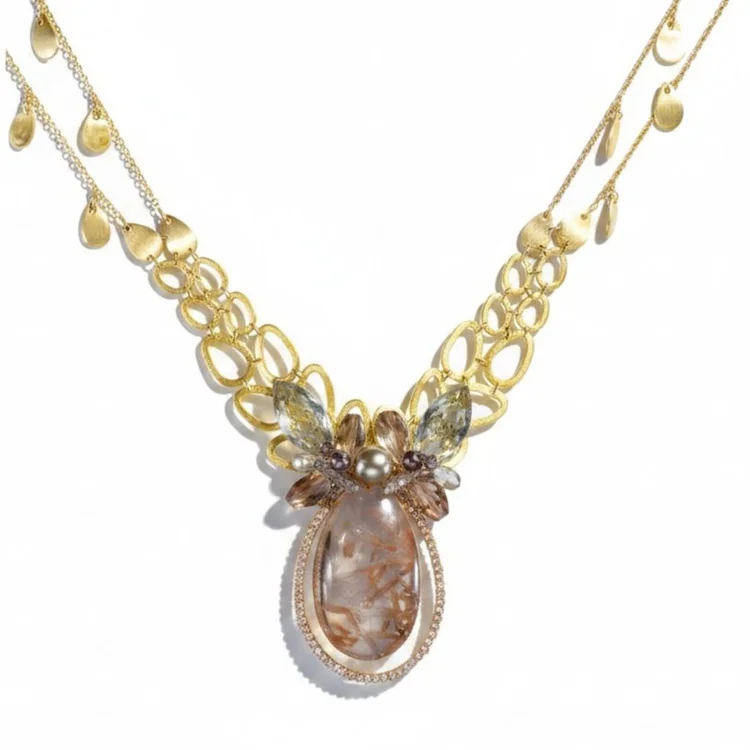 Sold Out
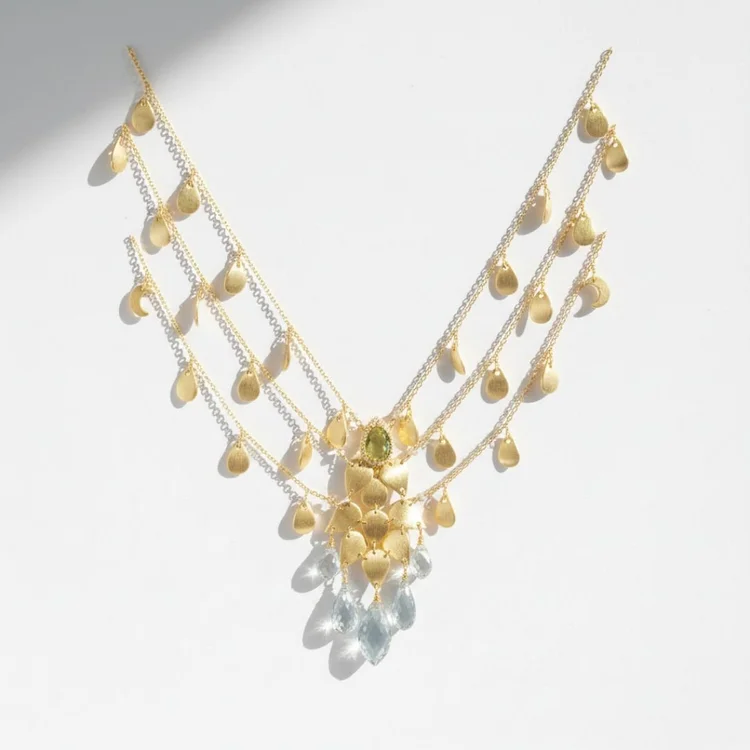
Coachella Rutilated Quartz Pendant Necklace
$660.00
 Sold Out
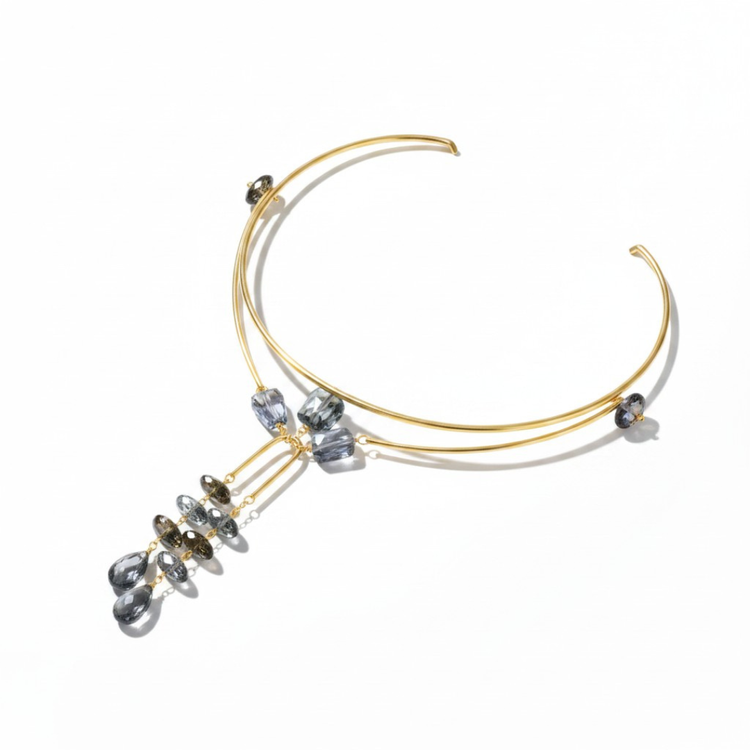
Sandstorm Gold Layered Necklace
$490.00
 Sold Out
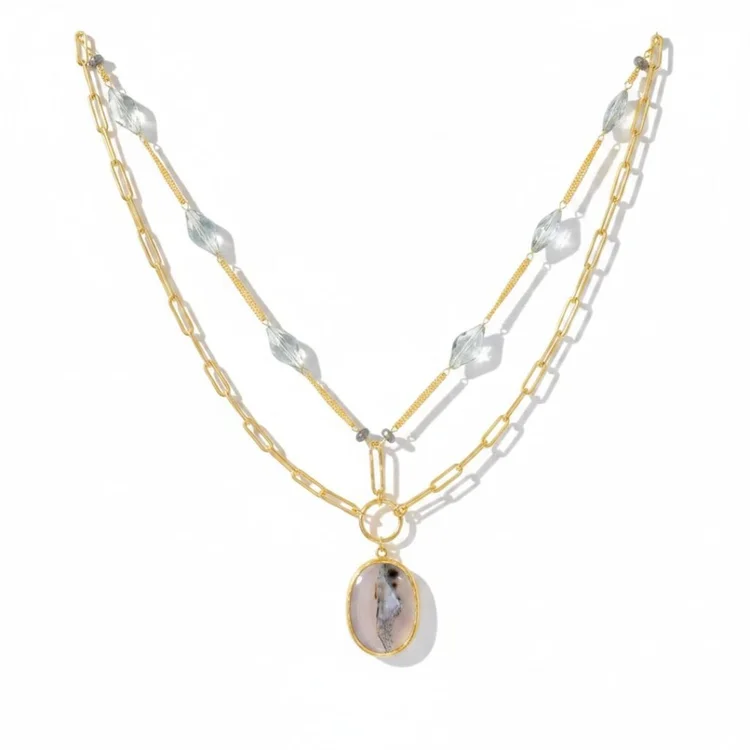
Nobia Gold Choker Necklace
$775.00
 Sold Out
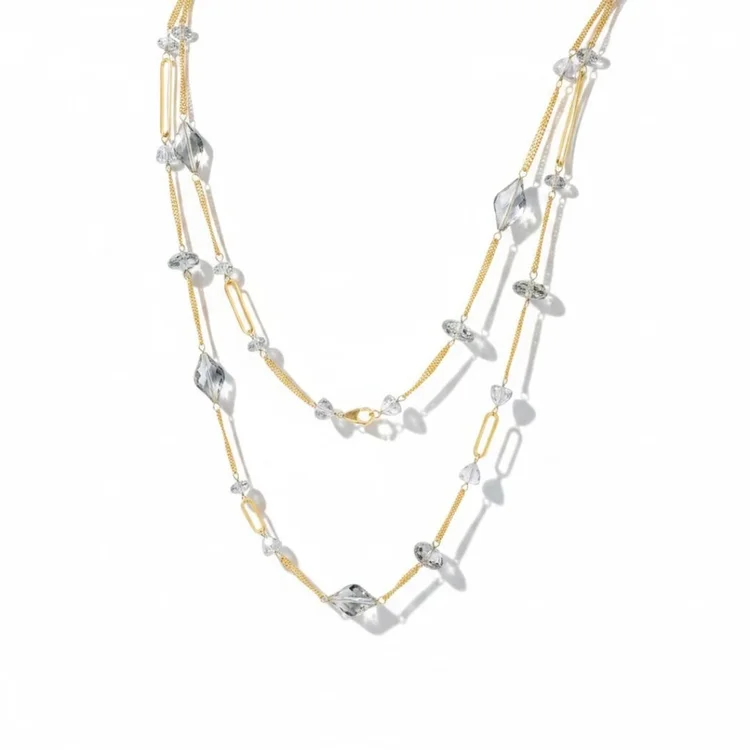
Mojave Double Layered Paper Clip Chain Necklace
$850.00
 Sold Out
Andes Long Layered Necklace
$540.00
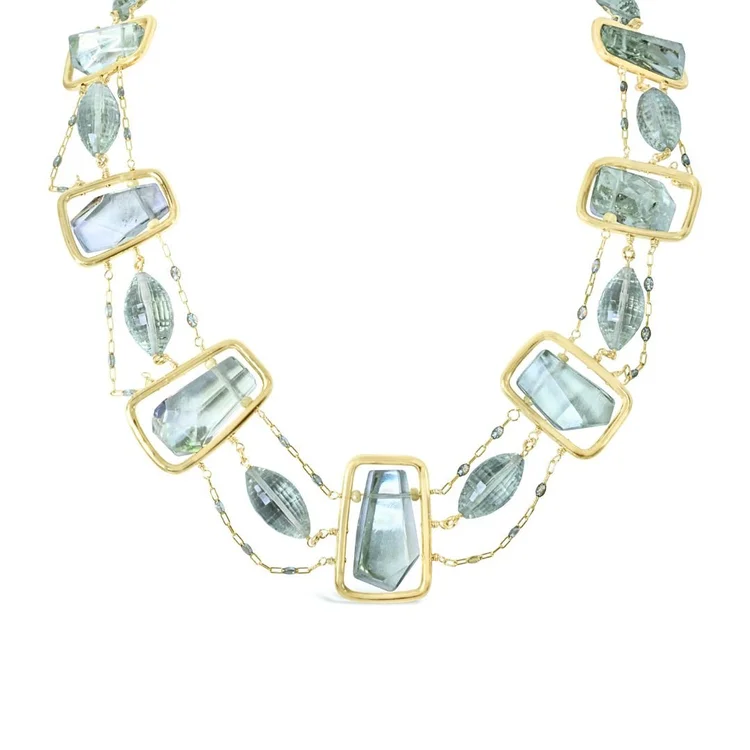 Sold Out
Green Amethyst Square Gemstone Collar Necklace
$2,800.00
Green Amethyst Necklaces
Green amethyst framed, layered and cascading, from hand-framed square stones in a graduated collar to marquis briolettes beneath 24k vermeil teardrops and hand-bailed gemstone chains. Each piece is hand-built by Andrea Li in her Denver studio.
One of a kind · Built once
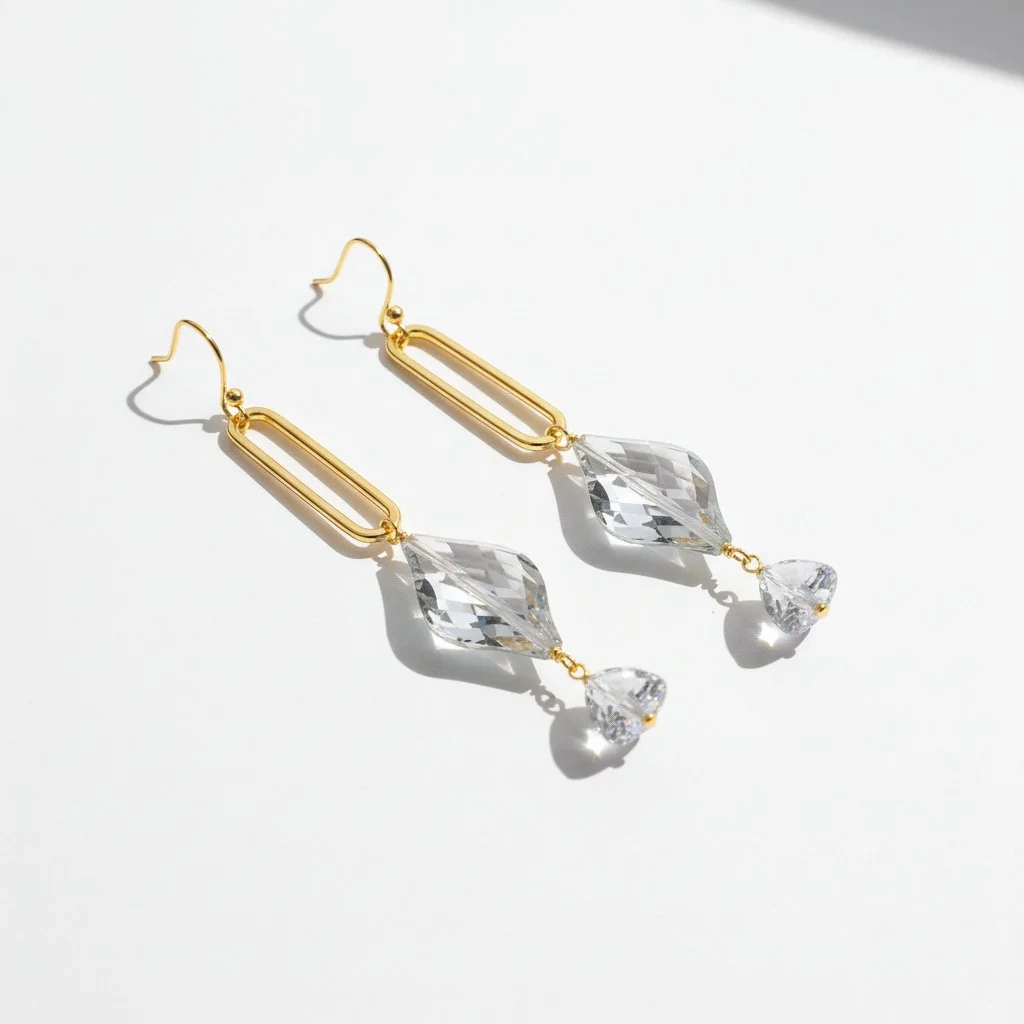
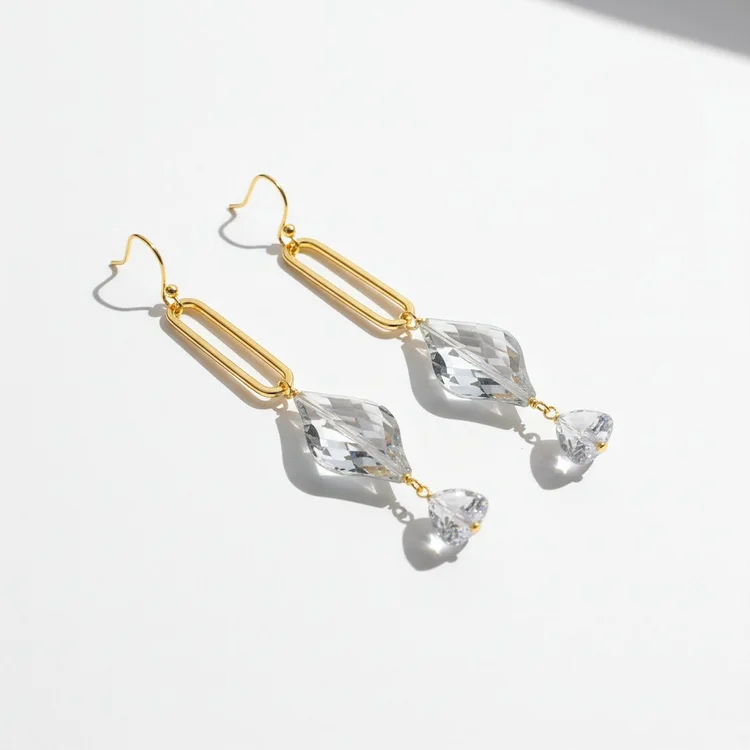
Nafud Dangle Earring with Gemstone Drop
$260.00
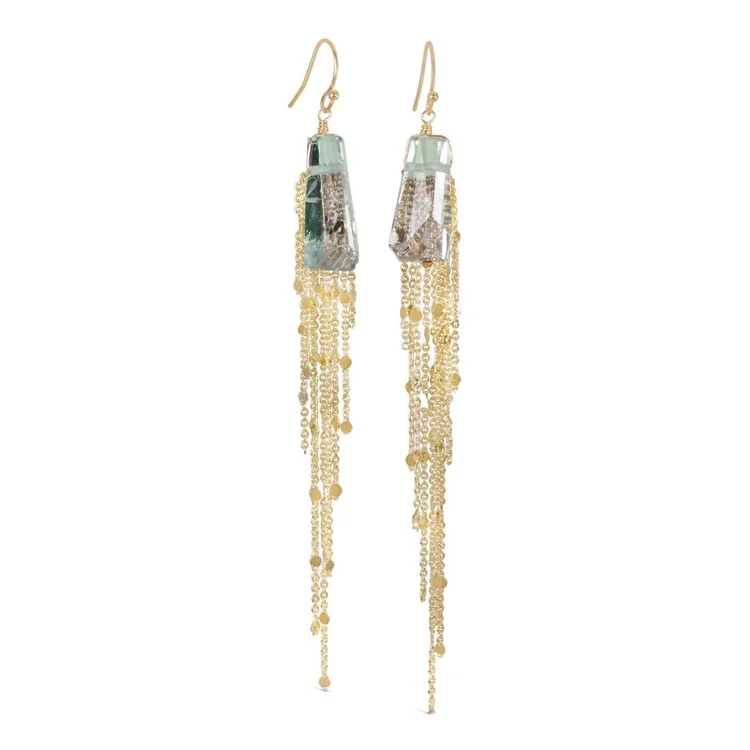
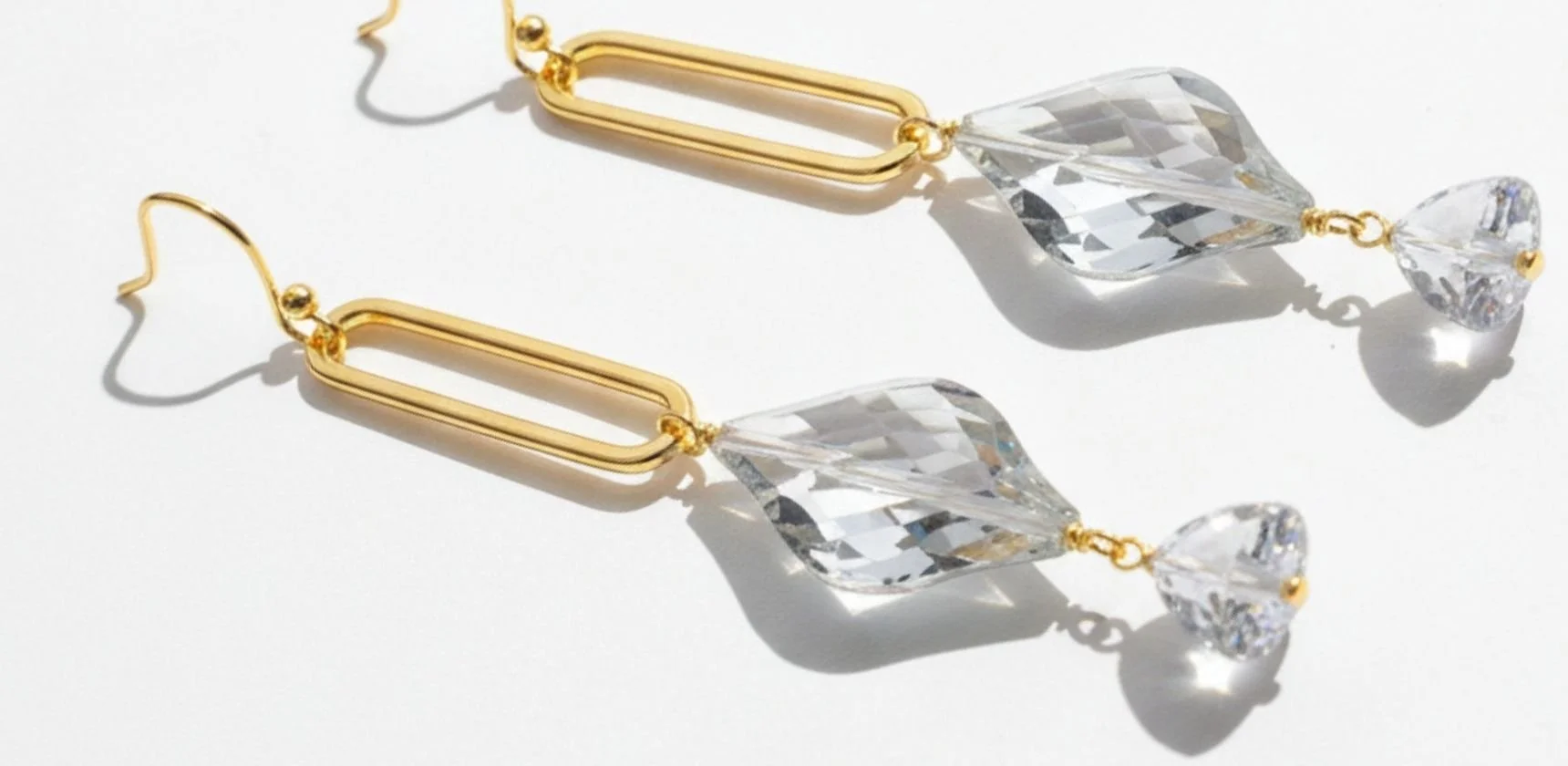
Green Long Gemstone Tassel Earrings
$250.00
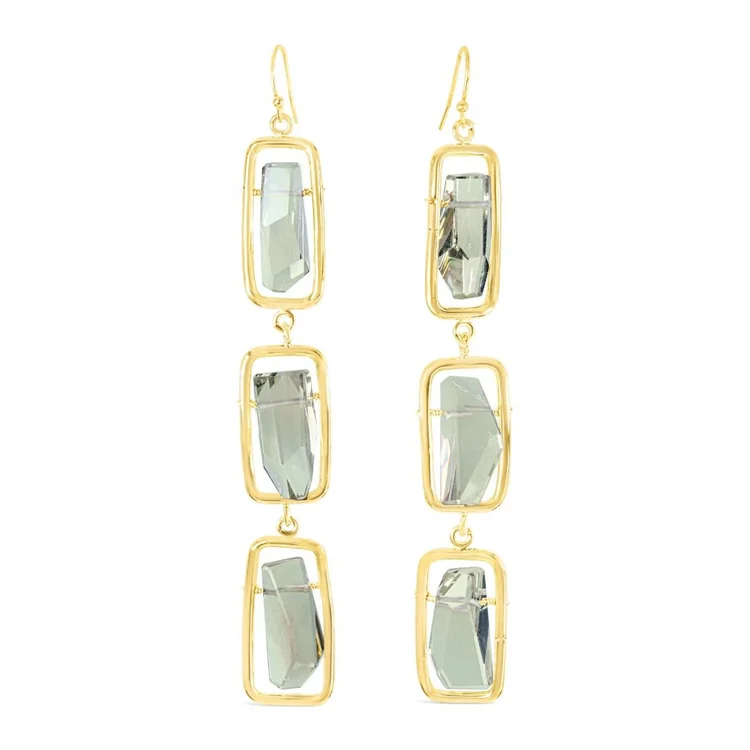
Green Long Square Gemstone Drop Earrings
$465.00
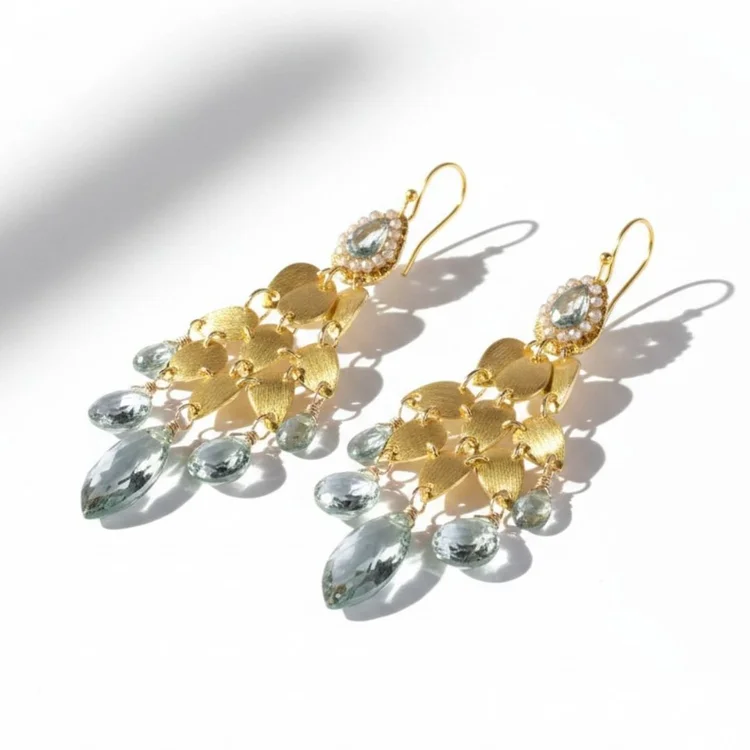 Sold Out
Salton Teardrop Gold Chandelier Earrings
$410.00
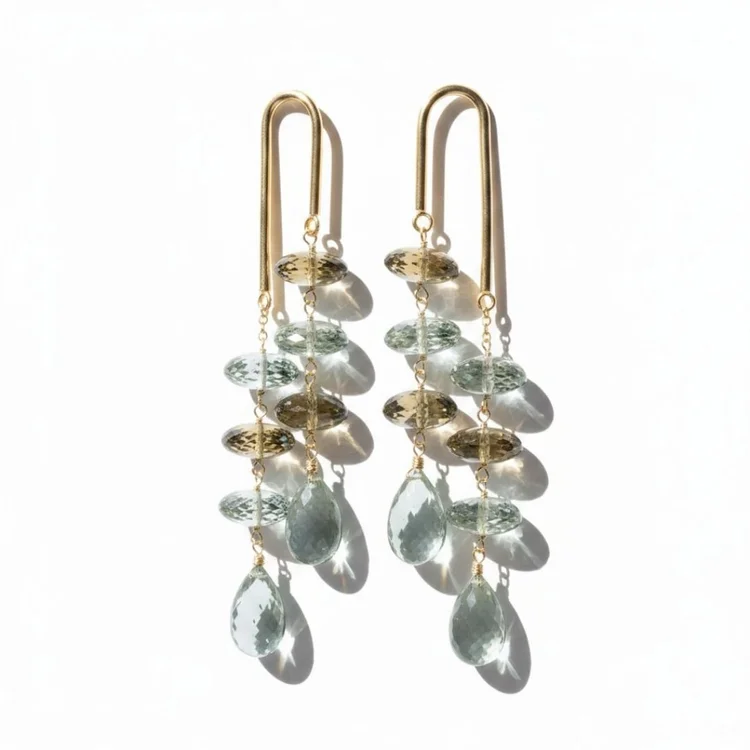 Sold Out
Gibson Multi-Drop Gemstone Earrings
$560.00
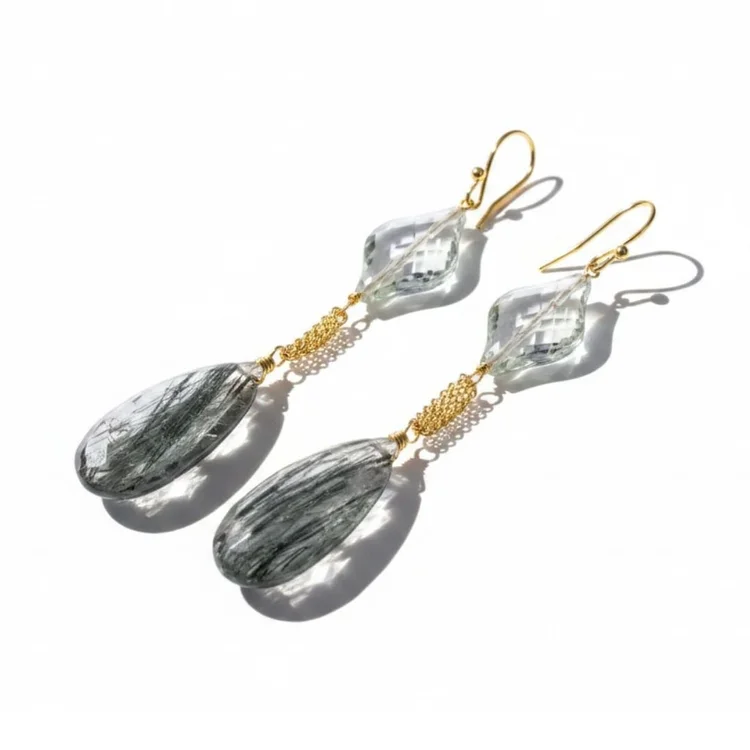 Sold Out
Sahara Drop Earrings
$230.00
 Sold Out
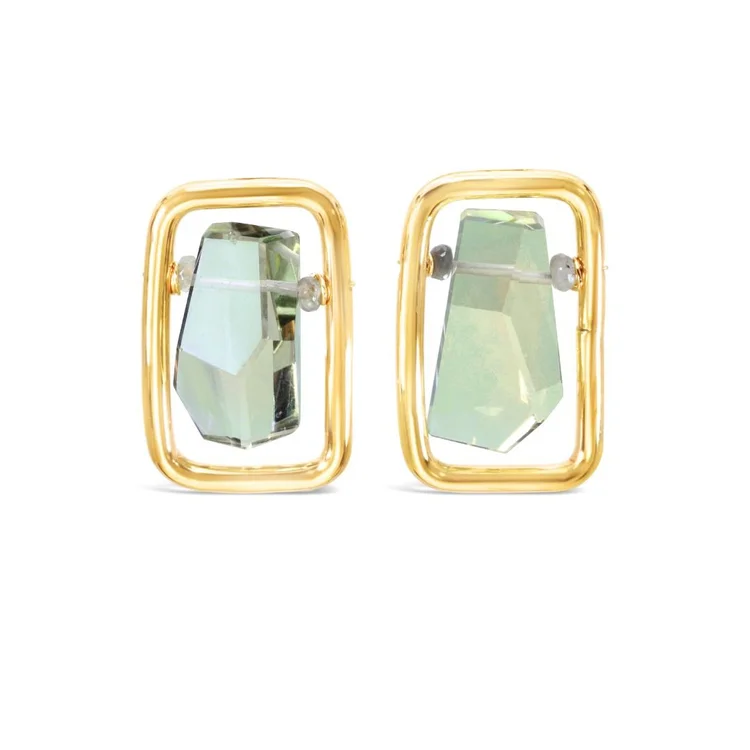
Green Amethyst Square Gemstone Stud Earrings
$400.00
Green Amethyst Earrings
Green amethyst set to move, from minimalist square studs in hand-fabricated frames to faceted drops anchored by cascades of 14k gold-filled sequin chains. Each piece is hand-built by Andrea Li in her Denver studio.
One of a kind · Built once
Green Amethyst Bracelets
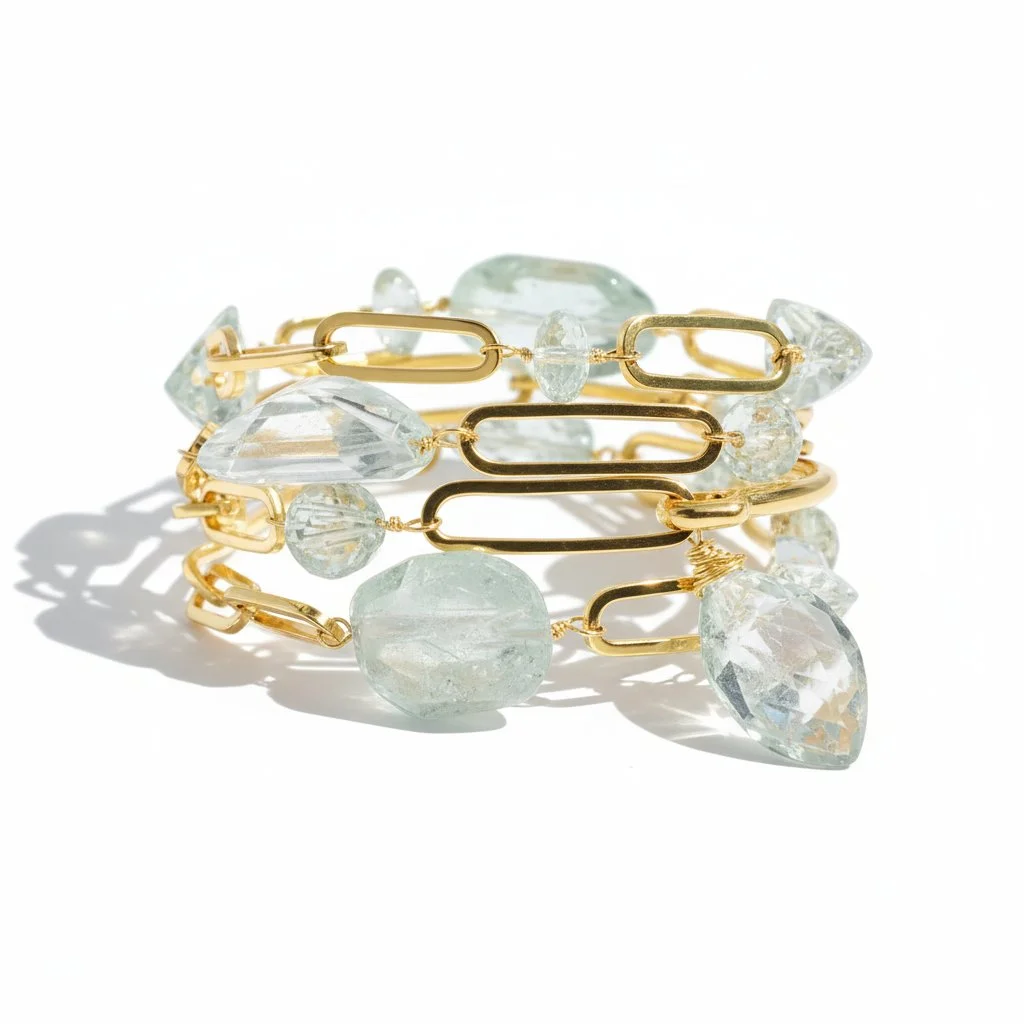
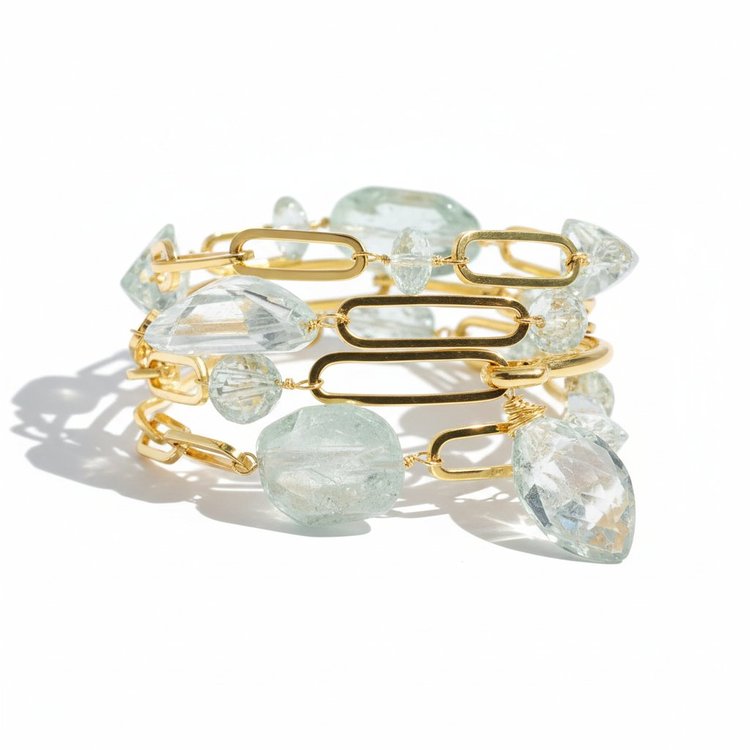
Green amethyst accents on 14k gold-filled hand-fabricated paperclip chains, anchored by a hand-formed bangle, easy to take on and off and wearable as a necklace. Each piece is hand-built by Andrea Li in her Denver studio.
One of a kind · Built once
There's something about green amethyst that stops people mid-sentence. It's not loud. It's not trying to compete with emerald or peridot. It's this quiet, sophisticated green that catches light in a way that makes you look twice, and then you can't stop looking.
- 01
Why I Work with Prasiolite
Prasiolite sits in a color space that almost no other gemstone occupies: cooler than peridot, warmer than green tourmaline, softer than emerald. It pairs beautifully with both gold and silver, and it has enough transparency to let light pass through in a way that feels alive on the skin. Every piece I create with it is one-of-a-kind because no two prasiolite stones carry the same depth of green.
- 02
Amethyst's Green Secret
Most people know amethyst as purple. What they don't know is that when certain iron-bearing amethyst meets intense heat, rarely from volcanic activity, far more often from careful treatment, the crystal transforms from violet to this ethereal green. It's the same mineral, the same structure, but with a completely different personality. That transformation is part of what makes it special.
Caring for Your Green Amethyst
- 01
Avoid prolonged sunlight
Extended direct sun exposure can gradually fade the green color. Store in a jewelry box or pouch when not wearing.
- 02
Clean gently
Warm water, a degreasing dish soap like Dawn, and a soft toothbrush. Never use an ultrasonic cleaner: it is not safe for the stones. Avoid steam too: heat can affect color stability.
- 03
Durable for daily wear
At 7 on the Mohs scale, prasiolite is suitable for everyday jewelry. Harder than most glass and steel.
- 04
Put jewelry on last
Apply perfume, lotion, and hairspray before putting on your piece. Chemicals can dull the stone's surface over time.
Frequently Asked Questions
About Green Amethyst & Prasiolite Jewelry
01Is green amethyst the same as prasiolite?
Yes. Prasiolite is the gemological name for green amethyst: a green quartz that begins as purple amethyst. When certain iron-bearing amethyst is heated to around 400 to 500 degrees Celsius, its color shifts from violet to a serene, minty green. By strict definition amethyst is purple, so gemologists call the green stone prasiolite. I use both names because most people searching for this stone know it as green amethyst.
02Is green amethyst natural or heat treated?
Almost always heat treated. Amethyst can turn green through heat deep in the earth, but natural deposits of prasiolite are exceptionally rare. Most green amethyst on the market today is heat-treated purple amethyst from Brazilian or Uruguayan mines. It is still real quartz; heat only changed its color. So assume any green amethyst you buy, mine included, was heated.
03Will green amethyst fade?
Not from everyday wear. The risk is long, strong light: left in direct sunlight, or under some kinds of artificial light, for long stretches, the green can gradually fade. Heat can affect the color too. Store your pieces in a jewelry box or pouch when you're not wearing them.
04Can I wear green amethyst jewelry every day?
Yes. Prasiolite is quartz, a 7 on the Mohs scale with good toughness, and I've never cracked one at the bench. Put your piece on last, after perfume, lotion and hairspray, and store it apart from harder gems like diamonds or sapphires, which can scratch it. Some of my pieces were made for every day, like the Maricopa long layering necklace and the Nafud dangle earrings.
05Where can I buy handmade prasiolite jewelry?
Right here. I design every green amethyst piece by hand in my Denver studio, and every piece is built once: when it sells, it's gone. The necklaces, pendants, earrings and wrap bracelet are all on this page, and the sold pieces stay up so you can see the range. If the one you wanted has sold, ask me about a custom piece.
06What metal looks best with green amethyst?
Gold is my go-to because it makes the green absolutely glow: the warm yellow gold creates a beautiful contrast that brings out the green's earthy depth. Every green amethyst piece on this page is set in 14k gold-filled, several with 24k gold vermeil details. Rose gold adds a romantic warmth, and sterling silver or white gold lean the stone cooler and more contemporary. There's no wrong answer; it depends on your personal style and skin tone.
07How do I clean green amethyst jewelry?
Warm water, a degreasing dish soap like Dawn, and a soft toothbrush. Never put your pieces in an ultrasonic cleaner: it is not safe for the stones. Skip steam cleaning too. Shine the gold parts with a Sunshine polishing cloth, never the stones.
08Is green amethyst a February birthstone?
Amethyst is February's birthstone, and green amethyst begins as amethyst, so it makes the unexpected February gift: everyone expects purple. Green amethyst itself is not on the official birthstone list. By tradition it is associated with clarity and calm, which is why some people choose it for someone stepping into a new chapter.
Looking for something you don't see here? Every piece is one-of-a-kind: when it's gone, it's gone.
Ask About a Custom Piece →