Labradorite JewelryAndrea Li Handcrafted Labradorite Jewelry
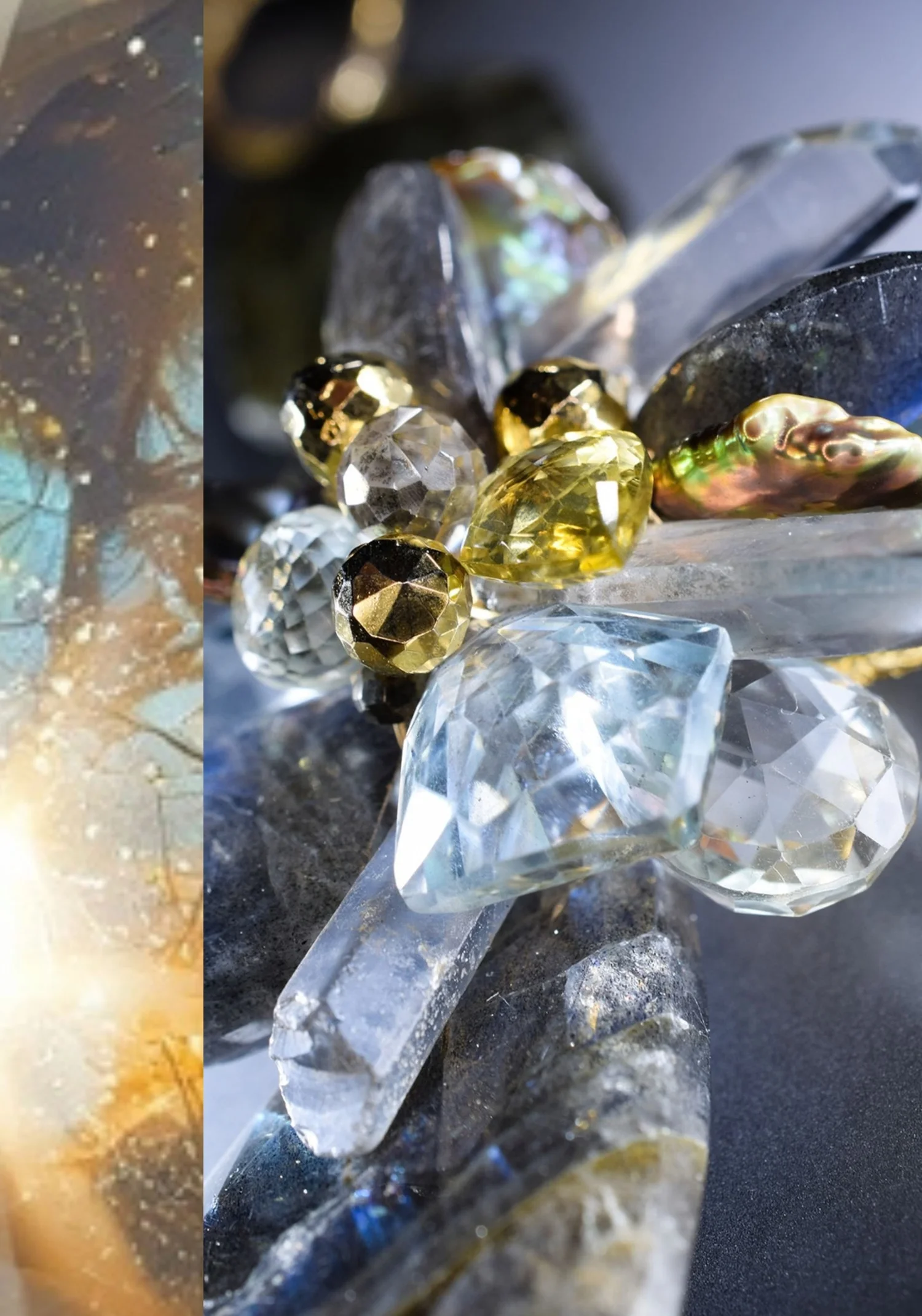
If you've ever watched light move through a stone and felt something shift, labradorite found you, not the other way around.
Andrea Li designs one-of-a-kind Labradorite jewelry by hand in her Denver studio, working in 14k gold-filled, 14k gold, and sterling silver. Every piece is built once. When it sells, it's gone.
Every piece is built once. When it sells, it's gone.
14k gold-filled, 14k gold, and sterling silver.
Labradorite, with vivid labradorescence.
Interactive guide · Tap a chapter
Who Does Labradorite Flatter?
1. Your skin tone
Pick the closest match.
Fair & Light
The stone's moody gray base creates dramatic contrast against fair skin, while the blue flash catches light in a way that draws the eye without overwhelming. Think of it as wearable twilight.
Medium & Olive
Labradorite's blue-green flash harmonizes naturally with olive undertones. The stone looks like it belongs: like it chose you, not the other way around.
Warm & Golden
Against warm skin, labradorite's gold flash becomes the dominant tone. The stone shifts warmer, richer, and the blue appears only when you move. It's a conversation piece that reveals itself slowly.
Deep & Rich
This is where labradorite is at its most electric. The full spectrum of flash (blue, gold, green, sometimes purple) becomes vivid and alive against deep skin. The stone performs.
2. Your metal
Pick a skin tone and a metal to see your match
In my studio, I often pair labradorite with gold because the warmth of the metal makes the blue flash feel even more electric.
When to Give Labradorite
The Person Who Doesn't Wear "Normal" Jewelry
If they've never been drawn to diamonds, if they always notice the weird stone in the case, if they'd rather have something no one can identify on sight: labradorite is their stone.
A Turning Point
New career, big move, coming through something hard. Labradorite is often called the stone of transformation. Whether or not you believe in that, the symbolism carries weight as a gift.
Something Blue (For the Unconventional Bride)
Labradorite's blue flash is a stunning, unexpected "something blue." For the bride who was never going to carry a traditional bouquet. Explore wedding jewelry →
Just Because (The Best Reason)
A one-of-a-kind labradorite piece from a one-woman studio says more than a card. There's literally only one, and you chose it for one person. When it's gone, it's gone.
The Creative
Artists, designers, writers, makers: people who notice color and light. Labradorite's shifting flash is endlessly interesting to anyone who pays attention to how things look. They'll never stop discovering new angles.
Labradorite vs. Similar Stones
| Property | Labradorite | Moonstone | Opal |
|---|---|---|---|
| Color | Gray with blue-gold flash | Milky white with blue sheen | White/dark with rainbow play |
| Optical Effect | Labradorescence (directional flash) | Adularescence (floating glow) | Play of color (spectral fire) |
| Mineral Family | Feldspar (plagioclase) | Feldspar (orthoclase) | Mineraloid (hydrated silica) |
| Hardness | 6–6.5 Mohs | 6–6.5 Mohs | 5.5–6.5 Mohs |
| Daily Wear? | Good (avoid hard impact) | Good (avoid hard impact) | Moderate (more fragile) |
| Price Range | Moderate | Moderate–high (for blue) | Moderate–very high |
| Best For | The person who wants mystery and depth | The person drawn to ethereal glow | The person who wants maximum spectral fire |
| Personality | Moody magic | Soft luminescence | Kaleidoscope drama |
Labradorite and moonstone are actually cousins: both feldspar minerals. The difference is in how light moves through them: labradorite flashes, moonstone glows.
How to Wear Labradorite
Dark Palette, Bright Flash
Black, charcoal, navy, deep plum: dark backgrounds make labradorite's flash pop. The stone looks like captured lightning against a storm cloud. This is the most dramatic pairing.
Best with: All black, dark denim, evening wear
Neutral Base, Let It Lead
Cream, gray, taupe, stone. Neutral palettes let the stone's color-shift become the focal point without competition. The flash does the talking.
Best with: Cashmere, linen, minimal layers
Mixed Metals
Labradorite is one of the rare stones that works equally well in gold and silver, because it already contains both tones in its flash. Don't overthink the metal matching. The stone handles it.
Best with: Layered bracelets, stacked rings
Statement Solo
One large labradorite piece, nothing else competing. Andrea Li's sculptural designs are built for this: a single necklace that changes color as you turn. It's the piece people can't stop watching.
Best with: Simple neckline, hair pulled back
Labradorite Jewelry
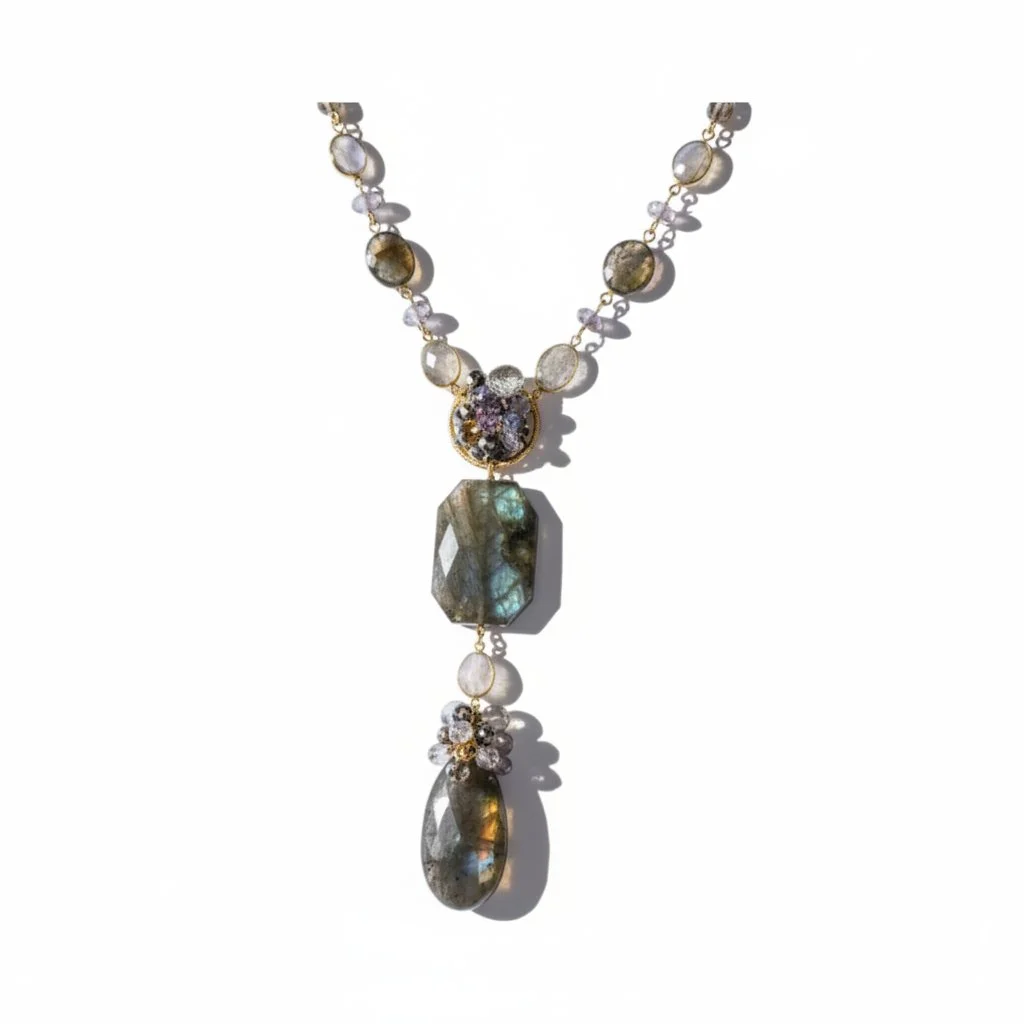
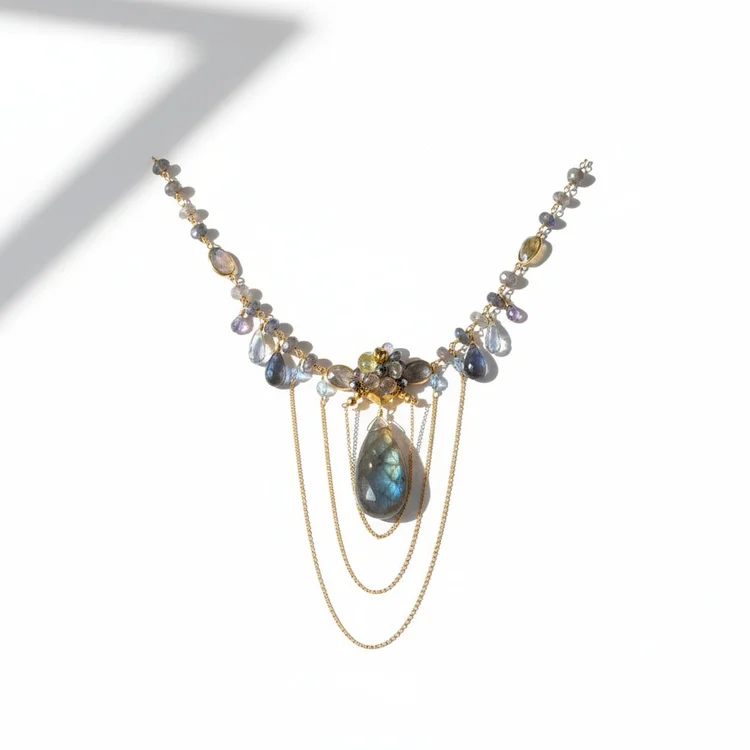
Long Labradorite and Gemstone Necklace
$665.00
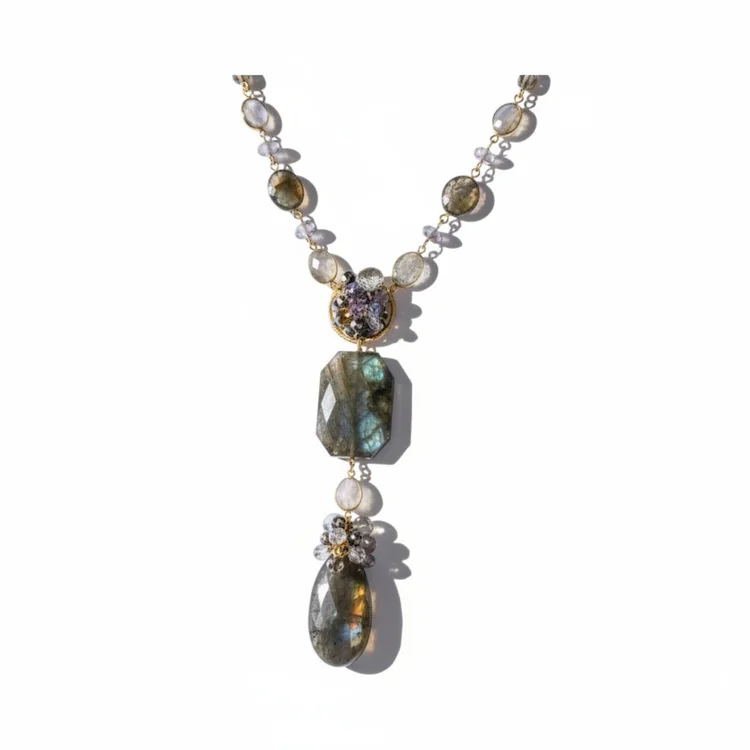
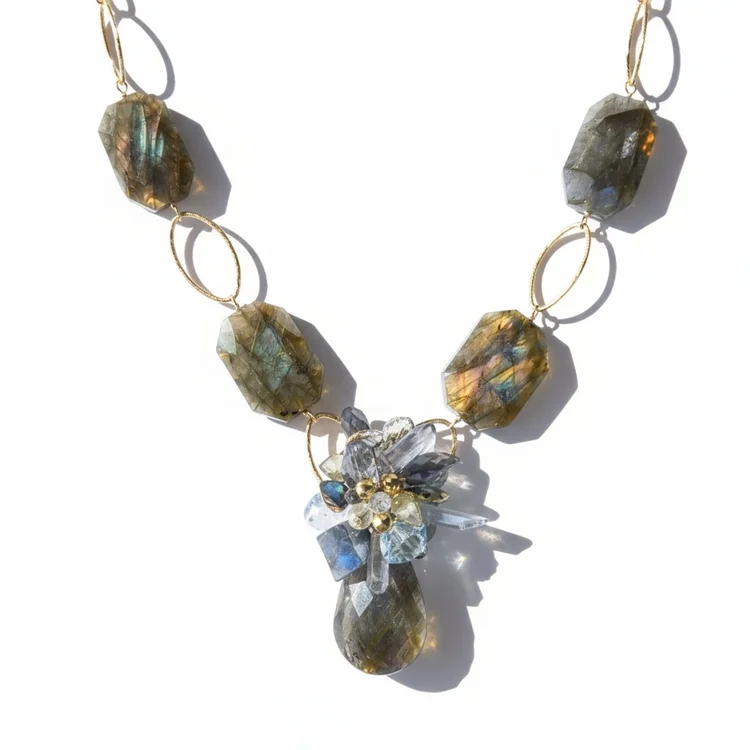
Labradorite Drop Pendant Necklace with Gemstones
$450.00
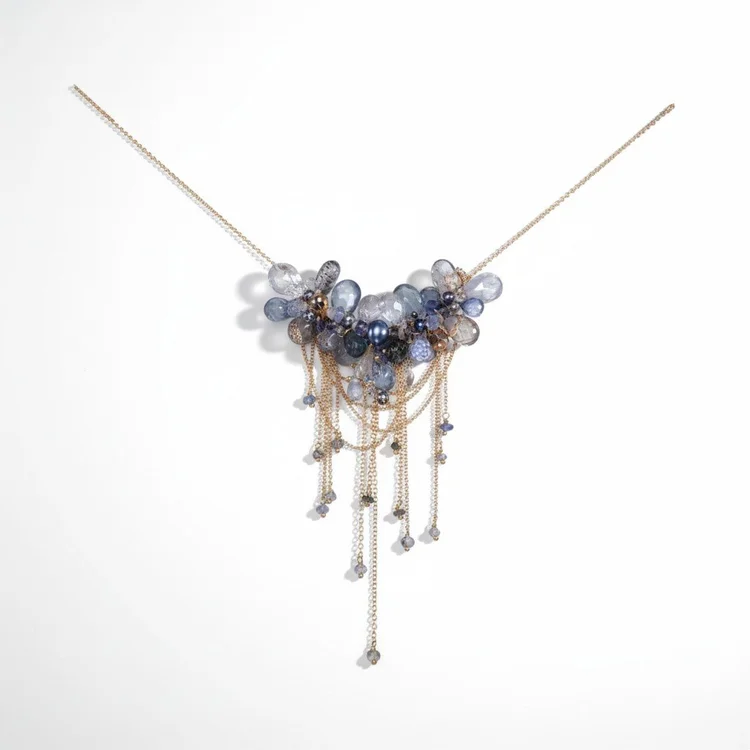
Labradorite and Gemstone Statement Necklace
$475.00
 Sold Out
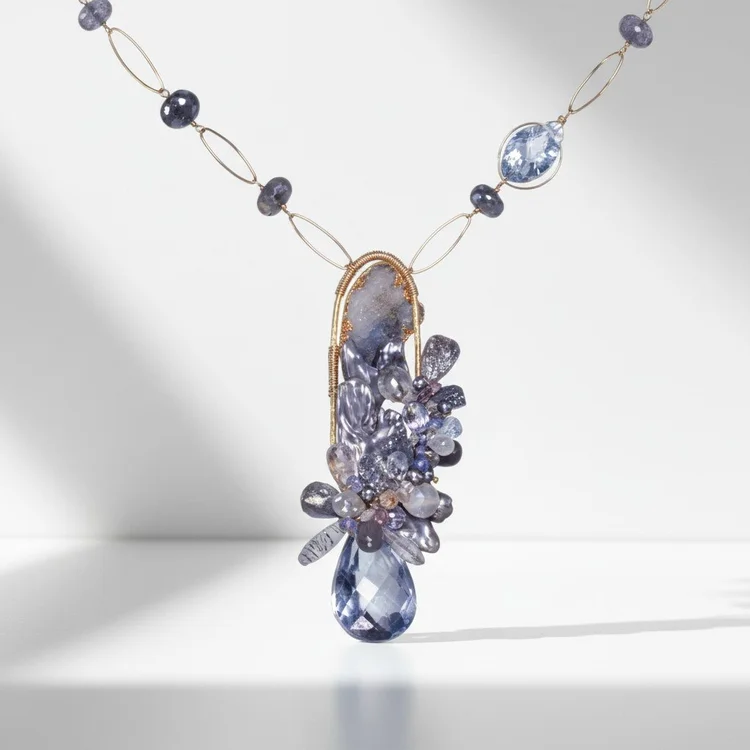
Satellites Gemstone Multidrop Necklace
$585.00
 Sold Out
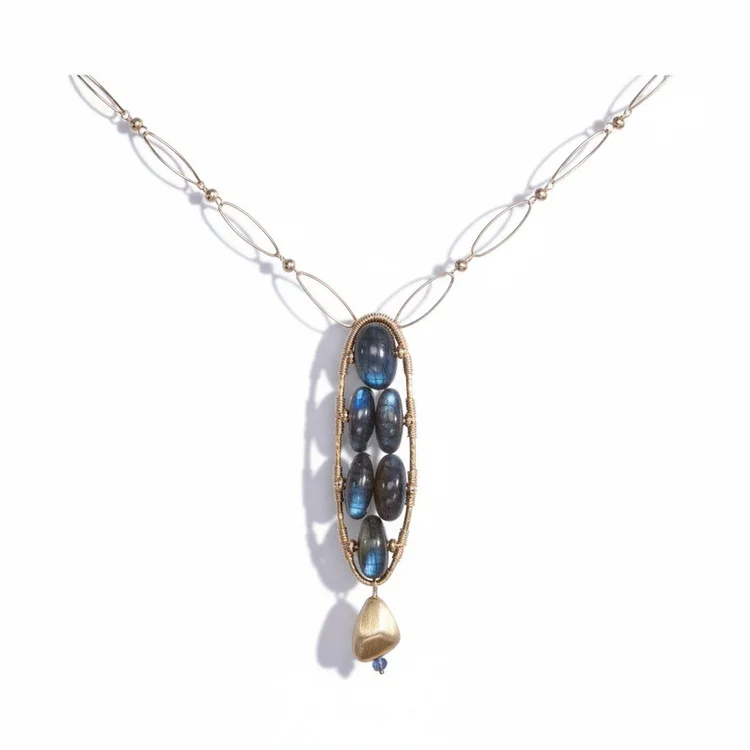
Droplet Nebula Gemstone Necklace
$720.00
 Sold Out
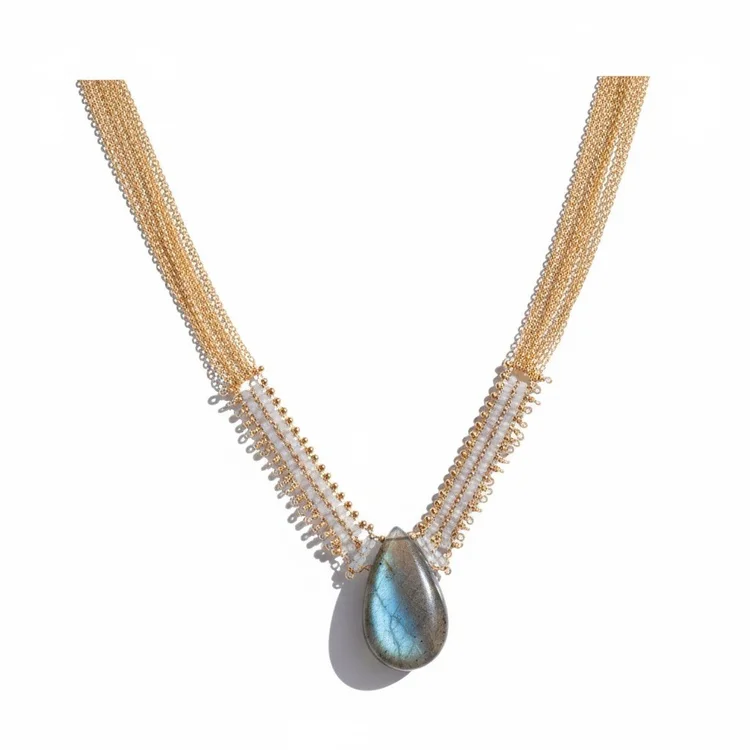
Oculus Galaxy Labradorite Necklace
$380.00
 Sold Out
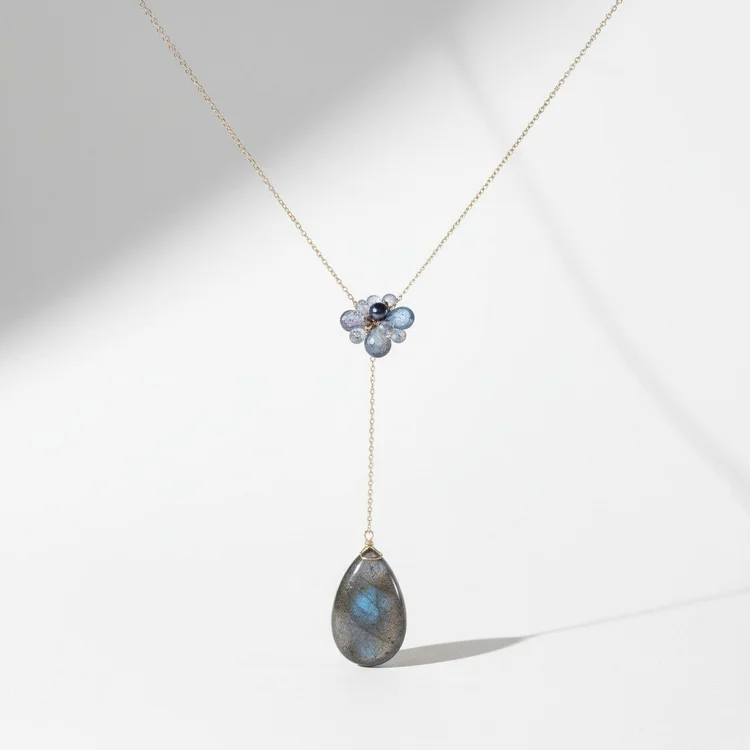
Omega Alcyoneus Labradorite Necklace
$485.00
 Sold Out
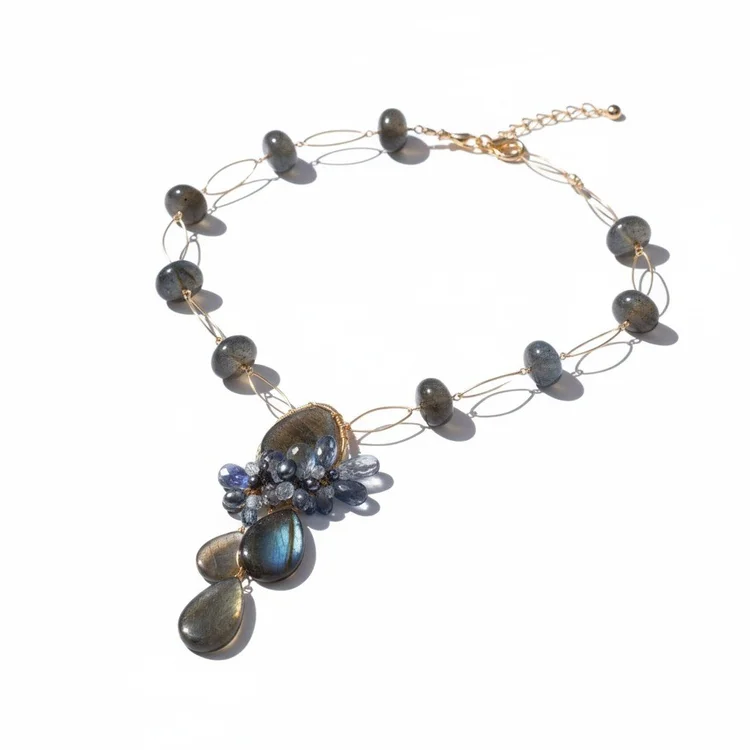
Achelois Cloud Gemstone Necklace
$290.00
 Sold Out
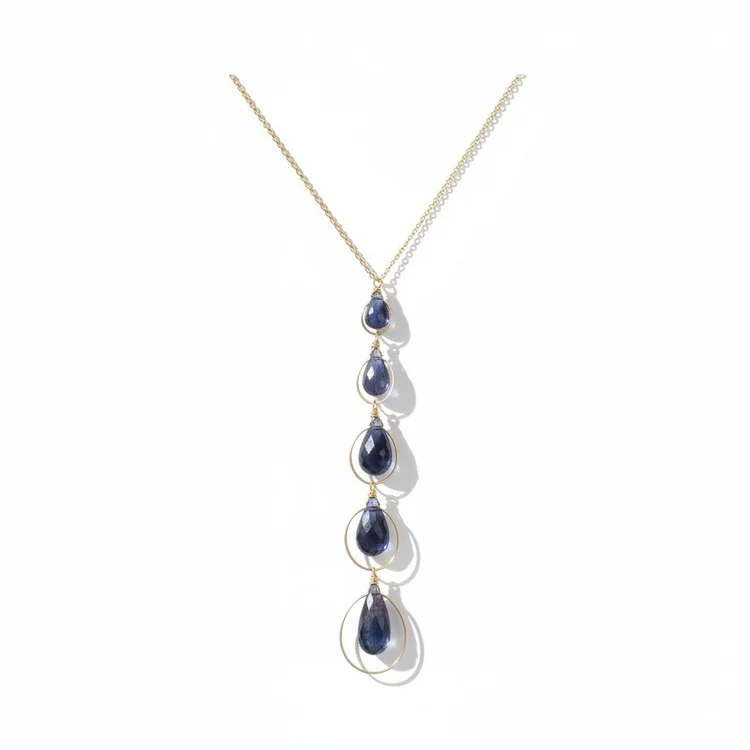
Exploding Cloud Gemstone Necklace
$790.00
 Sold Out
Draco Adastreia Labradorite Necklace
$175.00
 Sold Out
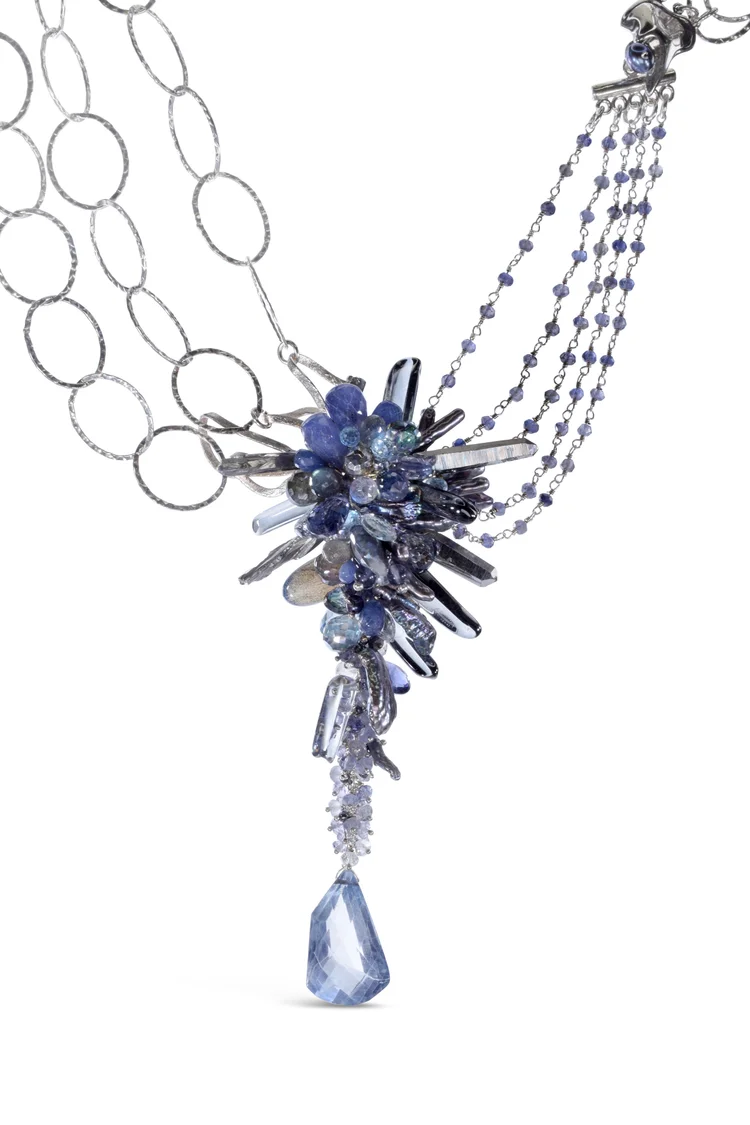
Iolite Ombre Gemstone Cluster Necklace
$760.00
Labradorite Necklaces
Labradorite drops, clusters and multi-chain statements, each a collaboration between the stone and the light in whatever room you're standing in. Each piece is handmade by Andrea Li in her Denver studio.
One of a kind · Built once
 Sold Out
 Sold Out
Sagitta Boreas Earrings
$470.00
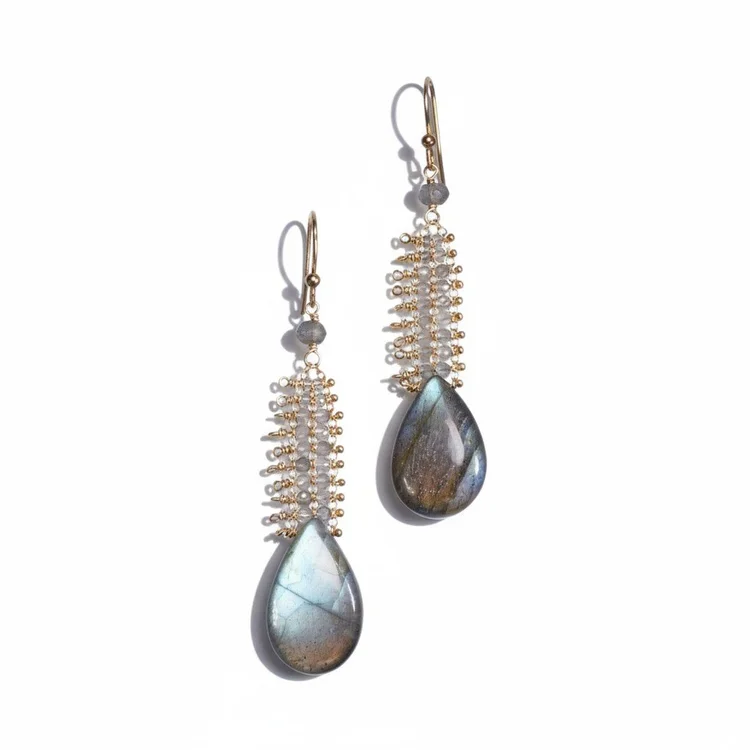 Sold Out
Proxima Ophiuchi Labradorite Earrings
$235.00
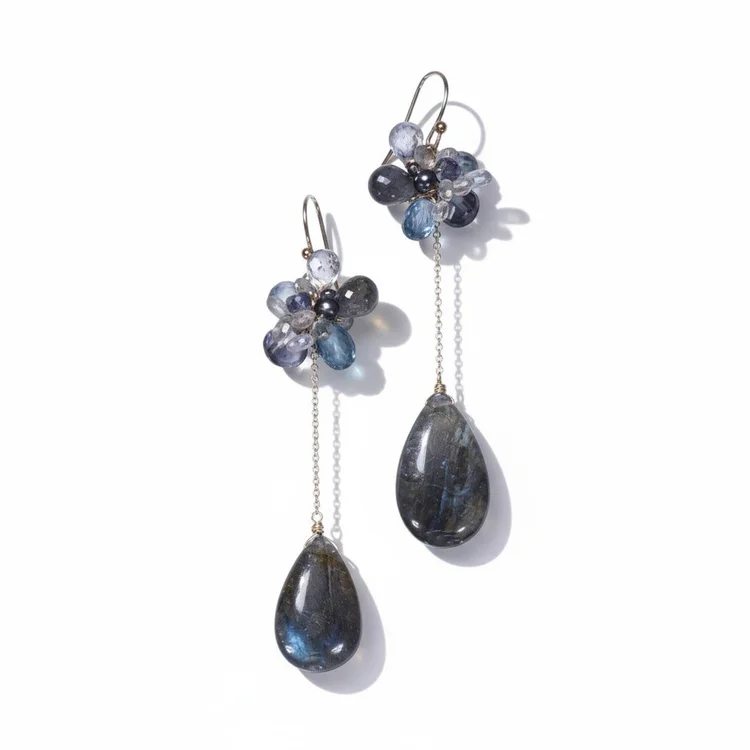 Sold Out
Serpens Eioneus Gemstone Earrings
$285.00
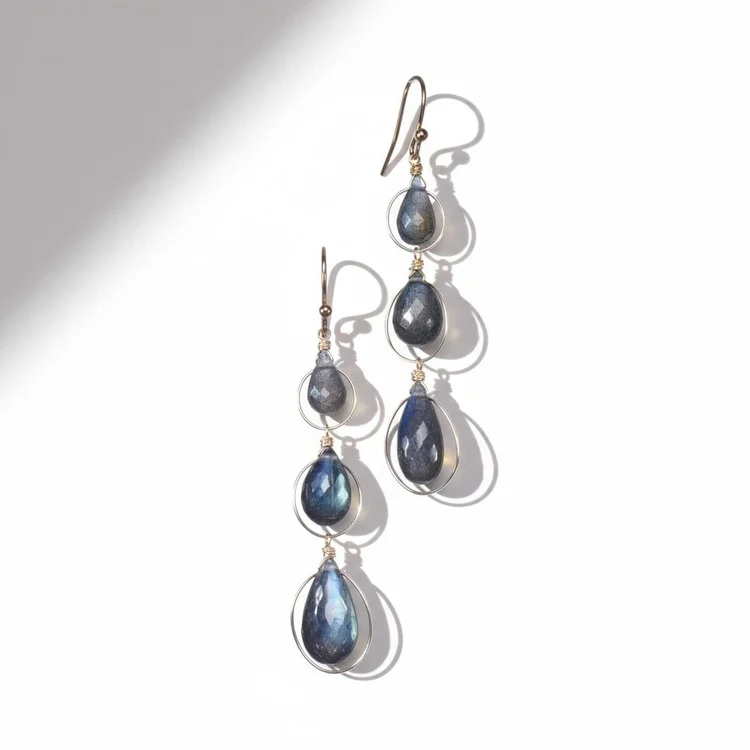 Sold Out
Meridian Nebula Labradorite Earrings
$175.00
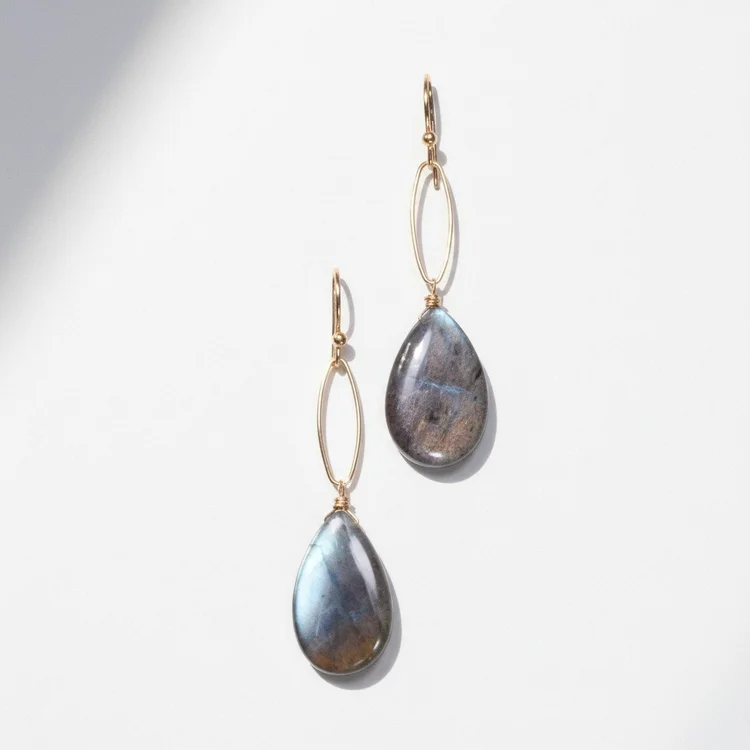 Sold Out
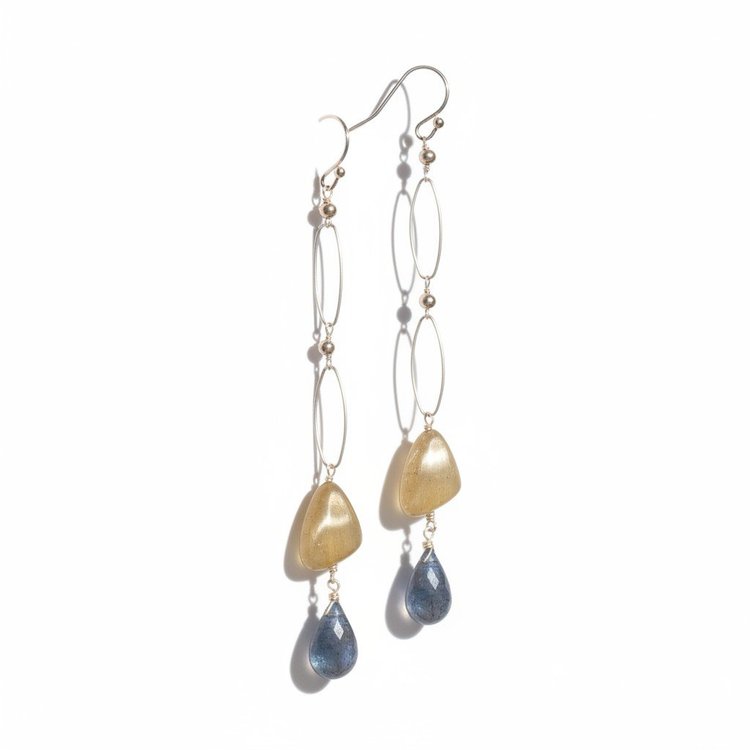
Corona Orionis Labradorite Earrings
$155.00
 Sold Out
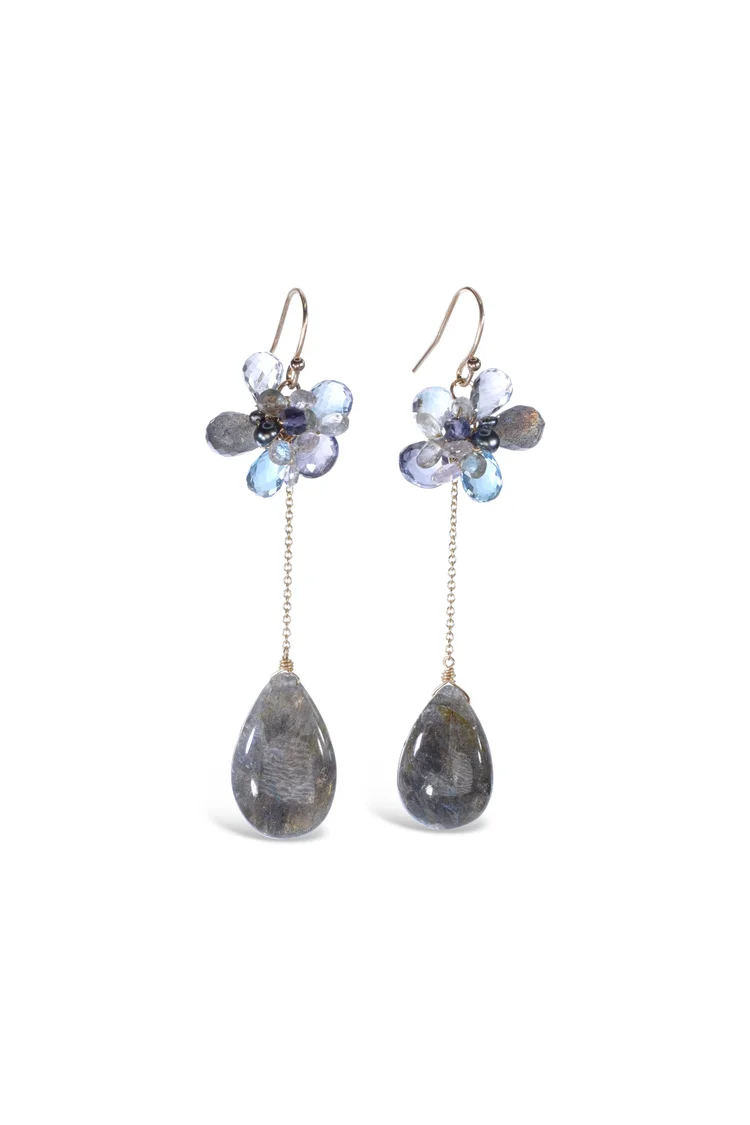
Gamma Hyperes Gemstone Earrings
$155.00
 Sold Out
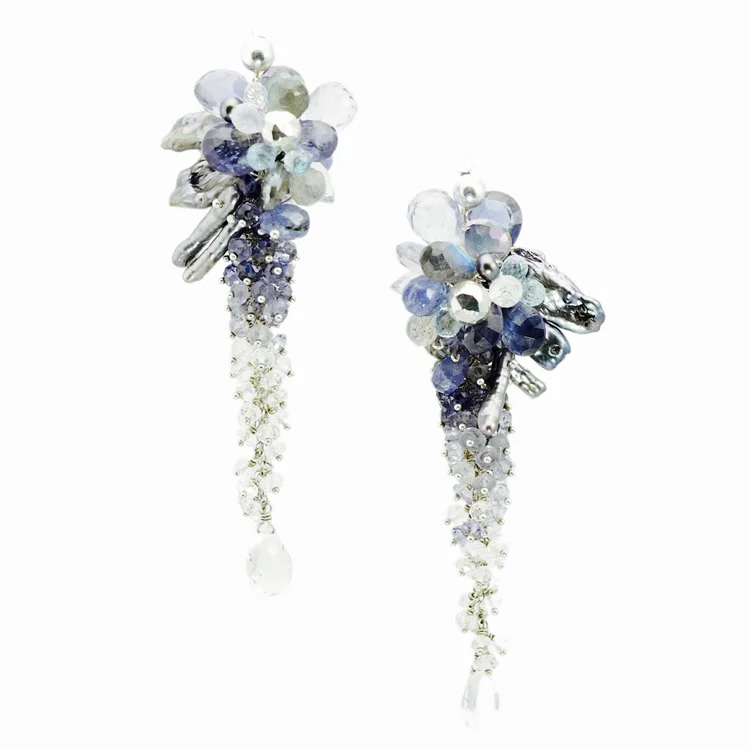
Labradorite and Gemstone Drop Earrings
$260.00
 Sold Out
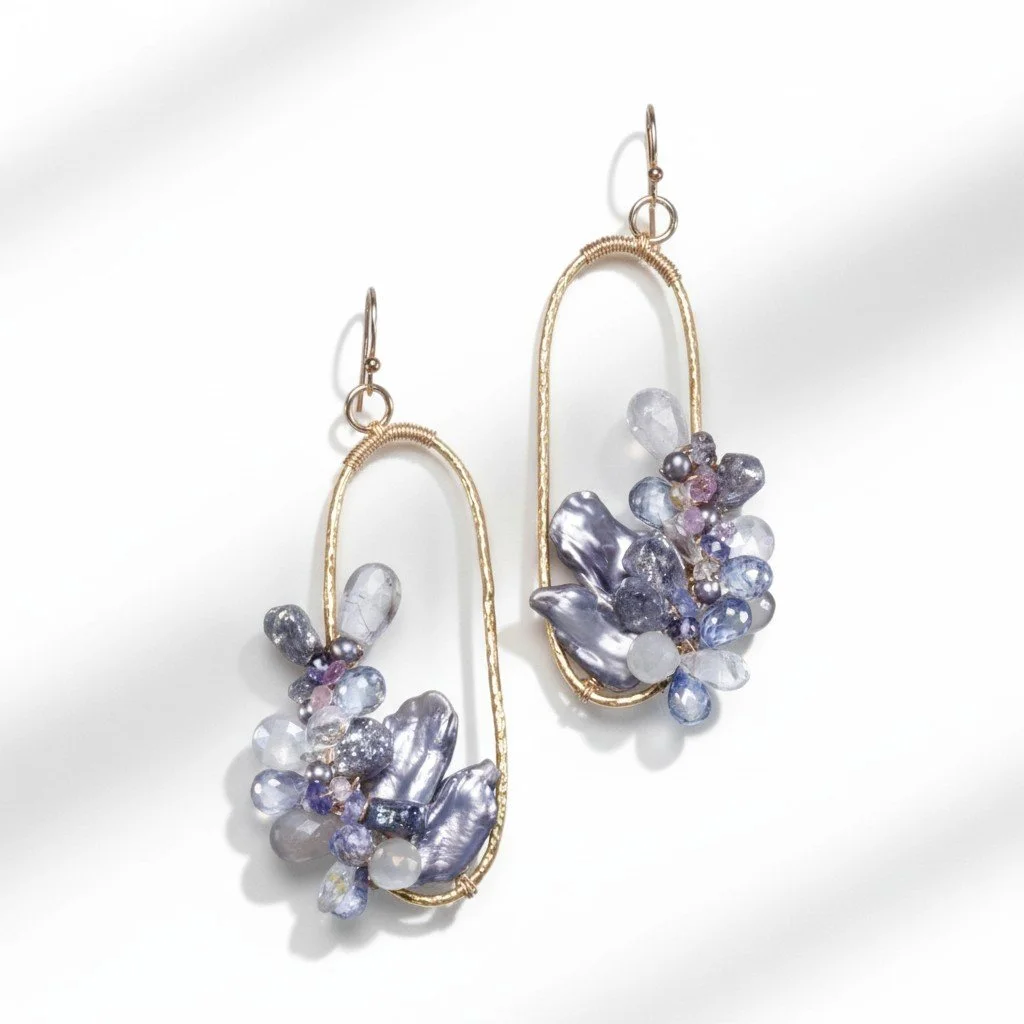
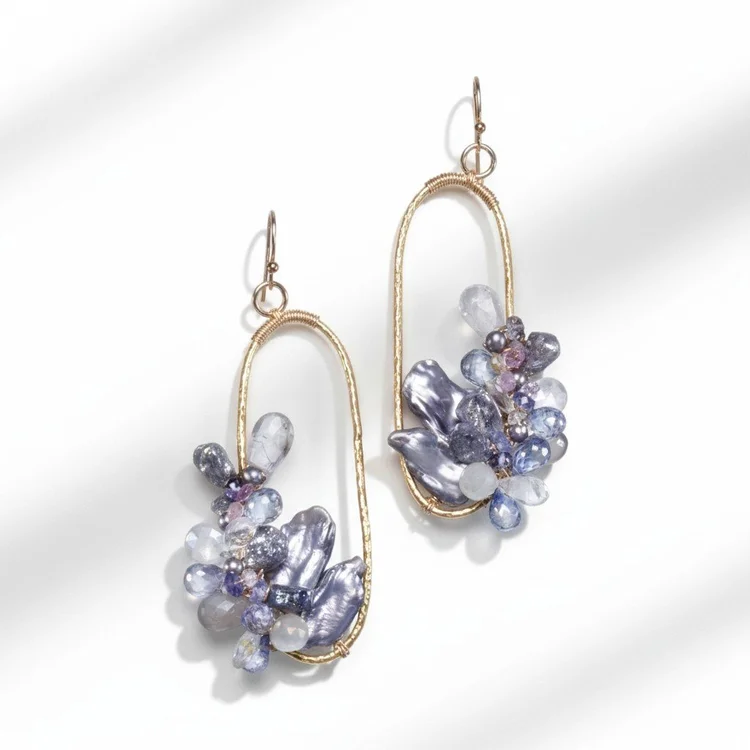
Iolite Ombre Gemstone Cluster Earrings
$475.00
Labradorite Earrings
Labradorite set to move, so the flash of blue fire appears every time you turn your head. Each piece is handmade by Andrea Li in her Denver studio.
One of a kind · Built once
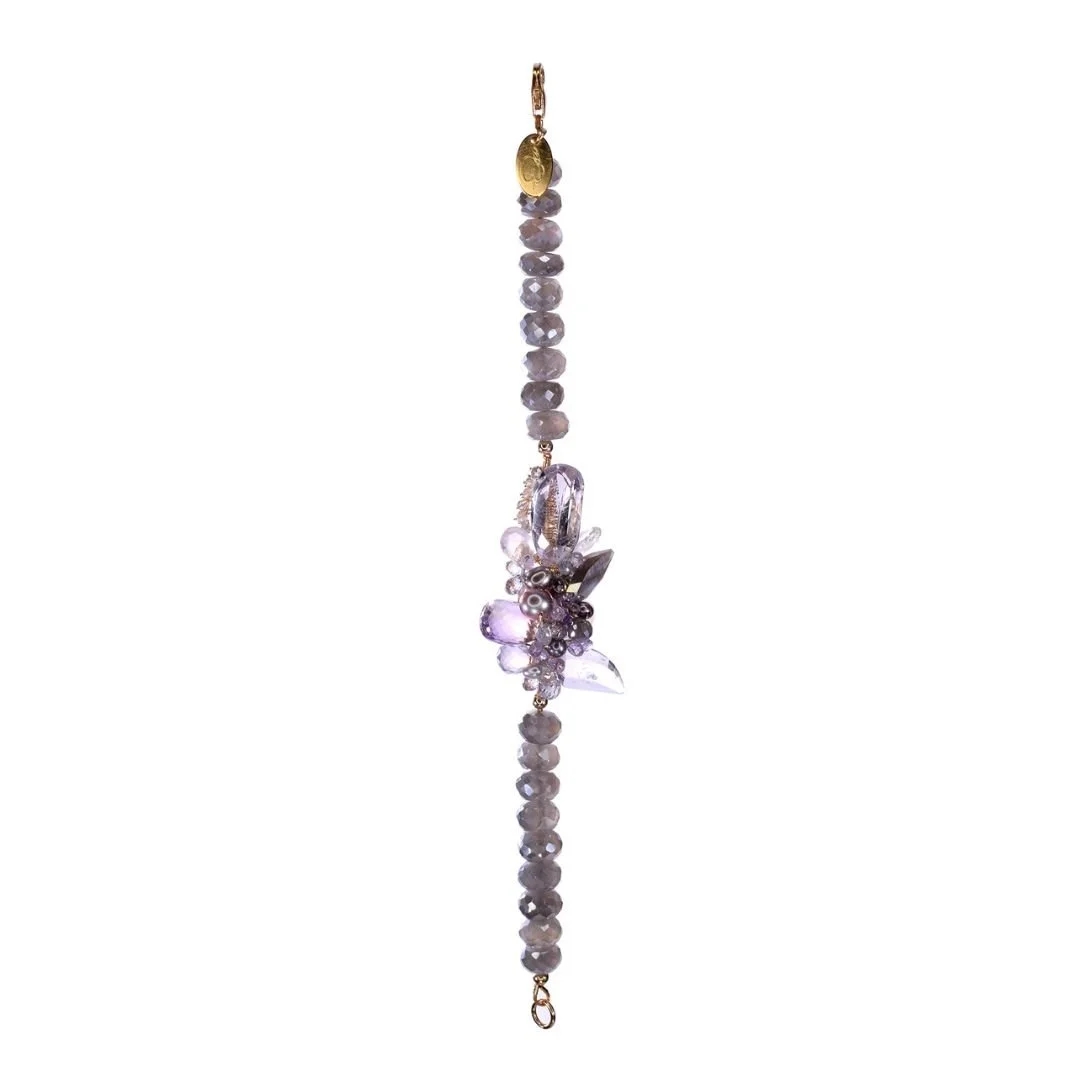
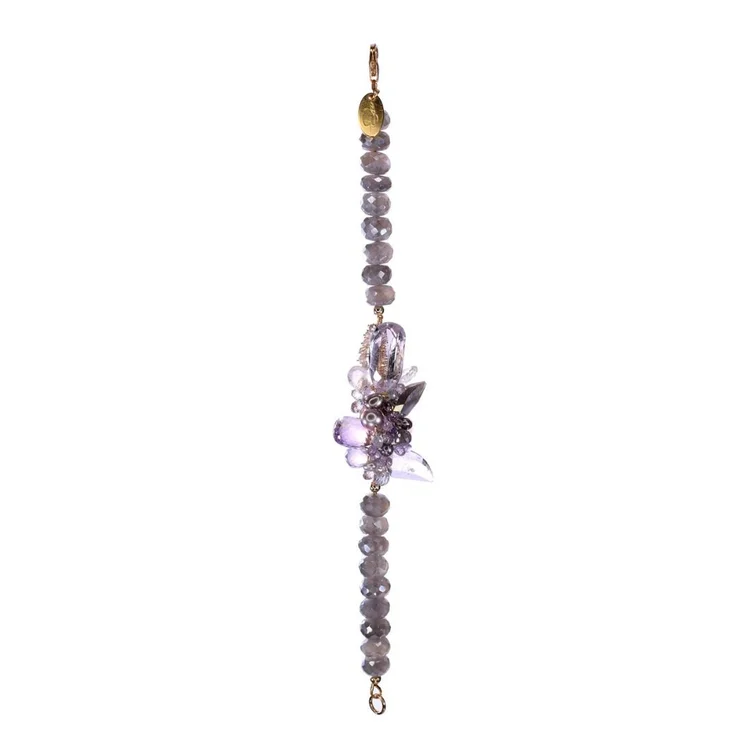
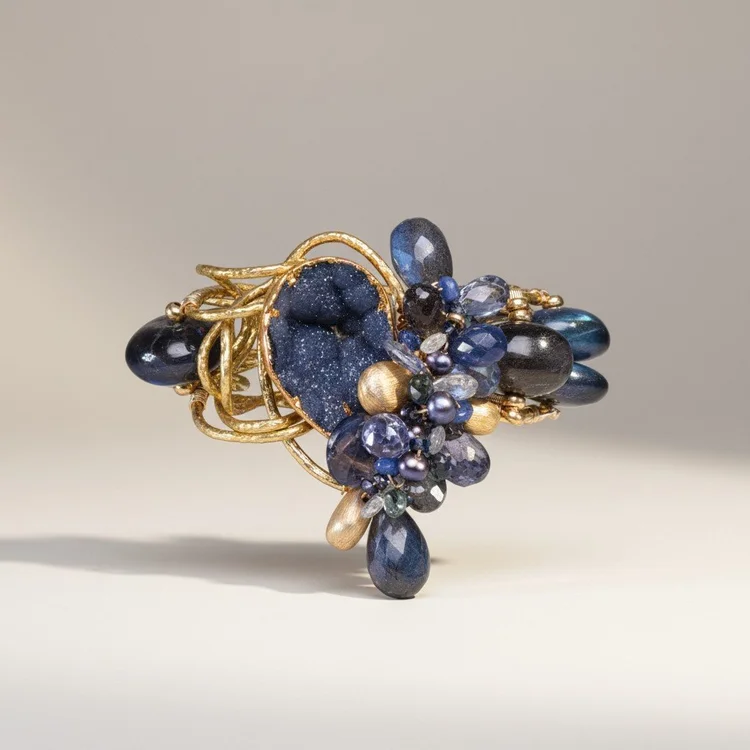
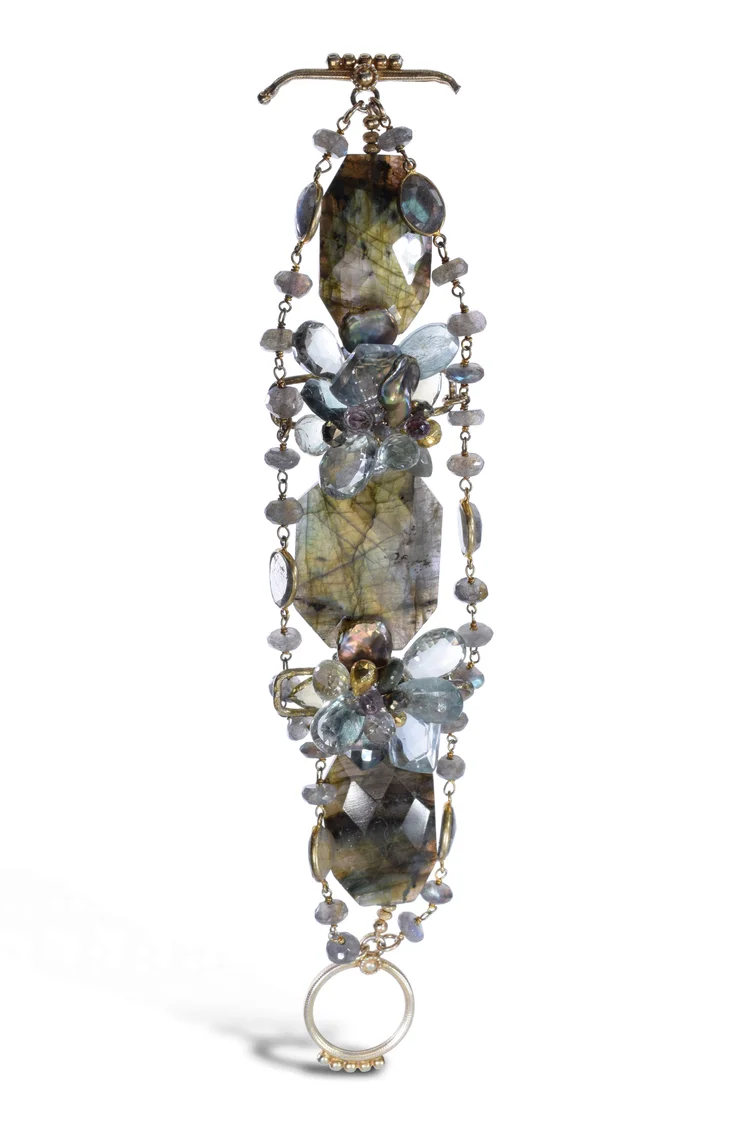
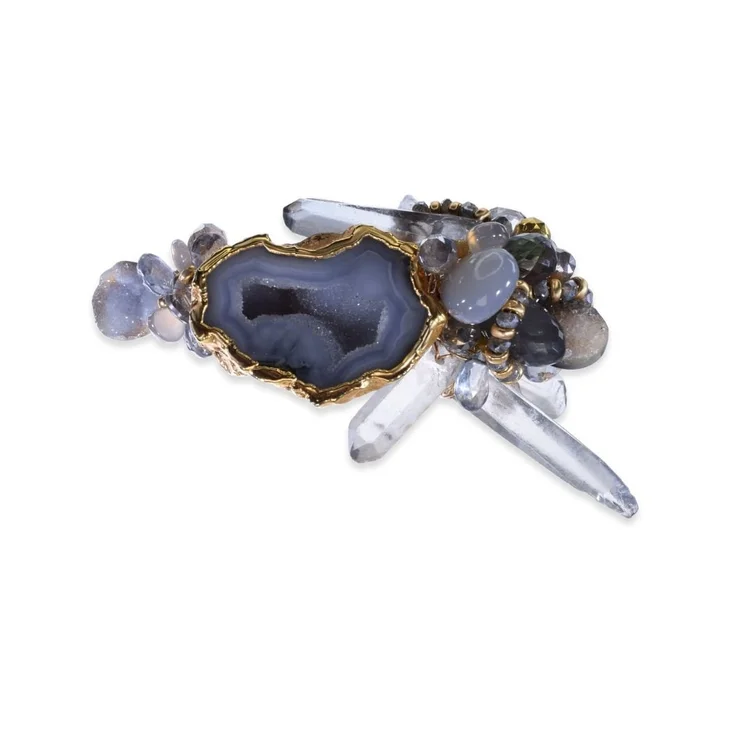
Labradorite Bracelets
Labradorite at the wrist, where the stone catches the light all day long. Each piece is handmade by Andrea Li in her Denver studio.
One of a kind · Built once
Labradorite is the stone I reach for when I want a piece to feel like it has a secret. From one angle it looks like an ordinary dark stone, and then you move, and this impossible flash of blue fire appears. It's the closest thing to magic I've found in a mineral. Every client who sees it in person for the first time has the same reaction: they can't stop turning it in the light.
- 01
Why I Work with Labradorite
There's no other gemstone that does what labradorite does. Emerald is green. Sapphire is blue. Labradorite is whatever the light decides it is: blue, teal, gold, violet, sometimes all at once. That unpredictability is exactly why I love it. Every piece I set in gold or silver becomes a collaboration between the stone and the light in whatever room you're standing in. It's alive in a way that most gems aren't.
- 02
Frozen Northern Lights
The Inuit people of Labrador, Canada believed the Northern Lights were once trapped inside coastal rocks, and that a warrior struck the stone with his spear, freeing most of the light into the sky. What remained became labradorite. The science isn't far off: labradorescence is caused by light diffracting between ultra-thin internal layers, creating interference colors the same way oil on water creates rainbows. It's geology doing what only physics can explain.
Caring for Your Labradorite
- 01
Protect from hard impacts
Labradorite has perfect cleavage in two directions: a sharp knock at the right angle can split the stone. Bezel settings protect better than prongs.
- 02
Clean gently
Warm water, a degreasing dish soap like Dawn, and a toothbrush. Ultrasonic cleaners are not safe for stones, so skip them, and skip steam and harsh chemicals too.
- 03
Suitable for regular wear
At 6–6.5 Mohs, labradorite is durable enough for necklaces, earrings, and bracelets. For rings, choose protective settings and remove during heavy manual work.
- 04
Store separately
Keep labradorite away from harder gems like diamonds, sapphires, and topaz that can scratch its surface. A soft pouch or lined jewelry box is ideal.
Frequently Asked Questions
About Labradorite Jewelry
01What is labradorite, and why does it flash blue and green?
Labradorite is a feldspar gemstone, named for Labrador, Canada. Its body is a dark gray, and when light hits it at the right angle it flashes blue, teal, gold, violet and sometimes green. That flash is called labradorescence: light diffracts between ultra-thin layers inside the stone, the same physics behind the colors in a soap bubble or an oil slick. Because the color comes from the stone's structure, not a coating, it will not fade. From one angle it looks like an ordinary dark stone, and then you move, and this impossible flash of blue fire appears.
02Is labradorite durable enough to wear every day?
Yes, in necklaces, earrings and bracelets, with a little care. Labradorite is 6 to 6.5 on the Mohs hardness scale, but it has perfect cleavage in two directions, so a sharp knock at the right angle can split it. That is why every stone I use is cold-connected, assembled with wire and never with heat: a briolette is drilled through its narrowest point, which is exactly where the stone is most brittle. Store it apart from harder gems like diamonds, sapphires and topaz. To clean it, use warm water, a degreasing dish soap like Dawn and a toothbrush. Ultrasonic cleaners are not safe for stones.
03Does labradorite look better in gold or silver?
Both work, because labradorite already carries warm and cool tones in its flash. Gold brings out its golden flashes, and sterling silver plays to the blue and teal. In my studio, I often pair labradorite with gold because the warmth of the metal makes the blue flash feel even more electric. I work in 14k gold-filled, 14k gold and sterling silver.
04What gemstones go well with labradorite?
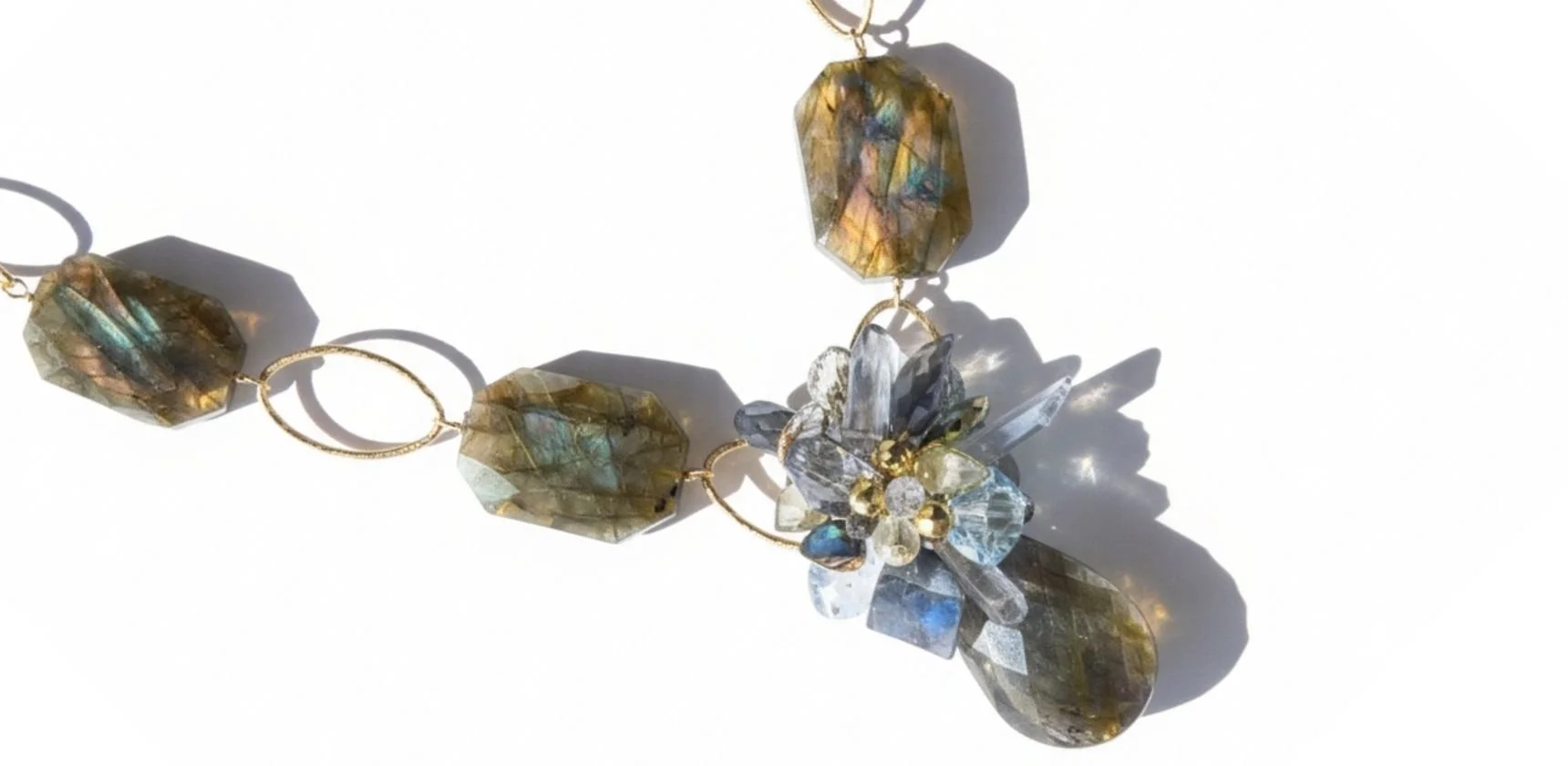
Stones that either echo its cool flash or push against it with warmth. In one of my necklaces, Swiss blue topaz and lemon topaz keep the labradorite's movement in the cooler, more luminous register, while mystic topaz and pyrite pull in warmth and depth. Another sets it with pyrite, hydro quartz, green amethyst, mystic topaz, whiskey topaz, moss aquamarine, crystal points, amethyst and Keshi pearl, so the composition runs warm metallics against cool flash.
05What does labradorite mean?
Its name comes from Labrador, Canada. The Inuit people of Labrador believed the Northern Lights were once trapped inside coastal rocks, and that a warrior struck the stone with his spear, freeing most of the light into the sky. What remained became labradorite. It is also often called the stone of transformation, which is why some people give it at a turning point. Whether or not you believe in that, the symbolism carries weight as a gift.
06Where is your studio, and can I book an appointment?
My studio is in Denver, Colorado, where I make every piece by hand, one of a kind. You can book a private virtual appointment with me.
Every labradorite catches the light differently. These are one-of-a-kind pieces: when they're gone, they're gone.
Ask About a Custom Piece →