Aquamarine vs MorganiteGemstones
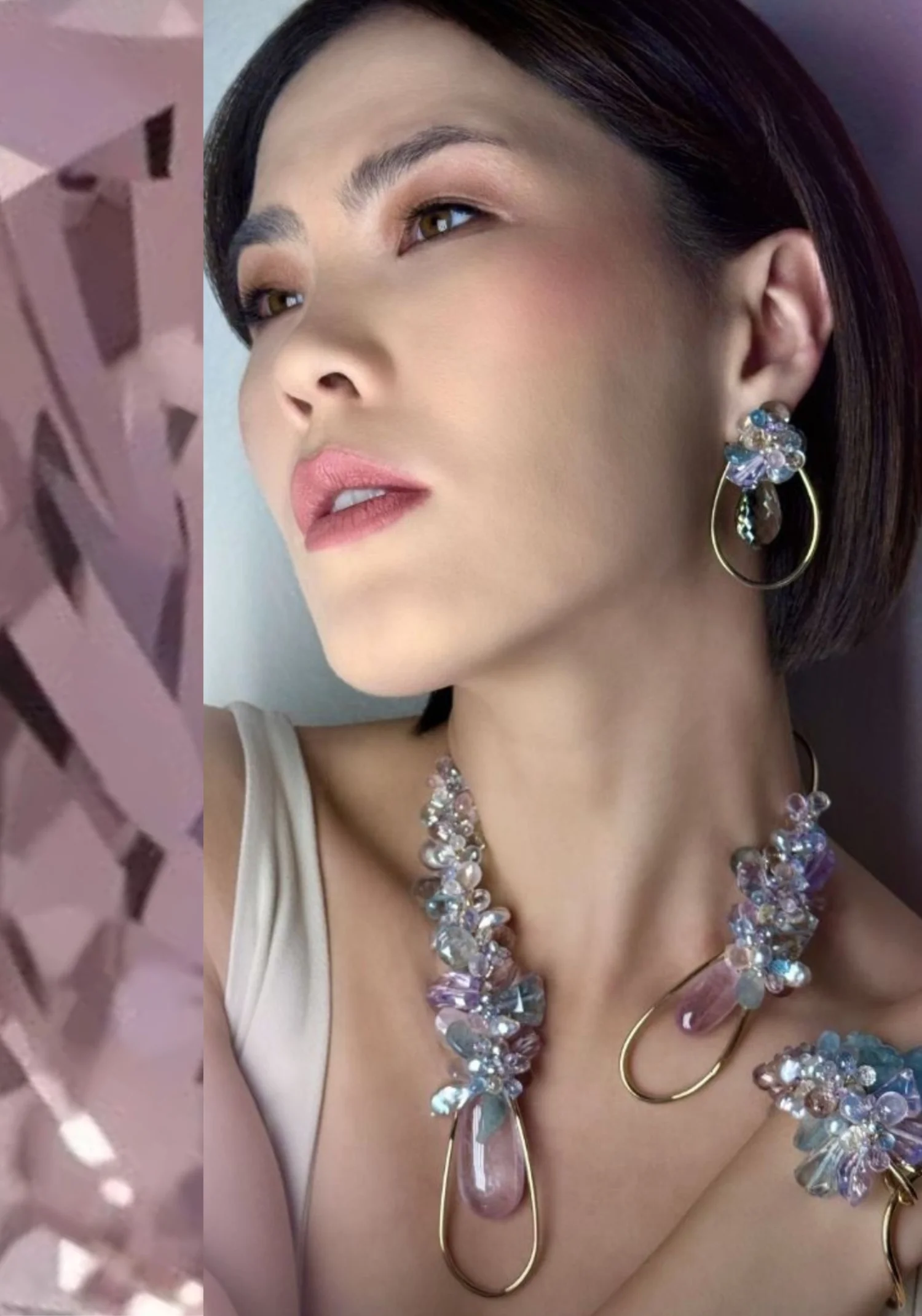
Which Gemstone Is Right for You?
Same family. Different personalities.
Side-by-Side Comparison
| Property | Aquamarine | Morganite |
|---|---|---|
| Color | Cool blue-green, ranging from pale sky to deep sea | Warm pink-peach, ranging from blush to salmon |
| Color Source | Trace iron (Fe²⁺) in the crystal structure | Trace manganese (Mn²⁺) in the crystal structure |
| Mineral Family | Beryl (same as emerald) | Beryl (same as emerald) |
| Hardness | 7.5–8 Mohs Tie | 7.5–8 Mohs Tie |
| Daily Wear | Excellent: highly scratch-resistant | Good to excellent: slightly more care with impact |
| Clarity | Typically very clean, high transparency Edge | Typically clean, excellent transparency |
| Best Metal Pairing | Sterling silver (contemporary), 14k gold (warm-cool tension) | 14k gold, rose gold (amplifies warmth) Edge |
| Skin Tone | Stunning on all: especially medium/olive and deep skin tones | Flatters warm and golden tones beautifully; softens fair skin |
| Birthstone | March | Not a traditional birthstone (sometimes associated with October) |
| Anniversary | 19th year | No traditional anniversary (gifted for romance) |
| Price Range | Moderate to high (deep blue commands premium) | Moderate (more accessible than aquamarine for equivalent size) |
| Common Treatment | Heat treatment to enhance blue (permanent, standard) | Heat treatment to enhance pink (permanent, standard) |
| Personality | Quiet power. Cool confidence. The person who commands a room without raising their voice. | Soft strength. Romantic warmth. The person who draws people in without trying. |
| Andrea Li's Pick For | Statement necklaces, sculptural cuffs, milestone pieces that photograph in any light | Intimate pieces, layering with warm metals, wedding jewelry with a modern edge |
Both stones are sourced by Andrea at the Tucson Gem Show and handcrafted into one-of-a-kind pieces in her Denver studio.
The Lookbook
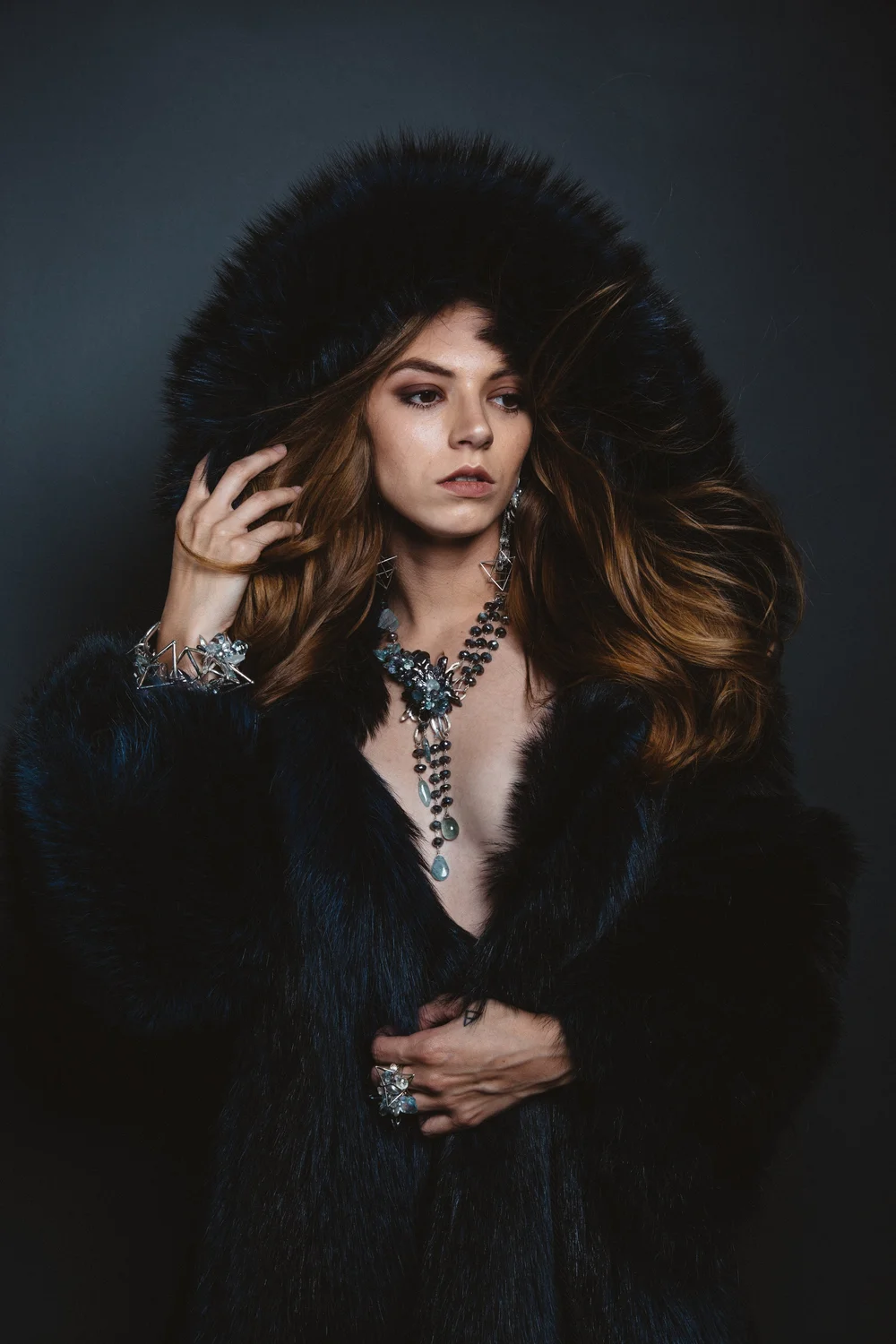
Piscine
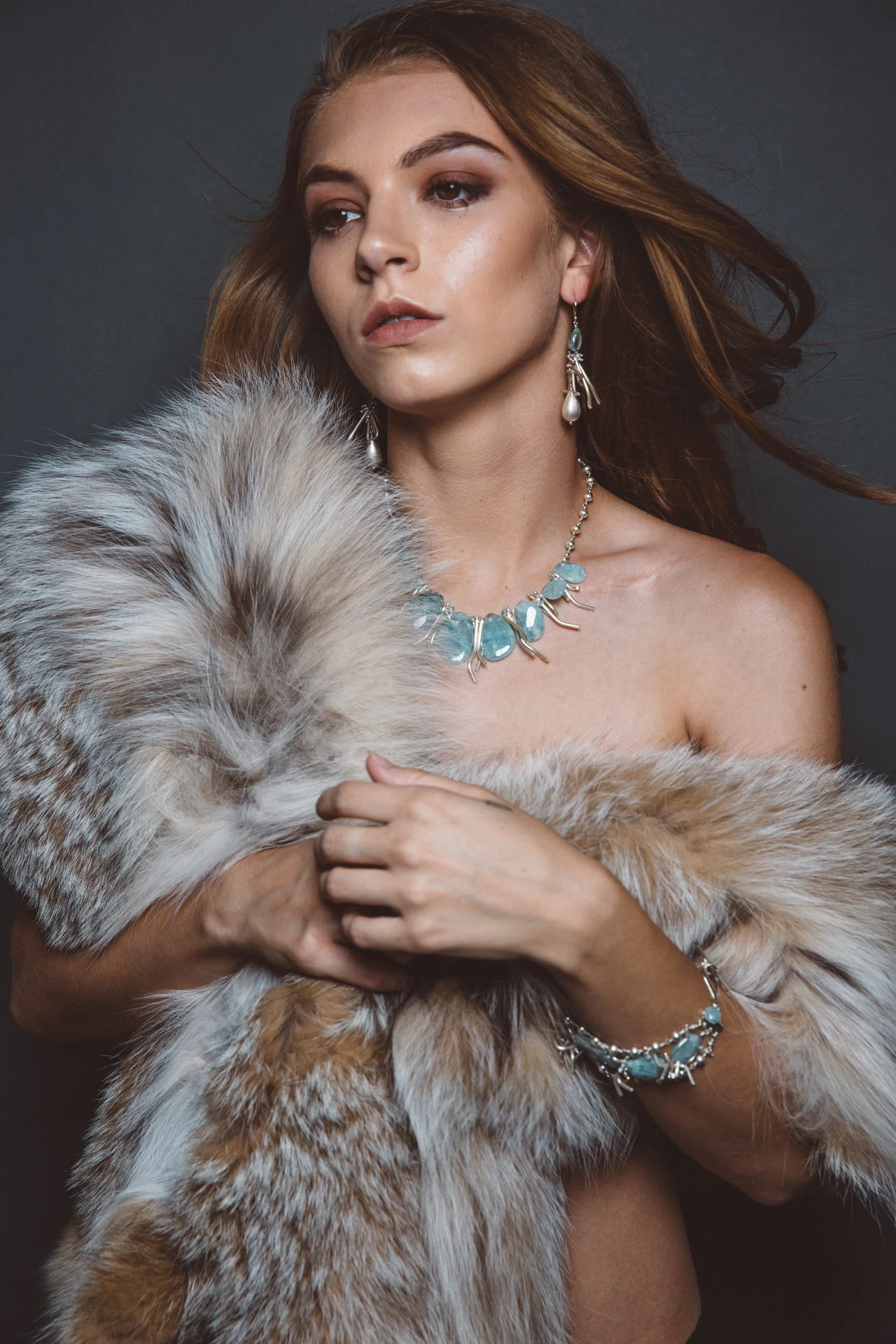
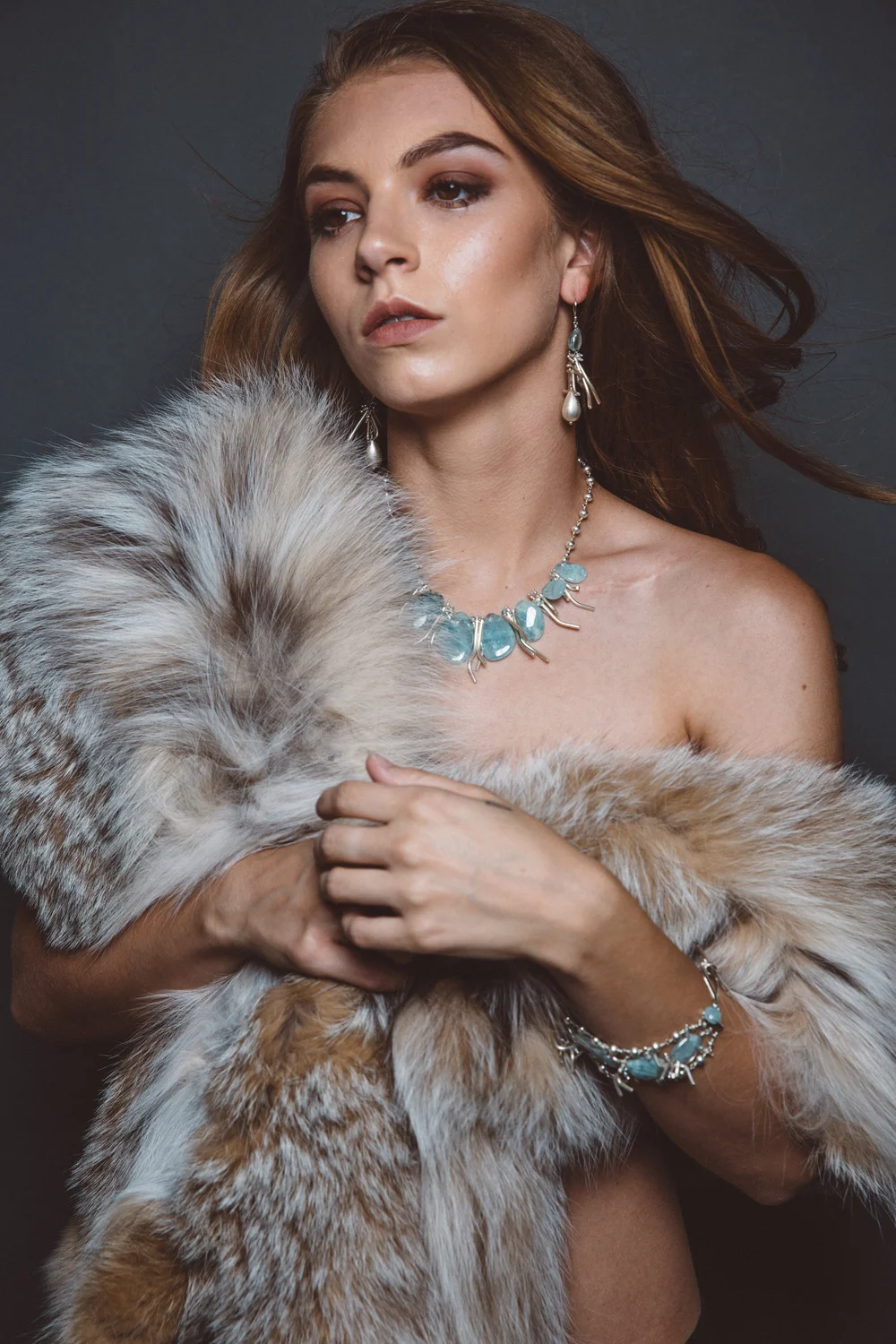
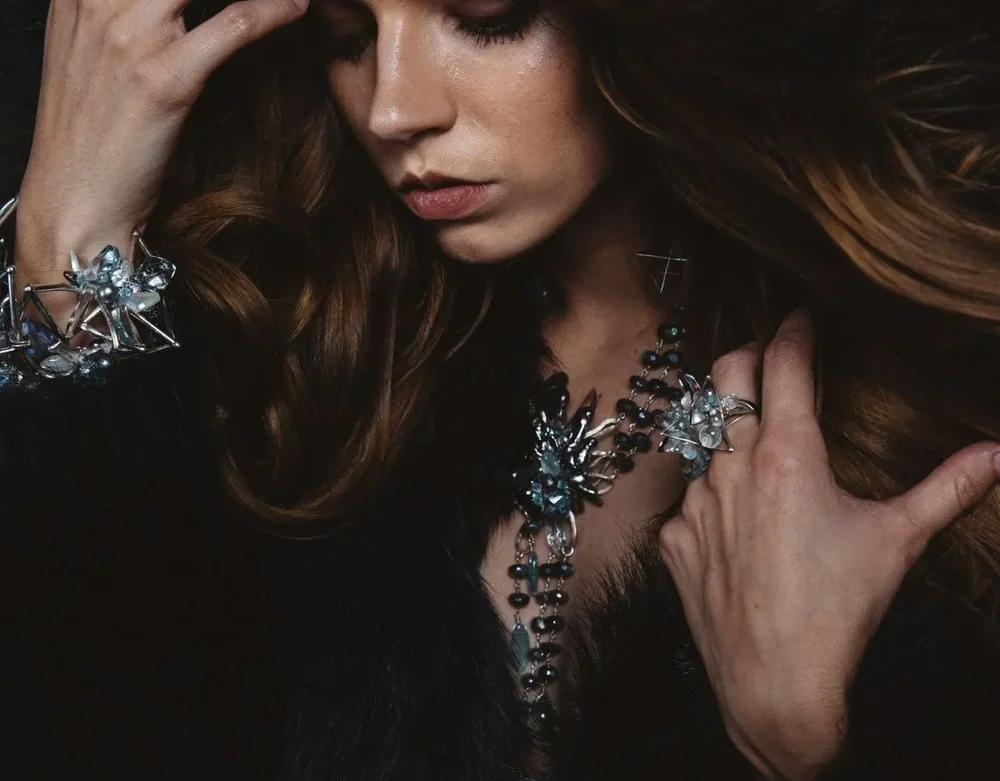
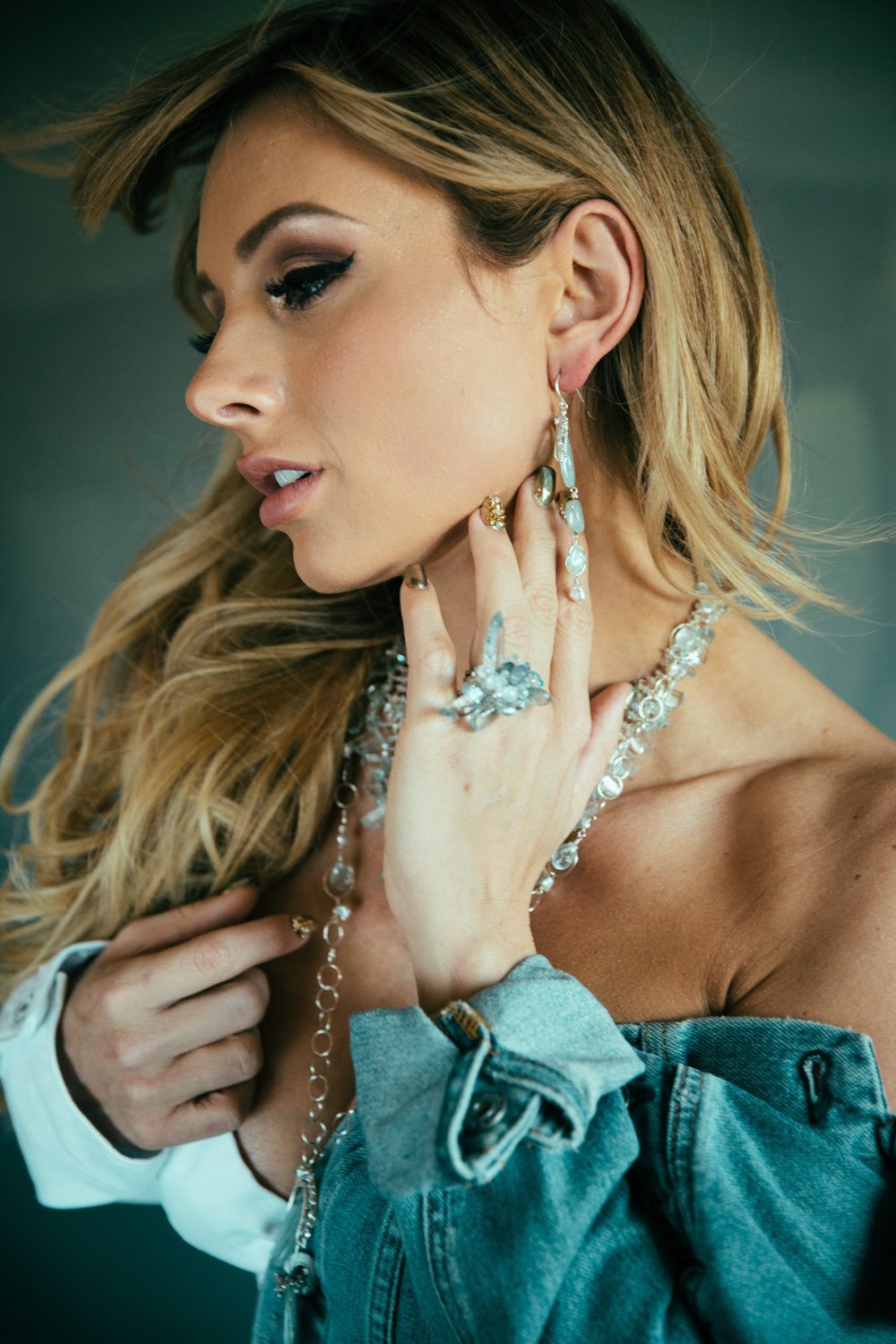
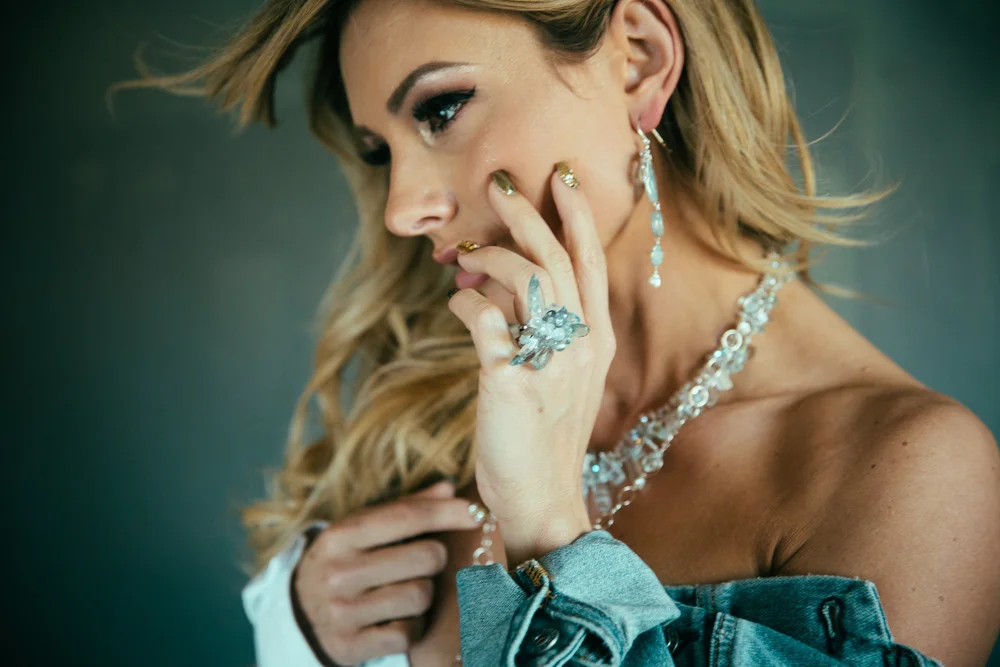
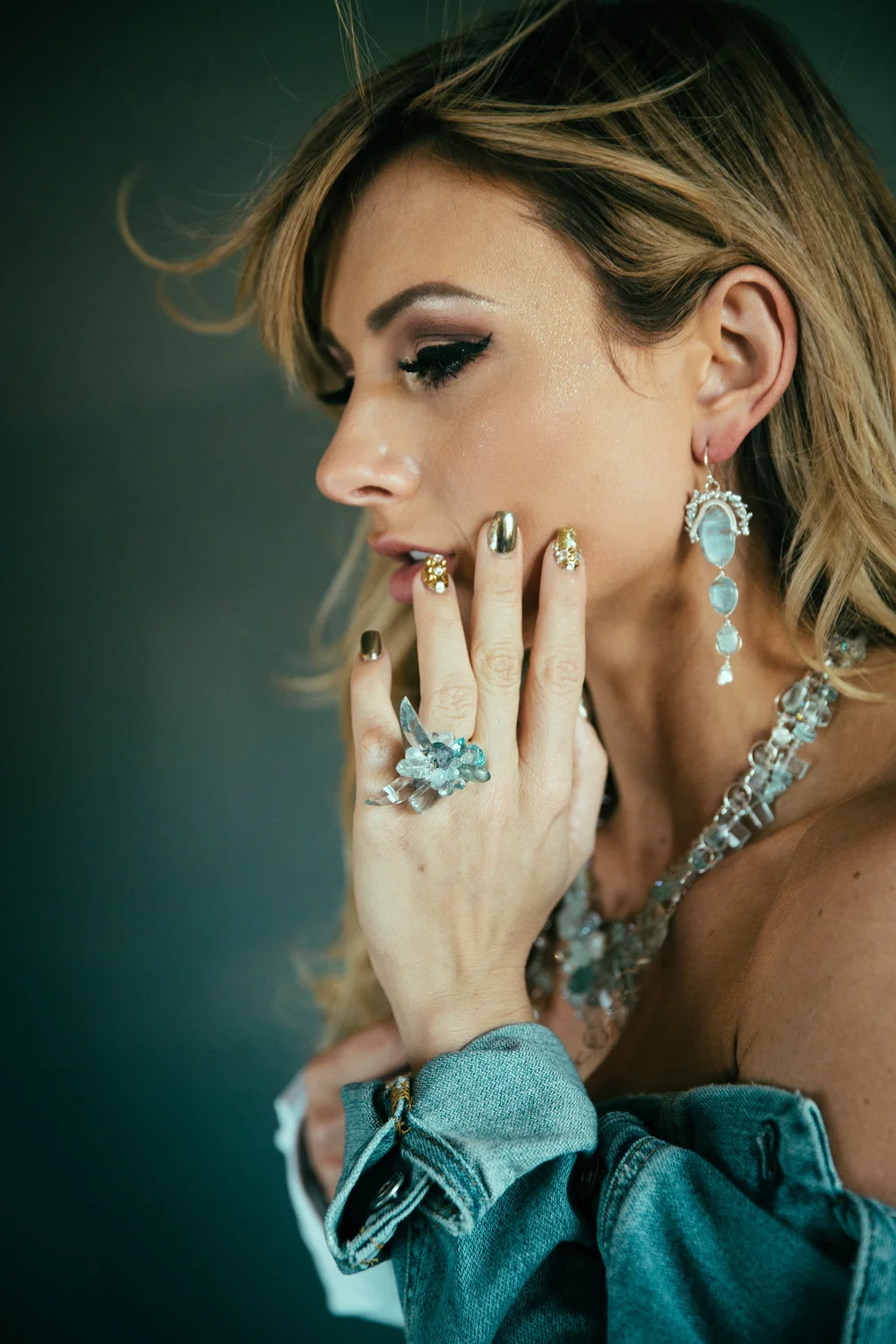
Photography Nicole Marcelli · Model Caitlin · Hair and makeup Mel Akana McIntosh · Furs Andreas, Atsagas Fur & Leather · Creative Credits



Andrea Li
Morganite vs Aquamarine
A Comparison Guide
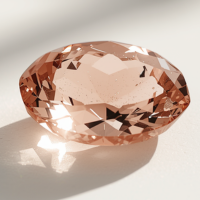
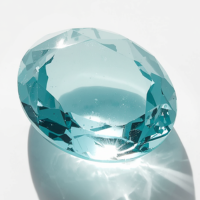
Morganite
- Soft pink, peach, and rose-gold tonalities
- Warm and blush hued
- Manganese (Mn) causes the color
Color & Appearance
Aquamarine
- Cool blue, sky, sea, and greenish-blue tonalities
- Refreshing and tranquil hued
- Iron (Fe) causes the color
Morganite
- Be3Al2Si6O18, a beryl variety
- Color cause: trace manganese (Mn2+)
Chemical Composition
Aquamarine
- Be3Al2Si6O18, a beryl variety
- Color cause: trace iron (Fe2+)
Morganite
- 7.5 to 8 on the Mohs scale
- Excellent durability, suitable for daily wear
Hardness (Mohs Scale)
Aquamarine
- 7.5 to 8 on the Mohs scale
- Excellent durability, suitable for daily wear
Morganite
- Typically eye-clean
- High clarity
- Vitreous luster
Clarity & Luster
Aquamarine
- Exceptionally clear
- Often flawless to the eye
- Vitreous luster
Morganite
- Love and romance
- Compassion
- A manganese-associated heart connection
Meaning & Symbolism
Aquamarine
- Calm and tranquility
- Protection
- Connection to the sea
- An iron-associated oceanic energy
Morganite
- Less common
- Growing in popularity
- Valued for its unique color range and manganese depth
Especially loved paired with rose gold.
Value & Rarity
Aquamarine
- Well-known and well-loved
- Priced by blue depth and purity
- Deep, pure blue is the most highly valued
A classic, timeless blue.
Embrace the magic of natural stones andreali.com
This stone is part of my pastel gemstone collection, one-of-a-kind pieces handcrafted in Denver.
See it in a piece
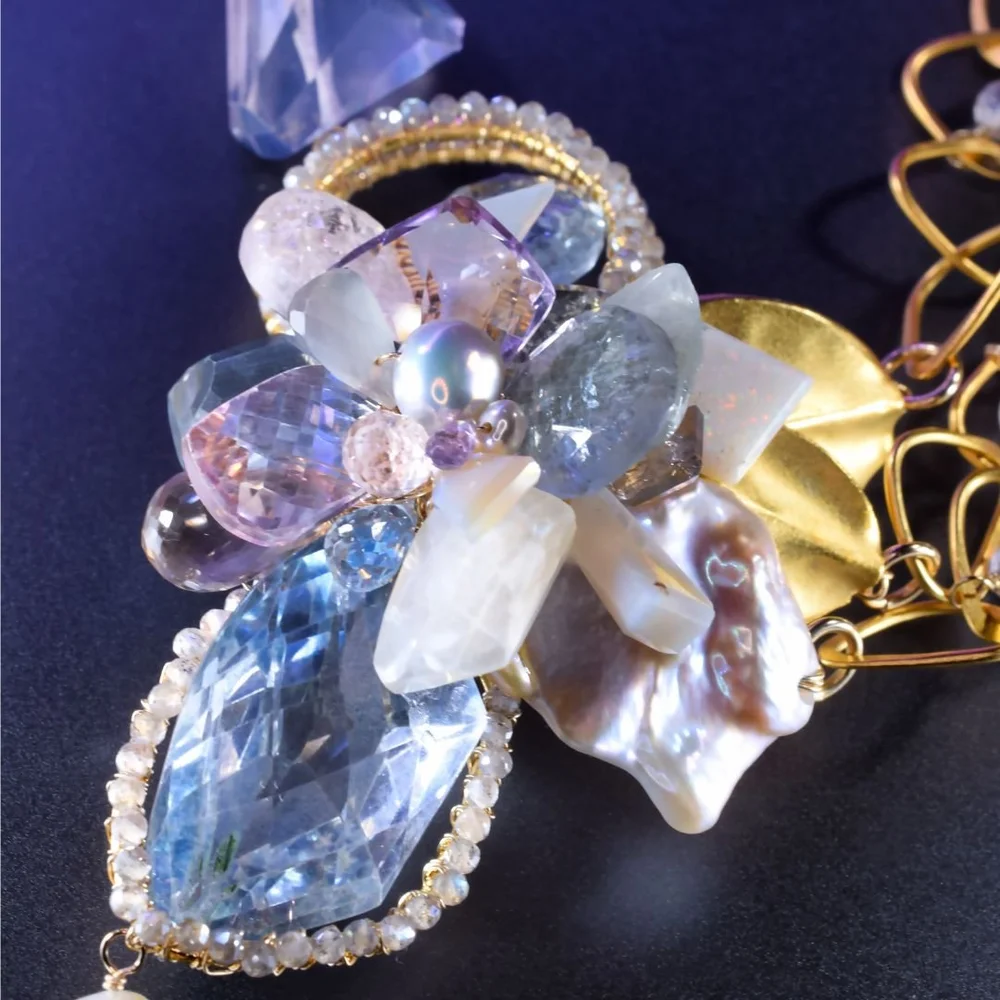
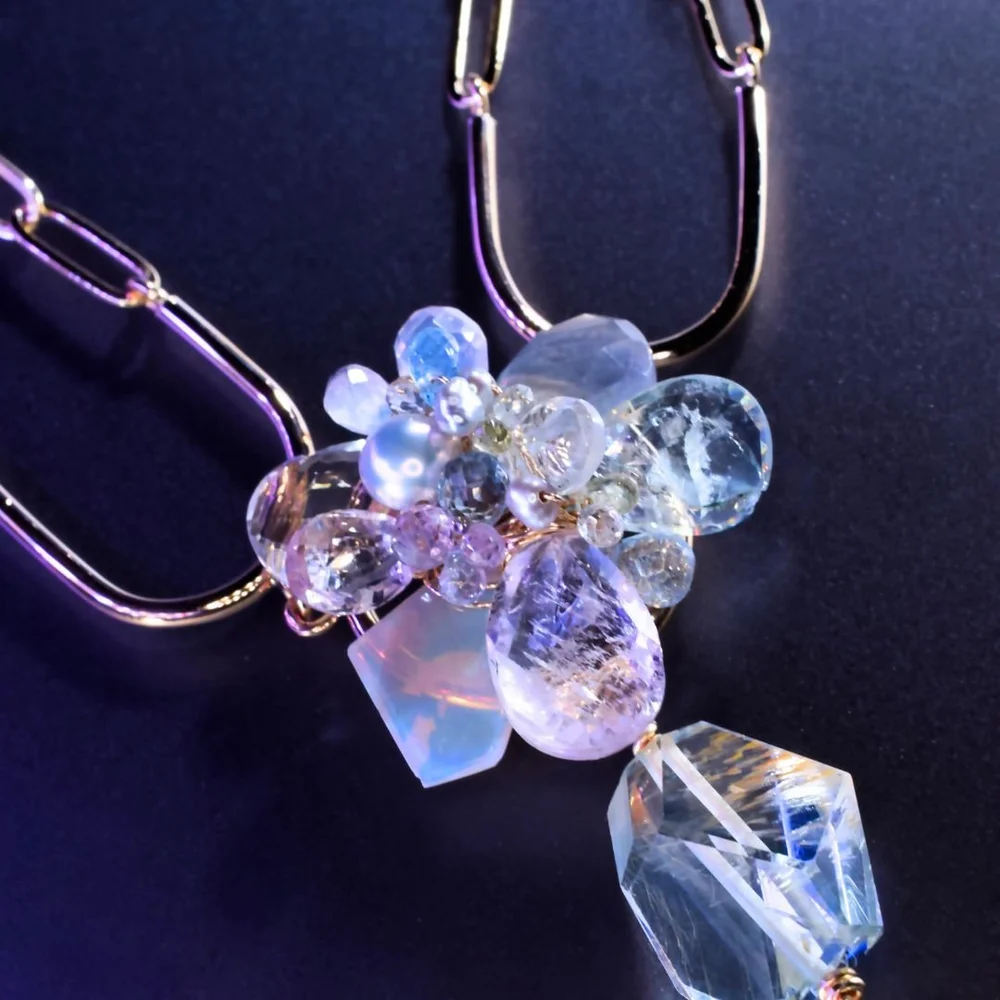
Both beryls, together in Halo
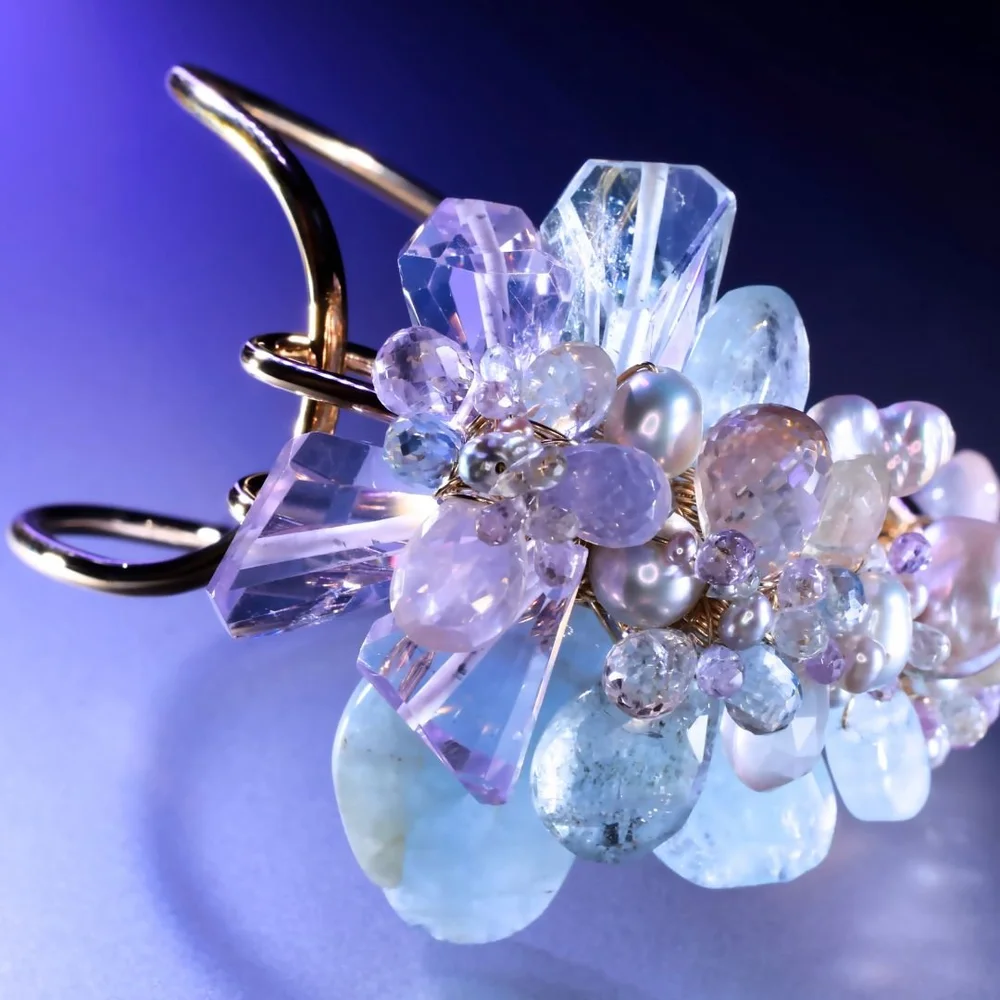
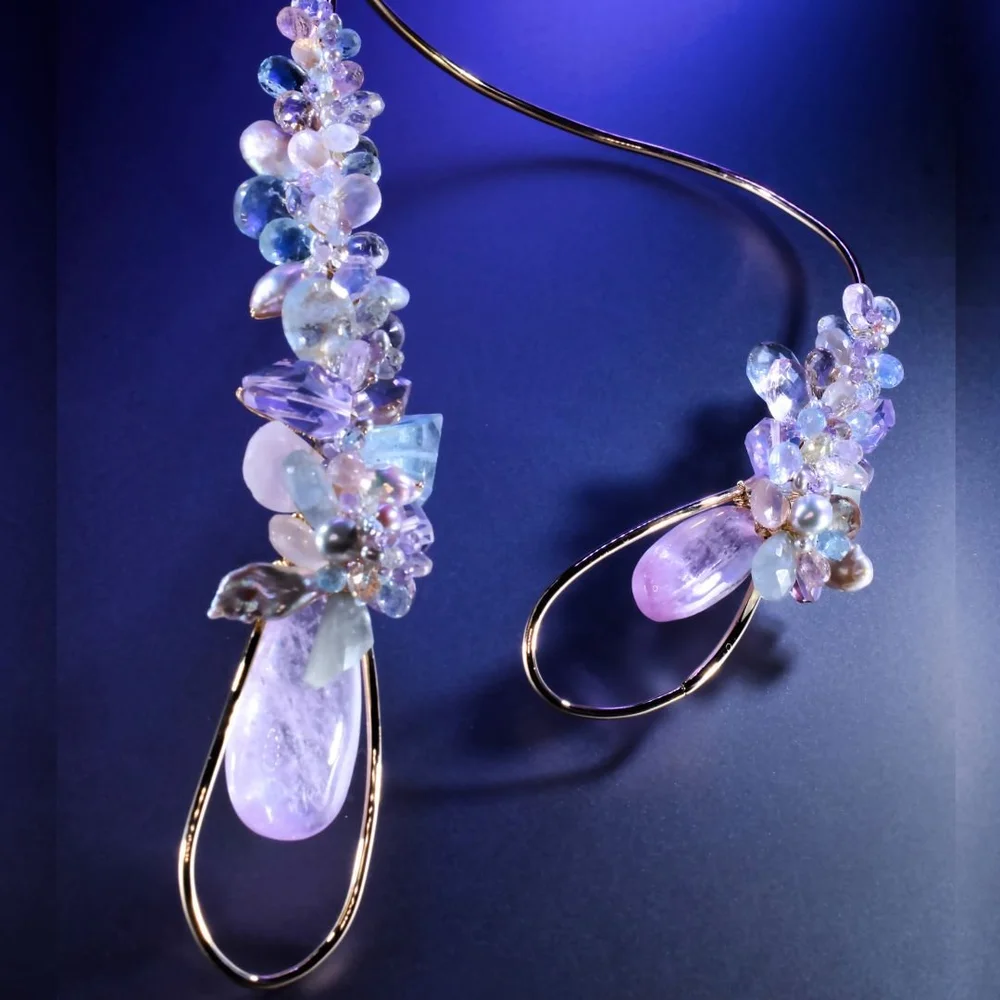
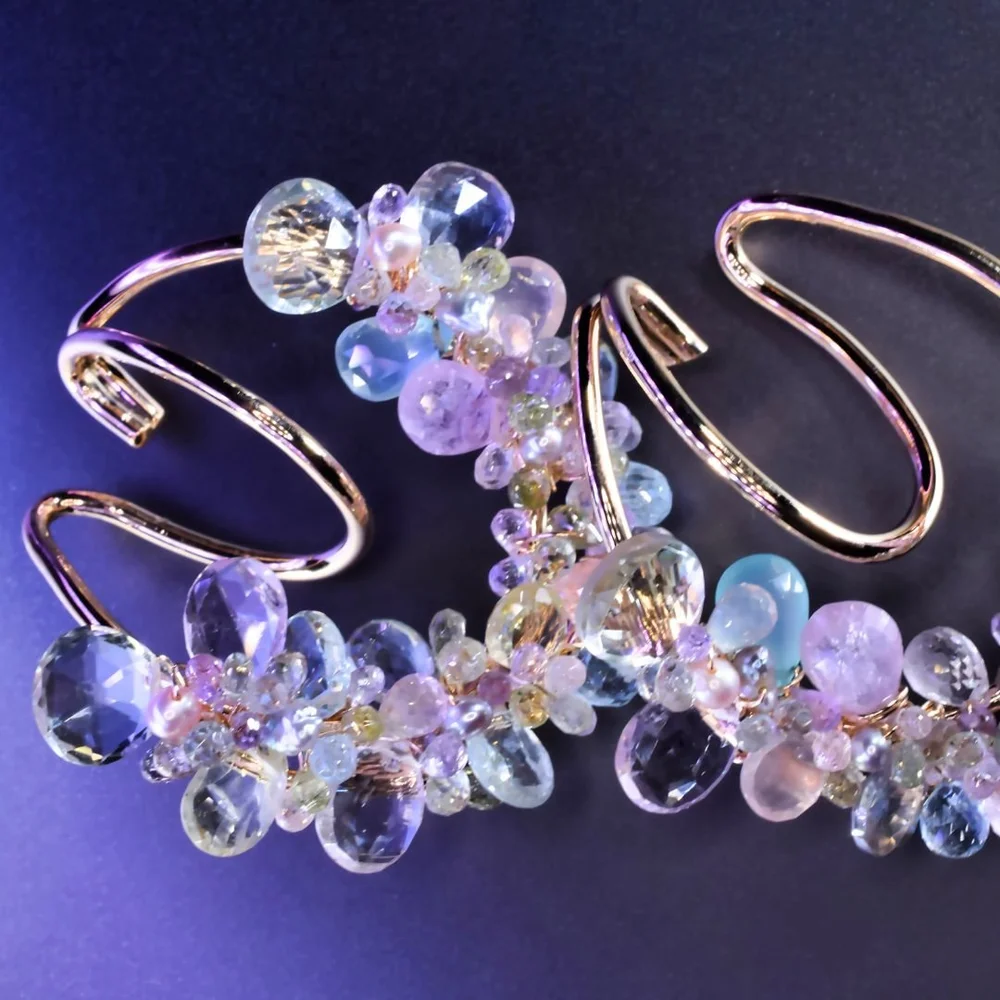
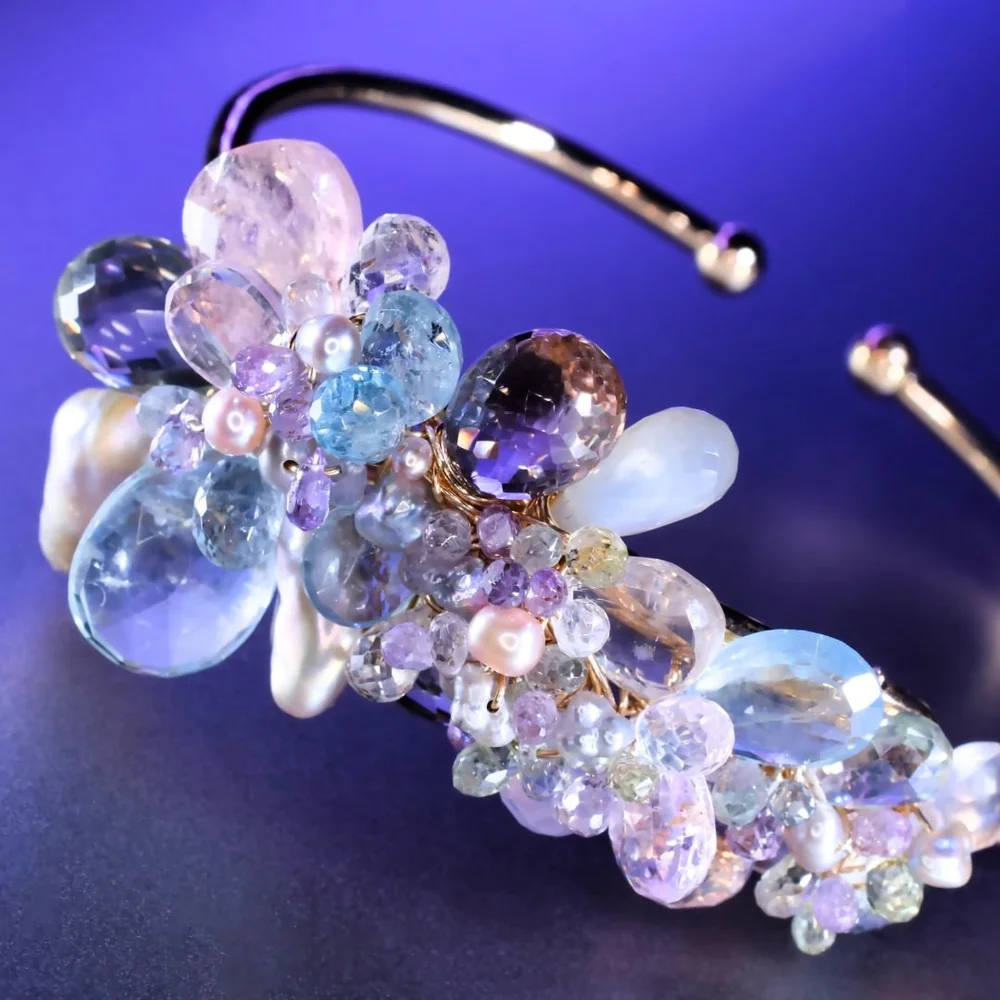
Aquamarine and its peach sister morganite both appear in Halo, a one-of-a-kind floating choker from the Second Light collection, where the two beryls sit side by side in a single pale cluster. Read how the piece was built around that soft, watery palette.
Read the Halo studio story →Which Stone Is Right for You?
Match the scenario to find your stone.
Choose Aquamarine
"Something blue" for a bride
Natural, not novelty. Aquamarine's cool clarity photographs beautifully in every lighting condition: ceremony, reception, golden hour. A meaningful "something blue" that becomes an heirloom.
Choose Morganite
Bridal jewelry with modern warmth
Morganite's blush-peach tone complements blush, ivory, and champagne palettes. For the bride who wants color without competing with the dress: soft, romantic, and uniquely hers.
Choose Aquamarine
Medium, olive, or deep skin tones
This is where aquamarine truly sings. The cool blue-green pulls warmth from olive and golden undertones. Against deep skin tones, the stone appears more vivid and saturated: the combination stops people mid-sentence.
Choose Morganite
Fair, warm, or golden skin tones
Morganite's warm peach-pink creates a glow against fair and golden skin. The stone flatters without overpowering, adding color that reads as natural rather than costume.
Choose Aquamarine
March birthday or 19th anniversary
Aquamarine is March's birthstone and the traditional 19th anniversary stone. A one-of-a-kind aquamarine piece says "I know you" in a way a generic birthstone pendant never could.
Choose Morganite
"Just because" or a romantic milestone
Morganite has no traditional occasion attached to it, which makes it perfect for the moments that don't have a Hallmark card. An anniversary that's not a "big" year. A promotion. A gift to yourself.
Choose Aquamarine
Statement pieces that command a room
Aquamarine's cool authority makes it ideal for sculptural necklaces, bold cuffs, and pieces designed to be noticed. It doesn't need good lighting to show up: it creates its own.
Choose Morganite
Intimate, layered, or everyday pieces
Morganite's warmth shines in smaller, more intimate settings: drop earrings, delicate pendants, pieces that layer beautifully with other warm metals and stones.
Can't decide?
You don't have to. Both stones are beryl family gems with the same durability and brilliance. If one speaks to you, trust that instinct. If both do, Andrea can help you figure out which one matches what you're looking for, or design something that uses both.
Start a Conversation →Aquamarine & morganite, together
Tamar
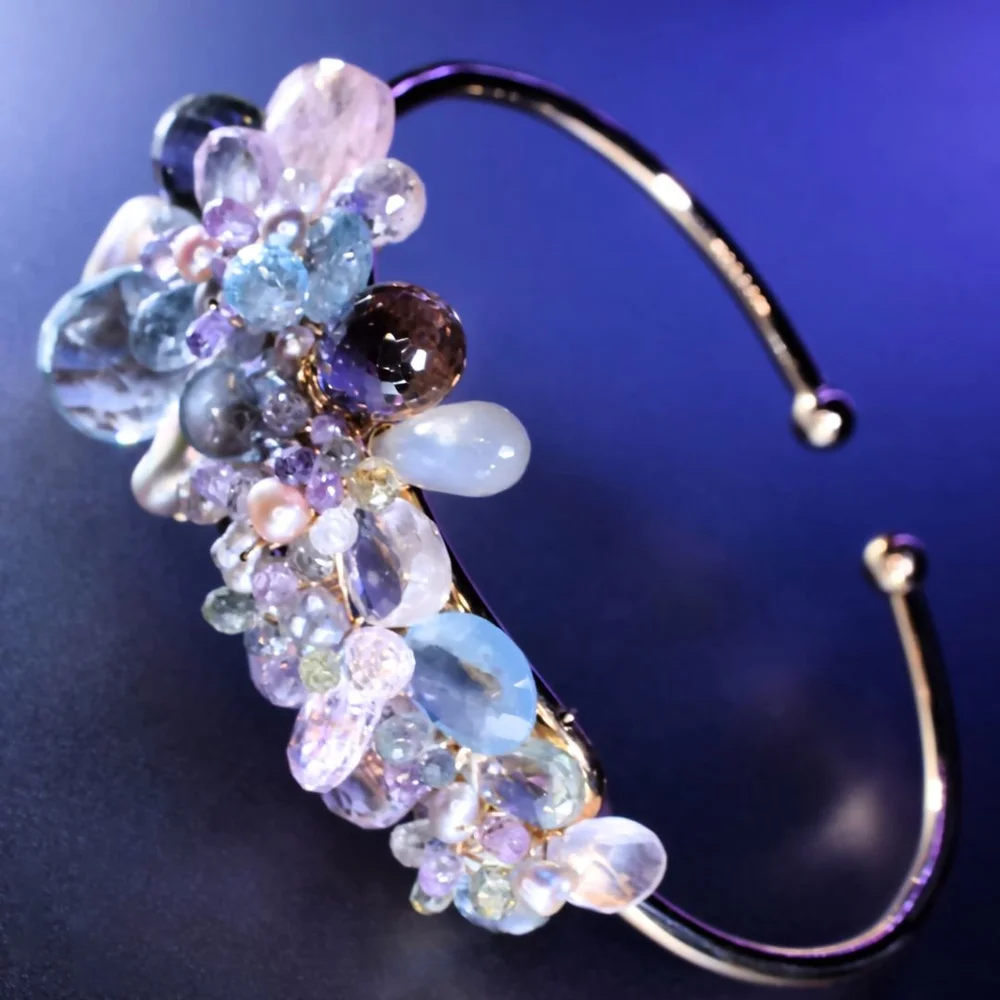
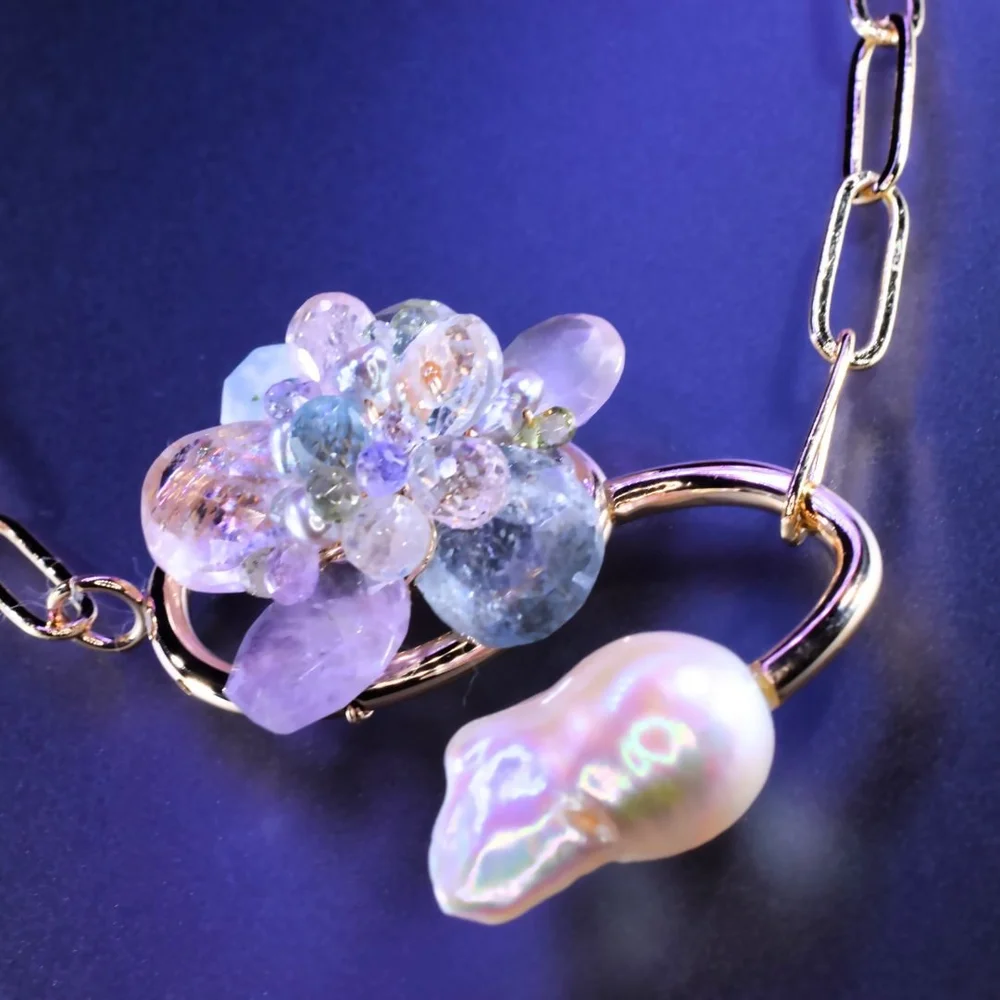
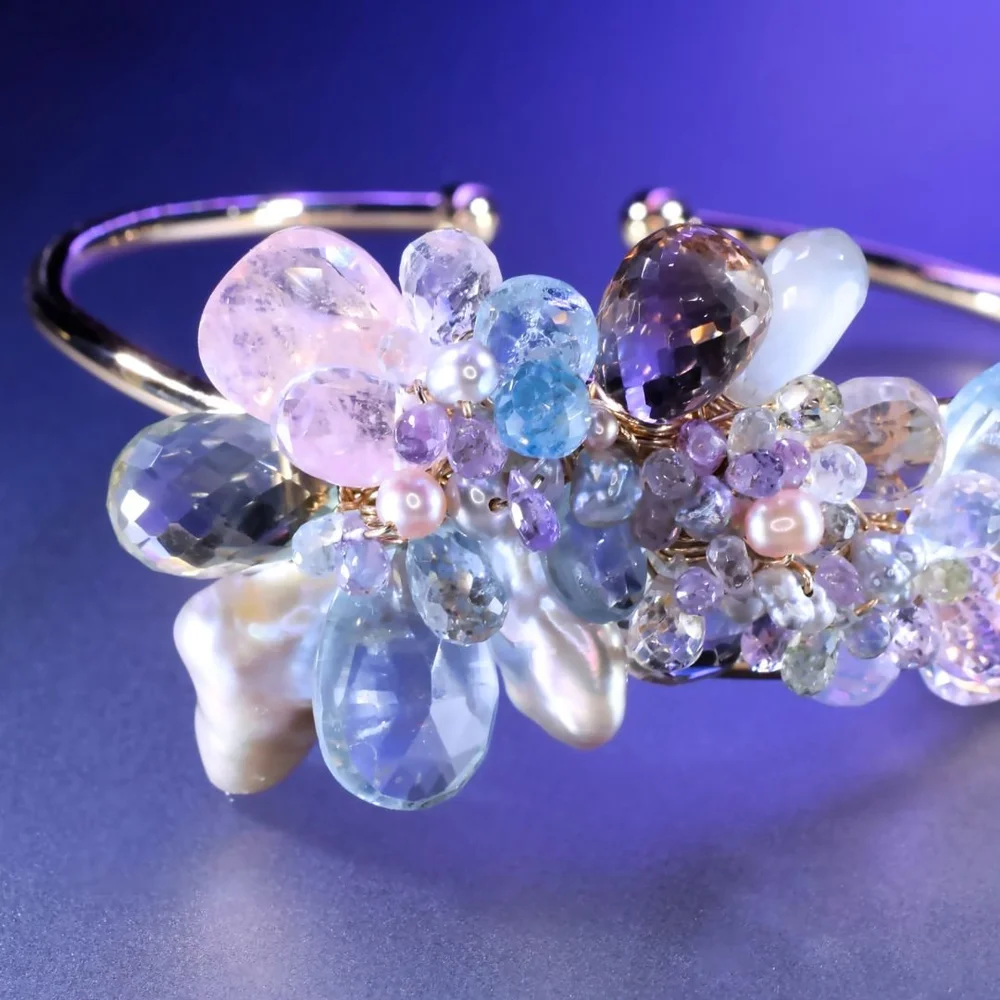
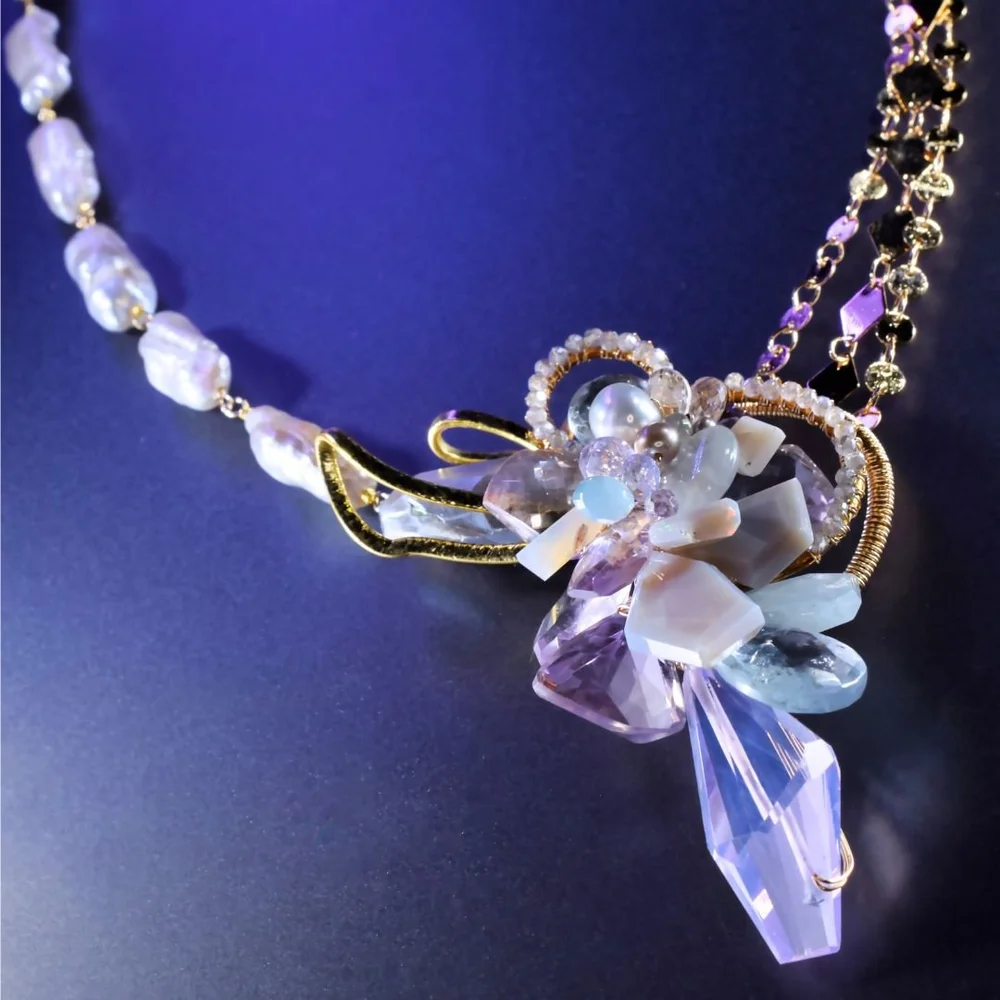
Interactive · 3 questions
- 01What's the piece for?
- 02What draws your eye?
- 03What metal do you gravitate toward?
Which Beryl Is Yours?
3 questions. Your personalized recommendation.
Choose one
Choose one
Choose one
Every recommendation, at a glance
Aquamarine · Wedding or “something blue” Aquamarine is a natural, meaningful "something blue", not a novelty ribbon, but a gemstone with real presence. It photographs beautifully across every lighting condition your wedding day will throw at it, from the ceremony through golden hour.
Aquamarine · A gift Aquamarine says "I see you" in a way generic jewelry never could. As March's birthstone and the traditional 19th anniversary stone, it carries meaning. As a one-of-a-kind handcrafted piece, it carries a story.
Aquamarine · Treating myself You're drawn to quiet power: the kind of piece that commands a room without trying. Aquamarine's cool confidence matches your energy. One sculptural piece is all you need.
Aquamarine · A milestone Aquamarine symbolizes courage and clarity, which makes it perfect for marking a moment of stepping into something new. A promotion, a move, a personal achievement. The cool blue-green reads as composed and intentional, just like the decision you\u2019re celebrating.
Morganite · Wedding or “something blue” Morganite's blush-peach warmth complements ivory, champagne, and blush palettes beautifully. It's bridal without being traditional: romantic, modern, and uniquely yours.
Morganite · A gift Morganite doesn't need an occasion: it IS the occasion. Its warm, romantic energy makes it perfect for the milestones that don't have a Hallmark card. A promotion. A fresh start. A "just because."
Morganite · Treating myself You're drawn to warmth and softness, but not weakness. Morganite's gentle glow belies a stone rated 7.5-8 on the Mohs scale. It's as tough as it is beautiful, and it gets more personal every time you wear it.
Morganite · A milestone Morganite\u2019s warm glow is perfect for marking moments of personal growth: the kind of milestones that don\u2019t come with a card but deserve something lasting. A piece you\u2019ll wear every time you want to remember what you\u2019re capable of.
Both · Wedding or “something blue” Both stones work beautifully for weddings. Aquamarine offers a natural "something blue" with cool confidence. Morganite brings warm, romantic blush tones. Andrea has designed bridal pieces with each, and can help you decide based on your dress, venue, and vision.
Both · A gift Aquamarine carries tradition (March birthstone, 19th anniversary). Morganite carries romance (no occasion needed). Both carry the story of a one-of-a-kind piece. The right one depends on who's receiving it: tell Andrea about them.
Both · Treating myself You appreciate both cool authority and warm softness, which means you have range. Andrea can help you figure out which stone matches what you're looking for right now, or design something that uses both.
Both · A milestone Both stones carry meaning without needing an occasion to justify them. Aquamarine for clarity and courage. Morganite for warmth and self-compassion. Andrea can help you choose the one that matches this moment in your life.
Aquamarine · Sterling silver Aquamarine in sterling silver is where contemporary meets clarity. The cool metal amplifies the stone's blue-green, creating a modern, almost architectural feel. I love this pairing for statement necklaces and sculptural cuffs.
Aquamarine · 14k gold or gold-filled This is my favorite tension: warm 14k gold against cool aquamarine. The contrast feels intentional, not accidental. The gold brings out depth in the stone that silver can't reach.
Aquamarine · Rose gold Rose gold with aquamarine is an unexpected pairing: the warm blush of the metal against the cool stone creates a beautiful push-pull. It reads as modern and thoughtful.
Aquamarine · Let the stone decide When I select an aquamarine, the metal choice follows the stone's personality. A deeply saturated blue calls for gold to add warmth. A pale, crystalline aquamarine sings in silver. I let the stone tell me.
Morganite · Sterling silver Morganite in sterling silver is an interesting choice: it cools down the stone's warmth and creates a more contemporary, editorial feel. Less romantic, more architectural.
Morganite · 14k gold or gold-filled Morganite in 14k gold is where this stone truly comes alive. The warm metal amplifies the stone's internal glow: it's like the gem is lit from within. This is the pairing I reach for most.
Morganite · Rose gold Rose gold and morganite is the classic pairing for a reason: the tones are in the same family, creating a seamless, monochromatic warmth. It reads as deeply romantic and intentionally soft.
Morganite · Let the stone decide Morganite almost always wants warm metal. The stone's pink-peach character amplifies in gold and rose gold in a way that silver can't replicate. I'll match the exact alloy to the stone's specific hue.
Both · Sterling silver If you're drawn to silver, that's a cool-leaning preference, which often means aquamarine will feel more natural on you. But I've made beautiful morganite pieces in silver that surprised even me.
Both · 14k gold or gold-filled Both stones pair beautifully with 14k gold. Aquamarine creates a deliberate warm-cool contrast; morganite creates a warm harmony. I'd want to show you both stones in gold before you decide.
Both · Rose gold Rose gold tips the scale slightly toward morganite: the warm metal and warm stone create a unified glow. But aquamarine in rose gold is a sleeper hit. Come see both in person.
Both · Let the stone decide This is my favorite answer. When you let the stone decide the metal, that's when the best pieces happen. Tell me what you're looking for and I'll pull stones for you to see in different metals.
Now you know the difference
Ready to wear the sea?
Handmade aquamarine jewelry →From the bench · Andrea Li
One mineral, two faces
A note from Andrea Li, who sets both aquamarine and morganite by hand in her Denver studio.
On the back of my work there is a weave, a web of wire I was told for years to hide and never could. It holds every stone I set, whatever its color. And here is something most people comparing these two stones never say out loud: aquamarine and morganite are the same mineral.
One stone, two colors. Iron turns it blue. Manganese blushes it peach. I set them both the same way.
Both are beryl. What separates them is a trace of metal caught in the crystal as it grew. A little iron cools beryl into the blue-green of aquamarine. A little manganese warms the very same beryl into the soft peach-pink of morganite. Same hardness, same clarity, same family. At the bench they behave like siblings.
So I set them the way I set everything, cold connected, no heat, the weave holding them from behind so a torch never touches the stone. The one tell I learned the hard way: the faceted crown-cut beryls, in both colors, are fragile right at the drilled hole, so I build the cluster with sturdier stones first and add these last, one at a time, by hand. Blue or peach, it is the same care and the same weave underneath. The color is only which metal happened to be in the ground.
Gifts · Handmade & One-of-a-Kind
Looking for an aquamarine or morganite gift?
Soft sea-blue or blushing pink, both aquamarine and morganite make tender, romantic gifts. Each piece is handmade and one-of-a-kind, sculpted by hand in my Denver studio.
Explore the Jewelry Gift Guide →Frequently Asked Questions
Is aquamarine or morganite more durable for daily wear?
They're essentially equal. Both are rated 7.5–8 on the Mohs hardness scale, which makes them excellent for daily wear: more scratch-resistant than amethyst (7) and nearly as hard as topaz (8). The main difference is practical: aquamarine tends to have fewer inclusions, which means slightly less risk of internal fractures on hard impact. But for normal daily wear, including rings, bracelets, and necklaces, both stones hold up beautifully over years of use.
Are aquamarine and morganite the same stone?
Yes: aquamarine and morganite are the same mineral. Both are beryl. What separates them is a trace of metal caught in the crystal as it grew. A little iron cools beryl into the blue-green of aquamarine. A little manganese warms the very same beryl into the soft peach-pink of morganite. Same hardness, same clarity, same family. At the bench they behave like siblings, and I set them both the same way: cold connected, no heat, so a torch never touches the stone.
Are aquamarine and morganite related to emerald?
Yes, all three are varieties of the mineral beryl. Pure beryl is colorless. Chromium creates emerald's green. Iron creates aquamarine's blue. Manganese creates morganite's pink. They share the same crystal structure, the same hardness, and many of the same physical properties. The difference is entirely about which trace elements were present when the crystal formed millions of years ago.
Which gemstone photographs better?
Aquamarine has a slight edge in photography versatility. Its cool blue-green reads well in daylight, tungsten, LED, and golden hour: it doesn't shift color dramatically between lighting conditions. Morganite can appear warmer or cooler depending on the light source, which means it looks slightly different in photos versus in person. For wedding photography specifically, aquamarine is more predictable across the full day of changing light. For lifestyle and studio photography, both are excellent. See our photography guide →
Is one stone more expensive than the other?
Generally, aquamarine commands a higher price per carat than morganite, especially for deeply saturated blue stones. Morganite offers more accessible pricing for equivalent size and quality. However, in Andrea Li's studio, the price of a finished piece is driven more by the design complexity, metalwork, and total labor hours than by the raw stone cost. A sculptural morganite cuff with extensive fabrication work may cost more than a simple aquamarine pendant.
Can I wear aquamarine and morganite together?
Absolutely, and it's a beautiful combination. The cool blue-green of aquamarine and the warm pink-peach of morganite create a complementary contrast that feels intentional rather than mismatched. Andrea has used both stones together in multi-gemstone pieces, where the color interplay adds depth and visual interest. If you're layering separate pieces, keep the metal consistent (14k gold works with both) and let the stones create the conversation.
How does Andrea Li source aquamarine and morganite?
Andrea sources both stones primarily at the Tucson Gem Show, selecting each individual stone by hand for its color, clarity, and character. No two stones are identical, which is why no two pieces are identical. The design doesn't exist before the stone does. Andrea examines how each stone catches light, what internal characteristics it has, and what kind of setting will honor the stone's personality. This is the foundation of one-of-a-kind design: the stone leads, and the metalwork follows. Read the full aquamarine guide →