Serene Greens in a Statement Bracelet
For Your Signature style
One of a Kind · Built Once
Explore Green Chrysoprase BraceletsLIMITED COLLECTIONS
The Palms Collection
The Stone
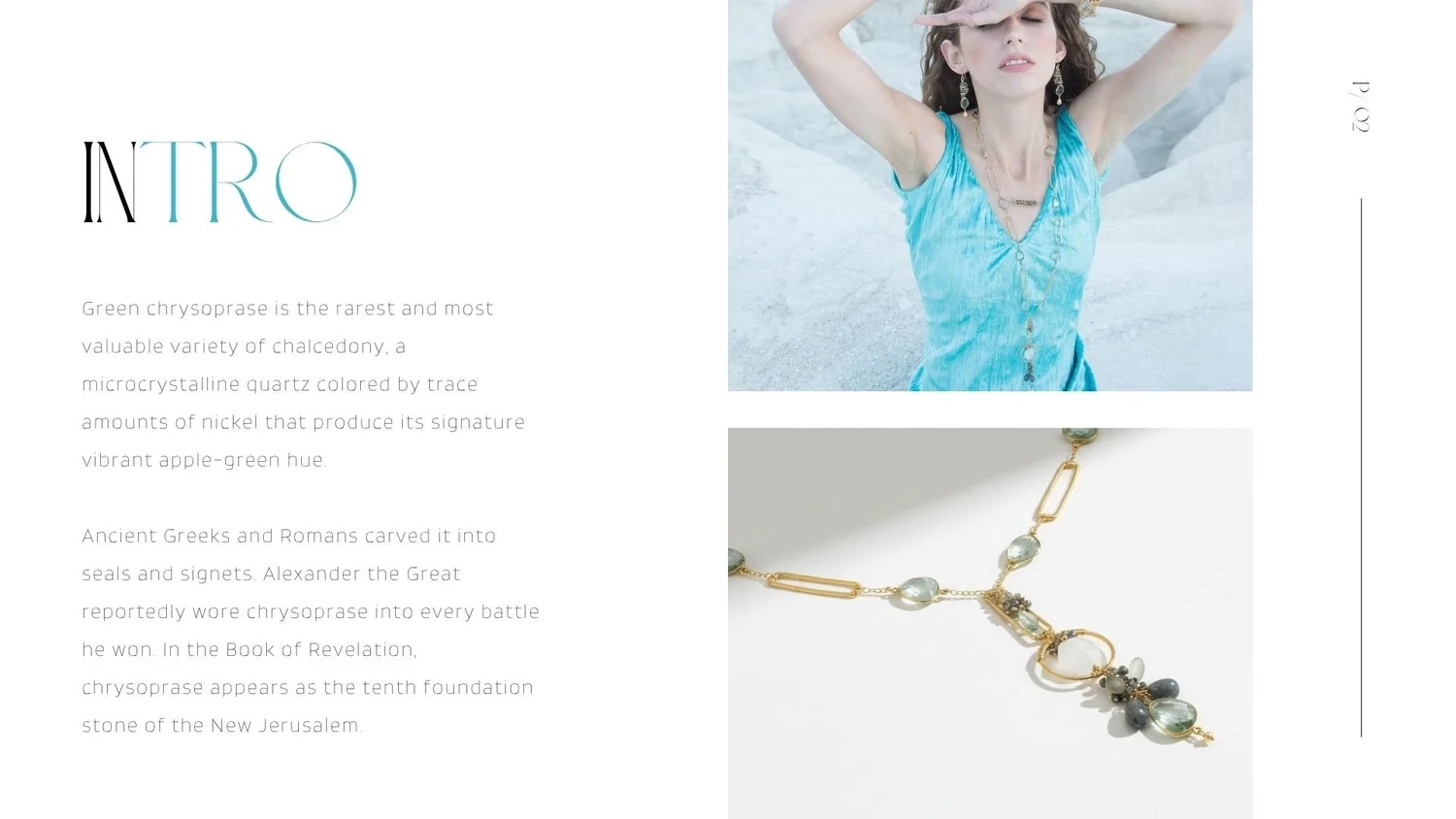
Green chrysoprase is the rarest and most valuable variety of chalcedony, a microcrystalline quartz colored by trace amounts of nickel that produce its signature vibrant apple-green hue. At 6.5–7 on the Mohs scale, it's durable enough for everyday jewelry yet demands thoughtful care: chrysoprase can fade with prolonged sunlight exposure, though the color is often recoverable through dark, moist storage. Ancient Greeks and Romans carved it into seals and signets. Alexander the Great reportedly wore chrysoprase into every battle he won. Frederick the Great of Prussia loved it so much he reserved all Silesian deposits for himself and used it to adorn the Sanssouci Palace in Potsdam. In the Book of Revelation, chrysoprase appears as the tenth foundation stone of the New Jerusalem.
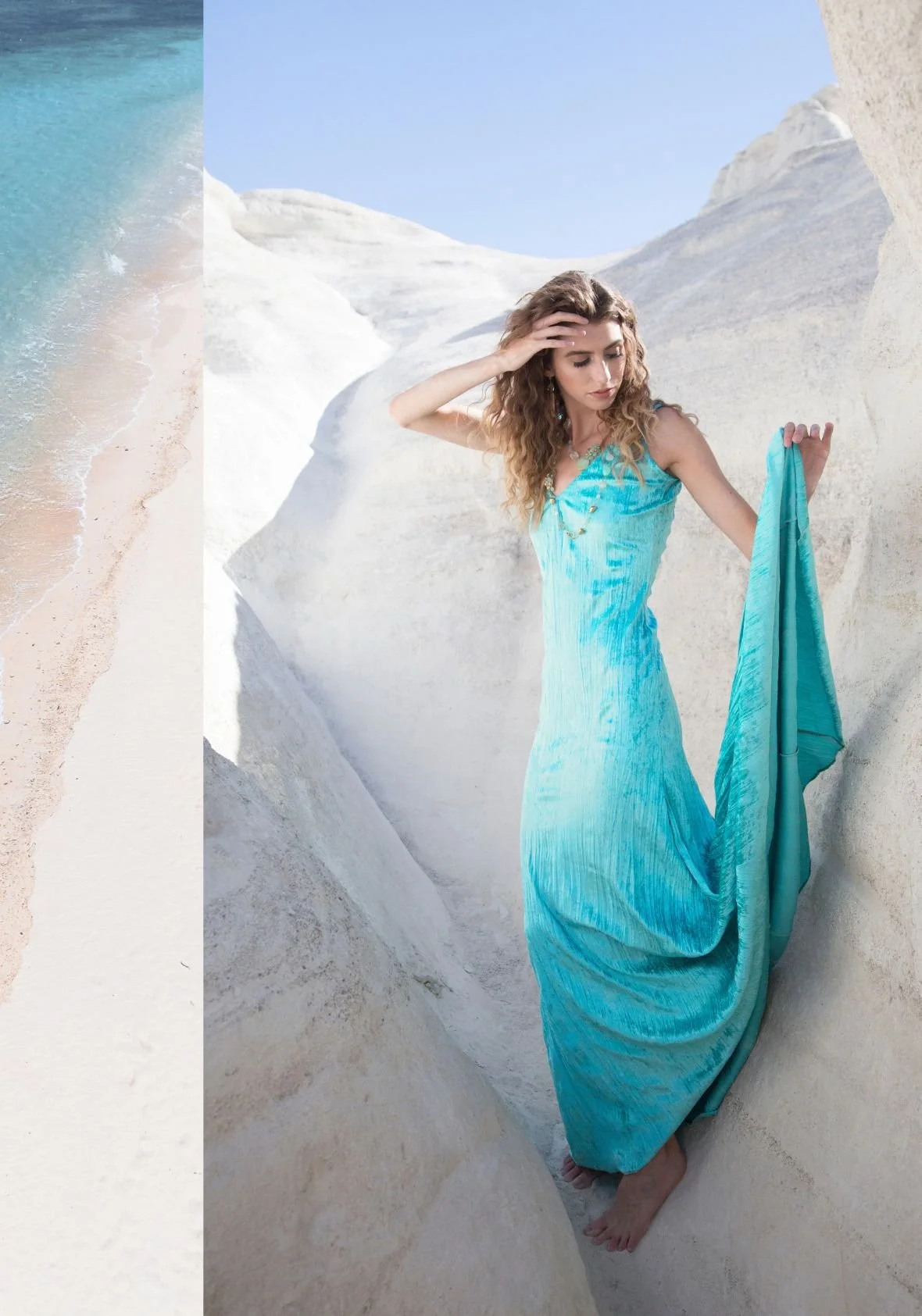
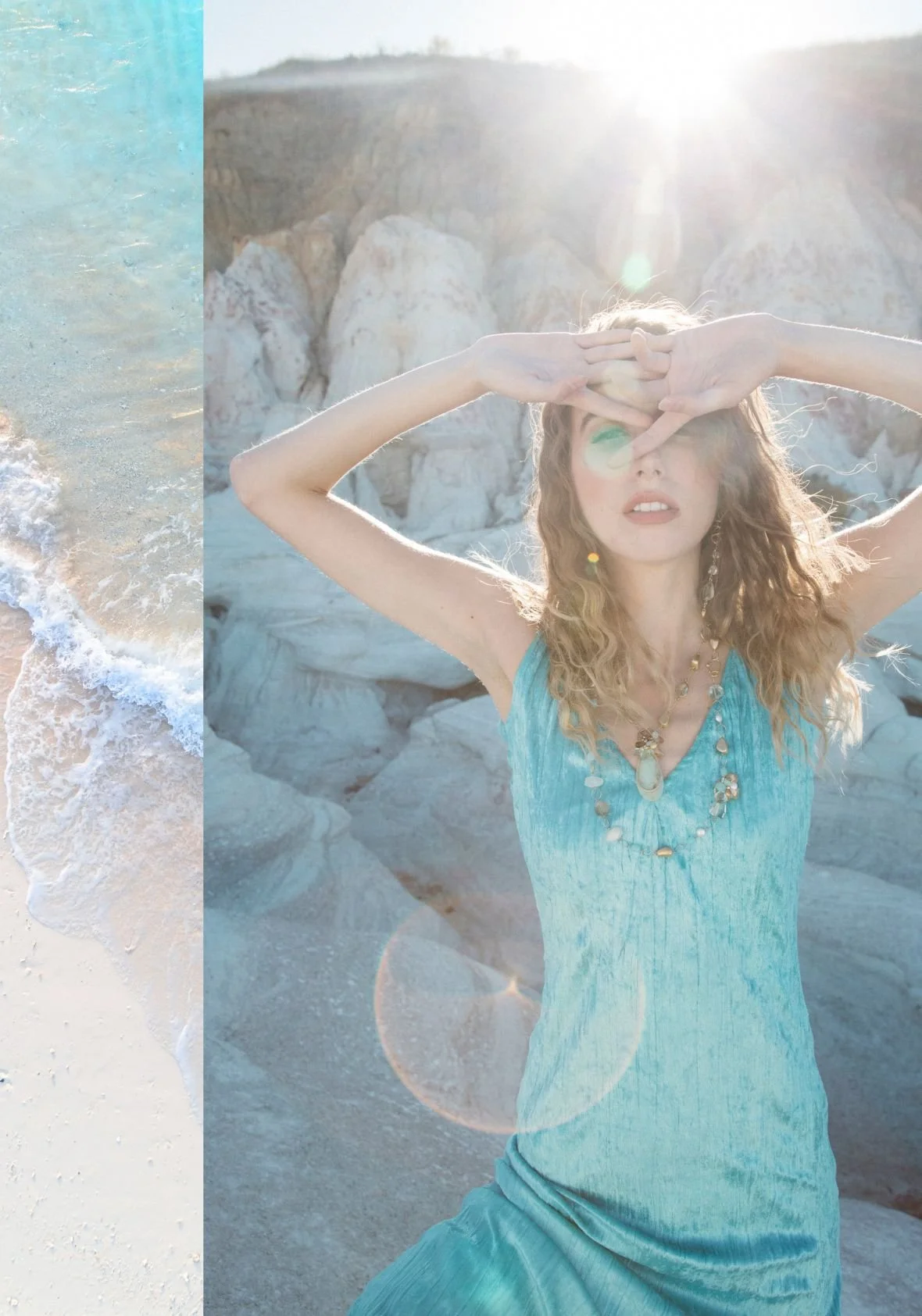
From Tucson
Andrea sources her green chrysoprase at the Tucson Gem Show, selecting stones for vibrant color and unique cuts. The larger stones, chosen specifically for their unusual shapes, become cornerstones of each design. Smaller briolettes are sprinkled into gemstone clusters so the chrysoprase color echoes cohesively throughout every piece.
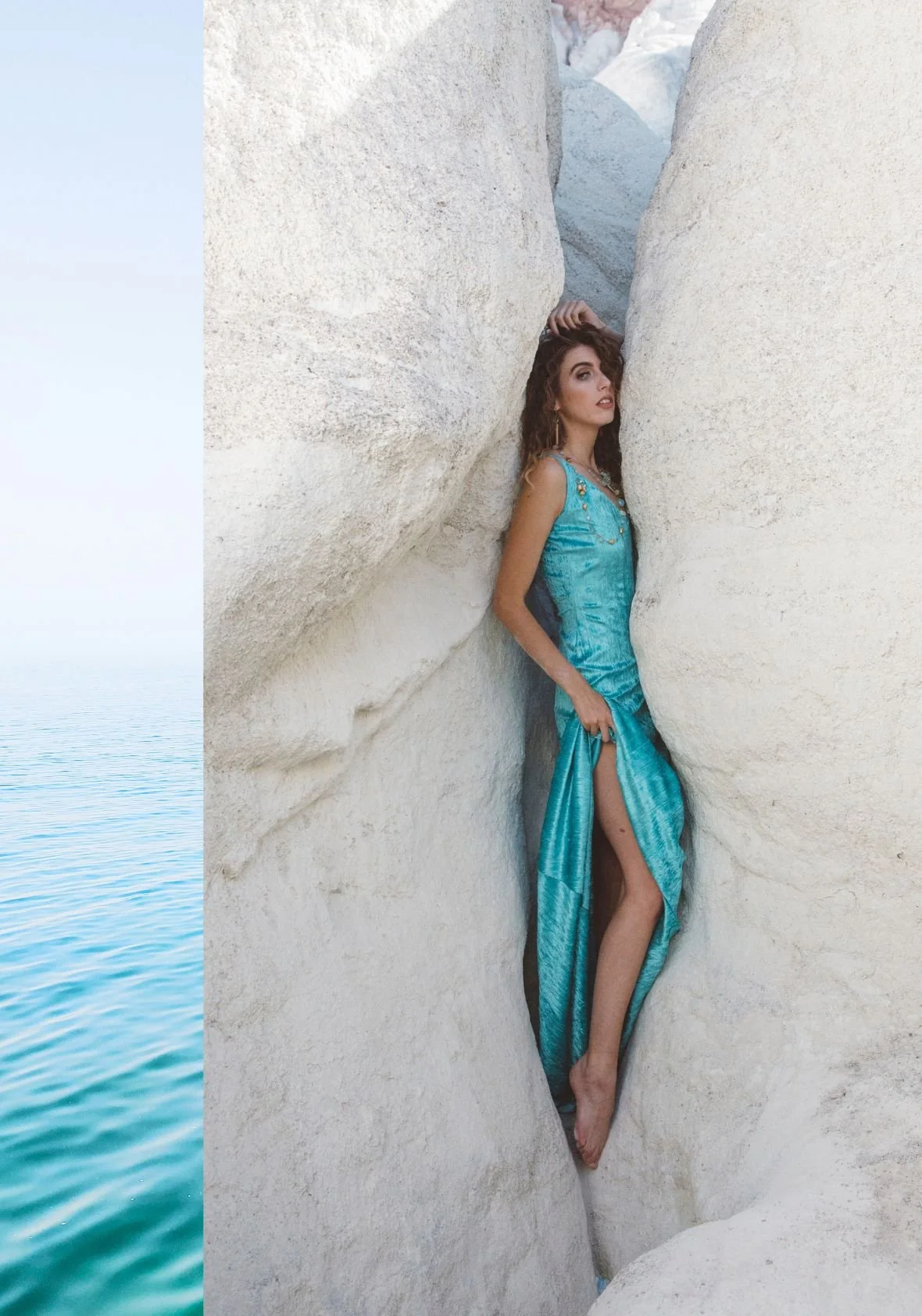
At the Bench
Andrea draws on every technique available, fabrication, wire work, and assembly, to build pieces where no single element is recognizable in the final design, pairing green chrysoprase with complementary stones like gilded turquoise, apatite, peridot, Peruvian opal, chalcedony, rutile, andalusite, green amethyst, freshwater pearls, whiskey topaz, Oregon sunstone, and smoky topaz.
The Guide
chrysoprase
Chrysoprase is the rarest and most valuable variety of chalcedony: a microcrystalline quartz whose vibrant apple-green color comes from trace amounts of nickel. Called the "Stone of Venus," it has been prized by rulers and craftspeople for thousands of years.
6.5–7
Mohs Hardness
SiO₂
Composition
May
Birthstone
Rare
Natural Occurrence
Crystal System
Trigonal (Microcrystalline)
Color Source
Trace nickel compounds
Natural: never dyed or coated
Color Range
Apple green to deep teal
Higher nickel = deeper green
Transparency
Translucent to nearly opaque
Waxy to vitreous luster
Refractive Index
1.530–1.540
Primary Sources
Australia, Poland, Tanzania, Brazil, USA
Chrysoprase forms through the deep weathering of nickel-bearing serpentinite and ultramafic rocks. As groundwater carries dissolved nickel through cracks and fractures in these rocks, silica precipitates and traps the nickel, creating veins of vibrant green chalcedony: sometimes only a few centimeters wide.
Unlike emerald (colored by chromium) or peridot (colored by iron), chrysoprase owes its distinctive green entirely to nickel. The nickel exists as tiny nickel silicate inclusions dispersed throughout the microcrystalline quartz structure: so fine they're invisible to the naked eye, creating an even, saturated color rather than visible spots or zones.
Chrysoprase requires a specific geological recipe: nickel-rich ultramafic rock, deep weathering over millions of years, and silica-saturated groundwater. The veins where it forms are typically narrow fracture fillings, rarely more than a few inches across, which limits the size of rough material and makes large, vivid stones genuinely scarce.
Chrysoprase contains trace water molecules that help hold the nickel compounds responsible for its color. Prolonged exposure to heat or direct sunlight can cause these water molecules to escape, temporarily fading the green. High-quality natural chrysoprase (especially Australian material) tends to hold color better than European or dyed specimens.
Chrysoprase is one of few green gemstones whose color is entirely natural and requires no treatment. Much of what is sold as "green agate" or "green chalcedony" is artificially dyed: genuine chrysoprase gets its color from its composition. This matters: the color is inherent to the stone, not applied to it.
Andrea sources her green chrysoprase at the Tucson Gem Show: one of the world's largest annual gemstone and mineral events. She selects each stone individually, prioritizing vibrant color saturation and unusual cuts and shapes that can anchor distinctive, one-of-a-kind designs.
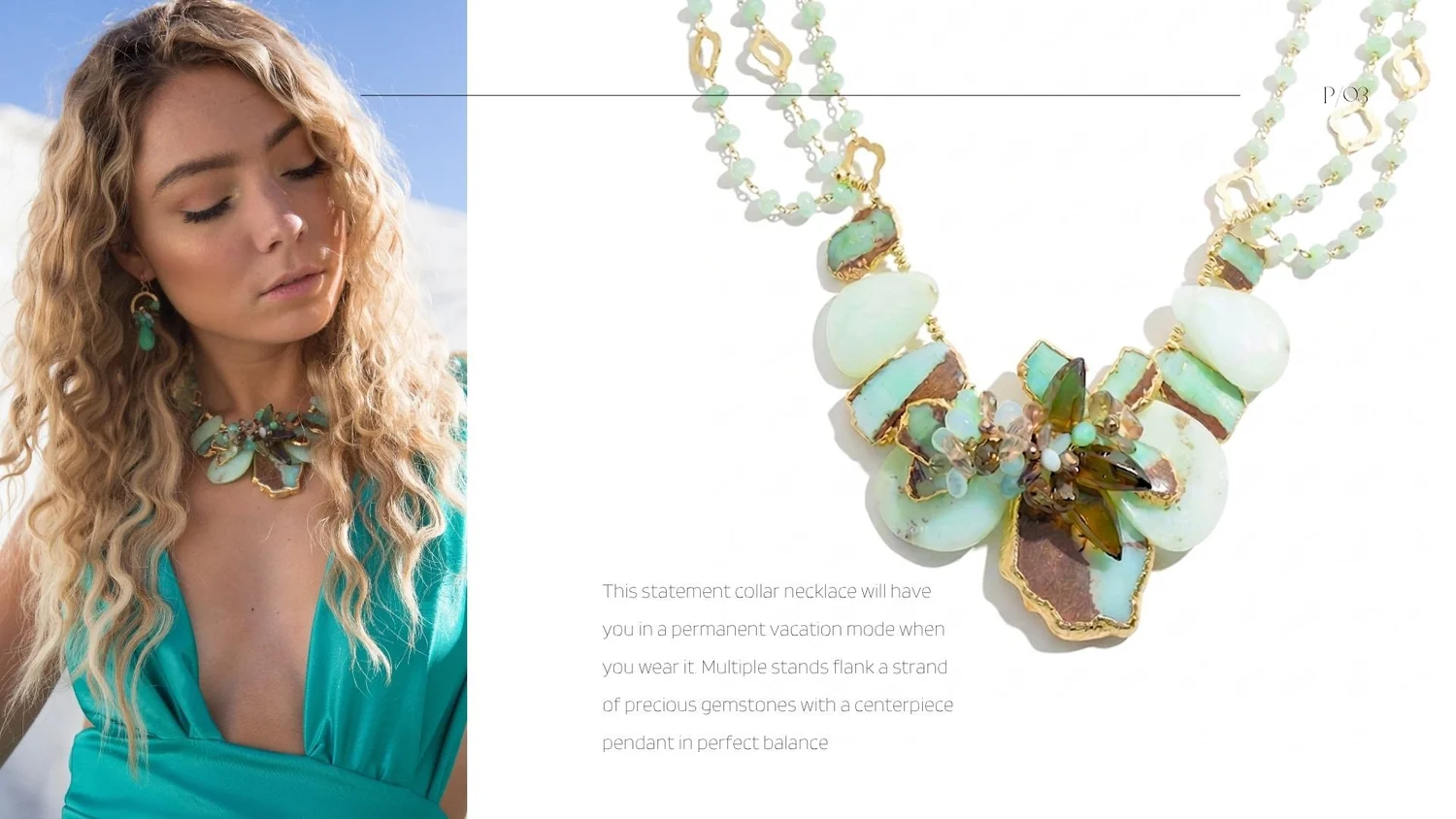
The larger chrysoprase stones are chosen specifically for their unique shapes: irregular, organic forms that become the cornerstones of each design. No two are alike, which means no two pieces in The Palms collection are alike. Andrea also selects smaller briolettes that get sprinkled into gemstone clusters, echoing the vibrant green throughout every design for visual cohesion.
Each Palms piece pairs chrysoprase with stones selected to create depth and contrast within a tropical color palette: gilded turquoise, apatite, peridot, Peruvian opal, chalcedony, rutile, andalusite, green amethyst, freshwater pearls, whiskey topaz, Oregon sunstone, and smoky topaz. The result is a cohesive collection where every piece feels like part of the same world.
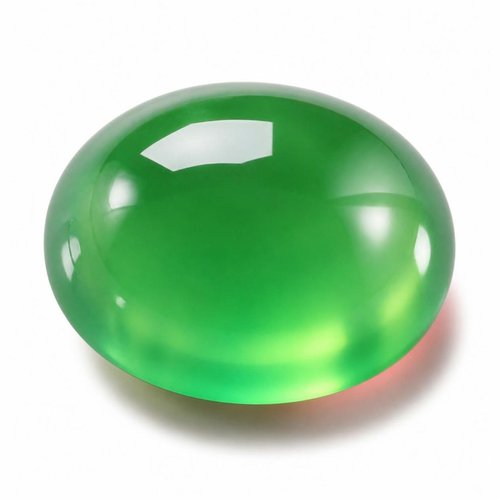
The most prized chrysoprase shows bright, evenly saturated apple-green color with soft translucency: like a Granny Smith apple held to sunlight. Stones that appear pale, yellowish-green, or heavily mottled with white calcite veins are lower quality. Perfect uniformity across a strand often signals dyed material rather than natural chrysoprase.
Australia (especially Queensland) produces the world's finest chrysoprase: vivid, saturated, and color-stable. Other notable sources include Poland (historically Europe's primary source since the 1700s), Tanzania, Brazil, Germany, Russia, and several U.S. states including Arizona, California, and Oregon. Australian material commands the highest prices for its superior color retention.
Chrysoprase is often compared to jade and emerald because of its vivid green color. Here's how it differs, and why Andrea chose it for The Palms collection.
| Property | Chrysoprase | Jade (Jadeite) | Emerald | Green Chalcedony (Dyed) |
|---|---|---|---|---|
| Color Source | Nickel (natural) | Chromium + iron | Chromium + vanadium | Artificial dye |
| Hardness | 6.5–7 | 6.5–7 | 7.5–8 | 6.5–7 |
| Treatment | None required | Often wax-coated | Almost always oiled | Always dyed |
| Price Range | $2–40/ct | $20–3,000+/ct | $50–10,000+/ct | Under $2/ct |
| Durability | Good for daily wear | Extremely tough | Brittle (inclusions) | Good, but color fades |
| Transparency | Translucent, waxy glow | Opaque to translucent | Transparent | Varies |
| Why It's Special | Rarest chalcedony; naturally vivid without treatment | Cultural significance; extreme toughness | Prestige; depth of color | Affordable green option |
Chrysoprase appealed to me because the color is genuinely natural: no dyes, no coatings, no treatments. That vivid green is just what the stone looks like. And the variety of cuts and shapes you can find at Tucson (irregular, organic forms that don't come out of a standard mold), that's exactly what I want as the foundation of a one-of-a-kind piece. You can't get that personality from a standard round-cut emerald.
The Palms collection uses both 14k gold-filled and 24k gold vermeil components. Each material has different care needs: here's how to keep your pieces looking their best.
Clean with lukewarm water, mild soap, and a soft cloth. Avoid ultrasonic cleaners, steam cleaners, and harsh chemicals. Store away from direct sunlight: prolonged UV exposure can temporarily fade the green. If fading occurs, store in a dark, slightly humid environment to restore color.
14k gold-filled is highly durable: a thick layer of solid gold bonded to a base metal. It won't tarnish under normal wear and can last decades with basic care. Remove before swimming or applying lotions. Clean with a soft polishing cloth.
24k gold vermeil is a minimum 2.5-micron layer of gold electroplated over sterling silver. It's more delicate than gold-filled: the gold layer can wear with daily friction, especially on high-contact areas like bracelets. Remove before bathing, swimming, exercising, or applying products. Store separately in a soft pouch.
Store pieces in a jewelry box or soft pouch away from direct sunlight and heat sources. Keep chrysoprase pieces separate from harder stones (diamonds, sapphires) to prevent scratching. A slightly humid storage environment is ideal for chrysoprase color retention.
The Palms collection uses both metals because each serves a different design purpose. Gold-filled is more durable: a mechanically bonded layer of solid gold that resists tarnishing and wear. It's Andrea's go-to for structural components. Gold vermeil uses a thinner electroplated layer (minimum 2.5 microns) over sterling silver. It offers a rich 24k gold color but requires more mindful care. With daily wear on high-friction items (bracelets, rings), expect the vermeil layer to show wear after 6–24 months. Lower-friction items (necklaces, earrings) last longer. Both materials can be cleaned with gentle soap and water: never use abrasive cloths or chemical jewelry cleaners on vermeil, as these can accelerate gold layer loss.
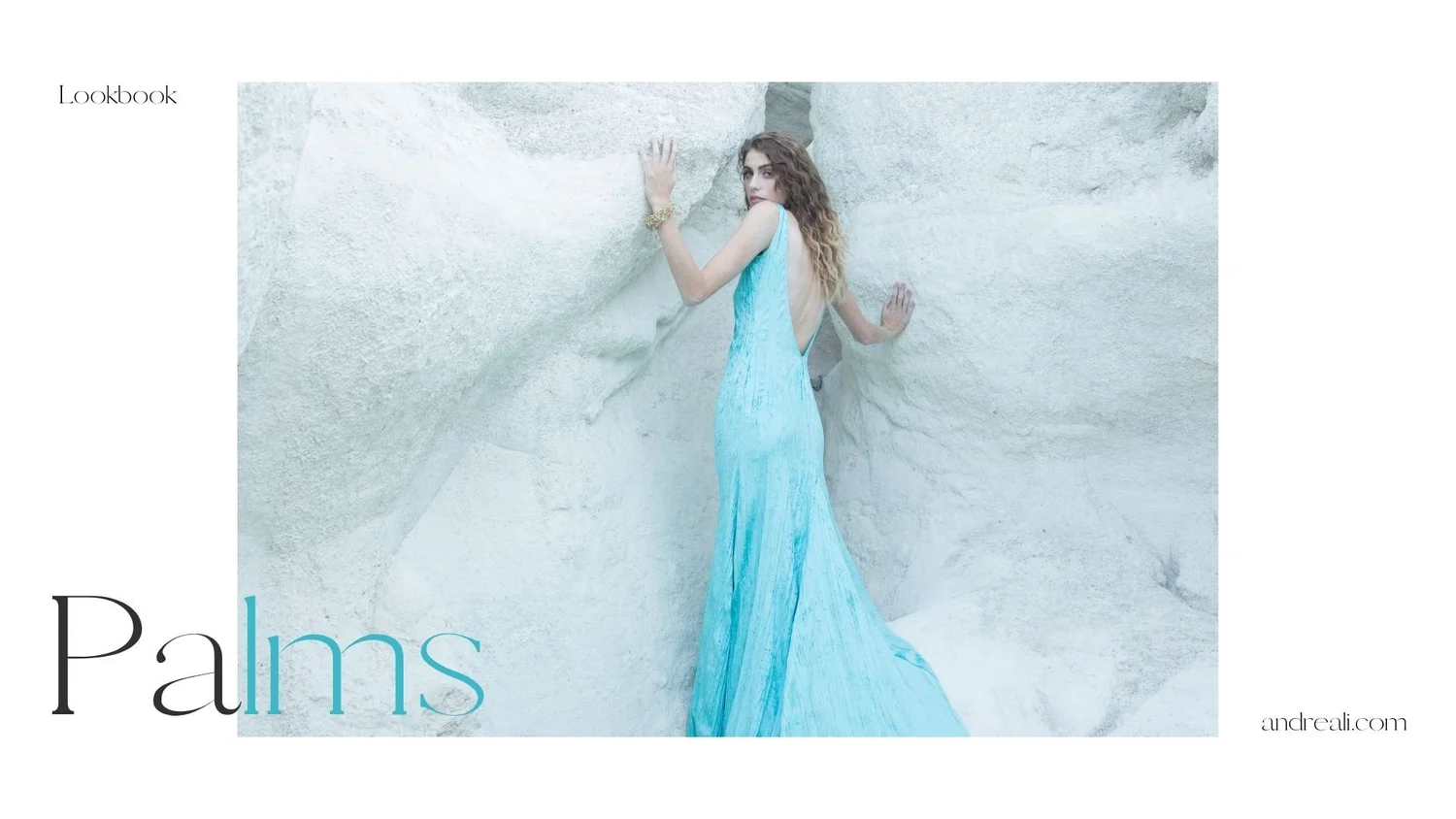
The Palms collection was born from a color palette that reminded Andrea of tropical waters: the crystalline teal of a white sand beach, the vibrant greens of palm trees, the warmth of sunlight on water. It's designed to take you away from the mundane of everyday life and transport you to the most memorable beach vacation you've ever taken. Peaceful. Serene. Vivid.
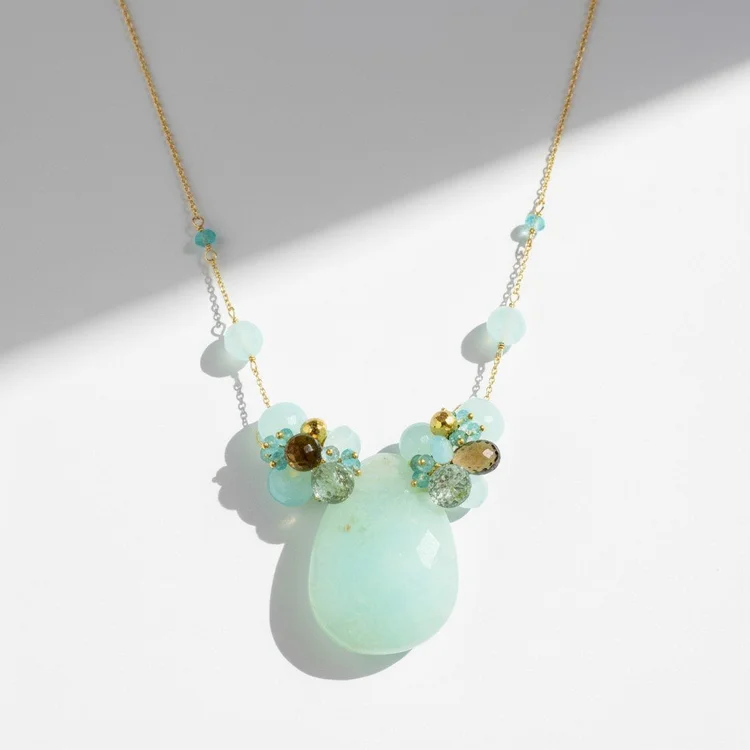
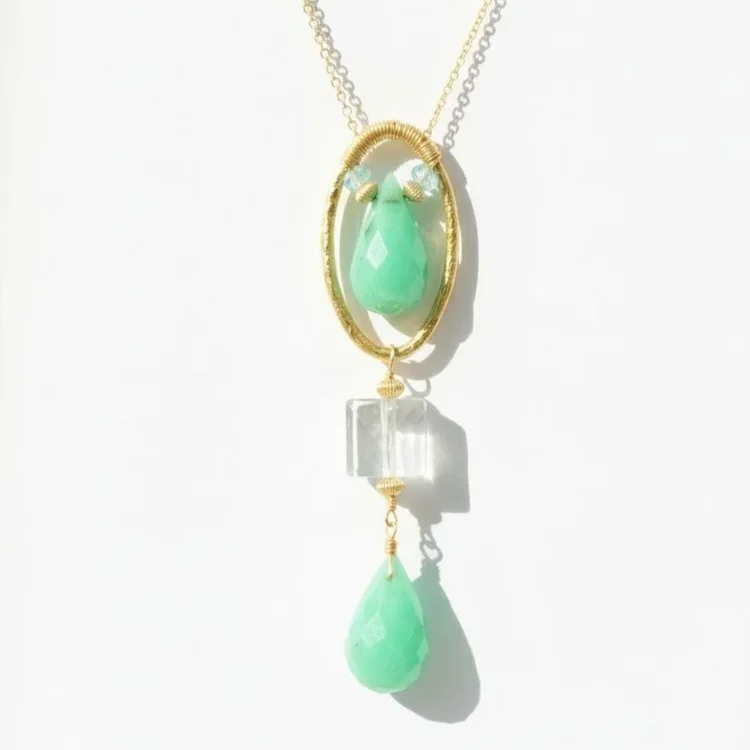
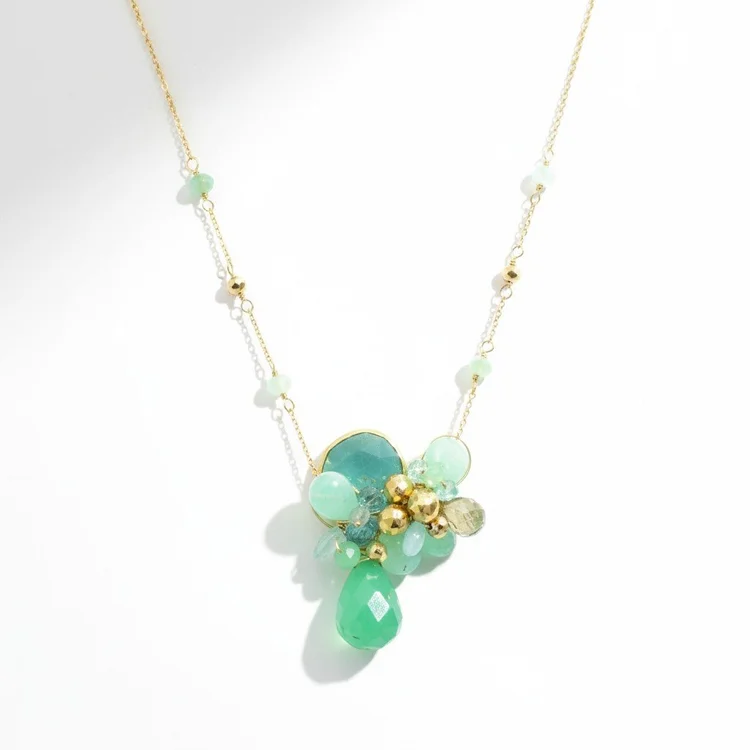
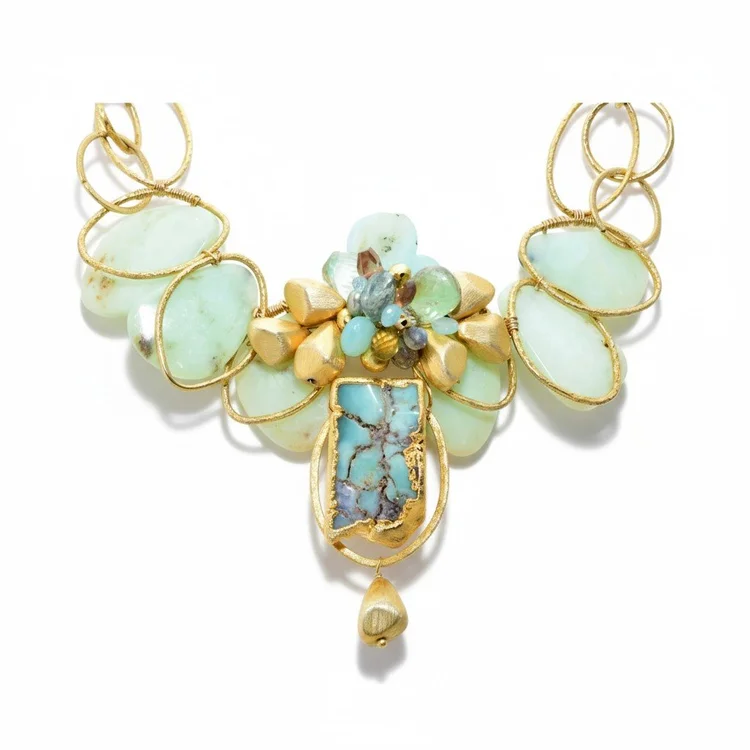
Each piece pairs green chrysoprase cornerstones, selected for their unique, irregular shapes at the Tucson Gem Show, with a carefully curated palette of complementary stones. Andrea uses 14k gold-filled and 24k gold vermeil components, twisting them into unique configurations to add uncommon detailing and architecture to every design. The result is jewelry that feels organic yet intentional, tropical yet sophisticated.
Andrea draws on every technique available (fabrication, wire work, and assembly) to build pieces where no single element is recognizable in the final design. The chrysoprase becomes just one voice in a chorus of color, texture, and metalwork.
Every Palms piece pairs chrysoprase with complementary stones chosen for depth, contrast, and color cohesion. Here's the full palette, and where to explore each stone further.

Soft luminescence that grounds the vibrant greens. The organic warmth of pearls balances chrysoprase's mineral intensity.

Delicate sage-to-olive hues from heat-treated amethyst. One Palms bracelet features green amethyst as its primary stone: kept here for its perfect color match.

Turquoise with gold matrix veining. Adds an earthy, sun-warmed dimension that contrasts with chrysoprase's cool green.
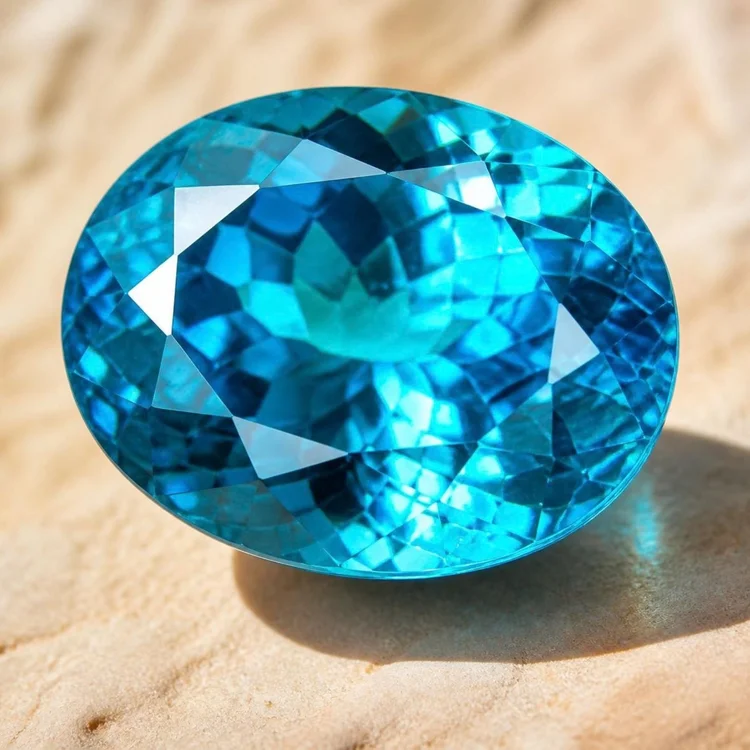
Electric teal-blue that deepens the tropical water palette. A vivid accent stone that bridges chrysoprase green and ocean blue.

Bright yellow-green that adds citrus spark. One of the few gemstones formed deep in the earth's mantle, not the crust.

Soft, translucent blue-green with a milky glow. Evokes calm, shallow tropical waters: the serenity note in the collection.

Chrysoprase's cousin in the quartz family. Blue-tinted varieties add cool contrast; its waxy luster echoes chrysoprase's own texture.

Warm golden-peach with copper shimmer. The sunset warmth that offsets the cool greens and blues: like golden hour on a beach.

Rich amber-brown warmth. Adds tonal depth and earthiness, like driftwood and warm sand anchoring the tropical palette.

Shifts between olive, gold, and reddish-brown depending on the angle: a natural color-change effect called pleochroism. Adds complexity.

Golden needle-like inclusions that catch light. When used as accents, rutile adds texture and sparkle within the gemstone clusters.

Deep, moody brown-gray that provides shadow and contrast. The grounding anchor that keeps the tropical palette sophisticated rather than candy-sweet.
Illustrations of each variety, not photographs of specific stones.
Explore the CollectionShop Necklaces →Shop Bracelets →Shop Earrings →
From the bench · Andrea Li
A note from Andrea Li, who sets chrysoprase by hand in her Denver studio.
Chrysoprase never meets a flame in my studio. I set every stone by cold connection: wire wrapping, hand-bailing, and beading with crimps and crimp covers. Heat would damage the stones, so no heat touches a gemstone cluster at any stage, and every connection is hand-built, mechanical and visible. I have never seen chrysoprase fade on me.
The soldering and bench fabrication go into the metal foundation the clusters are built onto, and that foundation is what makes each design completely new. When a piece uses a commercial chain, I embed it so deeply in wire wrap and bail work that it no longer reads as a stock element.
Each stone arrives pre-drilled by the lapidary who cut and polished it. Sometimes I widen the hole with a diamond-bit drill so my wire passes through cleanly. Then I wrap: one stone, one decision, one knot at a time, building outward into a cluster that has to flow as one design even though it was assembled bead by bead. Hand-bailing chain, wrapping individual rondelles onto a chain to make a gemstone-beaded chain, is the same technique applied to the chain itself.
There's no covering up your decisions afterward. Every wrap is visible.
It demands planning many moves ahead. I commit each stone's placement before I have placed the next twelve. Chrysoprase has never given me trouble under the drill or in the wrap. The brittle stones, like opal, I remember, and I add them last so the tightening of the cluster never stresses them.
I look for unusual cuts, because they make a cluster more varied. If the stones are too similar, the cluster flattens into something one-dimensional. The Palms palette came from the stones themselves: the greens, teals and blues reminded me of a tropical paradise, white sand beaches and turquoise water. For the Green Amethyst Link Bracelet, I cut leftover gold links to length and twisted them into custom links of different sizes and shapes.
These pieces aren't made for every day. They are for an occasion, or for changing your mood. One collector tells me she puts a piece on around the house just to lift her mood, and several display theirs as art, in shadow box frames or hung on sculptures, so they can simply admire them.
Chrysoprase is the next collection on my desk, which is why I wrote the Jewel Tone gemstone jewelry guide.
Featured Collection
Every piece in The Palms collection, one of a kind and handcrafted in Denver.
The Lookbook
Photography Nicole Marcelli · Models Madison Spialek and Savana Ray · Hair and makeup Mel Akana McIntosh · Garments Gino Velardi · Creative Credits
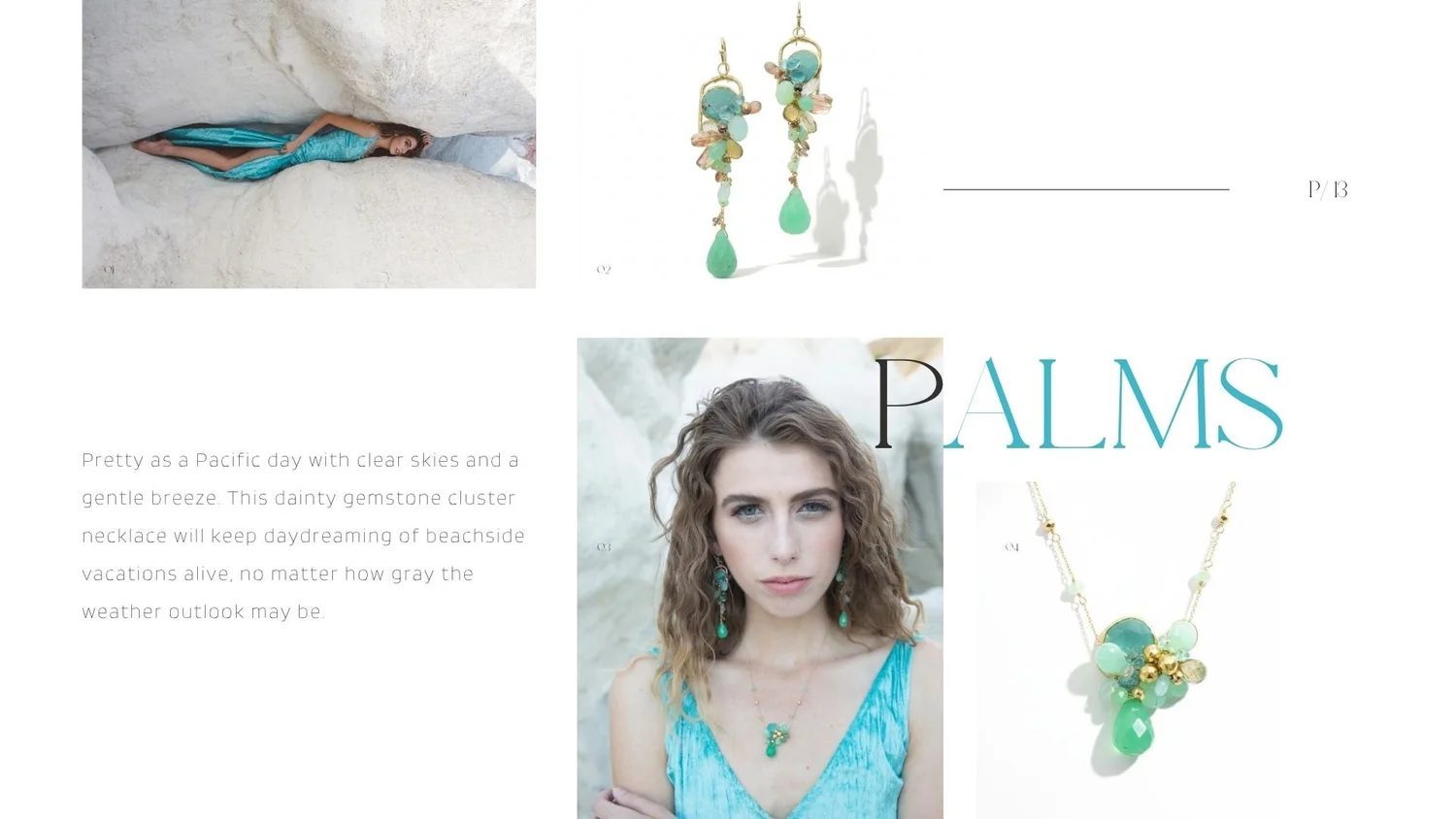
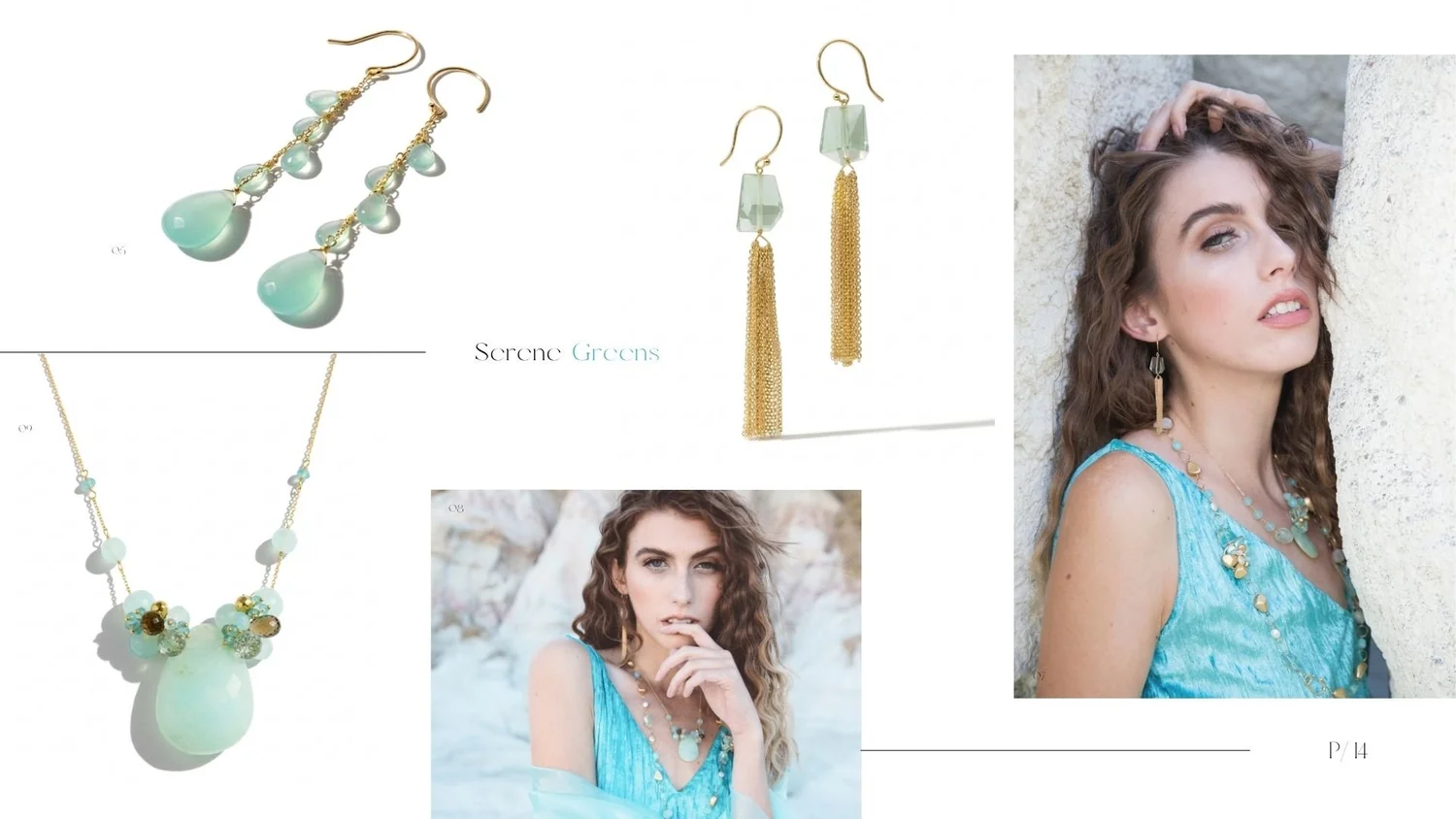
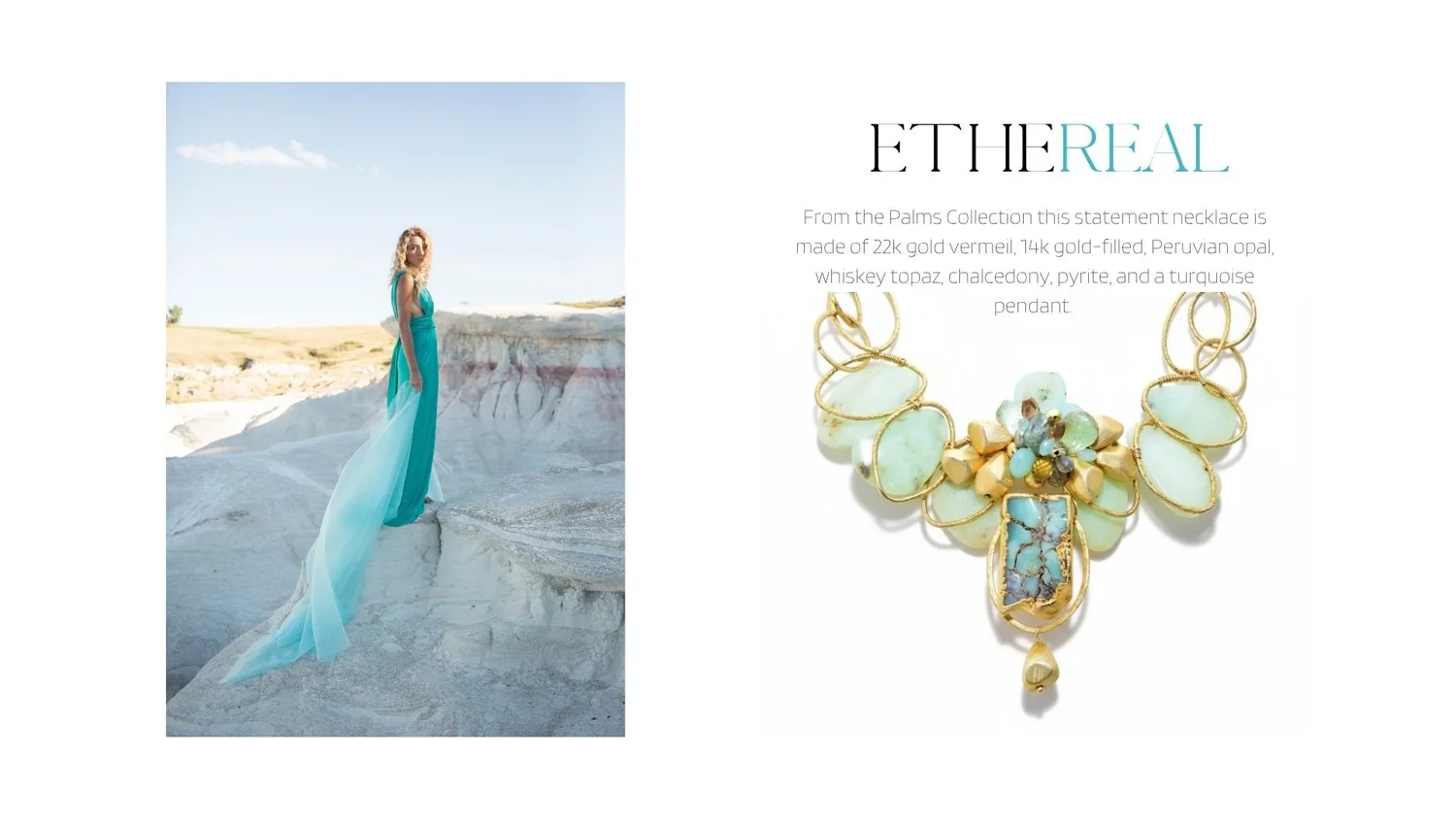
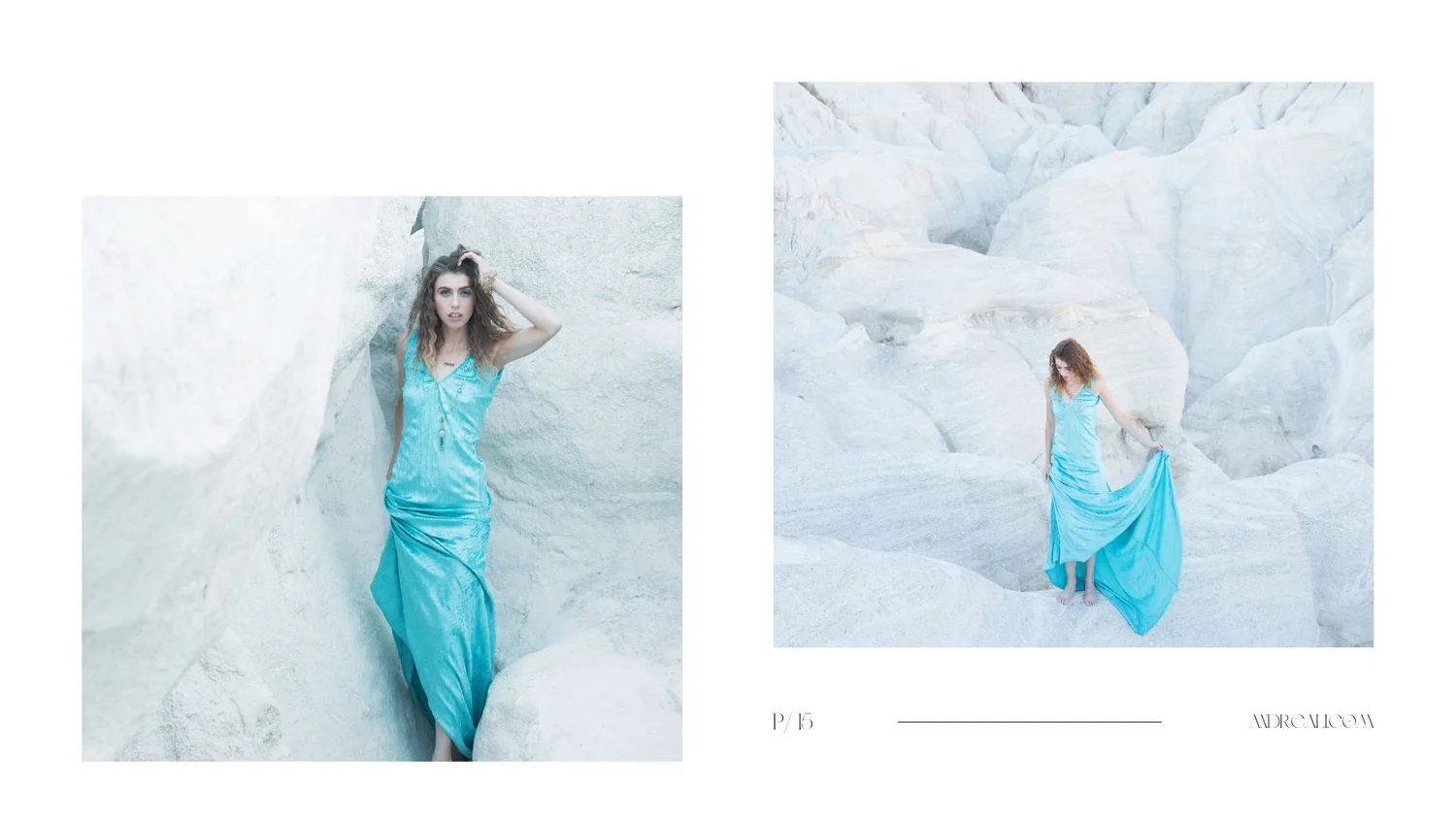
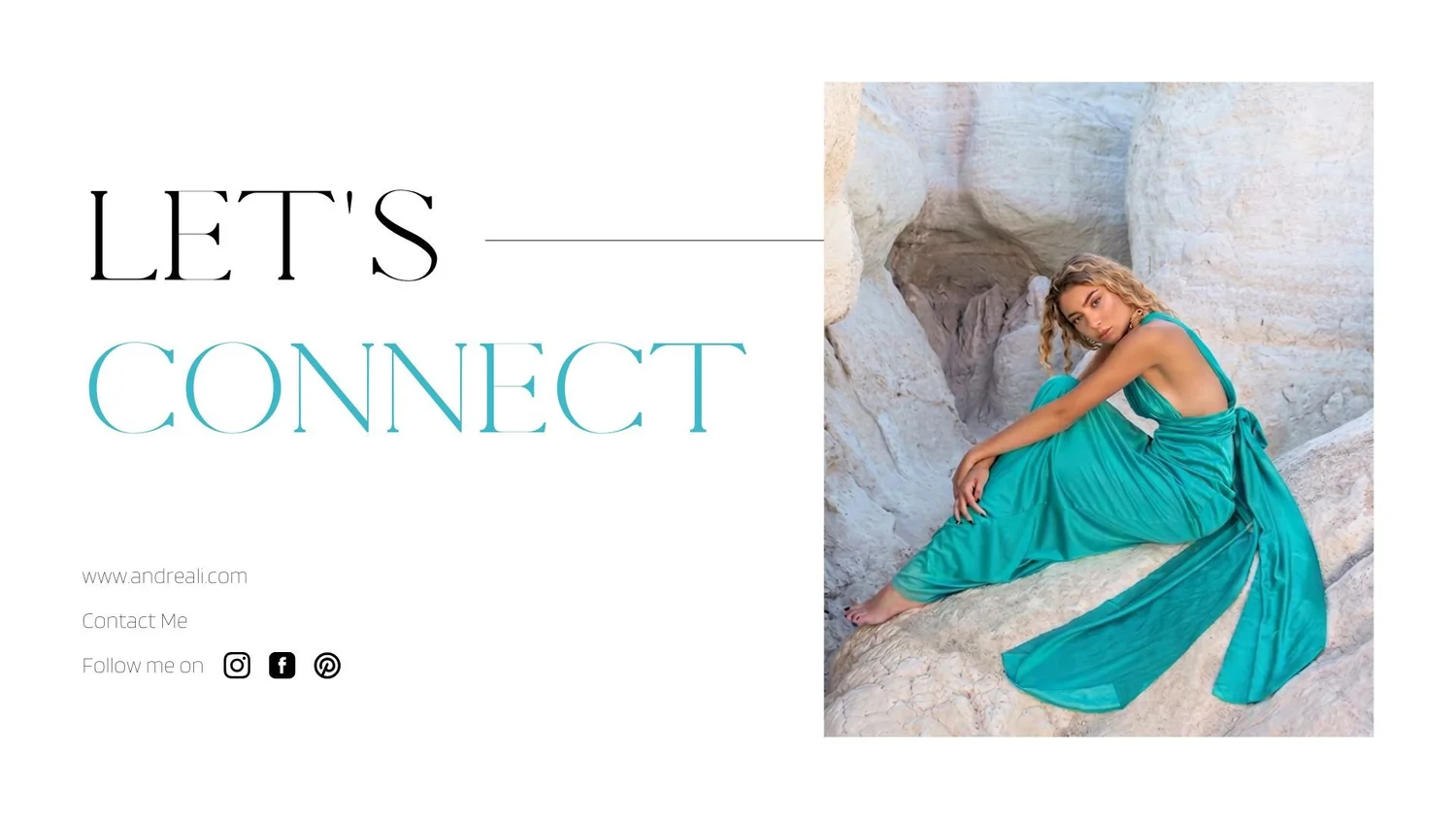
The Palms Collection
Most pieces in The Palms collection have found their homes. If something here speaks to you, or if you'd like a chrysoprase piece designed just for you, let's talk. Every commission is handcrafted in Andrea's Denver studio using the same techniques and materials you see in this collection.
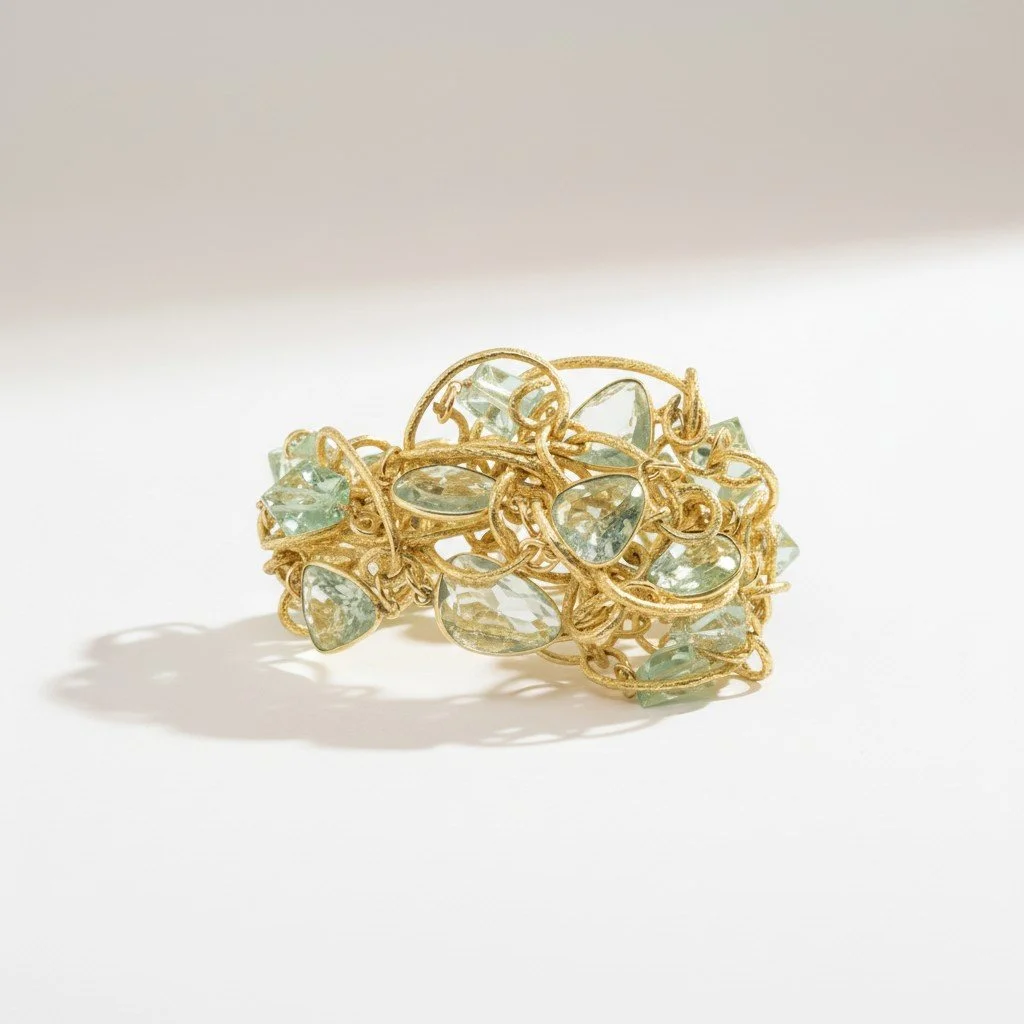
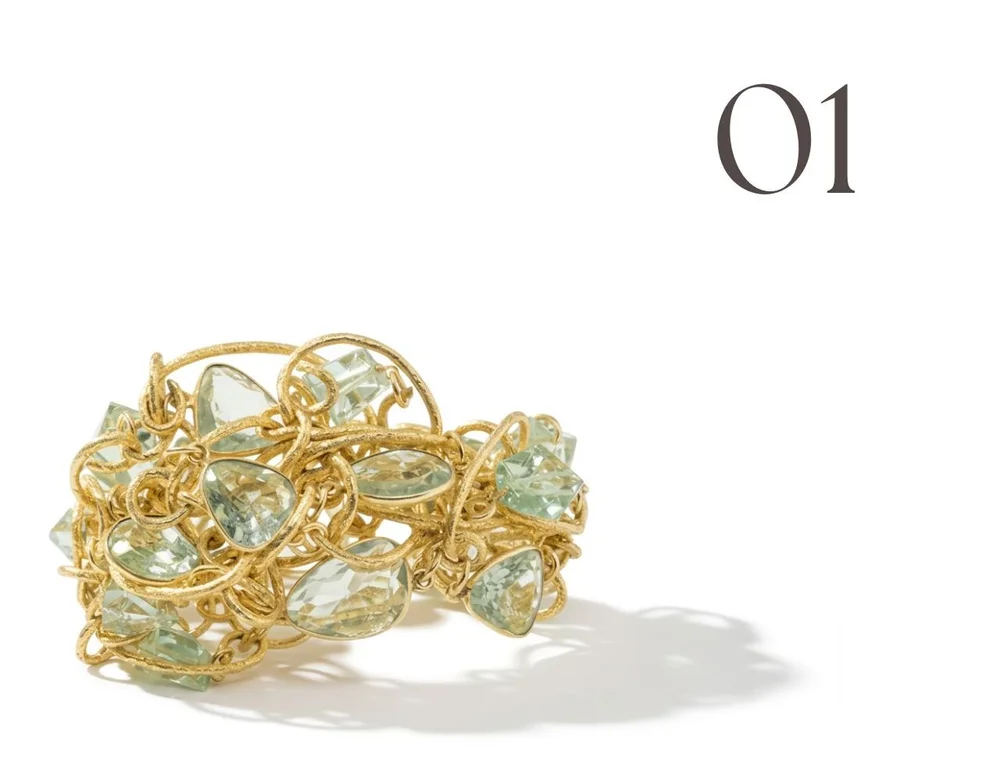
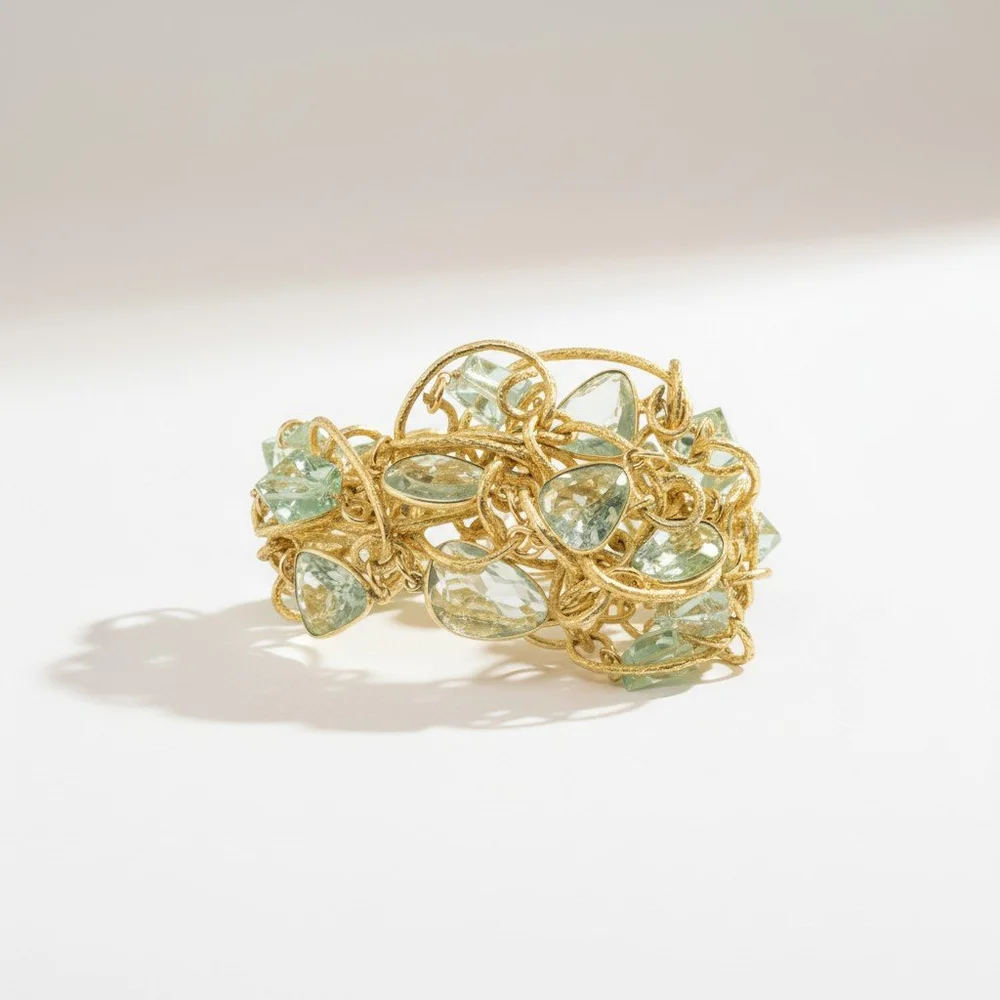
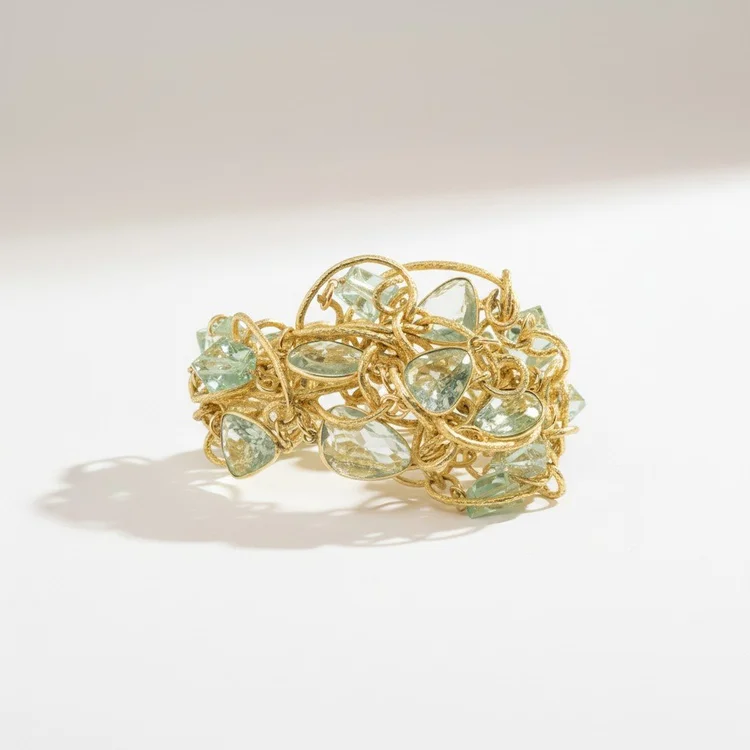
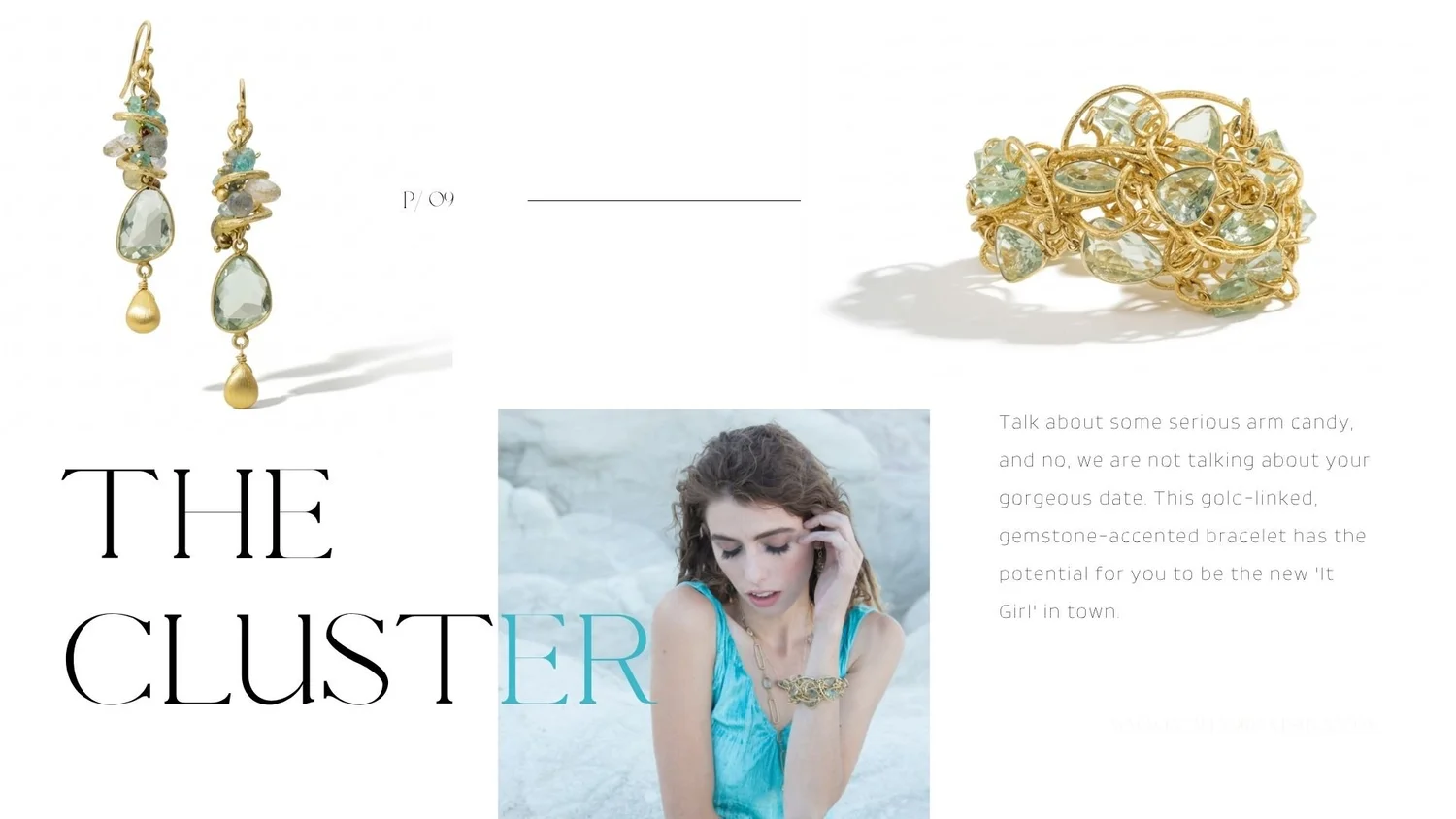
Start a Custom Piece →GREEN AMETHYST LINK BRACELET, handmade by Andrea Li in her Denver studio, built from 14K gold-filled wire and 22K gold vermeil with green amethyst accents. The bracelet moves from section to section the way a linked chain should: each segment has its own weight and swing, held together with hand-formed connections rather than a manufactured clasp assembly.
The green amethyst here reads closer to pale sage than to the deep purple most people expect from amethyst. That cooler green sits unusually well against both yellow gold and warm skin, which is why I paired it with two metals: 14K gold-filled structure and 22K gold vermeil detail. The difference in tone between them is subtle, the kind of thing you notice in certain light.
Every connection in this bracelet is cold-formed, which means no heat anywhere near the amethyst. Green amethyst, a heat-treated variety of quartz, is stable once formed, but I work cold on gemstone clusters and linked designs because precision matters more than speed: each wire bail is sized and set individually by hand, and that approach gives the finished piece a consistency that batch soldering cannot.
One of a kind. Built once in the studio, never repeated. Explore more one-of-a-kind pieces in the Palm Jewelry collection.
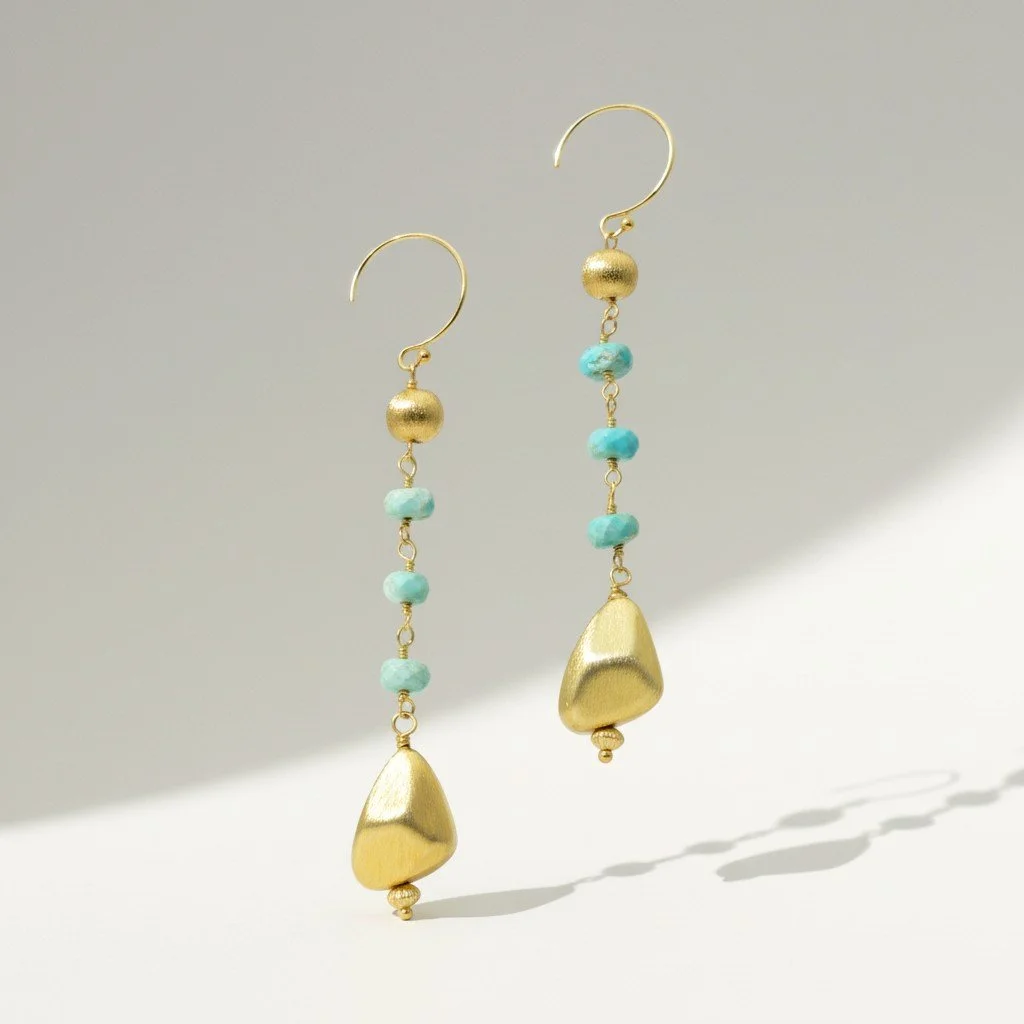
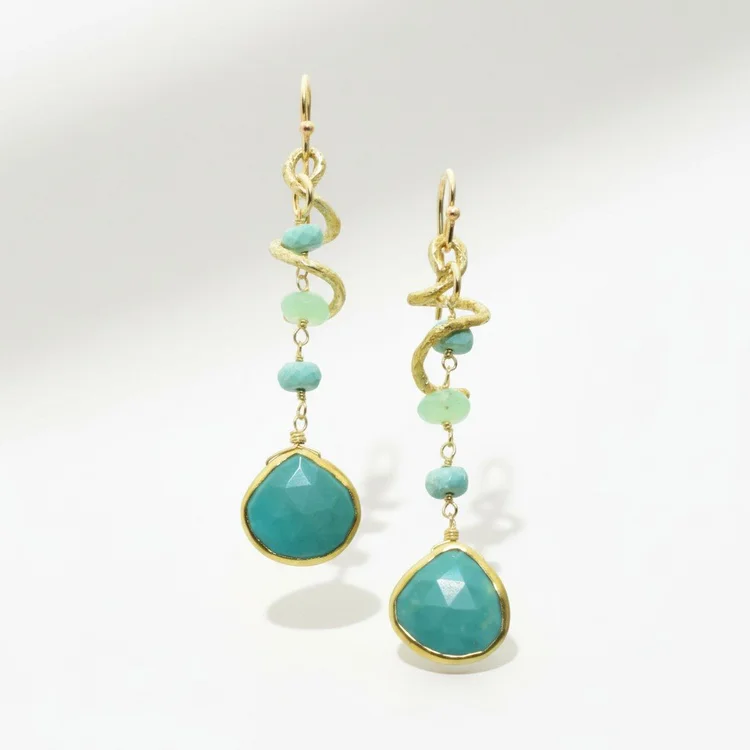
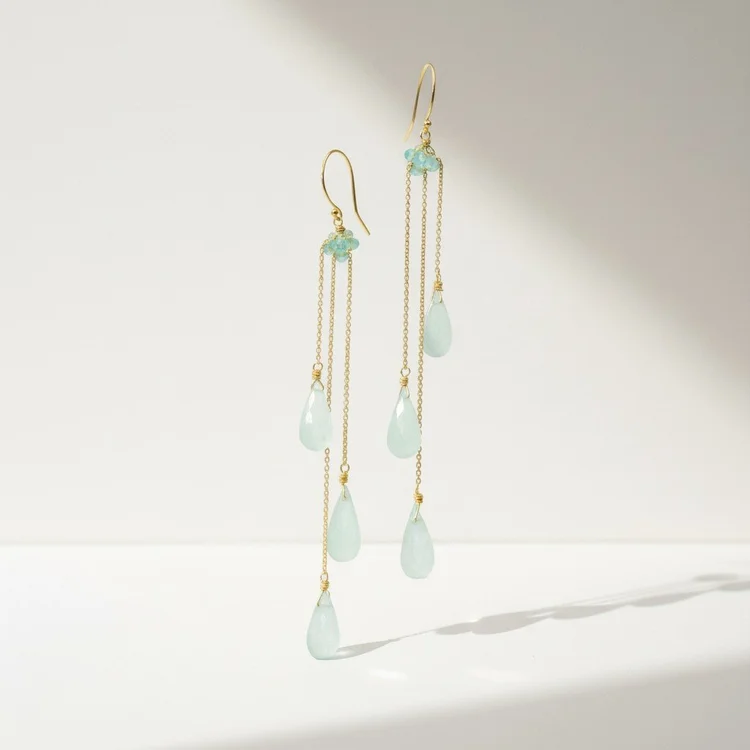
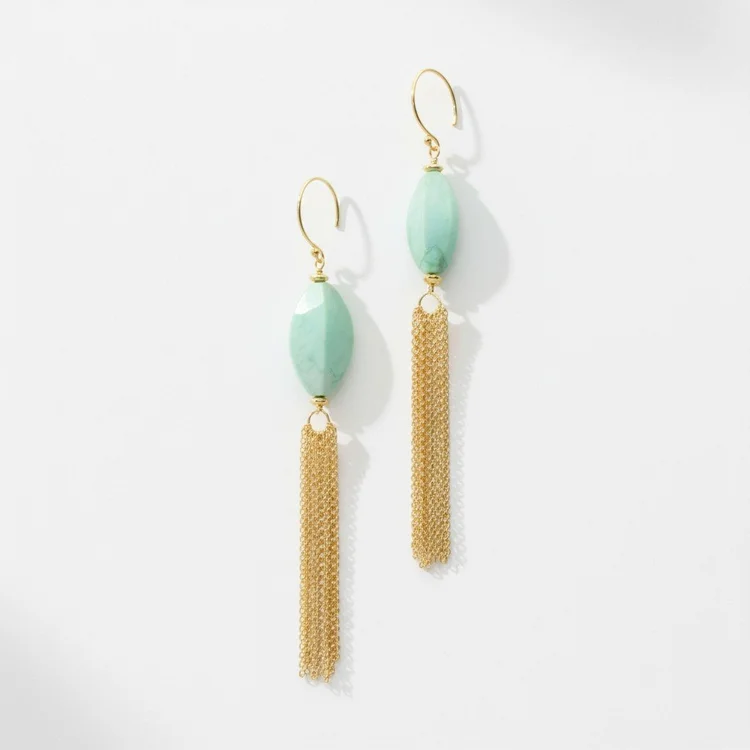
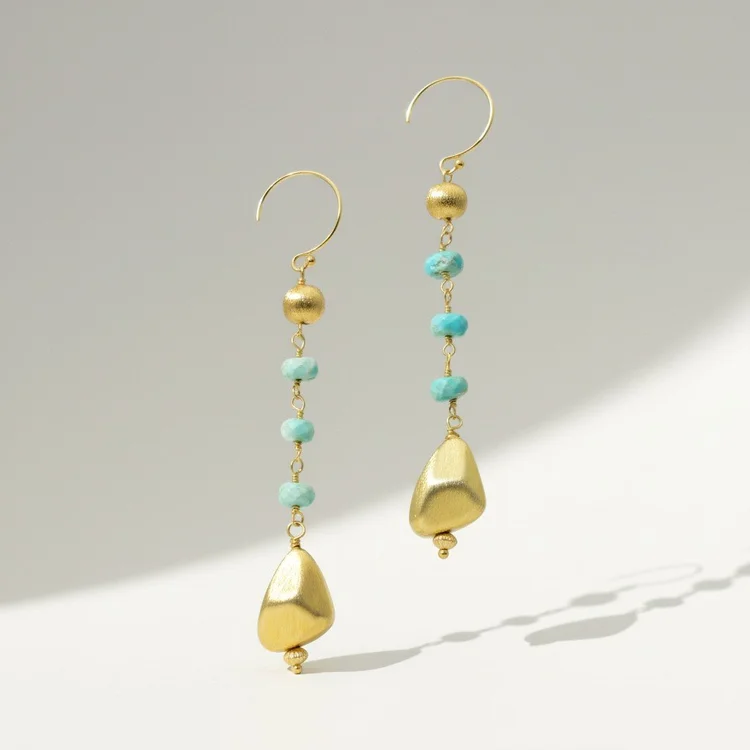
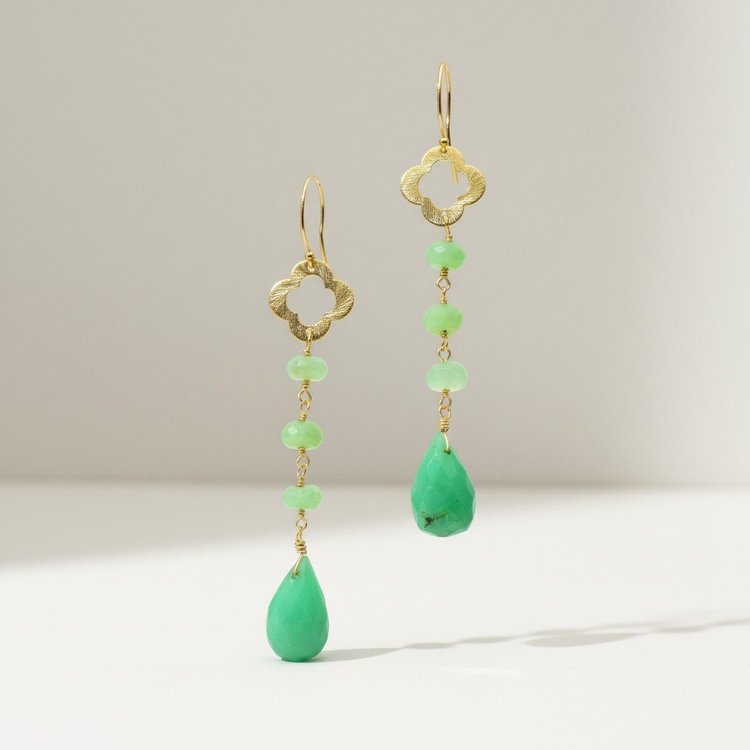
These earrings are an oasis for your fashion thirsty lobes. Simple yet elegant drops will make getting dressed a breeze. Made of 14k gold filled, 22k gold vermeil and turquoise rondelles.
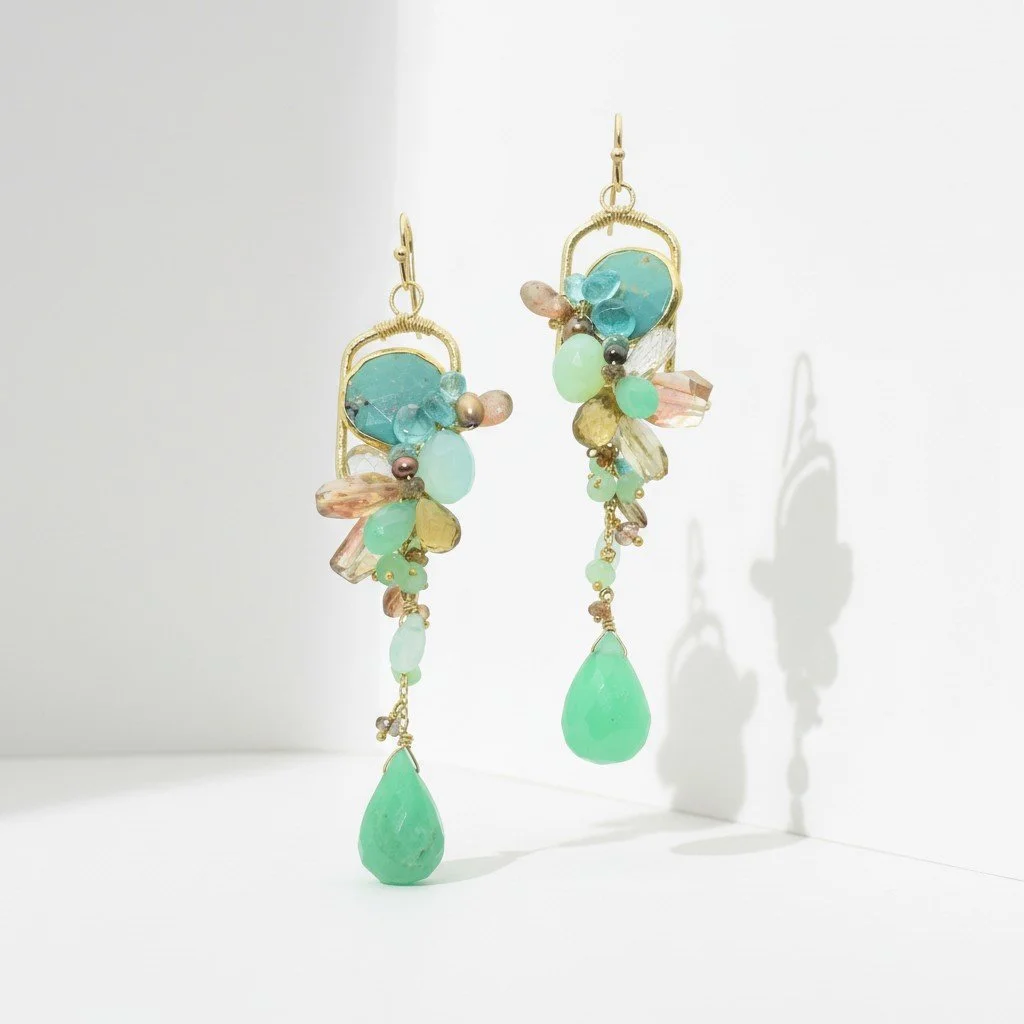
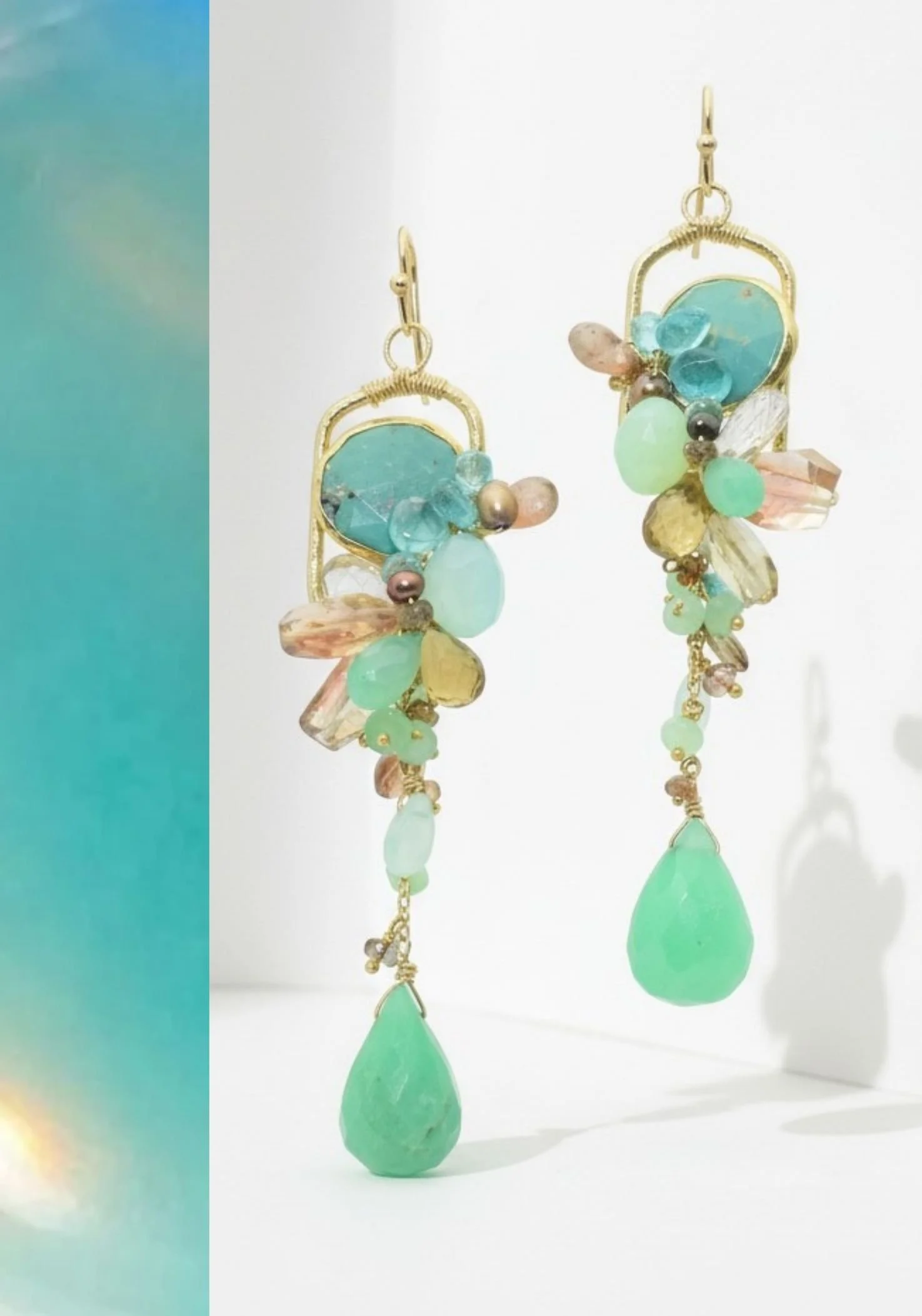
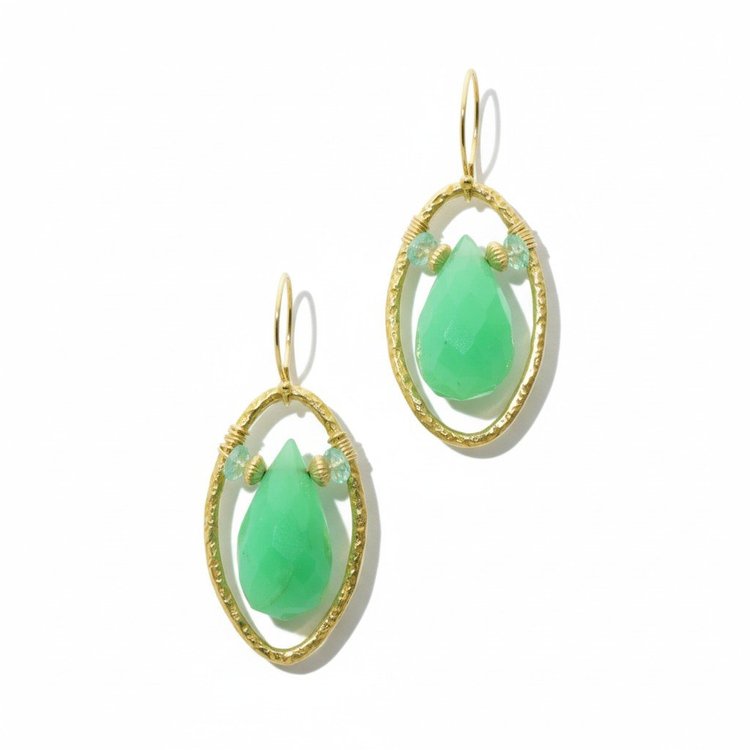
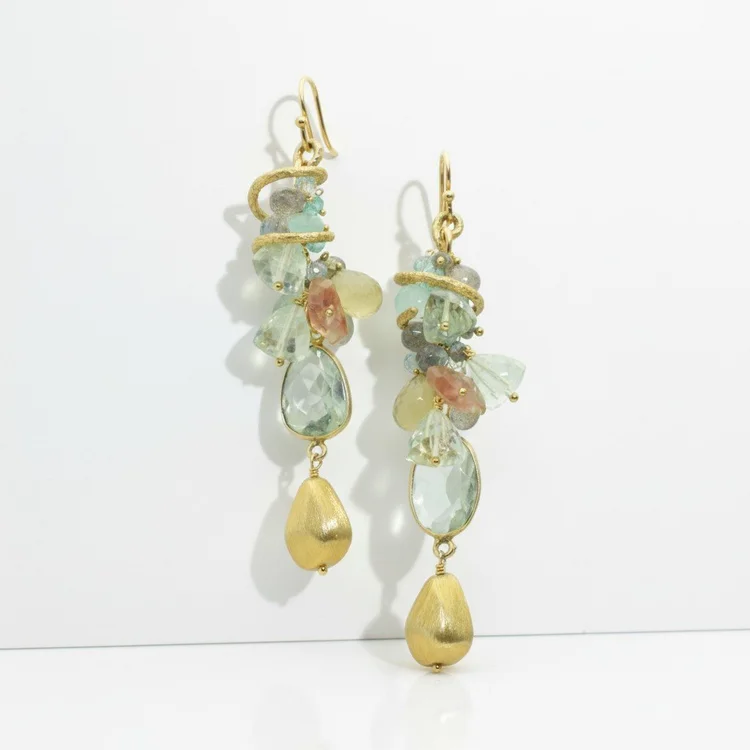
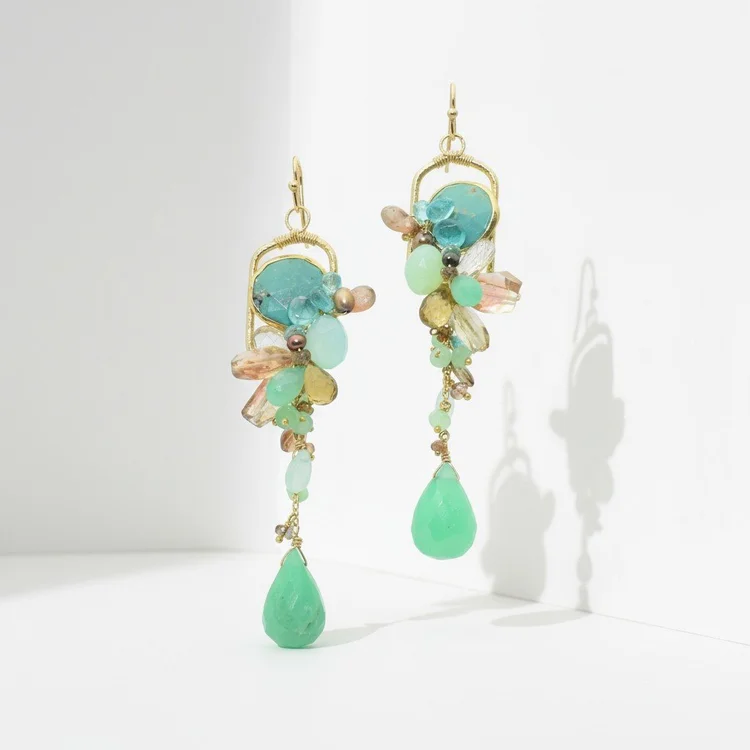
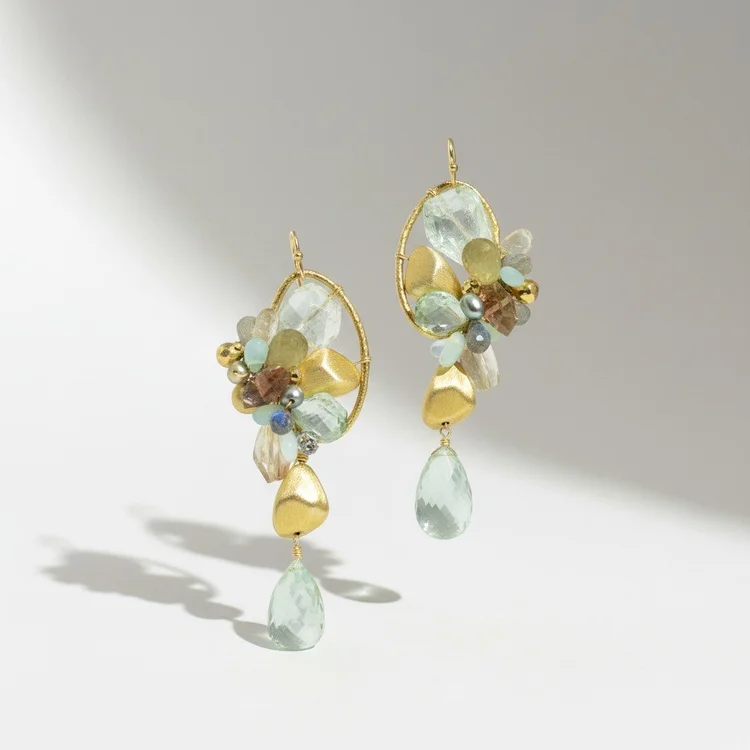
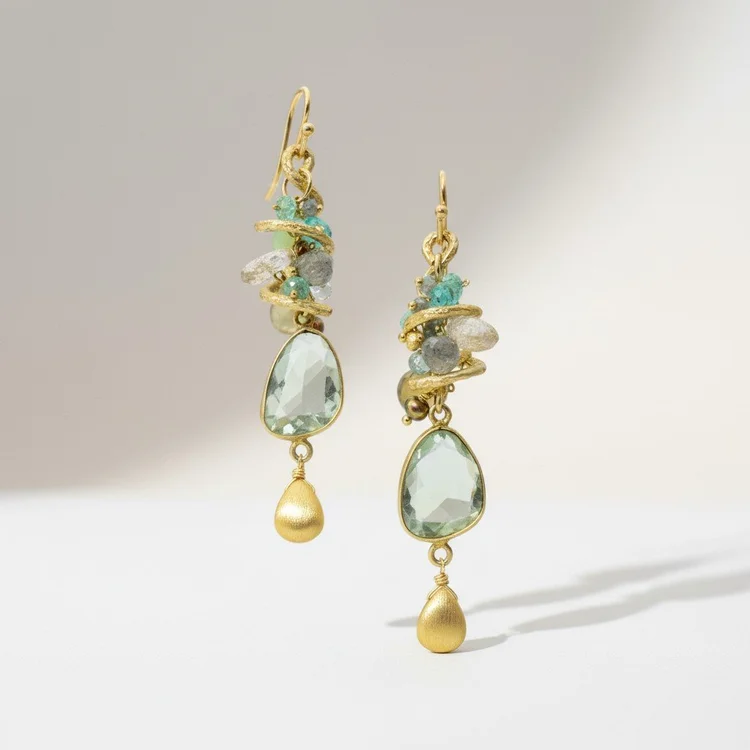
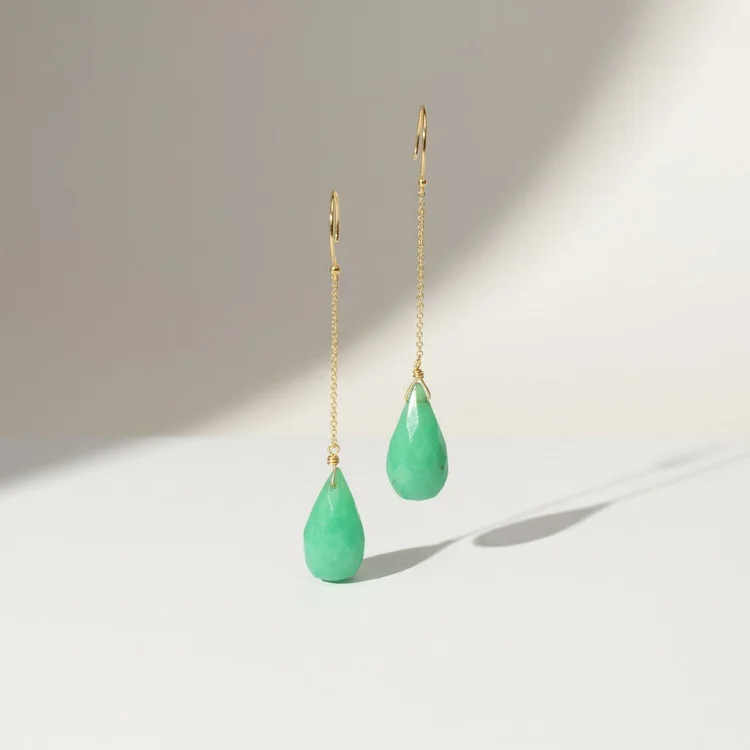
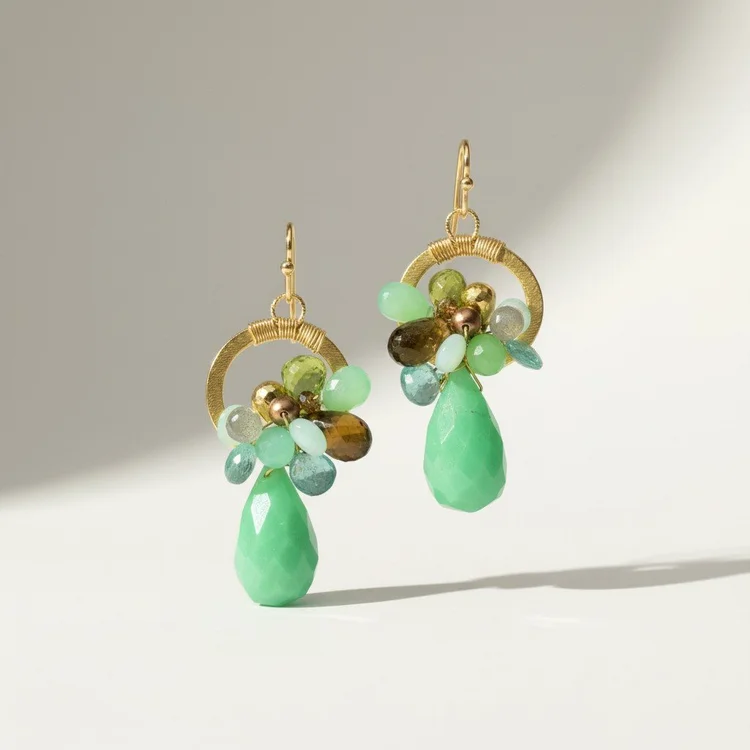
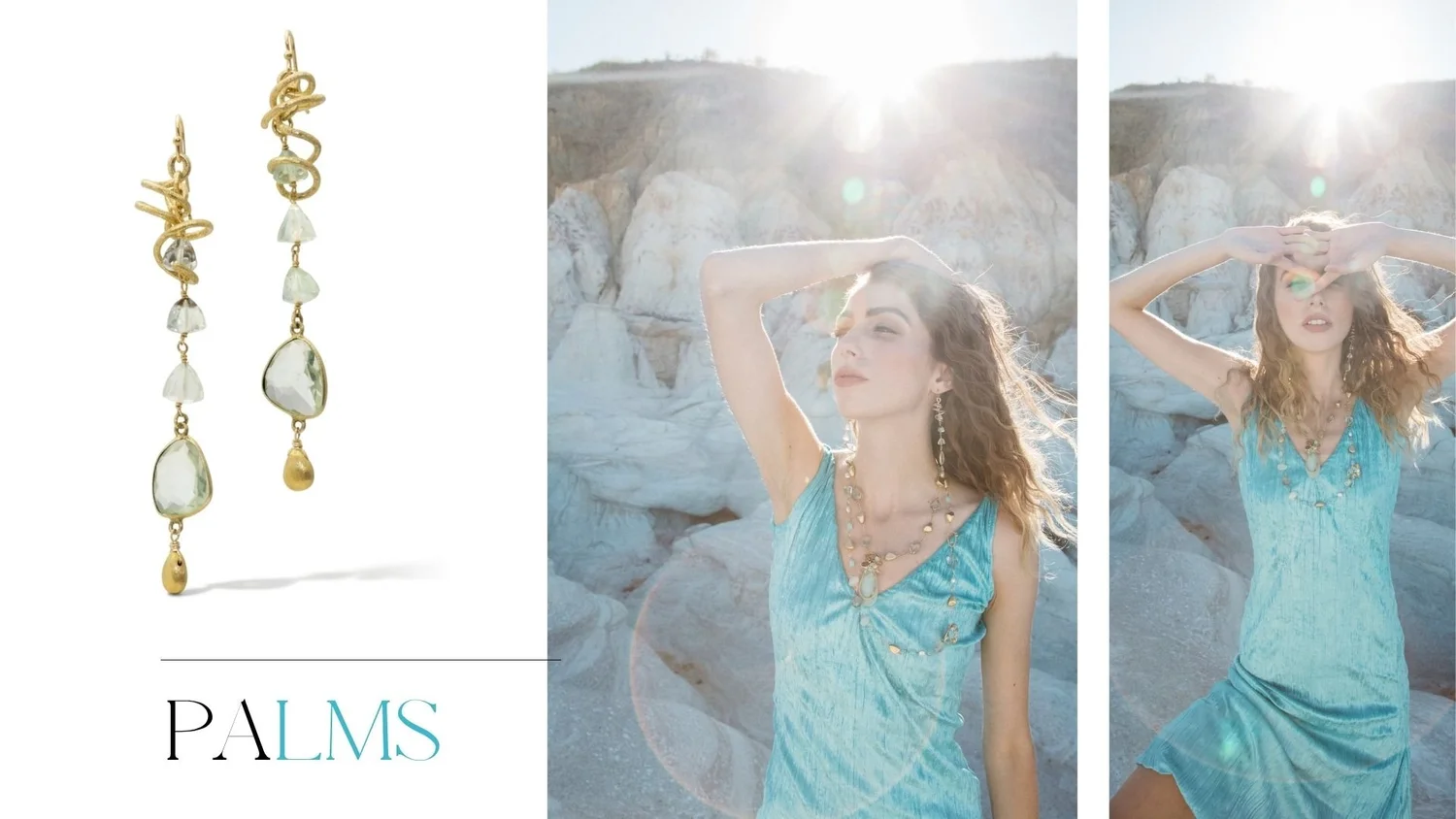
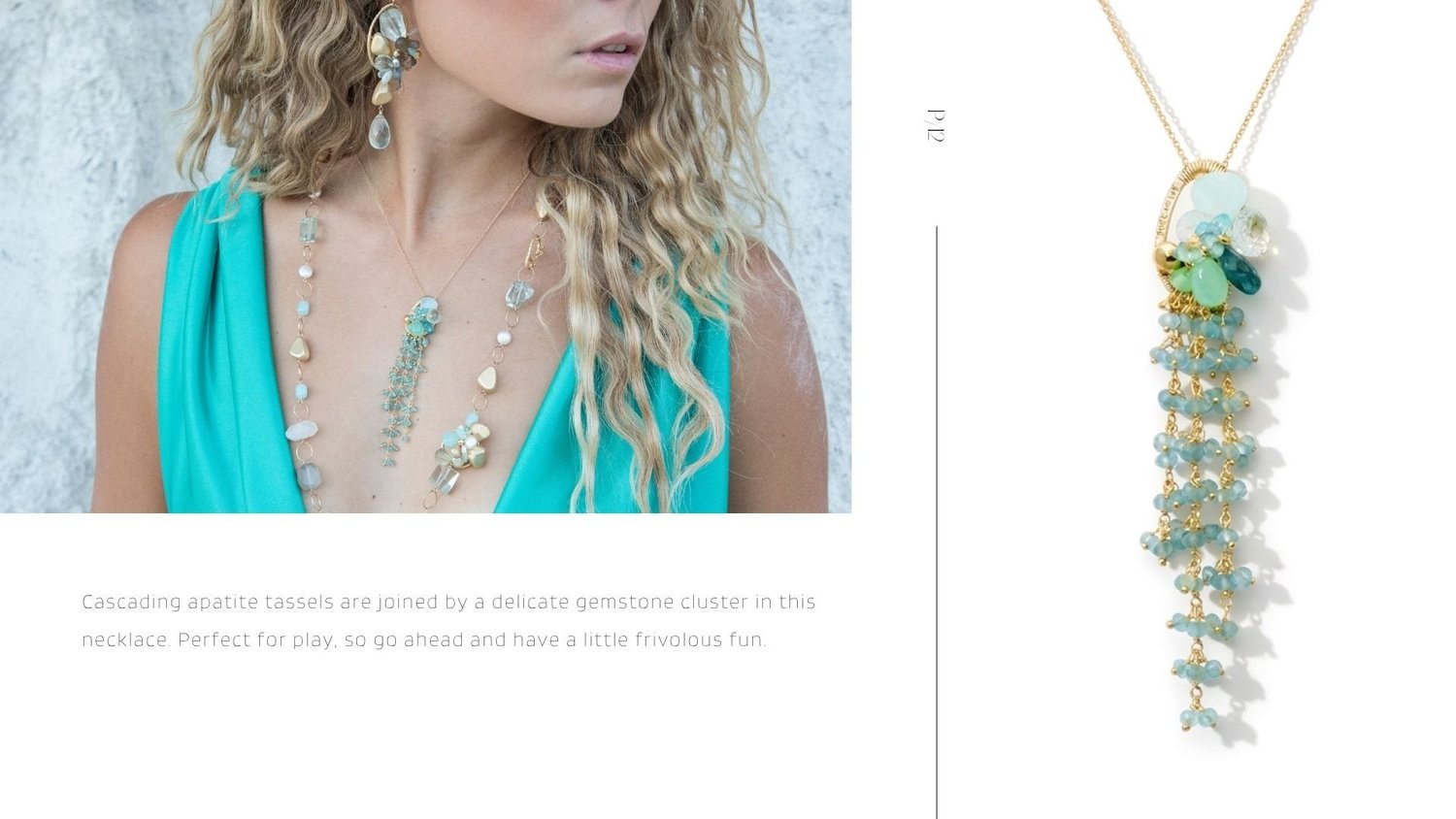
These gemstone danglers are playfully inspired by a Pacific lifestyle. These statement earrings may be the only accessory you need this summer. Made of 14k gold filled ear wires, 22k gold vermeil, 14k chain, gilded turquoise, Peruvian opal, chalcedony, whiskey topaz, Rutile, apatite, Oregon sunstone, andalusite, freshwater pearl, and chrysoprase drops.
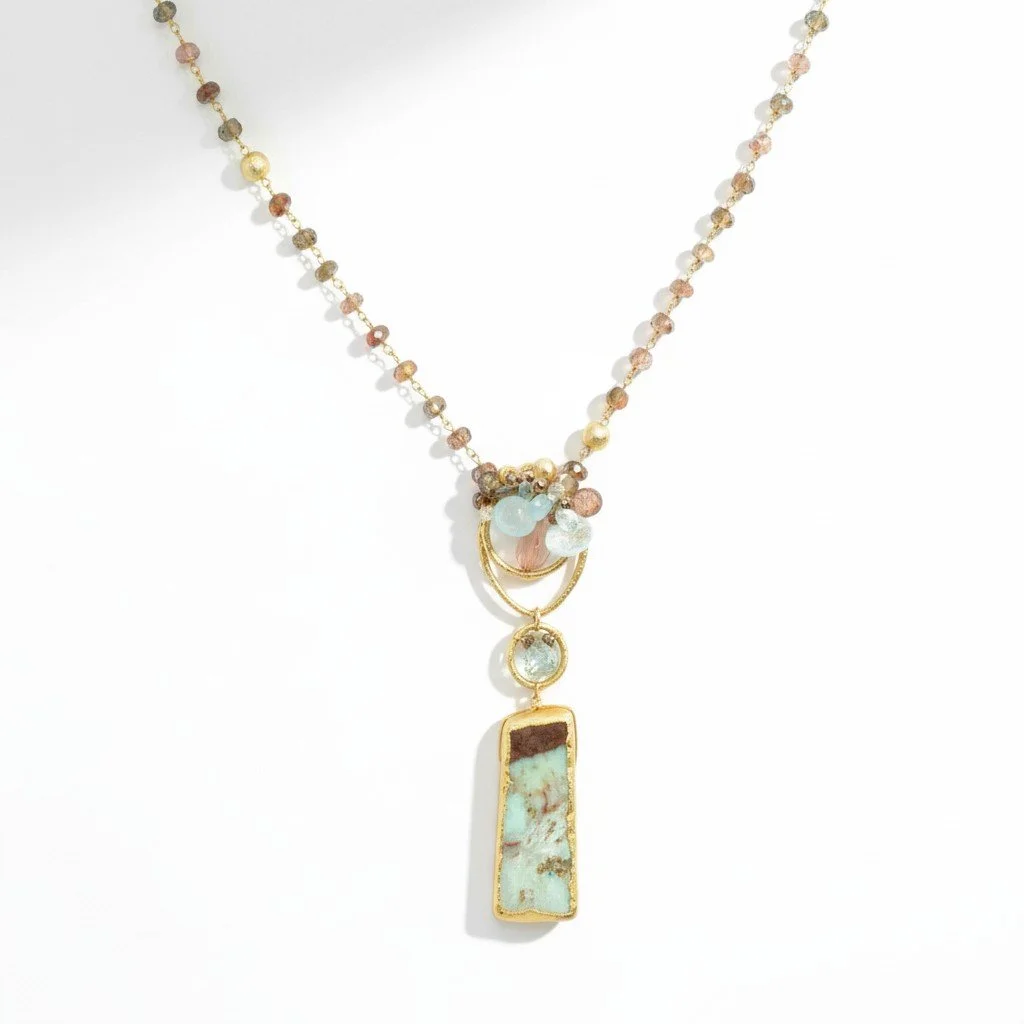
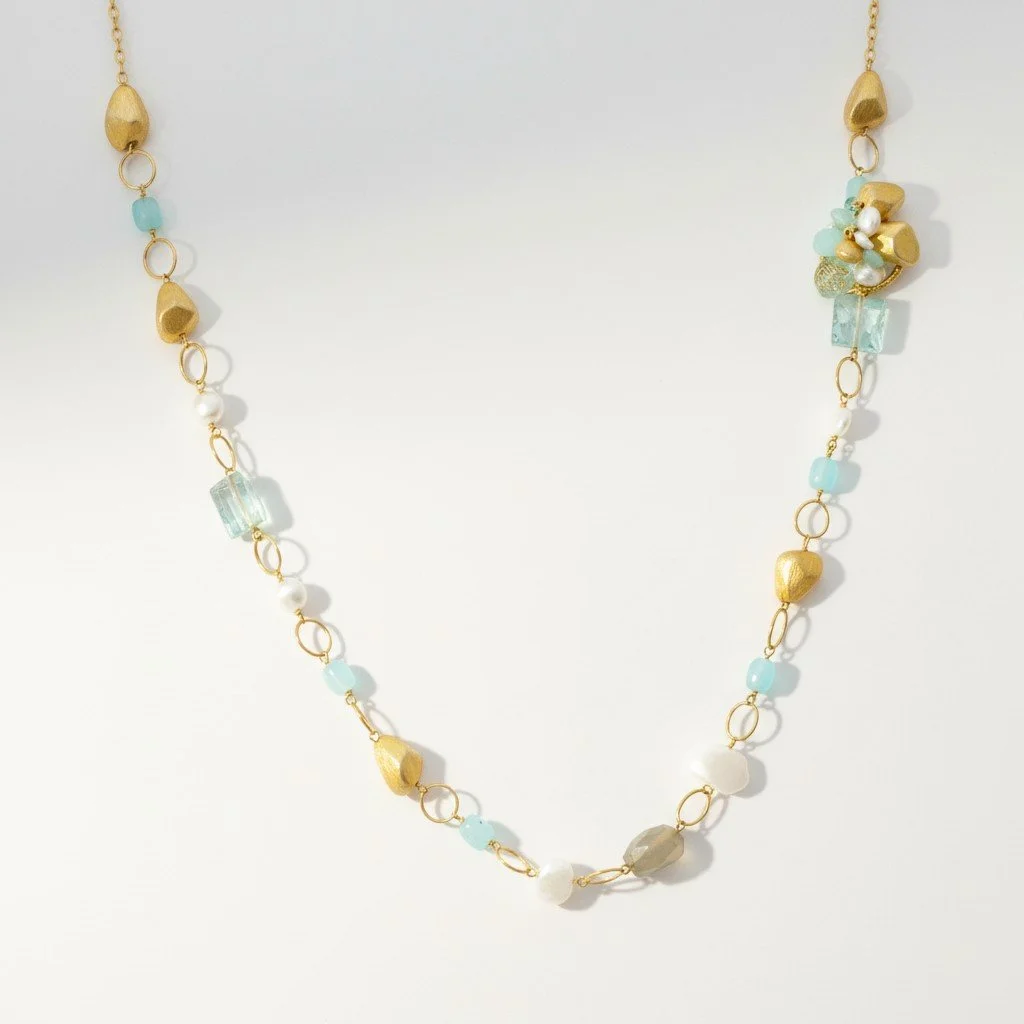
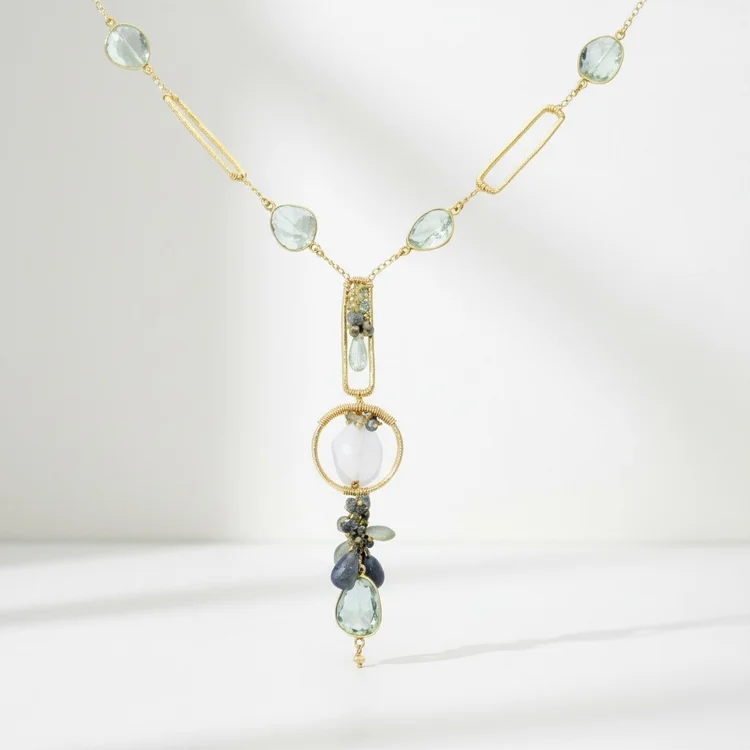
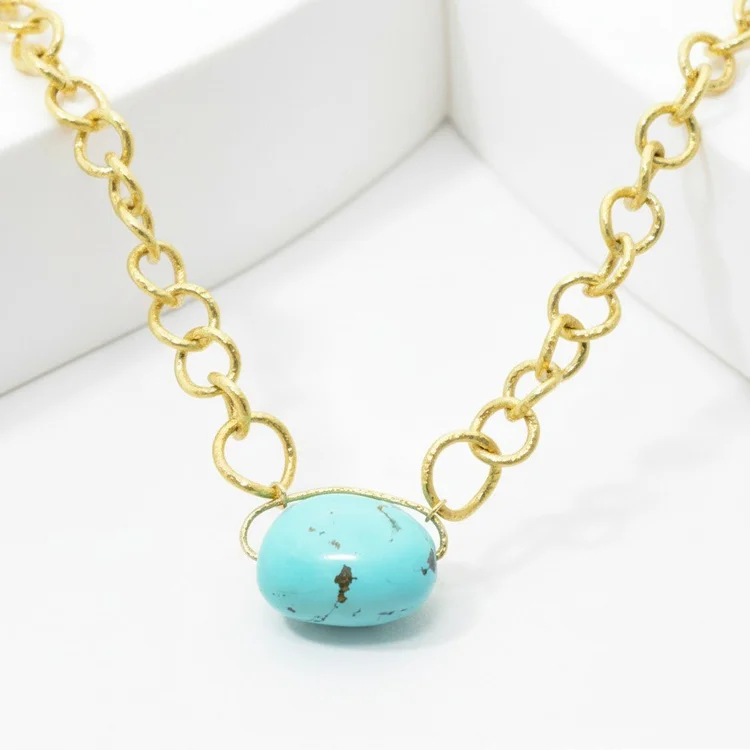
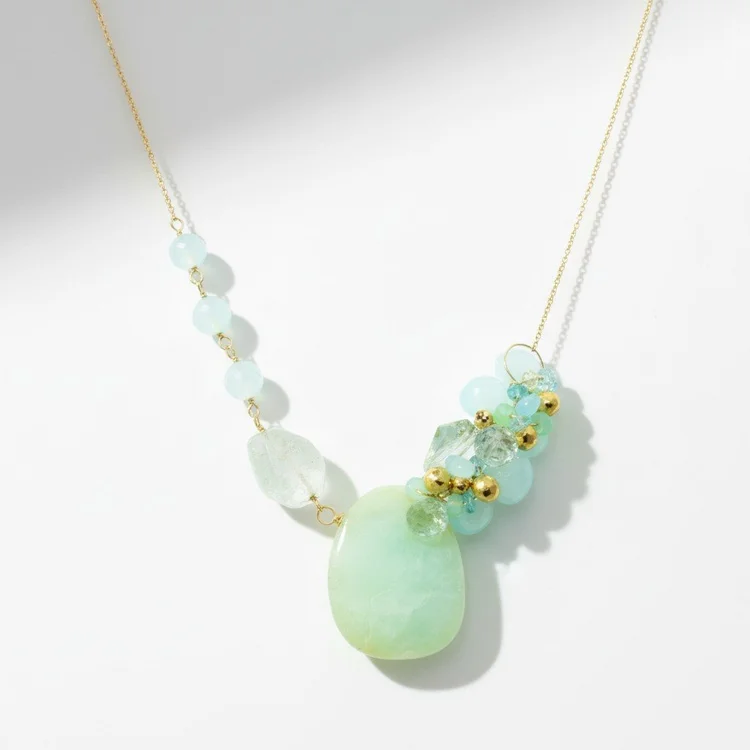
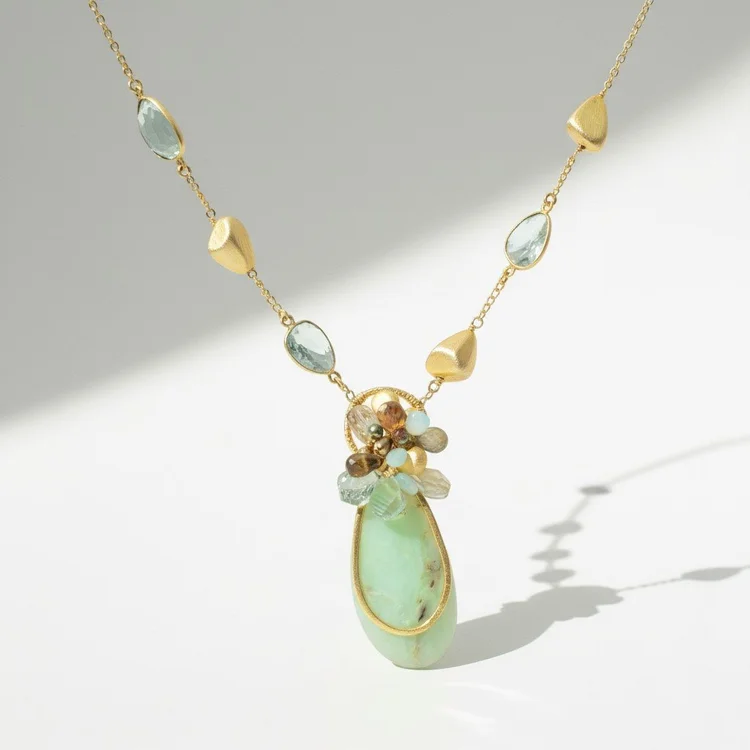
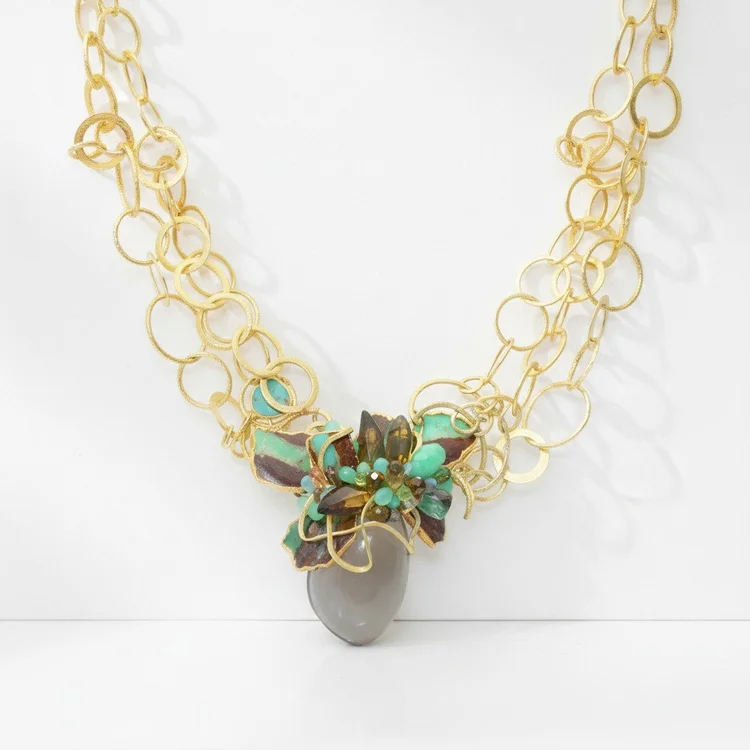
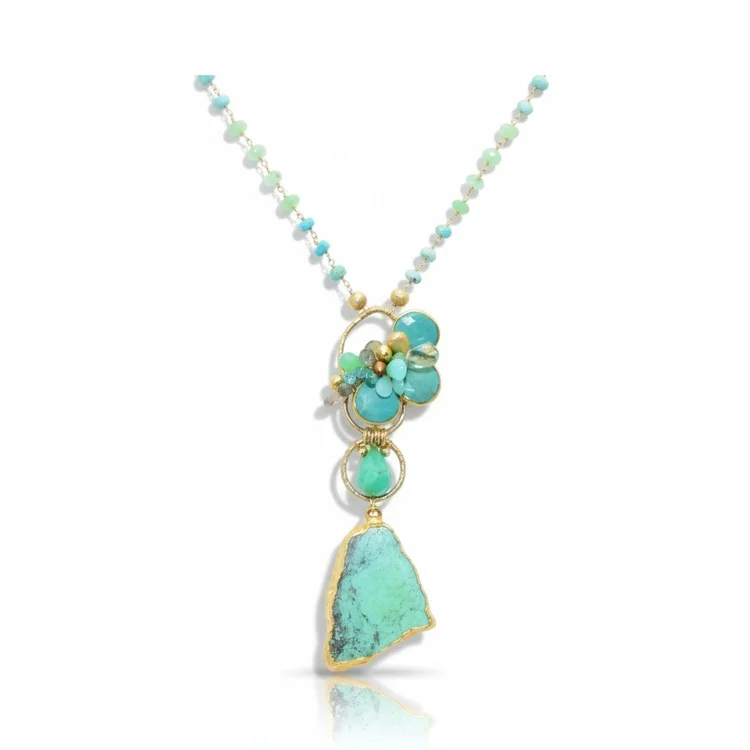
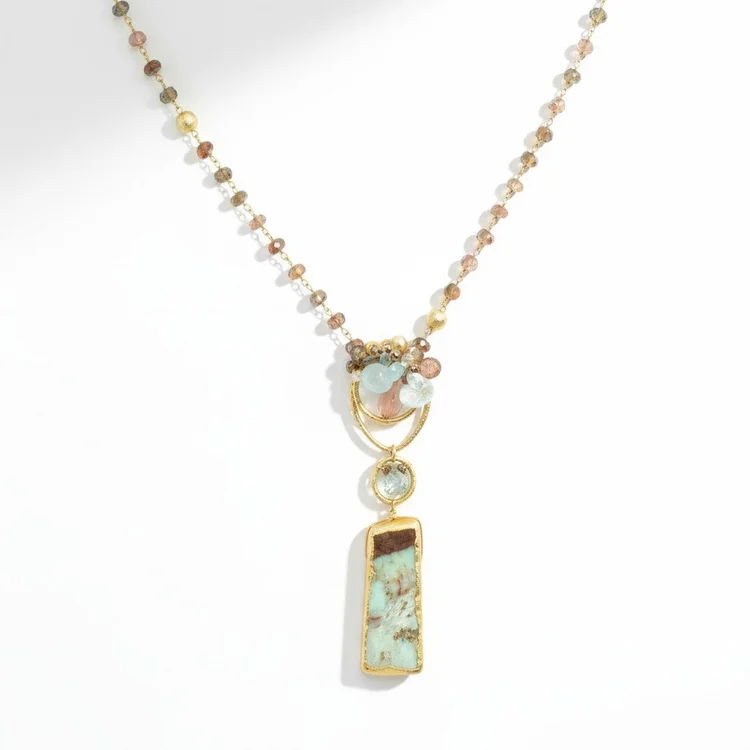
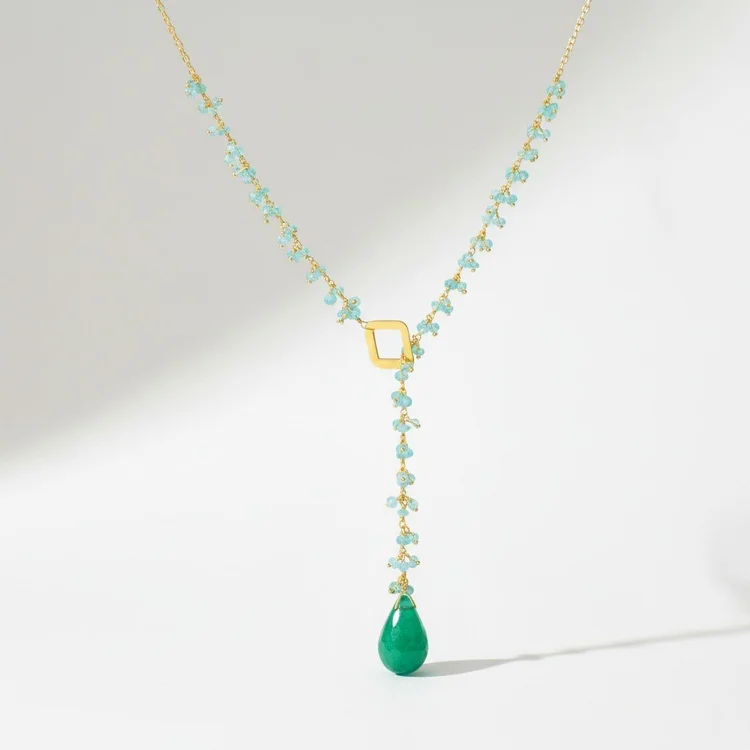
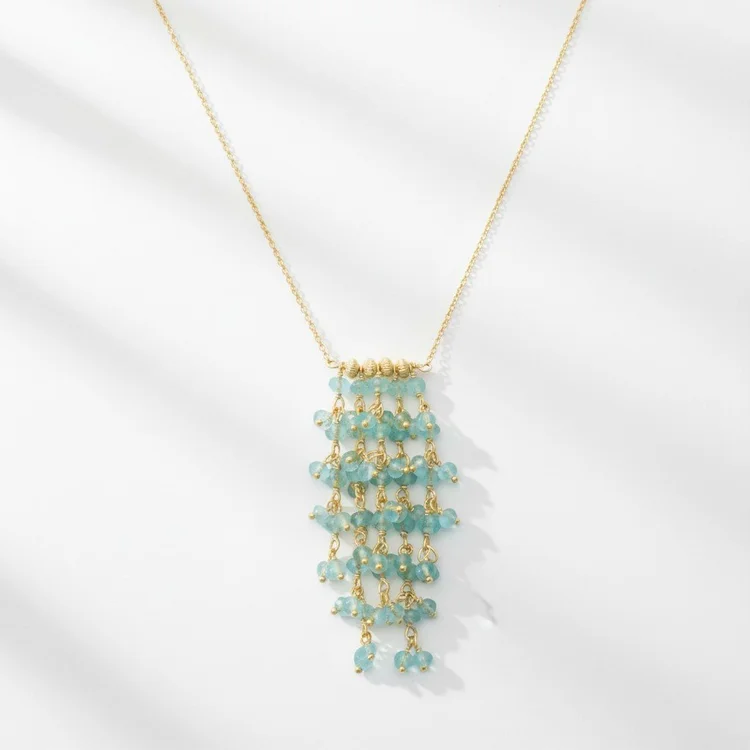
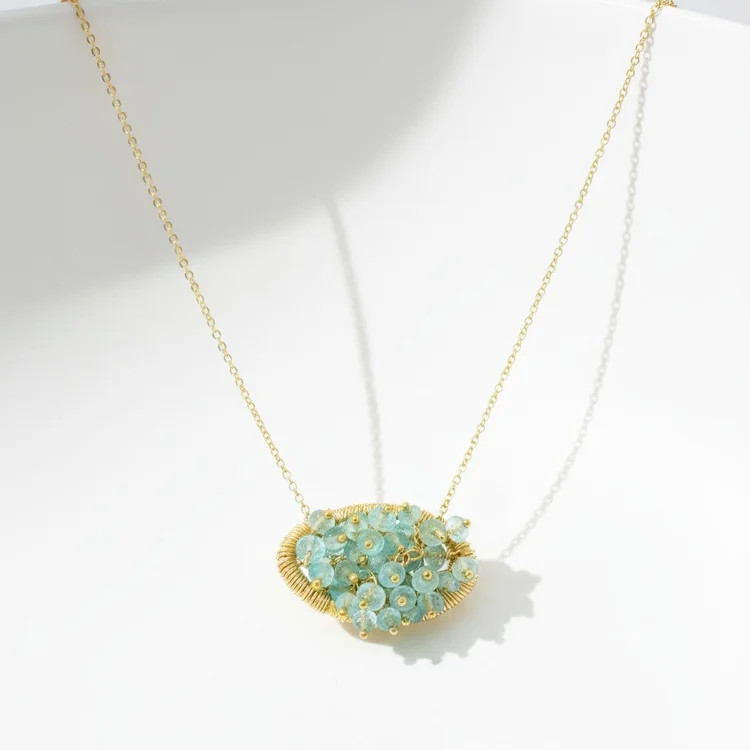
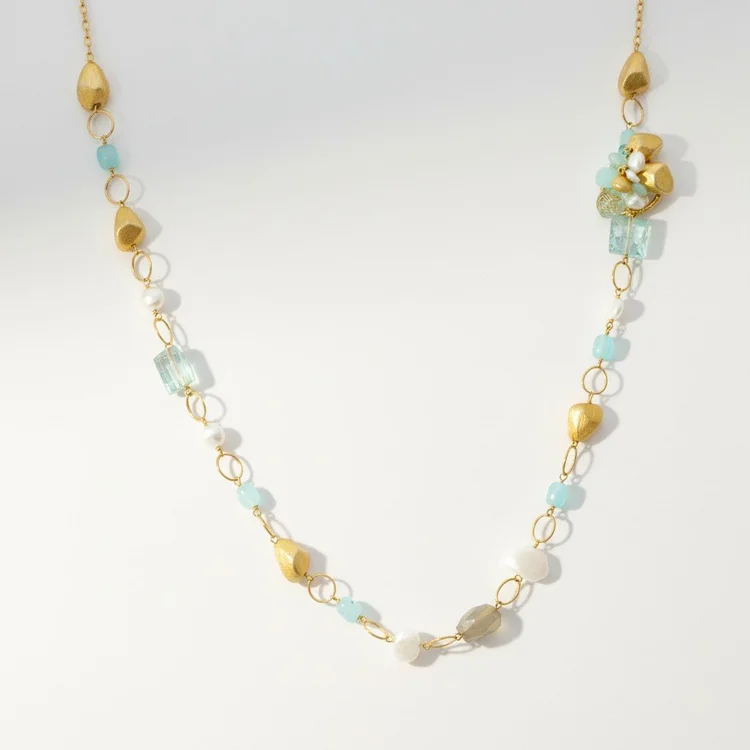
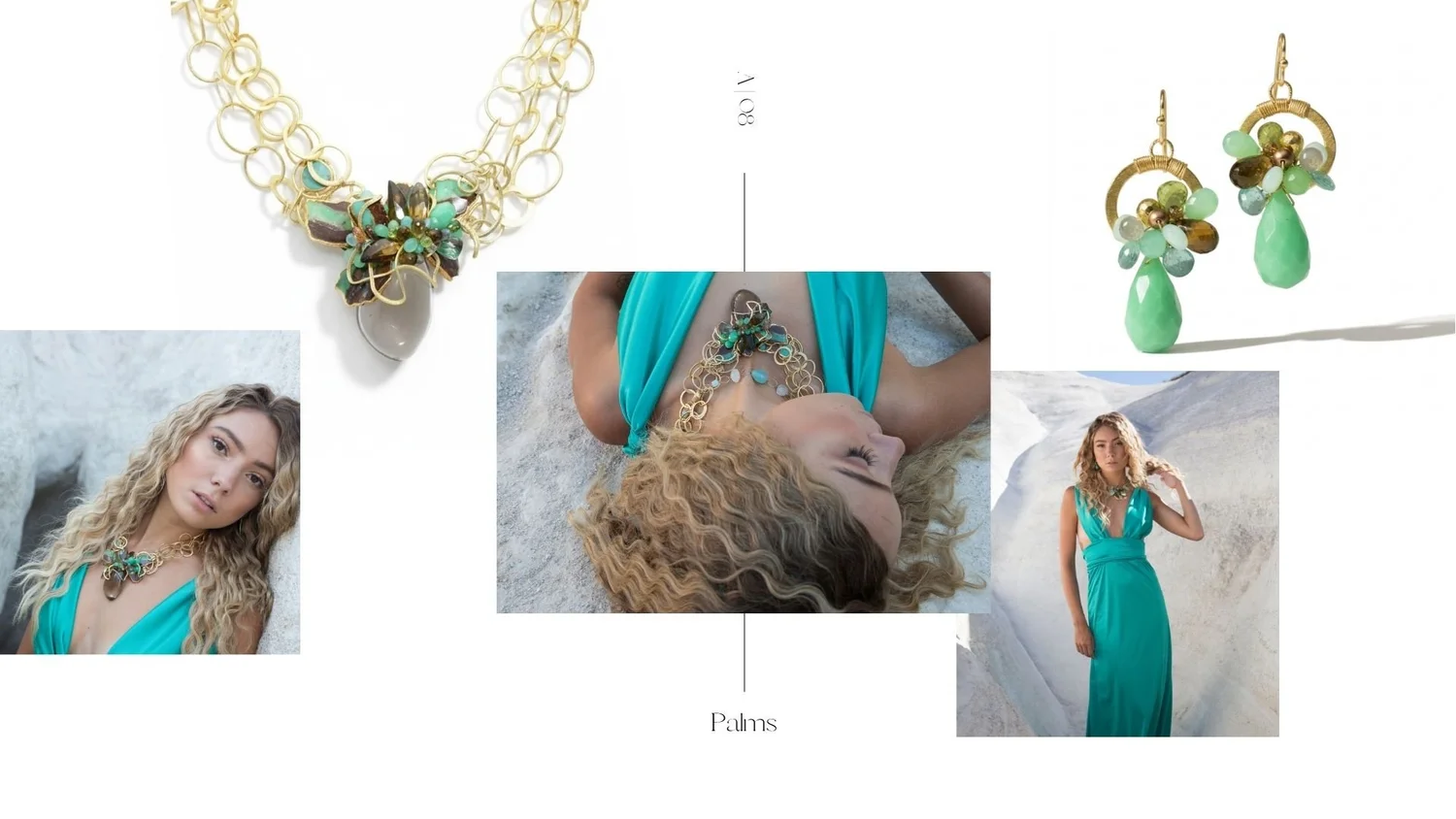
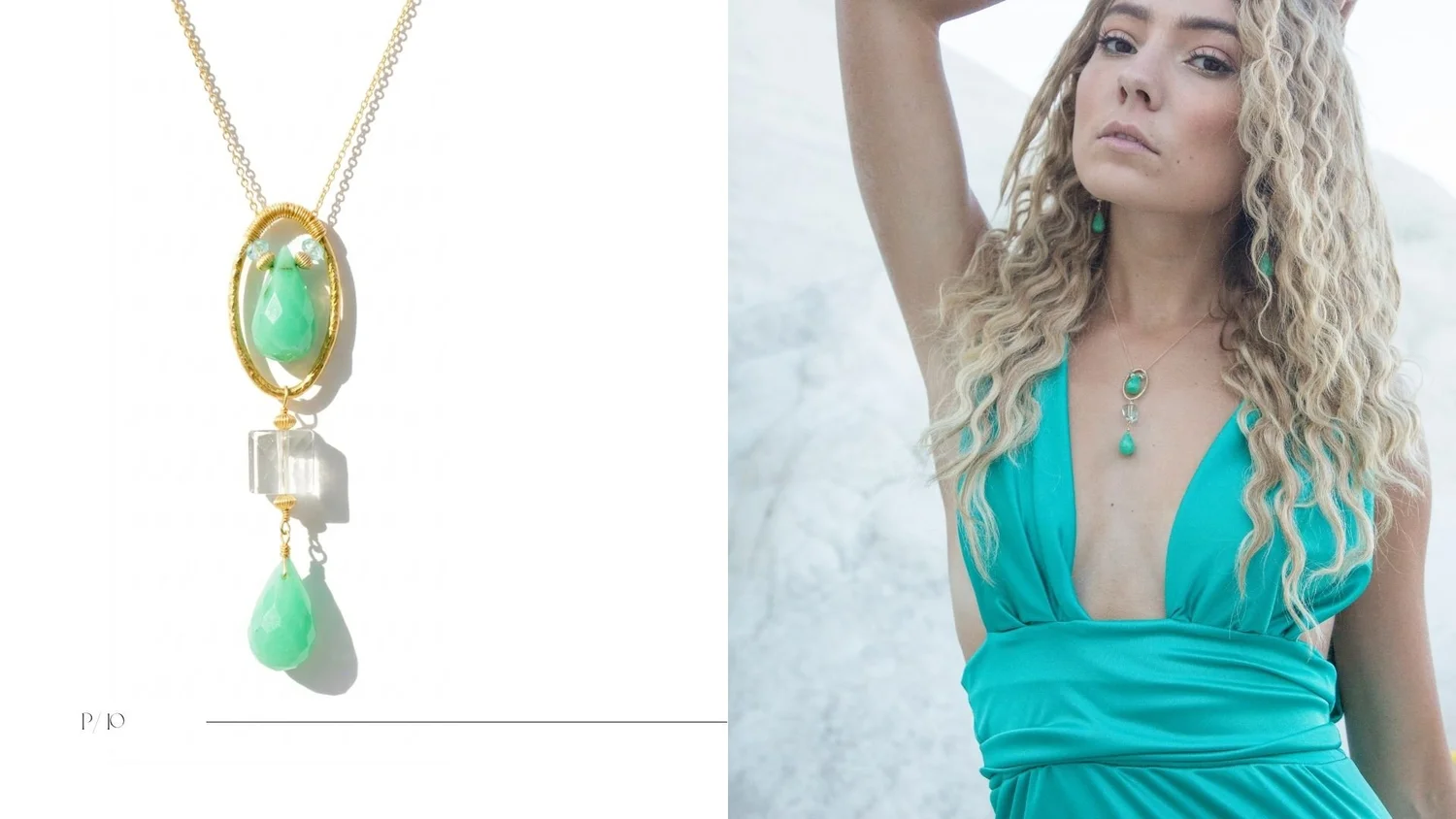
This gemstone necklace will earn its place as a staple in your summer wardrobe and beyond. Versatile enough to wear every day or layered with other pieces for a nighttime statement. Either way get ready to turn heads. From the Palms Collection this long necklace is made from chrysoprase, green amethyst, Oregon sunstone, andalusite, Peruvian opal, chalcedony, freshwater pearl, 22k gold vermeil, and 14k gold filled.
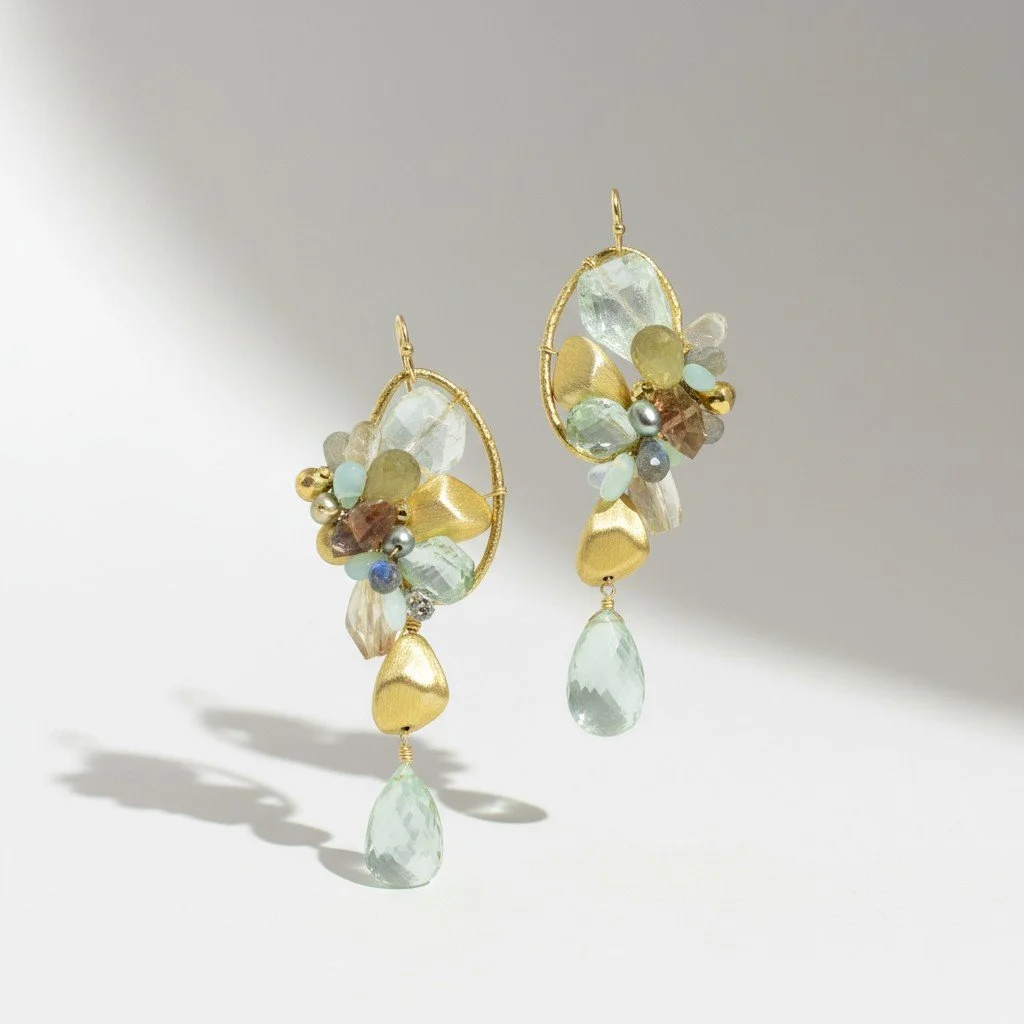
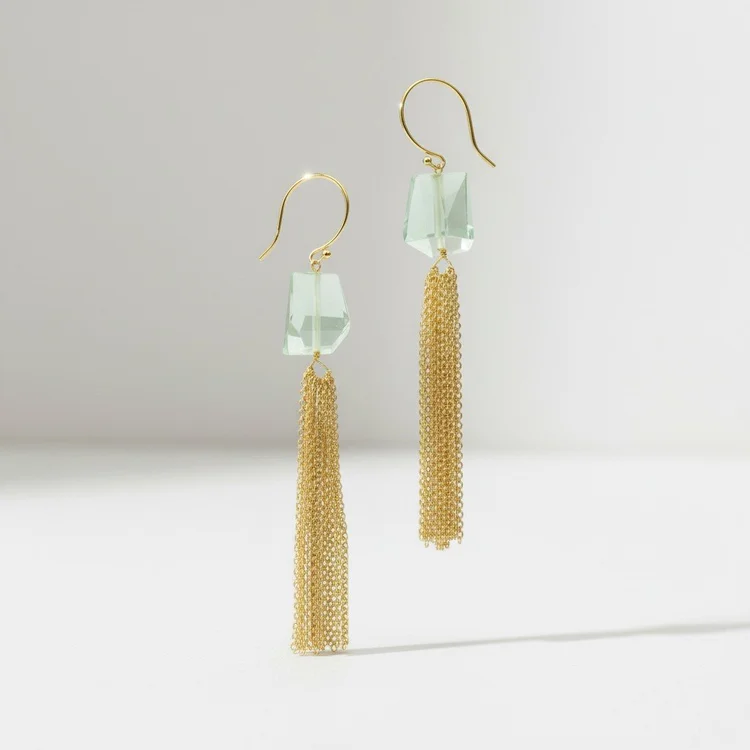
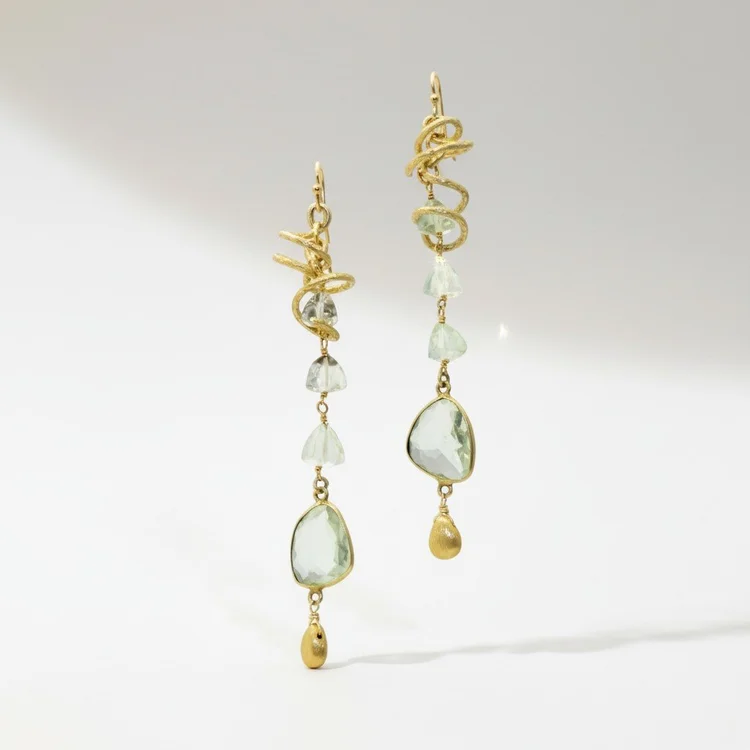
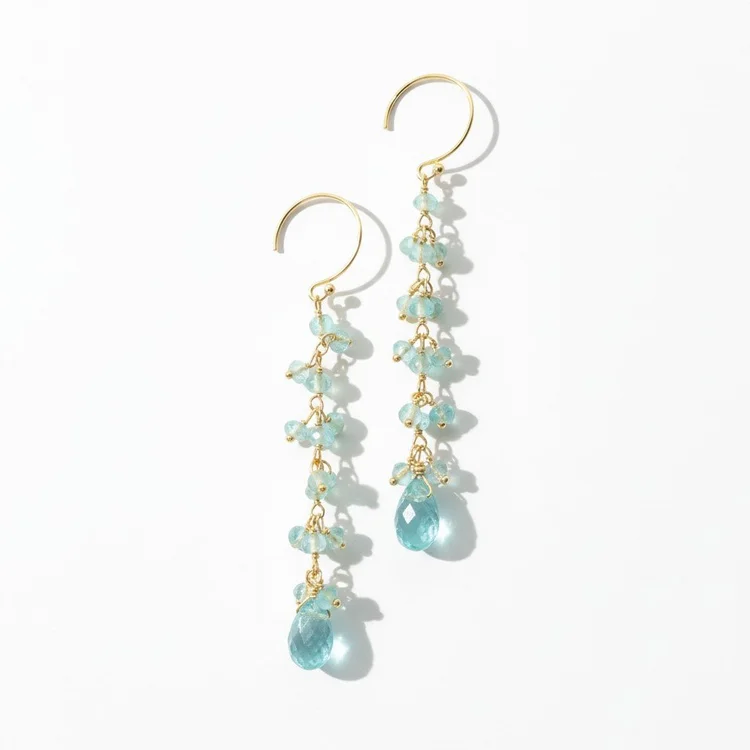
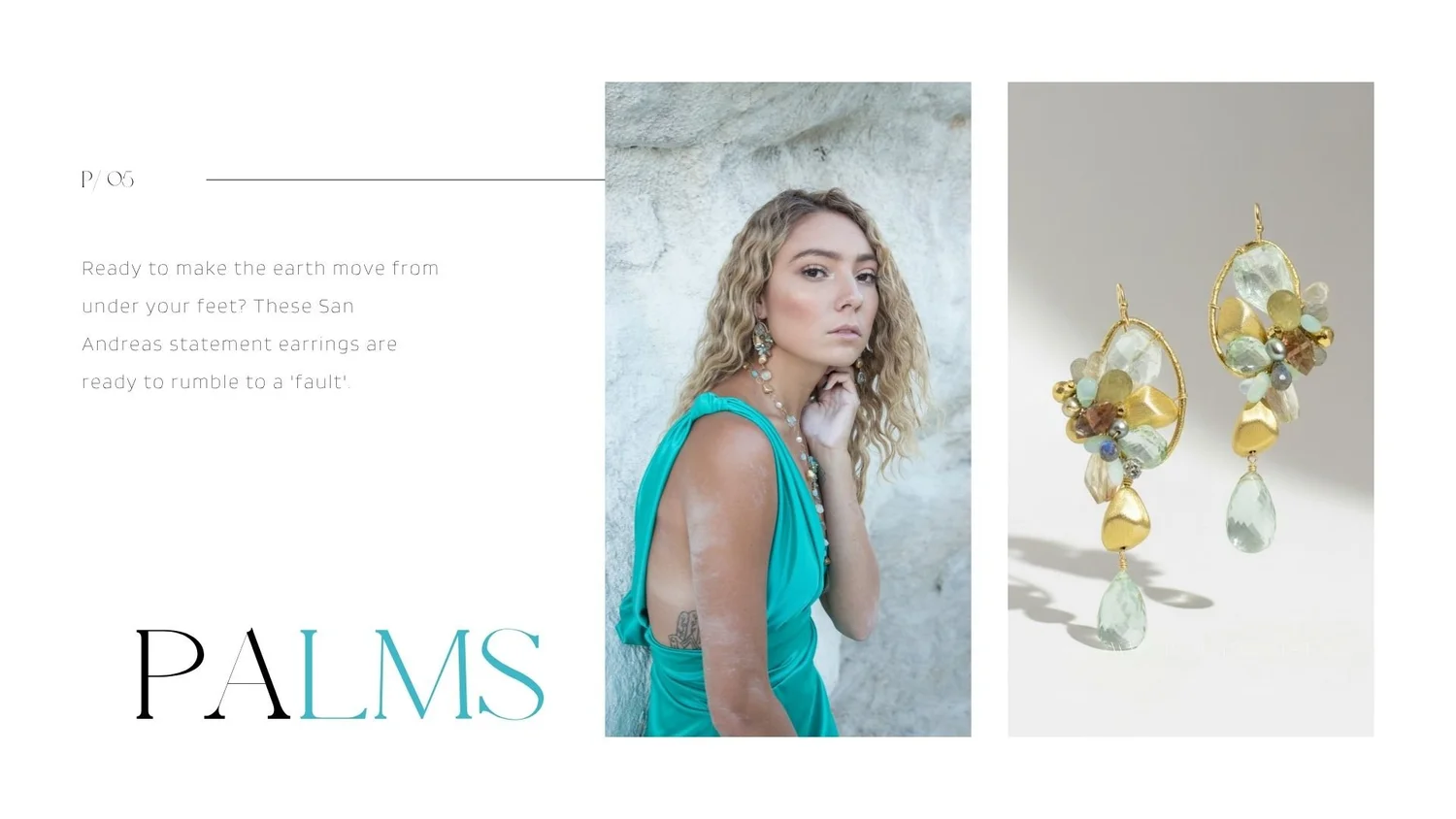
Ready to make the earth move from under your feet? These statement earrings are ready to rumble to a 'fault'. Made from 14k gold filled, 22k gold vermeil, aquamarine nuggets, Peruvian opal, whiskey topaz, labradorite, Oregon sunstone, pyrite, chalcedony, swiss blue topaz, freshwater pearl, and green amethyst briolette drop.
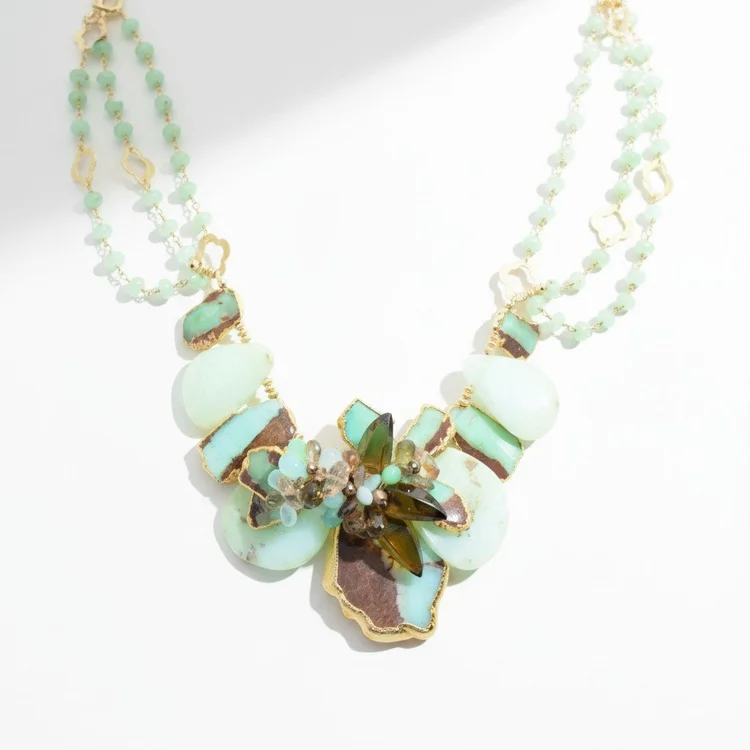
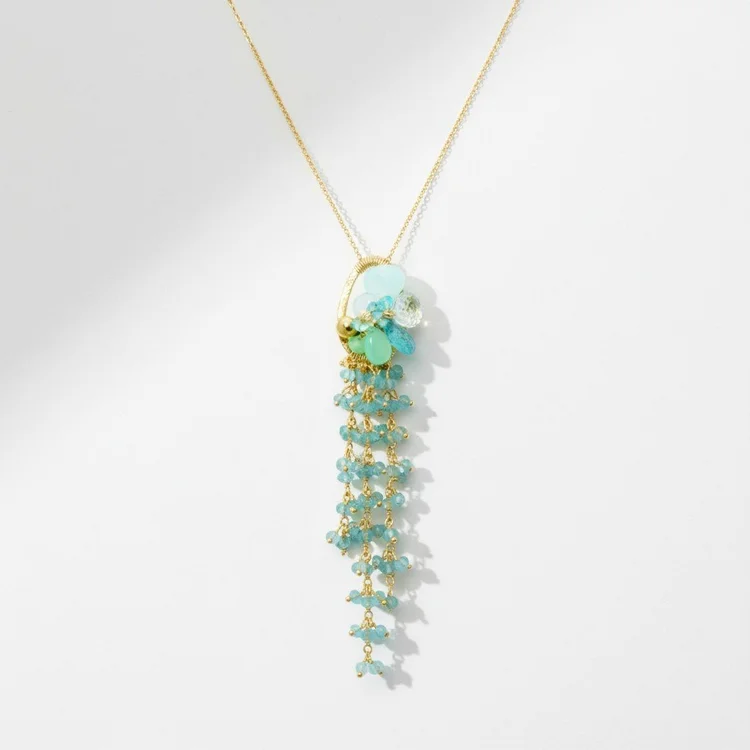
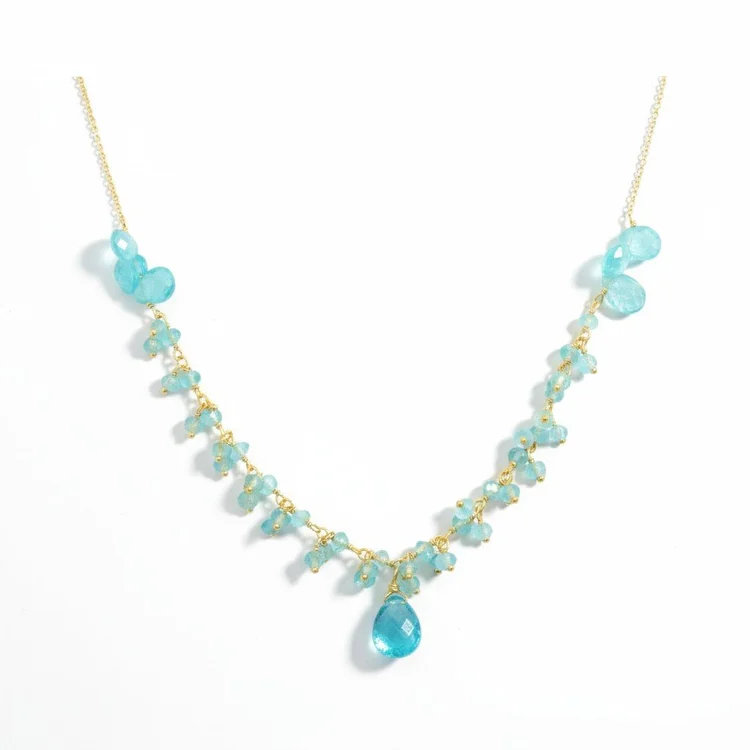
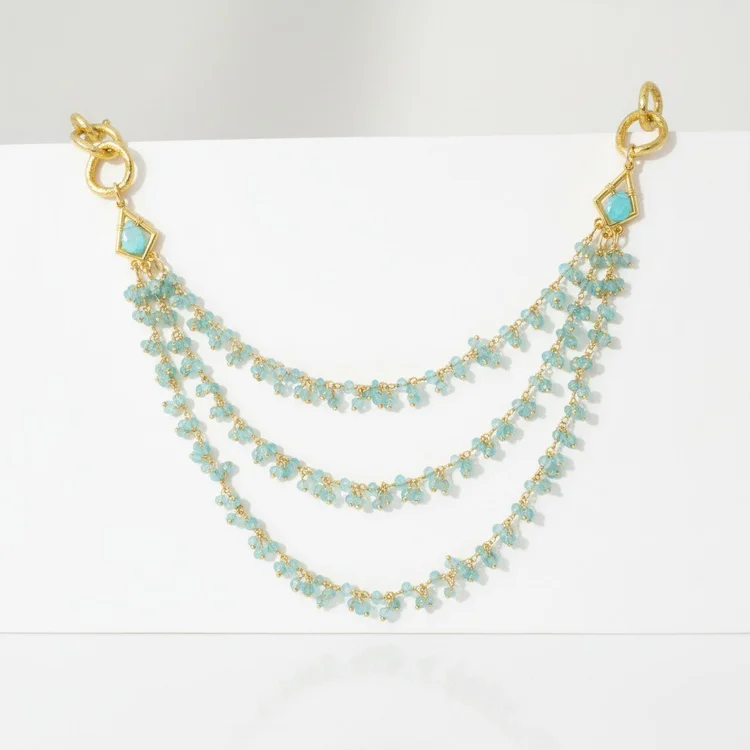
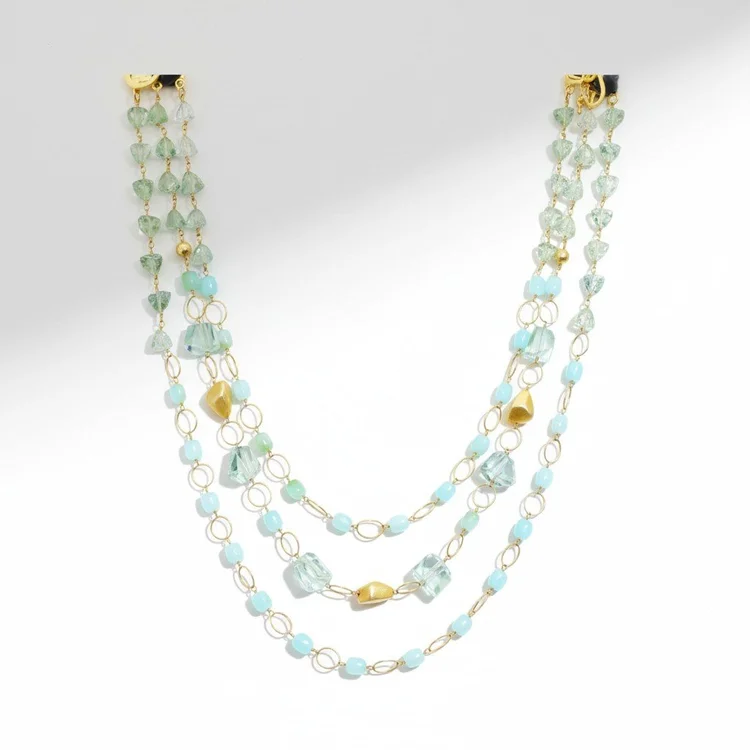
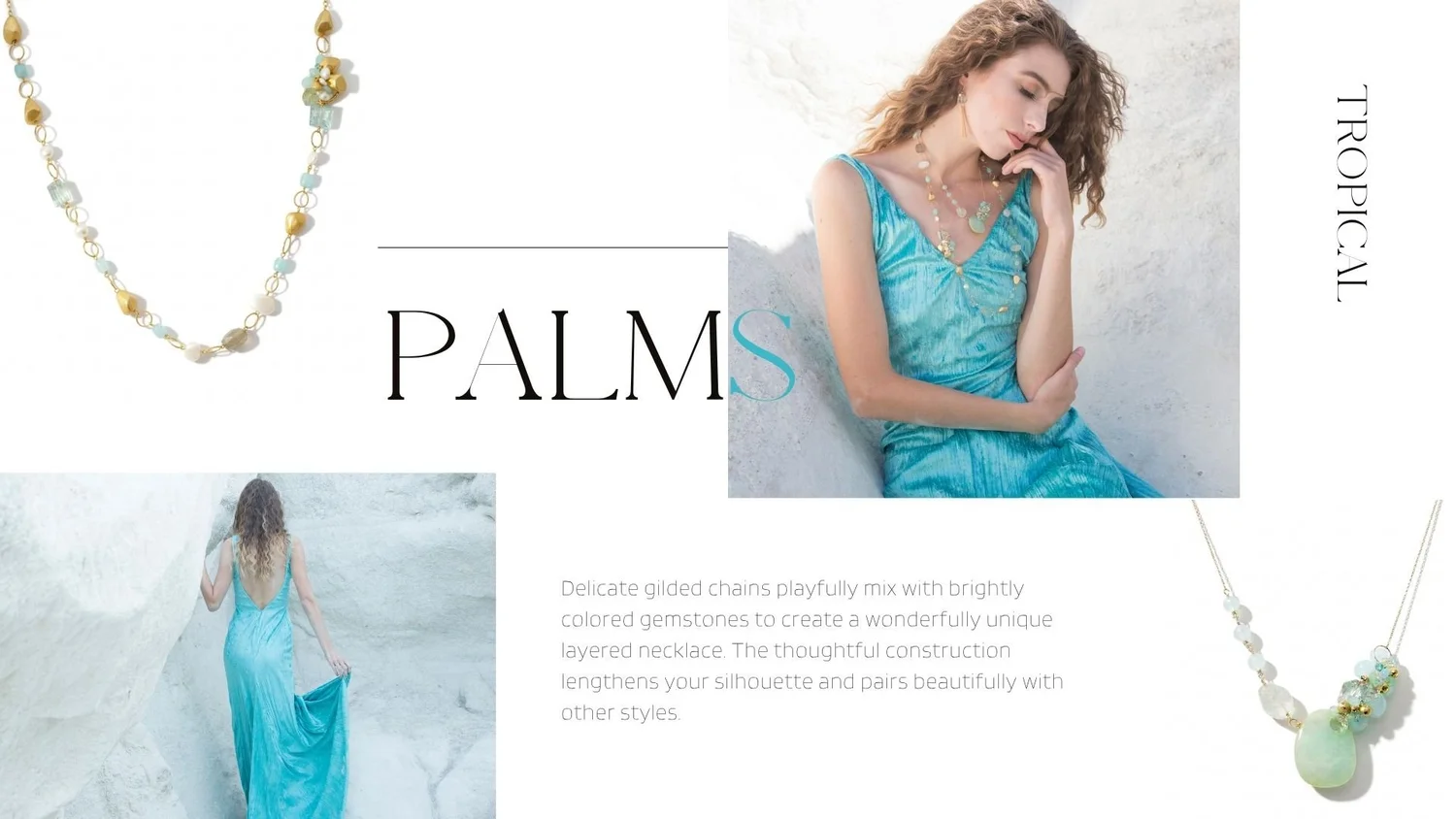
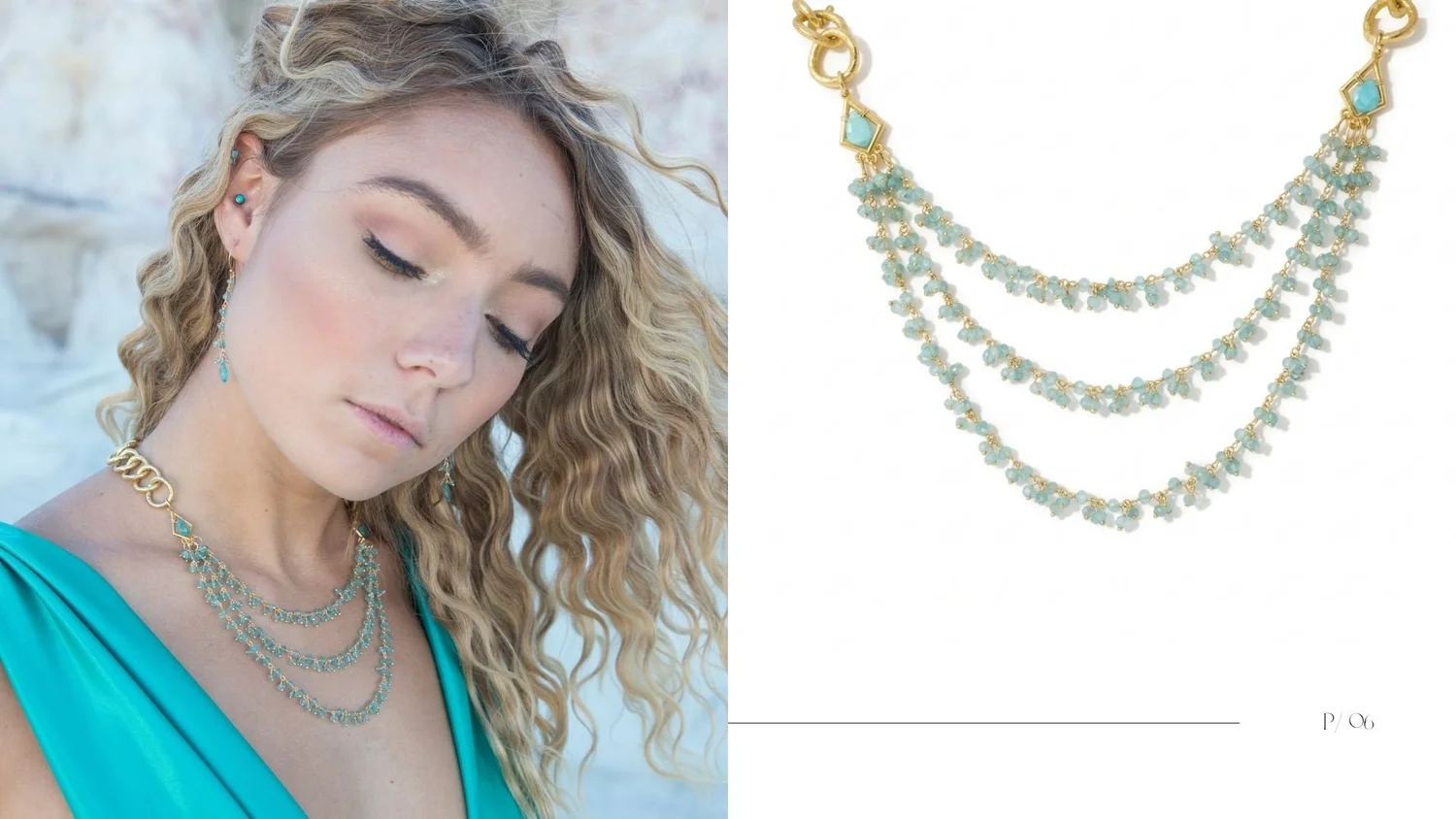
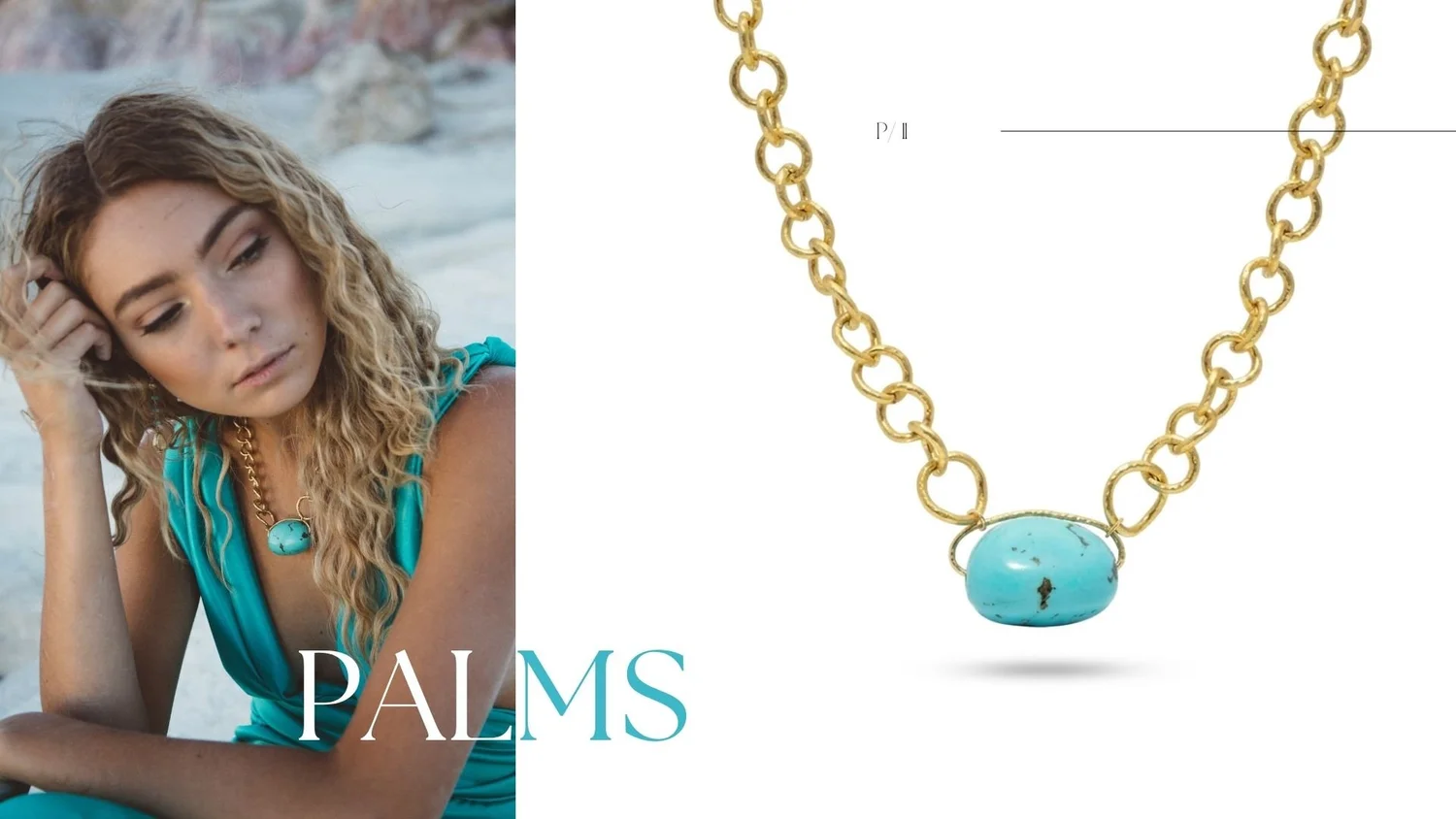
Delicate gilded chains playfully mix with brightly colored gemstones to create a wonderfully unique layering necklace. The thoughtful construction lengthens your silhouette and pairs beautifully with other styles. Made of 14k gold filled chain, 22k gold vermeil, Peruvian opal, chalcedony, whiskey topaz, Rutile, apatite, Oregon sunstone, andalusite, freshwater pearl, and chrysoprase drops.
The Palms collection uses 14k gold-filled and 24k gold vermeil components that Andrea twists into unique configurations, adding uncommon detailing and architecture to each design.
For Your Signature style
One of a Kind · Built Once
Explore Green Chrysoprase Bracelets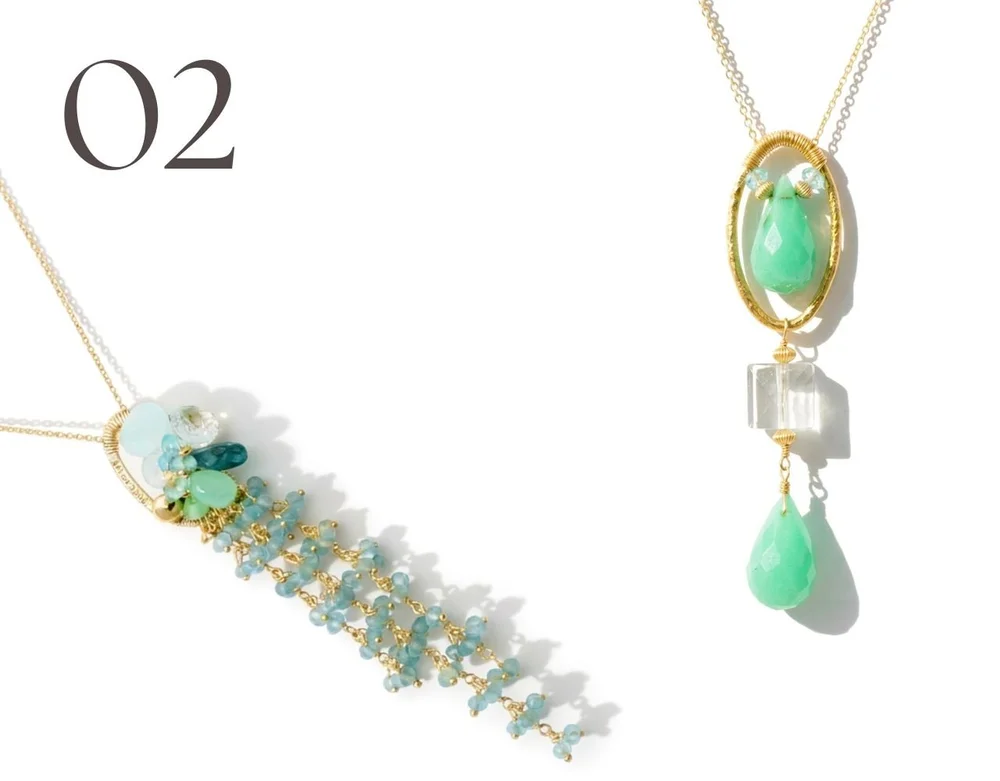
for the Statement Maker to elevate your everyday style
One of a Kind · Built Once
Explore green chrysoprase necklaces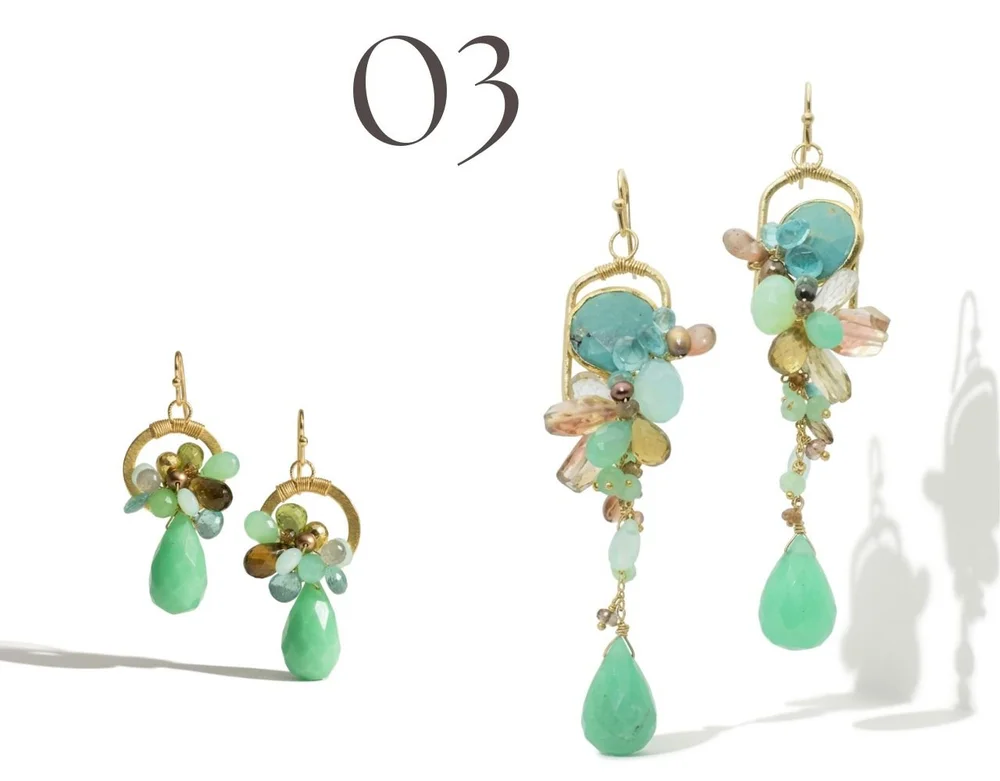
One of a Kind · Built Once
Explore green chrysoprase earringsGifts · Handmade & One-of-a-Kind
A fresh, apple-green chalcedony, chrysoprase is bright and uplifting, with a vintage soul. Each piece is handmade and one-of-a-kind, sculpted by hand in my Denver studio.
Explore the Jewelry Gift Guide →Chrysoprase is the rarest and most valuable variety of chalcedony: a microcrystalline quartz whose vibrant apple-green color comes from trace amounts of nickel. Unlike many green gemstones, chrysoprase requires no dye, coating, or treatment to achieve its color. It's been prized since antiquity: Alexander the Great reportedly wore it into battle, and Frederick the Great of Prussia used it to adorn the Sanssouci Palace.
Chrysoprase can fade with prolonged exposure to direct sunlight or heat, but normal daily wear won't cause fading. If fading does occur, the color can often be restored by storing the piece in a dark, slightly humid environment. High-quality natural chrysoprase, especially Australian material, tends to be more color-stable than lower-grade specimens.
Gold-filled uses a thick layer of solid gold mechanically bonded to a base metal: it's very durable and won't tarnish with normal wear. Gold vermeil (pronounced vehr-may) is a minimum 2.5-micron layer of 24k gold electroplated over sterling silver. Vermeil offers a beautiful rich gold color but the layer is thinner and can wear over time, especially on high-friction items like bracelets. Both are used in The Palms collection because each serves a different design purpose.
Remove jewelry before swimming, bathing, exercising, or applying lotions and perfumes. Clean gently with lukewarm water, mild soap, and a soft cloth: never use ultrasonic cleaners, steam, or harsh chemicals. Store pieces in a jewelry box or soft pouch away from direct sunlight and separate from harder stones. For vermeil components, avoid rubbing with abrasive cloths.
No, they're entirely different minerals. Chrysoprase is a variety of chalcedony (microcrystalline quartz) colored by nickel. Jade is either jadeite or nephrite, with completely different crystal structures and compositions. The two are sometimes confused because of their similar green color, but gemologists can easily distinguish them.
One bracelet features green amethyst (prasiolite) rather than chrysoprase as its primary stone. It lives in The Palms collection because the color palette is a perfect aesthetic match: the soft sage-green of prasiolite complements the tropical palette beautifully. We believe in transparency about materials, so we note this distinction rather than letting it go unmentioned.
Yes, if you love chrysoprase and want something designed specifically for you, Andrea accepts custom commissions. Each piece is designed and built by hand in her Denver studio. Visit the Custom Shop to start a conversation about your vision.
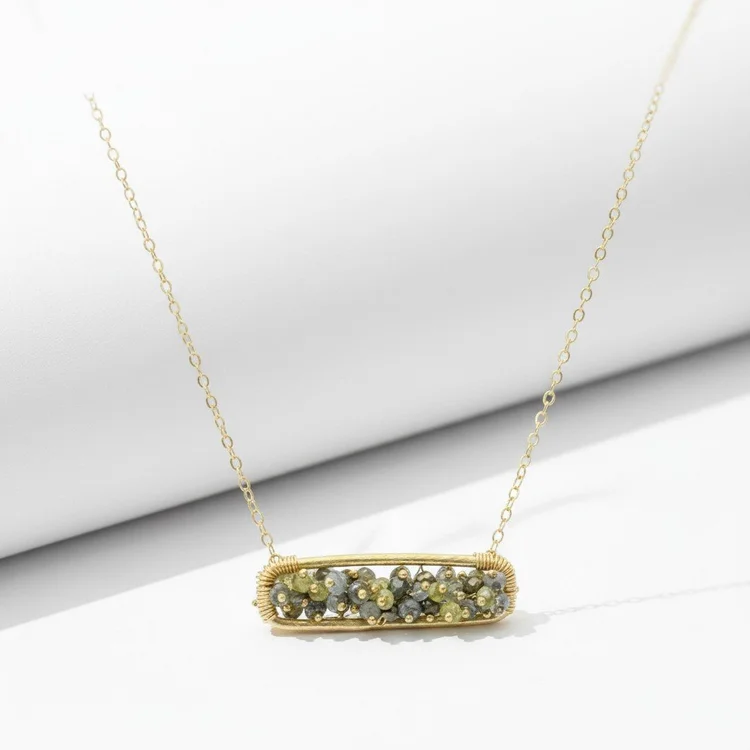
Set the bar of tasteful and simple style with this necklace. Classic bar pendant design that can easily be layered with other delicate chain necklaces. Made with 14k gold filled, 22k gold vermeil, green zircon, mystic labradorite, and pyrite.