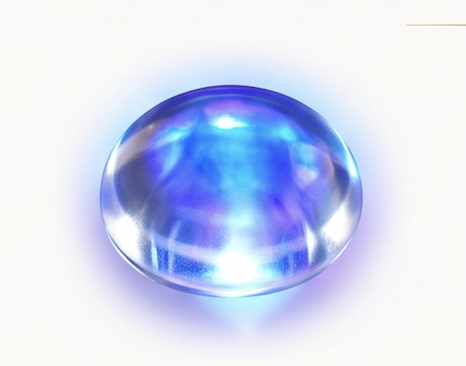
AAAA / AAA (Extra / High Grade)
Aura-quality
- Exceptional, crystal-clear transparency
- Intense, glowing blue and rainbow flash visible from any angle
- Zero or very few internal inclusions
- Expertly cut symmetrical cabochons with high polish
LIMITED COLLECTIONS
Interactive · Tap a marker
Pearl · Moonstone
They are mistaken for each other all the time. Tap a marker to see what gives each its light, and how to tell them apart.
Pearl
Luster & Orient. Luster is the soft surface sheen, light bouncing off the layered nacre. Orient is the rainbow play that seems to dance on or just beneath that surface, like oil on water. Together they make a pearl's glow.
Nacre. A pearl is organic. A mollusk coats an irritant in layer after layer of nacre until a pearl forms, so no two are ever identical.
Opaque. Light does not pass through a pearl. The glow is all surface, which is part of why it reads as warm and solid.
Moonstone
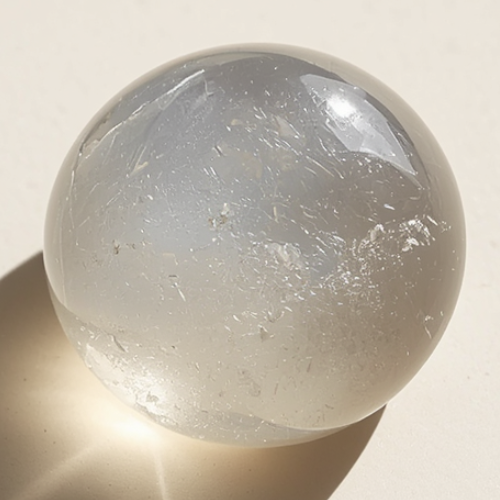
Adularescence. The blue-white light floats beneath the surface and drifts as you tilt the stone. No pearl does this. It is the fastest way to tell them apart.
Feldspar. Moonstone is a mineral, formed in the earth. Its glow comes from light scattering between microscopic layers inside the crystal.
Translucent. Light passes into the stone, which is why the glow looks like it is hovering just inside rather than sitting on top.
Illustrative, not a photograph.
Moonstone
Unlike diamonds with rigid laboratory certifications, gemstone grading for rainbow moonstone (technically a transparent variety of labradorite) relies on visual quality tiers defined by clarity, flash intensity, and cut.
Aura-quality
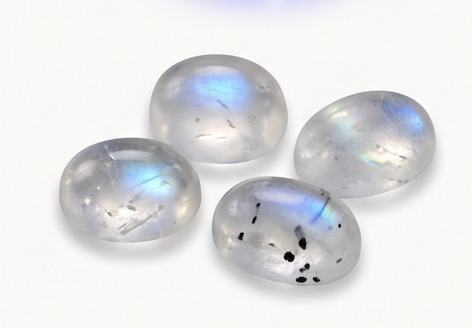
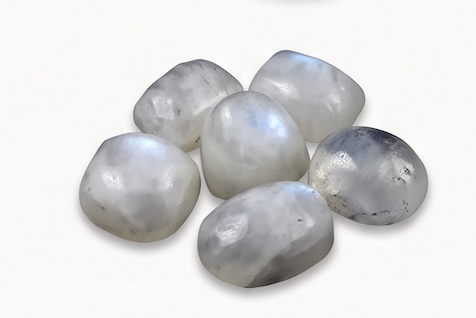
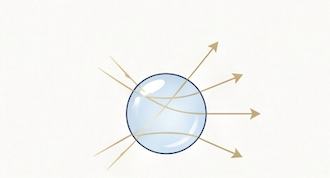
The clearer the background body, the higher the value.
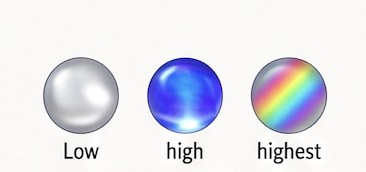
Deep neon blue, electric violet, or full-spectrum rainbow command the highest prices. Weak sheens rank lower.
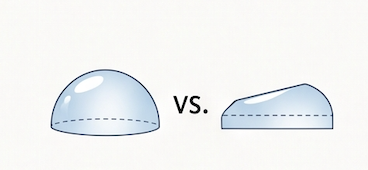
A smooth, properly proportioned dome maximizes the floating light effect. A flat or lopsided cut traps light.
The Kali Long Multi-Circle Gemstone Drop Pendant Necklace is handmade by Andrea Li in her Denver studio, and it is built for someone who wants a necklace that does two things at once: drapes quietly and stops a room.
The chain is 24k gold vermeil over sterling silver in a triangle-link pattern with moonstone rondelle accents threaded through the links. From it hang two circles. The smaller is 1 1/2 inches, gemstone-encrusted with moonstone, sapphire, moss amethyst, mystic quartz, and pearl, with 24k vermeil accent details and mystic labradorite rondelles ringing the setting. The larger is 2 inches across, its full edge wrapped in mystic labradorites. The clasp is 24k gold vermeil over sterling silver, and the wire on the circles is 14K gold-filled. Total pendant length from the top of the chain to the bottom of the large circle is 6 1/4 inches. At 41 inches total, the necklace settles right below the belly button -- the kind of length that layers well over a turtleneck and looks just as right with an open neckline.
Each circle is assembled cold. Every stone is wire-wrapped and set by hand -- no casting, no glue, no heat near the gems. That process is what lets the moonstone rondelles in the chain move independently, each one catching light from a slightly different angle as the necklace shifts. The whole piece is built to have that quality: stones that look like they wandered into an arrangement rather than being locked into one.
One of a kind. When it sells, it is gone. Explore the full Femme Fatale Collection, and see the moonstone guide for more on working with this stone.
Andrea Li Designs - Jewelry As Unique As You Are.
Book a private virtual appointment with me - Here
Product Specs:
• 24k gold vermeil over sterling silver triangle chain with moonstone rondelles link chain accents.
• 1 1/2’’ gemstone encrusted circle including moonstone, sapphire, moss amethyst, mystic quartz and pearl with 24k vermeil accents and mystic labradorite rondelles.
• Large 2’’ circle edged with mystic labradorites.
• Pendant length 6 1/4’’ from top to bottom.
• Necklace total length 41’’ typically hits right below the belly button.
• 14k gold filled wire
• 24k gold vermeil over sterling clasp
Mohini, the only female avatar of the Hindu God Vishnu and Goddess of enchantment. Magnify your essence of female beauty and allurement with this sparkling necklace of empowerment.
This occasion defying power piece will command attention as subtle or bold as you want. An excellent stand-alone exclamation point to any outfit or max it out by layering it with other pieces.
Entirely handmade, each gemstone is carefully placed to ensure originality that will never be replicated. The value of these gems spans generations. These limited collections of one of a kind pieces will be gone forever once they sell out.
Andrea Li Designs - Jewelry As Unique As You Are.
Book a private virtual appointment with me - Here
Product Specs -
• 24k gold vermeil over sterling silver triangle chain with moonstone rondelles, fancy cut amethyst accents, and GIA graded high luster pearls.
• Long multi-drop pendant with gemstone clustering of pink amethyst, sapphire, ametrine, GIA graded high luster pearls, and 24k gold vermeil accents.
• Pendant length 5 2/4’’ from top to bottom.
• 14k gold filled wire and clasp
• Necklace length 38’’ typically hits right at or below the belly button
Named after the ancient Greek mythological creature portrayed as a woman and known to be ferocious guardians. Be fashionably fierce with this pendant that packs a punch to mundane style.
Wear this long statement necklace anytime you want to elongate your silhouette. Max out a maxie-dress on the weekend or amp up a power suit in the boardroom. Ensure your style influence no matter what day of the week it is.
Entirely handmade, each gemstone is carefully placed to ensure originality that will never be replicated. The value of these gems spans generations. These limited collections of one of a kind pieces will be gone forever once they sell out.
Andrea Li Designs - Jewelry As Unique As You Are.
Book a private virtual appointment with me - Here
Product Specs -
• Main pendant gemstone cluster made from AAA quality ametrine briolettes, moonstone, grey sapphires, pink sapphires, purple sapphires, peacock pearls, tiny 24k gold vermeil spikes, and large 24k gold vermeil spikes.
• Main pendant hangs from a large 2’’ diameter circle completely encrusted with mystic labradorite rondells for extra sparkle.
• Chain made from large moonstone rondells and 24k gold vermeil circle accents.
• Main pendant length from top to bottom 5’’
• Necklace total length 40’’
Inspired by the legendary Spartan beauty Helen of Troy whose allure started wars. Embrace your own irresistible elegance with this versatile gemstone and pearl necklace.
Wear this stunner anytime you want to leave a memorable impression. Take your look from day to night with ease and swagger. Best for open necklines to truly give this piece space to breathe style points.
Entirely handmade, each gemstone is carefully placed to ensure originality that will never be replicated. The value of these gems spans generations. These limited collections of one of a kind pieces will be gone forever once they sell out.
Andrea Li Designs - Jewelry As Unique As You Are.
Book a private virtual appointment with me - Here
Product Specs -
• Three tiered drop pendant made of sapphires, moonstones, GIA certified freshwater pearls, 24k gold vermeil accents.
• Pendant length from top to bottom 3’’
• Chain made of moonstone with AAA quality ametrine briolette and 24k gold vermeil hammered circle accents.
• Necklace total length 23’’
The notorious Phoenician princess Jezabel may have used her seductress charm for nefarious intents but you as a modern-day woman should be empowered by your own femininity. Don’t be afraid to let your style do the talking for you when wearing this polished necklace.
This medium-length gemstone necklace gives you the versatility to anchor a blazer or add some edge to a girlish frock. The softly neutral color palette will play nicely with almost any shade of clothing in your wardrobe.
Entirely handmade, each gemstone is carefully placed to ensure originality that will never be replicated. The value of these gems spans generations. These limited collections of one of a kind pieces will be gone forever once they sell out.
Andrea Li Designs - Jewelry As Unique As You Are.
Book a private virtual appointment with me - Here
Product Specs -
• Main pendant made of pink amethyst, AAA quality ametrine, moonstone, sapphires, keshi stick pearls, GIA certified freshwater pearls with 24k gold vermeil accents.
• Completely encrusted 1 1/2 diameter circle with mystic labradorites for extra shimmer.
• Pendant length top to bottom 3 1/2’’
• Chain 24k gold vermeil triangle links with GIA certified freshwater pearls and simple cut moonstone accents.
• Necklace total length 31’’
The myth of Cleopatra, Queen of the Nile, whose beauty intoxicated powerful men still lingers vividly in the lore of famous Femme Fatales. Make your own mark amongst the most significant seductresses of all time with this uniquely beautiful gemstone necklace.
Wear intently to operate your own seducing tactics. Open necklines properly adorned always lead to opening conversations. No need to be quick or efficient, instead let your persuasion slowly do the talking for you.
Entirely handmade, each gemstone is carefully placed to ensure originality that will never be replicated. The value of these gems spans generations. These limited collections of one of a kind pieces will be gone forever once they sell out.
Andrea Li Designs - Jewelry As Unique As You Are.
Book a private virtual appointment with me - Here
Product Specs -
• Bar pendant made of fancy cut pink amethyst, labradorite, mystic quartz, moonstone, sapphire, AAA quality ametrine, 24k gold vermeil, top-edged with mystic labradorite rondelles.
• Delicate 14k gold filled chains with ametrine, moonstone, mystic quartz, amethyst, and GIA certified freshwater pearls.
• Pendant dimensions 2’’wide by 1 1/2’’ tall
• Necklace length 18’’
Even the strongest of men will be brought to their knees when faced by a seductress such as the Philistine princess Delilah. Embody the same feminine allure when wearing this gemstone cuff bracelet.
Perhaps this piece may not be intended for a beach outing. However, this glittering arm candy statement piece feels perfectly at home anywhere you want to make an impression that lasts. Wear it often to feel confidently beautiful at all times.
Entirely handmade, each gemstone is carefully placed to ensure originality that will never be replicated. The value of these gems spans generations. These limited collections of one of a kind pieces will be gone forever once they sell out.
Andrea Li Designs - Jewelry As Unique As You Are.
Book a private virtual appointment with me - Here
Product Specs -
• Gemstone cluster made of fancy cut pink amethyst, AAA quality ametrine, moonstone, sapphires, GIA certified freshwater pearls, 24k gold vermeil accents.
• Chain made of moonstone rondelles and 24k gold vermeil accents.
• Clasp and end details all 24k gold vermeil.
• Bracelet length 7’’
Salome’s youth and beauty were made infamous through her mother’s cunning plot to exact revenge. Own your ability to be a dangerous beauty yourself and amplify your power to do so when wearing this single spike pendant necklace.
Perfectly suited for plunging necklines. Easy to wear, making it the perfect go-to item in your jewelry box. Light and airy this piece can liven up just about any outfit.
Entirely handmade, each gemstone is carefully placed to ensure originality that will never be replicated. The value of these gems spans generations. These limited collections of one of a kind pieces will be gone forever once they sell out.
Andrea Li Designs - Jewelry As Unique As You Are.
Book a private virtual appointment with me - Here
Product Specs:
• Delicate gemstone cluster made of fancy cut pink amethyst, sapphires, GIA certified freshwater pearls, moonstone, mystic quartz, 24k gold vermeil.
• Pendant length top to bottom 3 1/4’’
• Chain 24k gold vermeil triangle links with moonstone, GIA certified freshwater pearls and delicate 14k gold filled chain accents.
• Necklace length 22’’
The Greek Ballad, the Argonautika, tells us the story of Medea. A powerful sorceress who used her magic to will her desires upon those around her. Embody your own potential for enchantment with this elegant gemstone collar necklace.
This statement piece adds pure sophistication to any outfit that requires a little effortless polish. Become a style icon whenever you wear this classic necklace design with a modern twist.
Entirely handmade, each gemstone is carefully placed to ensure originality that will never be replicated. The value of these gems spans generations. These limited collections of one of a kind pieces will be gone forever once they sell out.
Andrea Li Designs - Jewelry As Unique As You Are.
Book a private virtual appointment with me - Here
Product Specs:
• Side gemstone flourish detailing made of fancy cut pink amethyst, moonstone, labradorite, sapphires, Keshi stick pearls, GIA certified freshwater pearls, 24k gold vermeil accents.
• Graduated fancy cut moonstone ovals for the necklace chain.
• Fancy ‘S’ clasp in 24k gold vermeil.
• Necklace length 18’’
Daughters of the river-deity Achelous, the Sirens, known for their beauty and irresistible melodies that lured sailors to their death. Accessorize with your own anthem of seductive style with this drop pendant necklace.
Plunging necklines are recommended to give this piece center stage to your outfit. Wear to feel uniquely beautiful as often as you like. The neutral color palette makes it perfectly suited for prints or solids.
Entirely handmade, each gemstone is carefully placed to ensure originality that will never be replicated. The value of these gems spans generations. These limited collections of one of a kind pieces will be gone forever once they sell out.
Andrea Li Designs - Jewelry As Unique As You Are.
Book a private virtual appointment with me - Here
Product Specs:
• Symmetric gemstone cluster pendant made of moss amethyst, moonstone, sapphires, GIA freshwater pearls, 24k gold vermeil attached to a custom backing 14k gold filled square wire with soldered jump rings.
• Pendant drop made of custom fabricated 14k gold filled triangles and shield cut fancy moonstones.
• Pendant length top to bottom 4 1/2’’ and 2’’ wide
• Chain made of 14k gold filled oval links with moonstone details and 14k gold filled clasp
• Necklace length 22’’
This statement necklace was named after Circe the greek goddess who kept Odysseus enchanted on her island for years. Unleash your own sorcery and place your own Greek God under your spell with this flourishing gemstone signature piece.
Wear whenever you want to decimate the competition with your compelling style. This piece is not for wallflowers and only for those who command the attention of the room when they walk into.
Entirely handmade, each gemstone is carefully placed to ensure originality that will never be replicated. The value of these gems spans generations. These limited collections consist only of one of a kind pieces will be gone forever once they sell out.
Andrea Li Designs - Jewelry As Unique As You Are.
Book a private virtual appointment with me - Here
Product Specs:
• Signature style gemstone cluster made of fancy cut moonstones, sapphires, keshi stick pearls, GIA certified freshwater pearls, ametrine, 24k gold vermeil accents.
• Chain made of three layered strands of smooth moonstone rondelles.
• 24k gold vermeil clasp and end detailing.
• Pendant cluster length top to bottom 4’’
• Necklace total length 23’’
During the times of ancient India, the Visha Kanya, a group of young women were used as assassins. It has been mentioned that they could kill a person simply by looking at them. Well, if looks can kill then it is time to arm your outfit with a weapon of choice. Starting with this statement gemstone necklace.
Wear this piece anytime you want to feel like an assassin in real life. Only for those who want to slay in the boardroom, on a date or at your next high powered event. Wear high and tight with a necktie blouse or leave it to roam free with an open neckline.
Entirely handmade, each gemstone is carefully placed to ensure originality that will never be replicated. The value of these gems spans generations. These limited collections consist only of one of a kind pieces will be gone forever once they sell out.
Andrea Li Designs - Jewelry As Unique As You Are.
Book a private virtual appointment with me - Here
Product Specs:
• Main pendant made of 1 1/2’’ diameter circle completely encrusted in mystic labradorites and a gemstone cluster of fancy cut pink amethyst, rose quartz, natural chopine, sapphires, moonstone, GIA certified freshwater pearls, 24k gold vermeil with fancy cut rectangle moonstone drop.
• Pendant length from top to bottom 3 3/4’’
• Chain made of moonstone rondells with AAA quality ametrine and GIA certified freshwater pearl accents.
• Clasp 24k gold vermeil.
Mata Hari was made famous after becoming a successful courtesan who used her relationships with high ranking military officers to aide in espionage. Run your own style ops and get a leg up on the competition whenever you rock this long necklace.
Easily lengthen your silhouette and swing into great style with this double tassel necklace to assist you with your new double-agent status. The long contours are perfect for a stand-alone statement or for layering with other pieces.
Entirely handmade, each gemstone is carefully placed to ensure originality that will never be replicated. The value of these gems spans generations. These limited collections consist only of one of a kind pieces that will be gone forever once they sell out.
Andrea Li Designs - Jewelry As Unique As You Are
Book a private virtual appointment with me - Here
Product Specs:
• Center pendant piece made of moss amethyst, natural chopine, moonstone, rose quartz, sapphire, GIA certified freshwater pearls, 14k gold filled accents.
• Two tassels made of custom fabricated 14k gold-filled elements, fancy shield-cut moonstones, oval 14k gold filled link chain, and moonstone smooth rondelles.
• Tassel lengths 8’’ and 10’’
• Chain made of oval 14k gold filled link chain and moonstone smooth rondelles.
• Necklace total length 38’’
The iconic 1946 movie Gilda stars Rita Hayworth in her first dramatic role as a femme fatale. The film’s romantic cross-section with noir creates some serious on-screen heat between Hayworth and her male counterparts. Embrace your own inner glamorous starlet with this statement cuff bracelet.
Leave the blazers behind with this piece of arm candy. This sparkling cuff begs for plenty of bare-arm real estate to maximize its star power. Give it a co-star of dangling earrings for extra sizzle.
Entirely handmade, each gemstone is carefully placed to ensure originality that will never be replicated. The value of these gems spans generations. These limited collections consist only of one of a kind pieces that will be gone forever once they sell out.
Andrea Li Designs - Jewelry As Unique As You Are
Book a private virtual appointment with me - Here
Product Specs:
• Gemstone clusters made of fancy cut pink amethyst, moss amethyst, moonstone, sapphires, Keshi stick pearls, purple amethyst, mystic quartz, GIA certified freshwater pearls, 24k gold vermeil accents.
• Body of bracelet made of 24k gold vermeil
• Bracelet length 7’’ circumference.
• Clasp 24k gold vermeil.
Clytemnestra, a powerful woman portrayed in Greek tragedies, seduced her lover to help her avenge the death of her daughter. Level up your own persuasive powers of seduction with this pendant necklace.
Subtle but not simple styling gives this piece versatility that transcends occasion. A great jewelry wardrobe staple that can easily be worn every day. The adjustable chain makes it a neckline chameleon.
Entirely handmade, each gemstone is carefully placed to ensure originality that will never be replicated. The value of these gems spans generations. These limited collections consist only of one of a kind pieces that will be gone forever once they sell out.
Andrea Li Designs - Jewelry As Unique As You Are
Book a private virtual appointment with me - Here
Product Specs:
• Pendant made of a long hand-edged oval with tiny shimmering mystic labradorites and a fancy cut moonstone drop accented by sapphires & 24k gold vermeil elements.
• Delicate 14k gold filled chains to finish with GIA certified freshwater pearl and mystic labradorite detailing.
• Pendant length top to bottom 2 1/2’’
• Adjustable 14k gold circle link chain and clasp with a scorolite gemstone briolette to finish.
• Necklace total length without adjusting chain 20’’ with adjusting chain 23’’
Inspired by Patasola, a forest-dwelling femme fatale in South American folklore. Protector of all life within the dense jungles. Whose wrath is directed to all men who seek to destroy it. Become your own version of a fierce female with this adjustable shimmering lariat necklace.
Wear anytime you want extra style points. Flattering to any neckline and subtle enough to enhance any outfit. Easily lengthens your silhouette with the long contours of the two tassels.
Entirely handmade, each gemstone is carefully placed to ensure originality that will never be replicated. The value of these gems spans generations. These limited collections consist only of one of a kind pieces that will be gone forever once they sell out.
Andrea Li Designs - Jewelry As Unique As You Are
Book a private virtual appointment with me - Here
Product Specs:
• Continuous beaded loop made from tiny sparkling mystic labradorites, GIA certified freshwater pearls, and 24k gold vermeil accents.
• Two tassels made of GIA certified freshwater pearls, 24k gold vermeil accents and fancy cut moonstone briolettes.
• Lariat length 46’’ generally hits around the belly button.
In American early 20th century film, femme fatale characters were referred to as vamps. Create your own legacy of seduction and power with this multi-strand statement lariat.
Wear on occasions when only the most unique will do. Give a plain white tee an extra punch of effortless style simply by adding this glamourous attention grabber. Whenever you wear it be prepared for frequent compliments.
Entirely handmade, each gemstone is carefully placed to ensure originality that will never be replicated. The value of these gems spans generations. These limited collections consist only of one of a kind pieces that will be gone forever once they sell out.
Andrea Li Designs - Jewelry As Unique As You Are
Book a private virtual appointment with me - Here
Product Specs:
• Center gemstone cluster made of fancy cut pink amethyst, fancy cut moonstones, rose quartz, natural chopine, Keshi stick pearl, sapphires, pale amethyst, GIA certified pearls, and 24k gold vermeil.
• Multiple strands of shimmering moonstone rondelles add dimension while long 24k gold vermeil spikes give an exclamation point at the end of each strand for extra style points.
• End details and clasp both 24k gold vermeil.
• Fluid adjustable length
• Necklace total length 36’’
Artemisia, Queen of Halicarnassus, fought in the Battle of Salamis. Even though she was opposed to the attack, she fought bravely and refused to back down. With her smart and canning ways, she fought through the Greek ships fearlessly. Become a style warrior yourself with this glittering long necklace.
Never leave the house without a confidence piece that will enable you to make winning decisions on the playing field of life. The subtle shimmer of this double tassel long necklace will easily enhance any outfit night or day.
Entirely handmade, each gemstone is carefully placed to ensure originality that will never be replicated. The value of these gems spans generations. These limited collections consist only of one of a kind pieces will be gone forever once they sell out.
Andrea Li Designs - Jewelry As Unique As You Are
Book a private virtual appointment with me - Here
Product Specs:
• It’s all in the details with this long necklace. Two tassels made of tiny sparkling mystic labradorites that shimmer like small diamonds. Accented with GIA certified freshwater pearls, 24k gold vermeil, and finished with AAA quality ametrine briolettes.
• Double chain is carefully handmade with a sprinkling of mystic labradorites to add subtle sparkle.
• Clasp 14k gold filled
• Tassel length 10 1/2’’
• Necklace total length 37’’
Lesbia was the literary pseudonym used by the Roman poet Gaius Valerius Catullus when referring to his lover. She was the subject of most of his musings outlining emotions of passion and betrayal. Become a muse yourself with this powerful pair of statement earrings.
Wear anytime you want to command attention. Let these punctuate your conversations at your next social outing.
Entirely handmade, each gemstone is carefully placed to ensure originality that will never be replicated. The value of these gems spans generations. These limited collections consist only of one of a kind pieces that will be gone forever once they sell out.
Andrea Li Designs - Jewelry As Unique As You Are
Book a private virtual appointment with me - Here
Product Specs:
• Top gemstone cluster adds additional flourishes to a classic design. Made of moss amethyst, sapphires, GIA certified freshwater pearls, moonstone, AAA quality ametrine.
• Moonstone encrusted 24k gold vermeil triangle middle link to add extra style points.
• Long fancy cut rectangle moonstone drop.
• Earwires 14k gold filled
• Earring length from top to bottom 3 3/4’’
The novel Juliette is the first known in which the femme fatale symbolizes not evil, but all the best qualities of Women. The novel is perhaps the earliest recording of femme fatale triumphs. Be triumphant in all of your pursuits with these powerful statement earrings.
Wear whenever you want to feel confidently beautiful at all times. These earrings are not for wallflowers but for those who boldly go forward to pursue their dreams.
Entirely handmade, each gemstone is carefully placed to ensure originality that will never be replicated. The value of these gems spans generations. These limited collections consist only of one of a kind pieces that will be gone forever once they sell out.
Andrea Li Designs - Jewelry As Unique As You Are
Book a private virtual appointment with me - Here
Product Specs:
• Statement earrings to make an impact. 24k gold vermeil circles completely hand-edged with tiny shimmering mystic labradorites with a gemstone cluster of AAA quality ametrine briolettes, sapphires, moonstone, GIA certified freshwater pearls and 24k gold vermeil accents.
• Earwires 14k gold filled
• Earring length top to bottom 4 1/2’’
The notable gothic tale The Monk, from the romantic period, features a very powerful femme fatale named Matilda. The iconic female character symbolizes not evil, but all the best qualities of women. Celebrate the best qualities within you with these whimsical statement earrings.
Wear with high collared tops and forgo a neckpiece in favor of filling up the premium real estate between your ears. These danglers perfectly frame your face and draw attention upwards. Get those bedroom eyes ready.
Entirely handmade, each gemstone is carefully placed to ensure originality that will never be replicated. The value of these gems spans generations. These limited collections consist only of one of a kind pieces that will be gone forever once they sell out.
Andrea Li Designs - Jewelry As Unique As You Are
Book a private virtual appointment with me - Here
Product Specs:
• Gemstone cluster details add an extra special touch to these statement earrings. Made of moss amethyst, moonstone, sapphire, rose quartz, GIA certified freshwater pearls, 24k gold vermeil.
• Drop down dangle made of custom hand fabricated 14k gold filled triangles and fancy shield cut moonstones.
• Earwires 14k gold filled
• Earring length 4’’
Hedda Gabler was a play written by a Norwegian playwright in 1891. The title character, Hedda, is considered one of the great dramatic roles in theatre. Whose character traits personified the classic femme fatale. Manifest your own memorable theatrics with these gemstone dangle earrings.
Wear anytime you want a little extra drama to your outfit. Light and airy, these can easily go from day to night. Bask in the limelight of frequent compliments before you exit stage left.
Entirely handmade, each gemstone is carefully placed to ensure originality that will never be replicated. The value of these gems spans generations. These limited collections consist only of one of a kind pieces that will be gone forever once they sell out.
Andrea Li Designs - Jewelry As Unique As You Are
Book a private virtual appointment with me - Here
Product Specs:
• Whimsical design made of custom hand fabricated 14k gold filled triangles, fancy cut amethyst and fancy shield cut moonstone.
• Earwires 14k gold filled
• Earring length 3’’
Marie Antoinette, the last queen of France, is perhaps one of the most well known public figures that fit the archetype of the femme fatale. Embody your own imperial status with these dangle earrings that pack a mighty punch of style.
Wear these anytime you want to feel fiercely feminine. The neutral color palette perfectly pairs with just about any color in your wardrobe. Sharp points give a hint of danger while shimmering gemstones soften the silhouette.
Entirely handmade, each gemstone is carefully placed to ensure originality that will never be replicated. The value of these gems spans generations. These limited collections consist only of one of a kind pieces that will be gone forever once they sell out.
Andrea Li Designs - Jewelry As Unique As You Are
Book a private virtual appointment with me - Here
Product Specs:
• Sharp and clean design make these dangle earrings a wardrobe staple. Gemstone cluster made of fancy cut moonstones, sapphires, GIA certified freshwater pearls, 24k gold vermeil, and punctuated by a long oval encrusted with tiny mystic labradorites for extra sparkle.
• Extra large stylish ear wires made of 24k gold vermeil.
• Earring length 3 1/2’’
Theda Bara was a notable silent-era movie vamp and femme fatale. From the American film audiences’ perspective, the femme fatale often appeared foreign. She was the sexual counterpart to the wholesome actress. Feel like a cinema starlet every day with this sparkling delicate layering bracelet.
Inject a little celebrity into mundane tasks like going for a coffee run when you wear these easy layering bracelets. Light and airy, they will make you forget you are even wearing anything at all making these the perfect daily style injection to all of your outfits.
Three of these layering bracelets are available. Each one is a slightly different version of the others, each created to be worn alone or make a fun “arm party”. Adopt your own signature style the way you like.
Entirely handmade, each gemstone is carefully placed to ensure originality that will never be replicated. The value of these gems spans generations. These limited collections consist only of one of a kind pieces that will be gone forever once they sell out.
Andrea Li Designs - Jewelry As Unique As You Are
Book a private virtual appointment with me - Here
Product Specs:
• Delicate chains sit among a chorus of tiny glittering gemstones giving each piece extra dimension and an illusion of three bracelets in one. Made of opals, sapphires, moonstones, GIA certified freshwater pearls, 14k gold-filled fine chains, and 24k gold vermeil accents.
• Bracelet length 7’’
During the film noir era, Jane Greer remains notable as a murderous femme fatale using her craftiness on Robert Mitchum’s character in Out Of The Past (1947). Inject your own artful playfulness into your personal style with this gemstone bracelet.
This sparkling stunner is ready for prime time as a standalone starlet on your wrist but shines even brighter with a chorus of costars. Add a delicate layering bracelet or two to give your arm party blockbuster status.
Entirely handmade, each gemstone is carefully placed to ensure originality that will never be replicated. The value of these gems spans generations. These limited collections consist only of one of a kind pieces that will be gone forever once they sell out.
Andrea Li Designs - Jewelry As Unique As You Are
Book a private virtual appointment with me - Here
Product Specs:
• A long gemstone cluster has a starring role in this bracelet. An extension of the long oval flanks the main large fancy cut pink amethyst briolette and is encrusted with tiny shimmering labradorites. Made of AAA quality ametrine, fancy cut pink amethyst, fancy cut moonstone, sapphires, mystic quartz, rose quartz, natural chopine, pale amethyst, GIA certified freshwater pearls.
• Body of bracelet made of large labradorite rondelles.
• Clasp 14k gold filled.
• Bracelet length 7’’
Valeria Messalina was the third wife of Roman Emperor Claudius and a powerful and influential woman. She allegedly conspired against her husband and was executed upon discovery of the plot. Her notorious reputation arguably results from political bias, but works of art and literature have perpetuated it into modern times. Immortalize your own place in style history with this unique lariat necklace.
Professionally polished and yet whimsical enough for a night out on the town. Command both respect and envy from your peers whenever you wear this statement piece out. Get past the naysayers at the office and the bouncers at the club when you don this sparkling necklace art.
Entirely handmade, each gemstone is carefully placed to ensure originality that will never be replicated. The value of these gems spans generations. These limited collections consist only of one of a kind pieces that will be gone forever once they sell out.
Andrea Li Designs - Jewelry As Unique As You Are
Book a private virtual appointment with me - Here
Product Specs:
• Asymmetrical gemstone cluster is the centerpiece of this stunning lariat. Made of fancy cut moonstones, fancy cut pink amethyst, moss amethyst, rose quartz, sapphires, mystic quartz, GIA certified freshwater pearls and 24k gold vermeil accents.
• Large moonstone rondelles of graduating size make up the body of the lariat with 24k gold vermeil spacers for extra detail. Punctuated by a long tassel of long slender 24k gold vermeil spikes to anchor the necklace.
• Clasp 24k gold vermeil.
• Pendant length 2 3/4’’
• Tassel length 6’’
• Necklace total length 44’’
Natasha Fatale, a curvaceous spy, takes her name from the femme fatale stock character in the film Rocky And Bullwinkle. You don’t need to be a voluptuous spy to embody your own feminine sorcery. Wear this cuff to imbue your own seductive powers on those around you.
This attention-grabbing cuff bracelet likes to be its own one-woman show. The size says “statement” while the soft color palette keeps it grounded. The triple-stranded design makes it easy and comfortable to wear. So don’t be afraid to rock it whenever an occasion arises that requires an extra punch of style.
Entirely handmade, each gemstone is carefully placed to ensure originality that will never be replicated. The value of these gems spans generations. These limited collections consist only of one of a kind pieces that will be gone forever once they sell out.
Andrea Li Designs - Jewelry As Unique As You Are
Book a private virtual appointment with me - Here
Product Specs:
• A bold and flourishing gemstone cluster is the centerpiece that anchors this cuff. Made of fancy cut pink amethyst, moss amethyst, rose quartz, ametrine, sapphires, pale amethyst, moonstone and GIA certified freshwater pearls.
• Triple criss-cross strands of large moonstone rondells make up the body of the bracelet.
• End details and clasp all 24k gold vermeil.
• Bracelet length 7’’
Theda Bara was a notable silent-era movie vamp and femme fatale. From the American film audiences’ perspective, the femme fatale often appeared foreign. She was the sexual counterpart to the wholesome actress. Feel like a cinema starlet every day with this sparkling delicate layering bracelet.
Inject a little celebrity into mundane tasks like going for a coffee run when you wear these easy layering bracelets. Light and airy, they will make you forget you are even wearing anything at all making these the perfect daily style injection to all of your outfits.
Three of these layering bracelets are available. Each one is a slightly different version of the others, each created to be worn alone or make a fun “arm party”. Adopt your own signature style the way you like.
Entirely handmade, each gemstone is carefully placed to ensure originality that will never be replicated. The value of these gems spans generations. These limited collections consist only of one of a kind pieces that will be gone forever once they sell out.
Andrea Li Designs - Jewelry As Unique As You Are
Book a private virtual appointment with me - Here
Product Specs:
• Delicate chains sit among a chorus of tiny glittering gemstones giving each piece extra dimension and an illusion of three bracelets in one. Made of opals, sapphires, moonstones, GIA certified freshwater pearls, 14k gold-filled fine chains, and 24k gold vermeil accents.
• Bracelet length 7’’
Gemstone Profile
Organic Gem
Mineral Gem
Formation
Layers of nacre build around an irritant inside a living mollusk, slowly, into a cultured or natural pearl.
A feldspar mineral that forms and grows within rock over long stretches of geological time.
Composition
Nacre (aragonite and conchiolin). An organic origin, grown by a living creature.
Feldspar (orthoclase and albite). A mineral formation, grown in stone.
Hardness (Mohs Scale)
Luster & Phenomena
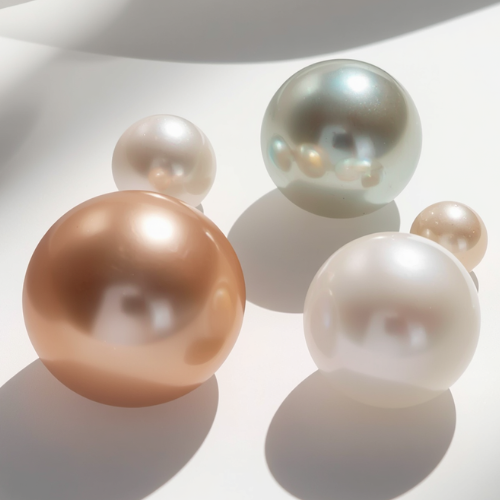
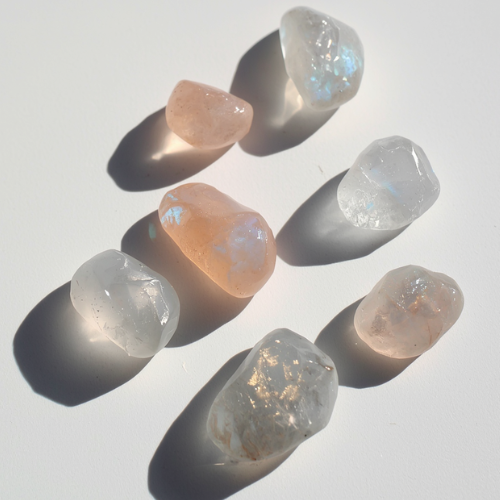
Varieties
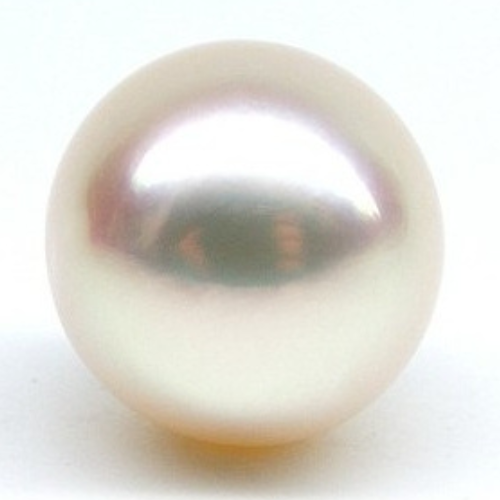 AkoyaClassic white and cream.
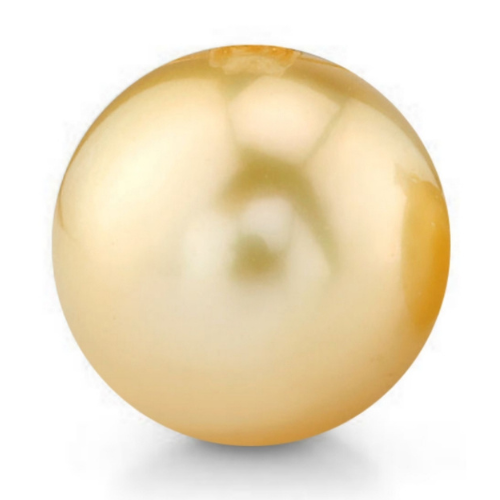 South SeaLuminous white and golden.
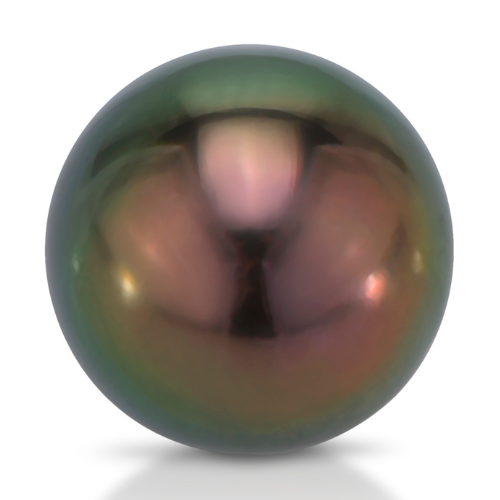 TahitianPeacock and black.
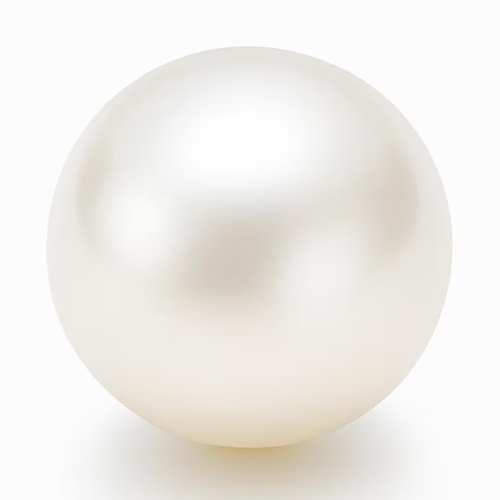 FreshwaterMany colors and shapes.
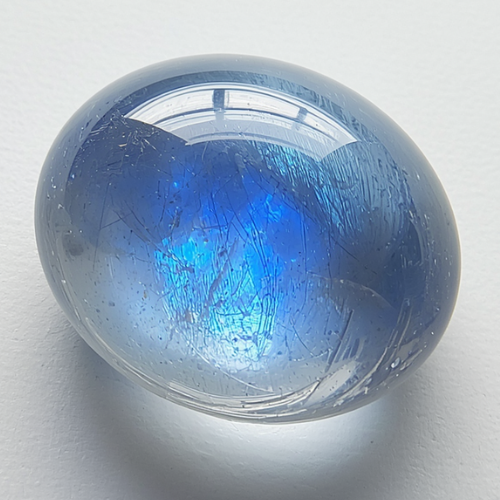 Blue SheenA floating blue glow.
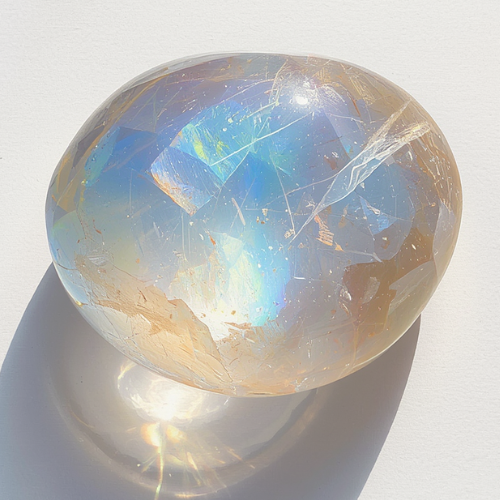 RainbowMulti-color flash, a labradorite.
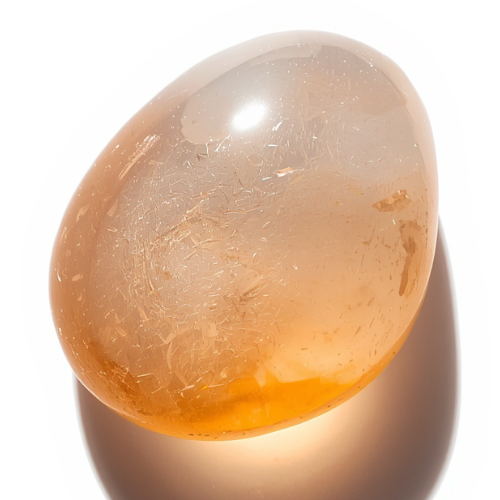 PeachWarm, soft tones.
 GrayCool, subtle glow.
Traditional symbolism
Purity, wisdom, and new beginnings.
Intuition, calm, and connection.
This stone is part of my pastel gemstone collection, one-of-a-kind pieces handcrafted in Denver.
As featured in
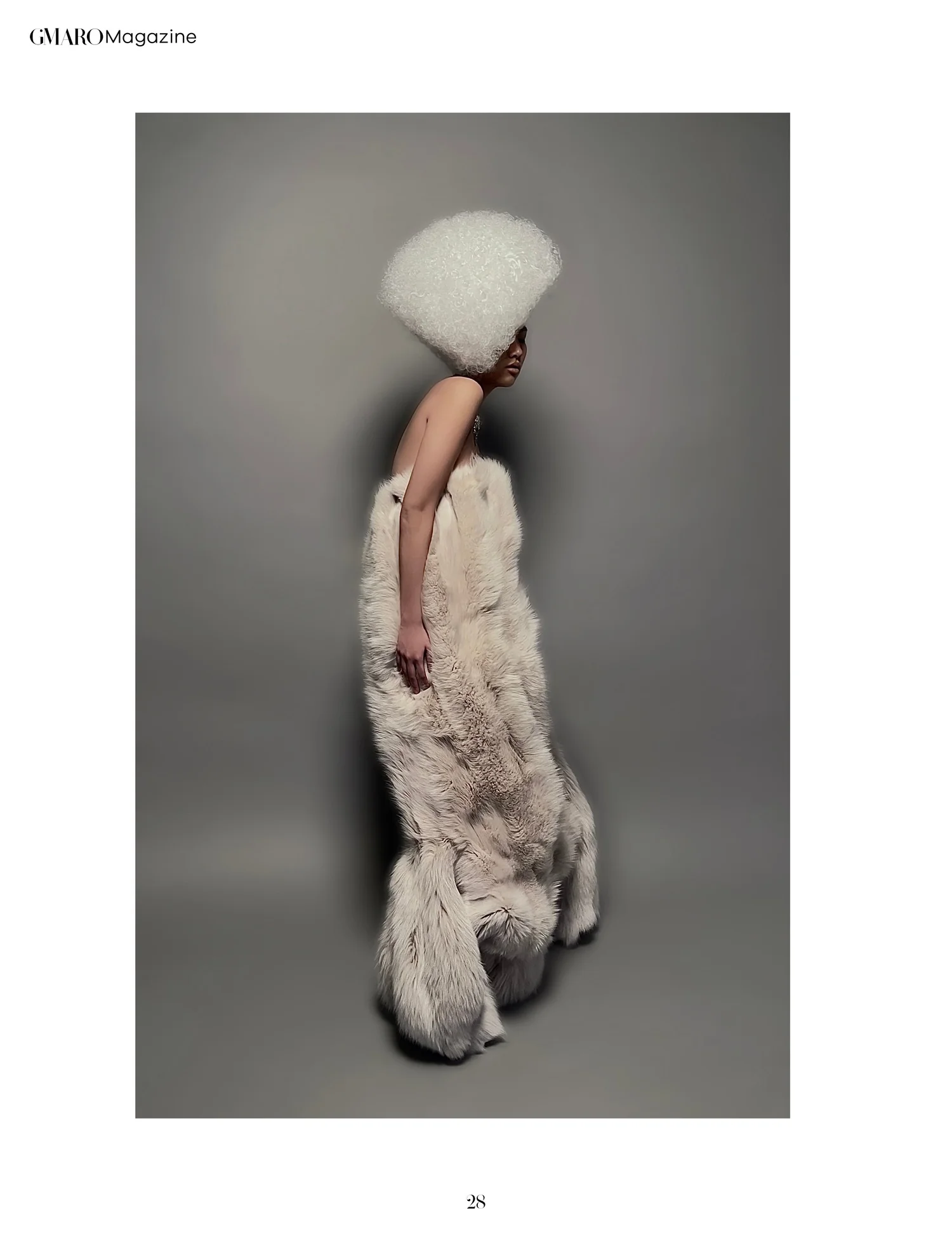
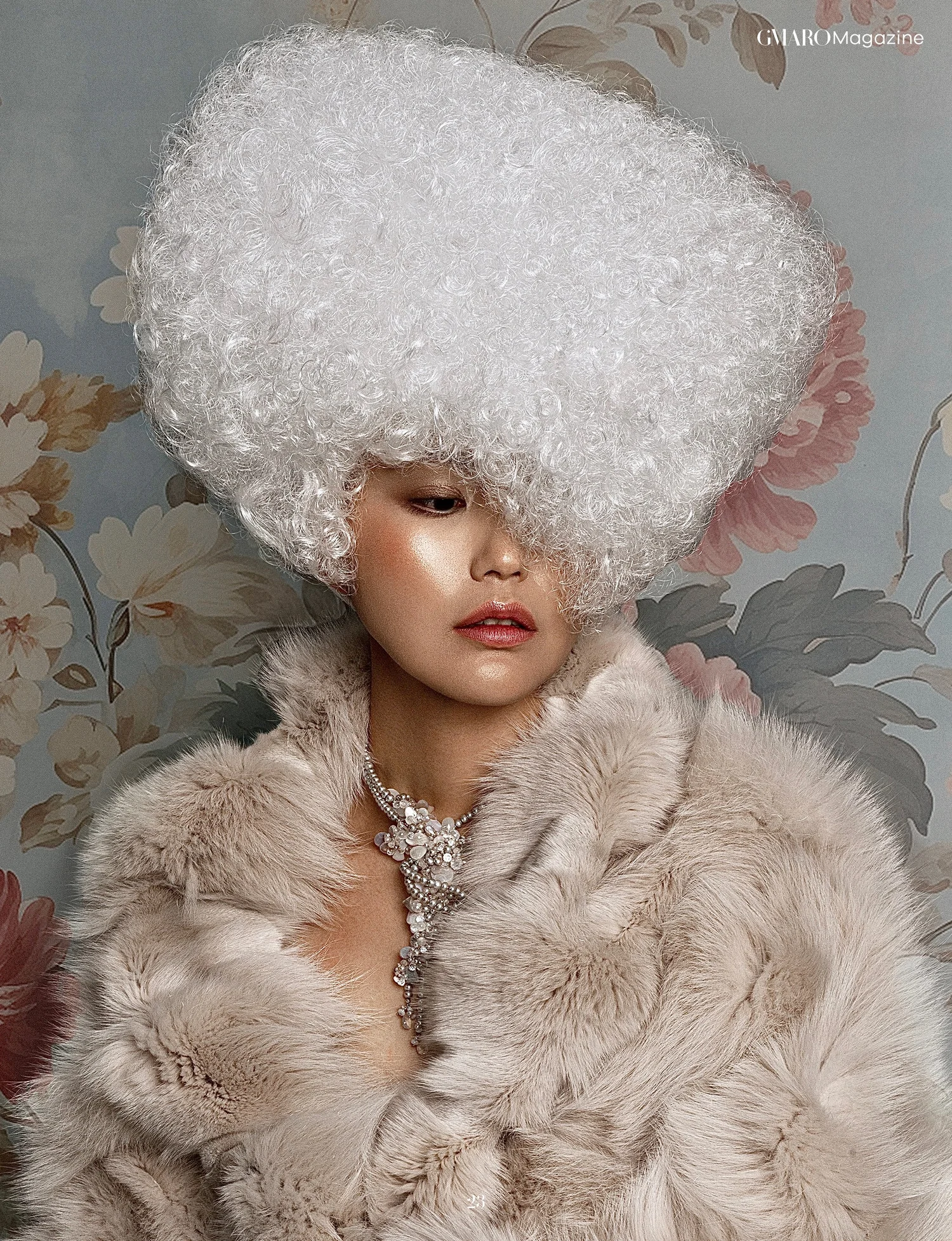
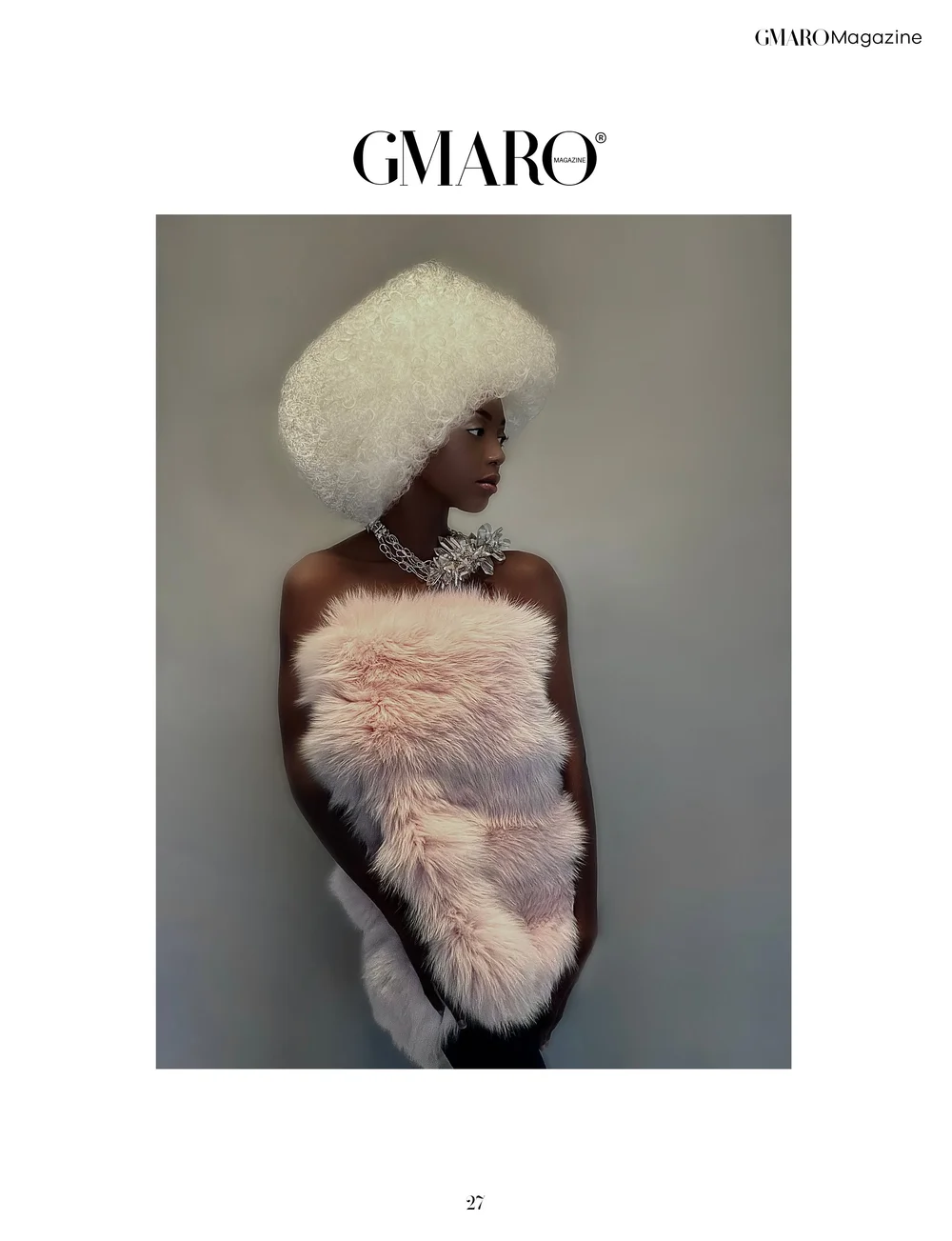
Pearl and moonstone jewelry by Andrea Li, as it ran.
Pearl
Moonstone
Andrea Li
A pearl and a moonstone can sit side by side and look like the same stone. Both glow with a soft, low light that seems to come from somewhere inside. People mix them up constantly. But they are not even close to the same thing: one is made by an animal, the other is made by the earth, and once you know where each one's light comes from, you will never confuse them again.
I set both. Pearls are one of the two stones in nearly every piece I make, and moonstone has carried whole collections. Here is how I tell them apart at the bench, and how you can tell them apart in your hand.
| Pearl | Moonstone | |
|---|---|---|
| What it is | Organic. Made by a mollusk. | Mineral. A feldspar, formed in the earth. |
| The glow | Luster (surface sheen) plus orient (a faint rainbow play) | Adularescence (a blue-white light that floats and drifts) |
| Transparency | Opaque. Light does not pass through. | Translucent. Light passes in and scatters. |
| Hardness (Mohs) | 2.5 to 4.5. Soft. | 6 to 6.5. Harder, but it cleaves. |
| Colors | White, cream, pink, gold, gray, black | Colorless to white body, with a blue or rainbow sheen |
| Source | Mollusks, farmed and wild, worldwide | Sri Lanka, India, Madagascar, and more |
| Birthstone | June | June |
| Care | Soft, porous, hates acid and heat. Last on, first off. | Tougher surface, but brittle. Protect from knocks. |
If you only learn one thing, learn this: look at where the light lives.
On a pearl, the light sits on the surface. That soft, satiny shine is called luster, and it is just light bouncing off the smooth, layered nacre the mollusk builds up. On a good pearl you may also see orient, the faint rainbow play that seems to dance on or just beneath the surface, like the colors in a film of oil on water. Luster is the sheen; orient is the rainbow. Together they make a pearl's glow, and all of it reads as warm and solid, because no light passes through.
On a moonstone, the light comes from inside. That floating blue-white glow is called adularescence, and it drifts across the stone as you tilt it. It happens because moonstone is built from microscopically thin layers, and light scatters between them, so the glow looks like it is hovering just under the surface rather than sitting on top. No pearl does this. The moment you see light move as you tilt the stone, you are holding a moonstone.
A pearl is organic. It is one of the few gems made by a living creature. A mollusk coats an irritant inside its shell with layer after layer of nacre, the same material that lines the shell, until a pearl forms. That is why no two pearls are ever truly identical, and why pearls are soft: nacre is delicate.
A moonstone is a mineral. It belongs to the feldspar family, the most common mineral group in the earth's crust, and it forms as two kinds of feldspar separate into thin, alternating layers as the stone cools. Those layers are what scatter the light into that blue glow. It is harder than a pearl, but feldspar cleaves, meaning it can split cleanly along its internal planes if it takes a sharp knock.
This is where setting them teaches you the difference fast. A pearl is soft and porous, so it has to be protected from heat, from acids, even from perfume and hairspray. A moonstone has a tougher surface but it is brittle, so the danger is a sharp impact rather than a scratch.
For the wearer, the rule of thumb is the same for both, for opposite reasons. Pearls go on last and come off first so they never meet perfume or lotion. Moonstones can take daily wear but should be kept from hard knocks against other jewelry. To clean either one, skip the ultrasonic cleaner and skip heat. Neither stone tolerates them, and honestly I would not put any of my pieces through them. Warm water, a soft toothbrush, and a drop of Dawn lift away the oils and dust that dull a piece, and the polishing cloth tucked into every order brings the metal back to life (oxidized silver should not be polished).
Here is the happy accident: both pearl and moonstone are June birthstones, so whichever speaks to you, you are covered.
Reach for a pearl if you love a warm, classic, dressed-up glow, the kind of light that has meant elegance for centuries. Reach for a moonstone if you are drawn to something cooler, more mysterious, a little otherworldly, with that blue light that moves when you do. One is the moon's reflection on calm water; the other is the moon itself.
Saltwater types are named for where they are farmed. Nearly all freshwater pearls on the market come from China. Nearly every pearl sold today is cultured; natural pearls are rare.
| Type | Oyster | Known for | Strand price, retail |
|---|---|---|---|
| Akoya | Pinctada fucata martensii | The first pearl cultured commercially. Smaller, classically round, white and metallic shades. | $300 to $10,000 and above |
| South Sea | Pinctada maxima | Size, and exceptional golden color. | $1,000 to $100,000 and above |
| Tahitian | Pinctada margaritifera, the black lipped oyster | Exotic dark colors, and baroque shapes. | $500 to $25,000 and above |
| Freshwater | Freshwater mollusk, which can carry up to about 50 pearls at once | A vast range of shapes, sizes and colors. Round ones look almost identical to Akoya at a lower price. | $50 to $2,000 |
Saltwater pearls grow around a bead for roughly ten months to two years, with only one or two pearls per oyster at a time. That time, and so few pearls per oyster, is why they cost more.
Anything with organic origins carries imperfection. Most surface marks are cosmetic and lower the grade. Some are growth characteristics that do not, and one of them is evidence of quality.
| Characteristic | What it is | Lowers the grade |
|---|---|---|
| Wrinkles | Uneven nacre formation. Expected, and often desirable, on pearls nucleated to be non round. | Yes, on round pearls |
| Spots | Slight variations of color. | Yes |
| Abrasions | Scratches or scuffs that interrupt the luster. | Yes |
| Dents and divots | Indentations in the nacre, varying in size. | Yes |
| Mottling | A light plating pattern formed inside the oyster. | No. It indicates a thick nacre layer. |
| Kobs and tips | Growth characteristics. | No, unless chipped, which affects durability. |
| Circles | A growth characteristic that gives a distinctive banded look. | No. |
| Stage | Share |
|---|---|
| Nucleated oysters that survive to bear a pearl | About 50 percent |
| Of those, pearls that are marketable | About 20 percent |
| Nucleated oysters yielding fine gem quality | Fewer than 5 percent |
| The grade above AAA | Hanadama, certified by the Pearl Science Laboratory in Tokyo |
These are figures the trade repeats rather than peer reviewed research, and pearl grading itself is not standardized, so treat every tier on every chart as one seller's opinion until you have looked at the pearl.
These one-of-a-kind Baroque Pearl Statement Earrings are handmade by Andrea Li in her Denver studio. The materials are freshwater baroque pearls; 14K gold-filled hoop and dramatic chain drop; 12 gauge gold-filled wire hoops. Total length: 6 inches.
Baroque pearls are the irregular ones, the ones that grow without a nucleus to shape them into a perfect sphere, and that irregularity is exactly why they belong in a statement piece. Every surface is different. Every catch of light is different. The chain drop moves as you move, making the earrings feel alive in a way that a manufactured piece never quite manages.
With pearls I follow a rule I learned early: they go on last and come off first. Pearls sit at 2.5 to 3 on the Mohs scale, which puts them softer than most gemstones and softer than household dust. Lotion, perfume, sunscreen, and even sweat will dull the nacre over time. The safest habit is to put these earrings on after everything else, and to wipe them gently with a soft cloth when you take them off. Store them lying flat, not hanging, so the wire stays straight and the pearl surface stays unmarked.
One of a kind. When it sells, it is gone. Find more pearl pieces in the Aglow Collection, or learn more about the stone in the pearl guide.
Product Specs -
• Modern statement Baroque pearl statement earrings with a 14K gold-filled hoop and dramatic chain drop, finished with another baroque pearl. A uniquely designed limited release that will give you an uncommon edge to your style.
• 12 gauge gold-filled wire hoops with a diameter of 1 1/4’’
• Total length 6’’
The Statement Gold Three Pearl Floating Illusion Ring is handmade by Andrea Li in her Denver studio: a 14k gold-filled open band engineered so that three freshwater pearls - two at 8.4mm and one at 10mm - appear to hover above the finger rather than sit on it. The open frame disappears against the skin. The pearls read as if they exist independently of anything holding them there.
Where most pearl rings press the stone into a visible bezel or claw setting, this band is designed to recede completely. The asymmetric pearl arrangement - the larger 10mm pearl anchoring the composition with the two 8.4mm pearls flanking it - is the design choice that makes this ring feel like a statement without adding weight or height. The structure is doing significant work without showing it. From the Aglow collection, where every piece is built around light-catching, minimal, sculptural forms.
Pearls ask for a little care on a ring your hands wear every day. They sit around 2.5 to 3 on the Mohs scale, softer than most gemstones, which means they absorb oils, perfume, and chemicals faster than harder stones. Put the ring on last, after lotion and perfume. Take it off first before washing your hands or anything abrasive. A soft cloth wipe keeps the nacre bright.
Explore the full Aglow collection or read more about working with pearls in Andrea's pearl guide.
Product Specs -
• Handcrafted 14k gold-filled open band with two 8.4mm Freshwater pearls and one 10mm Freshwater pearl. Sizes 6, 7, and 8. Please note, due to the unusual nature of this design ring sizing is approximate to a traditional ring band.
How To Determine Your Ring Size
Wrap string or paper around the base of your finger.
Mark the point where the ends meet with a pen.
Measure the string or paper with a ruler (mm).
Pick the closest measurement on the ring size chart below to find your ring size.
>>> Size 6 = 16.5mm
>>> Size 7 = 17.3mm
>>> Size 8 = 18.mm
Gold-Filled Pearl Bar Necklace, handmade by Andrea Li: a hand-fabricated 14K gold-filled bar necklace with thirteen 6-6.5mm freshwater pearls. A fine gold-filled chain and clasp beautifully finish the elegant design. Total length is 14''. It is part of Aglow, her collection of quietly luminous, layerable pieces that move with you and improve with wear.
The bar format does something a single pendant cannot: it distributes the pearls across the neckline so the light catches each one at a slightly different angle. Thirteen pearls, each seated along the bar, read as a unified piece from a distance and as individual, organic forms up close. It layers well over a fine chain or wears alone with the kind of quiet authority that does not compete.
Pearls ask for a small amount of care, and that care pays back in luster. Put this necklace on last, after lotion and perfume, so nothing coats the nacre. Wipe it gently with a soft cloth before storing it. Keep it away from harder stones that could scratch the surface and from water that could weaken the stringing. These habits are simple and they make a real difference over time.
One of a kind. When it sells, it is gone. Explore more in the Aglow collection, or read about pearl care and sourcing in the pearl gemstone guide.
Product Specs -
Hand-fabricated 14k gold-filled bar necklace with thirteen 6-6.5mm freshwater pearls. A fine gold-filled chain and clasp beautifully finish the elegant design. The total length is 14''.
This exquisite piece combines timeless sophistication with a modern twist, making it a must-have accessory for any fashion-forward individual. Let this necklace be the statement piece that elevates your style to new heights.
Imagine draping your neck with this stunning necklace as you prepare for a day at the office, transforming your business casual look into a statement of professional elegance. Or perhaps, consider how it could accentuate the neckline of your favorite evening gown.
Product Specs -
• Hand-fabricated 14k gold-filled paper clip links with high-luster rectangle freshwater pearls integrated seamlessly into them to bring you the best in unique design
• 26 total inches in length
• 14k gold-filled lobster clasp for extra security
• High-quality freshwater pearl accents throughout
This Baroque Pearl Gold-Filled Bracelet is handmade by Andrea Li: freshwater baroque pearls set alongside a 14K gold-filled open circle and a hand-fabricated 12 gauge gold-filled wire circle with a diameter of 1¼″, all carried on a hand-fabricated 10 gauge gold-filled wire cuff bracelet. Part of Aglow, her modular collection of barely-there, naked jewelry built to be stacked, layered, and lived in.
Baroque pearls are the irregular ones, each shaped differently by the way the oyster grew around the nucleus during cultivation. That irregularity is not a flaw. It is what makes each pearl unrepeatable and what gives the piece its organic, unhurried quality. The 10 gauge wire cuff is heavier than a standard bangle, shaped and finished by hand in the Denver studio before the pearls are ever set, so the structure holds its form whether worn on its own or stacked with other pieces from Aglow.
Pearls are soft, around 2.5 to 3 on the Mohs scale, and they ask for a little care: put this bracelet on after lotion and perfume, take it off before washing your hands, and wipe it gently with a soft cloth when you remove it. Store it away from harder stones that could scratch the nacre. Treated that way, the luster holds for years of real wear.
One of a kind. When it sells, it is gone. Explore more in the Aglow collection or read the pearl gemstone guide for more on how nacre forms and what sets one pearl apart from another.
Product Specs -
• Modern statement Baroque pearl statement cuff bracelet with a 14K gold-filled open circle to showcase a single lustrous Baroque pearl. A uniquely designed limited release that will give you an uncommon edge to your style.
• Hand-fabricated 12 gauge gold-filled wire circle with a diameter of 1 1/4’’
• Hand-fabricated 10 gauge gold-filled wire cuff bracelet
This Statement Gold Two Finger Two Pearl Illusion Ring is handmade by Andrea Li in her Denver studio: a sculptural open frame that spans two fingers, with two freshwater pearls positioned to appear suspended in midair. A 14k gold-filled open circle holds an 8.4mm freshwater pearl on one side; a gilded arch carries the structure across to a 10mm freshwater pearl on the other. The pearls seem to float between your fingers rather than sit on them.
Andrea built this ring to bring the same design ambition she applies to statement necklaces and cuffs to something as intimate as a ring. The pearl pegs are precision-soldered into the open gold frame so each pearl lands exactly where the eye does not expect it. Up close, it reads as jewelry that was thought through. From across the room, it reads as sculpture.
Because pearls are soft, around 2.5 to 3 on the Mohs scale, they ask for a little care on a piece your hands wear all day: put the ring on last after lotion and perfume, take it off first. The 14k gold-filled open circle and gilded arch do the structural work so the pearls never take the pressure of the design.
Available in sizes 6, 7, and 8. Due to the two-finger open design, sizing is approximate and the ring sits differently than a traditional band. One of each size is available. Explore the full Aglow collection.
Explore the full Aglow collection or learn about pearls in Andrea's gemstone guide.
How To Determine Your Ring Size
Wrap string or paper around the base of your finger.
Mark the point where the ends meet with a pen.
Measure the string or paper with a ruler (mm).
Pick the closest measurement on the ring size chart below to find your ring size.
>>> Size 6 = 16.5mm
>>> Size 7 = 17.3mm
>>> Size 8 = 18.mm
The perfect piece for when your mood needs a powerful lift for situations requiring a bit of posturing. Like a luncheon at Ai Fiori in Murray Hill with all the partners to discuss your future at the firm.
You wear confidence so well you would think that you devour self-doubt for breakfast every day.
Which you do. Welcome to your very bright future.
Aglow is a modular collection of naked jewelry to enhance your natural form with barely-there gilded collectibles. Each handcrafted piece is a timeless companion for your adventures in life. Covetable modern adornments that elevate everyday living with a touch of luxury.
Product Specs -
• Hand-fabricated sculpted design of a 12 gauge gold-filled choker and graduating circle pendant with one freshwater 8-8.4 mm grade-A pearl and one freshwater 9-10mm grade-A pearl.
• The pendant’s total length is 3’’.
This baroque pearl necklace is hand-built by Andrea Li in her Denver studio — every link in the large paperclip chain fabricated by hand, with pearl pegs soldered directly into alternating links to handset each baroque oval pearl into the chain structure itself. The pearls aren't dangling from the chain. They're part of it.
The necklace layers three strands at 16½, 19, and 24 inches. The top strand uses large 14k gold-filled paperclip links alternating with high-luster baroque pearls. The middle strand pairs smaller links with freshwater pearls. The third extends the cascade to create depth without bulk. A three-strand slider clasp holds everything secure and flat against the neck.
Andrea sourced these baroque pearls from Earthstone, one of her longtime vendors at the Tucson Gem Show. Each link needed to be uniform, and the precision soldering repeated across layers of chain had to be cohesively spaced for balance — a time-intensive process that makes this necklace impossible to replicate at scale. Built once and never repeated.
Explore the full Aglow collection or learn about pearls in Andrea's gemstone guide.
More subtle and less showy than its more attention-commanding counterparts. After all, wearing rings is more for you than an audience and often represents something meaningful.
If you’re looking to capture something more than the intimate viewing that rings offer then stack it with a chorus of shimmering companions. A perfect ring party is highly recommended while drinking fine champagne to properly showcase that manicure.
Aglow is a modular collection of naked jewelry to enhance your natural form with barely-there gilded collectibles. Each handcrafted piece is a timeless companion for your adventures in life. Covetable modern adornments that elevate everyday living with a touch of luxury.
Product Specs -
• Solid 14k gold cast band with a single Akoya 5mm grade AA pearl. Available size 6.5
How To Determine Your Ring Size
Wrap string or paper around the base of your finger.
Mark the point where the ends meet with a pen.
Measure the string or paper with a ruler (mm).
Pick the closest measurement on the ring size chart below to find your ring size.
>>> Size 6 = 16.5mm
>>> Size 7 = 17.3mm
Deceivingly modest but make no mistake, this sensuous necklace loves the limelight. The high-intensity luster of a single pearl commands attention as it’s nestled between your collarbone.
The barely-there design will have you forget you’re wearing it until you see the numerous gazes that drift below your neck.
Aglow is a modular collection of naked jewelry to enhance your natural form with barely-there gilded collectibles. Each handcrafted piece is a timeless companion for your adventures in life. Covetable modern adornments that elevate everyday living with a touch of luxury.
Product Specs -
• Solid 14k gold with a single Akoya 7-7.5mm grade-A pearl and 1mm delicate oval cable chain.
• The total length is 15’’.
This Sculptural Gold Illusion Three Pearl Choker is handmade by Andrea Li: a hand-fabricated 14k gold-filled modern choker frame with high-luster 8.4mm freshwater pearls accents that appear to float at the collar with no visible means of support.
The choker measures 10 total inches in length at half diameter. The spring of the heavy-gauge wire is what makes it work: it opens just enough to slide on and off, then springs back to hug the curves of your neck and hold its position without a clasp. The three pearls are placed where the eye lands first, spaced so each reads clearly against skin rather than clustering. It is the kind of piece that looks like it took engineering to figure out, because it did.
I work with high-luster freshwater pearls because luster is the quality that holds up over years of wear, and these are positioned close to the skin where the surface finishes the whole effect. Pearls are soft, around 2.5 to 3 on the Mohs scale, so I keep them away from perfume, lotion, and hairspray, wipe with a soft cloth after wearing, and store flat rather than tossed in with harder stones. Wear this choker last when you are getting ready, and it will stay beautiful.
One of a kind. When it sells, it is gone. Explore more in the Aglow collection.
• pearls
Product Specs -
• Hand-fabricated 14k gold-filled modern choker frame with high-luster 8.4mm freshwater pearls accents
• 10 total inches in length at half diameter. Choker is designed to easily slide on and off. the spring of the heavy gauge wire allows the choker to hug the curves of you neck and stay suspended
When you buy my art, you know you're getting something unique that no one else has.
This 14K Gold-Filled Graduated Two Pearl Bangle is handmade by Andrea Li: a hand-fabricated 12 gauge 14k gold-filled bangle set with two graduated freshwater pearls -- an 8-8.4 mm grade-A pearl paired with a smaller 4.5-4.8 mm grade-A pearl -- from Aglow, her modular collection of barely-there, naked jewelry built to be stacked, layered, and lived in.
The graduation is the whole point. The larger pearl anchors the composition and the smaller one echoes it, close but not identical, so the eye moves between them naturally. Both pearls are grade A, chosen for their luster and smooth, even nacre -- the qualities that register as quality without requiring explanation. The 12 gauge 14k gold-filled wire is heavy enough to hold its round shape through daily wear and light enough to feel like nothing on your wrist.
Pearls are soft, around 2.5 to 3 on the Mohs scale, and they ask for a little care: slide this bangle on after lotion, perfume, and sunscreen, take it off before washing your hands, and wipe it with a soft cloth when you remove it. Stored away from harder stones and metals, the nacre holds its luster for years.
Sizing: Small = approximately 7 1/2 inches; Medium = approximately 8 1/4 inches; Large = approximately 8 5/8 inches.
Explore more in the Aglow collection, and read Andrea's pearl guide for more on nacre, grading, and pearl care.
Product Specs -
• Hand-fabricated 12 gauge 14k gold-filled bangle with 8-8.4 mm grade A and 4.5-4.8mm grade-A freshwater pearls.
How to Determine Your Bangle Bracelet Size
Close your fingers together, bringing your thumb and little finger together (as though putting on a bangle).
Using a strip of paper or measuring tape, measure around your closed hand at the widest point, pulling the tape snug against your skin. If you are using a plain strip of paper, mark the paper with a pen, then measure the strip with a ruler. This is the circumference of your hand. Match your hand circumference to your bangle size below.
>>> Small = Approximately 7 1/2’’
>>> Medium = Approximately 8 1/4’’
>>> Large = Approximately 8 5/8’’
Ethically sourced diamonds offer sustainable glamour meant to be worn every day. The high wattage sparkle gives a whole new meaning of dusting off the dullness of daily living.
Whimsically unique while being sleekly modern. A perfect companion piece that easily takes you from the boardroom to weekend brunch to the exclusive dress circle section of the balcony for an encore of Hamilton.
Aglow is a modular collection of naked jewelry to enhance your natural form with barely-there gilded collectibles. Each handcrafted piece is a timeless companion for your adventures in life. Covetable modern adornments that elevate everyday living with a touch of luxury.
Product Specs -
• Solid 14k gold lost wax cast boat with approximately a little under three carats of VS-SI diamonds Color G, Clarity H, and Herkimer diamond accents. A solid 14k gold delicate chain and clasp gorgeously finish the pendant necklace.
• The total length is 17’’.
The Statement Gold Two Pearl Floating Illusion Ring is handmade by Andrea Li in her Denver studio: a minimal 14k gold-filled open band engineered so that two 8.4mm freshwater pearls appear to hover above the finger rather than sit on it. The open frame disappears against the skin, and the pearls seem to exist independently of anything holding them there. That is the illusion the design is built around.
Where most pearl rings press the stone into a visible bezel or claw setting, this band is designed to recede. The structure is doing significant work without showing it. From the Aglow collection, where the design intent is always light catching, minimal, sculptural.
Pearls ask for a little care on a ring your hands wear all day. They sit around 2.5 to 3 on the Mohs scale, which makes them softer than most gemstones. Put the ring on last, after lotion and perfume. Take it off first before washing your hands or anything abrasive. The pearls stay bright longer when they are kept away from oils and chemicals that they absorb faster than harder stones.
Explore the full Aglow collection or read more about working with pearls in Andrea’s pearl guide.
Product Specs -
• Handcrafted 14k gold-filled open band with two 8.4mm Freshwater pearls.
Sizes 6, 7, and 8. Please note, due to the unusual nature of this design ring sizing is approximate to a traditional ring band.
How To Determine Your Ring Size
Wrap string or paper around the base of your finger.
Mark the point where the ends meet with a pen.
Measure the string or paper with a ruler (mm).
Pick the closest measurement on the ring size chart below to find your ring size.
>>> Size 6 = 16.5mm
>>> Size 7 = 17.3mm
>>> Size 8 = 18.mm
This Baroque Pearl Drop Pendant Gold-Filled Necklace is handmade by Andrea Li: Freshwater baroque pearls (grown two years for thick lustrous nacre) suspended from a hand-fabricated 12 gauge 14K gold-filled wire circle with a diameter of 2″, on a gold-filled chain drop. Pendant length 11″; total necklace length 36″. It is part of Aglow, her modular collection of barely-there, naked jewelry meant to be stacked, layered, and lived in.
Baroque pearls are the irregular ones, each shaped differently by the way the oyster grew around the nucleus over two full years of cultivation. That growth time is not decorative language. Thick nacre is what gives a pearl its depth of luster, the quality that separates a piece from the surface and makes it glow rather than shine. The 2″ 14K gold-filled wire circle is fabricated entirely by hand in the studio, shaped and finished before the pearls are set.
Pearls are soft, around 2.5 to 3 on the Mohs scale, and they ask for a little care: put this on after lotion and perfume, store it separately from harder stones, and wipe it gently after wearing. Treated that way, the nacre holds its depth and the gold-filled components keep their warmth for years of real wear.
A rare and collectible limited release.
From the Aglow collection. Explore more at andreali.com/aglow or read the pearl gemstone guide for more on how nacre forms and what sets one pearl apart from another.
Product Specs -
• Modern statement Baroque pearl statement necklace with a 14K gold-filled open circle to showcase a single lustrous Baroque pearl. A dramatic drop finishes the design, resolving in another Baroque pearl. A uniquely designed limited release that will give you an uncommon edge to your style.
• Hand-fabricated 12 gauge gold-filled wire circle with a diameter of 2’’ with a single Baroque pearl
• Gold-filled chain drop with a Baroque pearl drop
• Necklace pendant length 11’’
• Necklace total length 36’’
A unique take on ear jewelry that is an elegant hybrid of both an earring and an ear cuff. Sleekly modern with a touch of futuristic minimalism.
A perfect power play to show others who the trendsetter is. Just make sure to get on board before they do.
Aglow is a modular collection of naked jewelry to enhance your natural form with barely-there gilded collectibles. Each handcrafted piece is a timeless companion for your adventures in life. Covetable modern adornments that elevate everyday living with a touch of luxury.
Product Specs -
• Solid 14k gold ear threader with two Akoya grade A pearls 7-7.5mm. A solid 14k gold chain drops behind the ear and is finished with one of the Akoya pearls and a solid 14k gold headpin.
• The ear ‘javelin’ length is 4 1/2’’.
• The chain drop behind the ear is 3’’.
This 14k gold-filled double pearl ear cuff is handmade by Andrea Li: a hand-fabricated 12 gauge gold-filled ear cuff set with two freshwater 8–8.4 mm grade-A pearls. It is part of Aglow, her collection of gilded, barely-there pieces built to be worn and layered without a second thought. The ear cuff sits at 2½″ total length, hugging the outer edge of the ear with no piercing required.
Two pearls, not one, is a deliberate choice. The pairing creates movement and a soft visual weight that a single stone does not, while staying within the range of effortless. Wear it alone as a quiet statement, or pair it with a simple stud in the lobe and let the cuff carry the composition. It is the kind of piece that works for a Tuesday morning meeting and a Saturday night in equal measure.
Handmade and collectible.
Grade-A freshwater pearls are chosen for luster and consistency of surface, the qualities that separate a pearl worth looking at up close from one that gets lost in the crowd. Because pearls are soft, around 2.5 to 3 on the Mohs scale, I apply them last in my process, after any metal forming is complete, so the nacre surface never gets near heat or abrasion. Put the cuff on after lotion and perfume; take it off first. That is the whole care routine. Explore the full collection at Aglow.
• pearls
• Aglow
Product Specs -
• Hand-fabricated 12 gauge gold-filled ear cuff with two freshwater 8-8.4 mm grade-A pearls.
• The ear cuff’s total length is 2 1/2’’.
This small gold open circle single pearl illusion ring is handmade by Andrea Li in her Denver studio: a 14k gold-filled floating open circle with one 8.4mm freshwater pearl seamlessly transitioning to a gilded arch open ring band. It is part of Aglow, her modular collection of barely-there, naked jewelry built to be stacked, layered, and lived in.
The circle and the arch appear to be separate forms, but the transition between them is what makes this ring interesting. Up close the geometry holds: the open circle reads as a frame around the pearl, and the gilded arch grounds it as a band rather than a pendant element. It is the kind of ring that catches the eye and then stays subtle, which is the whole point of Aglow.
The 8.4mm pearl is one of the larger stones I use in the collection, which is a deliberate choice here. Pearls are soft, around 2.5 to 3 on the Mohs scale, and a ring takes more contact than any other piece. I care for pearls the same way I always have: put it on last after lotion and perfume, take it off first, store it away from stones that can scratch it. With that much pearl in the circle, the luster is unmistakable and worth protecting.
From the Aglow collection.
• pearl
Product Specs -
• Handcrafted 14k gold-filled floating open circle with one 8.4mm Freshwater pearl seamlessly transitioning to a gilded arch open ring band. Sizes 6, 7, and 8. Please note, due to the unusual nature of this design ring sizing is approximate to a traditional ring band.
How To Determine Your Ring Size
Wrap a string or paper around the base of your finger.
Mark the point where the ends meet with a pen.
Measure the string or paper with a ruler (mm).
Pick the closest measurement on the ring size chart below to find your ring size.
>>> Size 6 = 16.5mm
>>> Size 7 = 17.3mm
>>> Size 8 = 18.mm
When you buy my art, you know you're getting something unique that no one else has.
These Baroque Coin Pearl Double Drop Earrings are handmade by Andrea Li in her Denver studio. The materials are hand-fabricated 12 gauge gold-filled wire arch earrings; gold-filled chain drops with two baroque coin pearl drops. Total length: 4 inches.
Coin pearls are disc-shaped, flat on both faces, which means they move differently from a round or teardrop pearl. These are baroque coin pearls, so each disc formed during cultivation with its own surface irregularity. That texture is not a flaw: it is the reason the luster shifts as you move. The disc catches light on an edge, then swings to show a broad, luminous face. The pair is asymmetric in exactly the way natural materials are asymmetric, which is to say they match in weight and intention and vary in the ways that matter least and interest most.
The arch is fabricated entirely by hand before the chain drops are added, which is what gives the earring its structure and lets it wear lightly. The two coin pearl drops hang at different points along the chain, so the movement is layered rather than synchronized.
With pearls I follow a rule I learned early: they go on last and come off first. Pearls sit at 2.5 to 3 on the Mohs scale, which puts them softer than most gemstones. Put these on after lotion and perfume, take them off before handwashing, and wipe them gently with a soft cloth when you remove them. Store them flat and away from harder stones.
One of a kind. When it sells, it is gone. Find more in the Aglow collection or read the pearl gemstone guide for more on how nacre forms.
Product Specs -
• Modern statement Baroque coin pearl statement earrings with 14K gold-filled arch design to showcase two lustrous Baroque coin pearls. Two dramatic drops finish the design. A uniquely designed limited release that will give you an uncommon edge to your style.
• Hand-fabricated 12 gauge gold-filled wire arch earrings
• Gold-filled chain drops with two Baroque coin pearl drops
• Earrings total length 4’’’
This is a treasure that marries timeless grace with contemporary flair. Each piece in this exclusive collection promises to captivate and charm, serving as a testament to refined taste and sophistication.
Our limited baroque oval pearl earrings are a celebration of craftsmanship and artistry. The heart of each earring is an exquisite baroque pearl, celebrated for its unique shape and lustrous sheen, making no two pieces exactly alike.
Imagine these stunning earrings as the finishing touch to your favorite outfits, elevating your look from simple to unforgettable. Picture them as your go-to accessory for special occasions, from weddings to gala events, where they complement your evening attire with their subtle glow.
Product Specs -
• Handcrafted 14k gold-filled oval link with a handset baroque pearl floating in the middle.
The classic pearl stud gets a thoroughly modern update with a long delicate chain drop and a solitaire pearl finish. For you hard-core traditionalists, not to worry because you can still convert it to the more conventional version by swapping out the back.
Designed with the intention to be layered with the ear cuff options available within the Aglow Collection for the ultimate modern statement.
Aglow is a modular collection of naked jewelry to enhance your natural form with barely-there gilded collectibles. Each handcrafted piece is a timeless companion for your adventures in life. Covetable modern adornments that elevate everyday living with a touch of luxury.
Product Specs -
• Solid 14k post earrings with chain drop attached to ear nut, two 7-7.4mm and 8-8.4mm freshwater grade A pearls.
• The earring total length is 3 1/2’’.
This Single Hammered Gold-Filled Stacking Bangle is handmade by Andrea Li: a hand-fabricated 12 gauge gold-filled wire bangle with a gorgeous hammered texture. Part of Aglow, her modular collection of barely-there, naked jewelry built to be stacked, layered, and lived in.
The hammered finish is not a coating or a print. Each strike of the hammer against the 12 gauge gold-filled wire work-hardens the metal slightly, setting the texture into the surface permanently and giving the bangle a quiet, organic movement that catches light differently at every angle. The result is a piece that looks handmade because it is, and holds its shape under real wear because the wire is heavy enough to keep it.
Stacking bangles work because they are minimal on their own and layered together, and this one is made for both. Wear it alone as a single clean accent or stack it with other Aglow pieces, mixing metals and textures, letting the hammered surface read against smooth or softer finishes. Unlike gold-plated bangles, a gold-filled wire bangle carries a substantial layer of karat gold bonded to a base metal core, so the surface holds up through daily wear without fading at the edges.
Explore more in the Aglow collection.
• Aglow
Product Specs -
• Hand-fabricated 12 gauge gold-filled wire bangle with a gorgeous hammered texture.
How to Determine Your Bangle Bracelet Size
Close your fingers together, bringing your thumb and little finger together (as though putting on a bangle).
Using a strip of paper or measuring tape, measure around your closed hand at the widest point, pulling the tape snug against your skin. If you are using a plain strip of paper, mark the paper with a pen, then measure the strip with a ruler. This is the circumference of your hand. Match your hand circumference to your bangle size below.
>>> Small = Approximately 7 1/2’’
>>> Medium = Approximately 8 1/4’’
>>> Large = Approximately 8 5/8’’
These 14k Five Pearl Hoop Earrings with Pearl Drop are handmade by Andrea Li: solid 14k post hoop earrings with a delicate chain attached to ear nut, ten Akoya 3mm grade AA pearls, and two freshwater 8–8.4mm grade-A pearls. Total length 3½″, hoop diameter 1¼″. Part of Aglow, her modular collection of barely-there, gilded pieces built to be layered and lived in.
The design runs in two layers. The hoop itself is solid 14k, clean and unadorned, with a diameter that sits comfortably at the lobe rather than commanding it. From the ear nut, a delicate chain trails ten Akoya pearls, each one 3mm and grade AA, which is the saltwater grade known for its sharp, mirror-bright luster, the kind you only see in Akoya and never in anything mass-produced. The chain ends in a pair of freshwater pearls at 8 to 8.4mm, grade-A, chosen for their size and even, rounded surface. The two pearl types belong in the same pair because they are doing different things: the Akoya chain brings brilliance, the freshwater drops bring weight and presence.
Pearls are soft, around 2.5 to 3 on the Mohs scale, and I work with them as the last element I seat at the bench. For everyday wear, the same logic applies: put these on after lotion and perfume, take them off first, wipe the pearls gently with a soft cloth before storing. That routine keeps nacre bright and keeps the luster you see on this page the luster you see a decade from now.
Handmade and collectible.
Explore more in the Aglow collection or visit the pearl guide for more on the difference between Akoya and freshwater pearls.
Product Specs -
• Solid 14k post hoop earrings with a delicate chain attached to ear nut, ten Akoya 3mm grade AA pearls, and two freshwater 8-8.4mm grade-A pearls.
• The earring total length is 3 1/2’’, hoop diameter is 1 1/4’’.
This 14k single pearl stacking ring is handmade by Andrea Li: a solid 14k 19-gauge wire band set with a single 4 to 4.4mm freshwater Grade A pearl. It is part of Aglow, her modular collection of barely-there, naked jewelry meant to be stacked, layered, and lived in. If ever there was a piece of jewelry that was essential to own, this stacking ring is it: a welcome addition to any well-thought-out ring party, all while displaying its well-earned independence.
It pairs well with a Baccarat flute of Cristal, caviar, and the latest shade of OPI, ‘Pearls of Wisdom.’ I choose Grade A freshwater pearls for their luster and even, rounded surface, the qualities that read as quality up close. Because a pearl is soft, around 2.5 to 3 on the Mohs scale, and a ring lives on your hand where it meets the most contact, I set it on a solid 14k band built to be worn daily and stacked without worry.
Need a size that is not listed? Contact me for a custom size.
How to determine your ring size: wrap string or paper around the base of your finger, mark where the ends meet, and measure in millimeters. Size 3 = 14.05mm · 4.5 = 15.27mm · 5 = 15.6mm · 5.5 = 16.10mm · 6 = 16.5mm · 7.5 = 17.63mm. Explore more in the Aglow collection.
• Pearl Gemstone Guide
Product Specs -
• Solid 14k 19 gauge wire band with a single 4-4.4mm freshwater grade A pearl. Contact me for custom sizes.
This Baroque Coin Pearl Double Drop Pendant Necklace is handmade by Andrea Li: a hand-fabricated 12 gauge 14K gold-filled wire arch pendant with gold-filled chain drops carrying two baroque coin pearl drops. Pendant length 4¼″; total necklace length 24″. It is part of Aglow, her modular collection of barely-there, naked jewelry built to be stacked, layered, and lived in.
Coin pearls are disc-shaped, flat on both faces, so they move differently than a round or baroque pearl: they swing and catch light on an edge, then flip to reveal a broad, lustrous face. The two drops on this necklace are baroque coin pearls, meaning each disc formed with its own surface irregularity during cultivation, a texture that makes the luster shift as they move. The arch pendant is fabricated entirely by hand in the Denver studio, shaped from 12 gauge gold-filled wire before the drops are added, so the structure carries weight without feeling heavy at the chest.
Pearls are soft, around 2.5 to 3 on the Mohs scale, and they ask for a little care: put this necklace on after lotion and perfume, take it off before handwashing, and wipe it gently with a soft cloth when you remove it. Store it separately from harder stones that could scratch the nacre. Treated that way, the luster holds for years of real wear.
A rare and collectible limited release.
One of a kind. When it sells, it is gone. Explore more in the Aglow collection or read the pearl gemstone guide for more on how nacre forms and what sets one pearl apart from another.
Product Specs -
• Modern statement Baroque coin pearl statement necklace with a 14K gold-filled arch pendant to showcase two lustrous Baroque coin pearls. Two dramatic drops finish the design. A uniquely designed limited release that will give you an uncommon edge to your style.
• Hand-fabricated 12 gauge gold-filled wire arch pendant
• Gold-filled chain drops with two Baroque coin pearl drops
• Necklace pendant length 4 1/4’’
• Necklace total length 24’’
Discover a symphony of elegance and contemporary flair with our Statement Gold Open Circle Single Pearl Illusion Ring. This exquisite piece marries the timeless allure of pearls with a bold open-circle design, creating an enchanting illusion that captivates at first glance.
The design's illusion effect is achieved through precise craftsmanship, ensuring that the suspended circle is securely held while maintaining its appearance of suspension over your hand.
Imagine slipping this stunning ring onto your finger as you prepare for a day at the office or a night out on the town. Its unique design makes it a perfect conversation starter, effortlessly elevating any outfit from ordinary to extraordinary.
Product Specs -
• Handcrafted 14k gold-filled floating open circle with one 8.4mm Freshwater pearl seamlessly transitioning to a textured ring band with one 10mm Freshwater pearl. Sizes 6, 7, and 8.
How To Determine Your Ring Size
Wrap string or paper around the base of your finger.
Mark the point where the ends meet with a pen.
Measure the string or paper with a ruler (mm).
Pick the closest measurement on the ring size chart below to find your ring size.
>>> Size 6 = 16.5mm
>>> Size 7 = 17.3mm
>>> Size 8 = 18.mm
Some things are simply destined for greatness. You don’t know how, it’s just a feeling you get deep inside.
This universally flattering and perfect companion piece to every piece in this collection makes it a must-have foundational component.
Start custom-building your ensemble of unique looks today, starting with this covetable ear cuff.
Aglow is a modular collection of naked jewelry to enhance your natural form with barely-there gilded collectibles. Each handcrafted piece is a timeless companion for your adventures in life. Covetable modern adornments that elevate everyday living with a touch of luxury.
Product Specs -
• Hand-fabricated 12 gauge gold-filled ear cuff with 8-8.4 mm grade A and 4.5-4.8mm grade-A freshwater pearls.
• The ear cuff length is 1/2’’, diameter 3/4’’.
These organic shaped gold single pearl earrings are handmade by Andrea Li: hand-fabricated 14k gold-filled organic-shaped hoops with a single lustrous pearl set to float and suspended by a modern oval anchor with a post; large 14k gold-filled earring clutches for extra stability. Total length 3 1/4″. They are part of Aglow, her modular collection of gilded, barely-there jewelry built to be layered and lived in.
The organic shape is the whole point. It is not a perfect circle or a standard hoop, it is something looser, quieter, and more considered. The pearl floats below the oval anchor, never crowded, never fussy, just one stone and one shape finding each other. That restraint is what makes them work at every scale, from a Tuesday at the studio to the kind of evening where you reach for the one piece that does everything.
A pearl at 2.5 to 3 on the Mohs scale is soft compared to most gemstones. On a pair of earrings that sit close to the face and move with you all day, that matters. I mount the pearl so it floats rather than grips, which keeps pressure off the surface and lets the lustre come forward. Put them on after perfume, take them off before bed, and they will hold their glow. Explore the full Aglow collection, or read more about pearl care and quality in the pearl guide.
Product Specs -
• Hand-fabricated 14k gold-filled organic-shaped hoops with a single lustrous pearl set to float and suspended by a modern oval anchor with a post
• Large 14k gold-filled earring clutches for extra stability
• Total length 3 1/4’’
A woman’s neck should be glamourously and exquisitely wrapped as if she were the most precious being on the planet. The necklace should be finely gilded but with intermittent punctuation of luminous pearls that appear to almost be floating.
10,000 pearls were required to perfectly match this elegant strand featured throughout this essential layering necklace. The ultimate style chameleon to take your look easily from day into night.
Aglow is a modular collection of naked jewelry to enhance your natural form with barely-there gilded collectibles. Each handcrafted piece is a timeless companion for your adventures in life. Covetable modern adornments that elevate everyday living with a touch of luxury.
Product Specs -
• Solid 14k hand-bailed long layering necklace with thirty 6-6.5mm round freshwater pearls and 1mm delicate oval cable chain.
• The necklace's total length is 36’’.
These 14K Graduating Pearl Ear Climber Earrings are handmade by Andrea Li in her Denver studio: solid 14k gold earrings that can be reversed as an ear climber, set with six graduating 4.5–4.9mm, two 5.5–5.9mm, and two 7–7.4mm freshwater Grade A pearls. Total length is one inch. Part of Aglow, her modular collection of barely-there, gilded pieces built to be stacked, layered, and lived in.
The graduating size sequence is the whole point: the pearls climb from small to large as the earring arcs up the ear, which creates a sweep of soft, even luster rather than a single focal point. Worn as a stud, the pair reads classic. Reversed as a climber, they do something more. Ten Grade A freshwater pearls, chosen one by one for consistent luster and even, rounded surfaces across three size groups.
A pearl is soft, around 2.5 to 3 on the Mohs scale, so I treat them with a little extra care at the bench and I ask the same of you to wear. Put these on last, after lotion and perfume. When you take them off, wipe them gently with a soft cloth before storing. Store them flat, not hanging, so nothing puts sustained pressure on the pearl surface over time. That is the whole routine and it keeps Grade A freshwater pearls looking like this indefinitely.
Handmade and collectible.
Explore more in the Aglow collection.
• pearls
Product Specs -
• Solid 14k gold earrings that can be reversed as an ear climber with six graduating 4.5-4.9mm, two 5.5-5.9mm, two 7-7.4mm freshwater grade A pearls.
• The total length is 1’’.
From the bench · Andrea Li
A note from Andrea Li, who sets both pearl and moonstone by hand in her Denver studio.
On the back of my work there is a weave, a web of wire I was told for years to hide and never could. It is the truest part of what I make. Every strand is held under tension, and the whole thing holds precisely because each one gives a little instead of snapping. Setting a pearl beside a moonstone taught me that lesson twice over.
Strength was never rigidity. It is knowing where to give.
A pearl is soft, Mohs two and a half, built of thousands of aragonite platelets bound in a protein called conchiolin, closer to structural plywood than a rigid crystal. That give is its whole gift. Across thousands of pearls, not one has ever broken on me, because when I widen a hole and seat the pearl on a peg it flexes and absorbs the pressure instead of fracturing. A hard, brittle gem does the opposite, cleaving along a hidden plane the moment you ask too much of it.
Moonstone teaches the same truth from the other side. It looks soft and lit from within, yet it is brittle, so I have to give on its behalf, working slow and cool. Even its glow is a kind of give: that blue drift, called adularescence, is only light slipping between microscopic layers inside the stone. Rigid things shatter. The ones that yield, a little, in the right place, are the ones that last. That is the throughline held in the weave on the back of every piece I make: pressure met with give, and turned into something more beautiful for it.
From the bench · Andrea Li
A note from Andrea Li, who sets both stones by hand in her Denver studio.
After years of setting both, I do not have to think about it anymore. These are the four things I read, side by side.
| Pearl | Moonstone | |
|---|---|---|
| Where the light lives | On the surface: a satiny luster, sometimes a faint rainbow orient drifting over it | Inside: a blue-white glow that floats and moves as you tilt the stone (adularescence) |
| Light through it | Opaque, no light passes through | Translucent, light passes in and scatters |
| What it is | Organic, made by a mollusk in layers of nacre | A mineral, a feldspar formed in the earth |
| How it behaves at my bench | Soft but forgiving. A pearl has never broken on me. | Harder, but brittle. It can cleave at the drill hole if it is stressed. |
That last line is the one no chart will tell you. A pearl rates only 2.5 to 4.5 for hardness, far softer than moonstone, yet its organic, layered structure absorbs stress instead of fracturing. Moonstone is harder, but it has cleavage planes, and a hard knock or too much tension where the hole is drilled will split it clean. Softer is not always more fragile.
No. A pearl is organic, made by a mollusk, and opaque. A moonstone is a mineral in the feldspar family, formed in the earth, and translucent. They can look similar because both have a soft inner-seeming glow, but the glow works in completely different ways.
Tilt it toward the light. If the glow stays put on the surface as a soft sheen, it is a pearl. If a blue-white light floats and drifts across the stone as you move it, it is a moonstone. Pearls are also opaque, while moonstone lets light pass through.
No. Mother-of-pearl is nacre, the iridescent material that lines the inside of a mollusk's shell, the same material a pearl is built from. Like a pearl, it is organic and opaque, and its shimmer sits on the surface. A moonstone is a feldspar mineral formed in the earth, and its blue-white glow, adularescence, floats beneath the surface and drifts as you tilt the stone.
Adularescence. It is caused by light scattering between microscopically thin layers inside the stone, which makes the glow appear to hover just below the surface and drift as the stone is tilted.
Yes. June has more than one birthstone, and both pearl and moonstone are among them, along with alexandrite. So either stone is a fitting choice for a June birthday.
Moonstone is harder on the Mohs scale (about 6 to 6.5) than a pearl (about 2.5 to 4.5), so it resists scratching better. But moonstone is brittle and can chip or cleave from a sharp knock, while a pearl's main enemies are scratches, acids, heat, and chemicals. Both are best treated gently.
Skip the ultrasonic cleaner and skip heat. Neither stone tolerates them. The safest method for both is warm water, a soft toothbrush, and a drop of Dawn dish soap to remove the oils and dust that dull a piece, then a Sunshine polishing cloth on the metal parts to bring them back. Oxidized silver should not be polished. Put pearls on last and take them off first so they never meet perfume, lotion, or hairspray.
Discover
Two minutes. The quiz tells me how you want jewelry to feel in your life, and the messages that follow walk you through pieces I think you'll love.
Take the Style QuizTwo minutes. I take it from there.
Stay Close
Google now lets you choose your favorite sources so they show up labeled in AI search answers. If you enjoy discovering handcrafted gemstone jewelry here, add Andrea Li Designs and we'll be easier to find next time you search.
Add Andrea Li Designs as a Preferred SourceOne click. Works across Google Search, AI Overviews, and AI Mode.
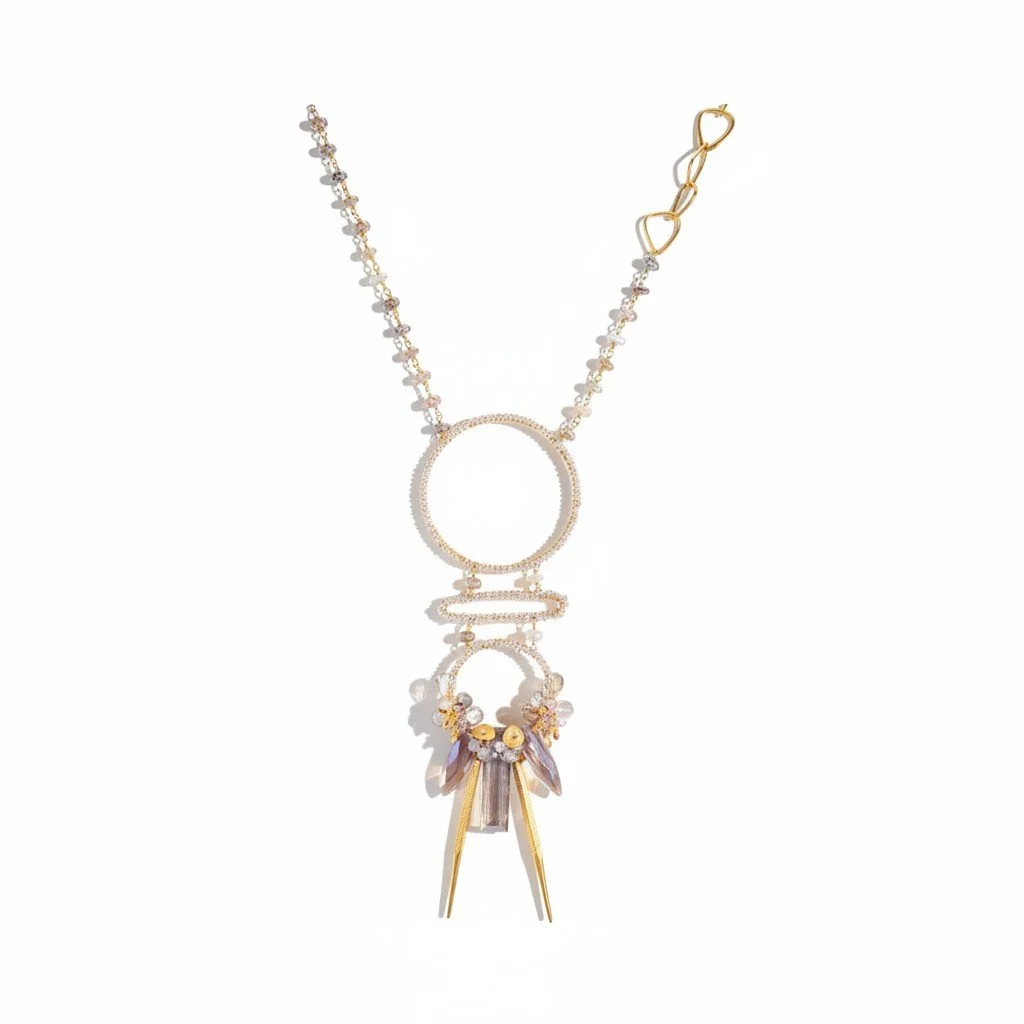
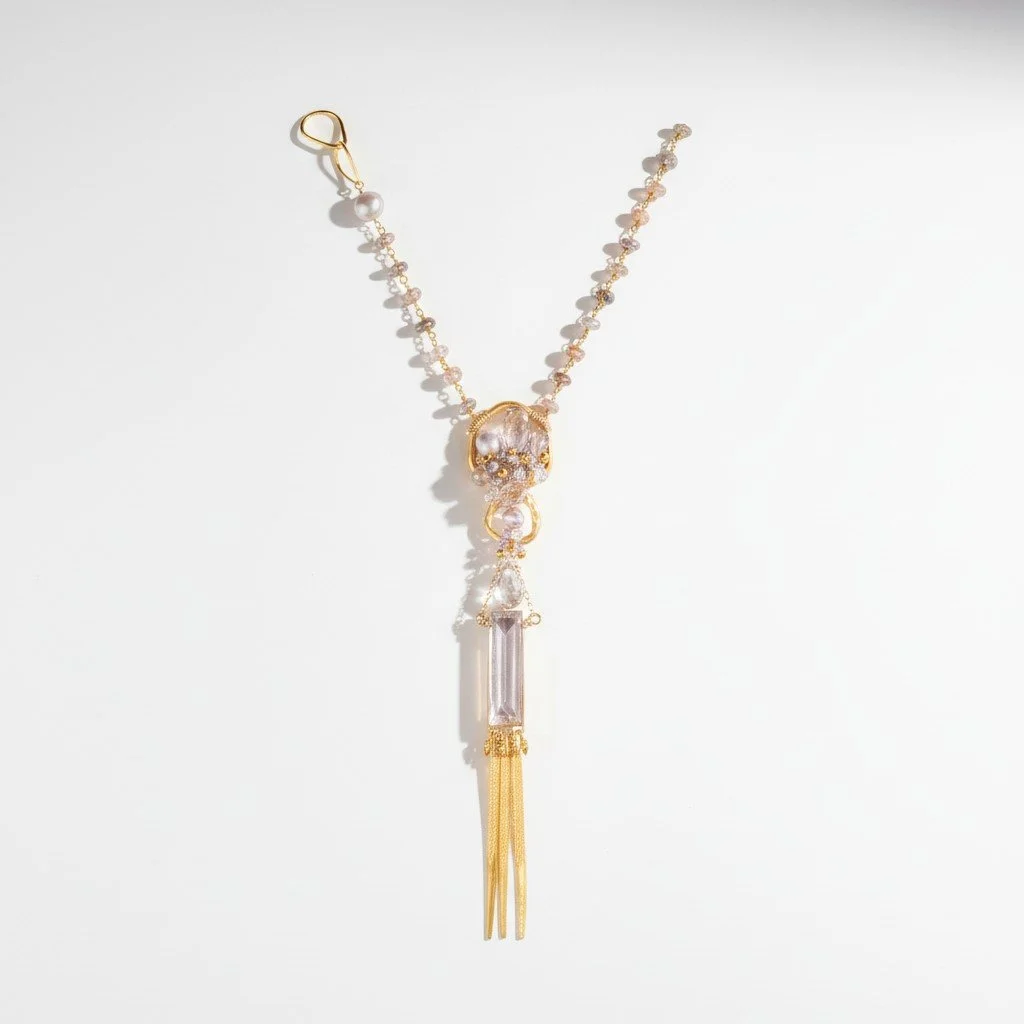
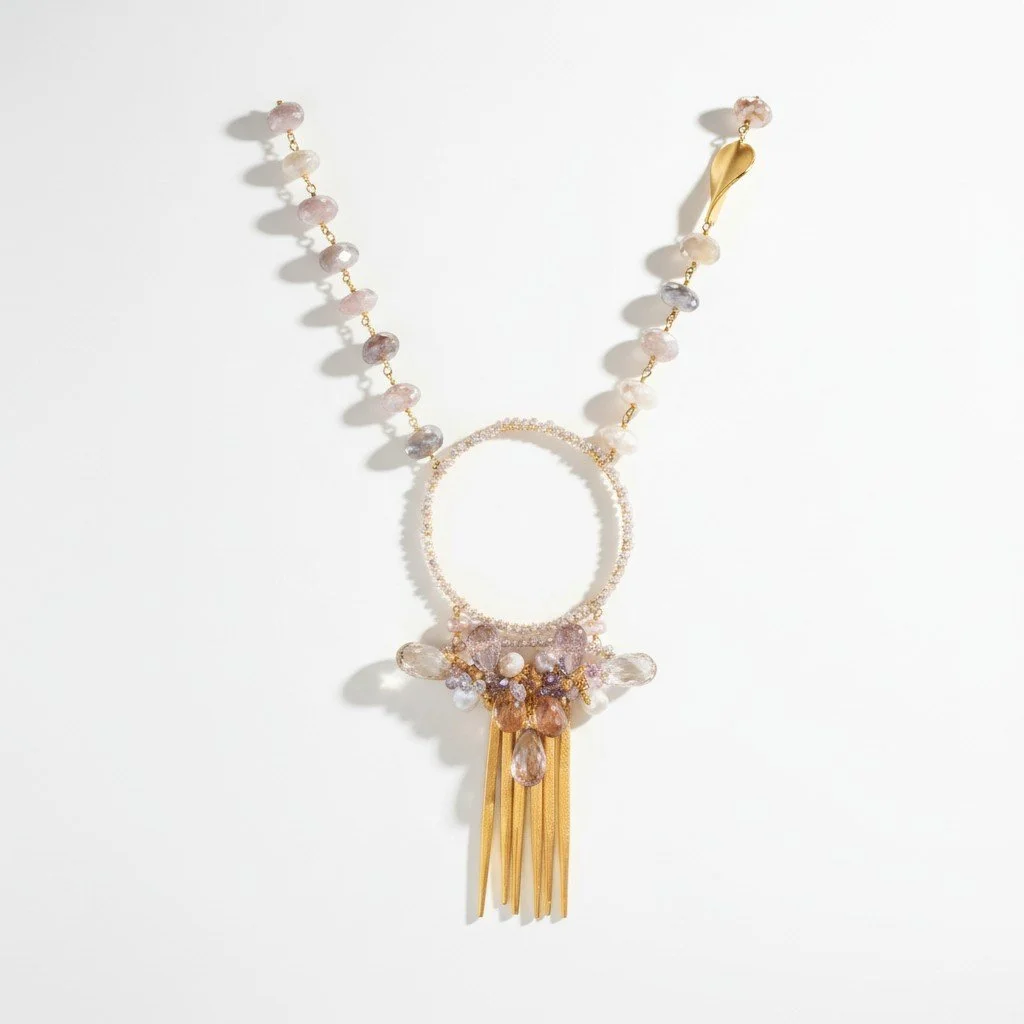
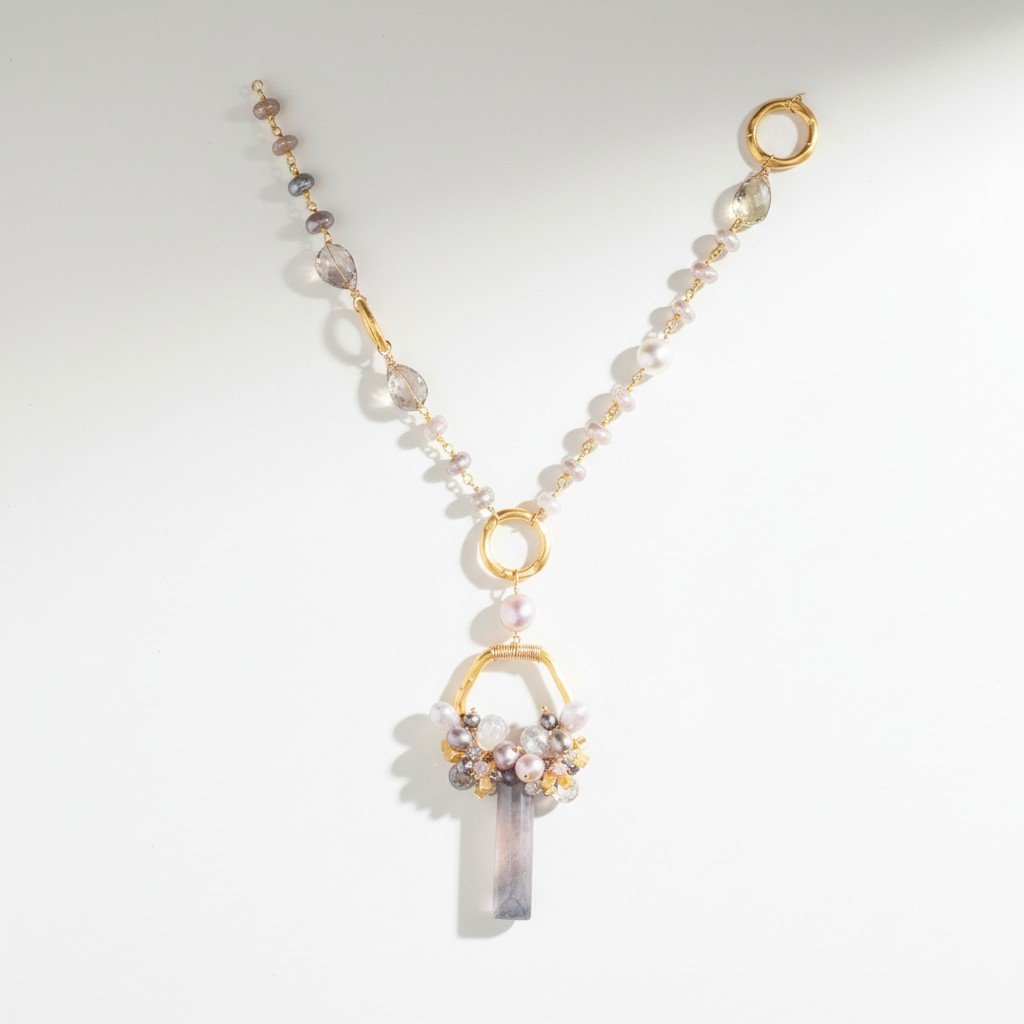
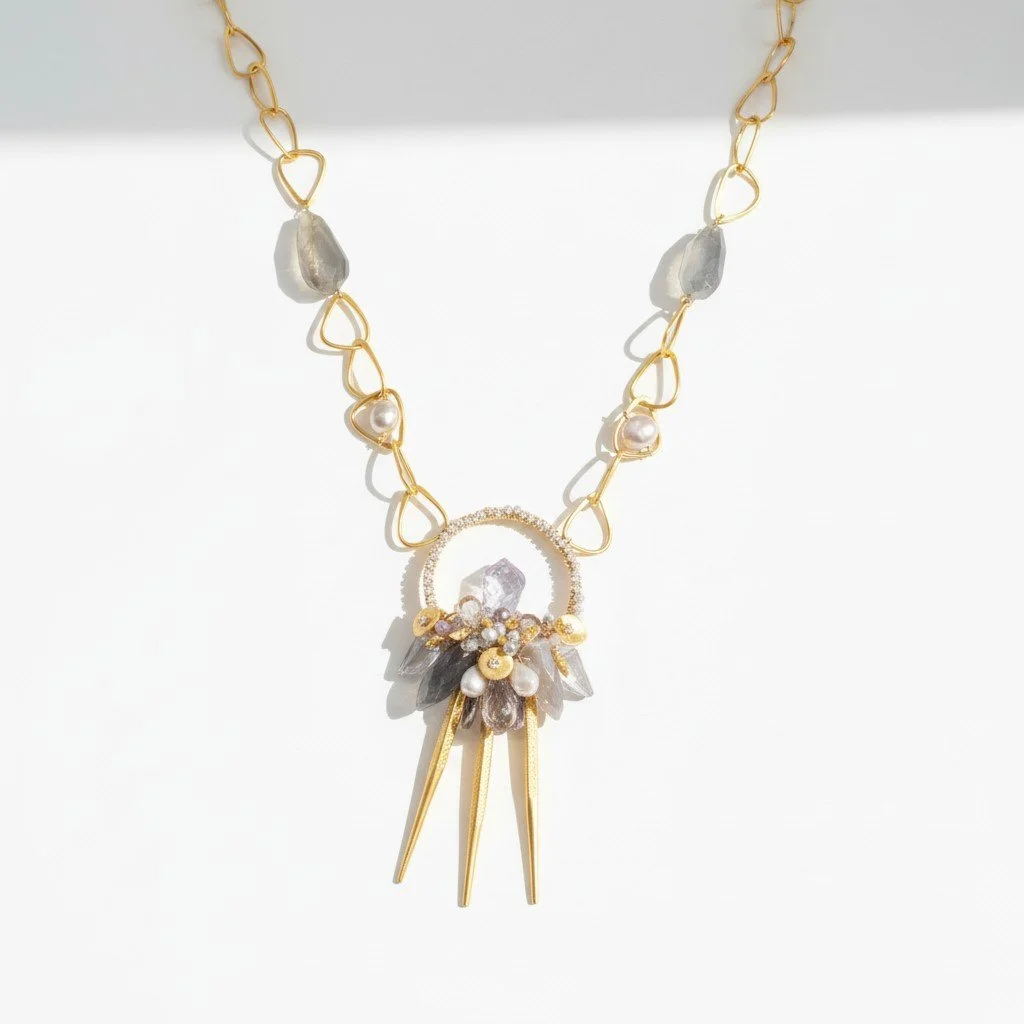
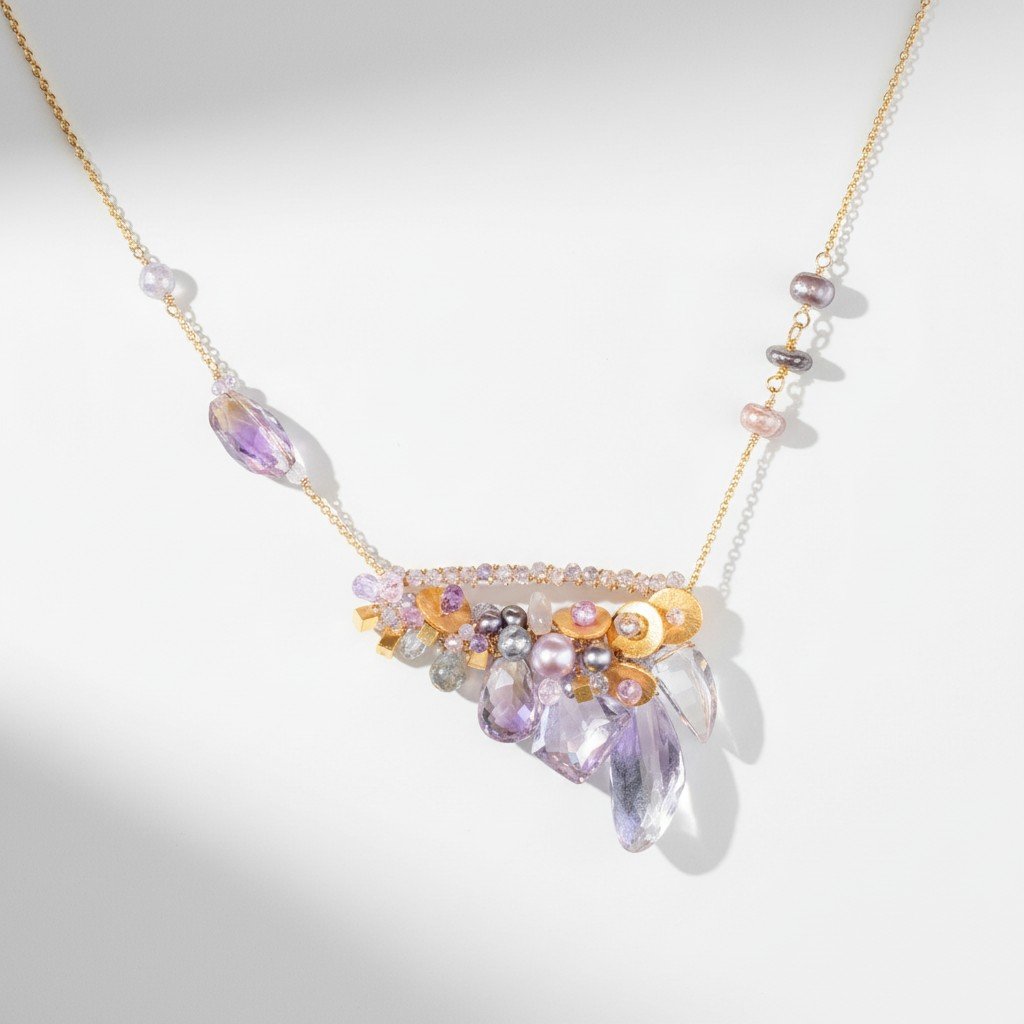
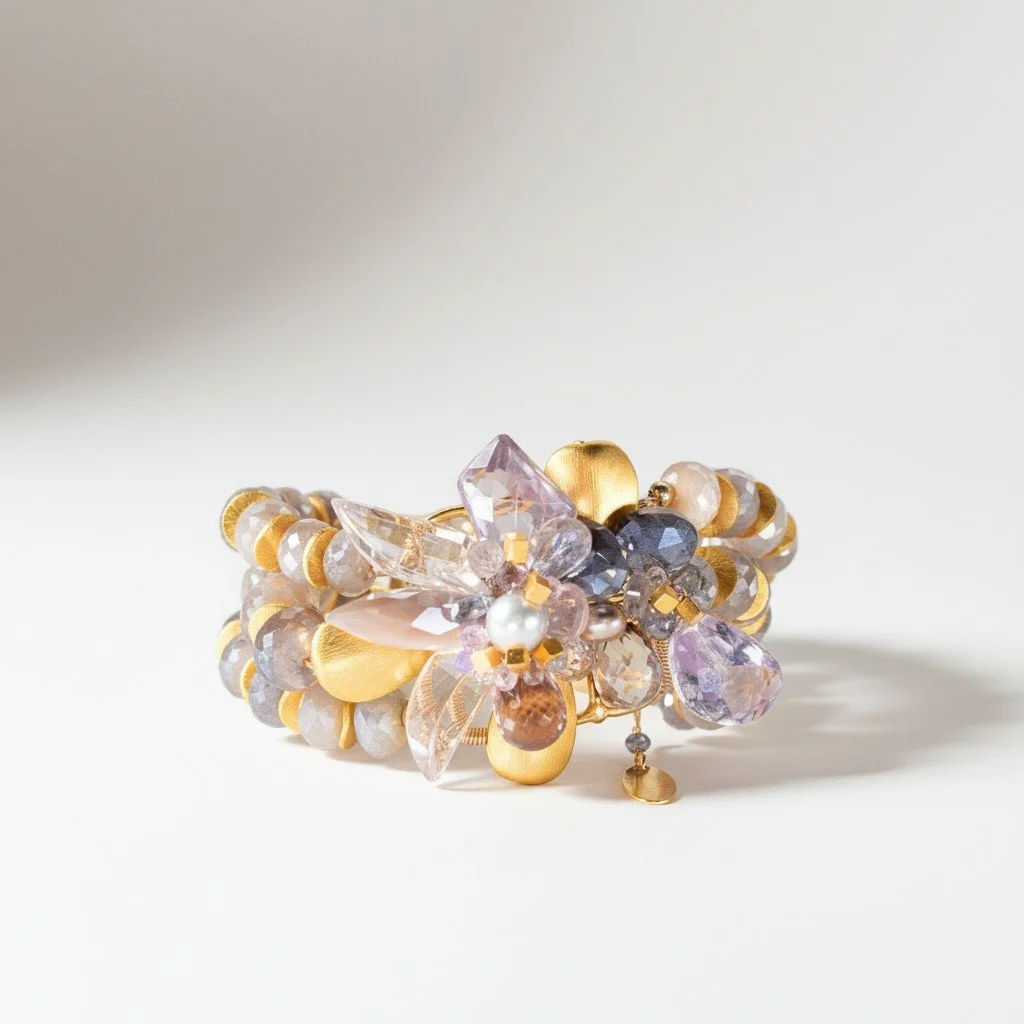
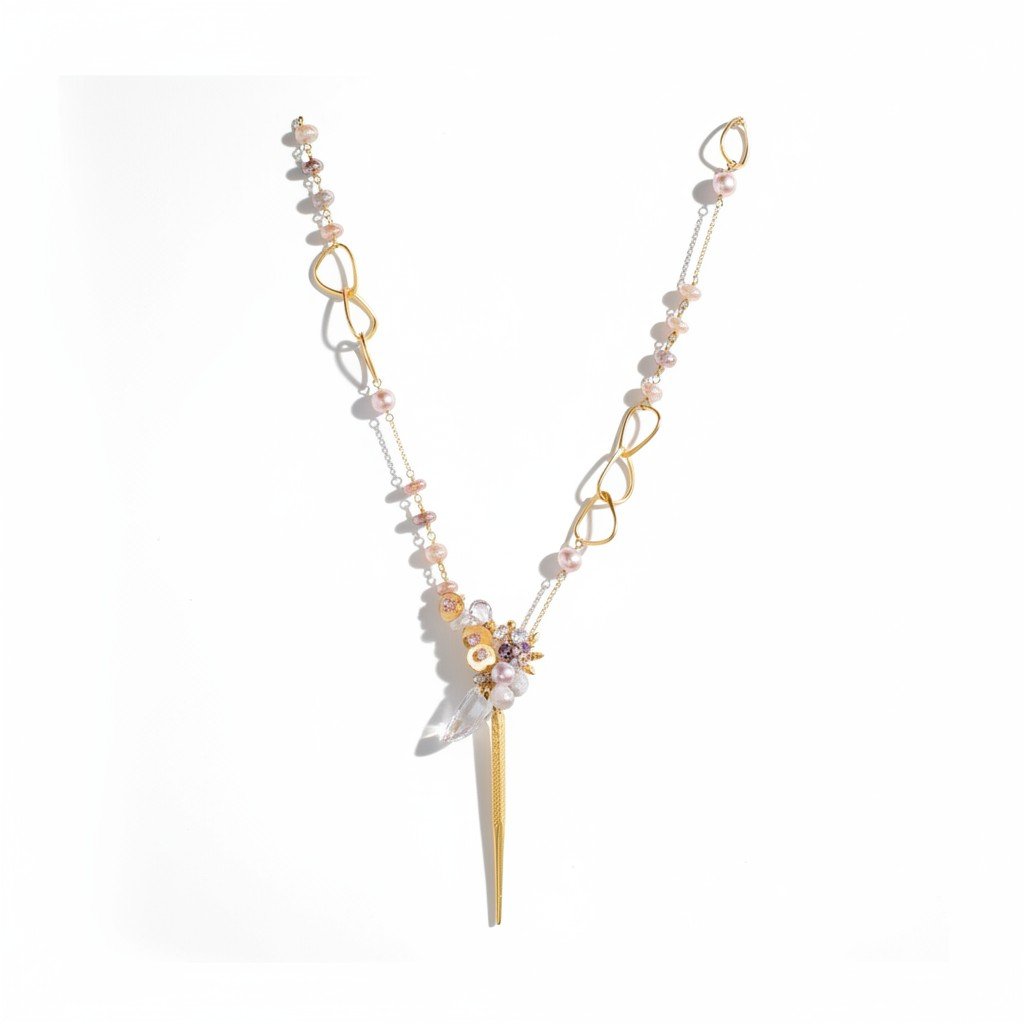
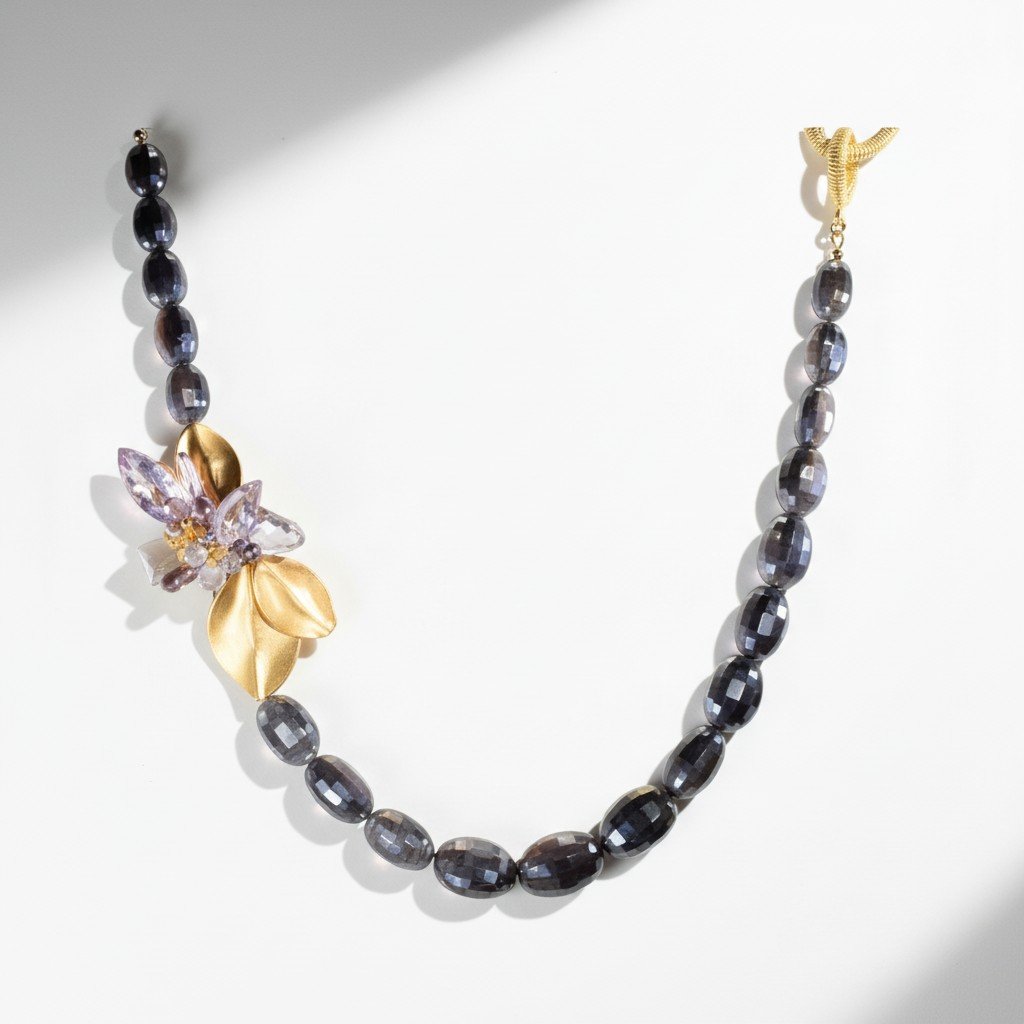
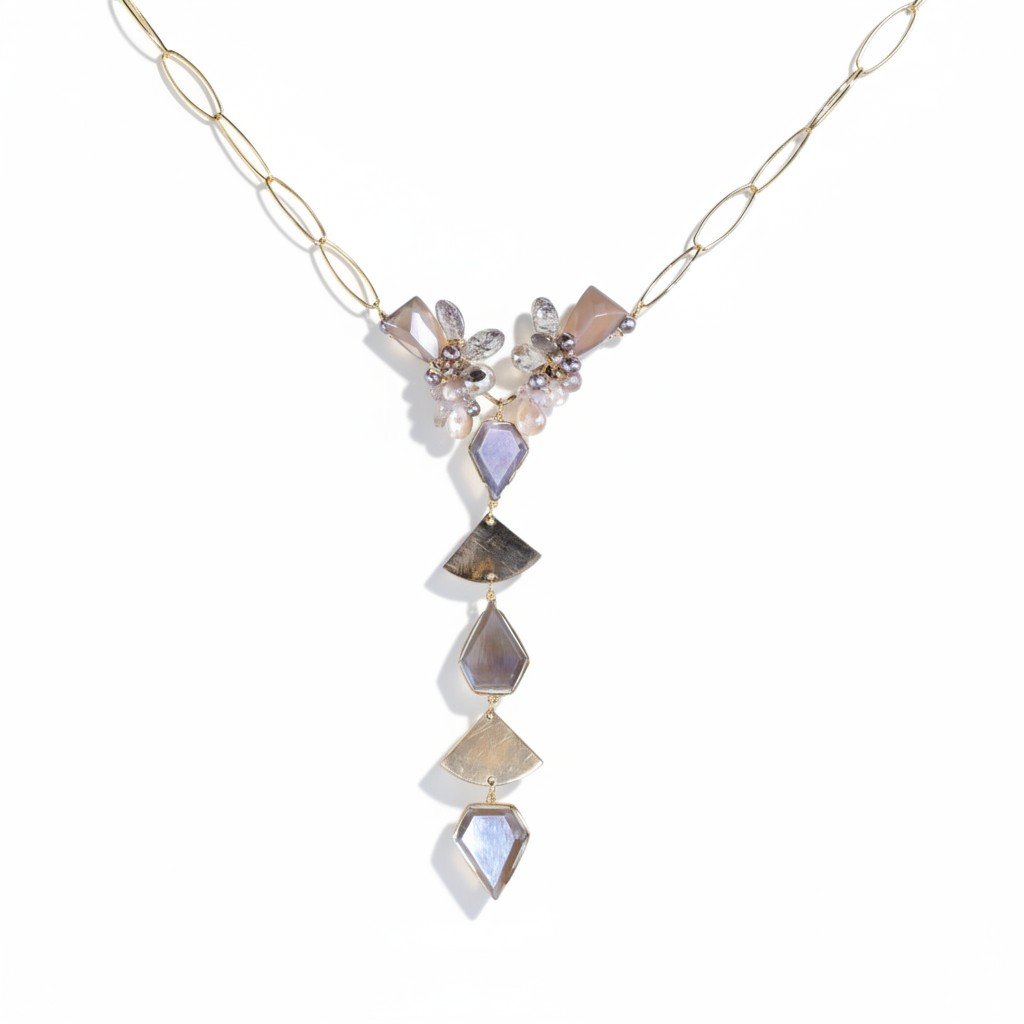
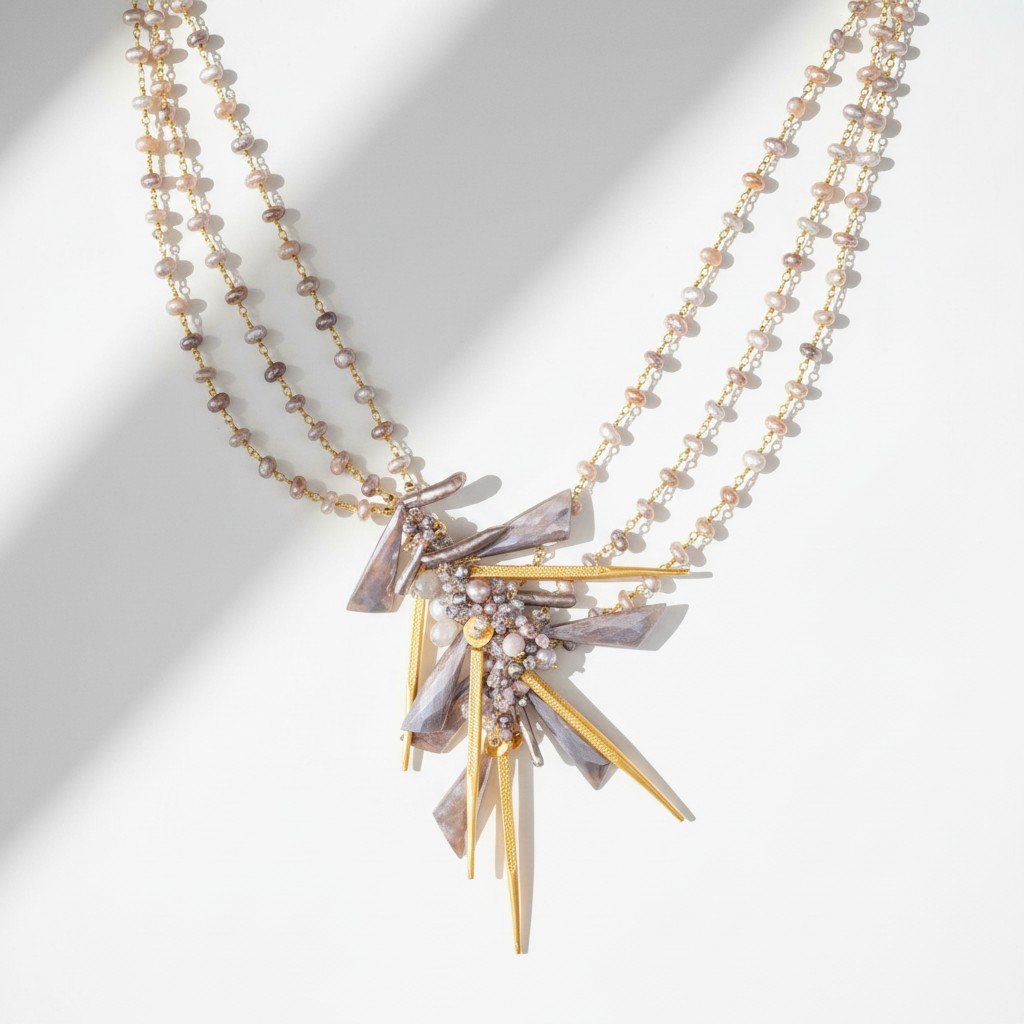
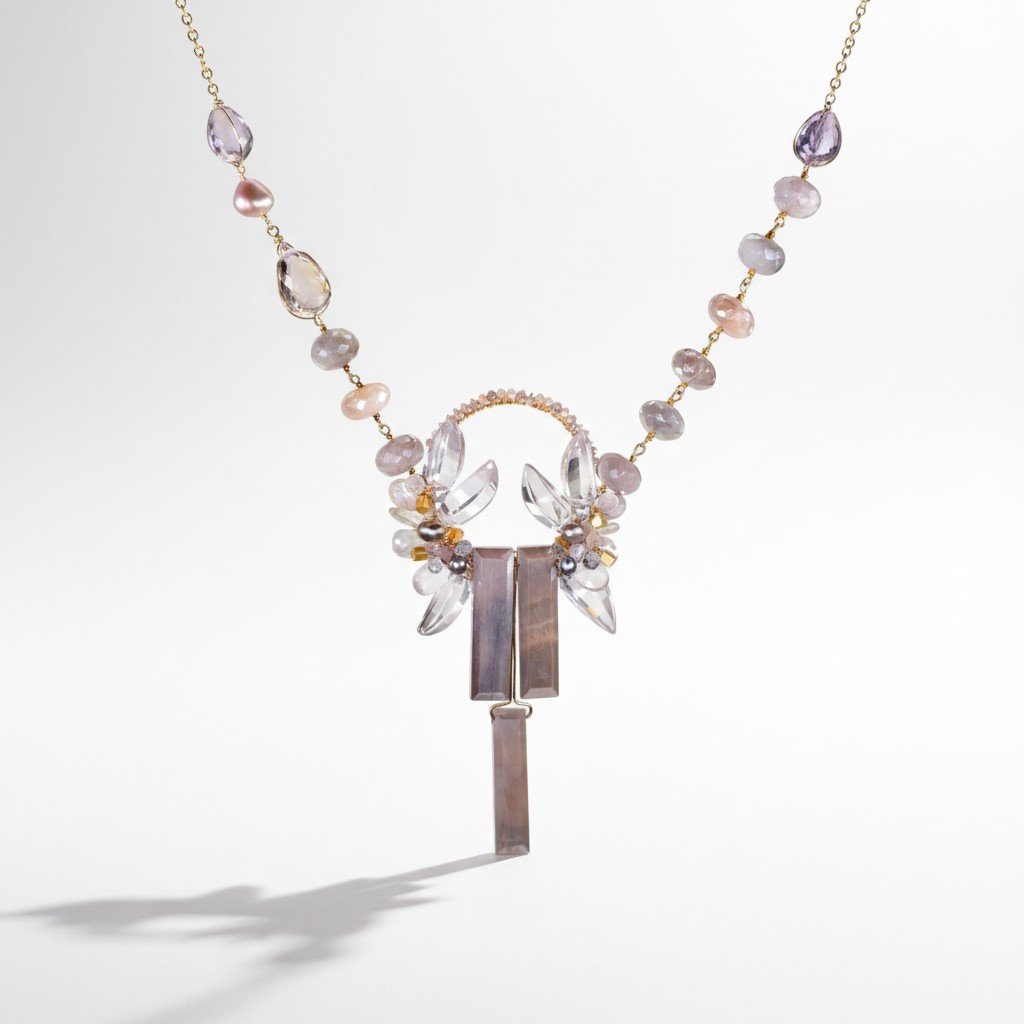
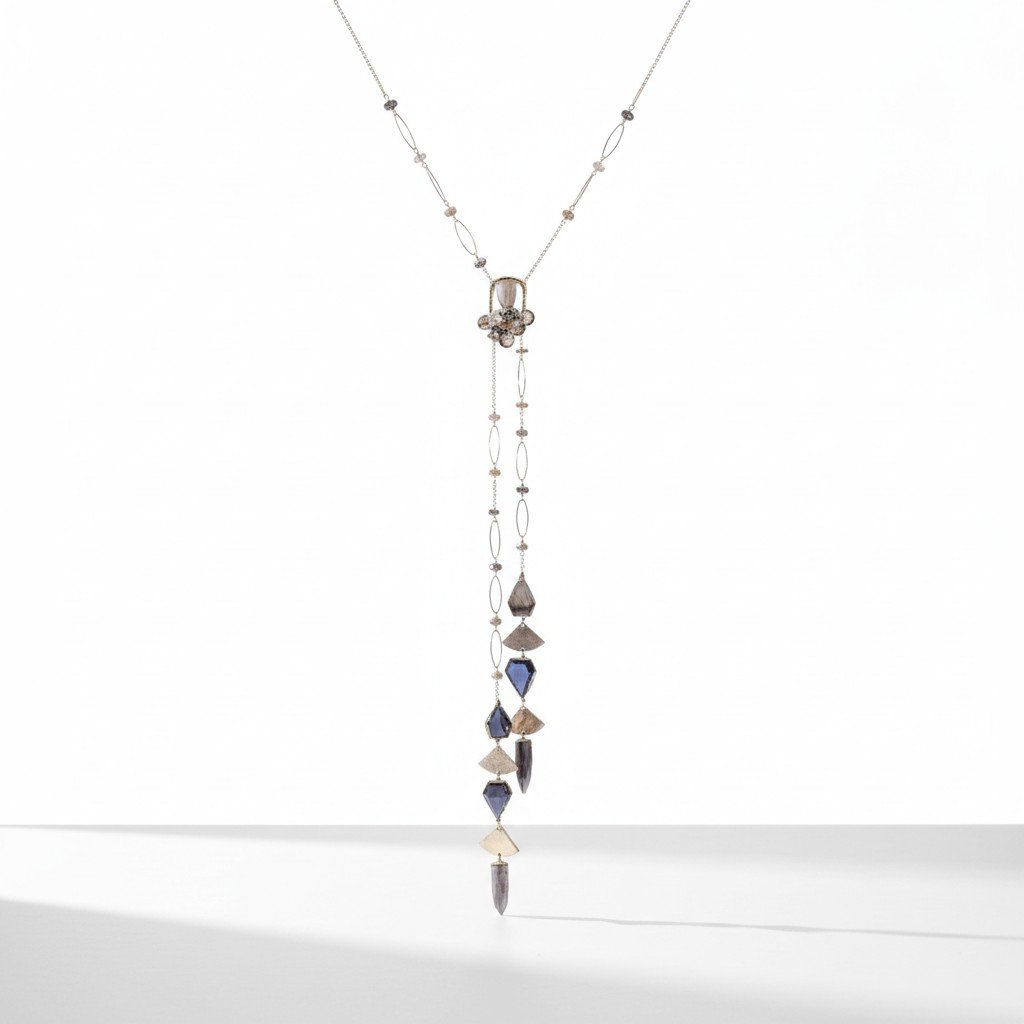
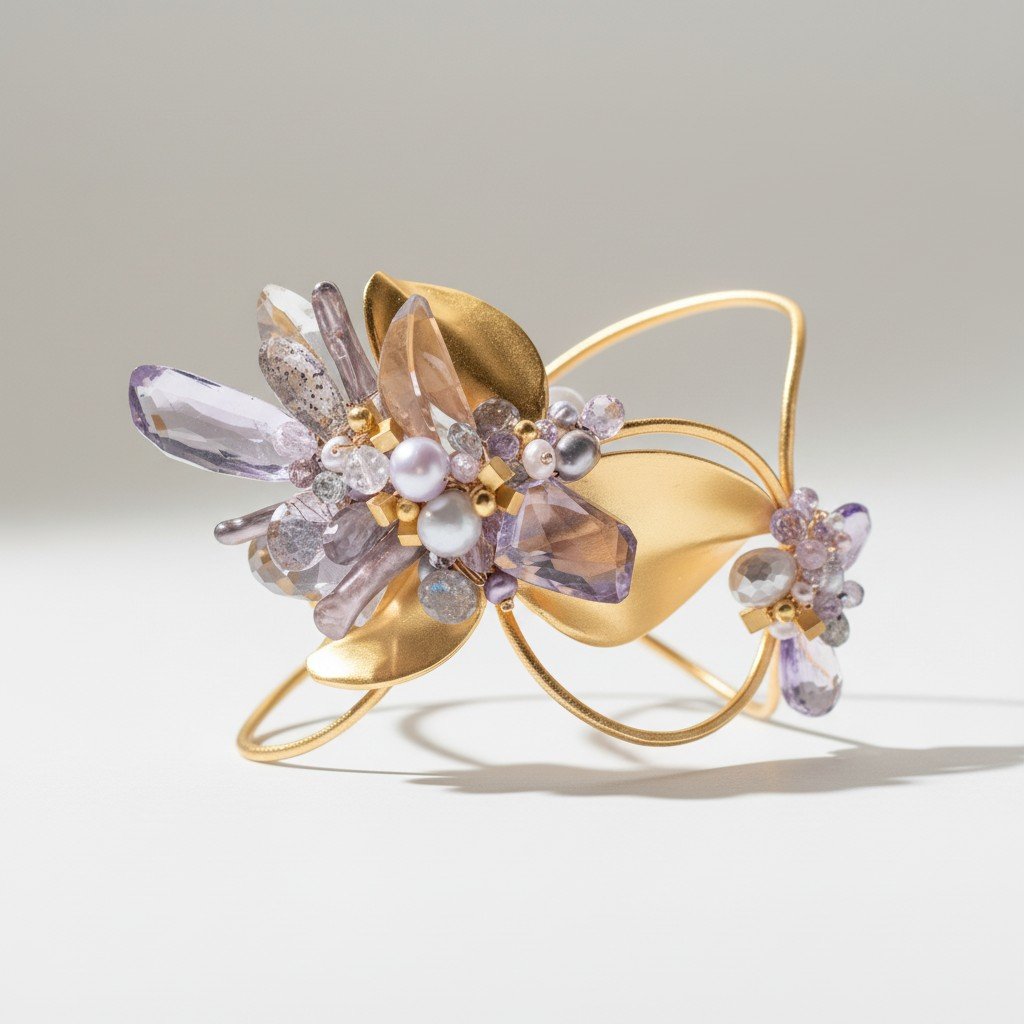
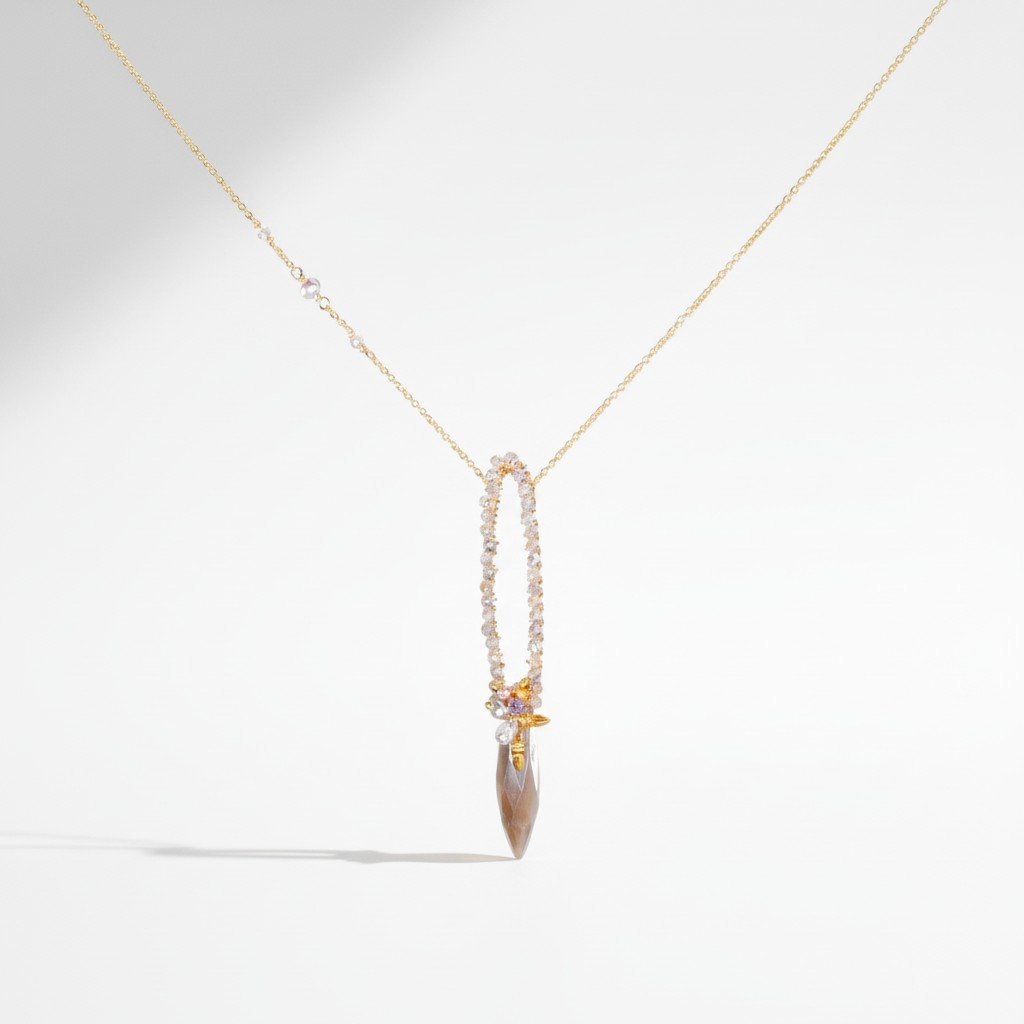
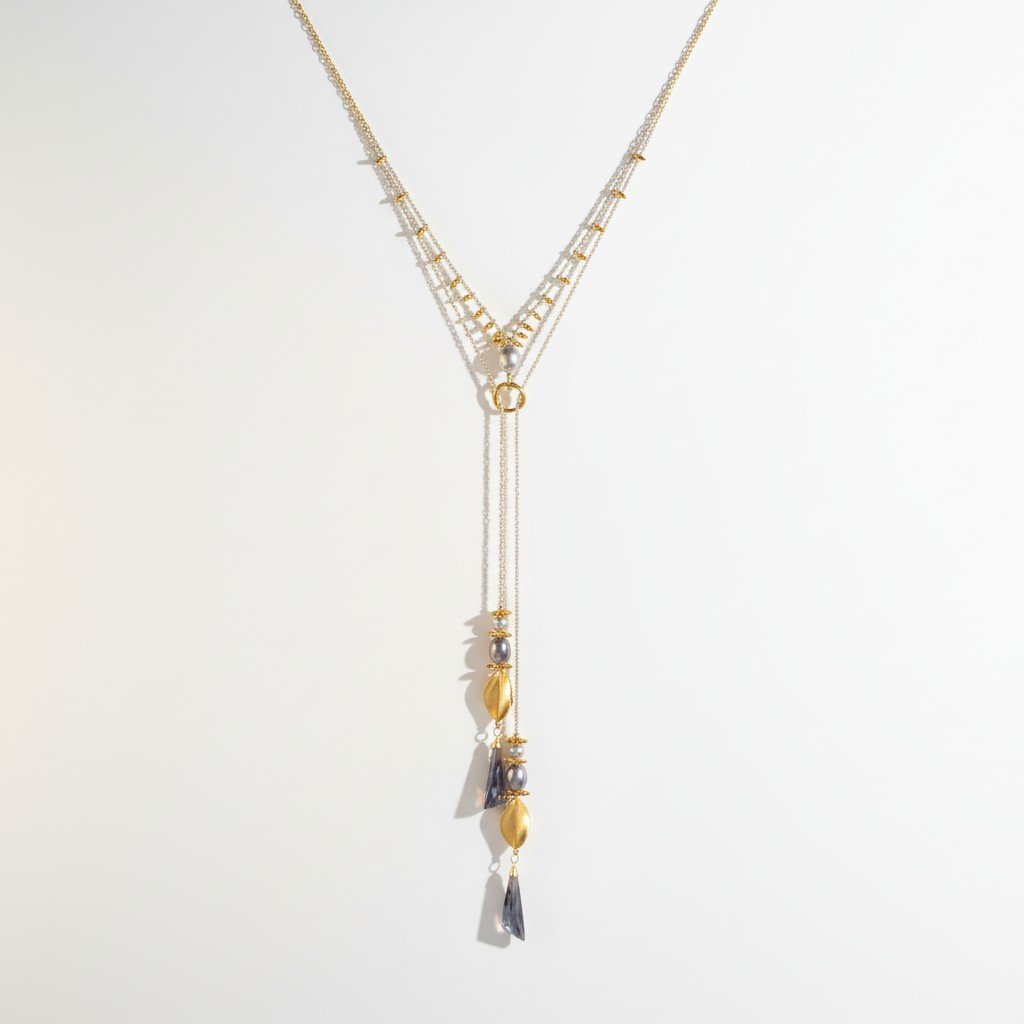
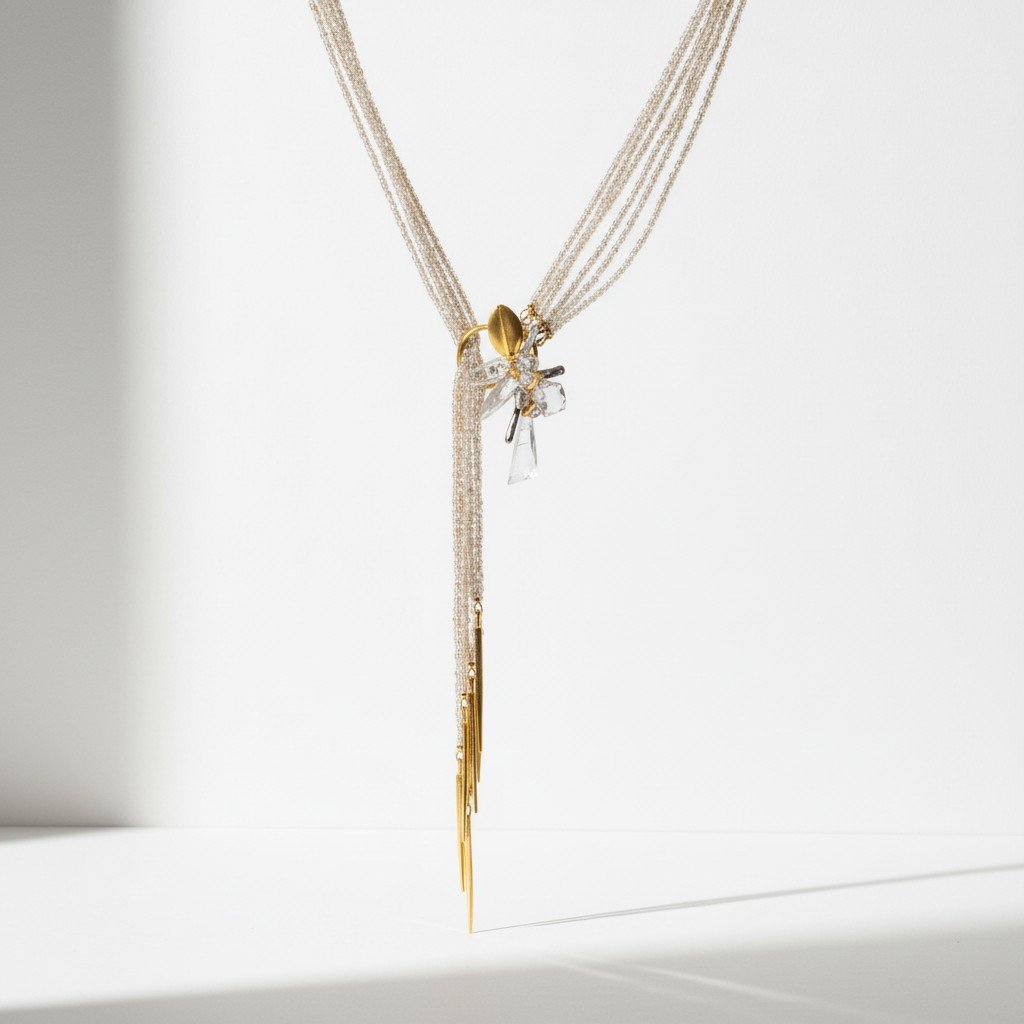
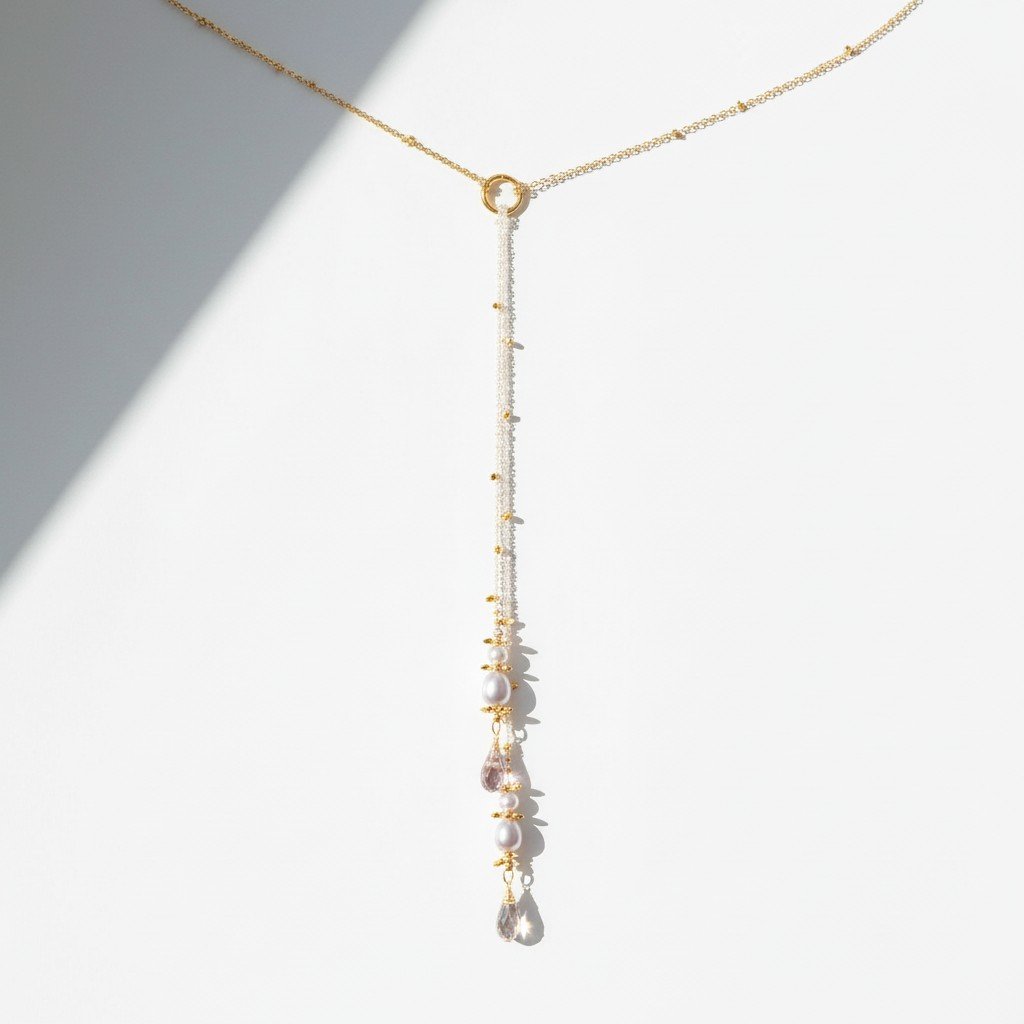
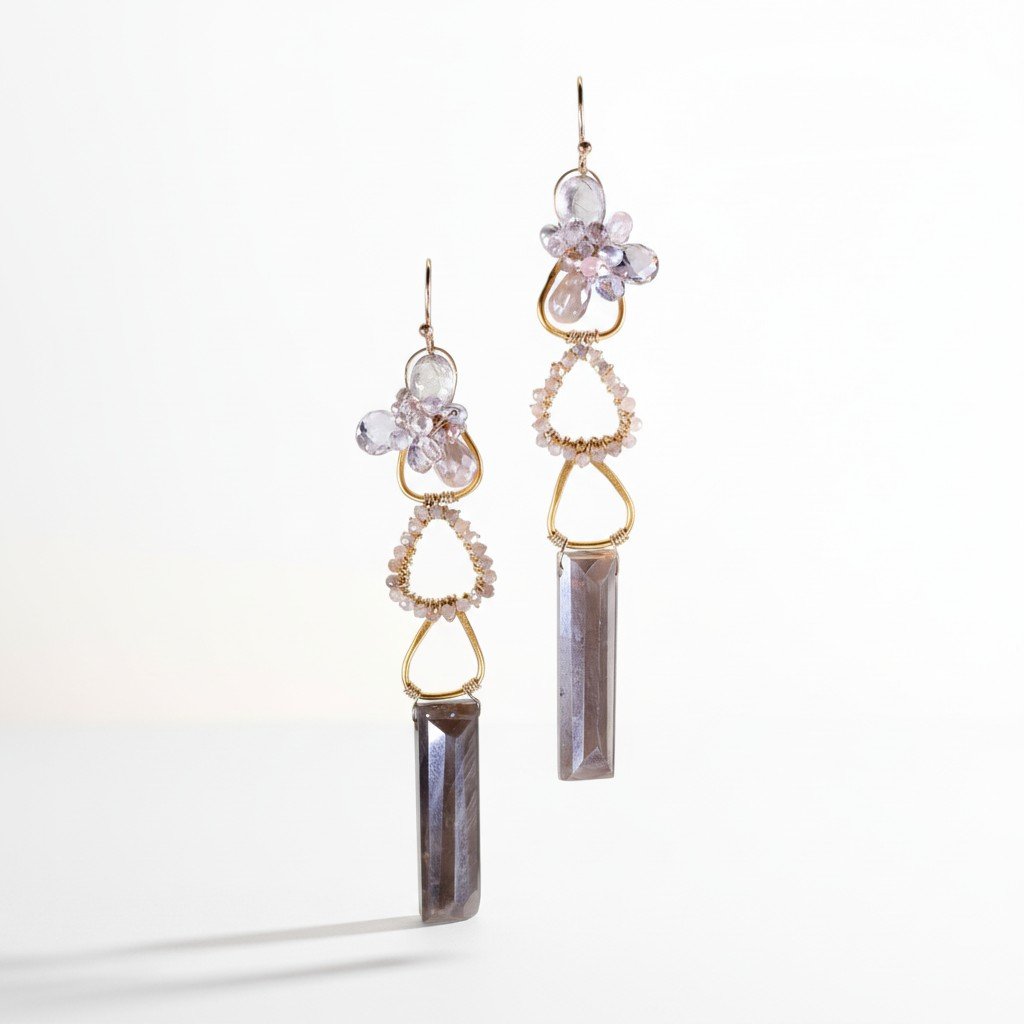
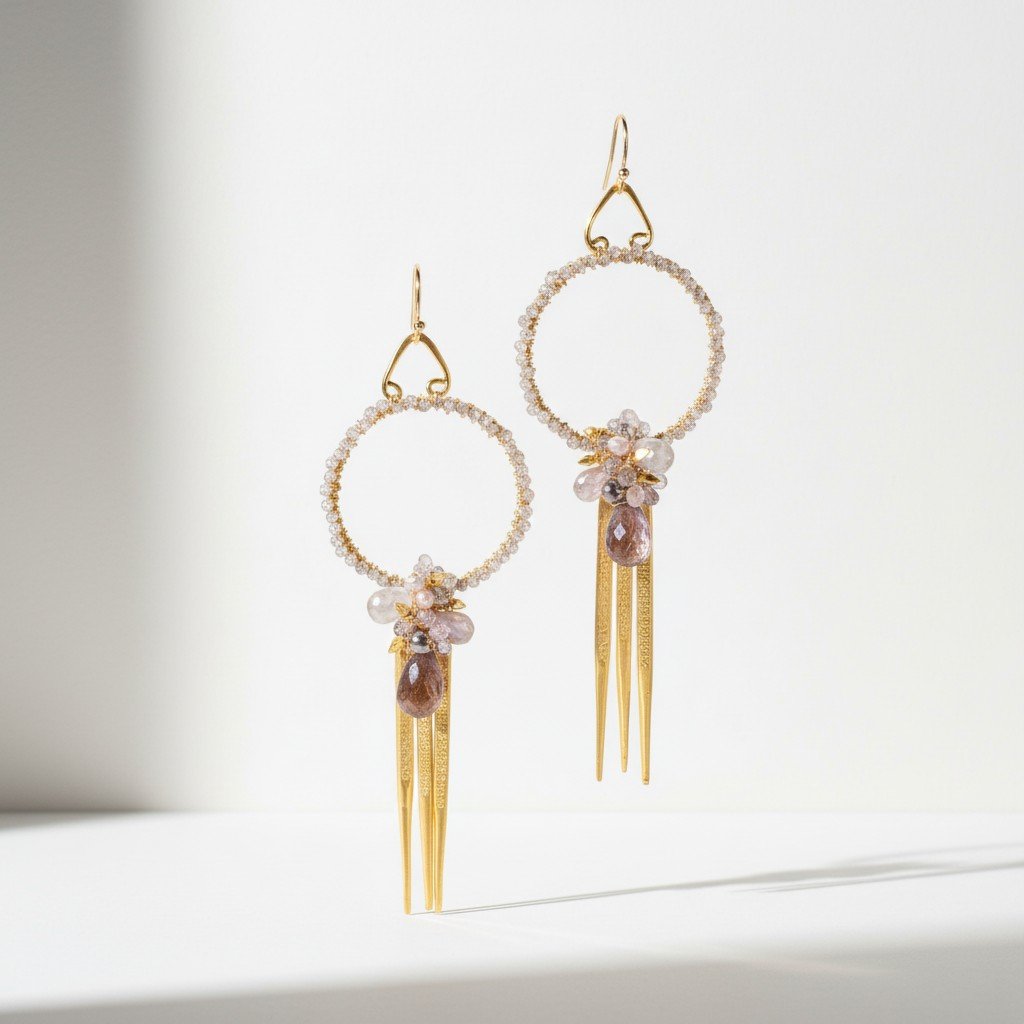
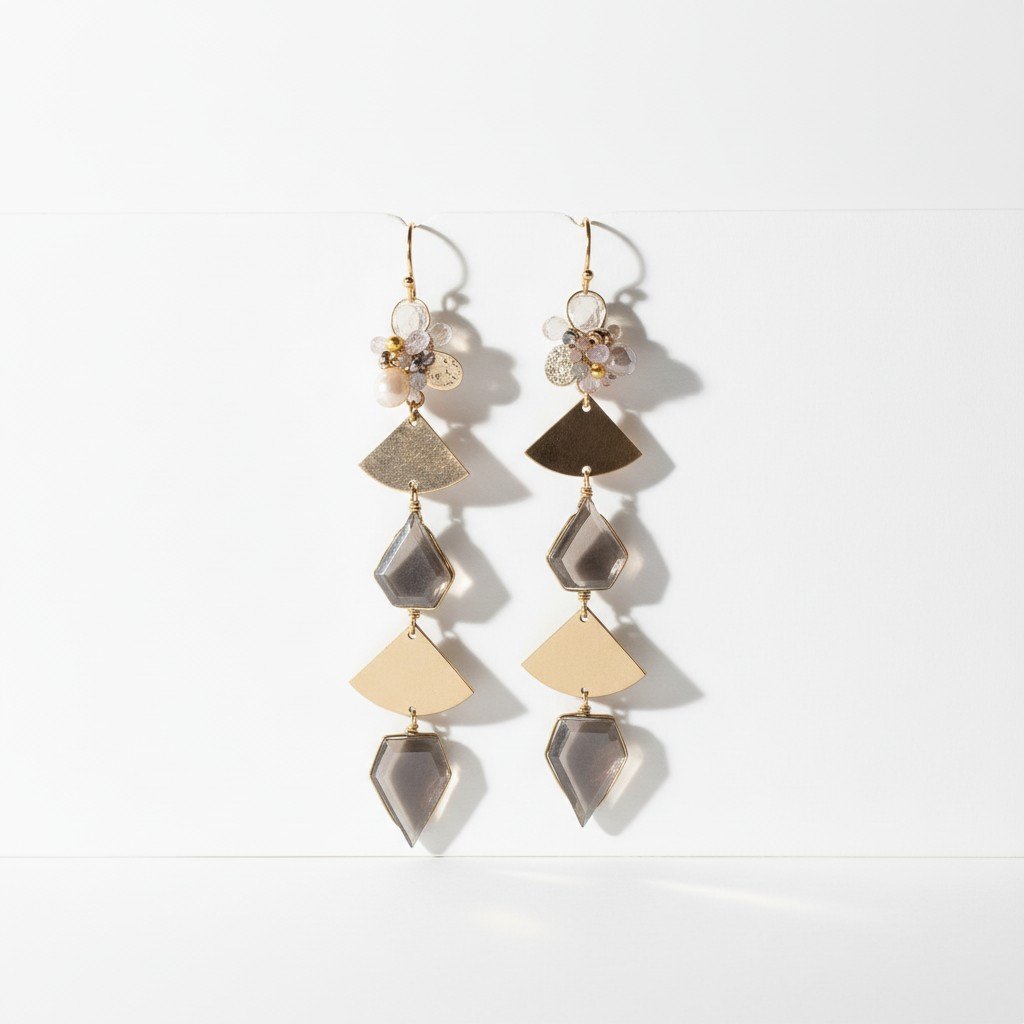
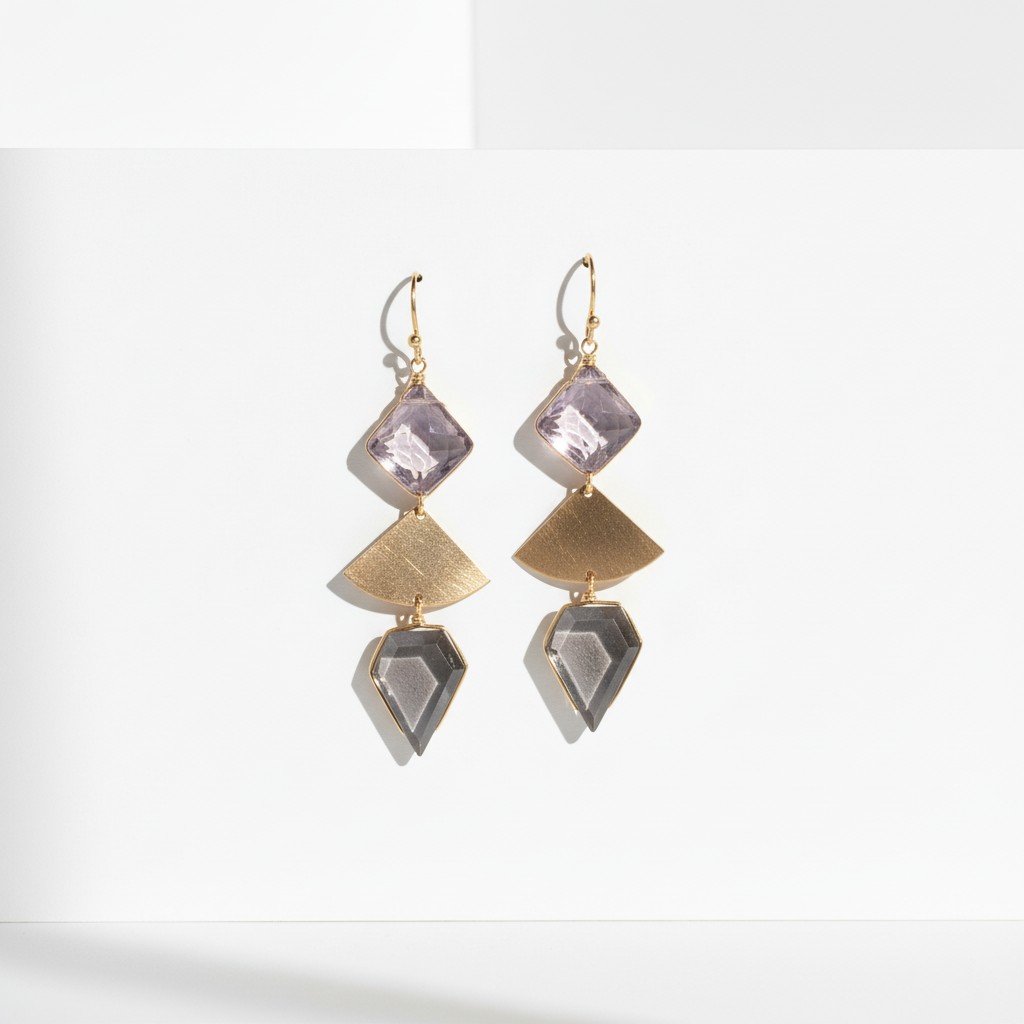
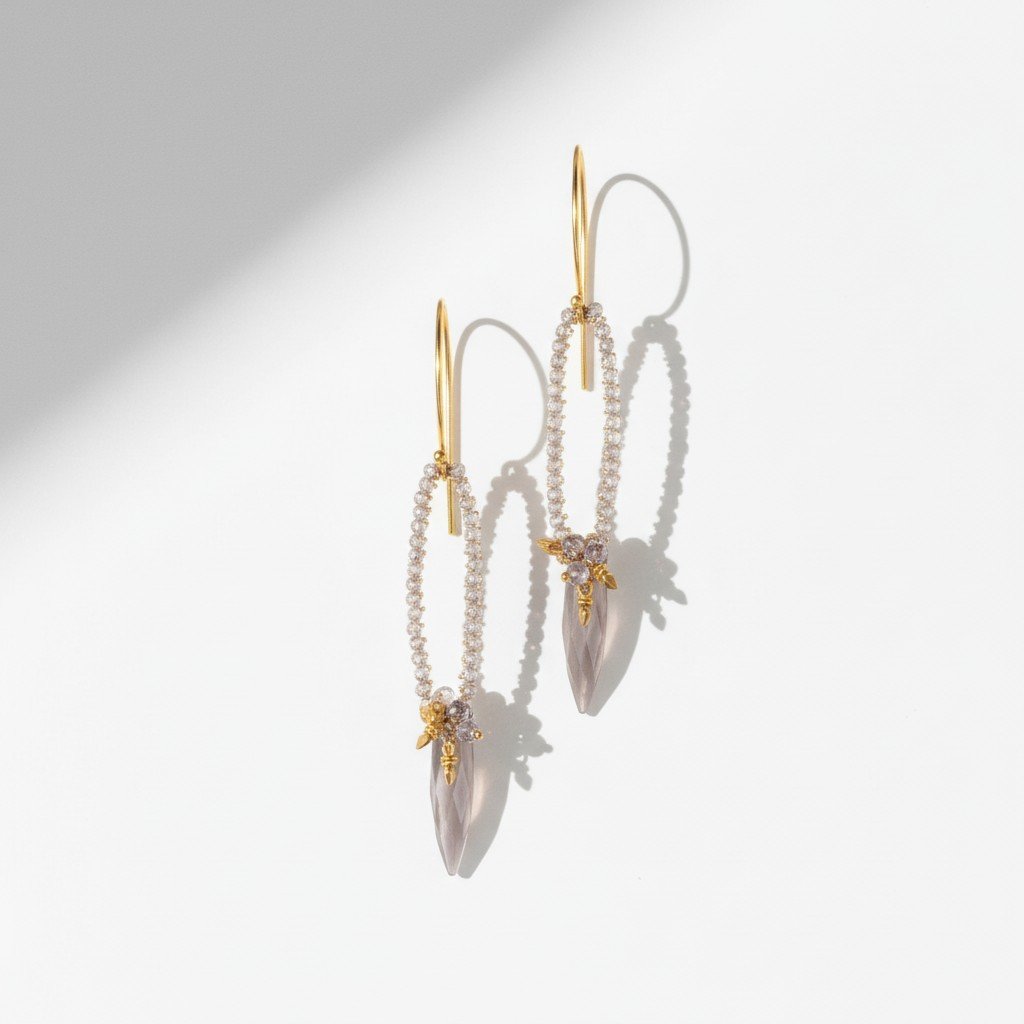
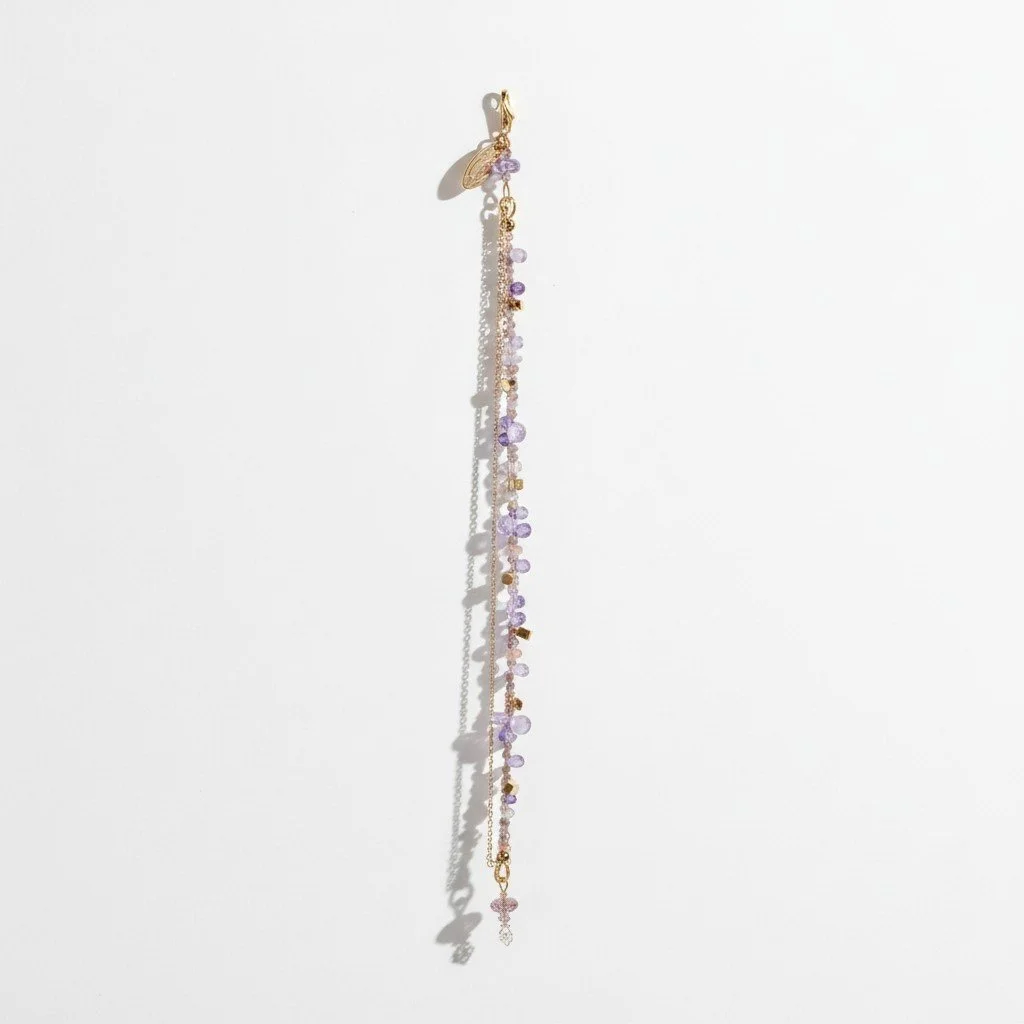
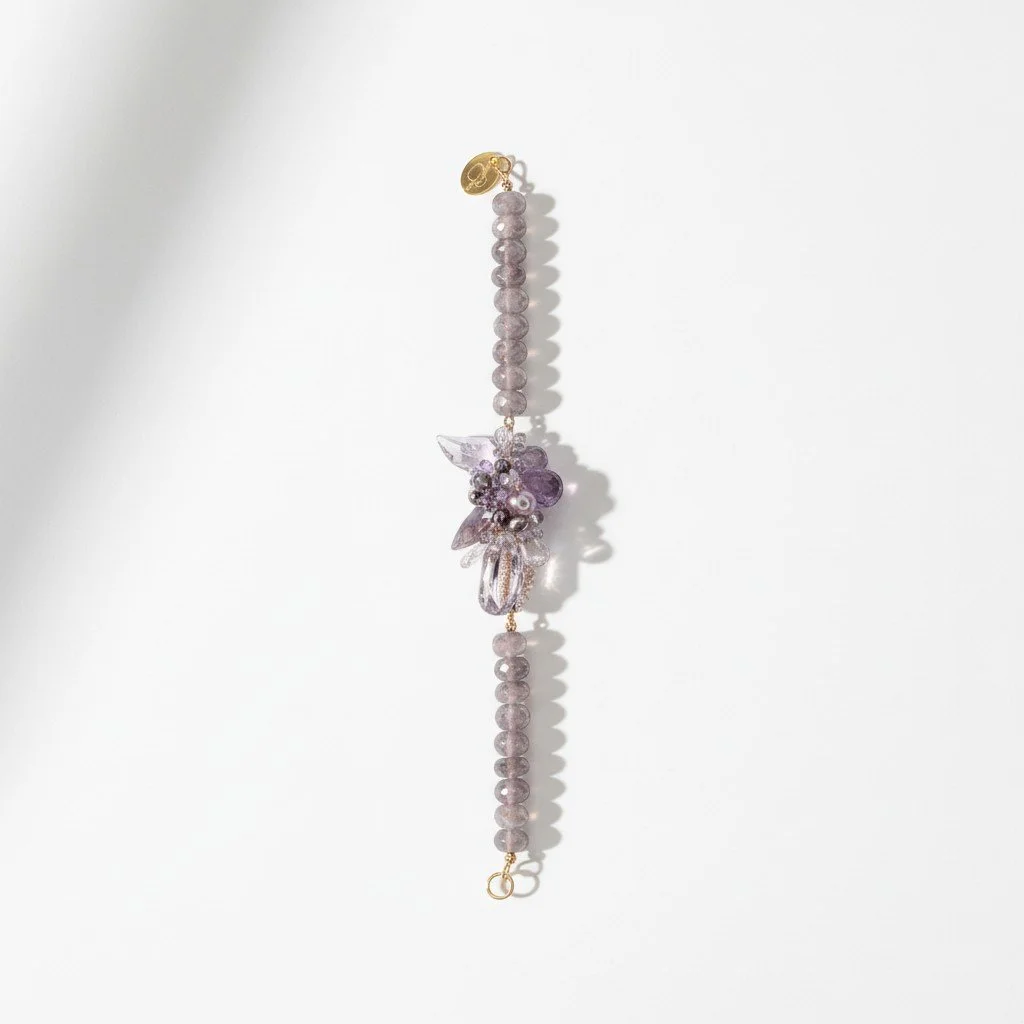
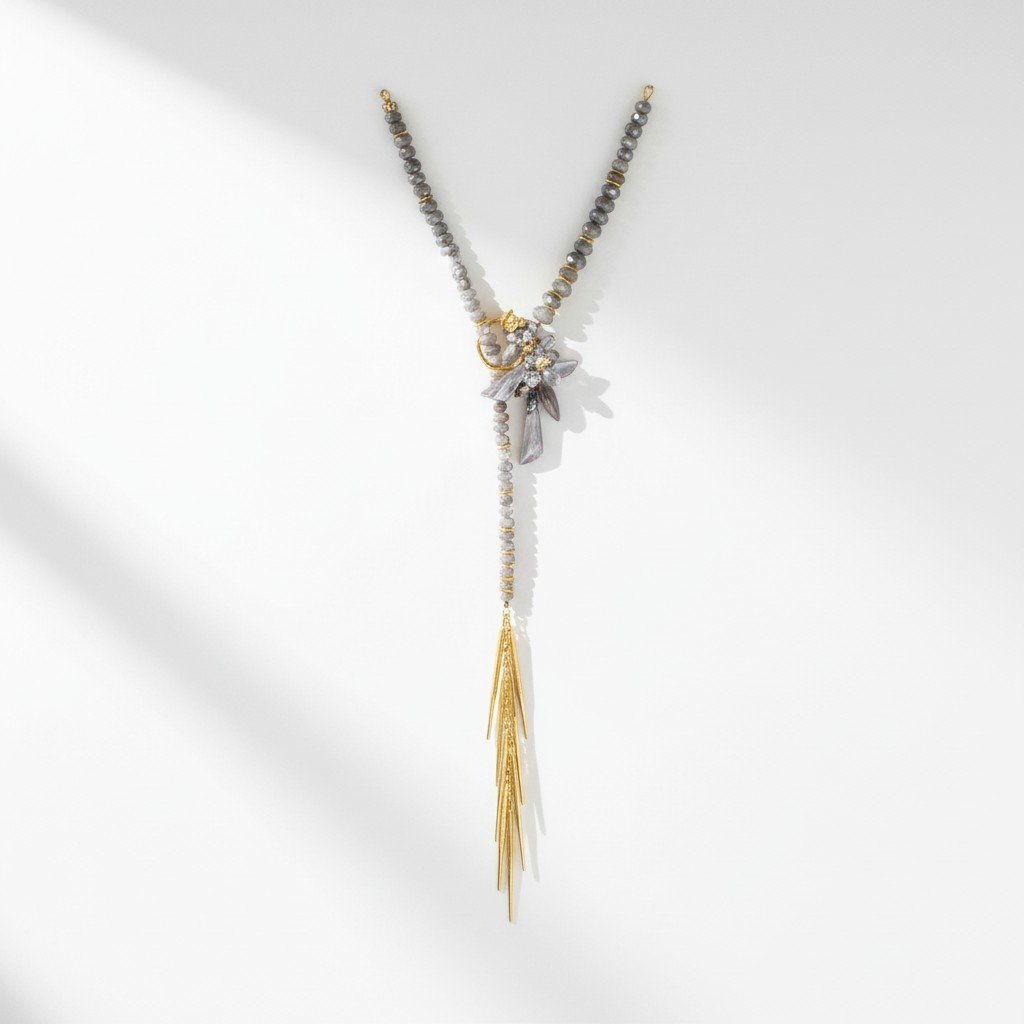
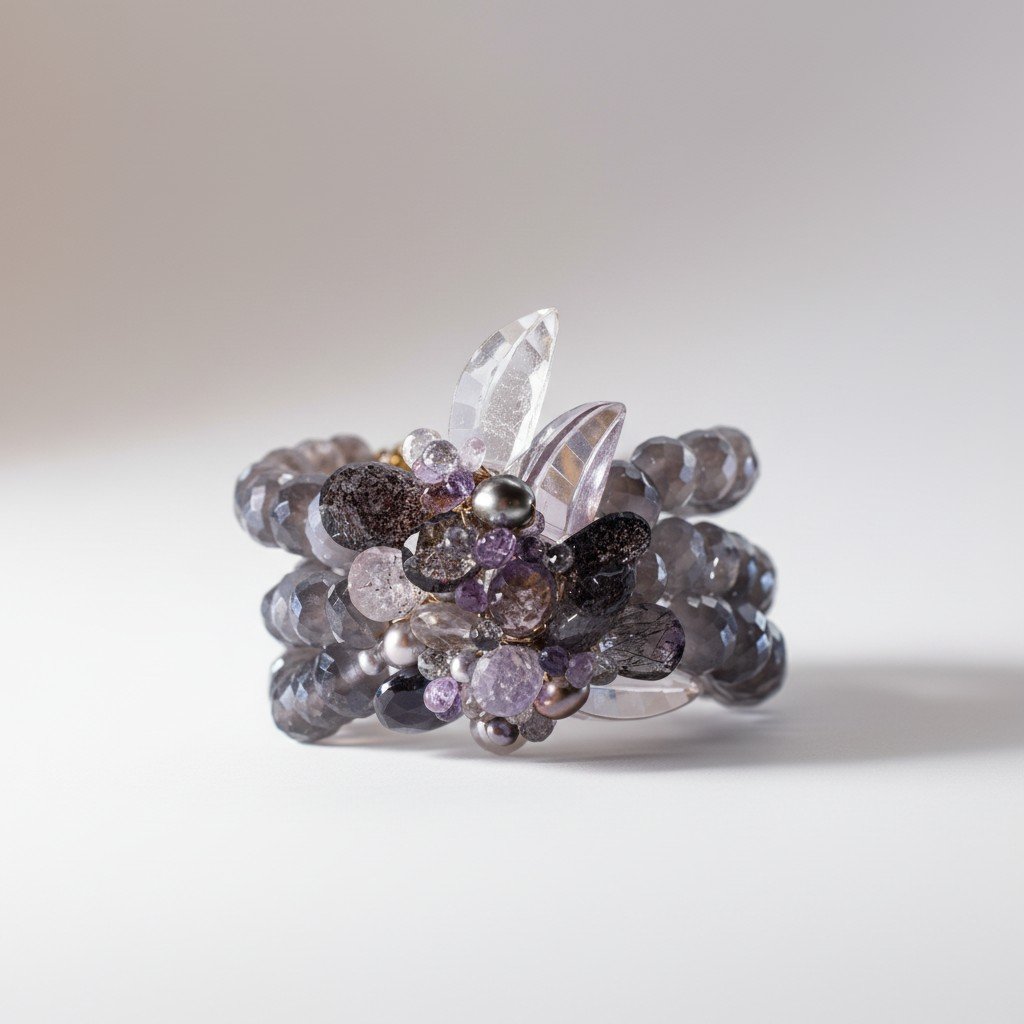
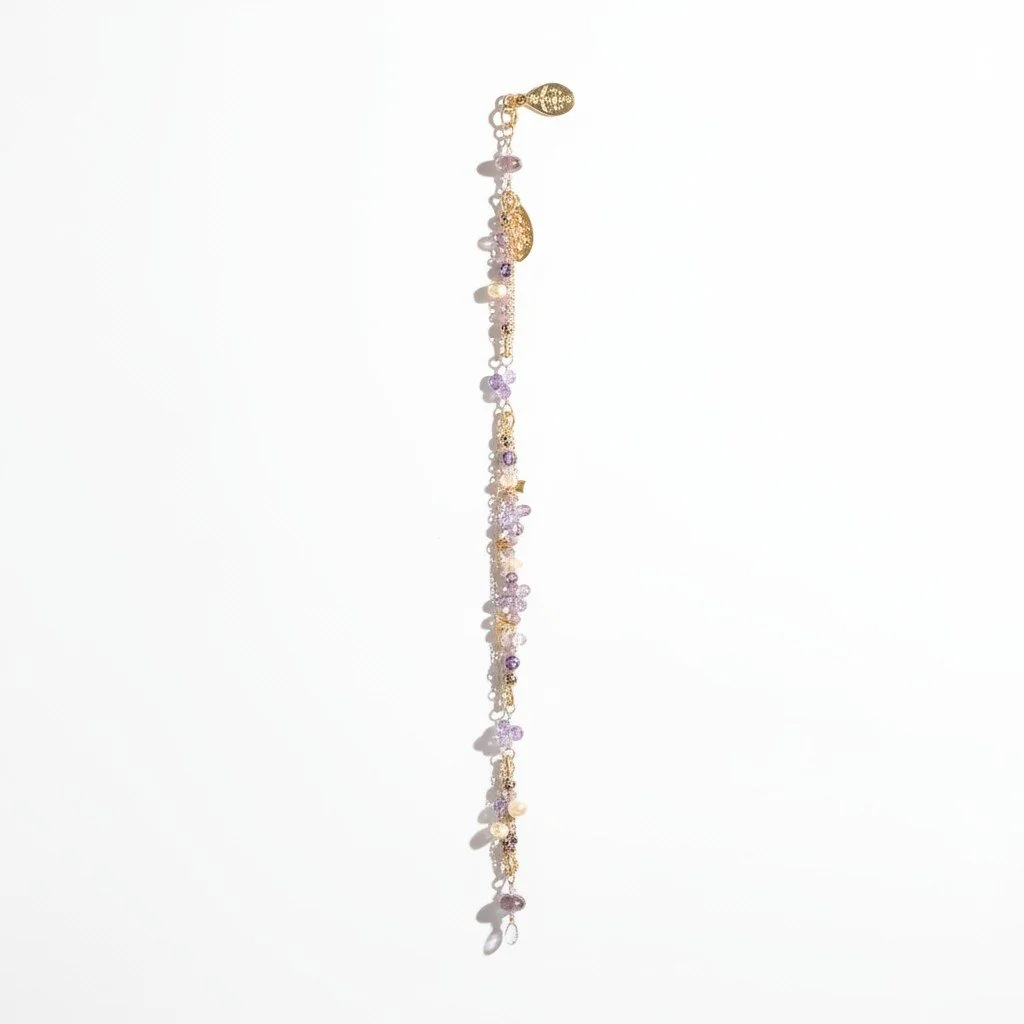
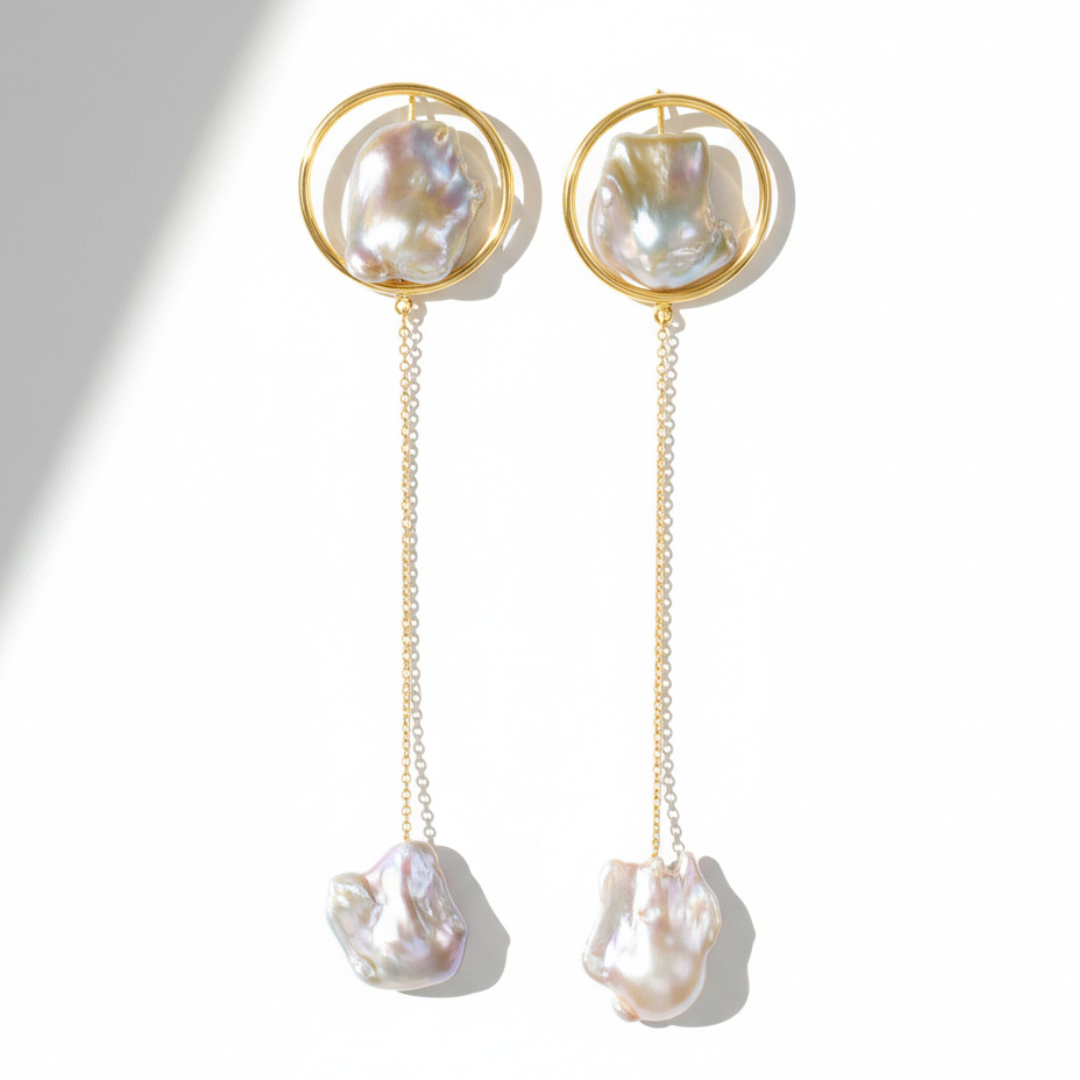
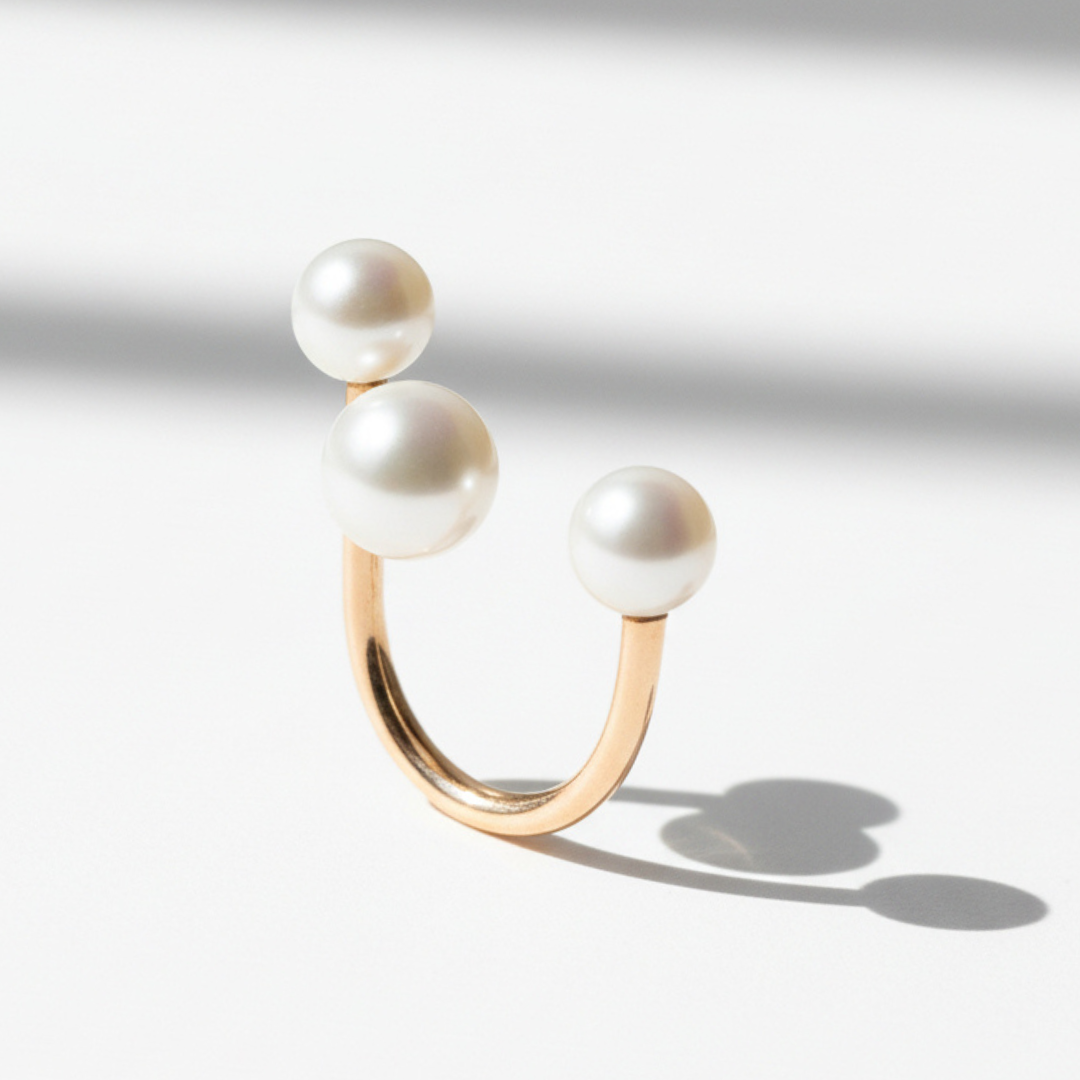
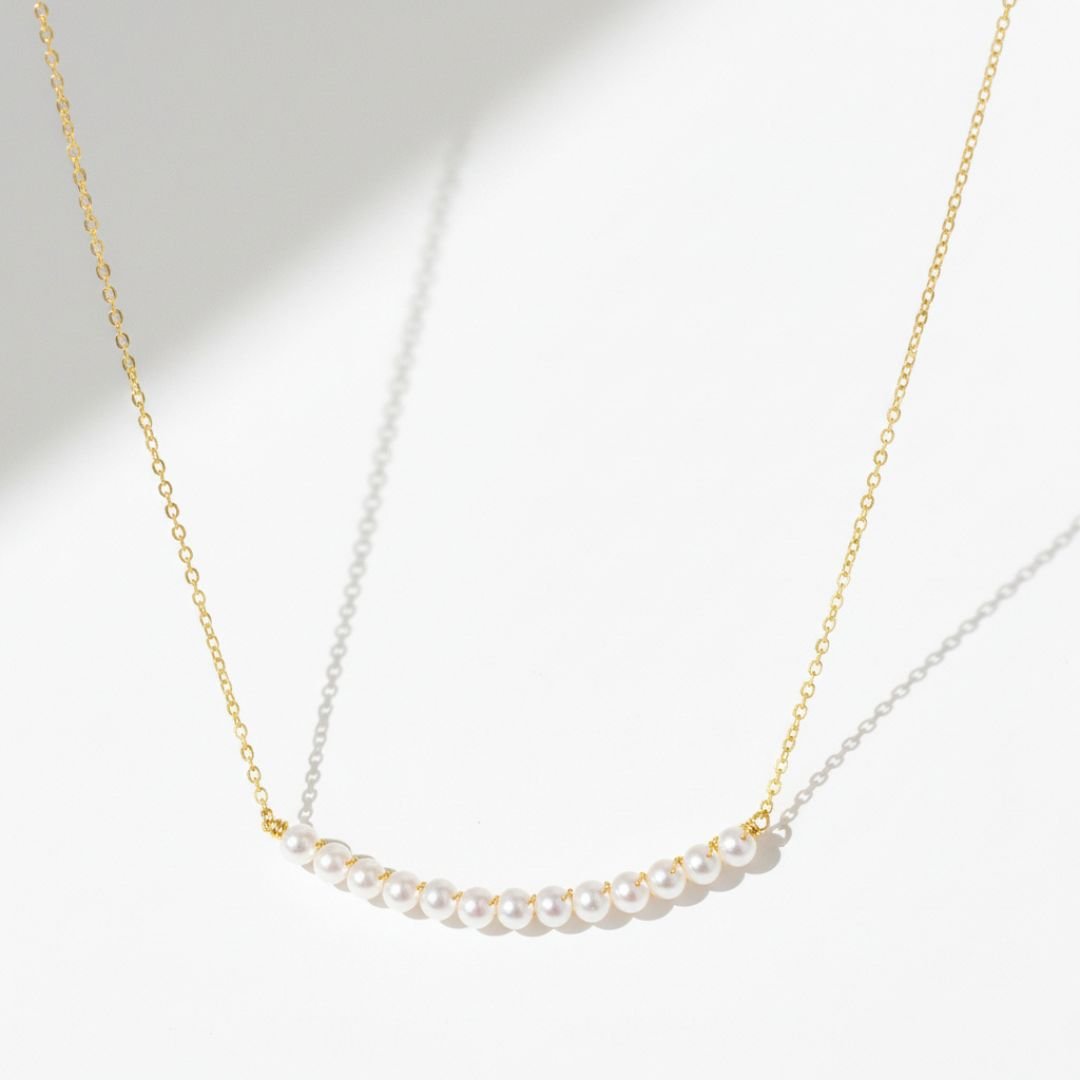
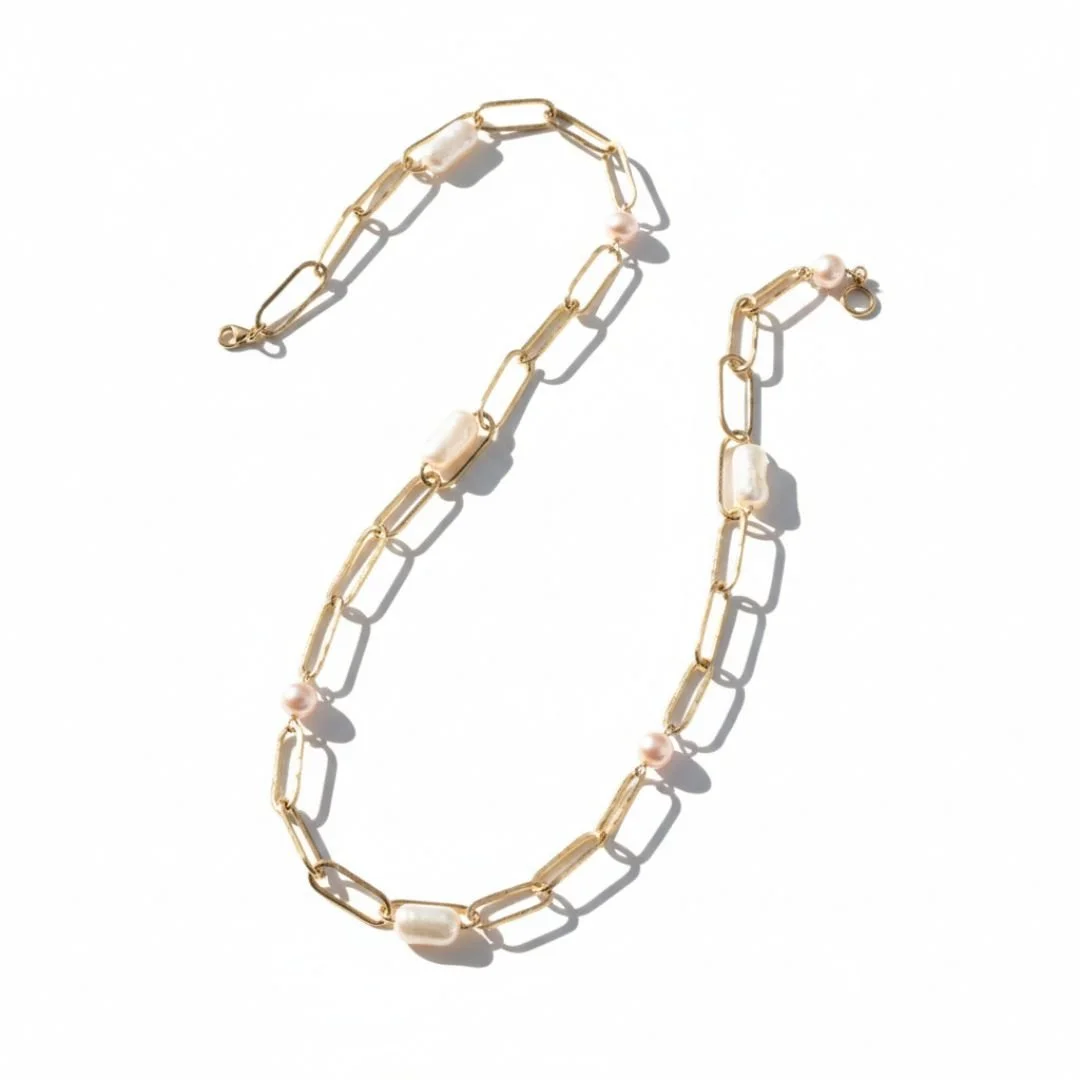
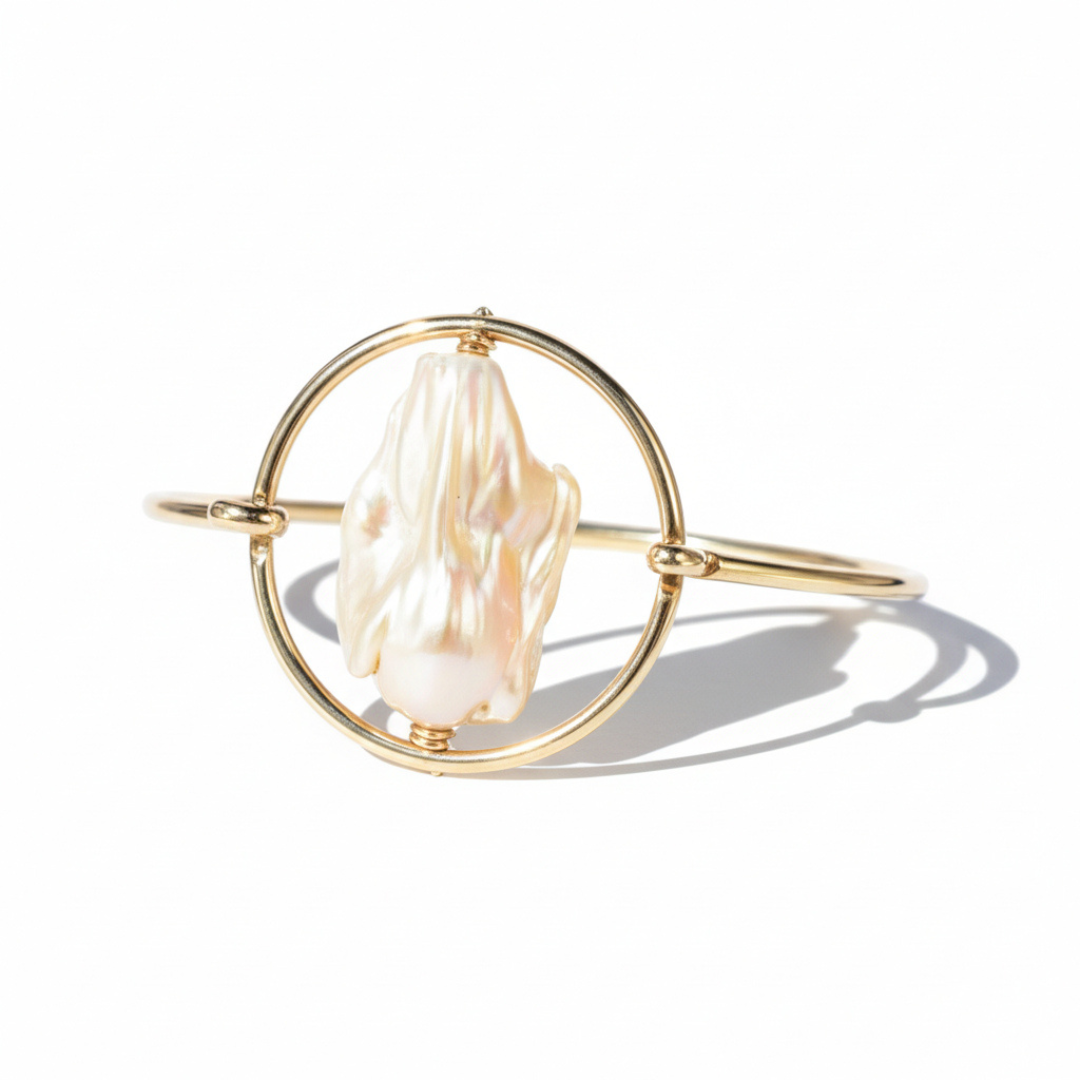
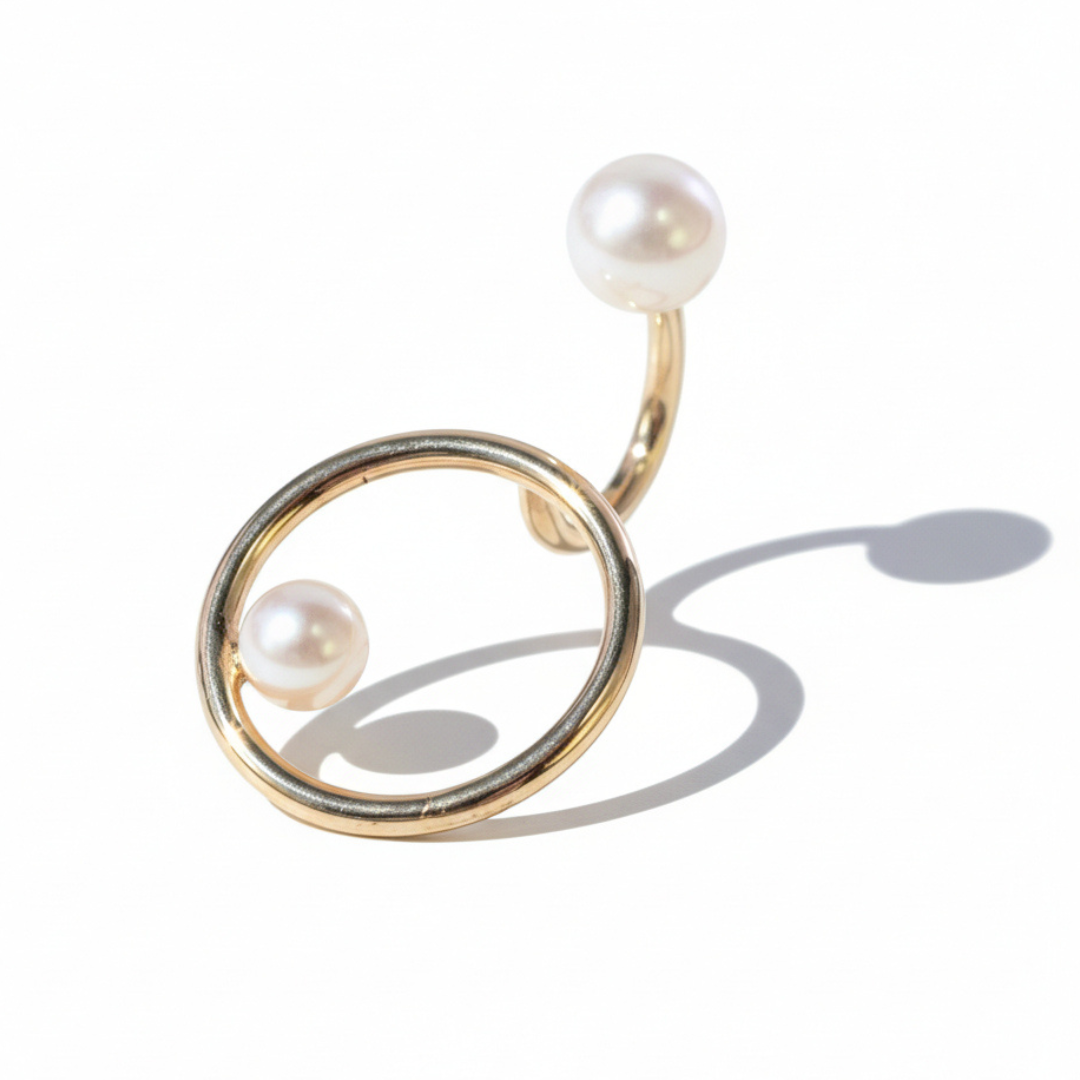
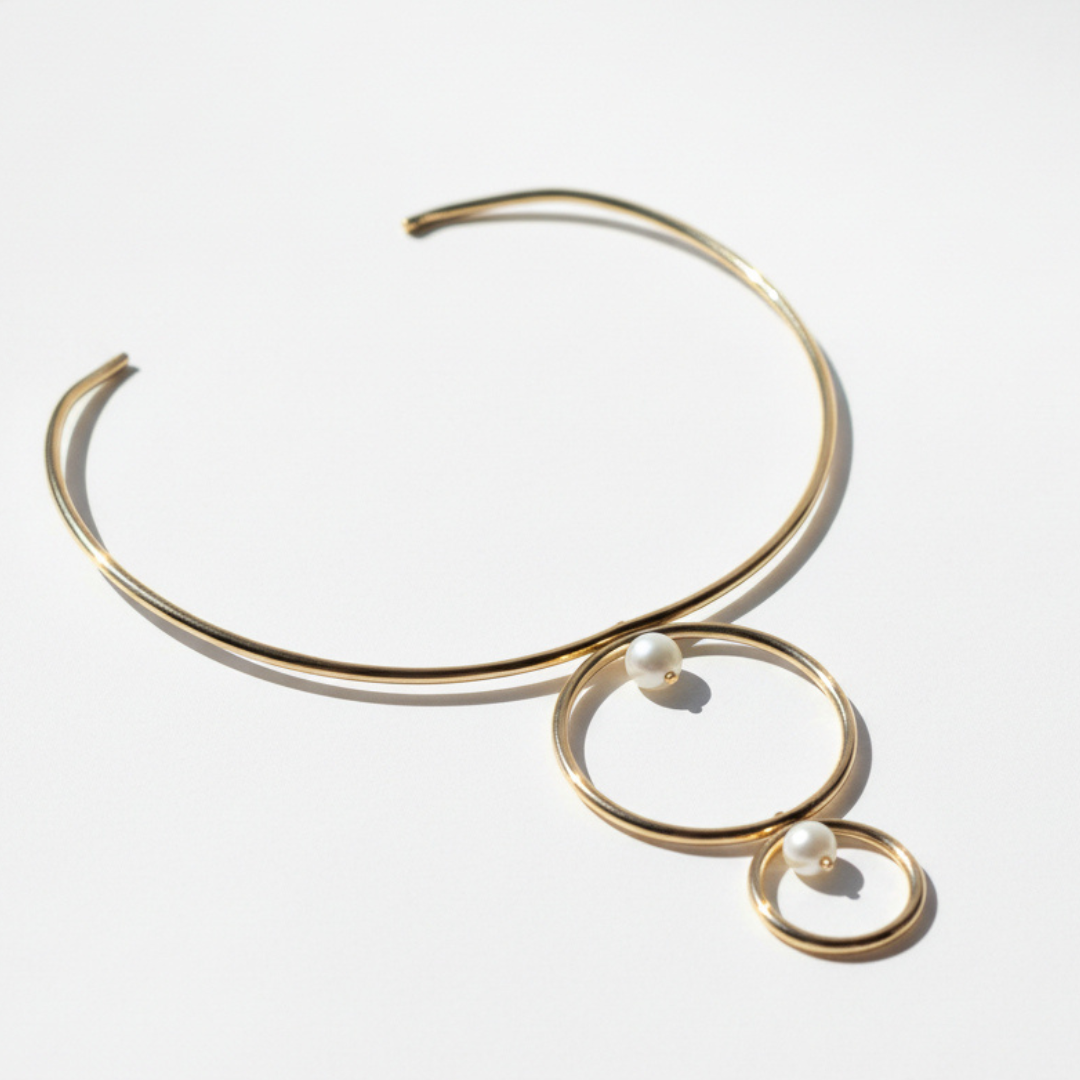
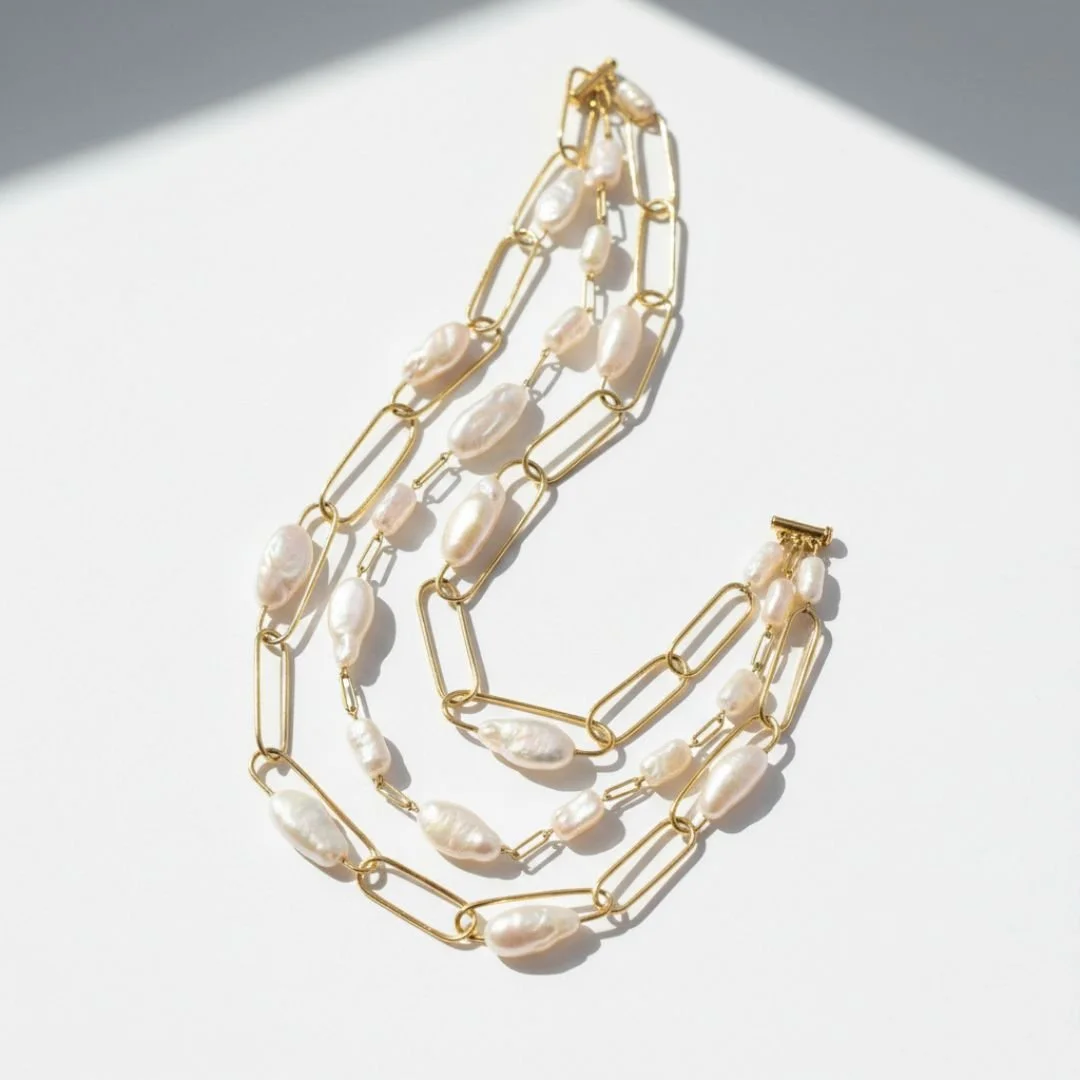
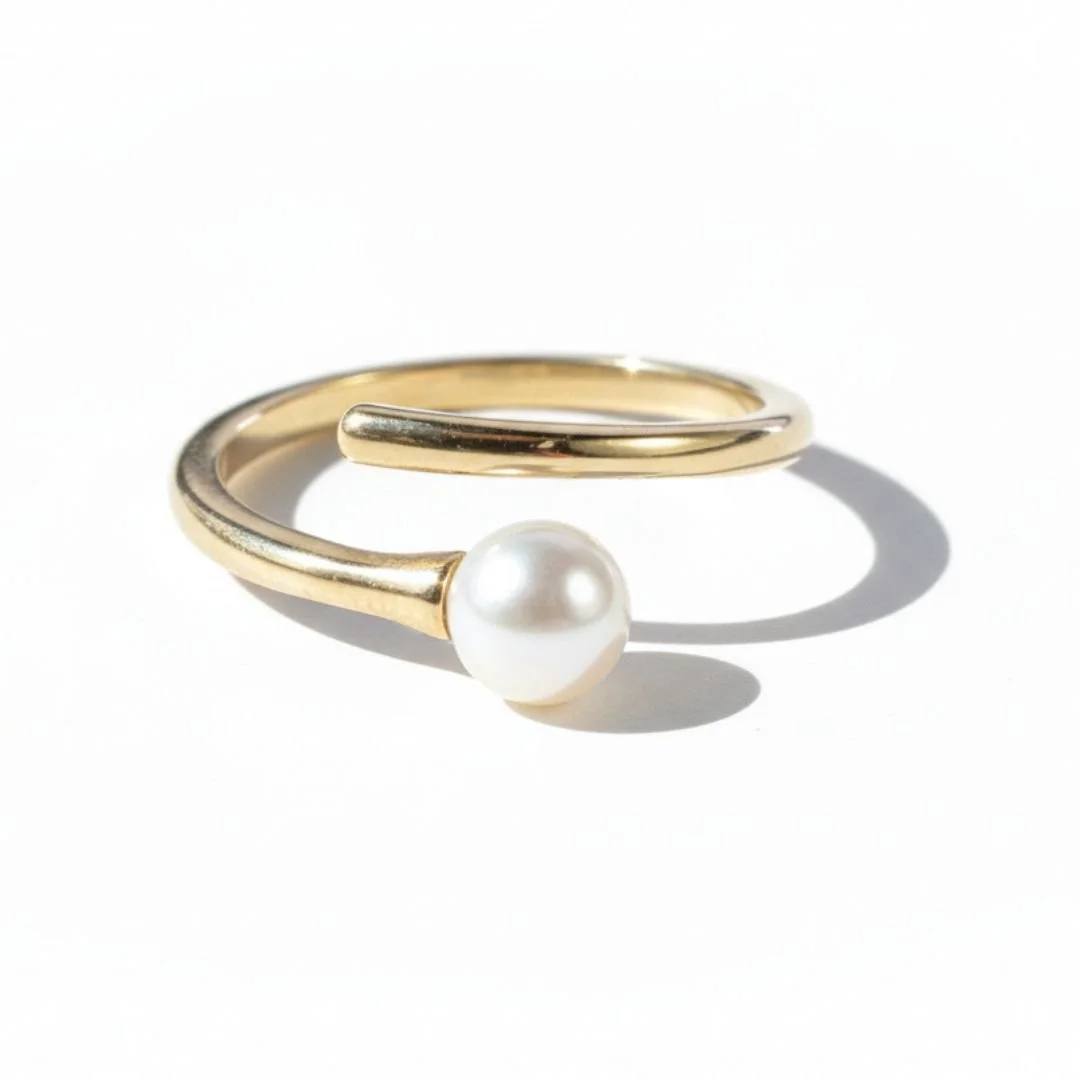
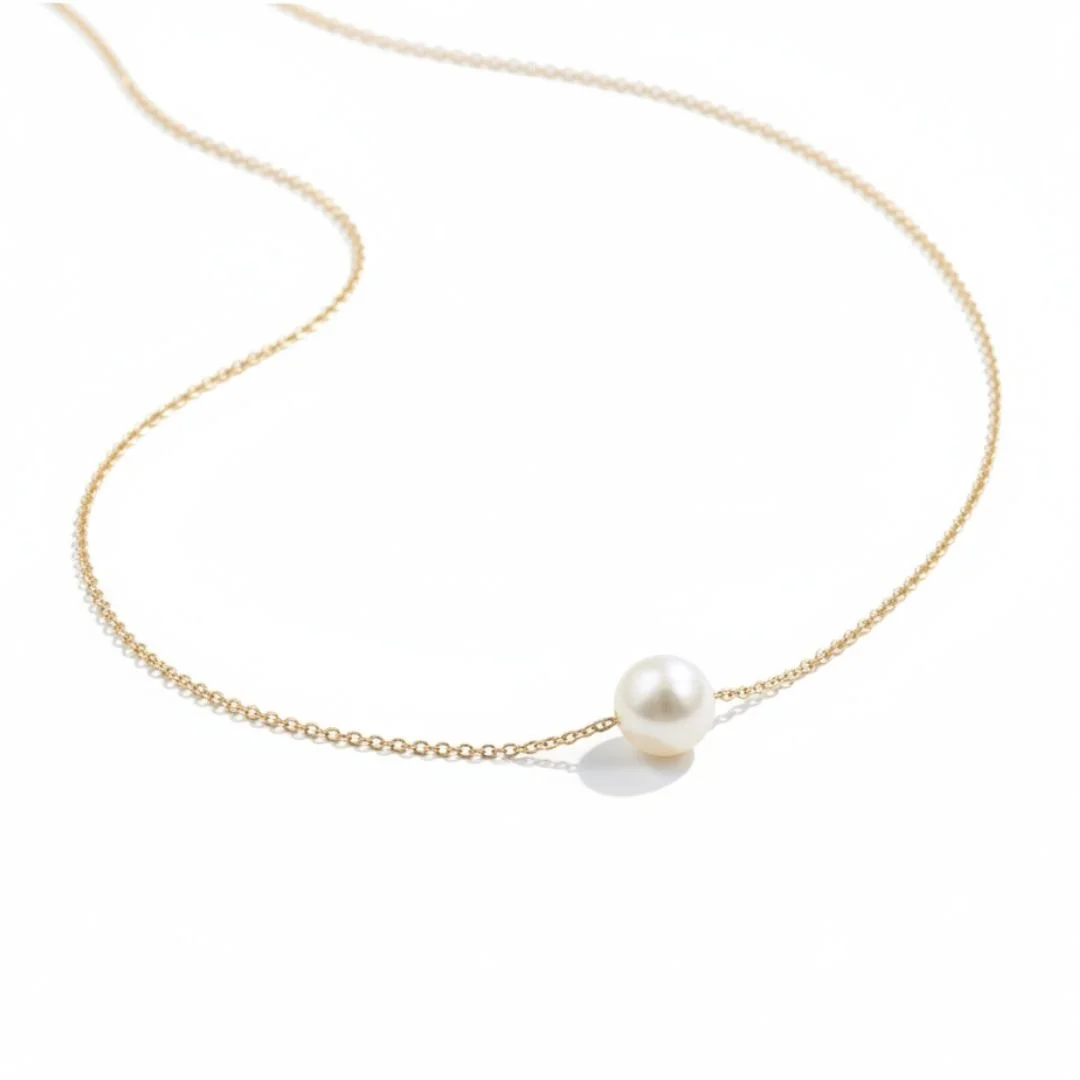
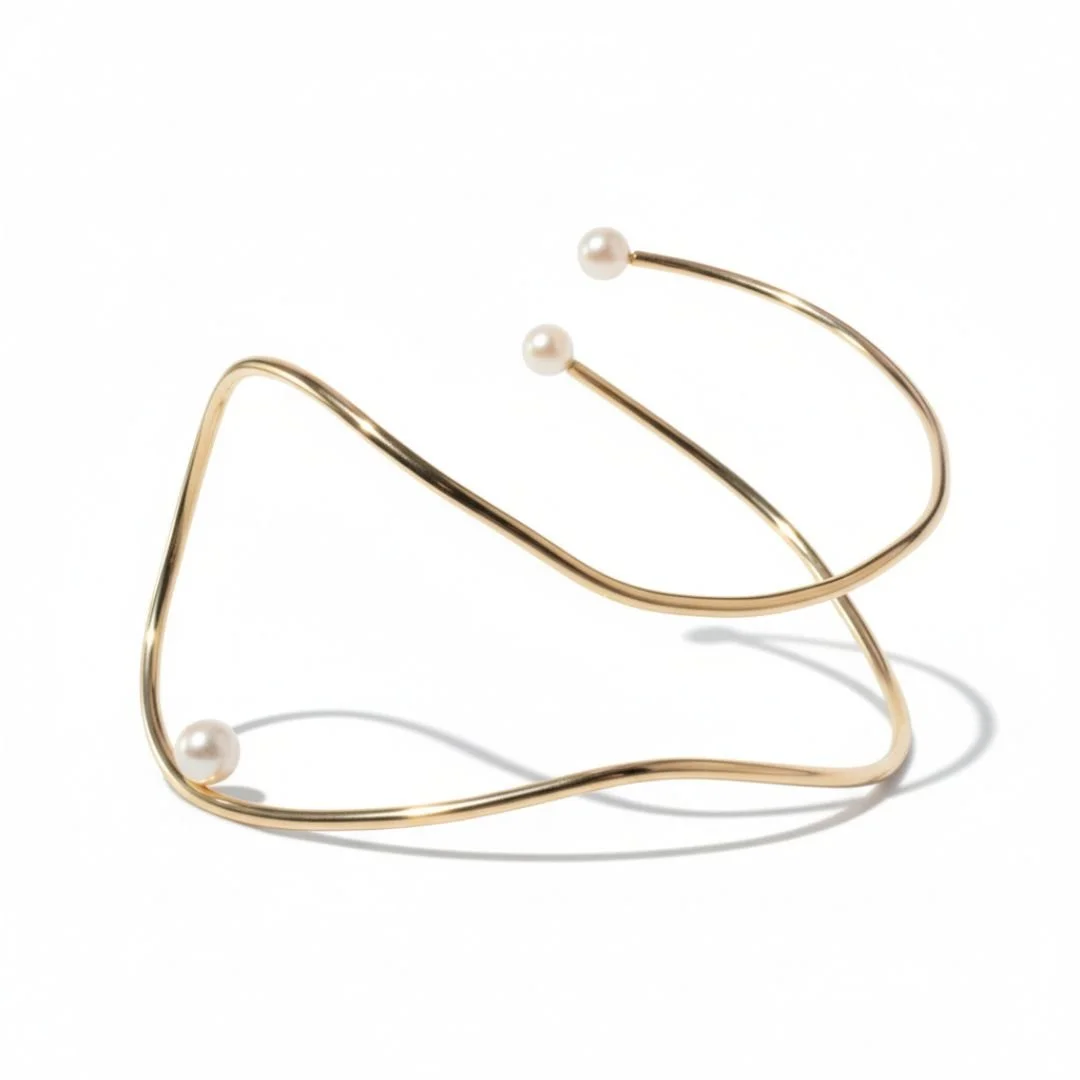
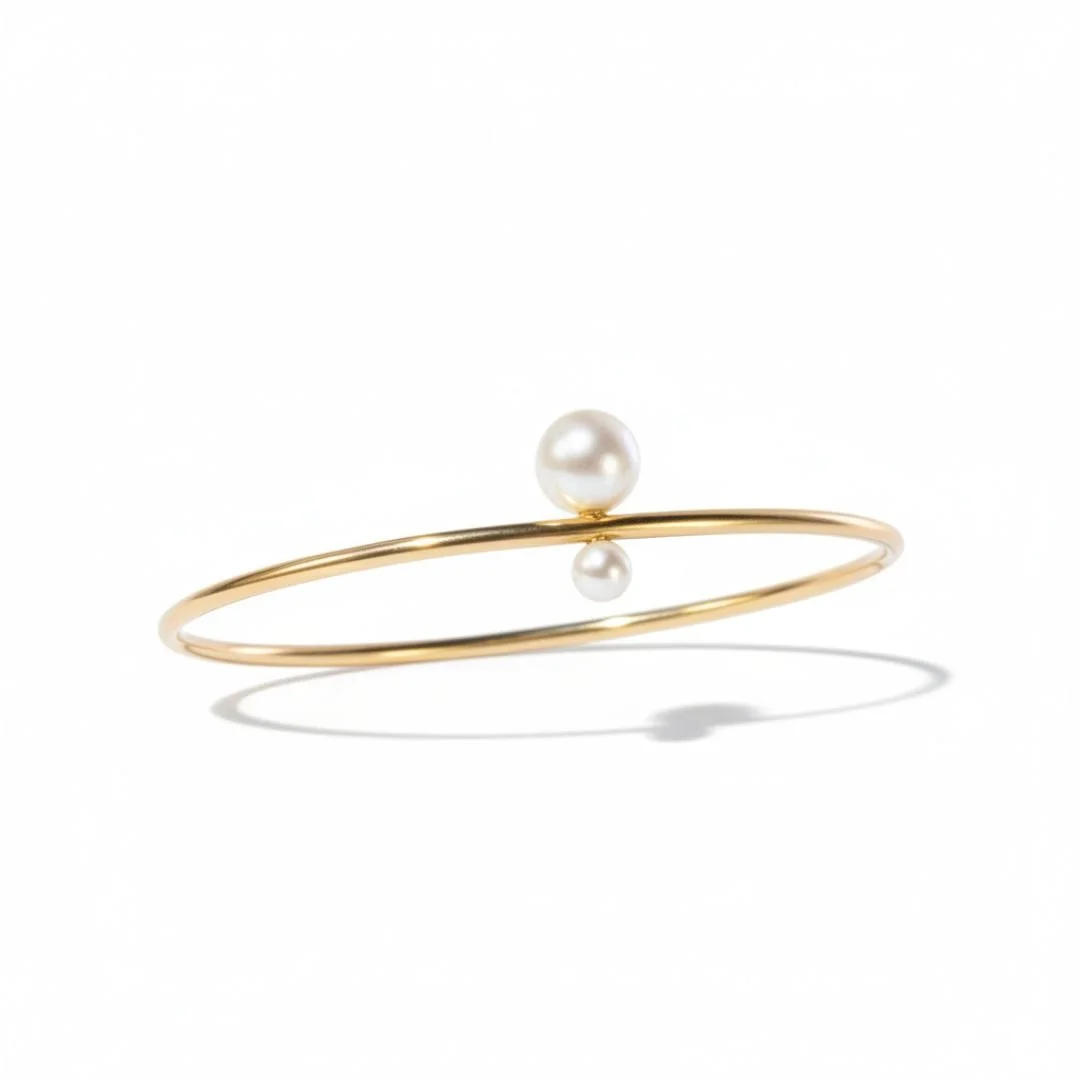
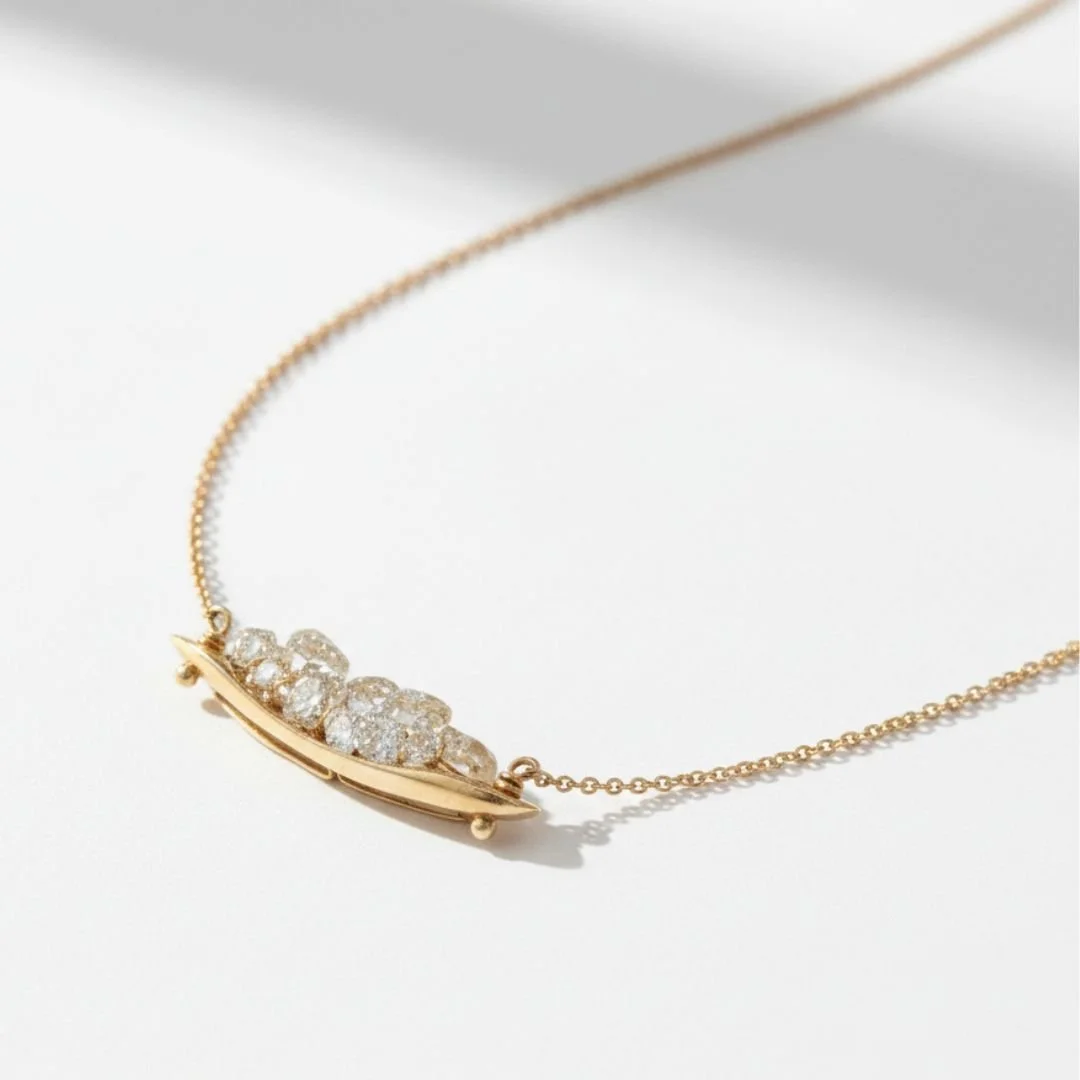
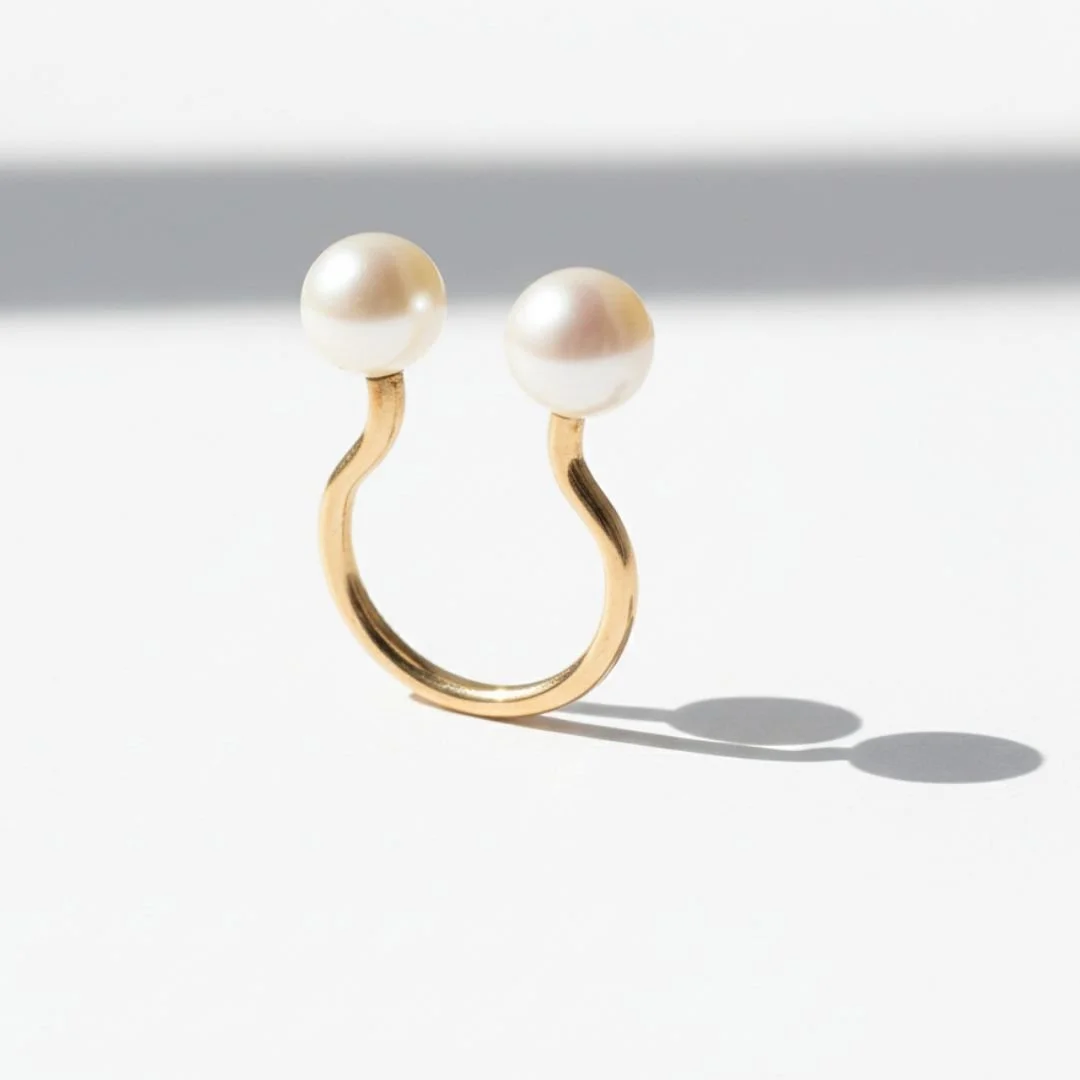
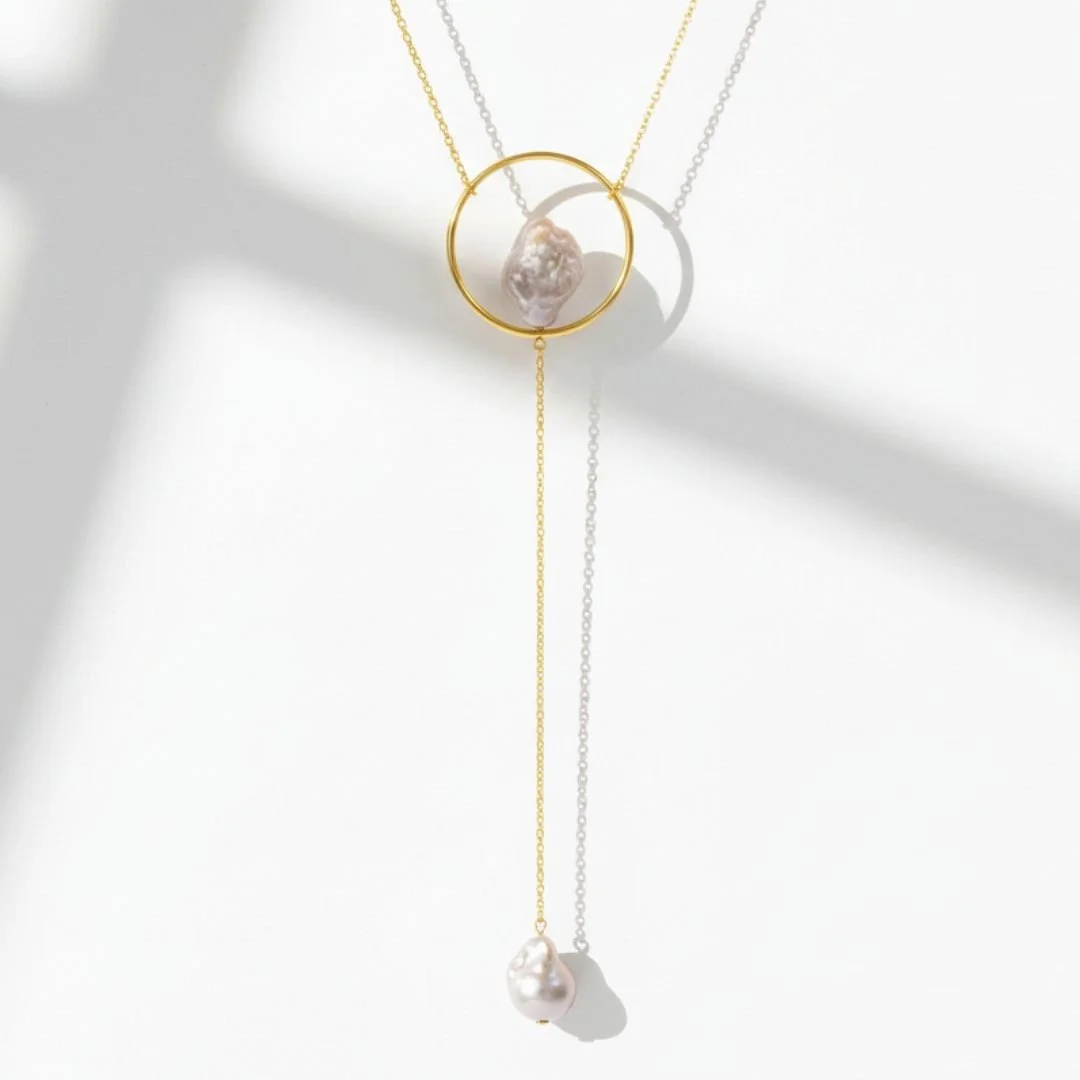
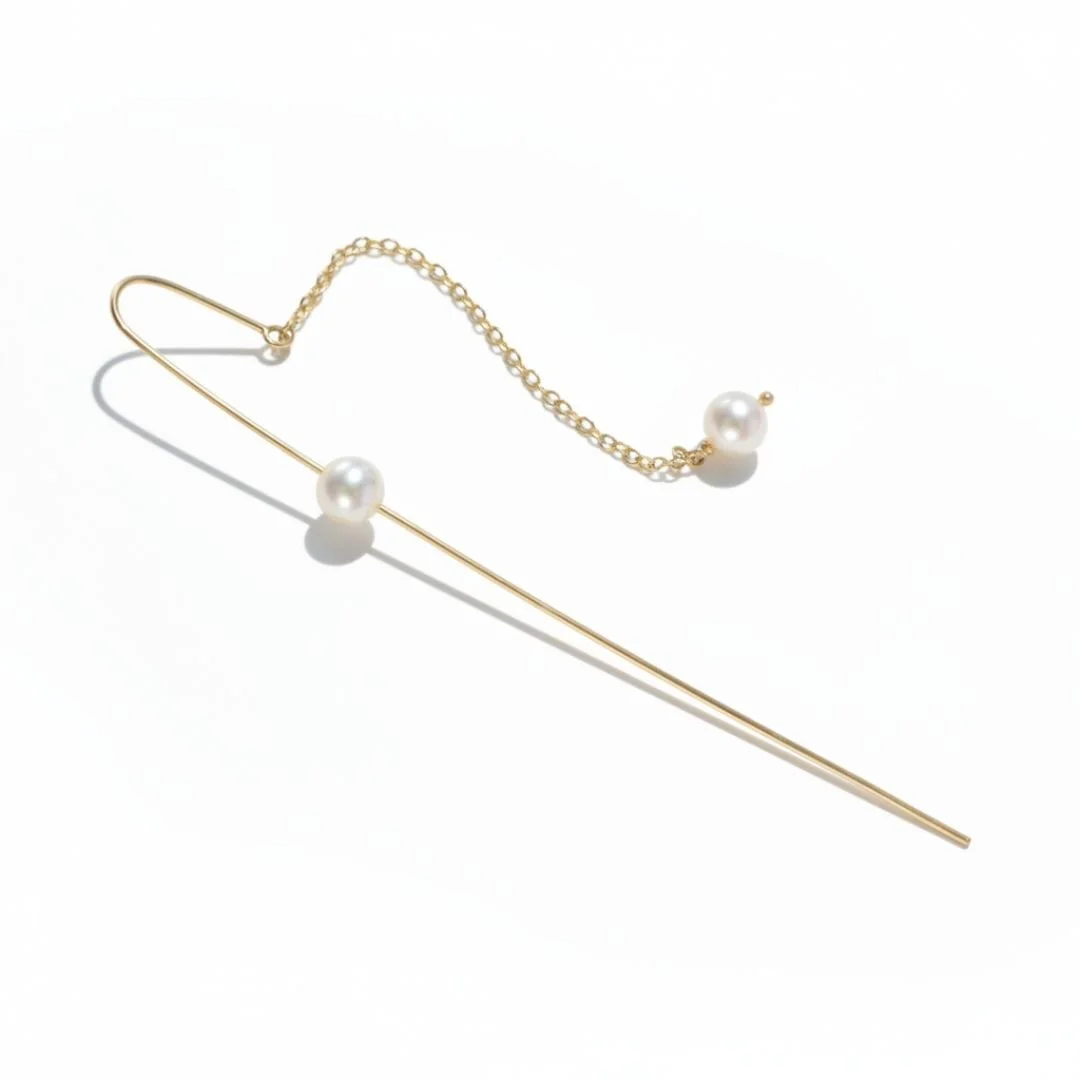
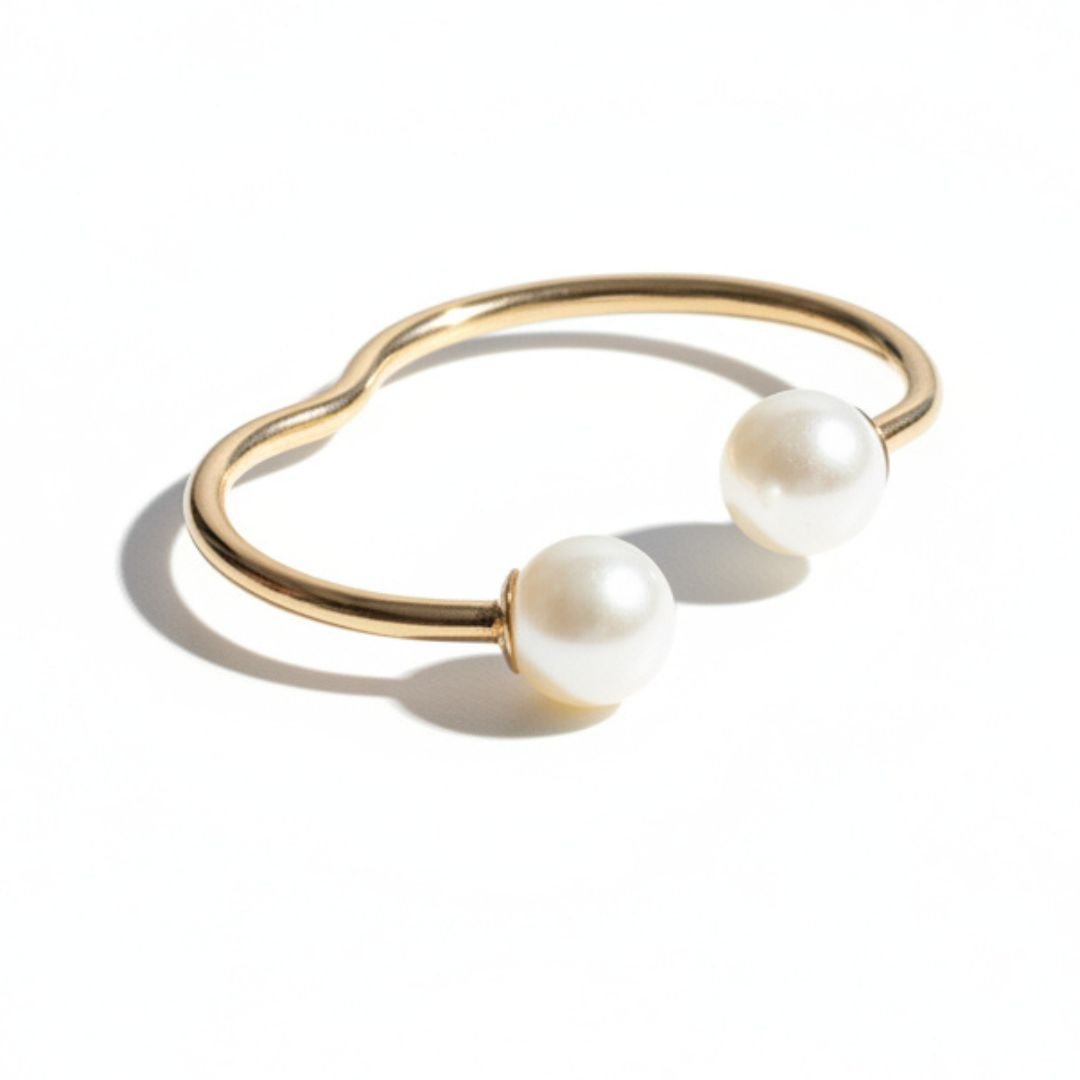
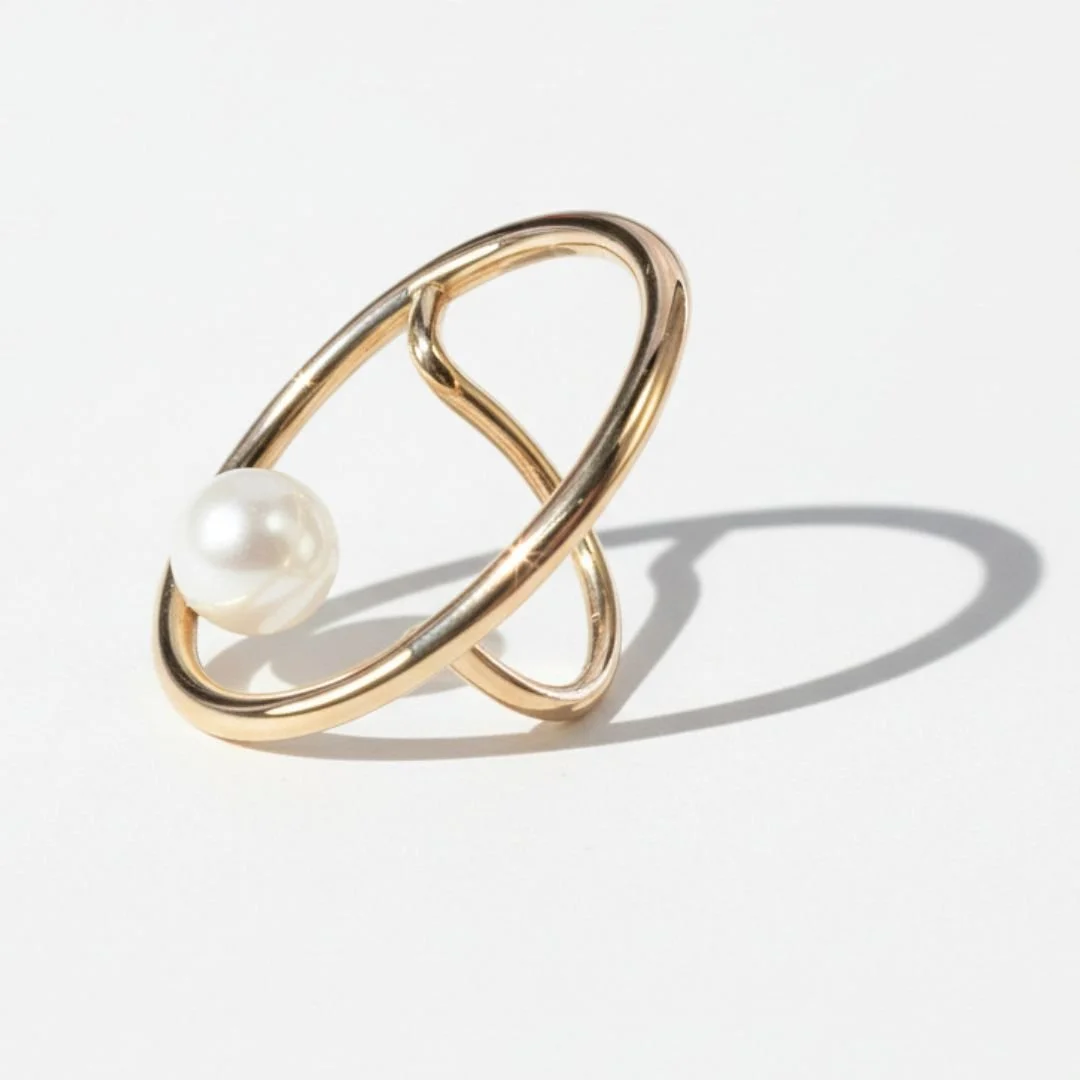
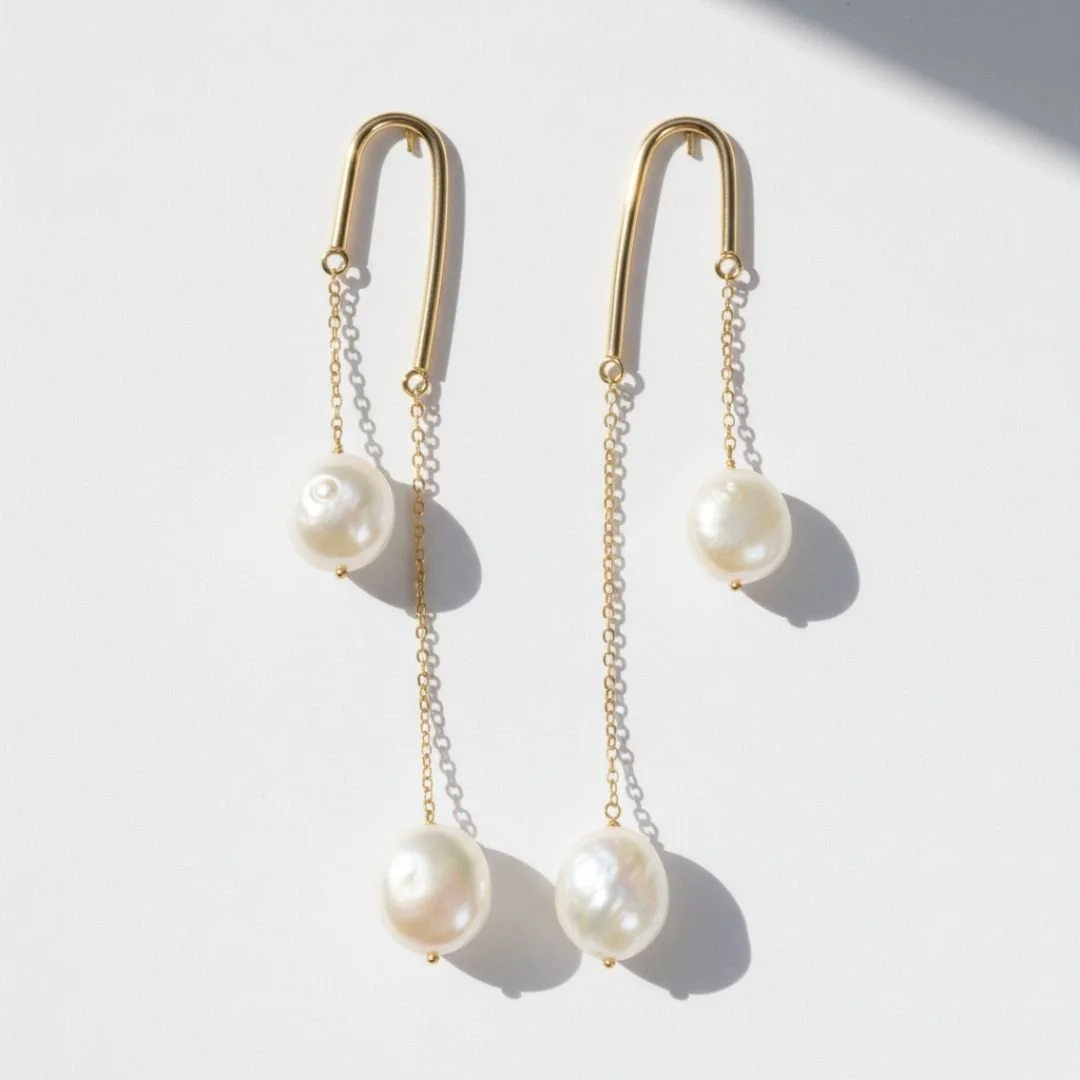
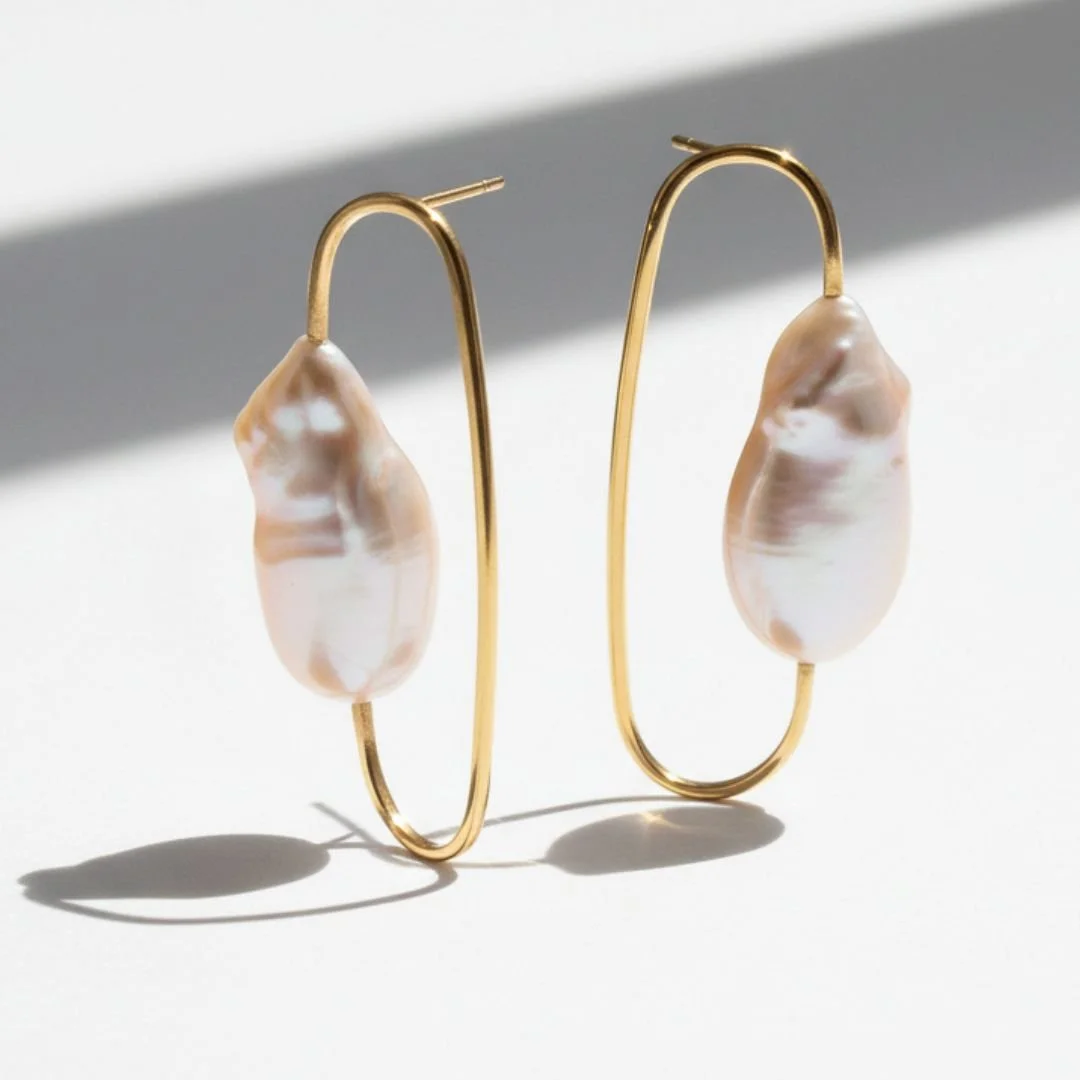
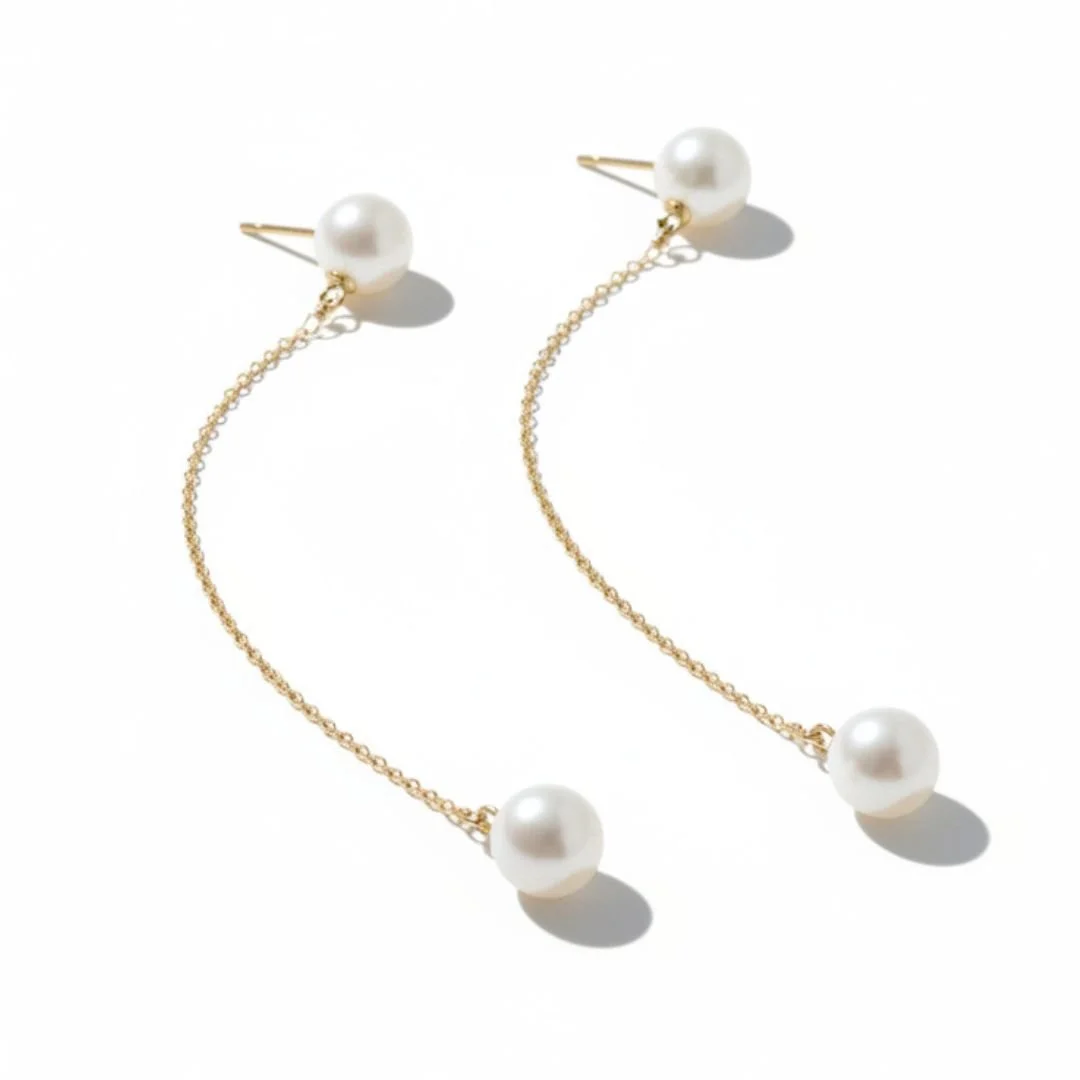
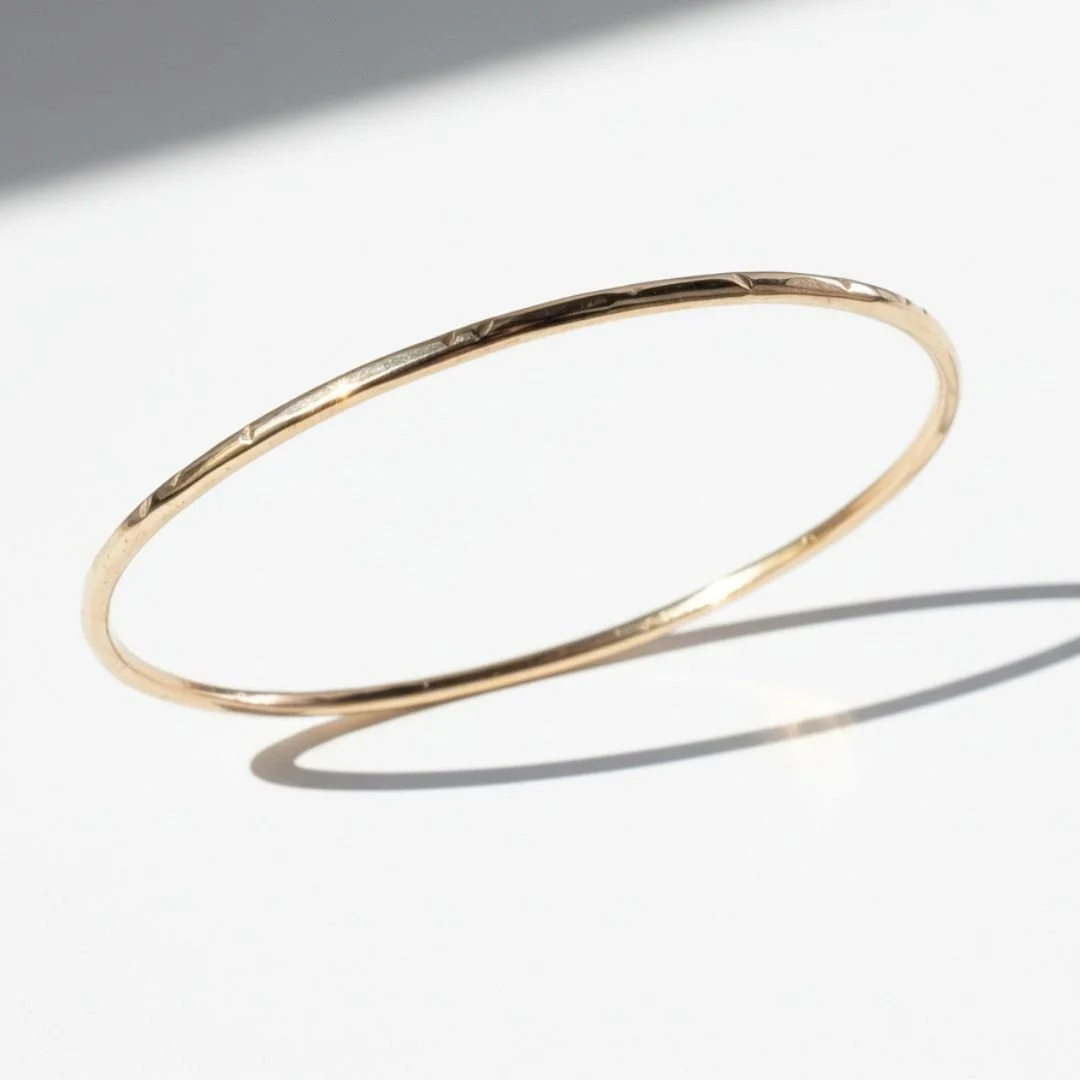
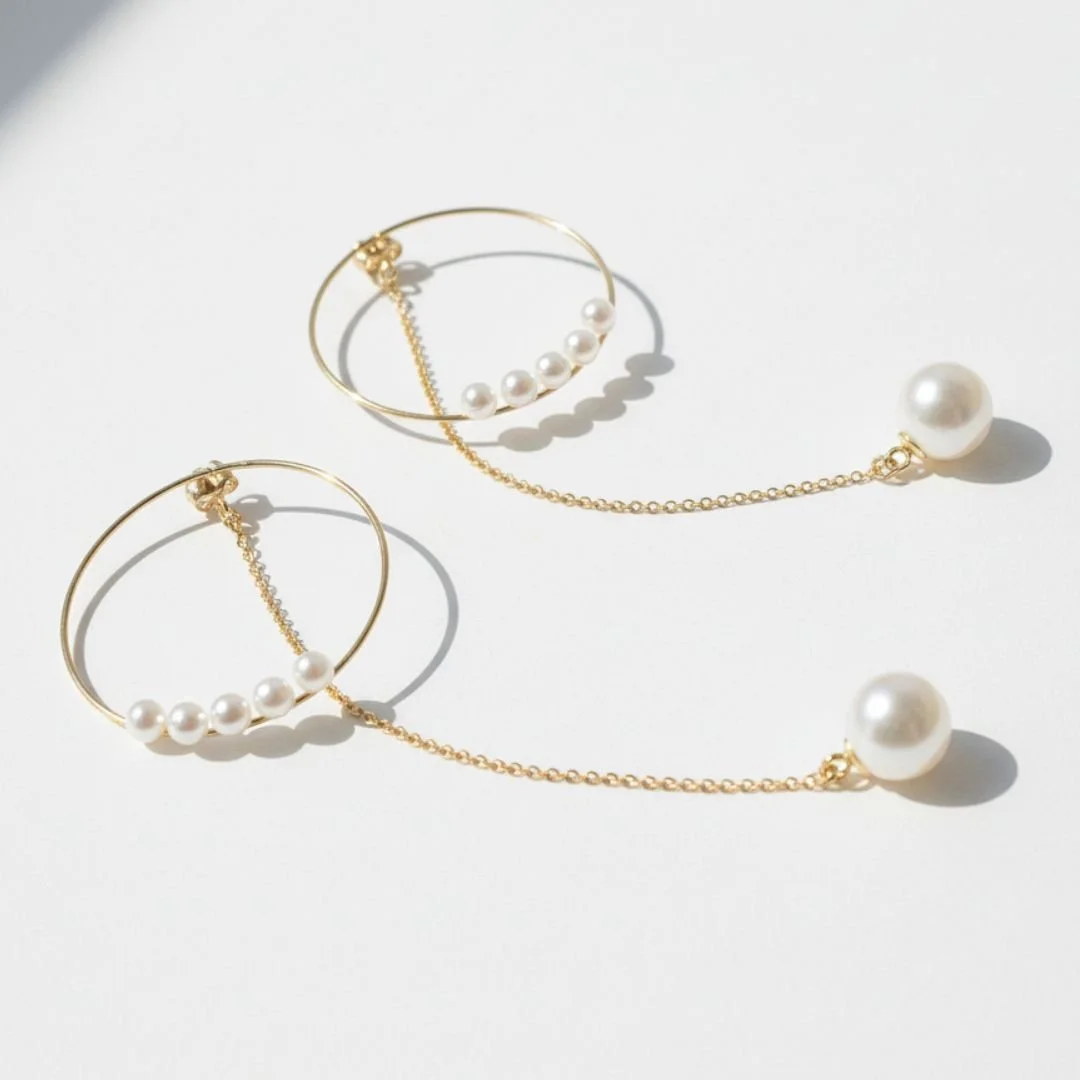
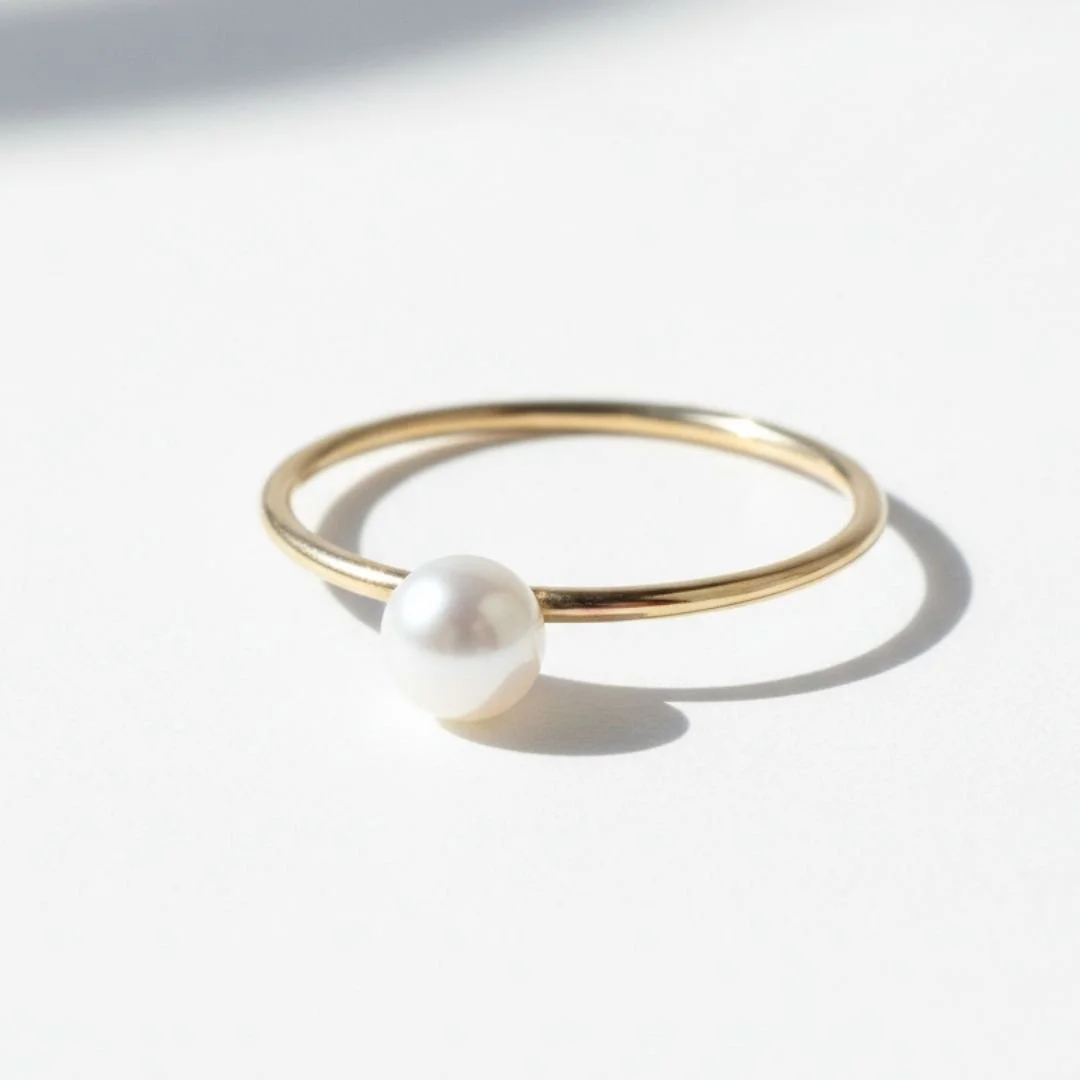
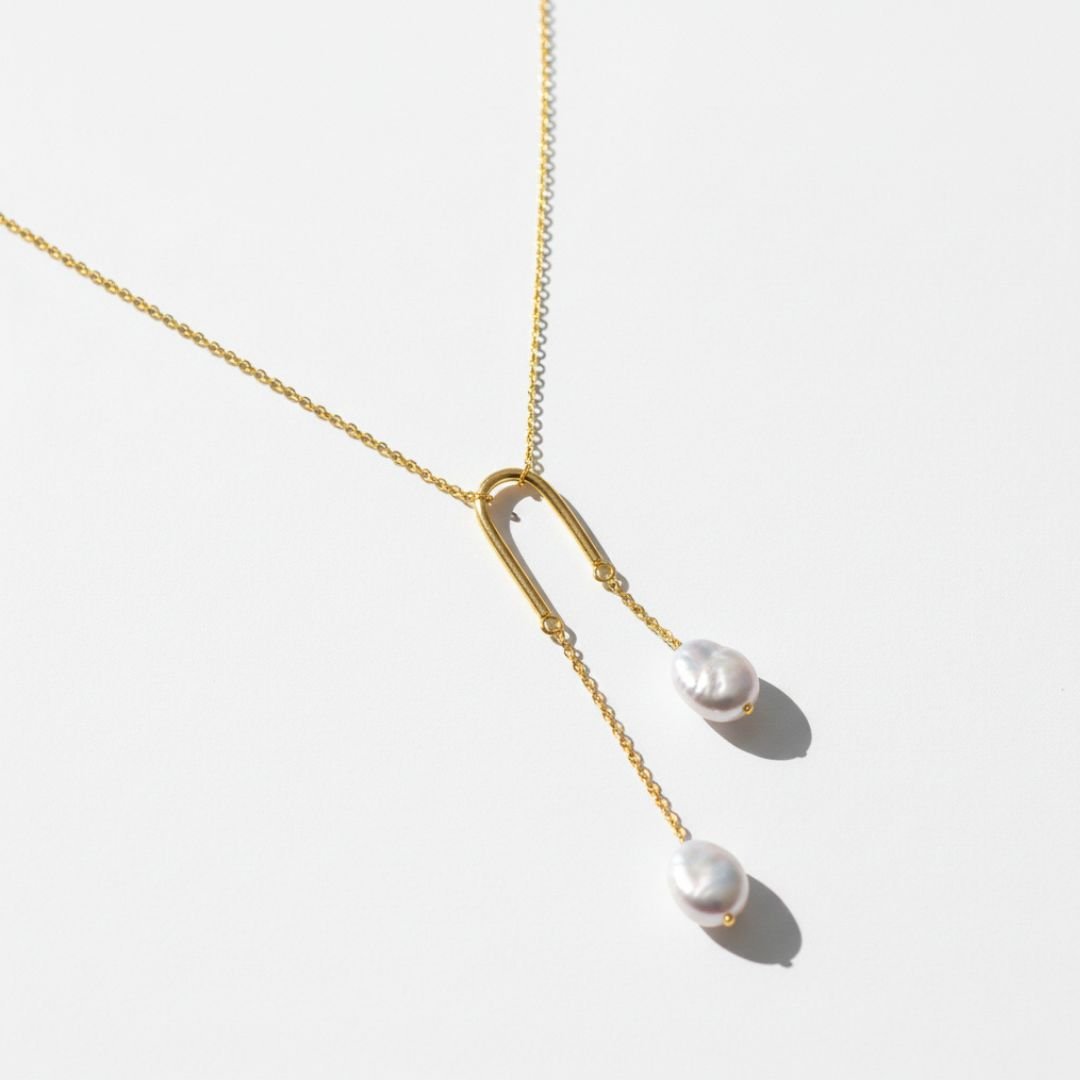
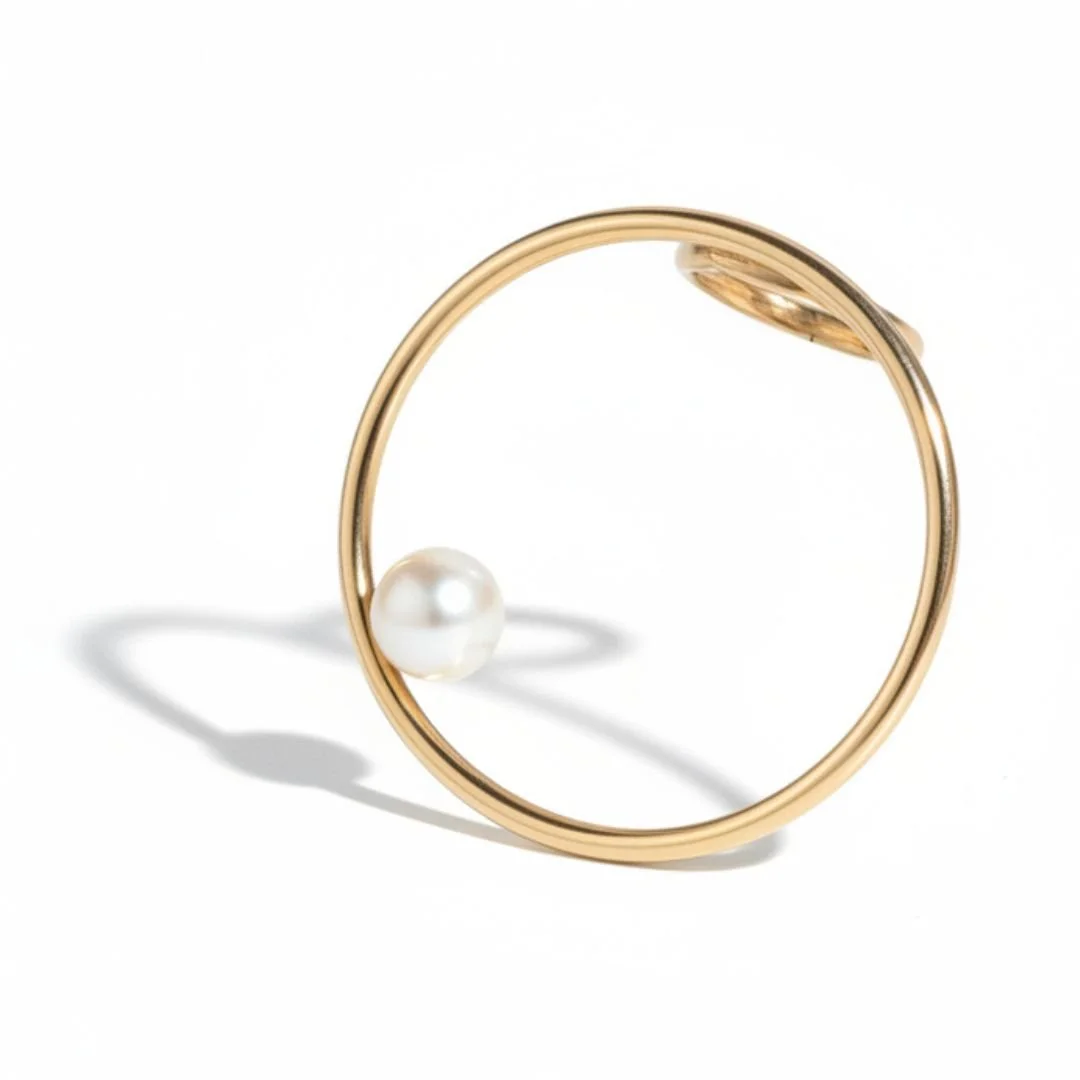
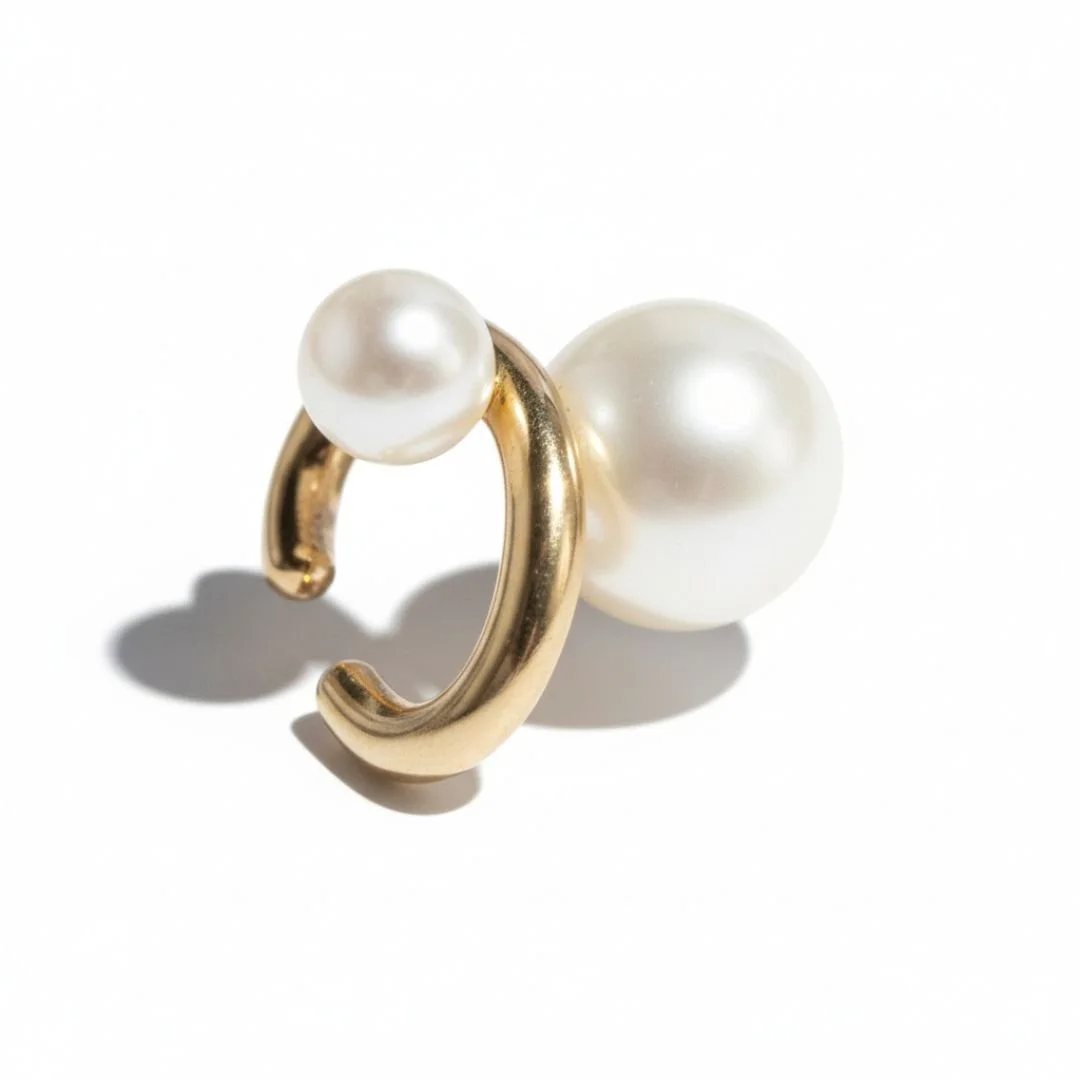
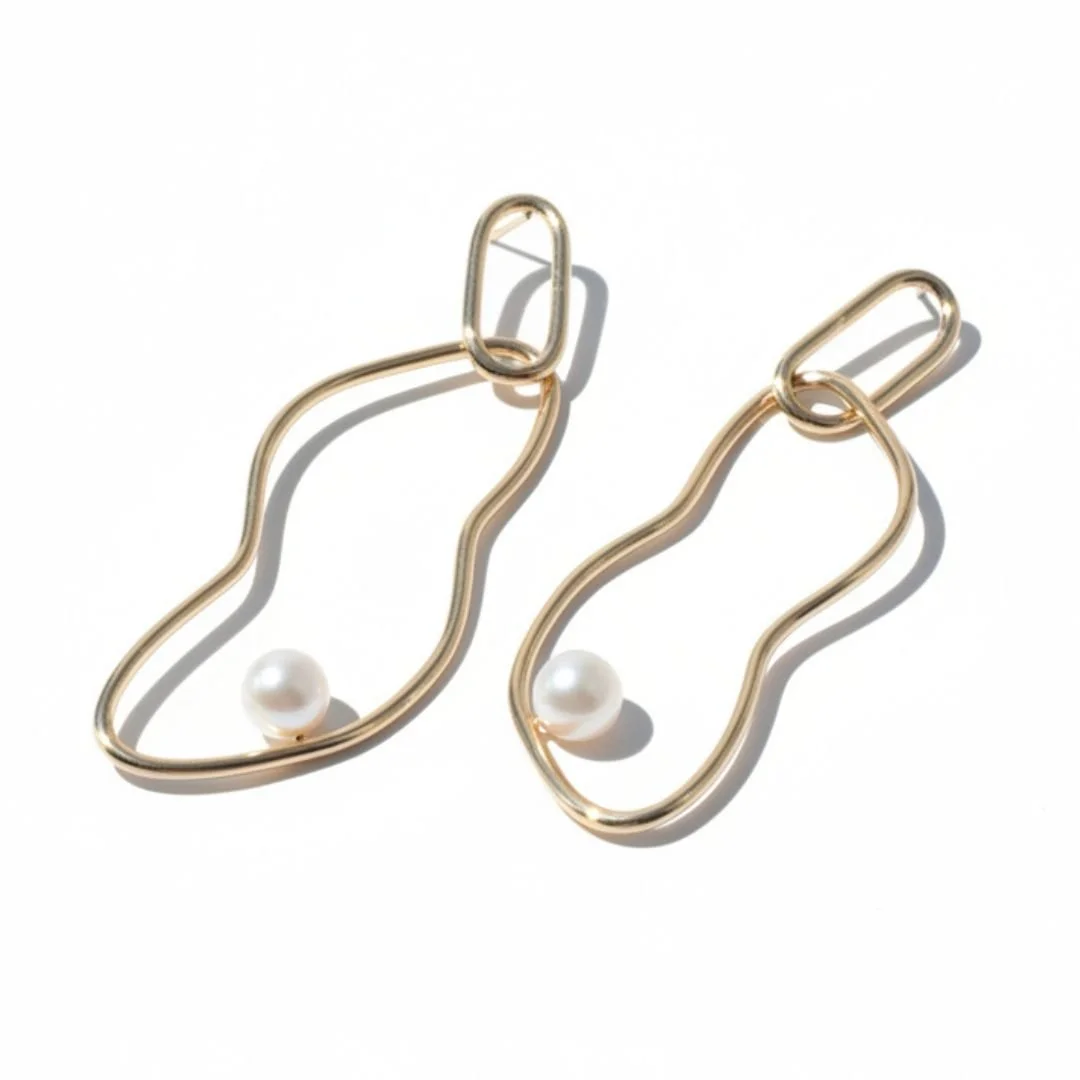
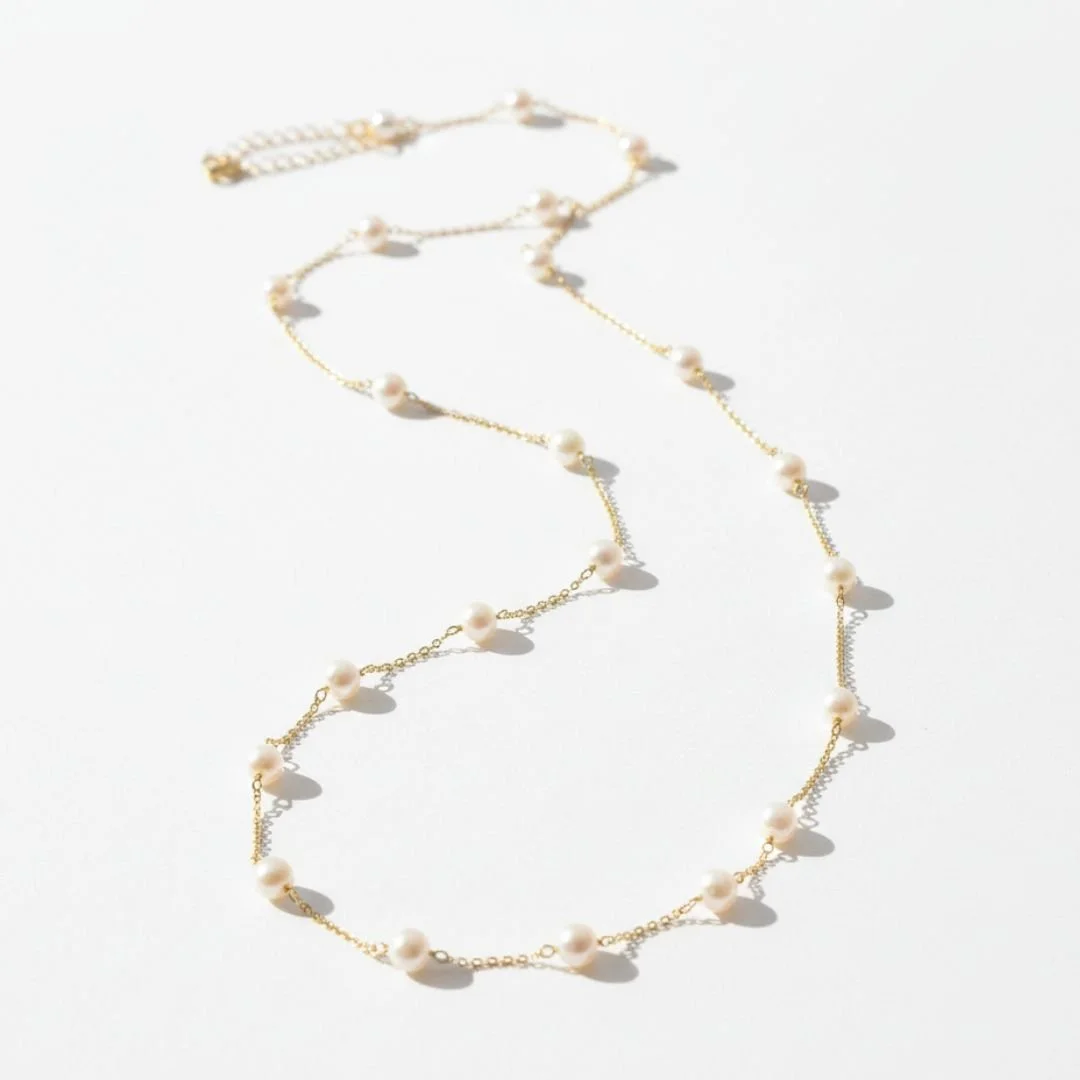
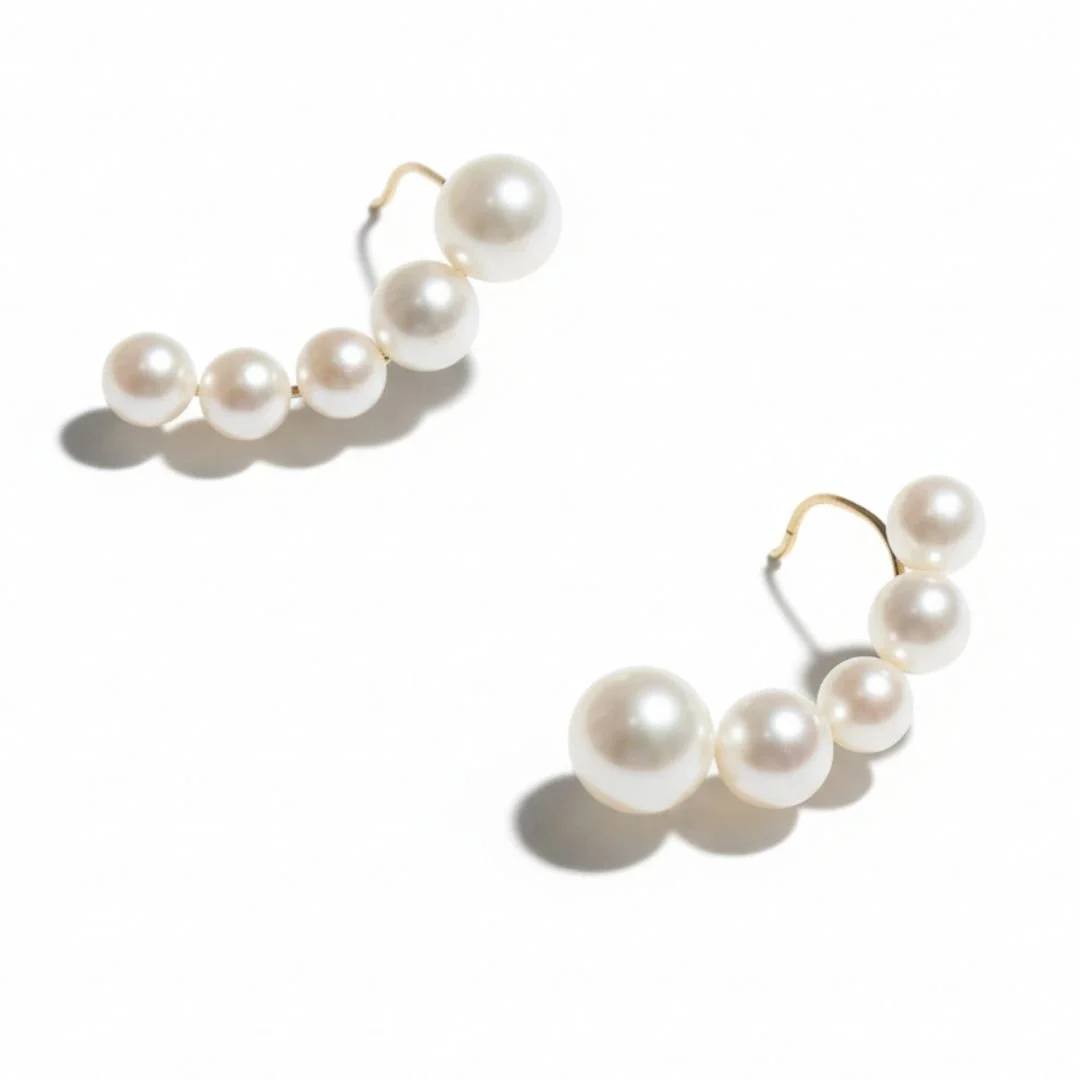
In celebration of the strong female archetype, this piece is named after the divine femme fatale of Hindu mythology, Kalika. Enchant your own Gods, demons, and sages when you wear this power pendant necklace.
Allow the color palette to do all of the work for you. The shimmering neutrals make it easy to coordinate with just about any item in your closet.
Entirely handmade, each gemstone is carefully placed to ensure originality that will never be replicated. The value of these gems spans generations. These limited collections of one of a kind pieces will be gone forever once they sell out.
Andrea Li Designs - Jewelry As Unique As You Are
Book a private virtual appointment with me - Here
Product Specs:
• 24k gold vermeil over sterling silver
• High lustre GIA exceptional quality certified cultured pearls
• 1 1/2’’ diameter circle pendant edged with sparkling labradorite rondells
• 2 3/4’’ gemstone cluster drop with pink amethyst, ametrine, sapphire, pearl and 24k gold vermeil accents
• 24k gold vermeil triangle chain with moonstone and GIA graded pearl accents
• 14k gold filled clasp and wire
• Necklace length 21’’
• Pendant length 3 1/4’’ top to bottom