
Sara Mrad's Spring 2025 Couture collection, Fleur de Lumière, reaches for the same Impressionist light I was chasing when I made the Tamar collection. Same Monet. Different mediums. Different fabrication languages, couture beadwork, and cold-connection gemstone clusters. This is what I see when I look at her work as a maker.


Photo Credits from Reddit
How I came to the work
A good friend, who is also a client, sent me Sara Mrad's Fleur de Lumière the way most of us encounter couture now: via someone else's tab, late at night, half-distracted. The thing that stopped me wasn't the dress. It was a single close-up where the beading behaved like brushwork—watercolor in glass. Light not so much captured as held still.
That stopped me because it's the same thing I was trying to do with Tamar. Different problem, same solution: make a flower that doesn't pretend to be a flower. Make the quality of looking at a flower, that softness at the edges where color bleeds, the way light dissolves a petal at the right angle. That's Monet's language. Mrad reads it through textile. I was reading it through gemstones.
This was the perfect setup to carry over to a recent shoot, collaborating with talented artists who each brought that same language into their craft to create a cohesive vision to communicate the ethereal nature of Sara’s collection and mine.
Published in Artells Magazine
Fashion & Glamour May Issue, Vol 4062 · Print & Digital
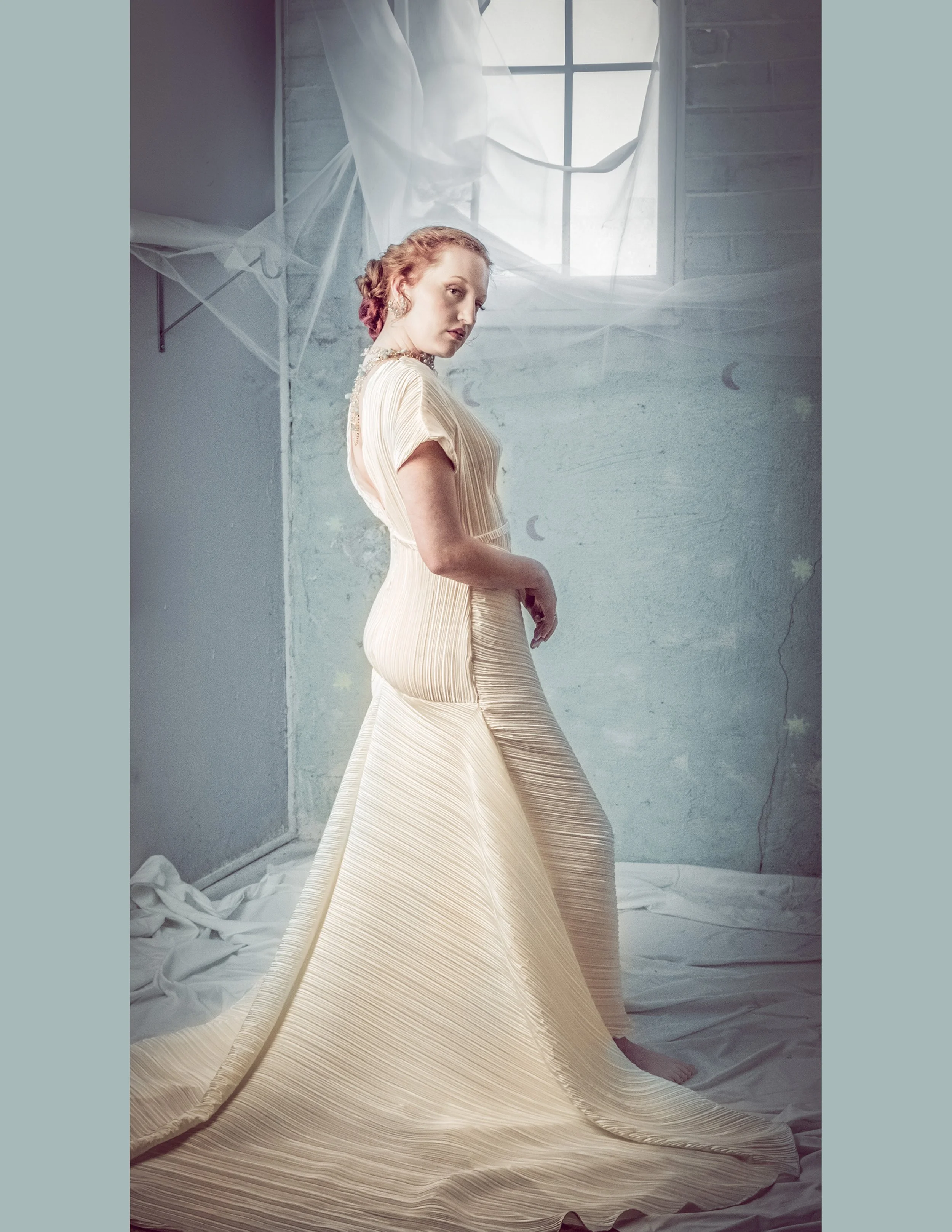
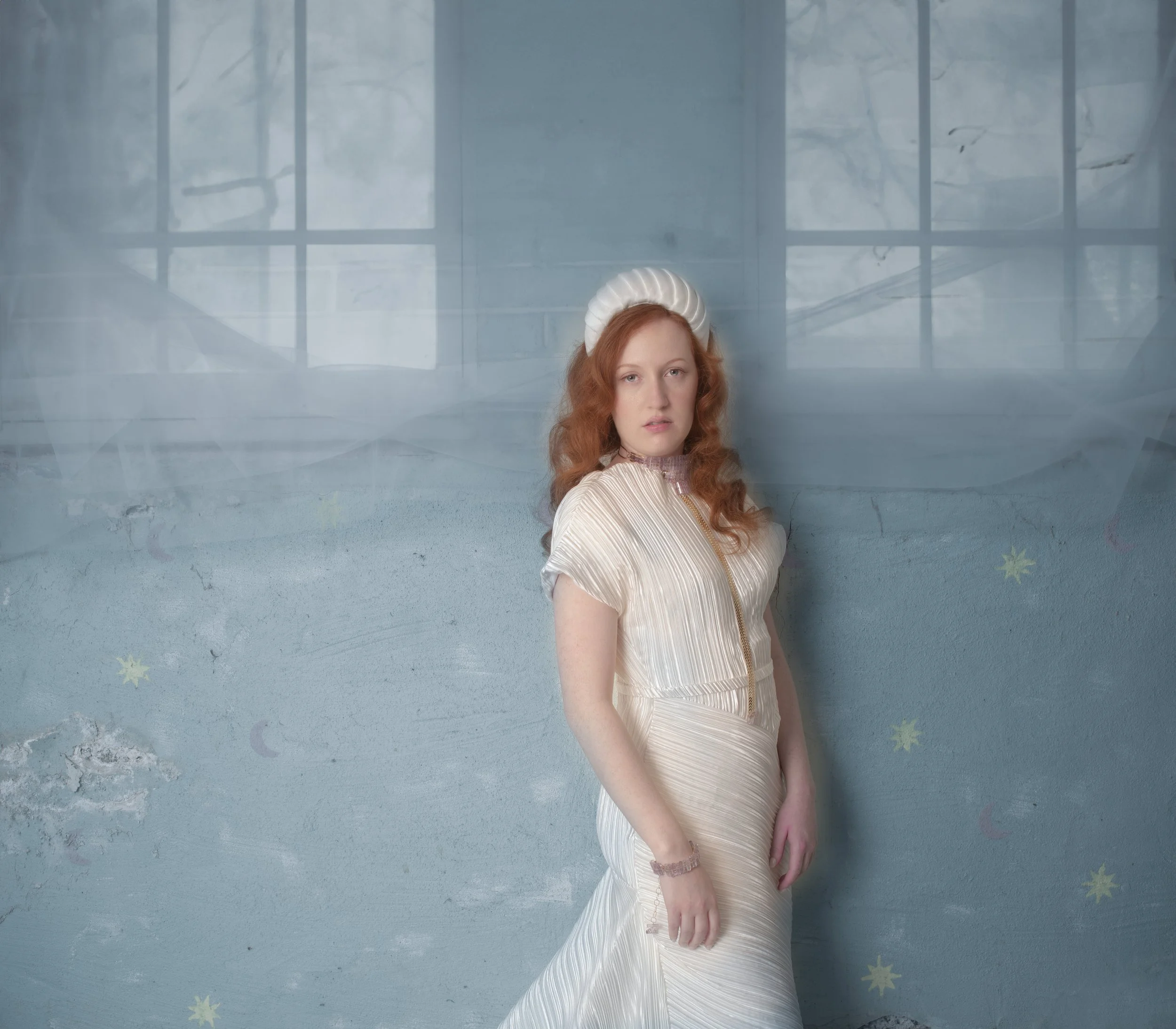
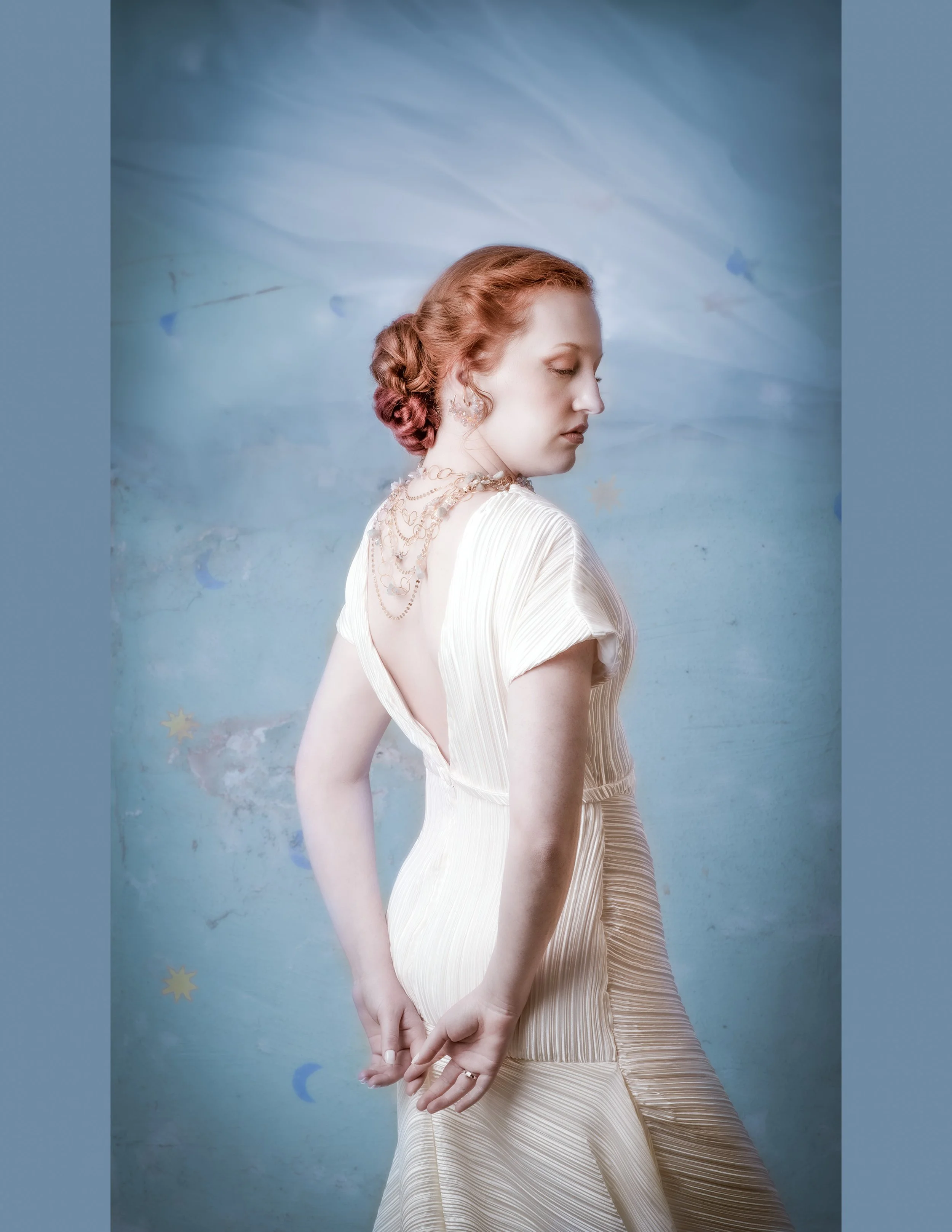
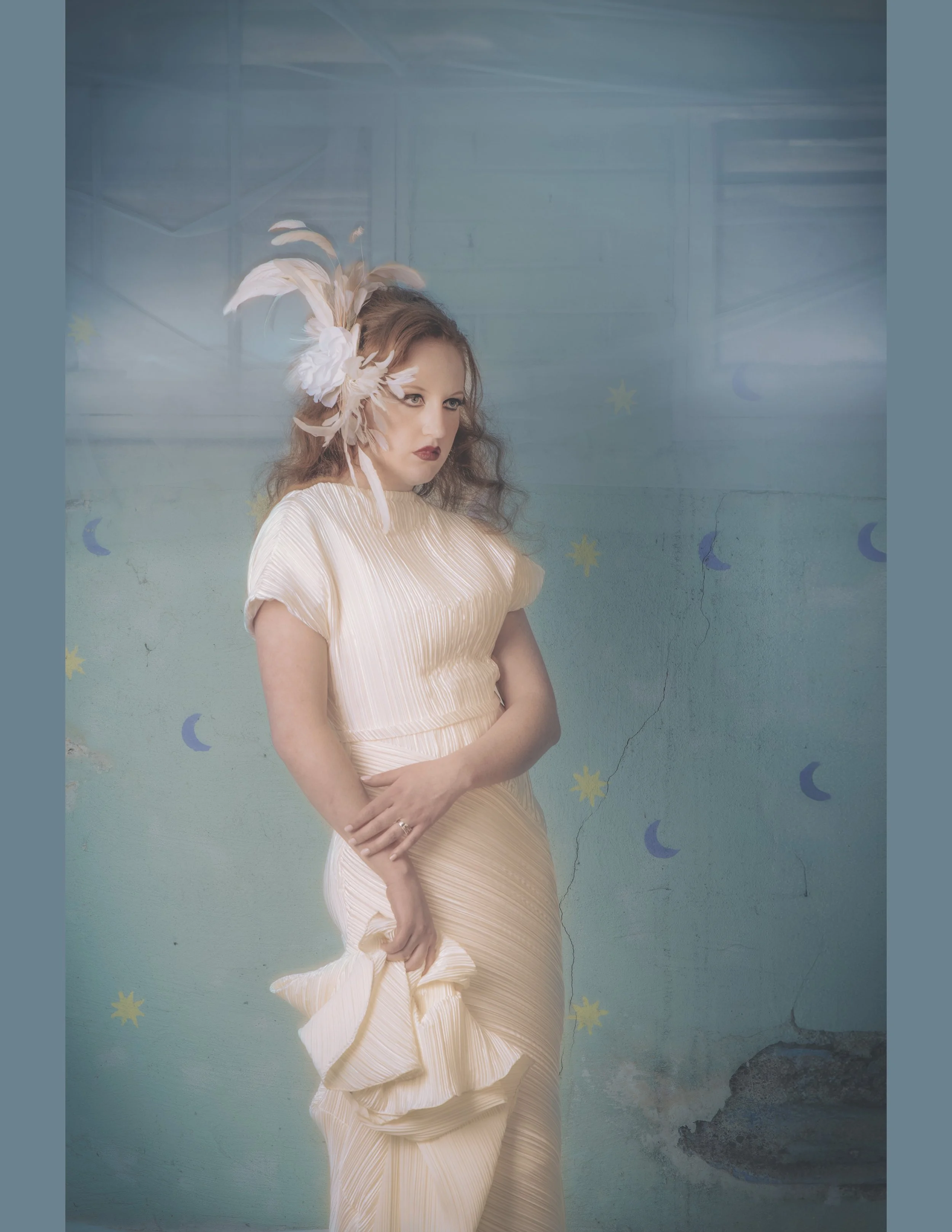
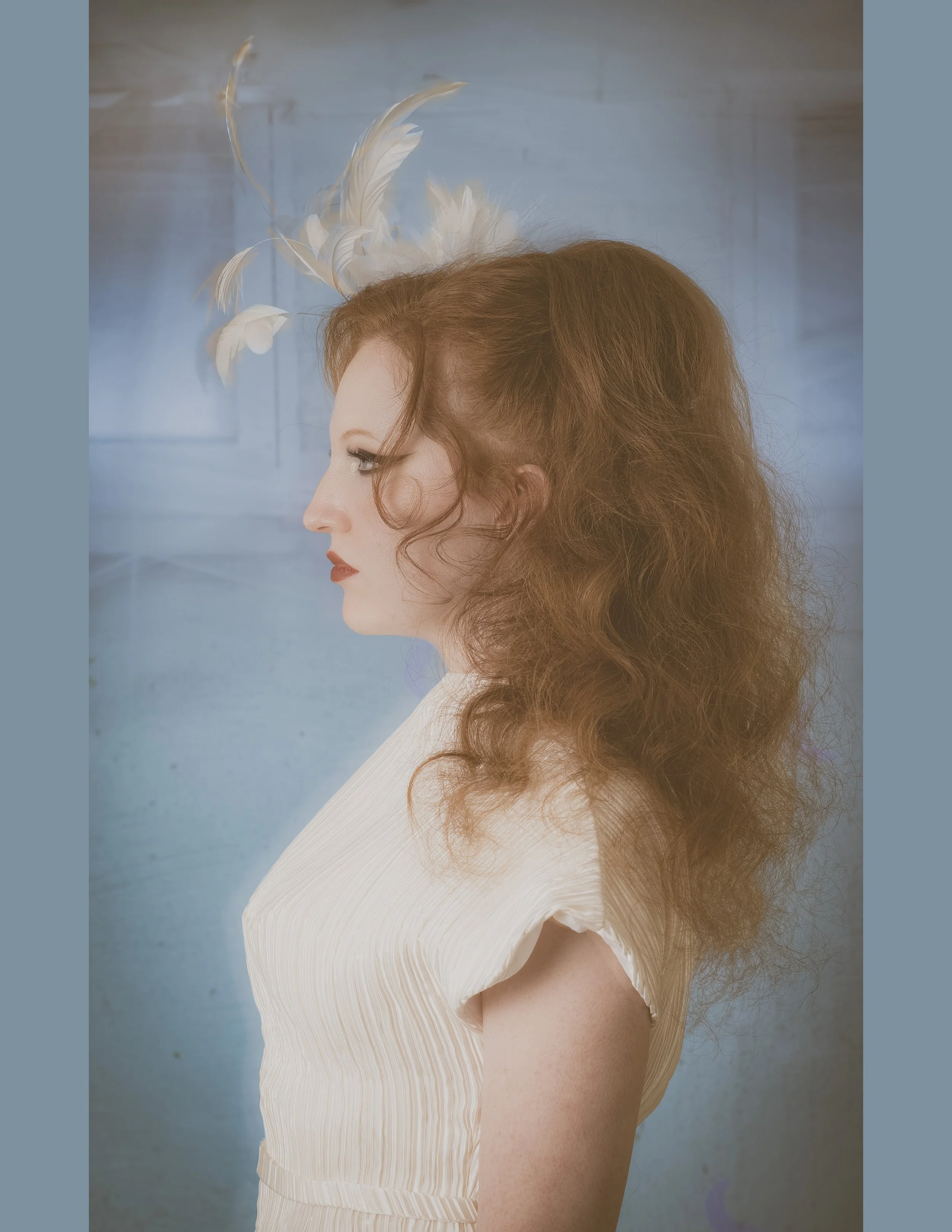
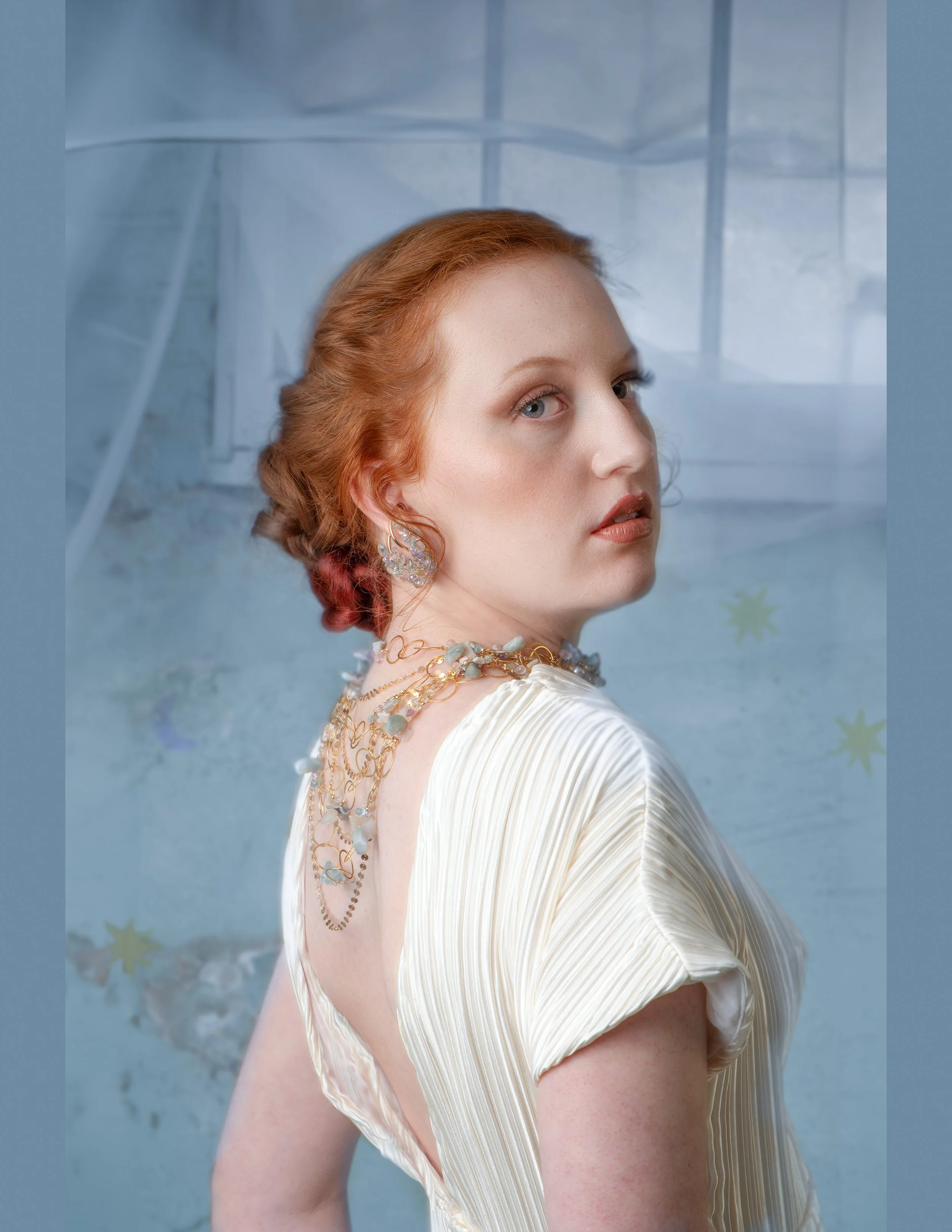
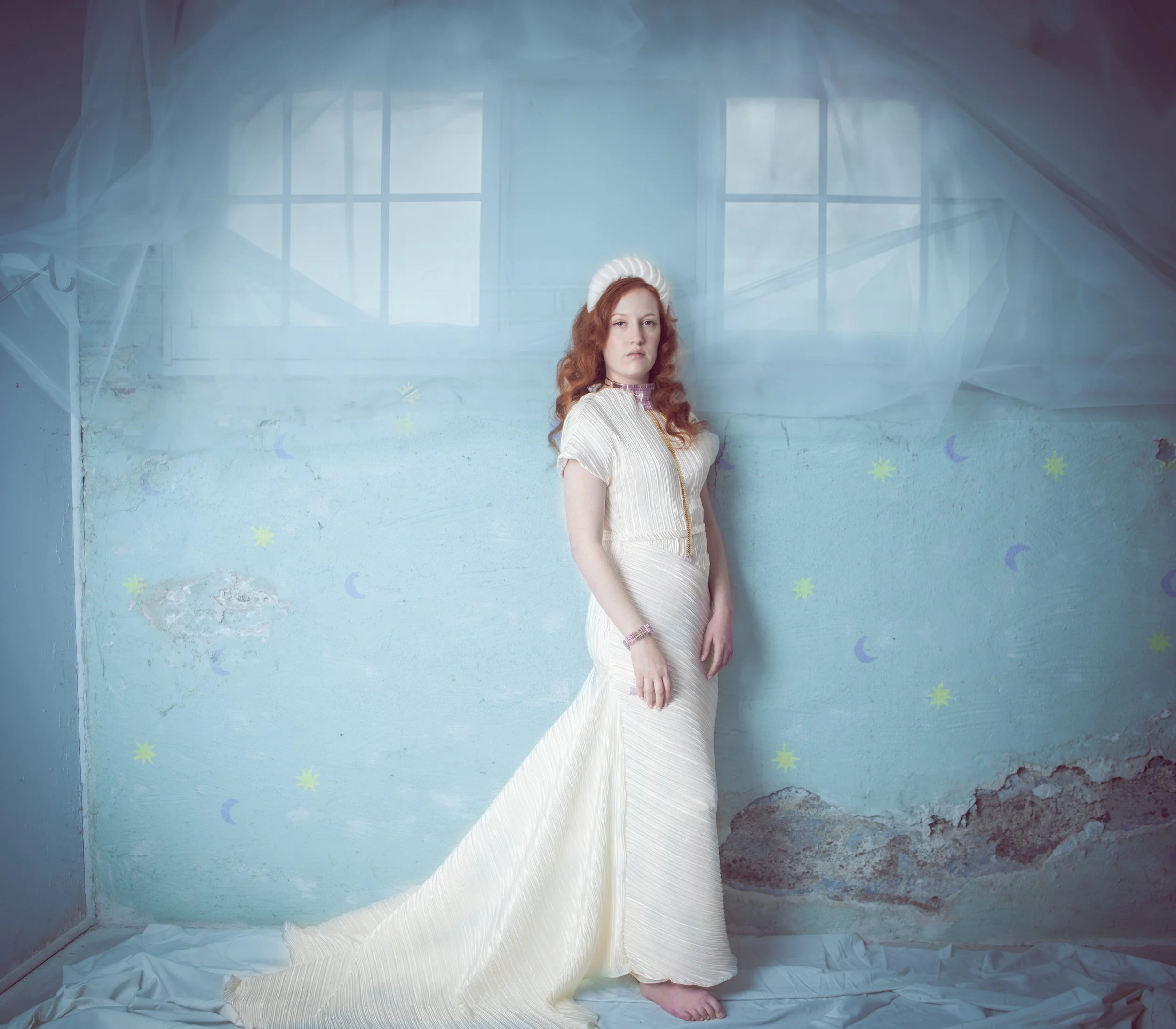
The shoot you see throughout this post became "My Star and Moon," a published editorial in Artells Magazine. What started as a creative conversation between Sara Mrad's Impressionist couture and my Tamar collection found its way into print, styled by Marie Margot Couture, photographed by E J Carr, and directed by Jani Duncan Smith, with Reilly Blake bringing it all to life against a hand-painted celestial backdrop.
Every artist on this team read the same brief and brought their own craft language to it. The pleated gown, the fur, the feathered headpieces, the celestial set, they all speak the same Impressionist softness the Tamar pieces were built to carry. That coherence is not an accident. It is what happens when every maker in the room understands the assignment at the level of material and light, not just mood board.
View "My Star and Moon" in Artells Magazine →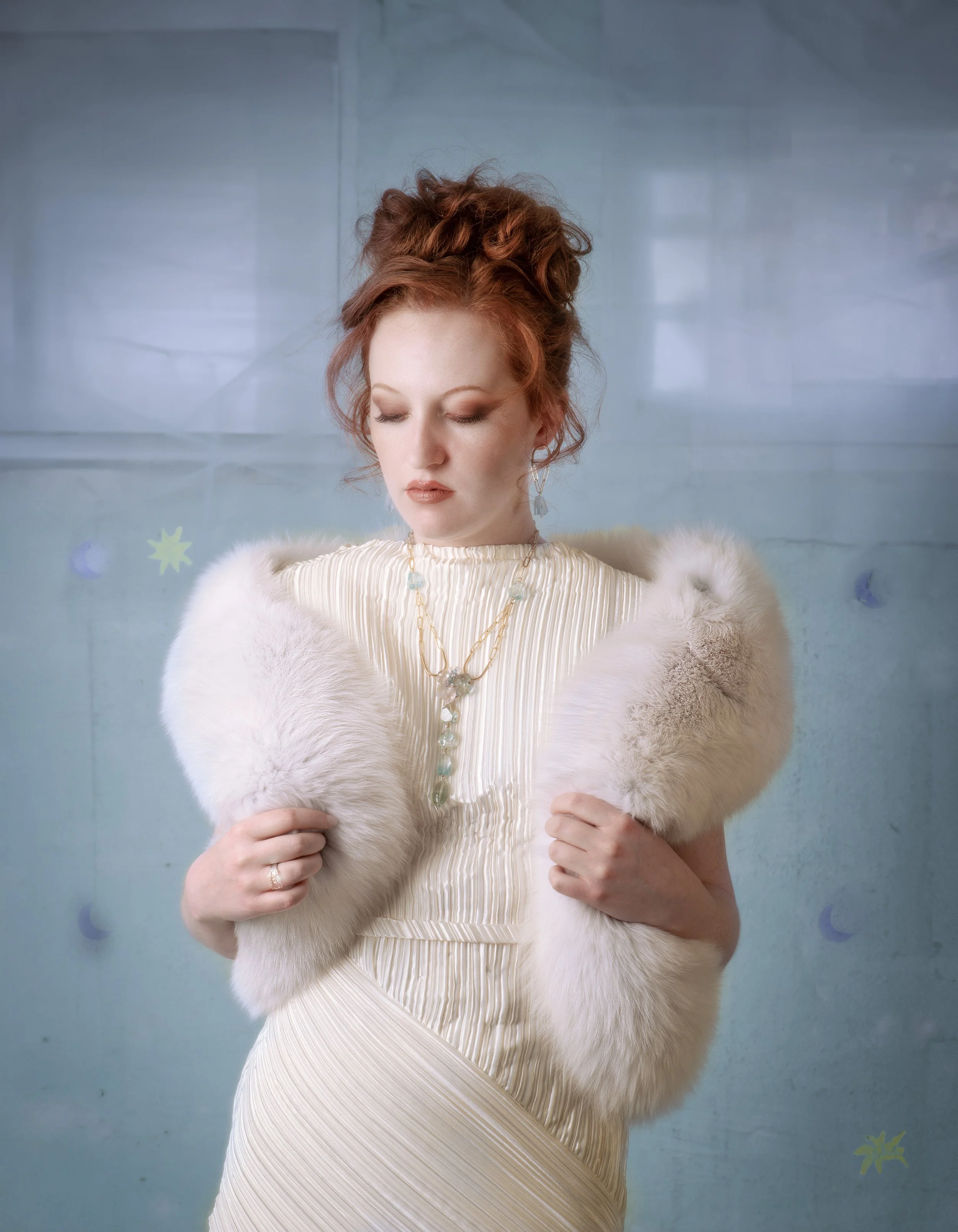
What Fleur de Lumière is
Sara Mrad is a Lebanese designer whose Spring 2025 Couture collection takes Monet's gardens as its source material, the water lilies, the wisteria, the late-Giverny saturation when the painter was nearly blind, and color was doing the work memory couldn't.
What's striking about her interpretation is the discipline. Couture-trained beadwork is by nature additive, bead by bead, one stitch at a time, until the surface becomes the painting. Mrad's restraint, when called for or maximalism to convey aesthetic impact, is what makes it Impressionist rather than just floral. Intention is the point. The eye has to do some of the work.
What Tamar shares with it
When I designed the Tamar collection, I was not thinking about Sara Mrad; I'd never seen her work. But we were drinking from the same well.
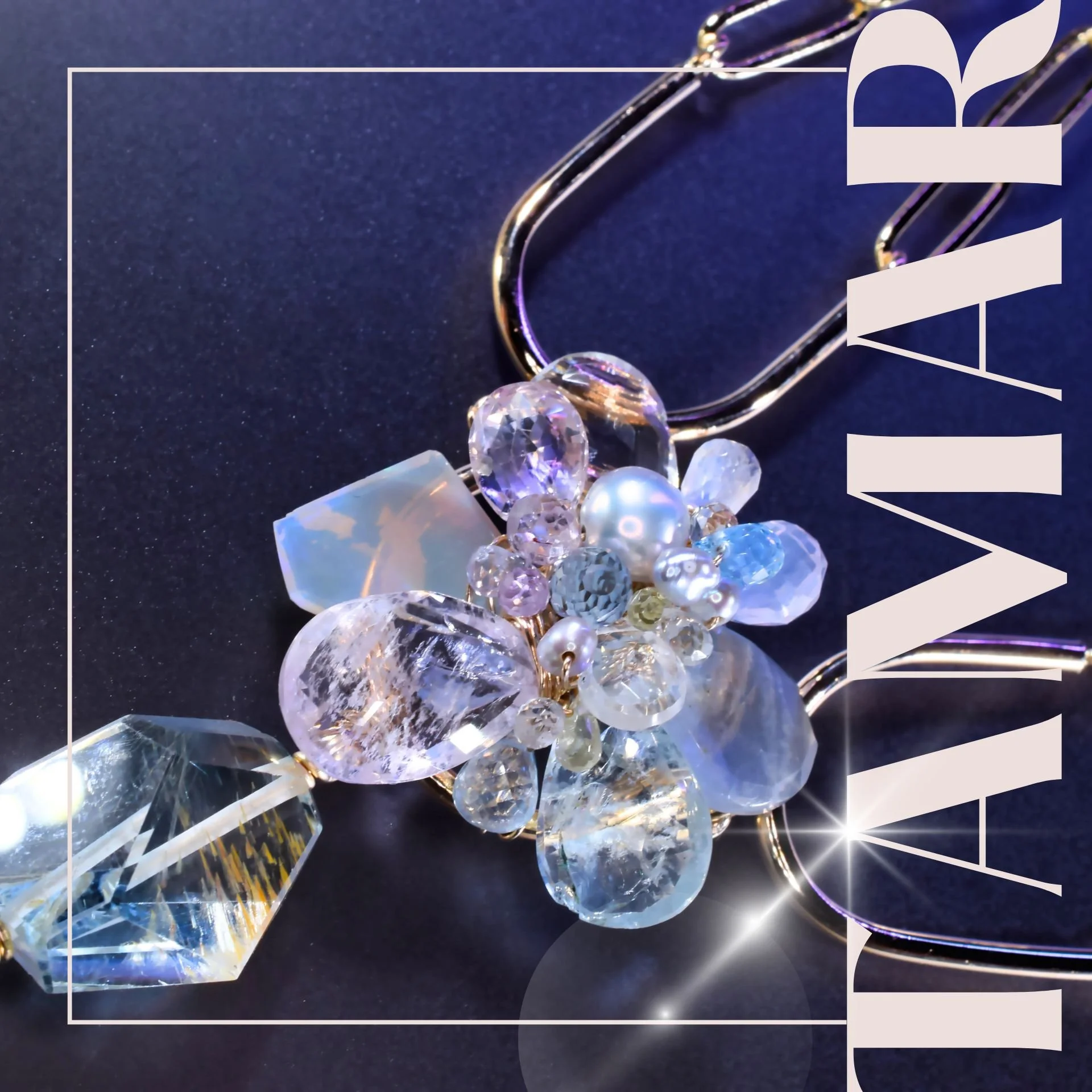
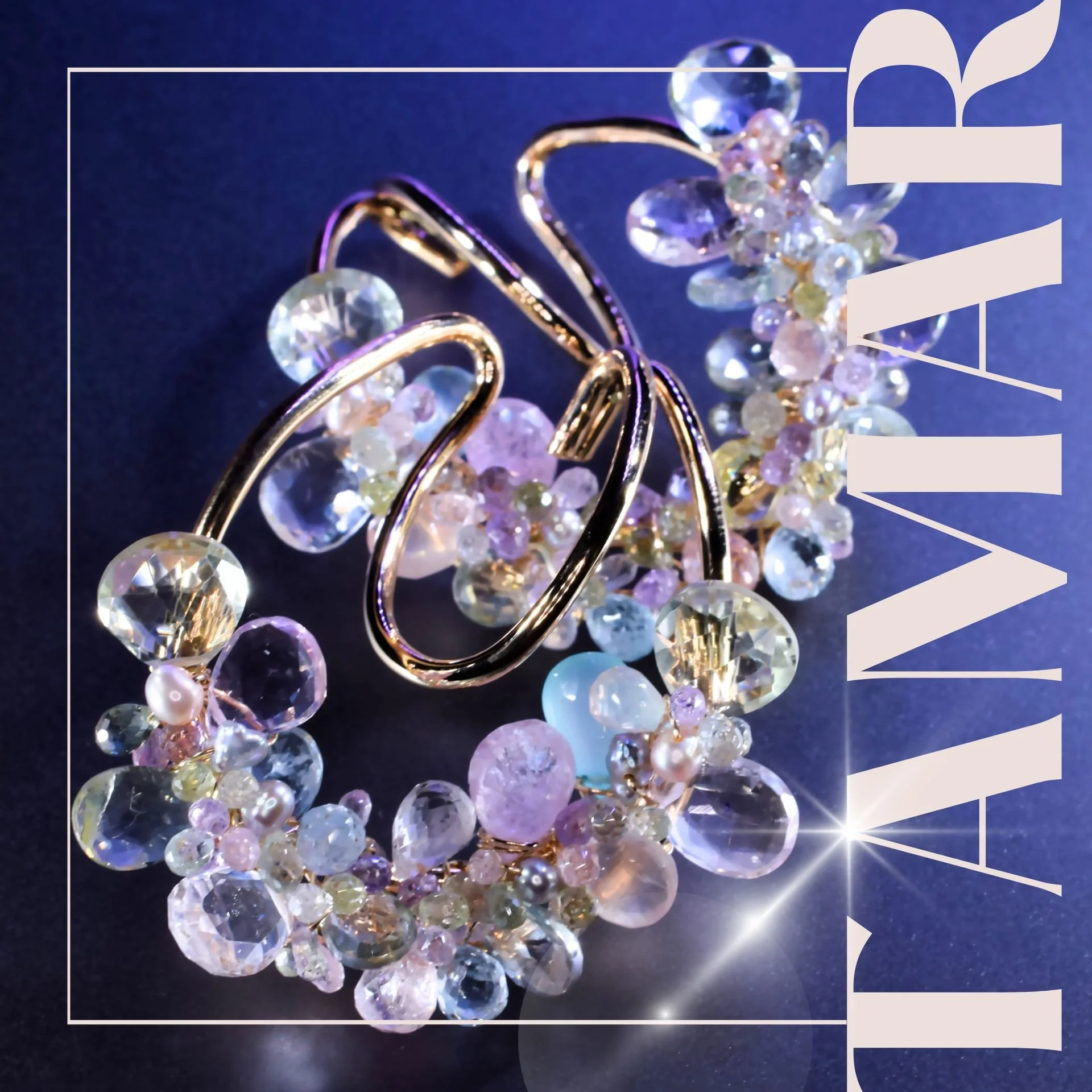
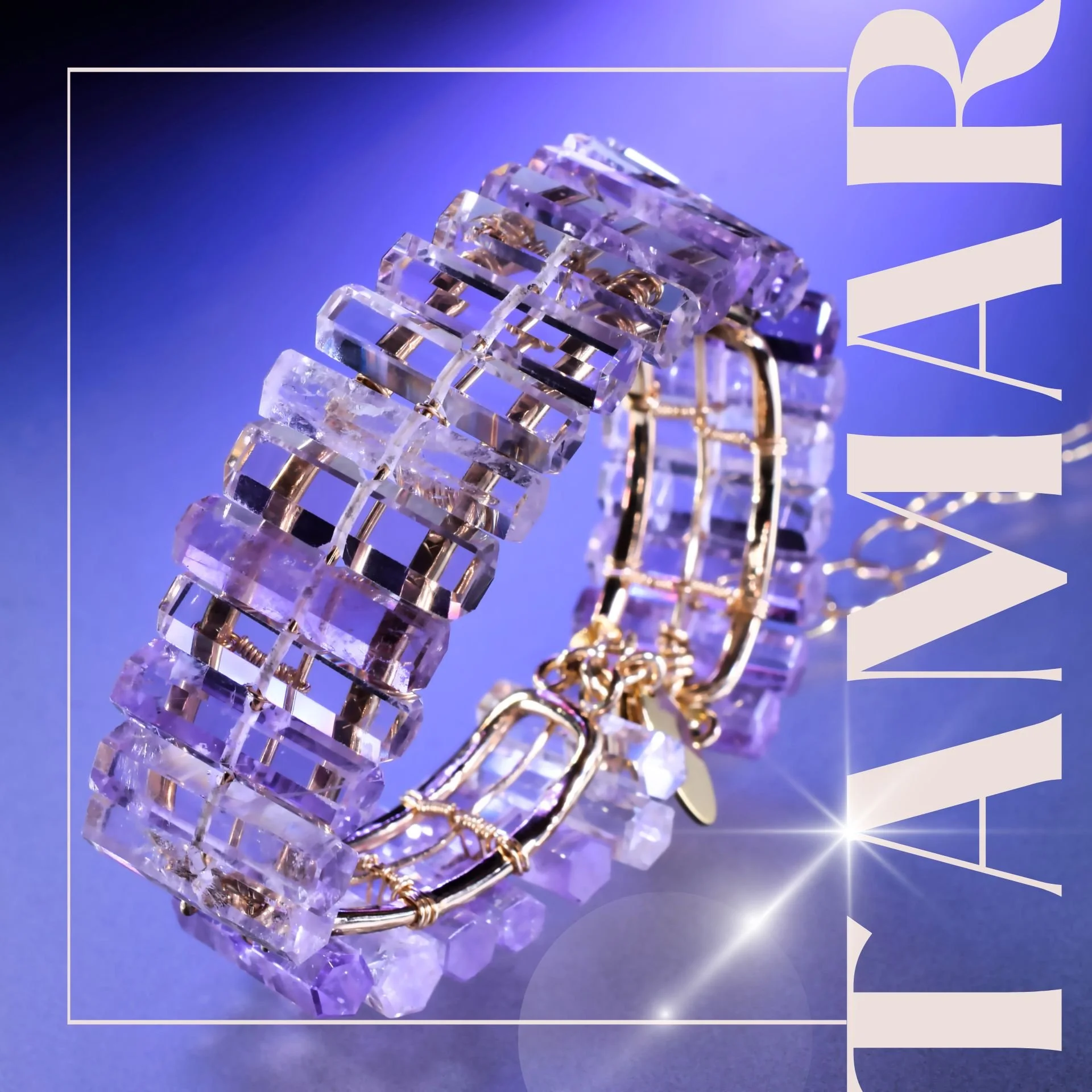
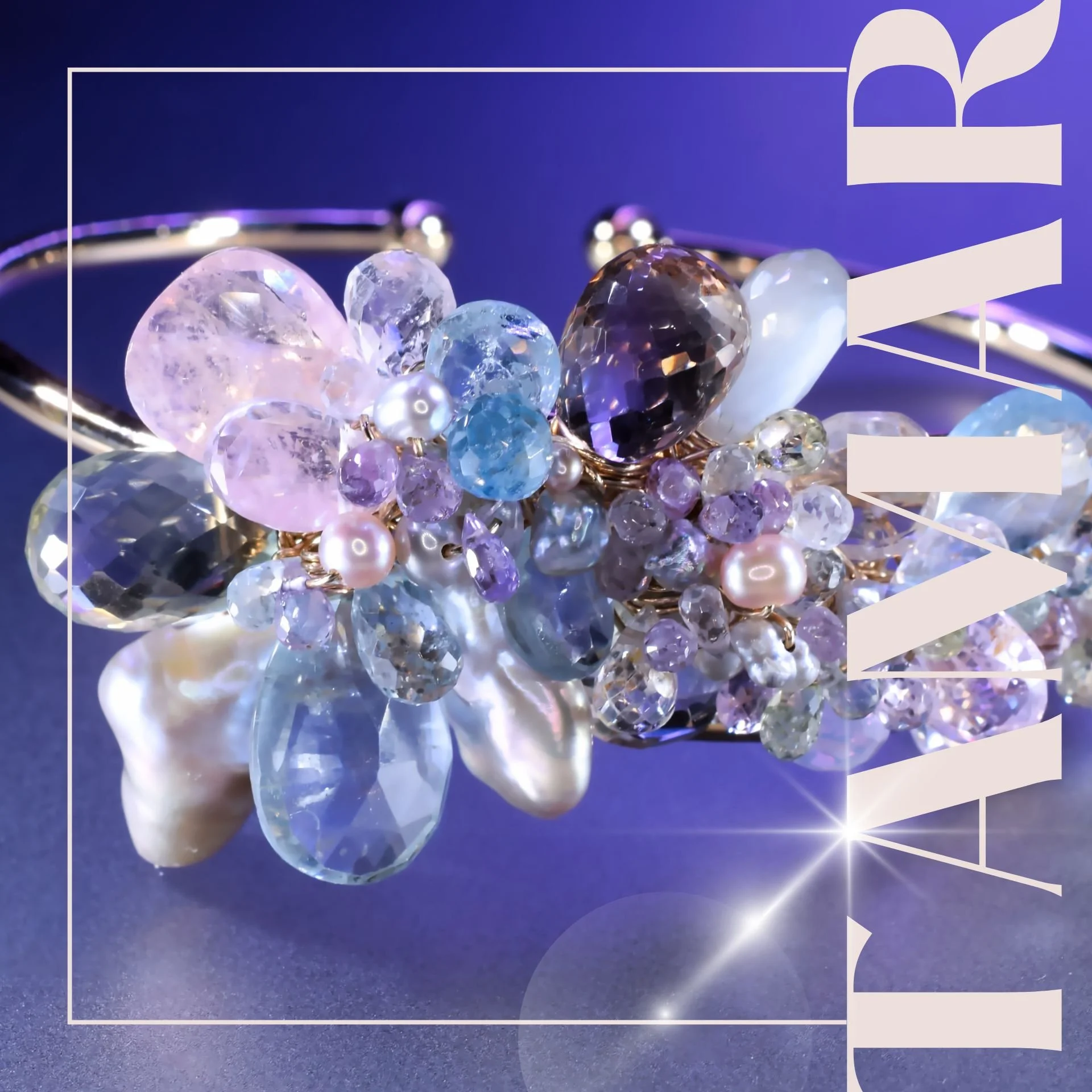
Tamar started with a question: how do you capture the essence of the floral without it reading as jewelry pretending to be a flower? I wanted petals that suggested rather than depicted. Stones that weren't trying to be the bloom but to be the way the bloom looked at dawn — pearled, watercolored, soft at the edge. That meant choosing aquamarine over diamond, moonstone paired with softly colored sapphires, accented by freshwater and Akoya pearls. All three have the quality of being lit from within rather than reflecting light.
When I see Mrad's beading, I recognize that same choice. She isn't trying to make a beaded flower. She's trying to make the look of a flower at a particular hour, in a particular slant of garden light. The beadwork isn't decoration. It's the medium as the brushstroke.
That's the parallel I'd not have spotted from a distance. Up close, it's the same eye.
Where the work diverges: cold connection
Here's where the fabrication languages actually diverge and where my training shows.
Couture textile, the kind Mrad does, is inherently additive. You build a surface bead by bead, stitch by stitch, embellishment over embellishment. Heat is rarely the issue; needle and thread are. The craft accumulates.
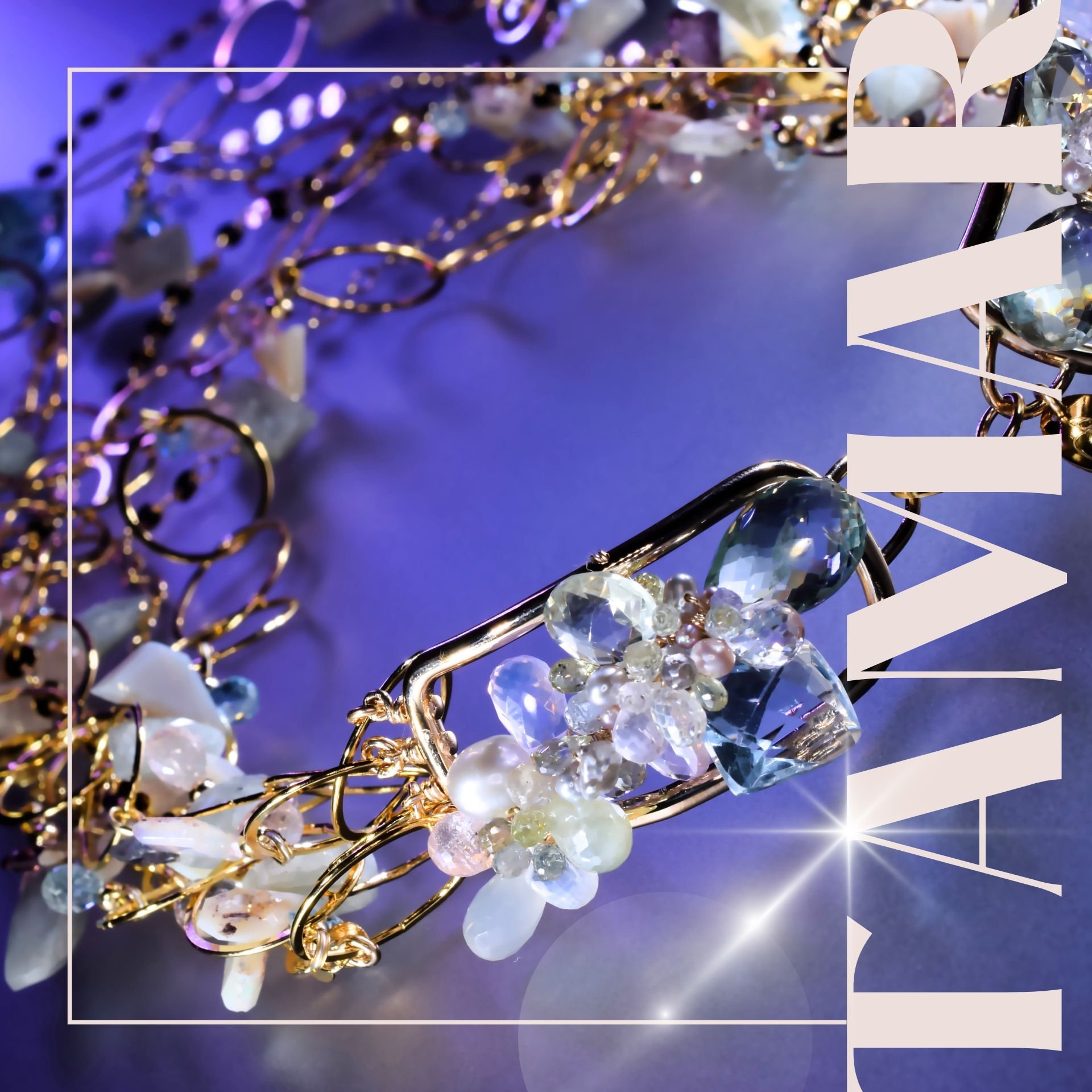
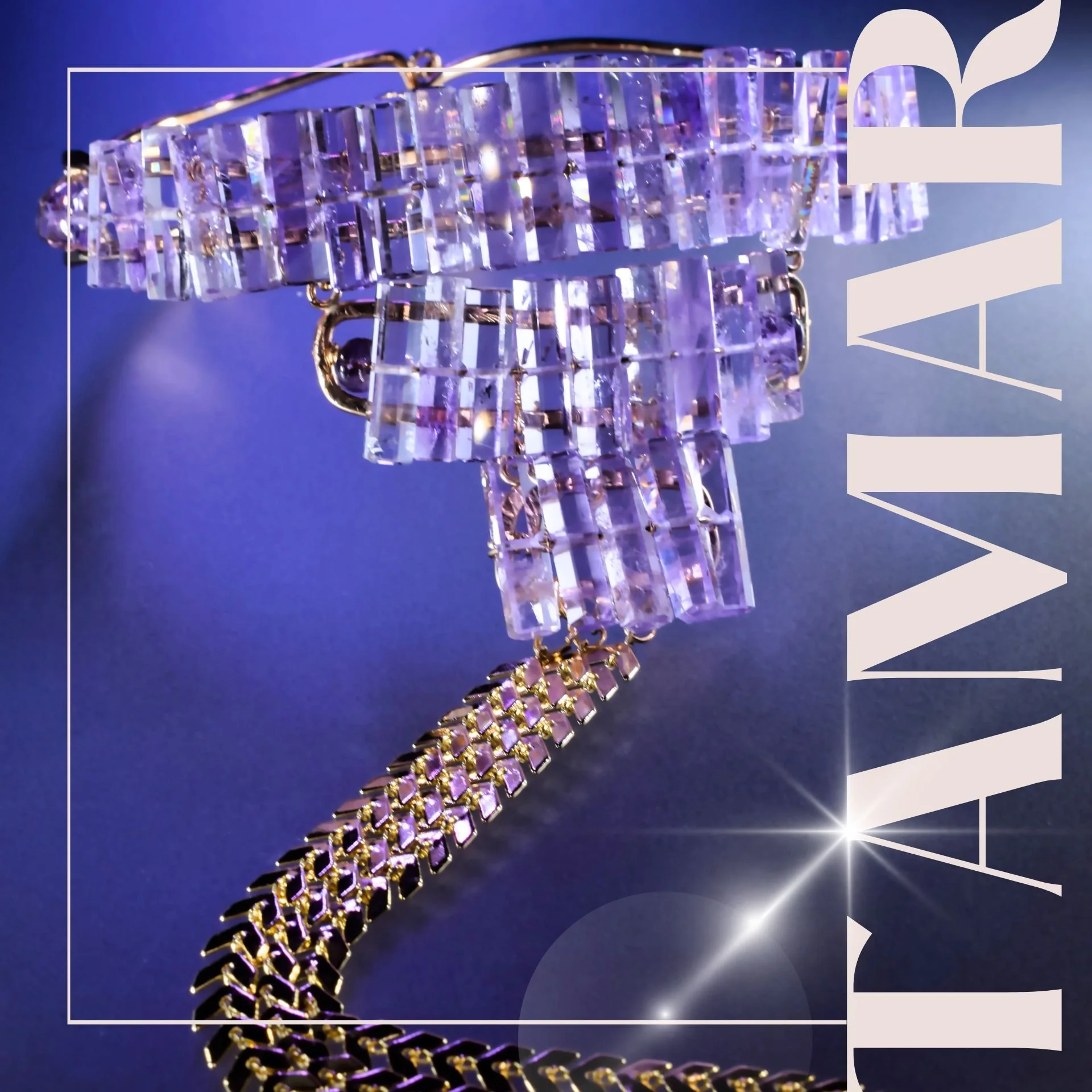
My Tamar work uses what I call cold connection — not the entire fabrication process, just the gemstone-assembly portion. I build pieces using wire wrapping, hand-baling, and beading using crimps and crimp covers. No heat at any stage when I’m building these intricate gemstone clusters. Heat would damage the stones, and the rest of the construction follows the same logic: every connection is hand-built, mechanical, visible. This is where I employ soldering and bench fabrication. This builds a unique foundation for integrating my gemstone clusters and ensures the entire design is completely novel. When I integrate a commercial chain into a piece, I embed it so deeply through wire wrap and bail work that it becomes unrecognizable as a stock element.
The process: each stone arrives pre-drilled by the lapidary who cut and polished it. Sometimes I have to widen that hole with a diamond-bit drill so the wire I'm wrapping with can pass through cleanly. Then I wrap. One stone, one decision, one knot at a time, building outward into a cluster that has to flow as a piece of design even though it's been assembled bead by bead. Hand-bailing chain, wrapping individual rondelle beads onto a chain to form a gemstone-beaded chain, is the same technique applied to chain construction.
It demands planning many moves ahead. You're committing each stone's placement before you've placed the next twelve. There's no covering up your decisions afterward. Every wrap is visible. Every cluster shows the maker's hand.
Here's what didn't occur to me until I saw Mrad's work: she's doing the same thing. Single bead at a time. Pre-strung, pre-counted, planned ahead, no covering up the decisions. The unit is different (bead vs. gemstone), the medium is different (textile vs. metal+stone), but the fabrication philosophy is identical. Additive. Sequential. Hand-built. No casting, no molding, no shortcuts. The visible maker's hand is the point.
That's the parallel. Not just "Monet inspires both." The structural commitment to assembling a painterly surface one unit at a time, beadwork on couture, gemstone wire-wrap on Tamar, is the same craft language pointed at the same problem.
What this means for how to wear it
If you're someone who tracks couture, who knows the difference between a Mrad and an Iris van Herpen, between a Schiaparelli embroidery and a Valli gradient, then your jewelry is part of that vocabulary too. It's reading from the same library.
The Tamar collection isn't trying to compete with couture. It's trying to live alongside it. A Tamar piece worn with a watercolor silk dress, an Impressionist-era pearl strand, and soft palette eyeshadow, it reads as one continuous design language. Worn against a sharper, more architectural piece (a Saint Laurent suit, a Mugler corset), it provides a counter-note: softness against structure, Monet against Mondrian.
The point isn't matching. It's literacy. Fine jewelry done well is a paragraph in a longer sentence about how you see the world.
Featured Tamar pieces
Six current Tamar pieces that carry the most of what I'm describing here, and what is featured in my recent shoot.
When you want a piece in this language
If you've read this far and what you actually want is a Tamar-spirited piece made for you, that's the custom shop. Cold-connection cluster work takes time, and one-of-a-kind means I'm not pulling something off a shelf. We start with the stones, what speaks to you, what suits your hand, what sits inside your wardrobe's color story, and build outward, one wire-wrap at a time.
This isn't a bigger or smaller version of an existing piece. It's a piece that's only yours. Different from couture, where Mrad makes one dress and another version is essentially impossible, but rhymes with it. Bench-built, hand-set, made once.
A note on cross-references
I'm going to write more of these. The fashion world has spent a hundred years thinking about how decoration creates meaning, and most of fine jewelry hasn't caught up yet. I want to bring some of that vocabulary back into how we talk about pieces. If you have a designer or a collection you'd like me to read through this lens, send it to me. I'll add it to the queue.
Cold connection refers specifically to the gemstone-assembly portion of Andrea's process. Pre-drilled lapidary stones (sometimes widened with a diamond-bit drill) are wire-wrapped, hand-bailed, and secured with crimps and crimp covers into floral, pastel-textured clusters with no heat at the stone-assembly stage. Hand-bailing chain, wrapping individual rondelle beads onto a chain to form a gemstone-beaded chain, uses the same technique. The structural foundation of each piece is built separately using soldering and bench fabrication, creating a novel base for integrating the cold-connection gemstone clusters. When a commercial chain is incorporated, Andrea embeds it so deeply through wire wrap and bail work that it becomes unrecognizable as a stock element. Every connection in the cluster work is hand-built and visible; the maker's hand shows in every wrap.
Both designers draw on Monet's Impressionist palette and the technique of suggesting rather than depicting flowers. Both build painterly surfaces through additive single-unit assembly: Mrad bead by bead in textile and beadwork, Andrea stone by stone in wire-wrapped gemstone clusters. The aesthetic vocabulary, soft-edge color, watercolor light, restraint over depiction, is shared. The fabrication languages couldn't be more different on the surface, but the structural craft commitment is the same.
Yes, through the custom shop. Commissioned pieces are bench-built using cold-connection cluster work (no two are alike) and start with stone selection. Timeline depends on stone availability and design complexity; typical commissions take several weeks from first conversation to finished piece.
Stones lit from within rather than ones that reflect light outward. Aquamarine, moonstone, softly colored sapphires, and freshwater and Akoya pearls all carry that quality. These stones have a luminous, translucent character that reads as painterly rather than architectural. The Tamar lens favors translucence and softness over high-refraction brilliance.
Love What You See? Keep Finding Us.
Google now lets you choose your favorite sources so they show up labeled in AI search answers. If you enjoy discovering handcrafted gemstone jewelry here, add Andrea Li Designs and we'll be easier to find next time you search.
Add Andrea Li Designs as a Preferred SourceOne click. Works across Google Search, AI Overviews, and AI Mode.
- Jewelry Andrea Li Designs
- Gown Marie-Margot Couture
- Photographer E J Carr
- Headpieces Miss Victoria Regina
- Fur A. Tsagas Designs
- Creative Director itgirlscoots
- Ring Afterglow Vintage
- Hair Artist Darrel DeWitt
- Makeup Artist Megan Urmann
- Model Reilly Blake
- Model Donna Baldwin Agency