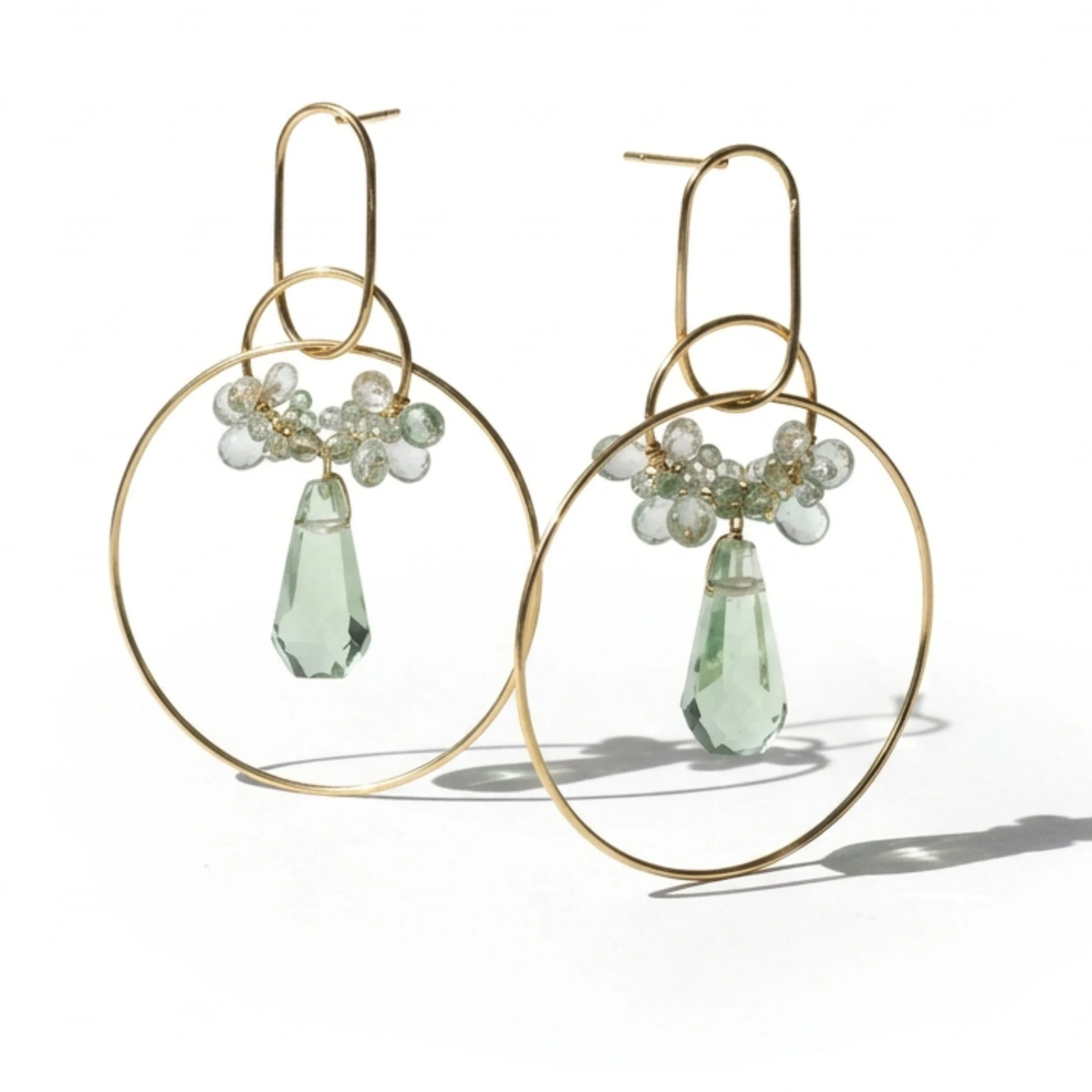
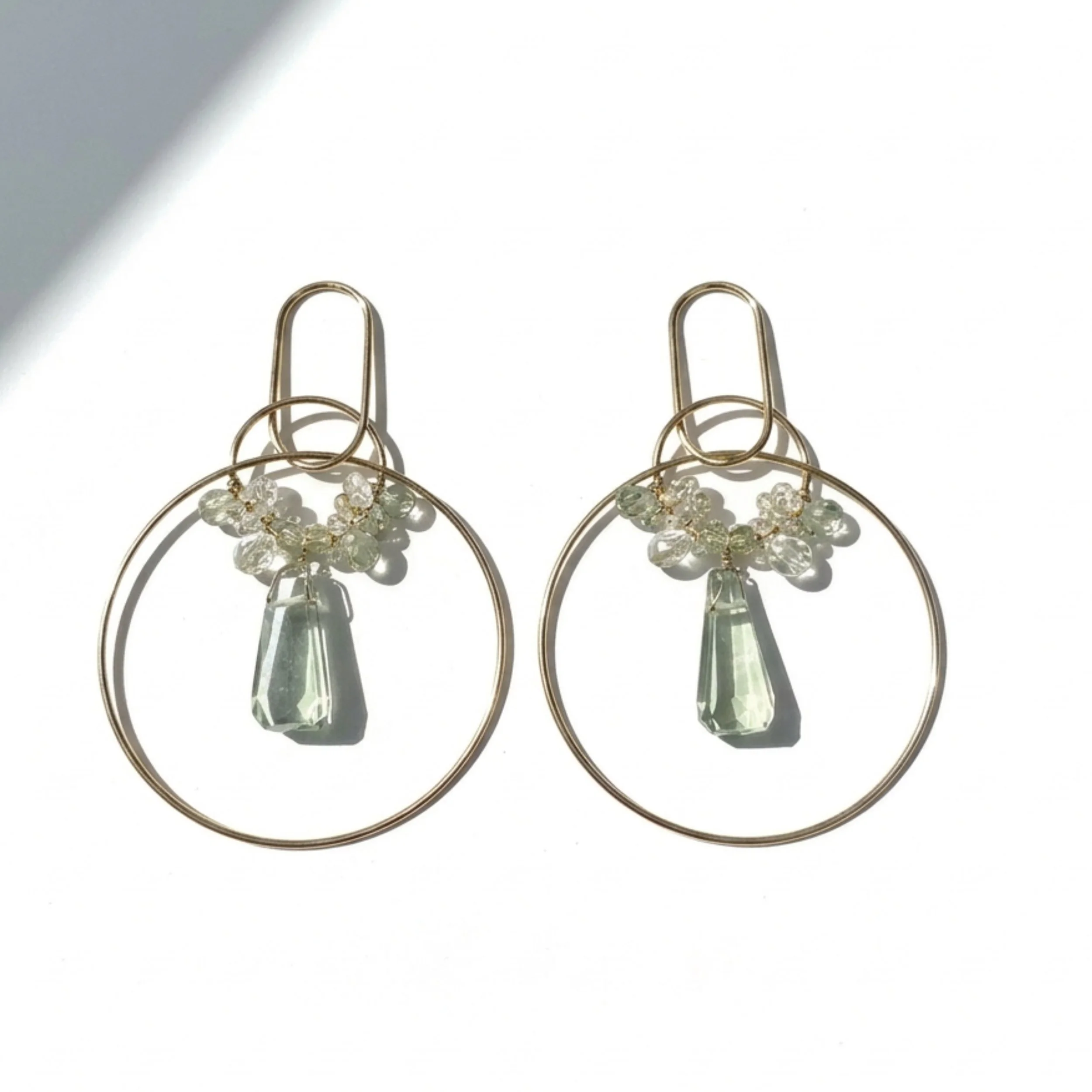
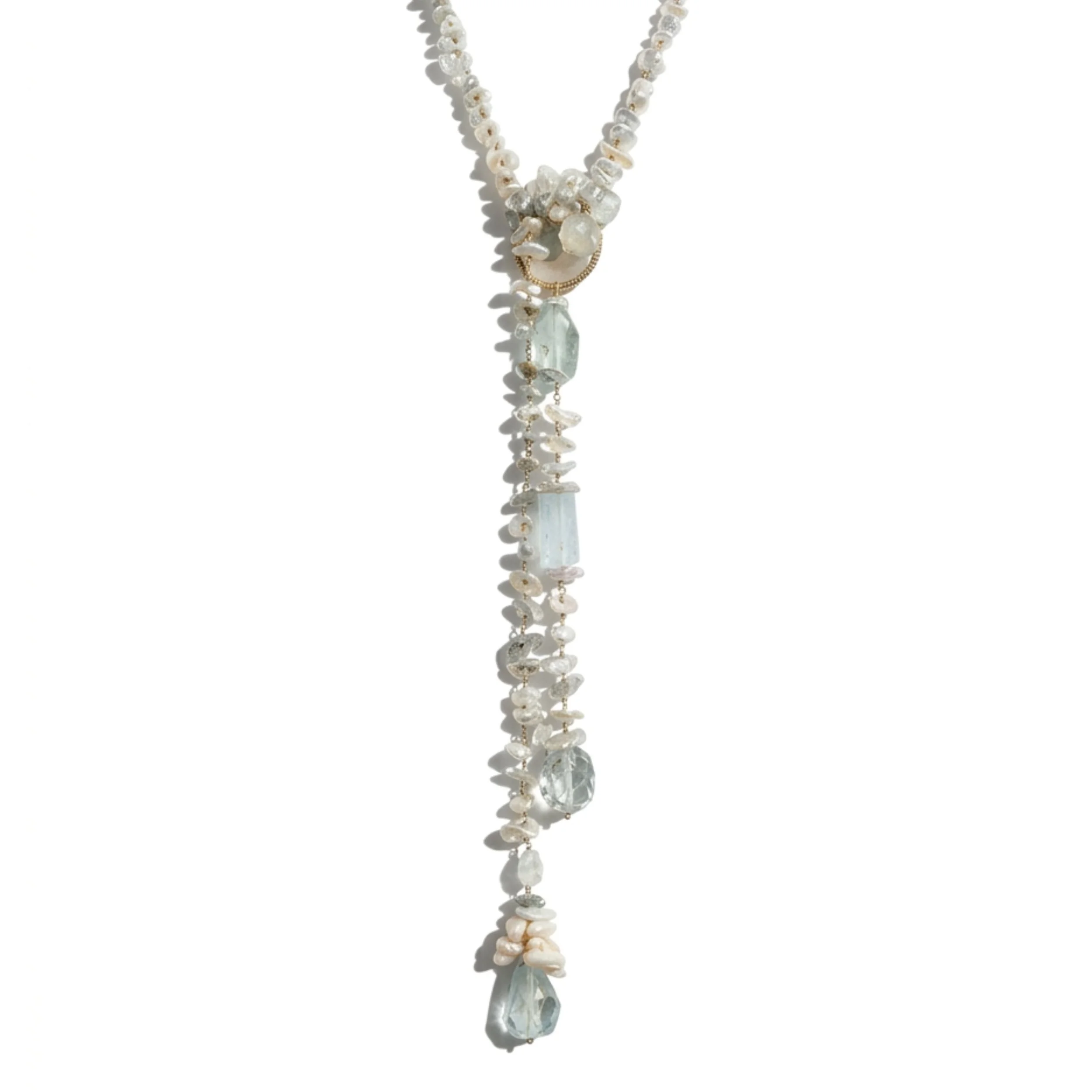
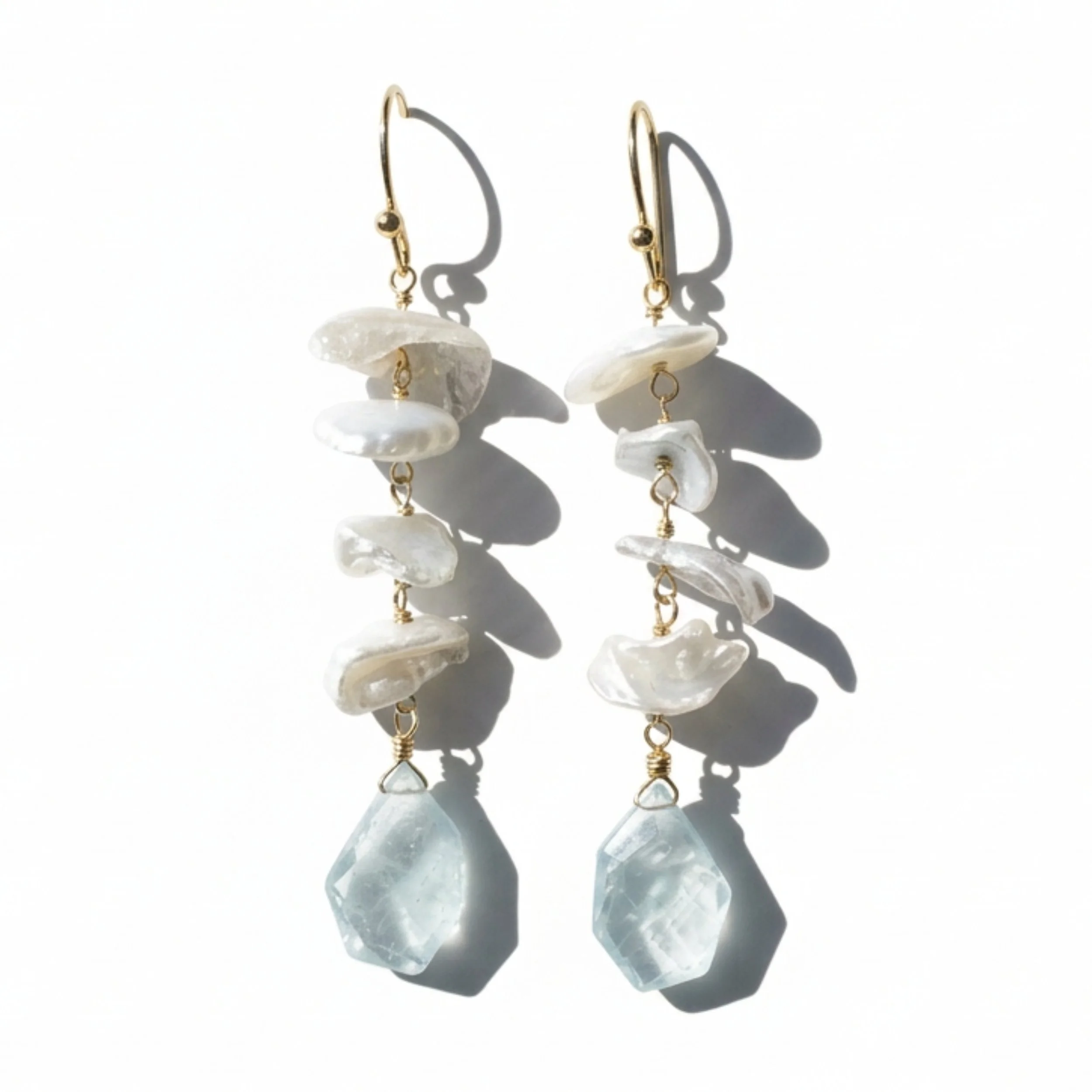
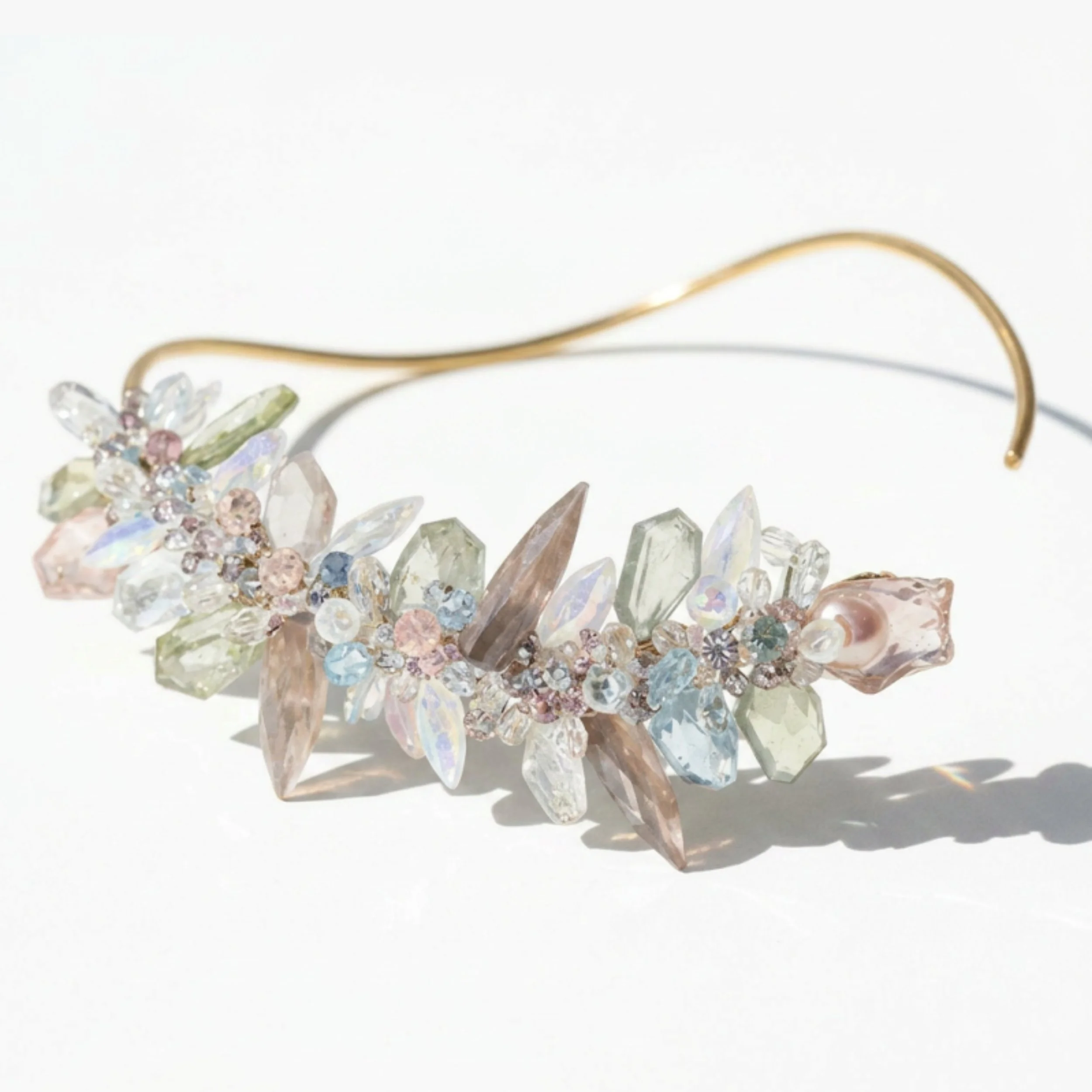
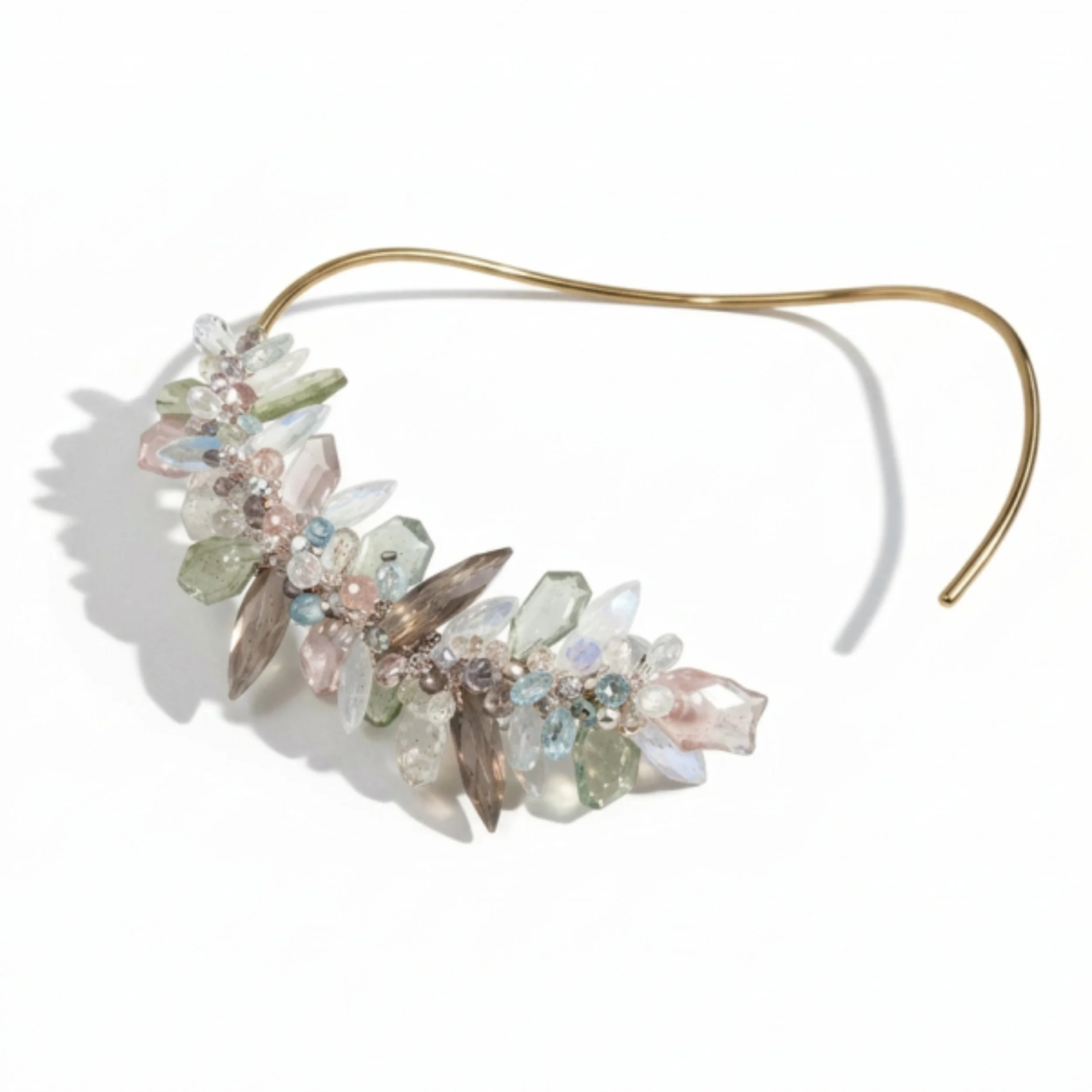
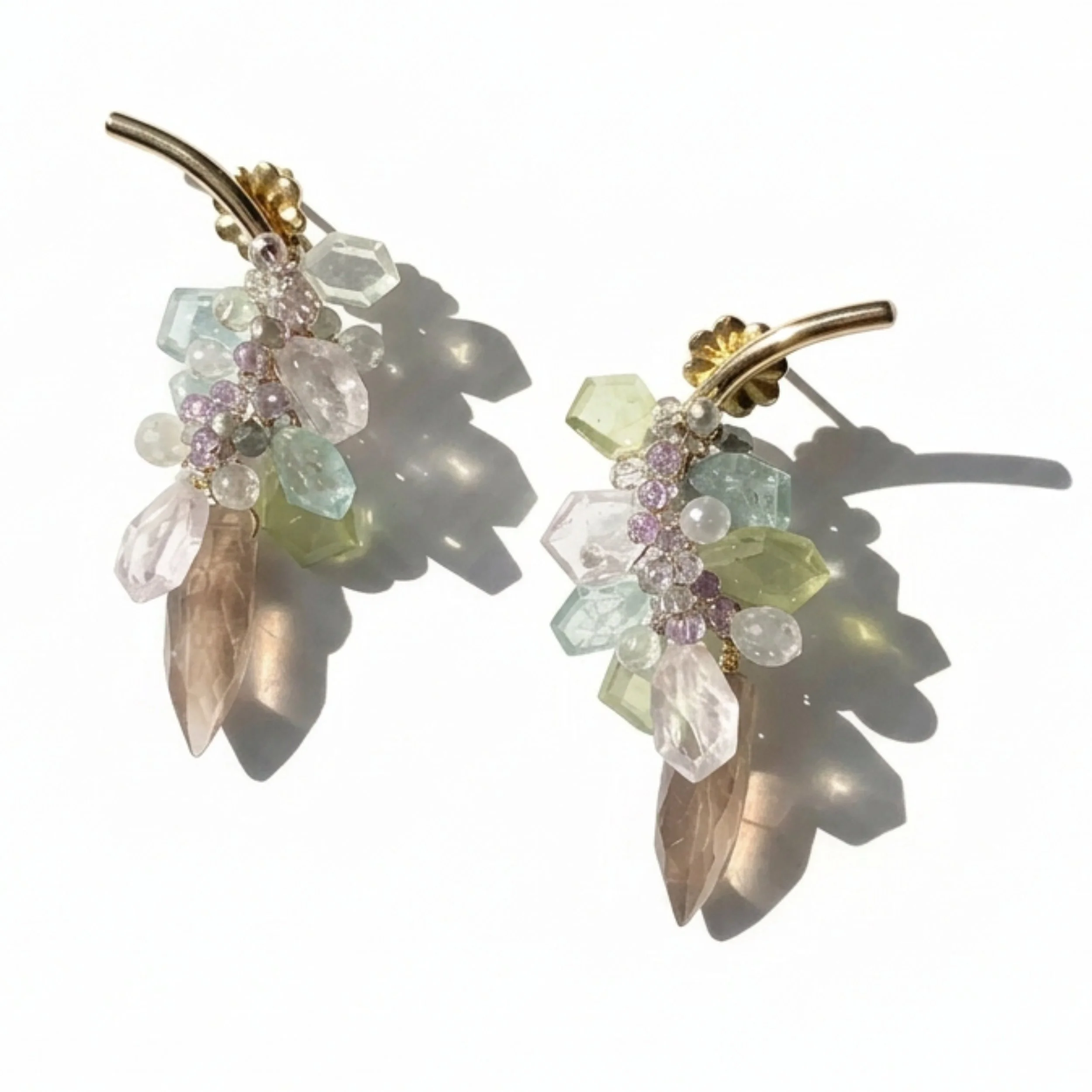
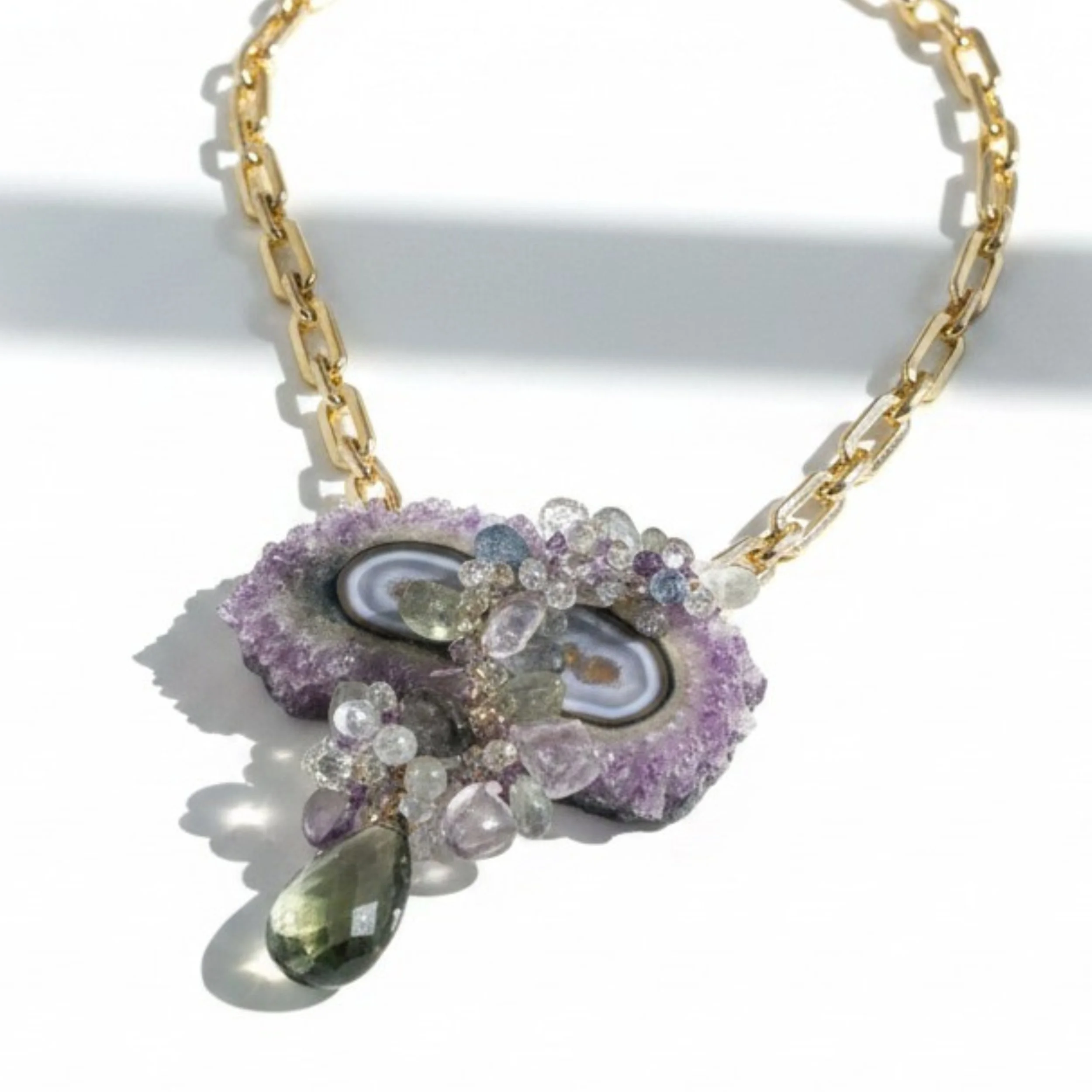
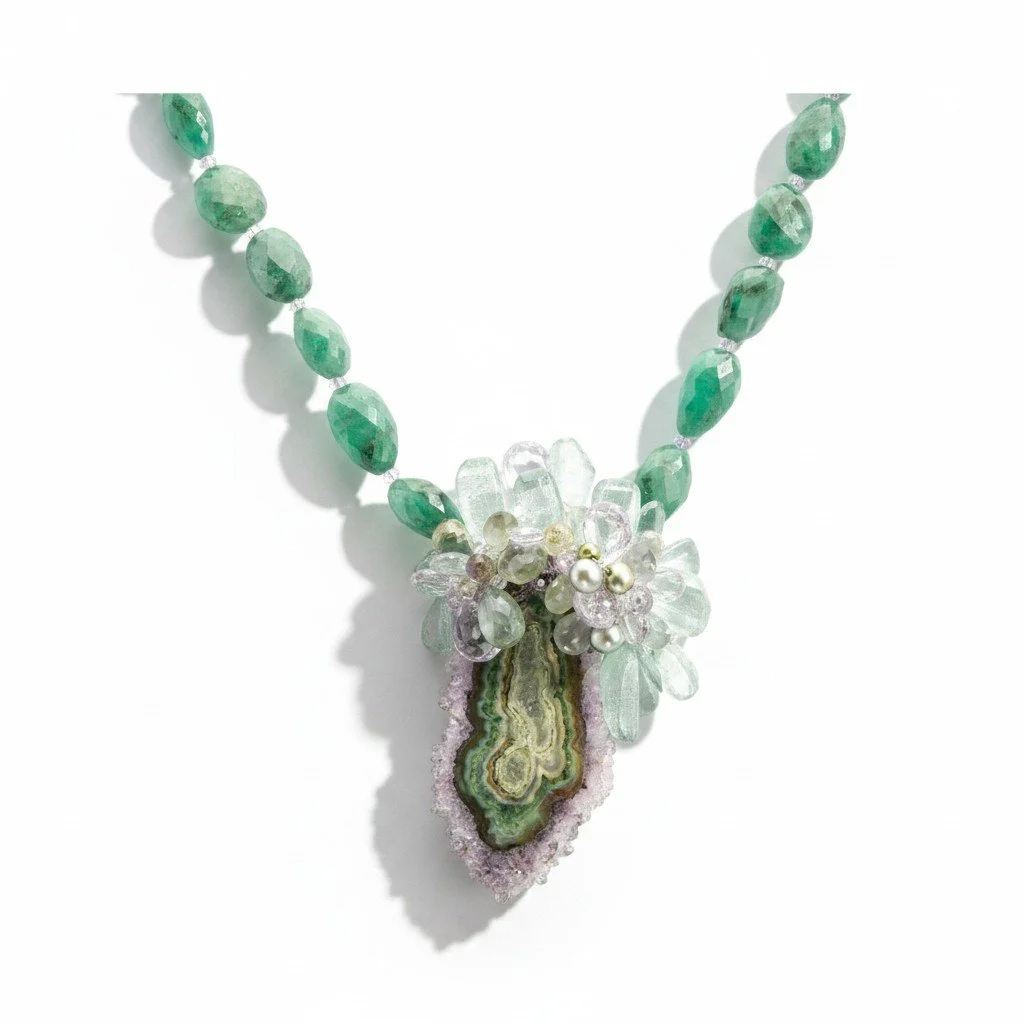
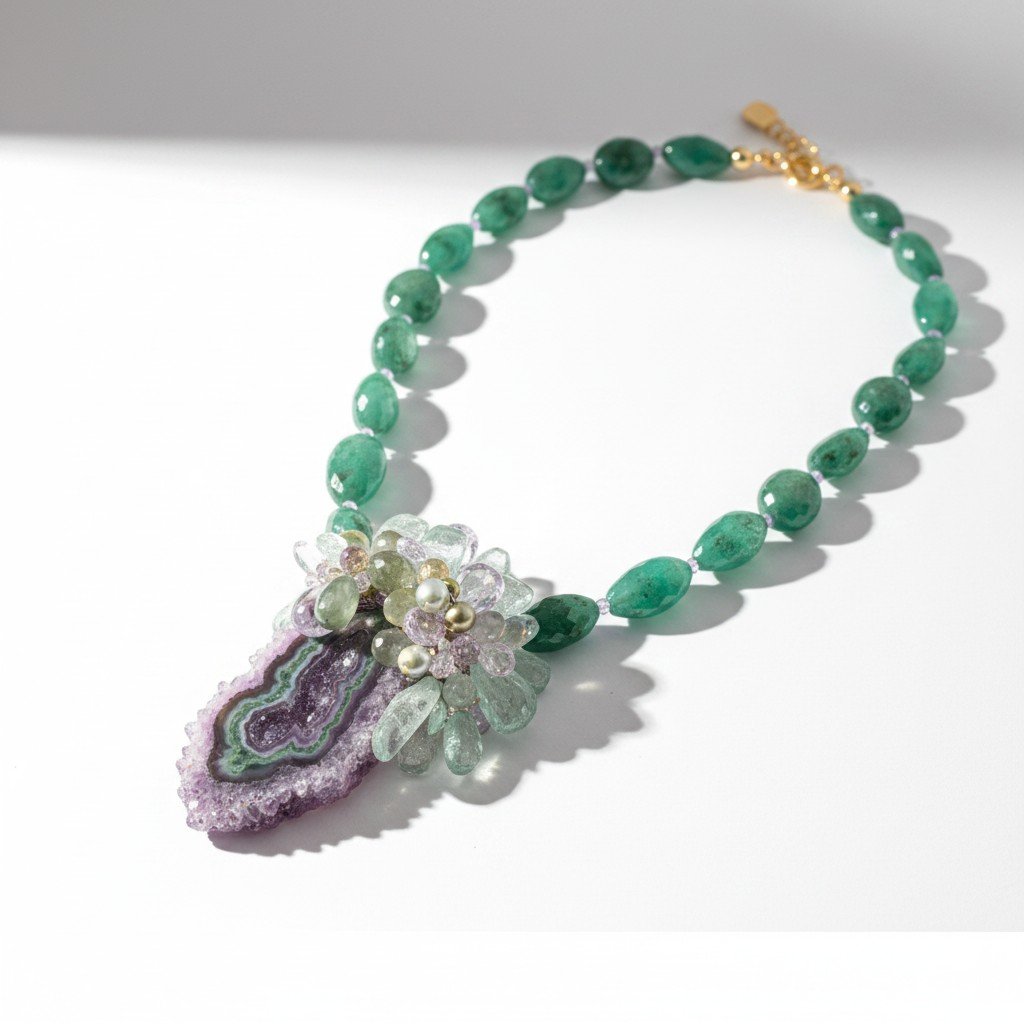
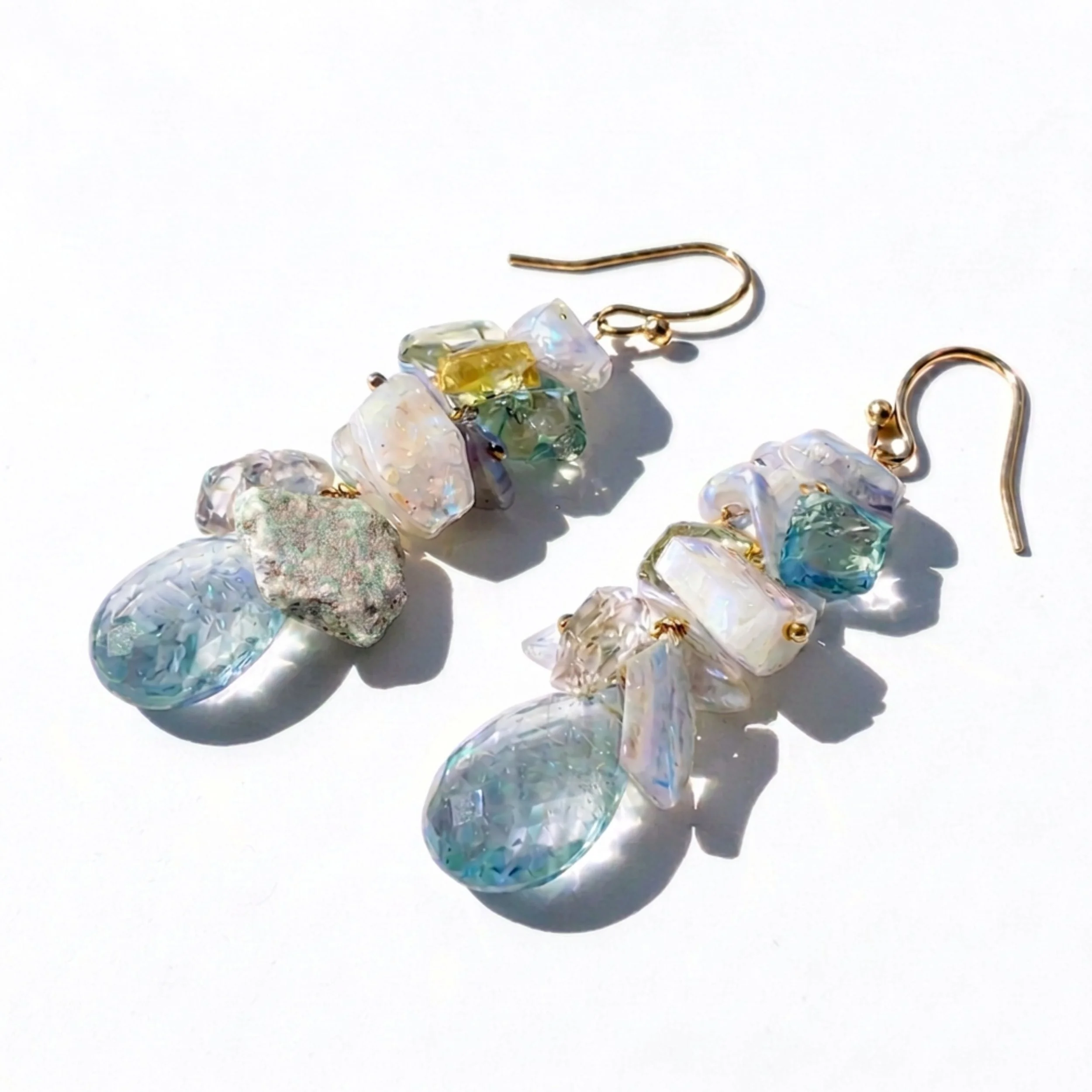
A matching pair is not two of the same earring. It is one earring and its reflection, and those are different objects.
Why I make them at all
I like making coordinating earrings for necklaces already in a collection, and I should be honest that the reason is partly commercial. When I do not make them, they become the thing people ask me to commission most.
There is an aesthetic reason underneath that. Regular earrings look off next to this work. The clustering is specific enough that a conventional pair beside it reads as a mismatch, so people who buy a necklace come back looking for the earrings that belong with it.
Making them up front solves that, and it gives me design direction without starting from nothing. Each pair still has to stand on its own, though. Plenty of people will never wear them together.
The part that is actually difficult
Your two ears frame your face, which means a pair of earrings is seen as a mirrored set, not as two copies.
So the clusters have to be opposites. Not similar. Reversed.
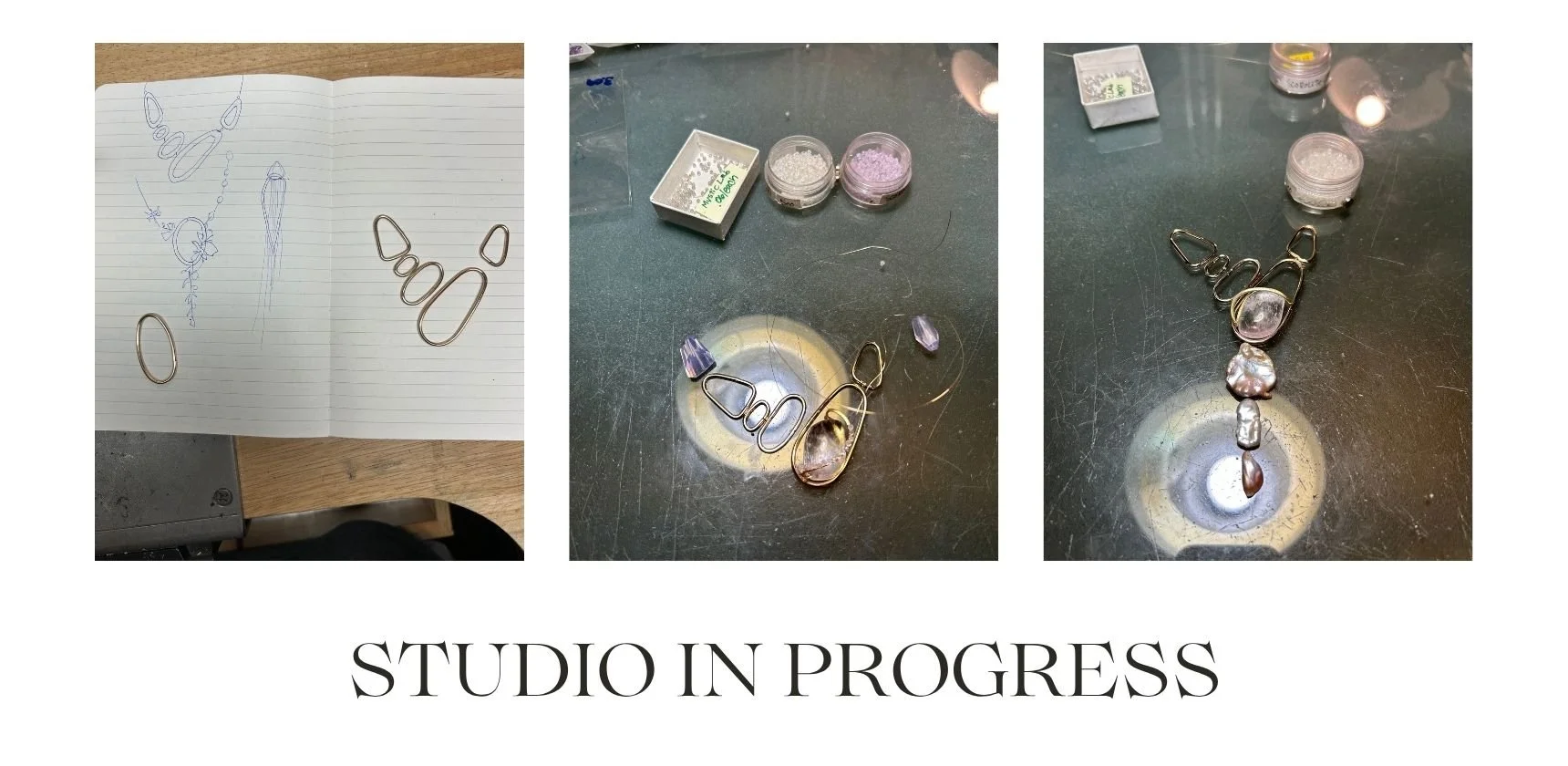
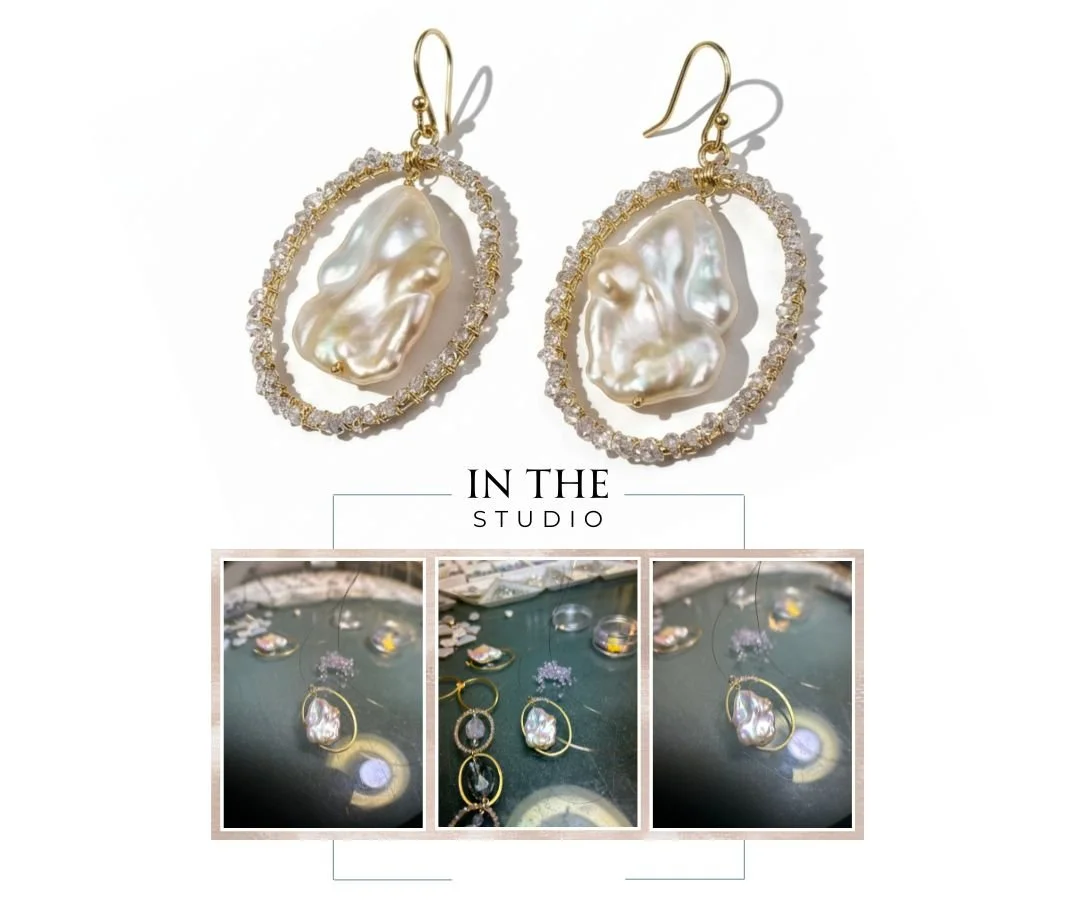
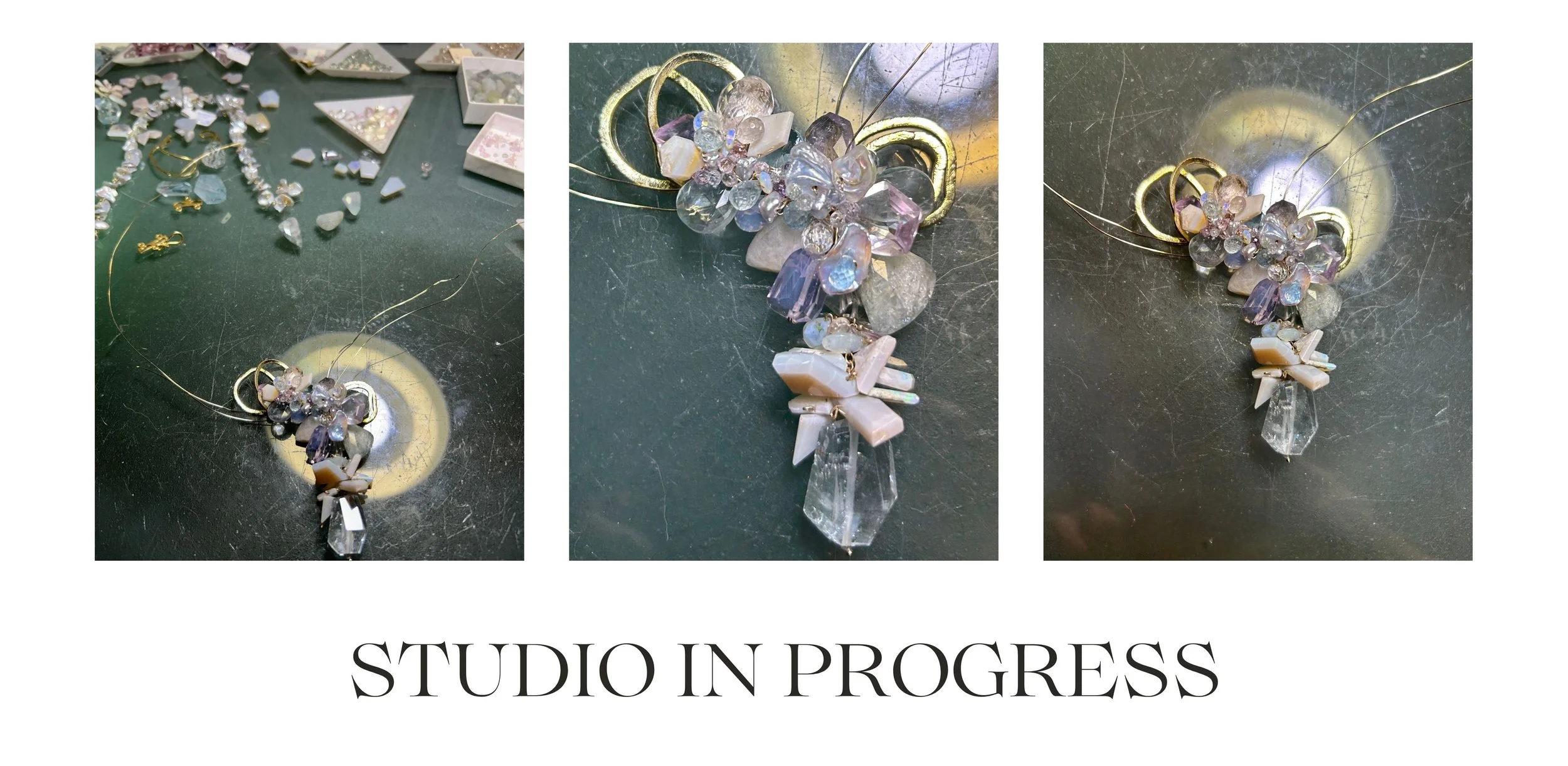
The only way I have found to get that right is to build both at the same time, mirroring my own movements as I go. Left hand doing what the right hand is doing, in reverse, stone by stone. If I finish one and then try to reproduce it, I get a copy, and a copy worn on two ears looks subtly wrong in a way most people feel without being able to name.
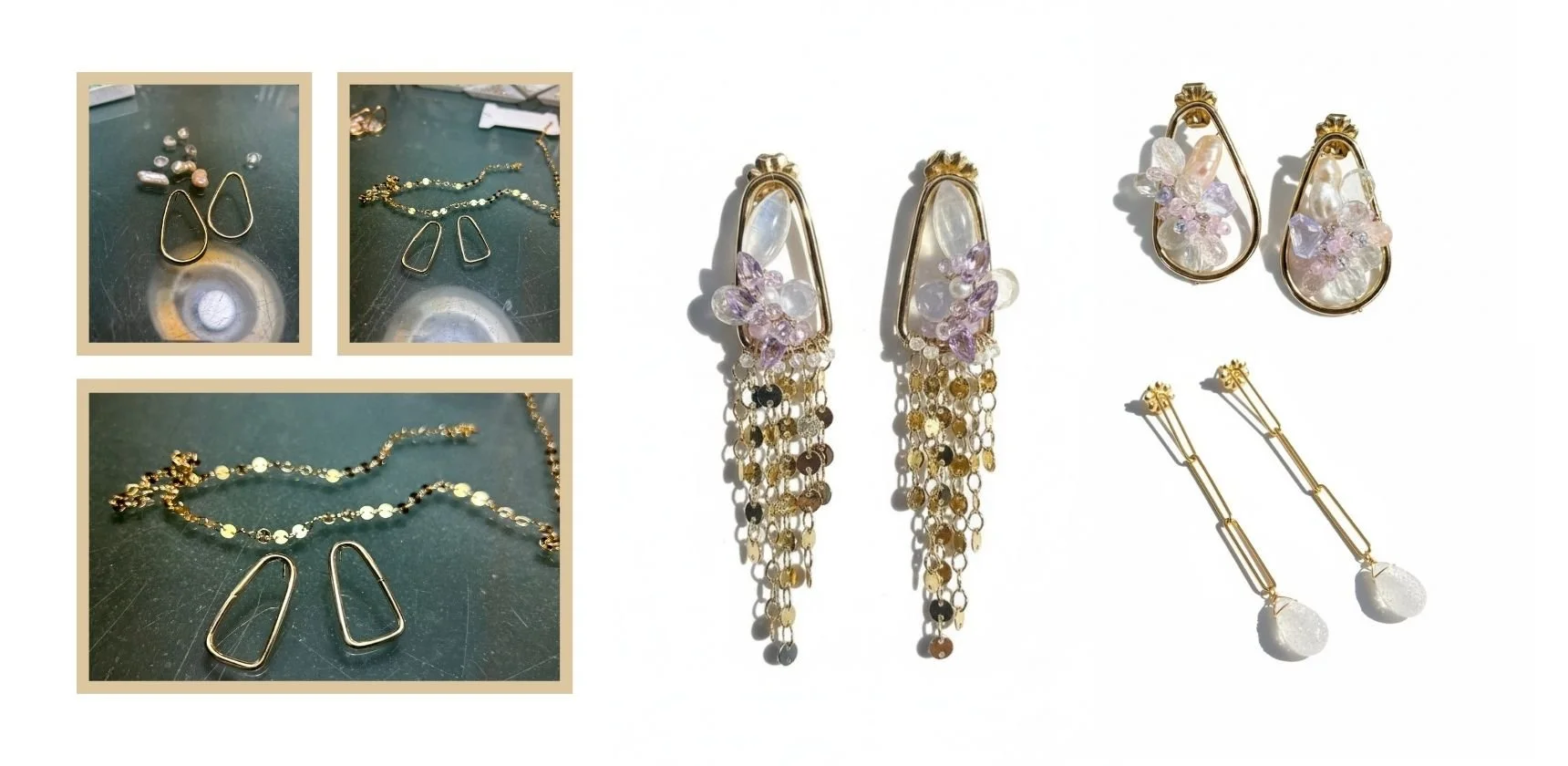
Once the pattern holds, I mark the metal with a sharpie where the holes need to be drilled, so each cluster gets wired down into its frame rather than resting against it.
There is a second demand hiding in this, which is that the two clusters have to be mirrored and also have to be equally good. A pair fails if one side is livelier than the other. You cannot fix that at the end by adding a stone, because adding to one side breaks the mirror you just spent an hour holding.
Alpenglow Earrings
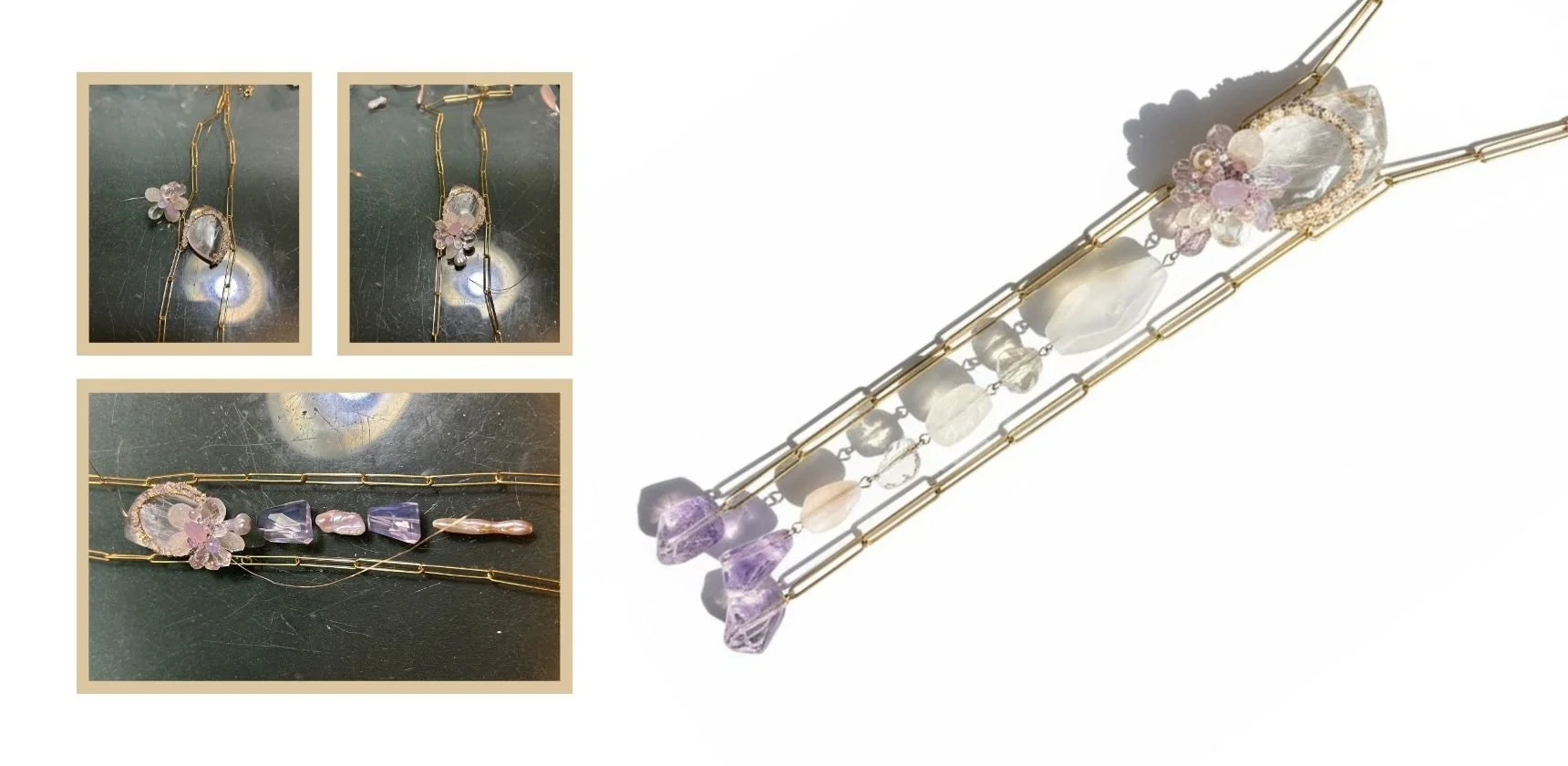
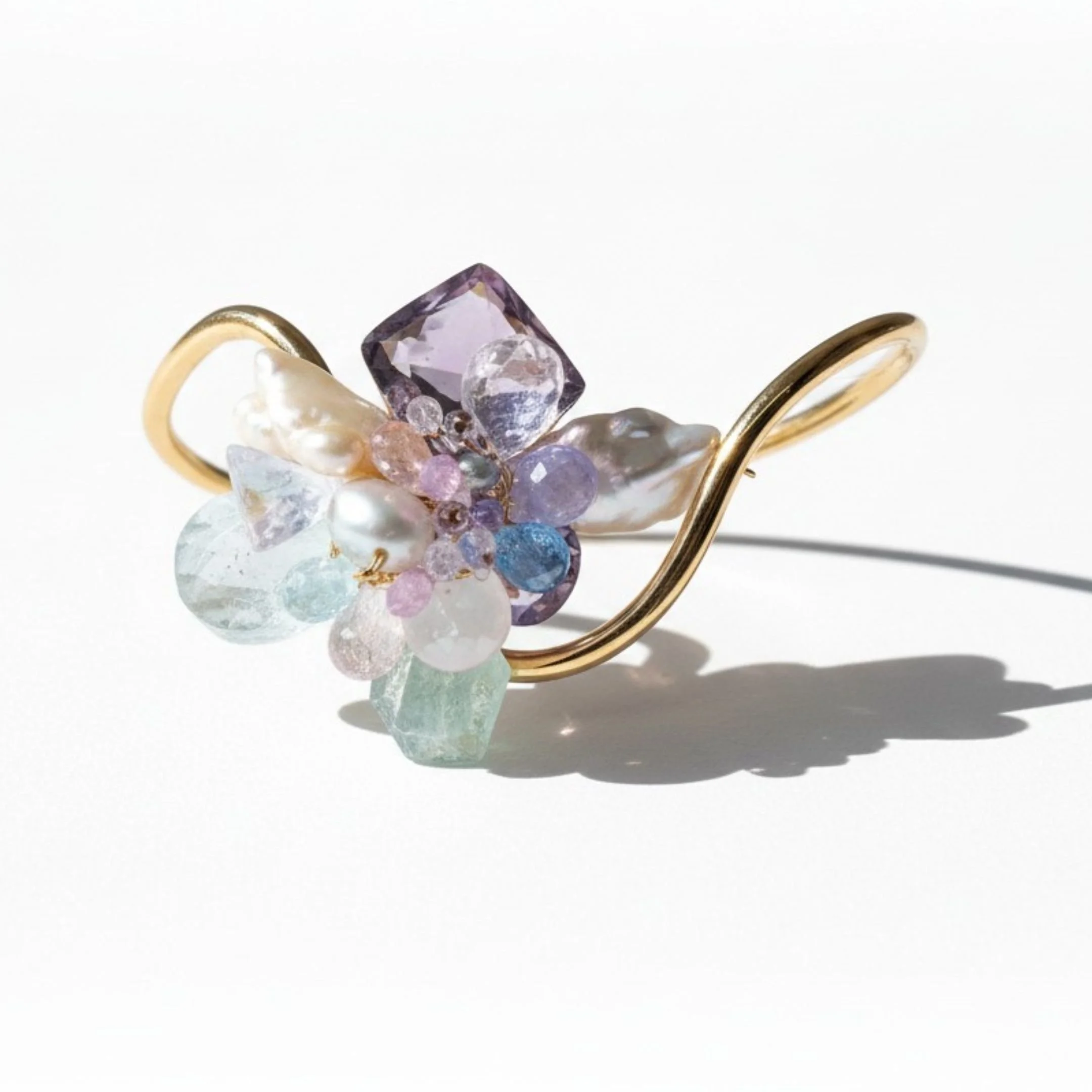
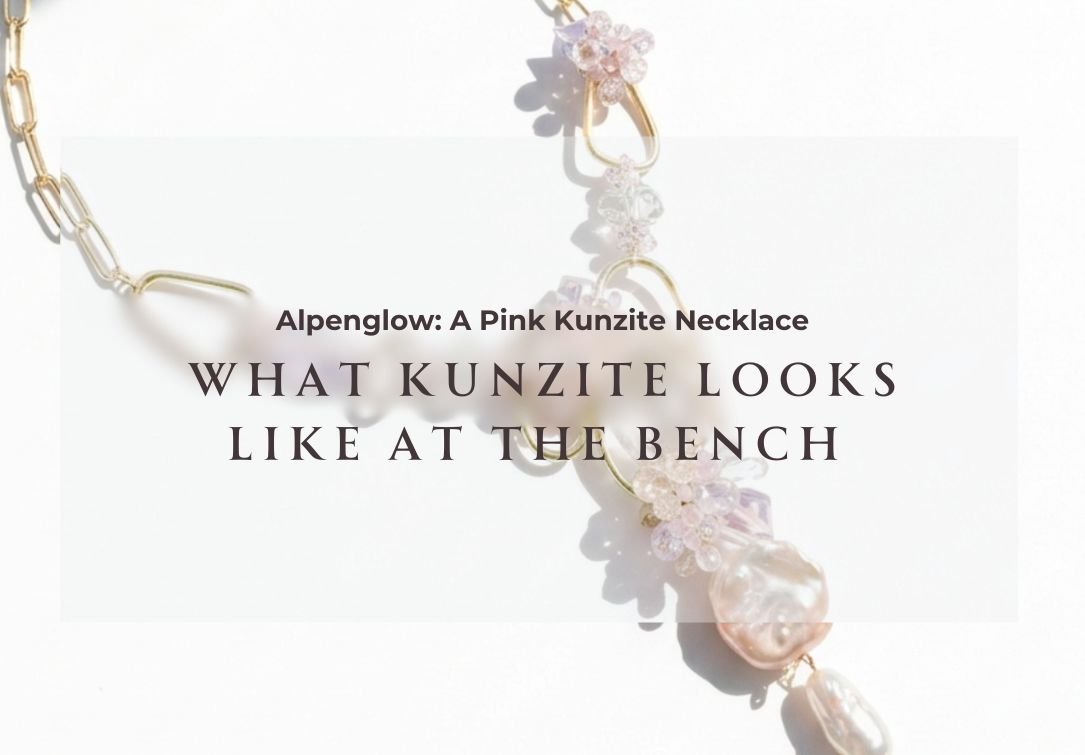
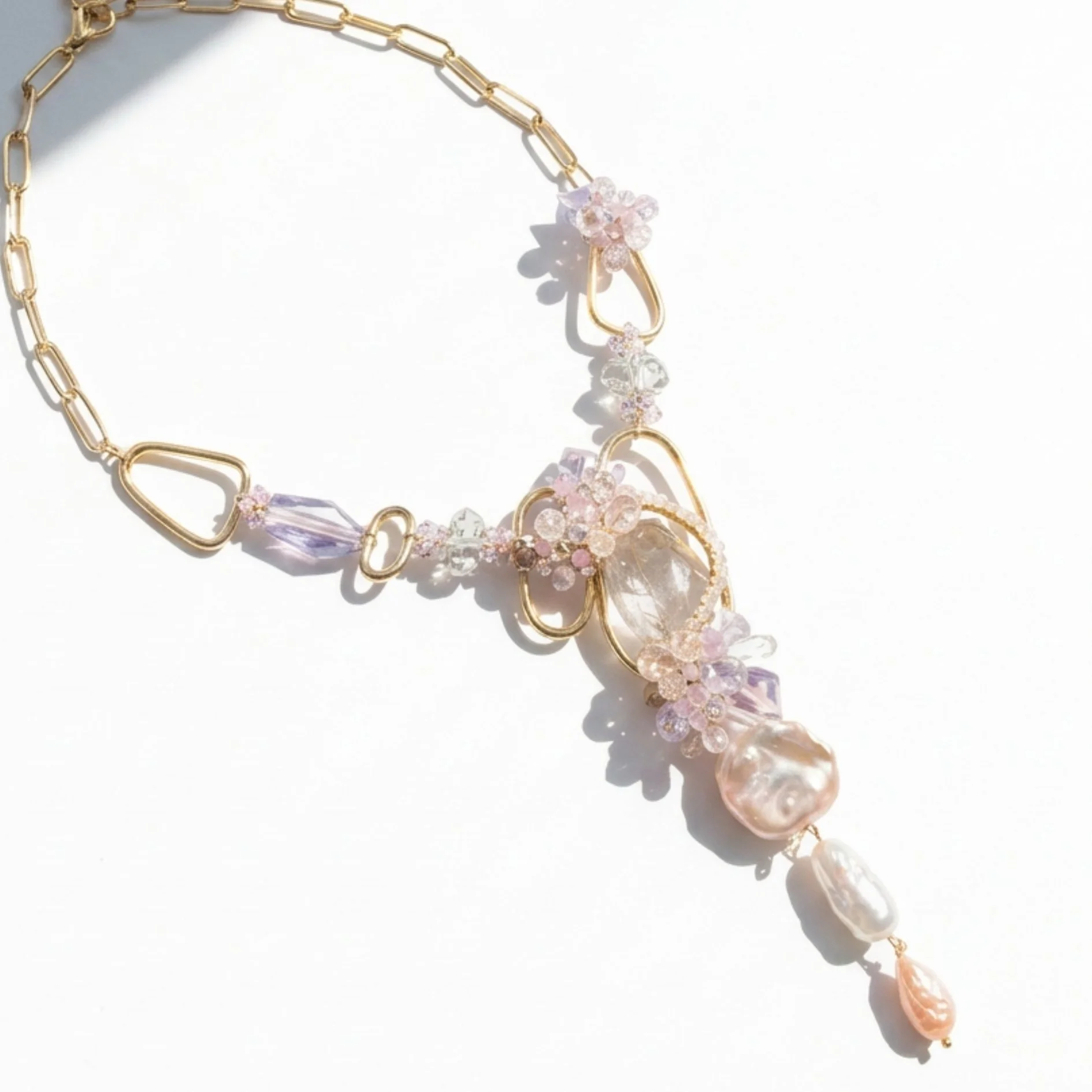
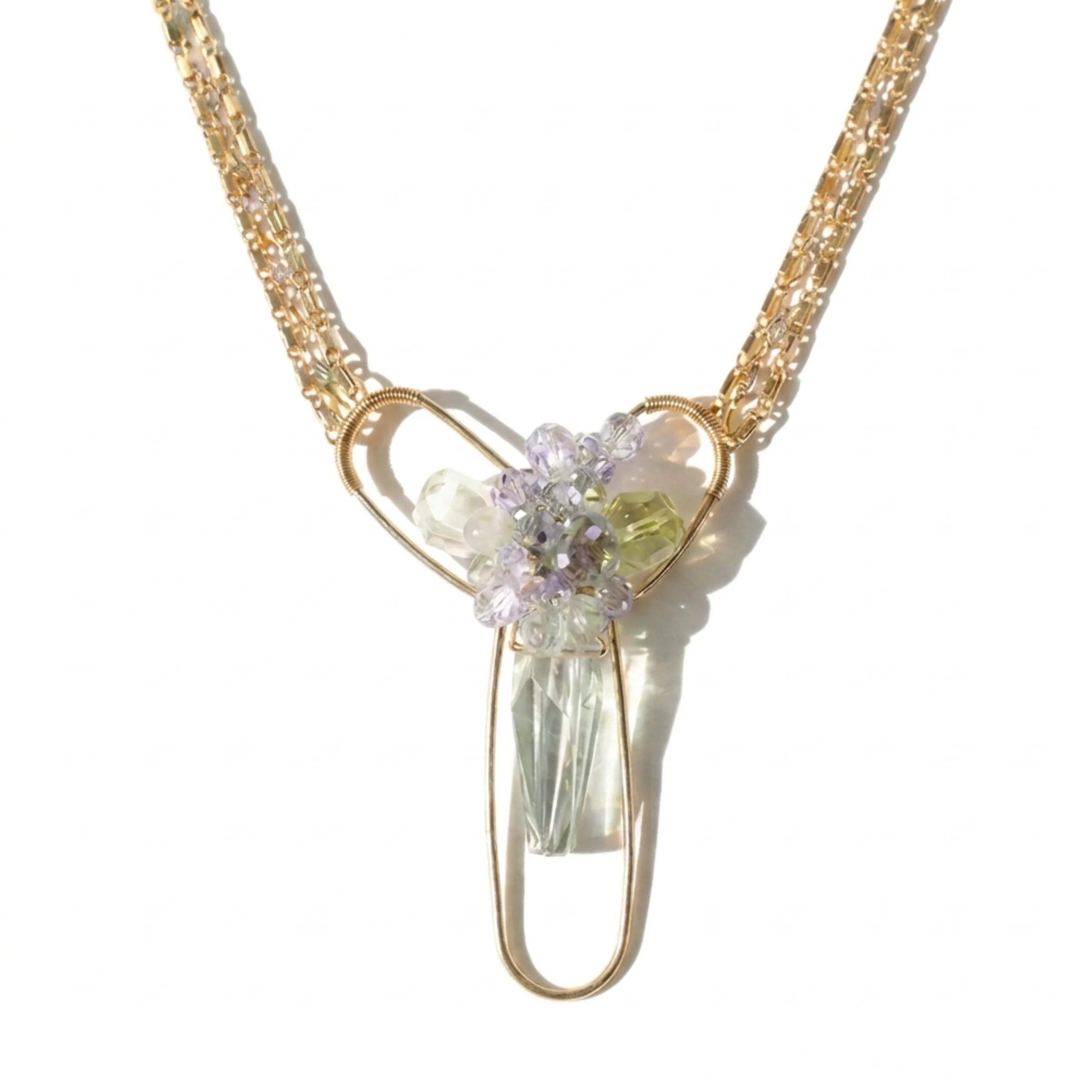
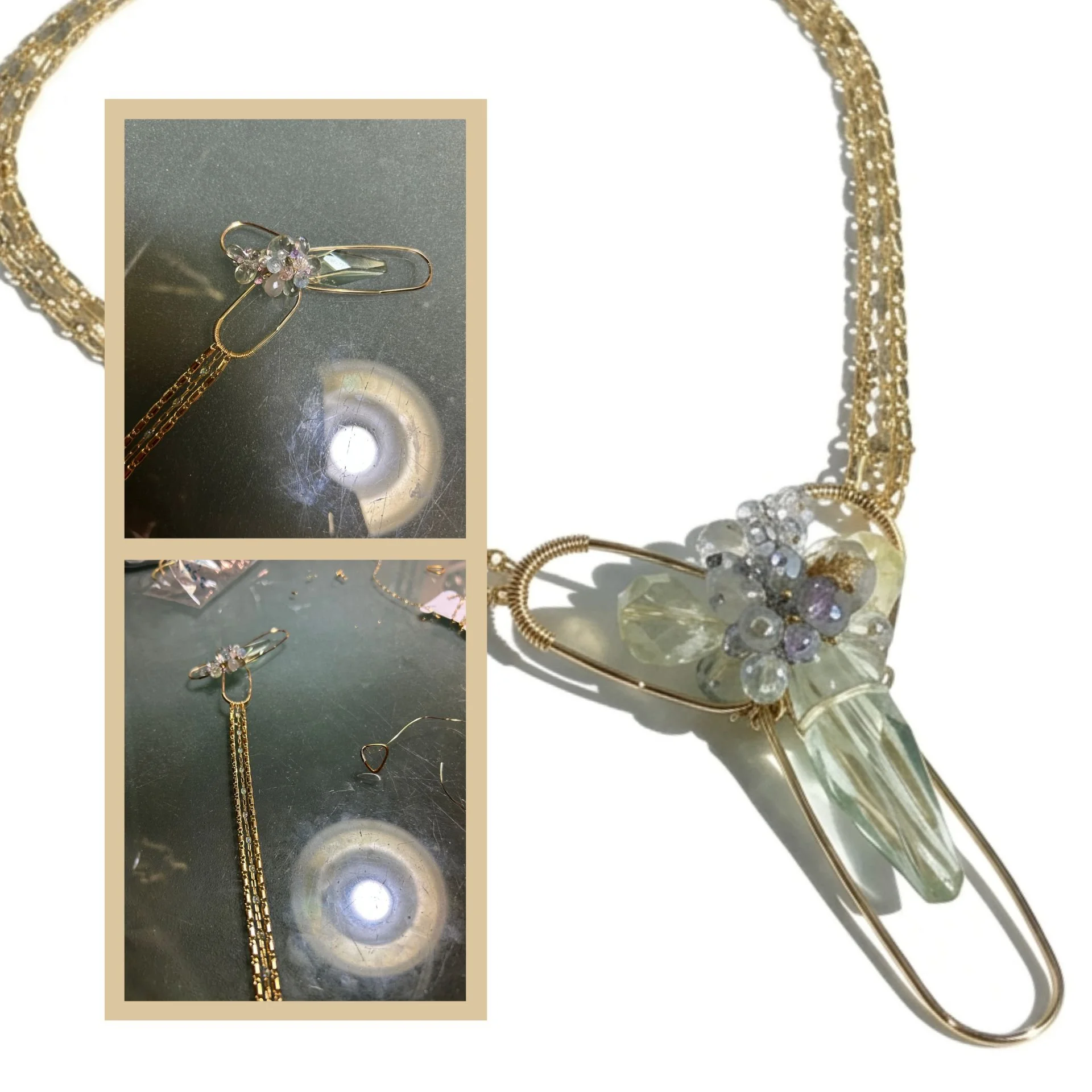
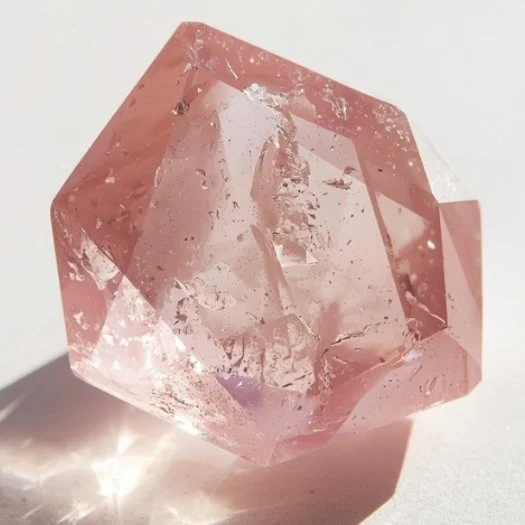
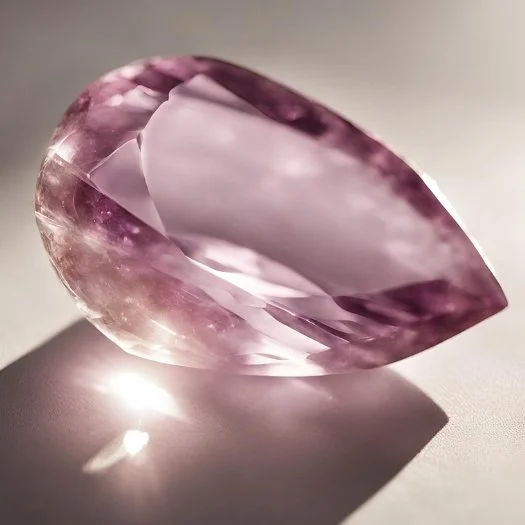
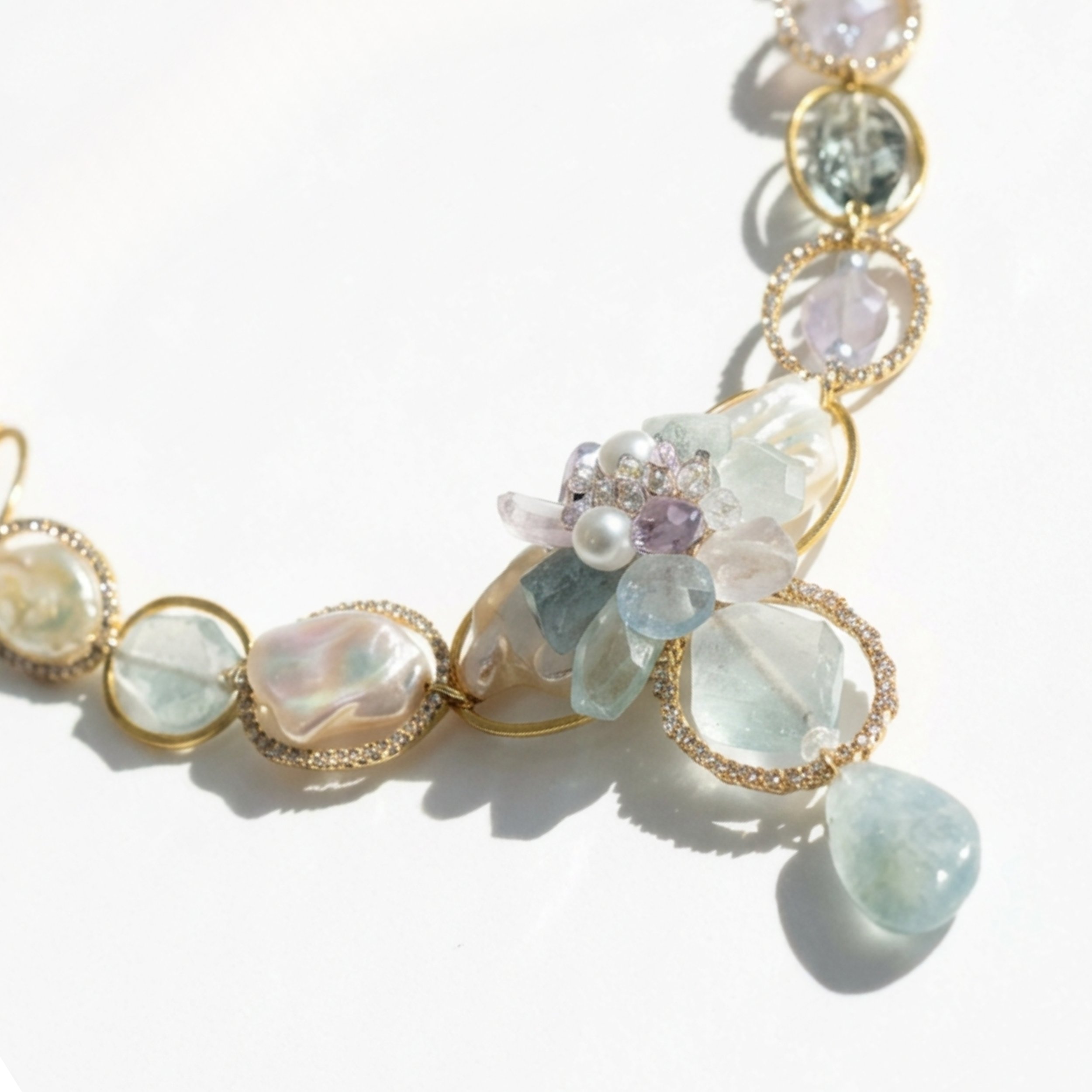
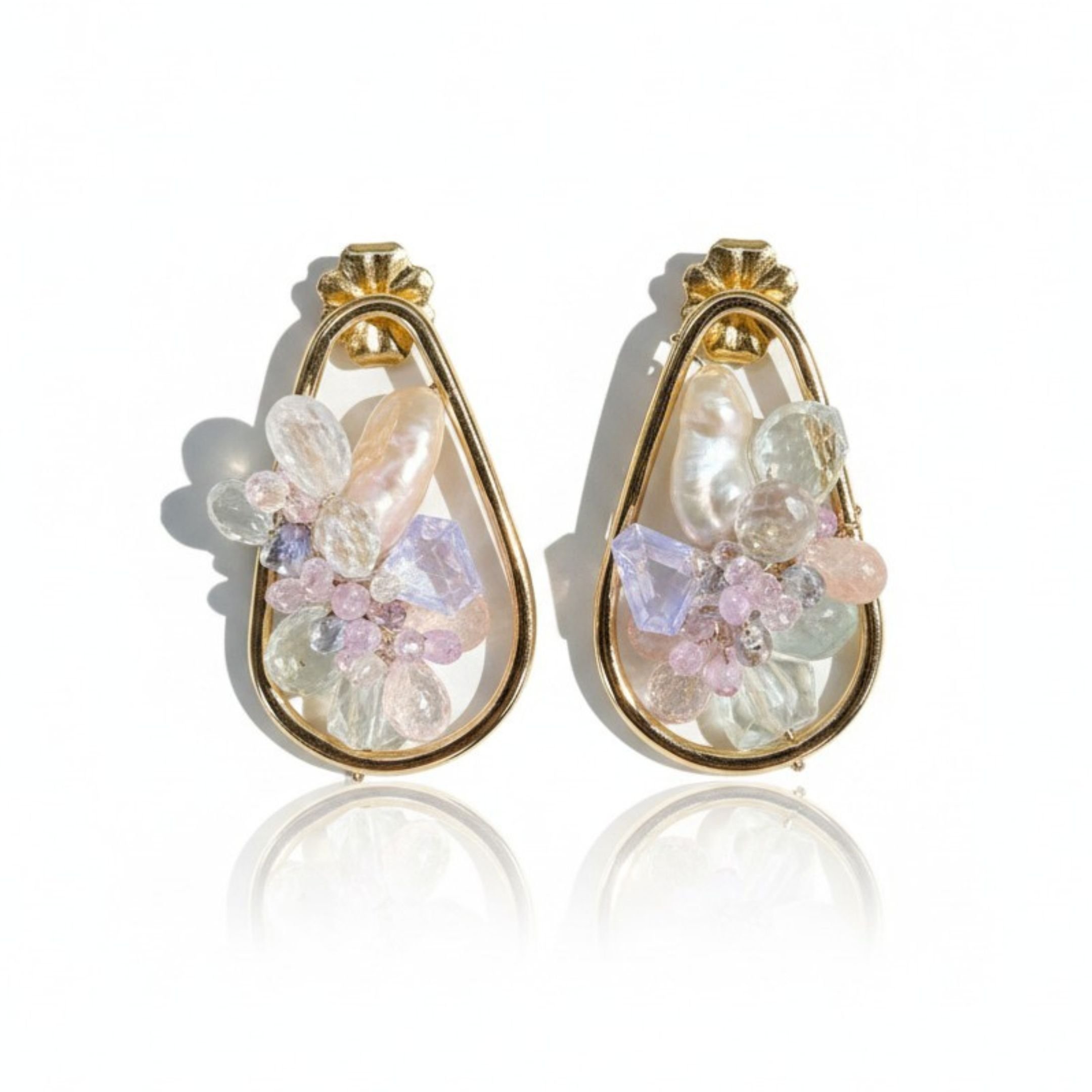
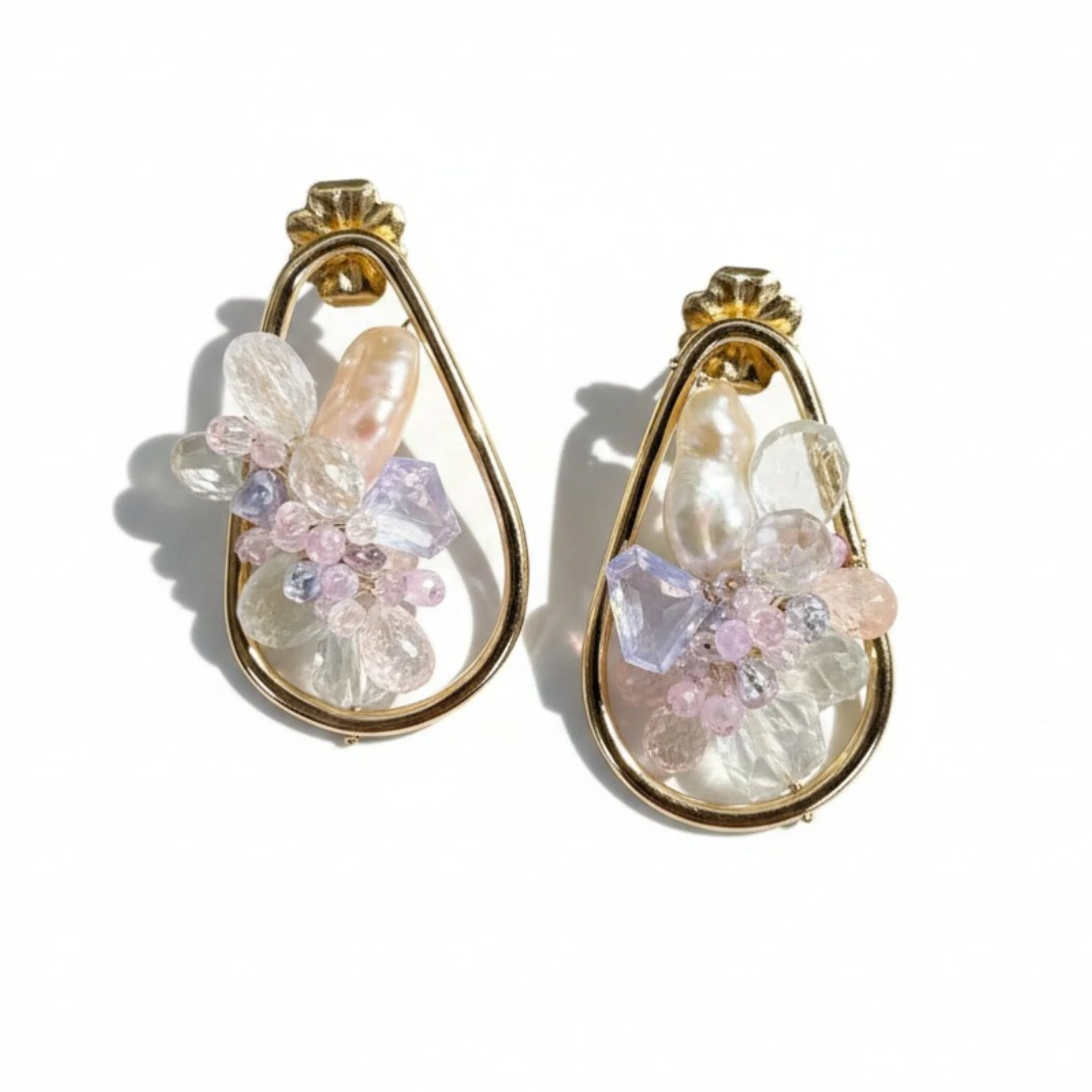
These go with Alpenglow, the pink kunzite baroque pearl drop necklace.
I hand-formed the teardrop frames from 12-gauge 14k gold-filled wire and soldered an ear post to each, then filled them. The cluster sits inside the open frame rather than hanging below it, which is the same structural idea as the necklace, where fabricated link shapes frame the stones set into them.
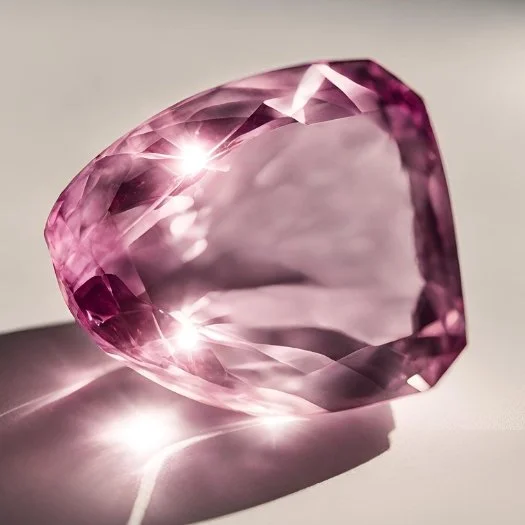
Kunzite, morganite, lavender keshi freshwater pearls, simple-cut aquamarine, Japanese Akoya keshi pearls, and pink and purple sapphires. Two lavender quartz went in last, once everything else was placed.
These took seven hours, which is the longest of the three pairs and longer than some necklaces in this collection. Small does not mean quick. There is no room to hide a decision at this scale.
Halo Earrings
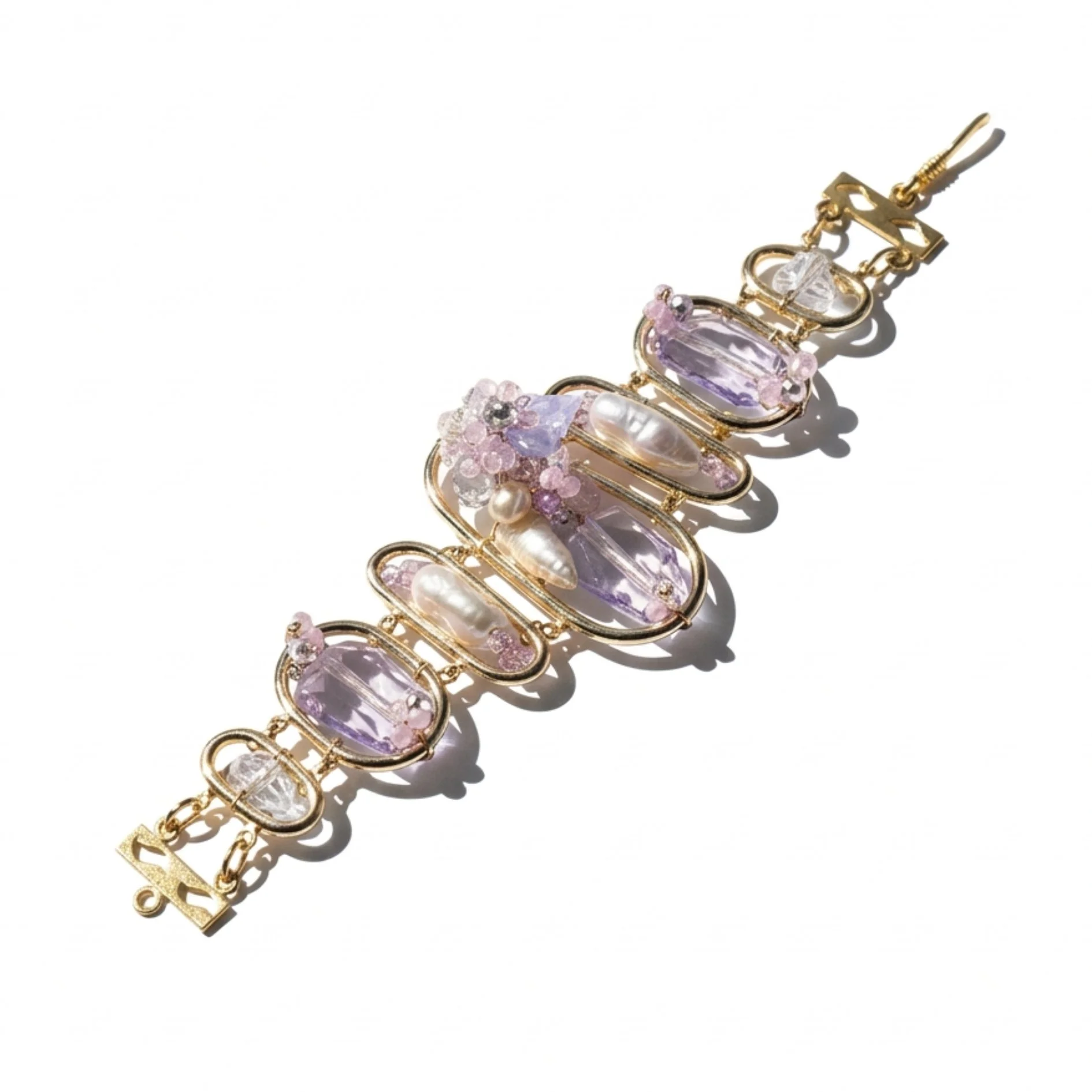
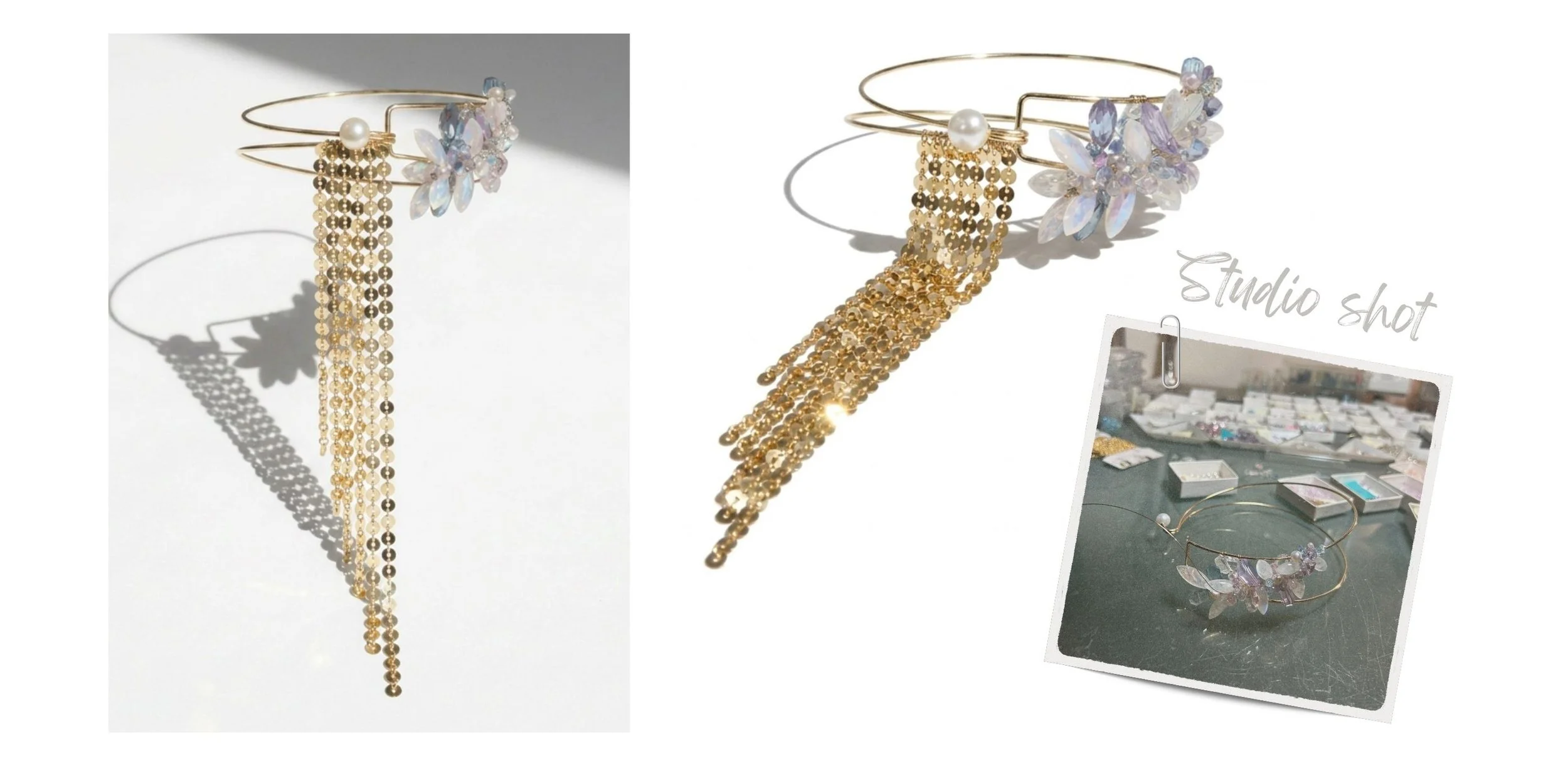
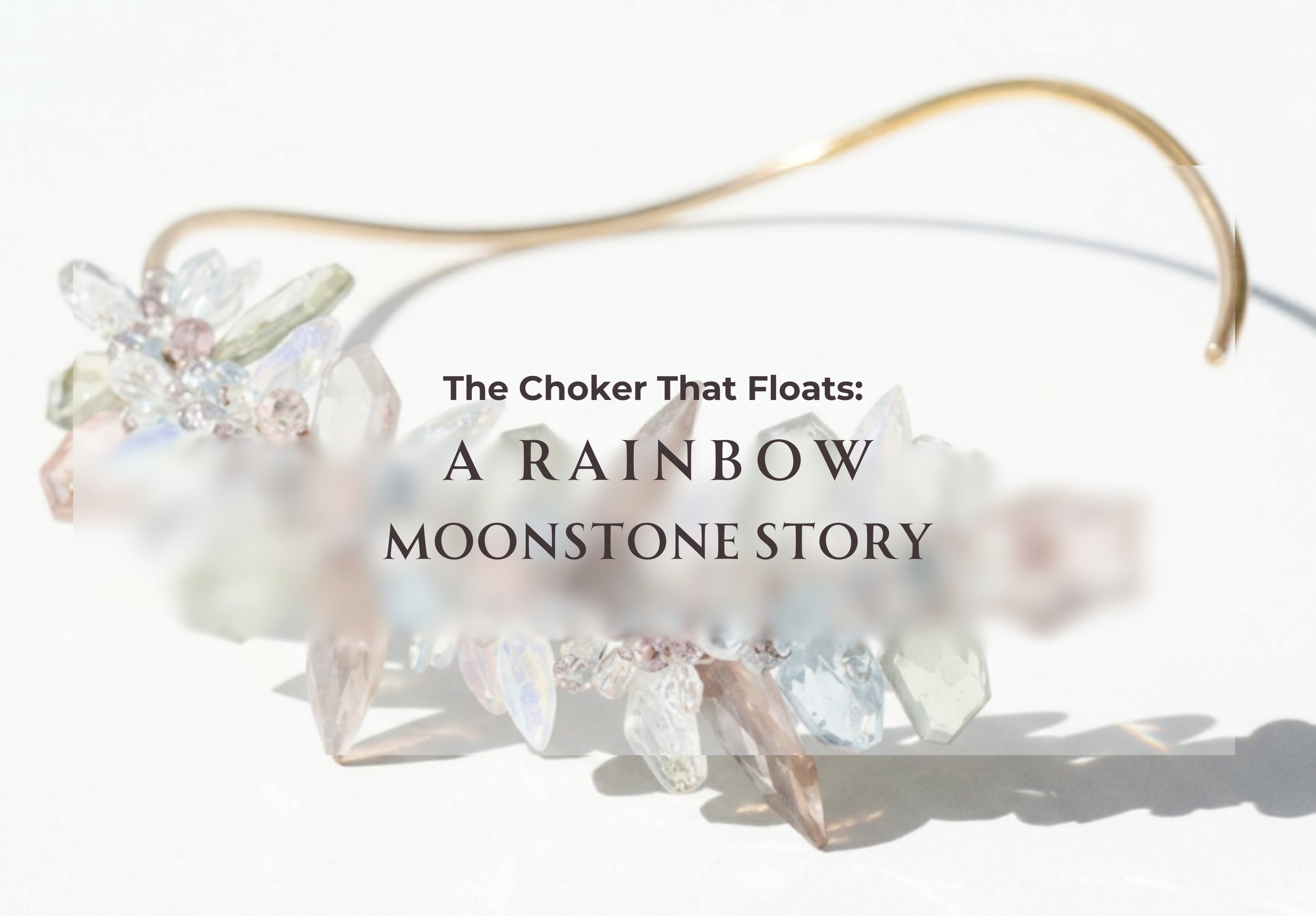
These go with Halo, the floating choker finished with a cascade of gold-filled sequin chain.
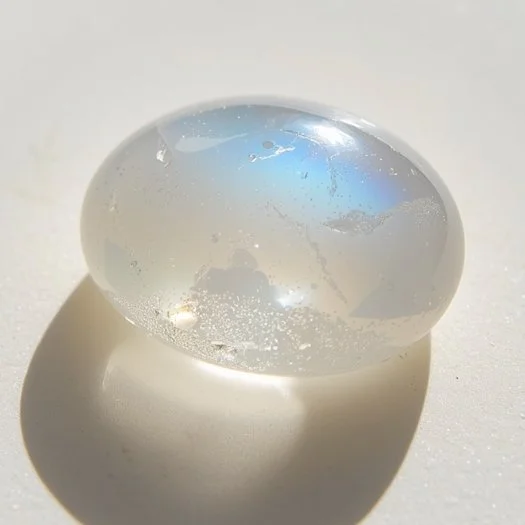
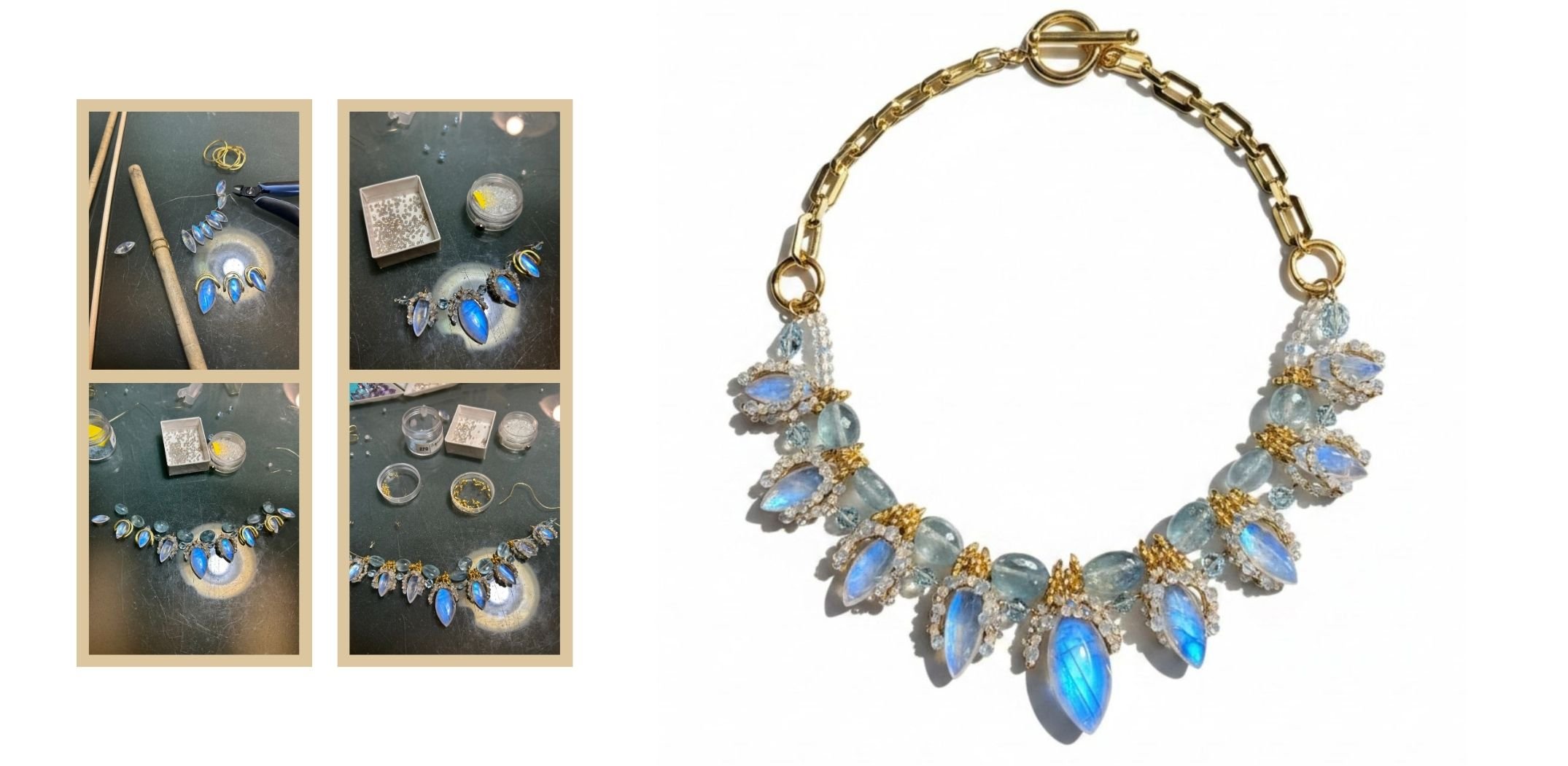
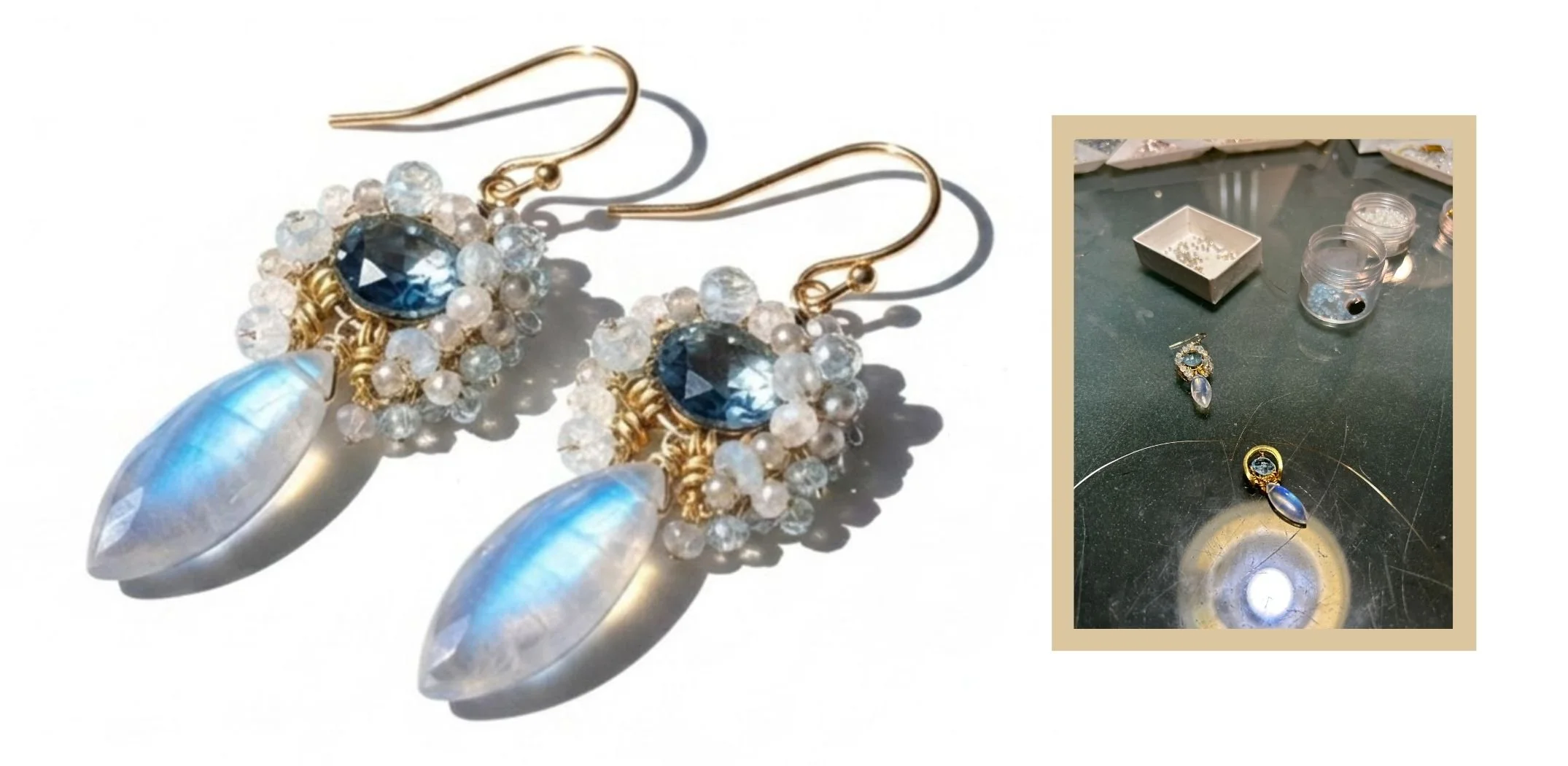
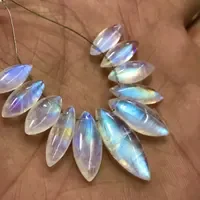
The two AAAA moonstone marquis in these came off the same strand as the eight in Blue Hour. That was deliberate. I wanted the moonstones on the earrings to mirror the moonstones on the choker, and using the same strand is the only way to be certain they match rather than merely resemble each other.
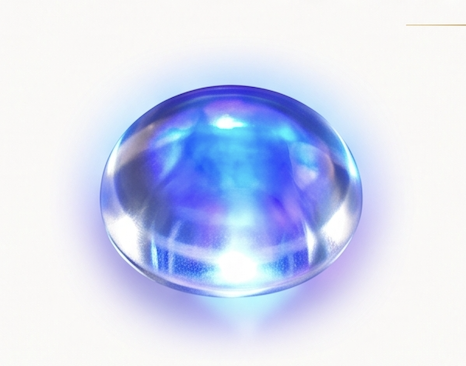
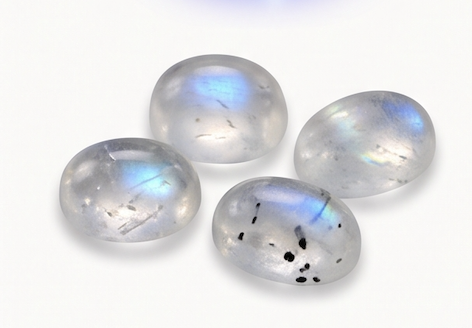
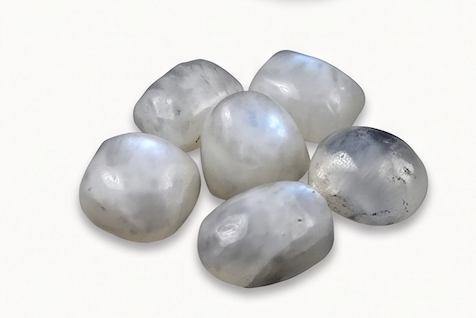
Below the clusters I wired sequin chains at different lengths, each one topped with a tiny moonstone. Staggering the lengths is what makes them read as a tassel instead of a fringe.
Sequin chain moves differently than link chain does. It catches light in flat little flashes as it swings, which is the same behavior as the cascade on the choker, and it is why that chain is on both pieces.
Last Light Earrings
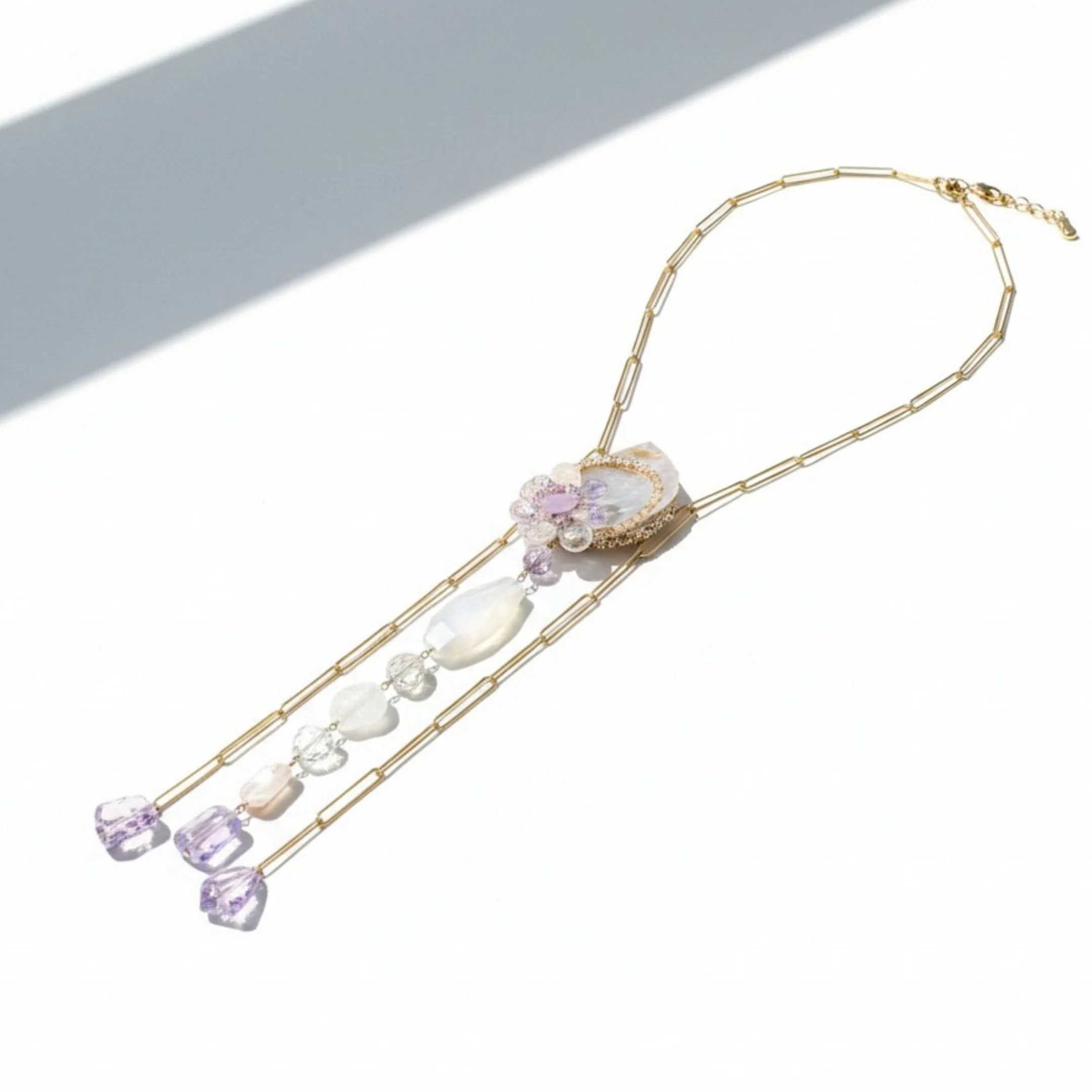
These go with Last Light, the kunzite double chain necklace.
They are the simplest thing in Second Light. An ear post soldered directly to paperclip chain, and a single pink druzy at the bottom of each. Four materials, two hours.
The chain is the same elongated paperclip as the necklace, and the druzy is the same druzy that appears in its cluster. So the pairing is not a matter of palette. They are literally made of the same things, reduced to a line and a stone.


Three pairs, each made once
None of these will be made again. The frames were formed by hand, the clusters were built as opposites in a single sitting, and in two cases the stones came off strands that are now used up.
If you have a piece of mine and have been looking for earrings that belong with it, that is the commission I get asked for most, and you can start one through the custom shop.
Questions
Why do matching earrings have to be mirrored instead of identical?
Can I wear these without the matching necklace?
Can you make earrings to match a piece I already own?
Discover
Jewelry that feels like you.
Two minutes. The quiz tells me how you want jewelry to feel in your life, and the messages that follow walk you through pieces I think you'll love.
Take the Style QuizTwo minutes. I take it from there.
Stay Close
Love what you see? Keep finding us.
Google now lets you choose your favorite sources so they show up labeled in AI search answers. If you enjoy discovering handcrafted gemstone jewelry here, add Andrea Li Designs and we'll be easier to find next time you search.
Add Andrea Li Designs as a Preferred SourceOne click. Works across Google Search, AI Overviews, and AI Mode.