
I build most pieces knowing, more or less, where they are going. This one I built the way you play chess against someone better than you: looking a hundred moves ahead, hoping the plan you cannot fully see will hold.
It took me close to twenty hours over three days. For almost all of that time I was confident, in the way thousands of hours at the bench make you confident, and still not certain. Those are two different feelings. I did not actually know Moontide would work until I was setting the finishing touches and the whole thing finally stood up and held its shape. That was the moment. Everything before it was faith.
The stones I chose, and the ones I gave up
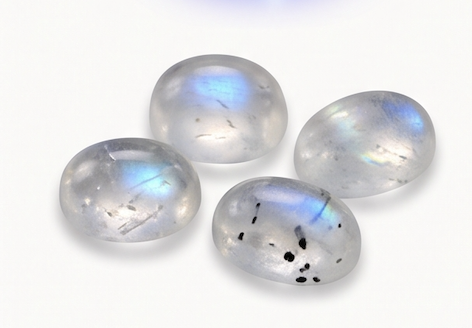
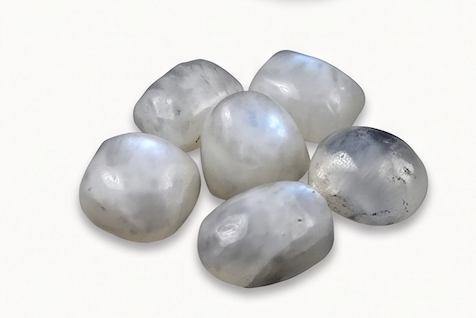
The heart of Moontide is a run of rainbow moonstone marquis, cut into that pointed-oval shape jewelers call a navette. They are the finest moonstones I have ever worked with, AAAA grade, nearly clear, with a blue flash that seems to float up from somewhere inside the stone rather than sit on its surface. I graduated them by size, largest at the center front, tapering as the design climbs toward the neck.
Around each moonstone I wrapped mystic labradorite, aquamarine, and tiny moonstone rondelles, and set small blue topaz between the frames. But that was not the original plan. I had meant to edge each frame in pastel Herkimer diamonds. When I started working at the scale this piece demanded, the Herkimer proved too brittle to survive the construction. The design was already ambitious enough without fighting my own materials, so I let the Herkimer go and let moonstone, aquamarine, and labradorite carry the cool, watery palette instead.
Gemstone science: where the flash comes from
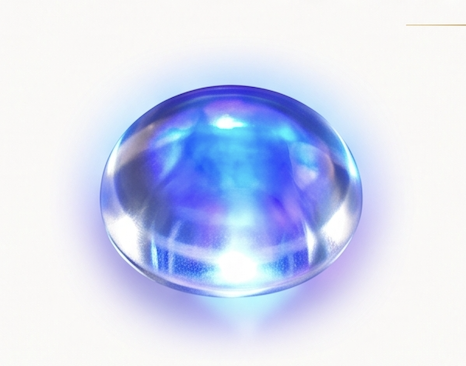
Moonstone's glow has a name: adularescence. It happens because moonstone is built from microscopic alternating layers of two feldspar minerals, and when light enters, those layers scatter it and send it back as that soft, rolling sheen. In the best rainbow moonstones, like these, the effect reads as an electric blue floating over near-colorless stone. Labradorite carries a cousin of the same magic, called labradorescence, which is where its own metallic blues and greens come from. Moonstone sits around 6 to 6.5 on the Mohs hardness scale, so it is a stone to wear with a little care. Because each stone's flash depends on its own internal structure, no two are alike, and no two ever catch the light the same way.
Andrea Li
☾ ✦ ✧
Gemstone Profile:
Moonstone
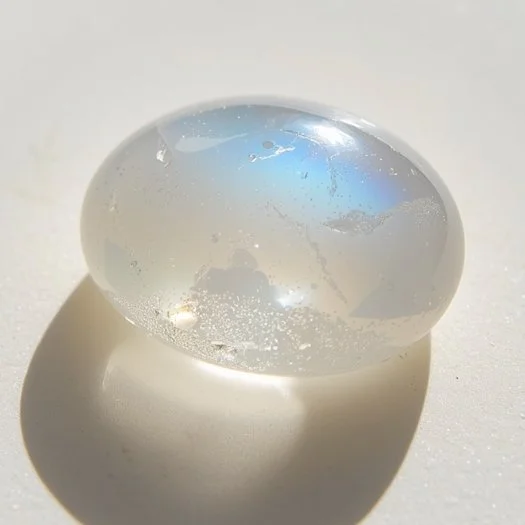
The glow · Adularescence
Identification & Type
Moonstone (orthoclase feldspar). A captivating variety of feldspar known for its ethereal, floating luster.
Physical Properties
Mohs hardness: 6 to 6.5
Colors: translucent to opaque. Classic white with a blue sheen, plus rainbow, peach, and grey.
Luster: pearly to vitreous.
Chemical formula: (K,Na)AlSi3O8
Key Phenomenon: Adularescence
Scattered light. The sheen comes from light diffracting through thin, alternating mineral layers inside the crystal, which scatters it back as that soft floating glow. Rainbow moonstone, a variety of labradorite, spreads it into a full spectrum.
Major Origins
Symbolism & Metaphysical
☉
Intuition & Clarity
☾
New Beginnings
✦
Calm & Balance
☽
Feminine Energy & Fertility
Care & Handling
Gentle cleaning. Use warm, soapy water and a soft brush. Never an ultrasonic or steam cleaner.
Avoid chemicals. Protect it from harsh agents, perfume, and cosmetics.
Store separately. Keep it in a soft pouch so harder stones cannot scratch it.
The beauty of moonstone. Elegance in nature's glow.
Andrea Li
andreali.com
Building the cages
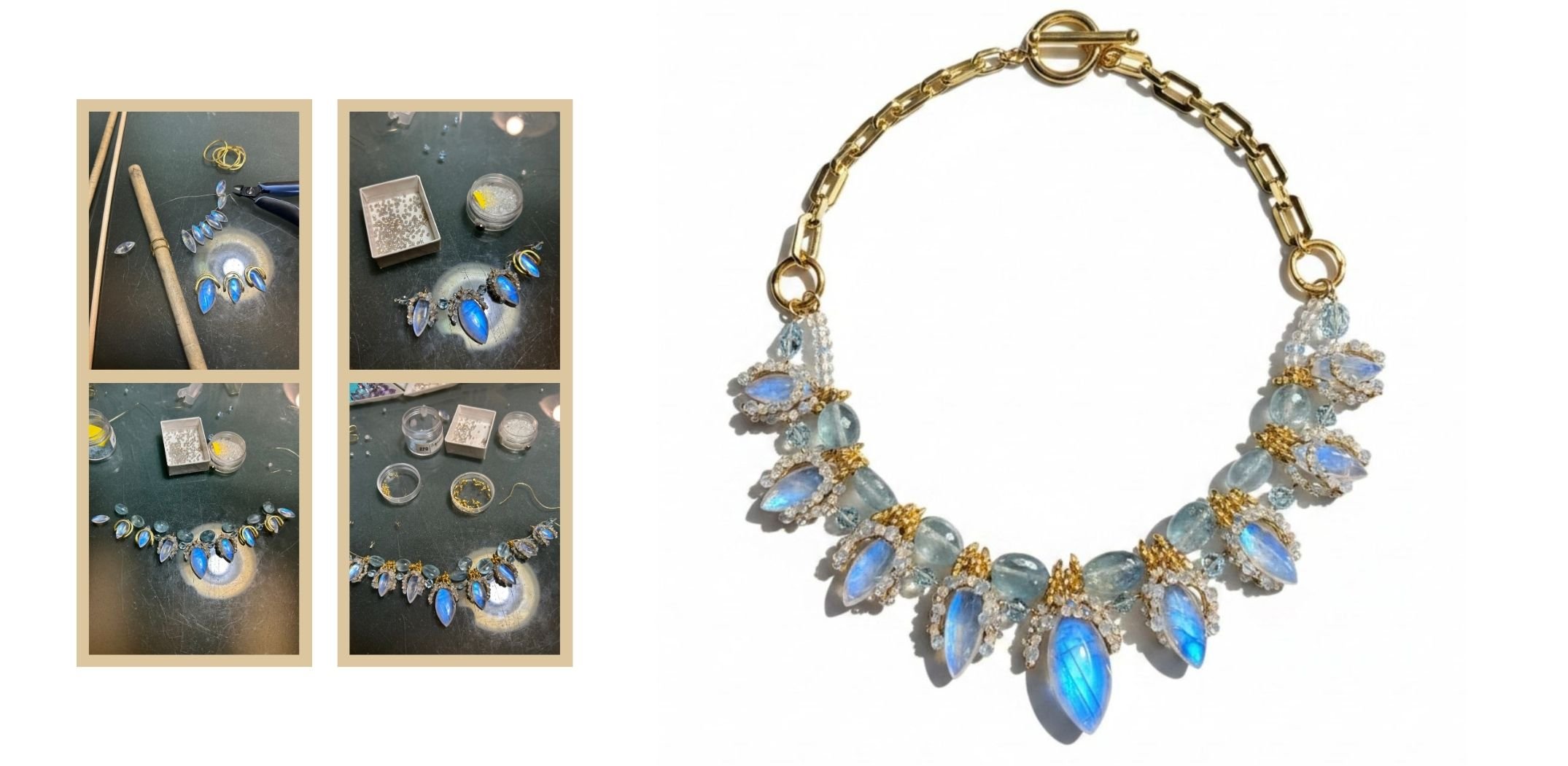
I do not bezel stones like these. Instead I made a frame for each marquis by taking a 24k gold vermeil oval and folding it, gently, over a wooden dowel, almost in half, into an open horseshoe shape. I left one side sitting a little higher at the back, which gave each frame dimension and something to anchor its moonstone into. Then I hand-wrapped the perimeter of every frame with mystic labradorite, aquamarine, and tiny moonstone rondelles, and went back and wrapped again, rewiring and securing the whole thing a second time so nothing would ever wiggle loose. Some frames I went through three times. When I broke a stone, I replaced it and started that frame's discipline over. When I missed a single rondelle, the pattern fell out of step and the moonstone would not sit centered, so I took it apart and did it again.
The frames themselves are two sizes. The front three are larger, one for the biggest moonstone and one on each side to flank it with the next size down. The rest are smaller, so the necklace reads as a graduated fan that narrows as it wraps the neck. That graduation was a decision I made at the very beginning, long before most of the piece existed.
The problem I solved at four in the morning
Here is the part that kept me up. Each frame needed to connect to its neighbors, and it needed a second layer above to hold everything up as the necklace climbs and, honestly, defies gravity a little. I set tiny blue topaz between the frames to join them, and they had to land at the exact same point on every arch or the whole necklace would hang crooked. I marked the pattern with a sharpie so I could repeat it precisely.
The top join was the real puzzle. Plain chain would not work, because chain has fixed spacing and the distance between the frames has to change continuously as the piece curves toward the neck. A bare beading chain would let the design collapse on itself. It needed something substantial between the frames to prop it open. I hunted for the right bead. Pearls were easy to drill but felt too precious. Then I remembered a stock of smooth aquamarine cabochons left over from my Glacier collection, exactly the right size, and I only had to ream a wide hole in that one kind of stone rather than dozens. The trouble with a smooth cabochon is that it can rotate. It was at four in the morning that I realized I had tiny 24k gold vermeil spikes I could place between the stones, a variable number in each gap. Their points radiate in every direction, almost like a burr, so they catch against the smooth cabochons where a plain rondelle never could. They do not stop the spin completely, but they slow it and give each stone structure on either side, and they became the thread running through the entire piece. Once I saw it, the design finally came together.
One last detail I love: on the final moonstone rondelle at each end, right before the chain, I drilled the hole extra wide so the end cap sinks down inside the stone and disappears. No visible hardware. Just stone into chain.
Why Moontide is one of a kind
Every one of these moonstones was unrepeatable before it reached my bench, and the way I graduated, framed, and joined them cannot be drawn the same way twice. Moontide is the first piece of Second Light, the next chapter of the pastel work I began with Tamar. Second Light is about light returning after dark, and a necklace built almost entirely of captured moonlight felt like the right place to begin. This one asked more of me than almost anything I have made. It was worth every one of those hundred moves.
The matching earrings
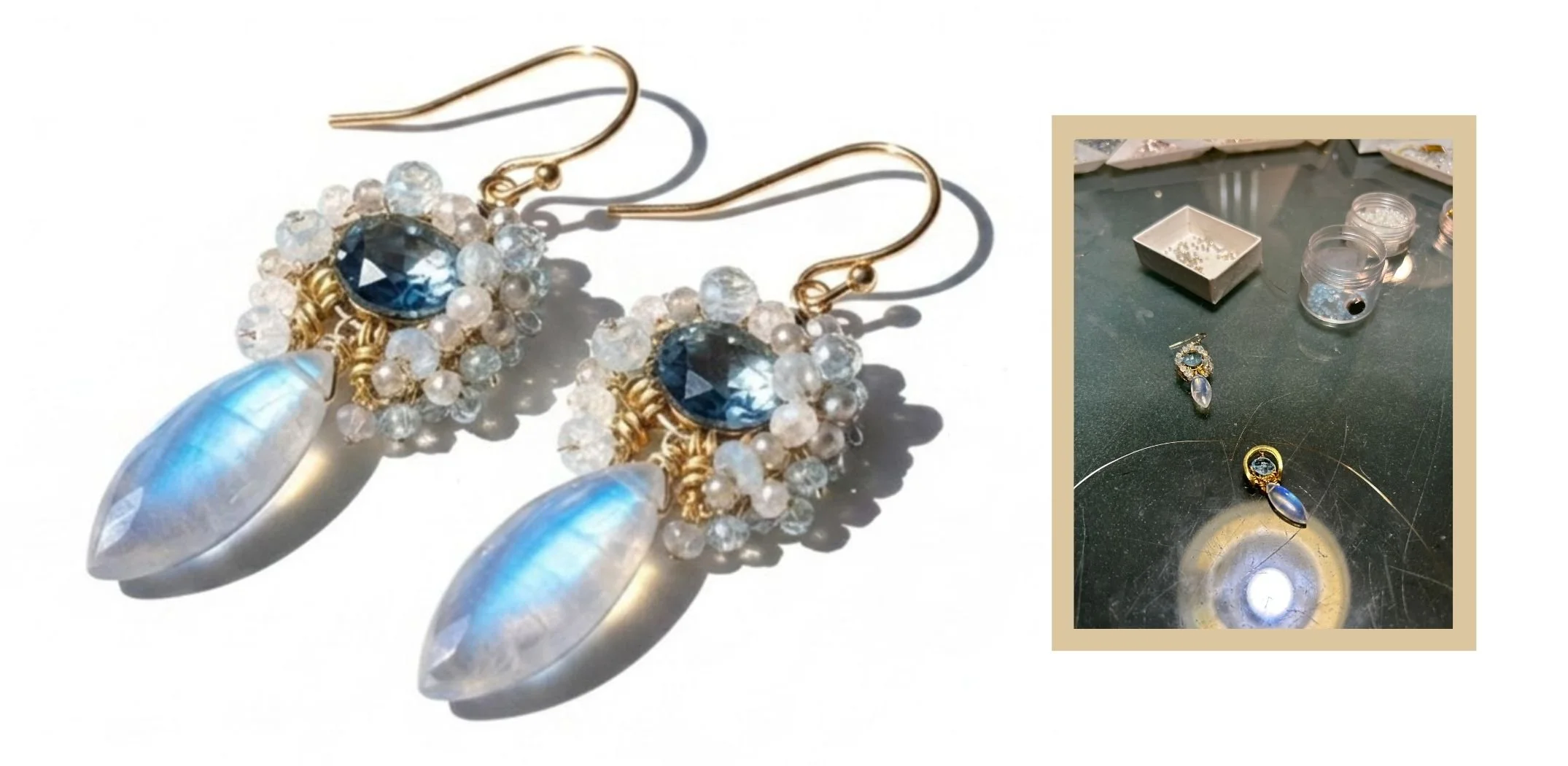
I made a pair of earrings to wear with Moontide, changed just enough to stand on their own. Each one centers a faceted Swiss blue topaz, a slightly deeper blue than the necklace's accents, framed with the same hand-wrapped halo and finished with a moonstone marquis drop. Tiny 24k gold vermeil spikes echo the spacer beads that run through the necklace, so the pair reads as clearly part of Moontide without simply repeating it.
Shop the Moontide necklace and its matching earrings, the first pieces of the Second Light collection.
Questions
What gives rainbow moonstone its blue flash?
Is moonstone durable enough to wear often?
Is Moontide one of a kind, and can I commission something similar?
Discover
Jewelry that feels like you.
Two minutes. The quiz tells me how you want jewelry to feel in your life, and the messages that follow walk you through pieces I think you'll love.
Take the Style QuizTwo minutes. I take it from there.
Stay Close
Love what you see? Keep finding us.
Google now lets you choose your favorite sources so they show up labeled in AI search answers. If you enjoy discovering handcrafted gemstone jewelry here, add Andrea Li Designs and we'll be easier to find next time you search.
Add Andrea Li Designs as a Preferred SourceOne click. Works across Google Search, AI Overviews, and AI Mode.