ANDREA LI

LIMITED COLLECTIONS

chokers

Halo: A Beautiful Contradiction

Tamar: Second LightAndrea Li
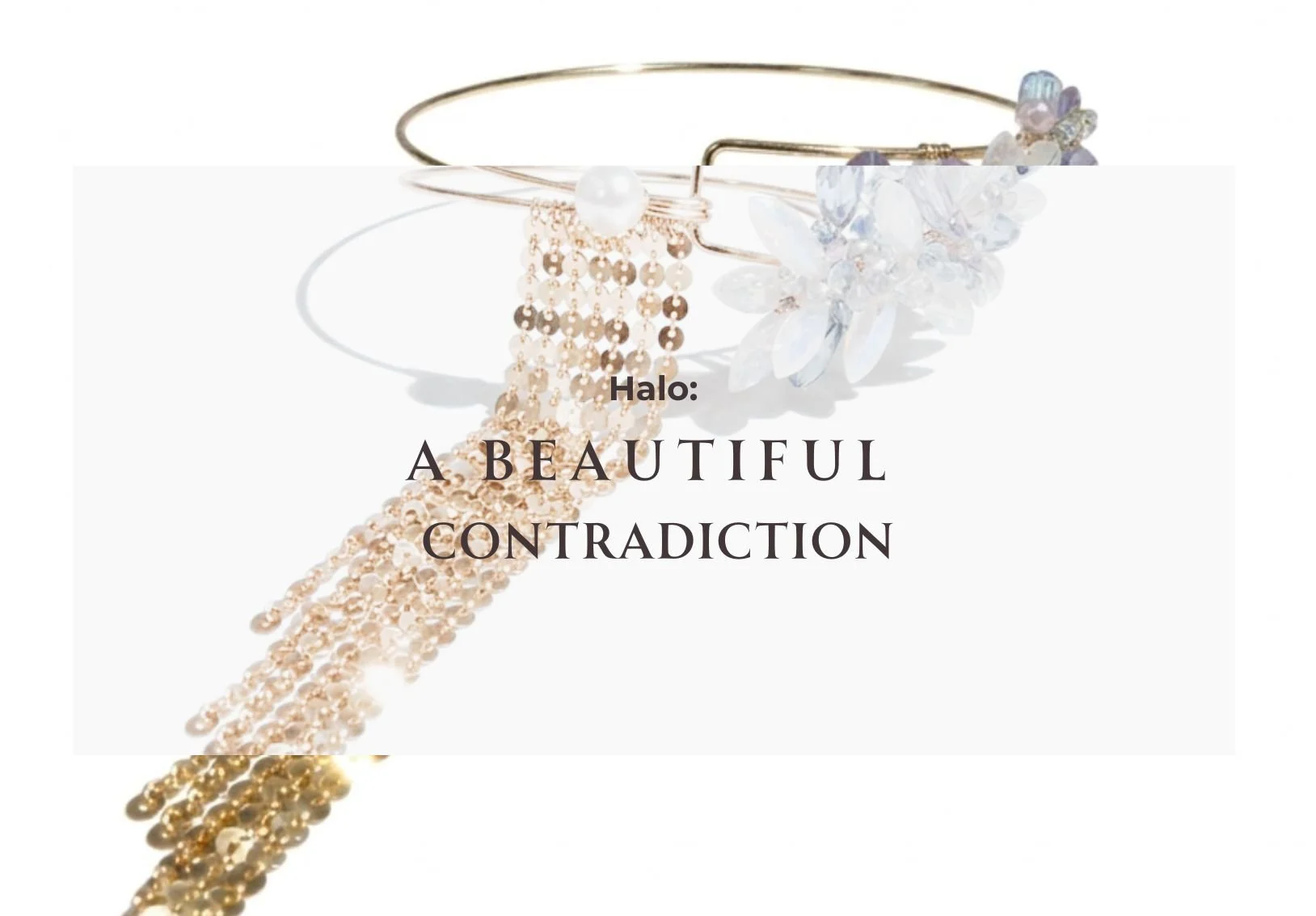
Editorial graphic with a gold halo-style bracelet and text overlay reading “Halo: A Beautiful Contradiction.”

I wanted to make a choker that looked like it was floating. That was the whole idea before I even walked into the studio, and it is a good example of how a piece rarely arrives the way you picture it.

Life gets busy, and keeping the studio perfectly stocked is not always high on the list. So this began the way real work often does: I trusted my inventory, got to the bench ready to build my floating choker, and discovered I had only enough wire in 12 gauge. Not what I would have chosen. But I went to work anyway, because sometimes the constraint is the assignment.

The materials

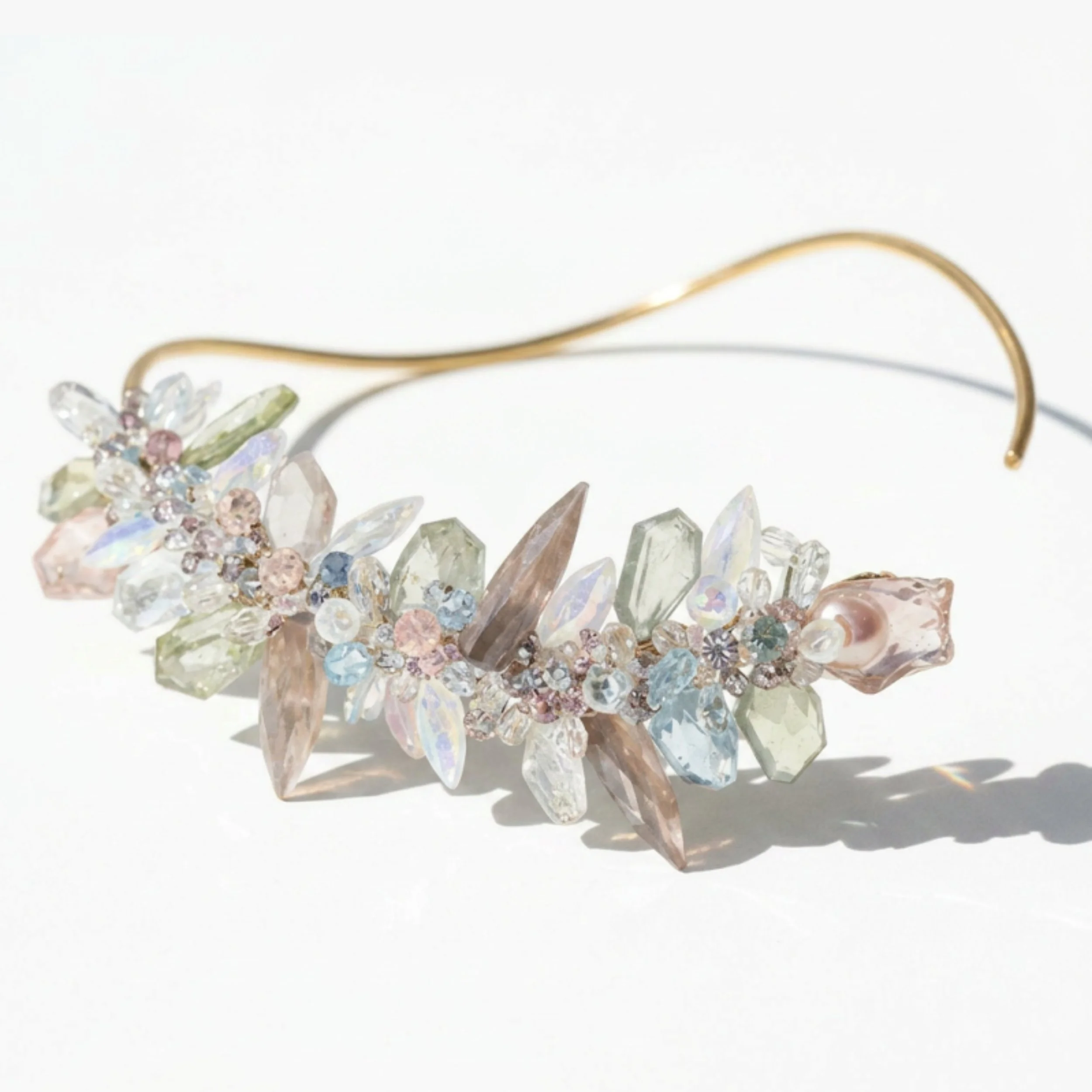
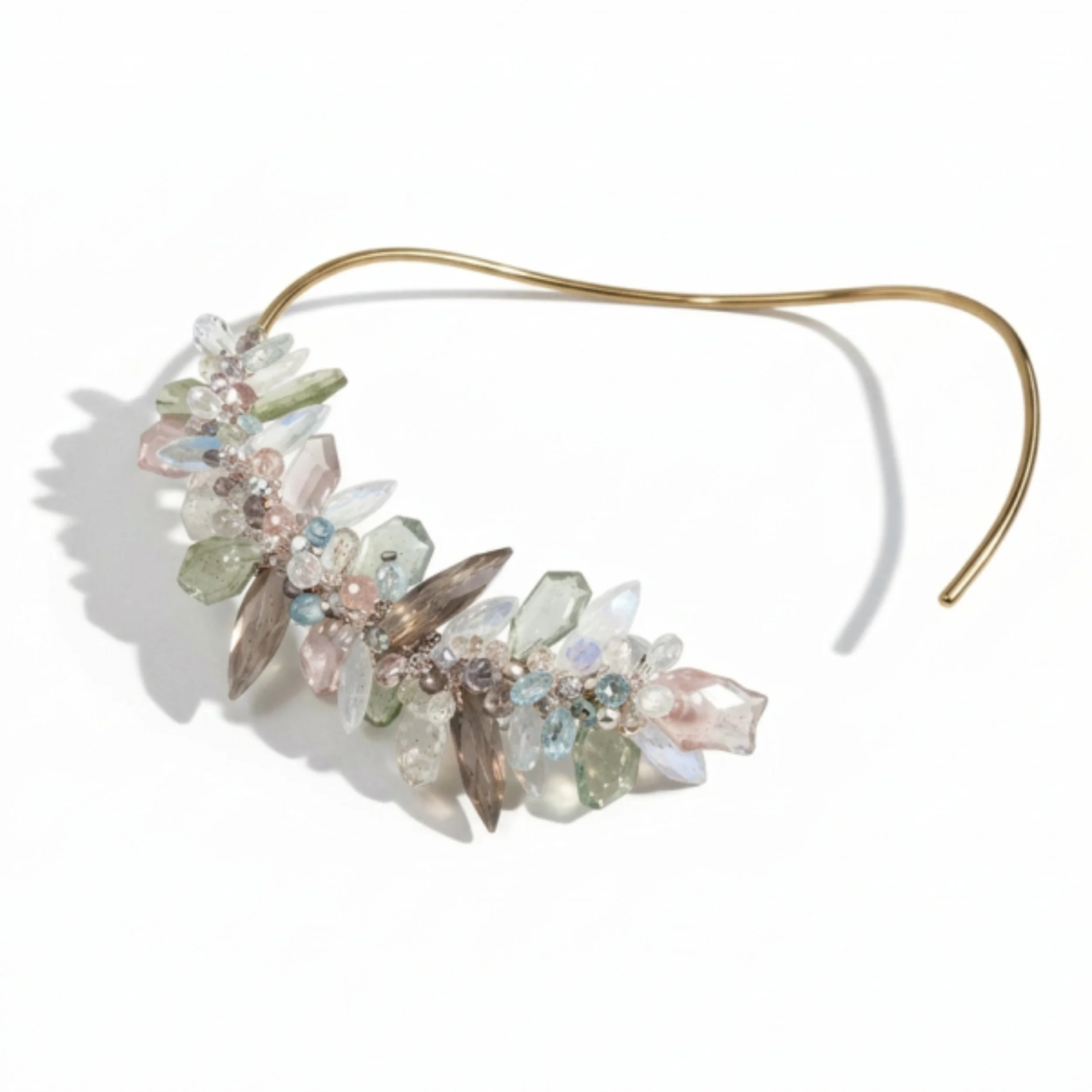
This is a Second Light piece, built in 12-gauge 14k gold-filled wire with a soft, watery pastel palette. The stones are a whole family of pale color: purple, pink, and grey sapphires, pale amethyst, morganite, aquamarine, a crown-cut mixed beryl, AAA-quality marquise moonstone, freshwater pearls, mystic quartz, and tiny moonstone rondelles, all finished with a cascade of 14k gold-filled sequin chain. Left to its own, it is a lot of gravitas hanging in the air. Held together the way I built it, it is barely there on the neck. That contradiction is the piece.
Gemstone science: why moonstone reads like captured light

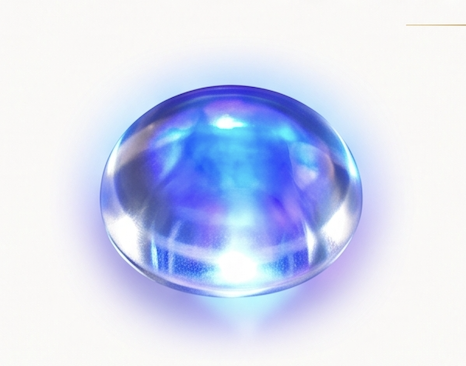
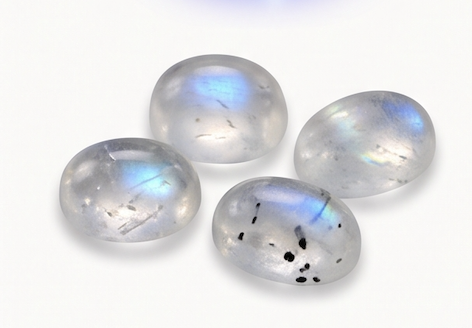
Moonstone was the right stone for something meant to float. That drifting glow, called adularescence, is not a color in the stone at all. It is light scattering between microscopic, alternating layers of feldspar inside the crystal, so the shimmer seems to hover just under the surface and move as you do. Rainbow moonstone is actually a variety of labradorite, which is why it can throw a whole soft spectrum rather than a single flash. It is also a brittle stone with cleavage, so it asks to be set gently and cool, never near heat. All of which made it the perfect companion to a choker built around the idea of weightlessness.

Andrea Li

☾ ✦ ✧

Gemstone Profile:

Moonstone
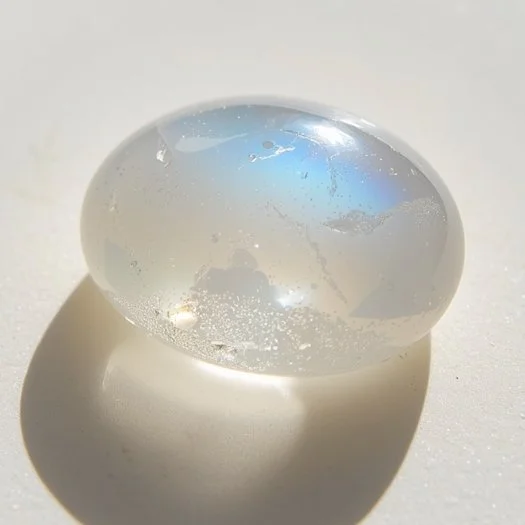
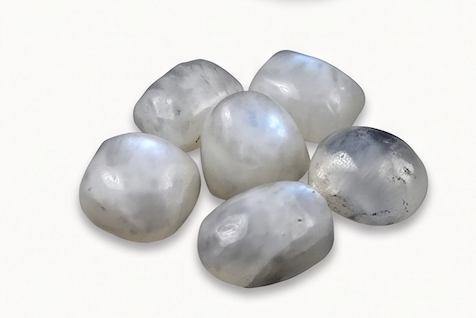
Moonstone showing its blue adularescent glow

The glow · Adularescence

Identification & Type

Moonstone (orthoclase feldspar). A captivating variety of feldspar known for its ethereal, floating luster.

Physical Properties

Mohs hardness: 6 to 6.5

Colors: translucent to opaque. Classic white with a blue sheen, plus rainbow, peach, and grey.

Luster: pearly to vitreous.

Chemical formula: (K,Na)AlSi3O8

Key Phenomenon: Adularescence

Scattered light. The sheen comes from light diffracting through thin, alternating mineral layers inside the crystal, which scatters it back as that soft floating glow. Rainbow moonstone, a variety of labradorite, spreads it into a full spectrum.

Major Origins

Sri Lanka (Ceylon) India Madagascar United States

Symbolism & Metaphysical

Intuition & Clarity

New Beginnings

Calm & Balance

Feminine Energy & Fertility

Care & Handling

Gentle cleaning. Use warm, soapy water and a soft brush. Never an ultrasonic or steam cleaner.

Avoid chemicals. Protect it from harsh agents, perfume, and cosmetics.

Store separately. Keep it in a soft pouch so harder stones cannot scratch it.

The beauty of moonstone. Elegance in nature's glow.

Andrea Li

andreali.com

The build, and the clasp that saved it

Shaping heavy 12-gauge wire into a floating collar was the first fight. The hardest part was doubling the wire back and squaring off the ends so the two ends met cleanly on the opposite side. I fiddled with it until the wire would rest flush, then set my solder neatly between the two ends.

And then I had two problems at once. Once it was soldered, the circumference was far too large, and I could feel that 12-gauge, as heavy as it is, was actually too thin to hold my floating concept rigid on its own.

Here is the moment the piece turned. Because the circumference was too big, I had extra length to work with, so I used it to build a hook clasp at the front. That one decision solved everything. The clasp took in the excess size, and the act of anchoring the collar closed at the front gave the whole structure the rigidity the thin wire could not provide by itself. The floating concept came back to life because I had, almost by accident, given it a spine. The shortage of wire, the very thing I had cursed an hour earlier, was what handed me the answer. To make the clasp a feature rather than just hardware, I soldered a pearl peg on the end and set a large freshwater pearl there, so the closure became the most decorative point on the piece.

Building the cluster in mid-air

Then came the gemstone cluster, and it fought me too. My first plan was two separate clusters running along the edges, because the front clasp needed clearance and I did not want a cluster blocking the hook. But when I held it up in the mirror, I could see the truth immediately: the cluster had to sit in the center of that empty floating space, or the whole design fell apart. So I started over with that intention.

I began with my usual vine cluster, assuming it would happily suspend between the two wires. It would not. As I built between them, it became clear the vine needed anchoring all the way along, or it would shift. So I diamond-bit drilled two large pale amethysts and one substantial aquamarine, opening them enough to thread multiple wires through, and spaced those stones down the cluster as structural anchors that hold the entire vine in place.

A few smaller choices made it cohere. I used round pearls throughout the cluster, which I rarely do in this collection, specifically to echo the large pearl on the clasp so the two ends of the piece would speak to each other. I filled and finished the front with moonstone marquise stones. And on the opposite side of the cluster I added a cascade of 14k gold-filled sequin chain, anchored with tiny moonstone rondelles, for drama and movement, the falling counterweight to the cluster's density.
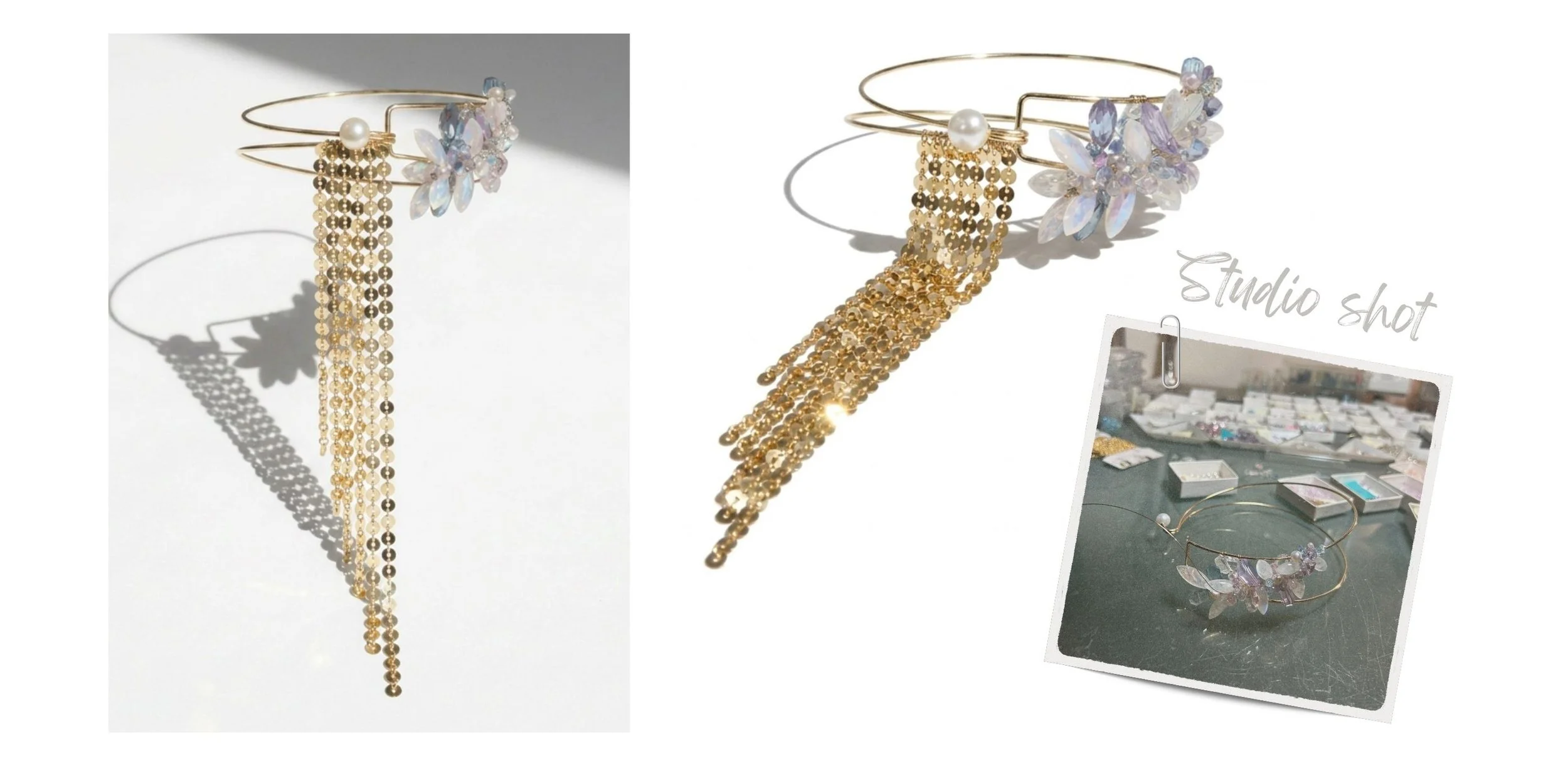
Collage of a gold halo choker with pastel crystal detail, paired with a pinned studio process photo on a light background.

What sitting with a piece teaches you

I always live with a finished piece for a while, setting it in places where I will keep catching sight of it, because that is when the last improvements reveal themselves. This time I could see one empty spot near the start of the cluster asking for a stone. I chose a beautifully faceted amethyst. My first instinct was to go large and really fill the gap, but a larger stone crowded the pearl hook clasp and would have kept it from clearing when you fasten it, so I sized down. The smaller amethyst rounded out the cluster and gave the whole design more cohesion, which is often how it goes: the right answer is the one that respects how the piece is actually worn.

Last, I went back and secured a few stones that had not passed my own durability test. I built gold-filled wire bezels around the ones that needed it and deepened their security within the cluster with a barrier of smaller stones that "set" them more firmly. It is quieter work than the drama up front, but it is the difference between a piece that photographs well and a piece that lasts.

The finished choker is minimal and not minimal at once, light to wear despite the gravitas of all that clustering. I named it Halo, for the ring of light it makes around the neck, and because a halo is exactly that kind of contradiction: weightless, and yet the most serious thing in the room. A beautiful contradiction, which feels honest to me, because so many true things are.

I would not have found any of it with a full drawer of the perfect wire. Constraints force us to be more creative. They take the obvious path away and leave you standing in front of the more interesting one. This piece is the proof I keep on my bench.

Questions

How does a floating choker stay closed without a visible clasp?
This one closes with a hook clasp at the front rather than a hidden catch at the back. The hook is anchored by a pearl peg set with a large freshwater pearl, so the closure doubles as the most decorative point on the piece. Fastening at the front also gives a fine-gauge collar the rigidity it needs to hold its shape.
How is the gemstone cluster kept from shifting?
The vine cluster is anchored, not just suspended. I diamond-bit drilled two large pale amethysts and one substantial aquamarine so I could thread multiple wires through them, then spaced those stones along the cluster as structural anchors. Any softer stones are further secured with hand-formed gold-filled wire bezels and a surrounding barrier of smaller stones.
Is a statement choker like this heavy to wear?
No, and that is the contradiction I love about it. It carries real visual weight from the pastel gemstone cluster and the cascade of chains, but built in 14k gold-filled wire and balanced by the front closure, it sits light on the neck. [CONTINUE READING — PRE-LAUNCH TEASE: Halo is part of Second Light, arriving November 4. Link to the Second Light collection / pre-launch page. Primary next step is the Style Quiz / join-the-list so readers are first to know when Halo and the collection go live. Do NOT link a shop/product page yet (Halo's product page is being built and the piece is not yet purchasable). Swap in the Halo product link + a shop CTA at launch.]

Discover

Jewelry that feels like you.

Two minutes. The quiz tells me how you want jewelry to feel in your life, and the messages that follow walk you through pieces I think you'll love.

Take the Style Quiz

Two minutes. I take it from there.

Stay Close

Love what you see? Keep finding us.

Google now lets you choose your favorite sources so they show up labeled in AI search answers. If you enjoy discovering handcrafted gemstone jewelry here, add Andrea Li Designs and we'll be easier to find next time you search.

Add Andrea Li Designs as a Preferred Source

One click. Works across Google Search, AI Overviews, and AI Mode.
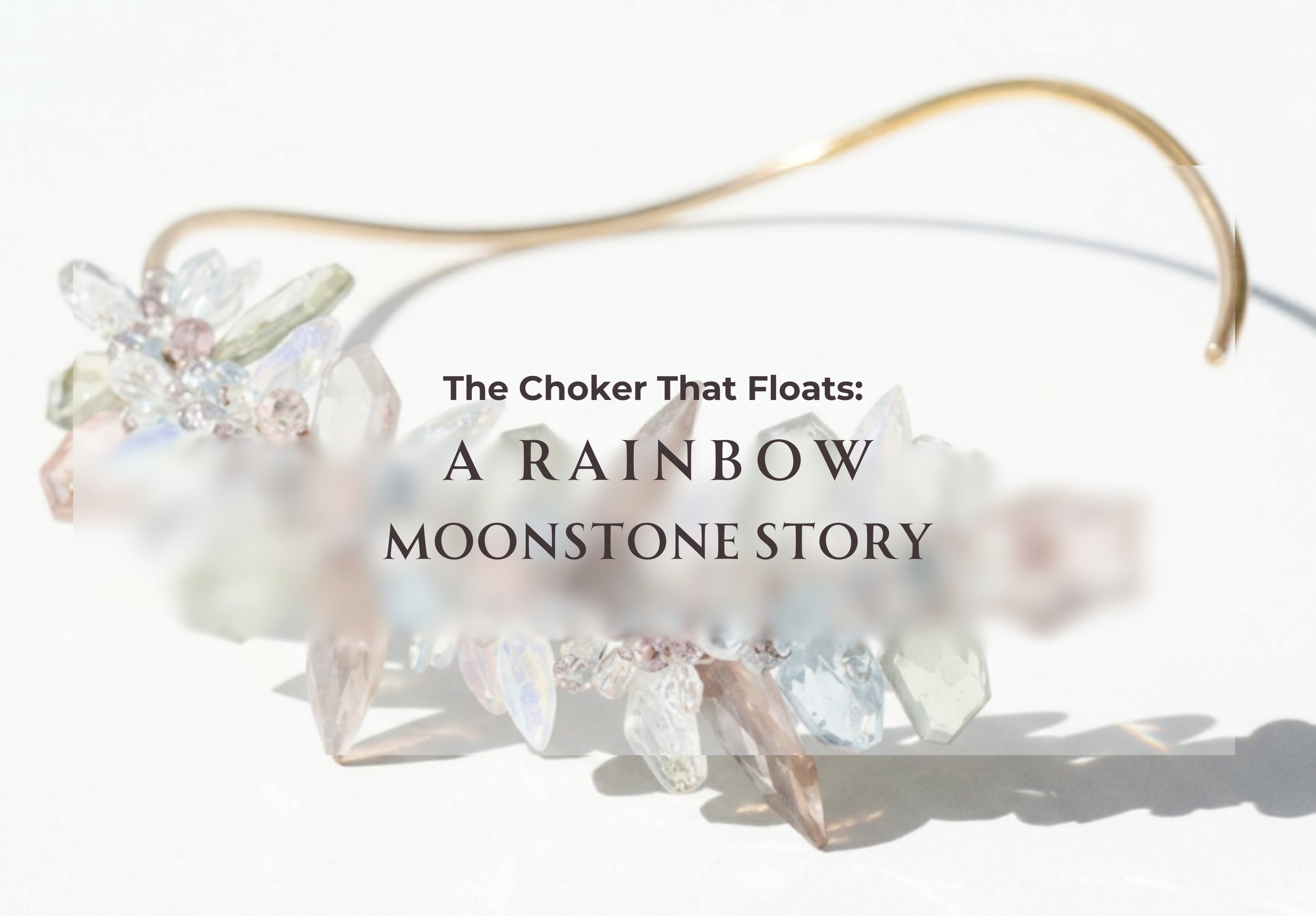
The Choker That Floats: A Rainbow Moonstone Story

Tamar: Second LightAndrea Li

It started with a handful of spikes.

I had found a strand of AAAA rainbow moonstone marquise briolettes, pointed little beads that catch the light and throw it back as color, and I could not stop looking at them. They had a glow that seemed to rise from somewhere deep inside the stone. I knew they had to be the center of something. I just had to figure out what.

The light inside a moonstone

That glow has a name: adularescence. It is the soft, floating sheen that seems to drift just below a moonstone's surface as you tilt it.

Gemstone science: why rainbow moonstone flashes color

Moonstone is a feldspar, and its sheen comes from its structure. Inside the crystal are microscopic, alternating layers of two feldspar minerals, albite and orthoclase. When light enters, it scatters between those layers and floats back to your eye as that dreamy glow. Rainbow moonstone takes it a step further. It is actually a variety of labradorite, and its internal layers act like a prism, splitting light into a whole spectrum of blues, yellows, oranges, and purples. No two stones ever catch the light the same way.

A spike that found its match

The marquise briolettes were shaped like spikes, and that shape jogged a memory. I had a small cache of bullet-shaped moonstones left over from my Femme Fatale collection, and their pointed silhouette was a perfect echo of the new briolettes. Two stones from two different collections, made years apart, that looked like they had always belonged together.

I also had a new material I was eager to feature: Mixed Beryl crown-cut beads, faceted geometric little stones in aquamarine, morganite, and heliodor. I wanted a design that would truly showcase all of it, the spikes, the bullets, and the crown cuts, without crowding any of them.

Andrea Li

☾ ✦ ✧

Gemstone Profile:

Moonstone

Moonstone showing its blue adularescent glow

The glow · Adularescence

Identification & Type

Moonstone (orthoclase feldspar). A captivating variety of feldspar known for its ethereal, floating luster.

Physical Properties

Mohs hardness: 6 to 6.5

Colors: translucent to opaque. Classic white with a blue sheen, plus rainbow, peach, and grey.

Luster: pearly to vitreous.

Chemical formula: (K,Na)AlSi3O8

Key Phenomenon: Adularescence

Scattered light. The sheen comes from light diffracting through thin, alternating mineral layers inside the crystal, which scatters it back as that soft floating glow. Rainbow moonstone, a variety of labradorite, spreads it into a full spectrum.

Major Origins

Sri Lanka (Ceylon) India Madagascar United States

Symbolism & Metaphysical

Intuition & Clarity

New Beginnings

Calm & Balance

Feminine Energy & Fertility

Care & Handling

Gentle cleaning. Use warm, soapy water and a soft brush. Never an ultrasonic or steam cleaner.

Avoid chemicals. Protect it from harsh agents, perfume, and cosmetics.

Store separately. Keep it in a soft pouch so harder stones cannot scratch it.

The beauty of moonstone. Elegance in nature's glow.

Andrea Li

andreali.com

Designing for the float

The answer was restraint. I landed on a minimal choker, the kind of design that gives a gemstone cluster room to breathe.

The whole idea was to make the cluster look like it was floating around the neck, with as little structure showing as possible. A clean stage, with nothing competing with the stones. The less hardware the eye notices, the more the stones get to be the entire story.

Building the vine

I fabricated the choker base by hand from 14k gold-filled heavy gauge wire, shaping it to sit close around the neck. At the very tip, where the choker comes around to the front of the throat, I soldered a tiny pearl peg and set a single luminous baroque pearl, the soft punctuation mark the whole piece resolves toward.

Then I drilled a row of tiny holes up the length of the wire. Those holes are how I anchor a cluster securely to a base this minimal, with no bulky setting to hide behind. Working up from there, I built the gemstone cluster like a vine twirling up the side of the choker, the marquise moonstones and bullet moonstones and crown-cut beryls climbing toward the front. I filled the heart of the cluster with tiny sapphires, sparkling Herkimer diamonds, and keshi pearls, the small details that give a cluster depth when you look closely, and let the whole thing resolve right at the baroque pearl cap.

The empty side

Here is the decision that makes the piece work. I left the other side of the choker completely bare.

No flourish, no stones, just the clean gold line of the wire. That emptiness is what sells the illusion. With one side blooming and the other side quiet, the cluster reads as something that grew there on its own, floating at the throat rather than sitting on a necklace. It also gives the choker a modern, architectural feeling, asymmetry used on purpose, the way a single branch reads against an open sky.

Why this one is one of a kind

A rainbow moonstone never flashes the same way twice, and neither do the stones that sit beside it. The bullet moonstones came from a collection I will never make again. The cluster was wound by hand, stone by stone, up one side of a base I fabricated for this piece alone. It cannot be repeated, and that is exactly the point. It is one moment of light caught at the throat, and it belongs to one person.

Choker earrings (mate to the Moonstone Choker)

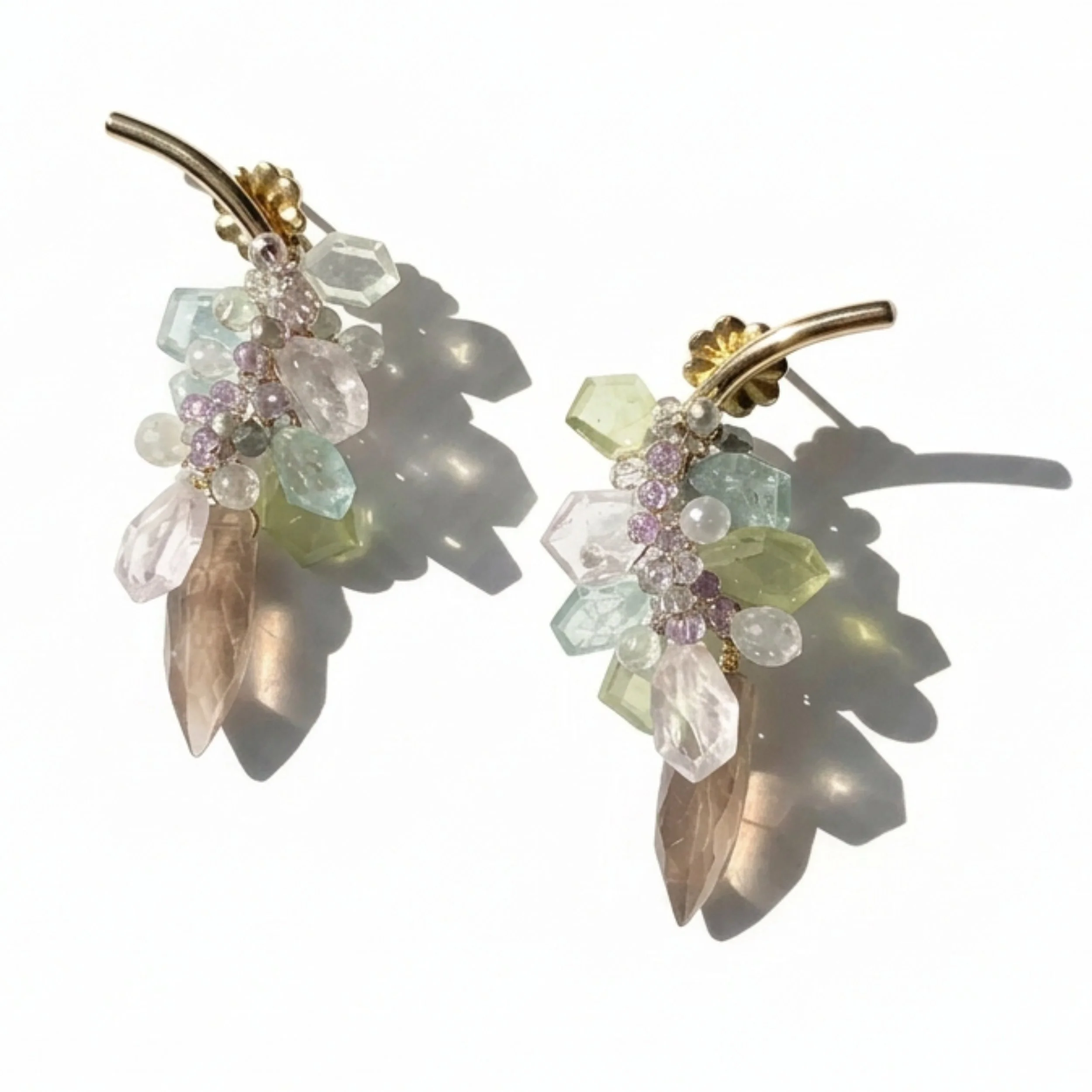
These were the most fun to engineer. My first instinct was a stacked cluster with a single bullet moonstone at the bottom, but it felt like parroting another design, so I started over. Instead I fabricated a gilded arch that mirrors the choker's own line, and built the gemstone cluster right into it so the design follows the curve of the earring. I soldered the post toward the center of the arch rather than the top, so each earring curves out to follow the curve of the lobe, an engineering choice as much as an aesthetic one, for balance and comfort on the ear. I drilled holes along the arch to hang a single moonstone bullet at the bottom and to anchor the cluster into the metal, then filled the center with small flat pear briolettes and tiny sparkling sapphires for depth and shine. The result echoes the modern, architectural feeling of the choker exactly.

Questions

What makes rainbow moonstone flash color?
Moonstone is a feldspar, and its glow, called adularescence, comes from light scattering between microscopic layers of two feldspar minerals, albite and orthoclase. Rainbow moonstone is actually a variety of labradorite whose internal layers act like a prism, splitting light into blues, yellows, oranges, and purples. No two stones ever catch the light the same way.
How is rainbow moonstone different from classic moonstone?
Both show adularescence, the floating sheen that drifts just below the surface. Classic moonstone glows a soft white to blue, while rainbow moonstone, technically a labradorite, throws a fuller spectrum of color.
Is this choker one of a kind, and can I commission something similar?
Yes. It was wound by hand, stone by stone, on a base fabricated for this piece alone, and some of its stones came from a collection that will not be made again. If you would like something made in the same spirit, you can begin a commission through the custom shop.

Discover

Jewelry that feels like you.

Two minutes. The quiz tells me how you want jewelry to feel in your life, and the messages that follow walk you through pieces I think you'll love.

Take the Style Quiz

Two minutes. I take it from there.

Stay Close

Love what you see? Keep finding us.

Google now lets you choose your favorite sources so they show up labeled in AI search answers. If you enjoy discovering handcrafted gemstone jewelry here, add Andrea Li Designs and we'll be easier to find next time you search.

Add Andrea Li Designs as a Preferred Source

One click. Works across Google Search, AI Overviews, and AI Mode.
Studio Stories: The Blue Gemstone Drop Choker

Tamar CollectionAndrea Li

The Blue Gemstone Drop Choker: The Devil in the Details. This choker looks simple. It nearly broke me. Shaping heavy-gauge wire to the human neck (which is not a circle), aligning a suspended blue topaz inside a caged U-shape, and orienting every stone flat-side back for comfort, the invisible engineering behind this piece makes its elegance possible.

The Pink Kunzite Choker: A Wearable Rebellion

Tamar CollectionAndrea Li

The Pink Kunzite Choker: A Wearable Rebellion

This sculptural choker pushed me beyond my technical limits and wasn't designed to sell; it was created for the soul. Born from pure artistic instinct and advanced soldering techniques I had to master in real-time, this piece represents what's possible when you stop asking "will this sell?" and start creating without compromise.